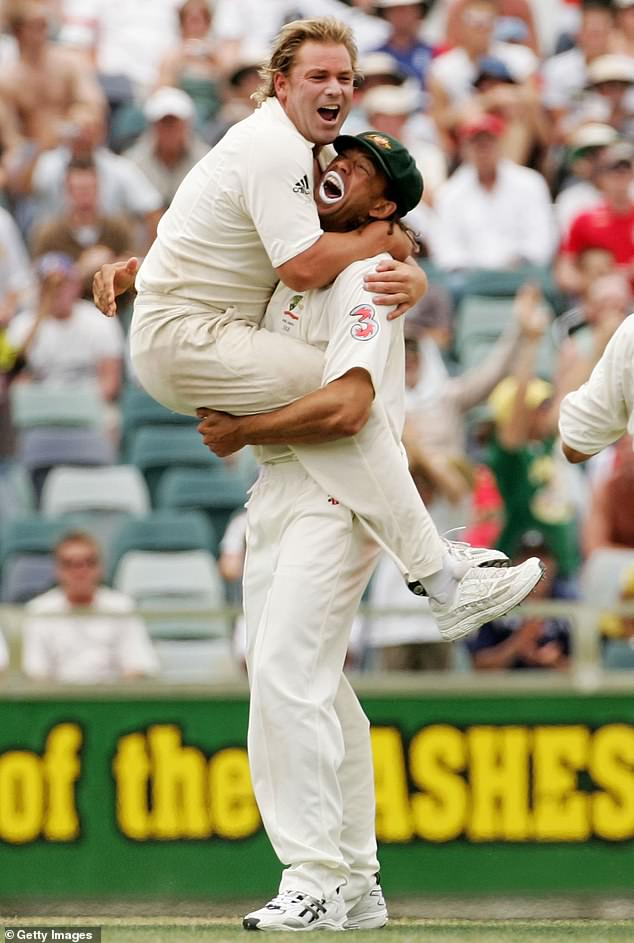
This week my thoughts turn to an aspect of sport that we do not often talk about. At least, I have not come across much editorial space being devoted to that part of modern sport, details of which I am on the verge of divulging. ‘So why don’t you get on with it, without faffing about it endlessly. We don’t have all day you know,’ I hear you complaining querulously. Your ire is well taken, but you will have to bear with me while I formulate my thoughts clearly. I am not serving instant 2-minute noodles here. More like some cheesy, baked offering with all the garnishing and trimmings. On occasion, not always, I write as the thoughts occur to me in a random, stream-of-consciousness flow. Blame it on James Joyce, whose Ulysses I pick up to read every once in a month or so, but even on the instalment reading plan, I am yet to get through the first 100 pages. This is no reflection on the great Irish novelist. Better men than I have struggled with Joyce.
However, I can relate to one of the novel’s protagonists, Leopold Bloom, who wanders around the city of Dublin, being very abstruse and somewhat incomprehensible. Any writer who casually keeps dropping phrases like ‘All Moanday, Tearday, Wailsday, Thumpsday, Frightday, Shatterday’ or ‘Love loves to love love’ needs close watching. As does Joyce’s compatriot, Irish music legend Sir Van Morrison who was so inspired by JJ that, just under 50 years after Ulysses was first published in 1918, he introduced this line in his song Madame George from his iconic album Astral Weeks – ‘Oh, the love that loves, the love that loves to love the love / That loves to love the love that loves to love.’ Take it from me, those lyrics make more sense, just about, when Morrison sings them.
I shall now jettison all literary pretensions and get down to the res. Where was I? Ah yes, sport. Without being conscious of it, for several years now, I have been wondering about how sportsmen, across various genres, celebrate victory and mourn defeat. It is an interesting area of speculation. In order to assemble my thoughts on this subject without getting into a needless tizzy, I shall concentrate on just two games, Cricket and Tennis. The capitalisation (just this once) is intentionally done to give those two forms of sport the importance they so richly deserve. I could touch on football, The Beautiful Game, in passing but two will suffice for my needs.
I have been watching international cricket ever since the early 60s. Some of them live at the venues, but in more recent times, mostly on wide-screen television. When the first, hesitant stirrings of an idea for this article came to me, I was watching the live telecast of the just concluded 5th and final Ashes Test at the Oval, Australia and England going hammer and tongs at each other at the end of a nail-biting series. I shall not go into the actual details of the game as they are not particularly germane to this piece, and those of you who follow the game know what transpired anyway. I was struck by the surfeit of uninhibited, celebratory joy that was exhibited every time a wicket fell. I am not referring to the mostly inebriated crowd here, but to the on-field players. Mind you this is nothing new, but it has become frenetic during the past couple of decades. It is a commonplace to see players hurling themselves over each other in a heap, hugging, kissing, running all round the field like they were being pursued by an angry swarm of bees. Incidentally, bee or locust invasion on a cricket pitch is not an unknown phenomenon. In a nutshell, everything short of indulging in an orgy of lovemaking is on full display. My heart goes out to the poor bowler who lies at the bottom of the heap under that mass of well-meaning humanity. Footballers are a class apart in this regard. Some of them (unique to Brazilian footers) even mimic the arrival of a baby in swaddling clothes after a goal is scored! The question ‘did you score?’ has more than one connotation. It is a wonder the players do not inflict on themselves serious injuries what with all the hurtling, flailing and jumping around.
Contrast this with something I was watching on YouTube. England’s magnificent fast bowler, Freddie Trueman, getting his 300th Test wicket at the Oval in August 1964 against the old enemy, Australia. He was the first to reach this amazing landmark at the time. He and his English team mates had every right to go bonkers and celebrate, losing all sense of decorum in the process, like their present-day counterparts. Instead, what we see on the grainy, black and white film clips are the players gently ambling up to ‘Fiery’ Fred and politely shaking him by the hand or avuncularly patting him on the back. That includes the opposing batter just dismissed. Trueman, in turn, graciously doffing his cap to the crowd in modest acknowledgment, as if to say, ‘It was nothing lads. All in a day’s work. You can buy me a pint.’
The same could be said of Bradman and Hutton, or even more recently of Gavaskar and Kapil Dev, reaching important milestones in their storied careers and not making a song and dance about it. It must be added here that skipper Gavaskar did blot his copybook when he had unseemly words with his opponents in Australia and almost forfeited the game in a Test match, but that was an exception, goaded by extenuating circumstances, and not the rule. What is more, when a batter was given out, without the benefit of a referral to the third umpire, rarely did he even register the mildest questioning look at the ump. Just walked. As one English coach from yesteryear told his ward who was fuming, ‘I was not out.’ ‘Really? Just look at the scoreboard, lad.’ One realises there is much more at stake these days and emotions run high. Nationalistic fervour, hubris, and above all, obscene sums of money, come into the equation. Among present day stars, I can only think of Zen Master M.S. Dhoni, whose facial expression rarely betrayed any emotion, whether he had just lifted the World Cup or been soundly thrashed. Still and all, it is a matter for reflection. We can keep harking back to times gone by with a nostalgic sigh, but we cannot bring it back. As James Joyce puts it, this time in a way we can follow, ‘Can’t bring back time. Like holding water in your hand.’
On to tennis. We talk about the G.O.A.T. Is it Federer, Nadal or Djokovic? Or will it be Alcaraz? Are those full stops between the four letters that spell ‘Greatest of All Time’ redundant? Are those full stops between I.N.D.I.A. a clever ruse? Who can tell? Not even Joyce, I suspect, but here’s the thing. When the immortal Rod Laver won the calendar Grand Slam on two separate occasions between a 7-year gap (1962 and 1969), he merely essayed a happy hop and a skip, trotted across to his opponent at the net, shook hands, and probably walked off for a beer and a simple pub meal with friends. For the past 20 years or so, we have watched one of those three G.O.A.Ts, great players all, do some or all of the following when match point is done and dusted – fall flat on their backs, get down on their knees and give tearful thanks to the Almighty, chew contemplatively on a blade of grass (if it is Wimbledon and if it is Djokovic), cry when you win, cry when you lose, clamber up the spectators’ gallery to your box, be hugged and kissed by about twenty people, cry some more and finally, when you have to say a few words as winner or runner-up, break down completely. Catharsis. A lady champion is also allowed to lean on Royalty’s shoulder and weep, if said Royalty happens to be the Duchess of Kent or the Princess of Wales, Kate Middleton. Cry and the world cries with you. Tears of joy and sadness witnessed in equal measure. All in all, a lachrymose affair, the prize distribution ceremony.
Which only leaves me with one question. Were players from previous generations impervious to emotion? Were they so philosophical that they took victory and defeat with stoic equanimity? I shall conclude with, no, not James Joyce you will be relieved to note, but with an edited Rudyard Kipling quote which meets the case admirably. ‘If you can talk with crowds and keep your virtue / Yours is the Earth and everything that’s in it / And—which is more—you’ll be a Man, my son!’ In those days, the term Man was employed generically to denote humankind (as opposed to mankind), so ladies kindly hold your horses. I cannot speak for the term ‘son.’ Only Mr. Kipling can answer to that and proffer an adequate explanation from his eternal resting place.


 Suresh's Corner
Excellent piece, Suresh!👍
LikeLike
Thanks JB.
LikeLike
Ugh! Theatrical, over-the-top gestures that infantalize the game and the players.
LikeLike
Infantilize
LikeLike