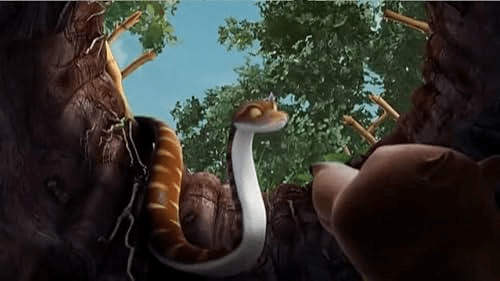
Somewhere on the outskirts of the city of Bijnor in Uttar Pradesh, a man died of snake bite, if the headline in one of the inside pages of my newspaper is anything to go by. This is not exactly news of earth-shattering importance in a hot and humid country like ours, where the genus serpentes flourish and more catastrophically, big Dreamliners crash barely after taking off. All the same, one’s heart goes out to the unfortunate snake-bite victim and his family. After all, India is famed for its centuries-old reputation as a land of snakes and snake charmers, an albatross of a cliché that we only now are beginning to rid ourselves of. Begs the question as to why I am kicking off this blog with this news item. To which I can only say in extenuation, that if it was good enough for The Times of India, it’s good enough for me.
Thereby hangs a tragic, if bizarre, tale. Apparently, this ill-advised gentleman had set himself up as some sort of snake expert, a minor celebrity in that locality where snakes abound. I suppose someone had to be. And when one of our hooded, reptilian friends made a friendly appearance in his vicinity, he was quick to seize the chance (and the snake) for some income generating publicity. Grown men, women and children gathered round, breathless, curious, armed with their mobile cameras, while the self-appointed snake charmer got right down to it and put some elbow grease into his work. A piece of cloth would have been spread out inviting the onlookers to throw coins and notes. UPI was out of the question. The snake man thought he was charming the snake. Only the snake was not charmed. The result was fatal. The man cuddled and cooed and picked up the cobra or viper (he was not fussy) and placed it round his neck while the mobile enthusiasts ooohed and aaahed in awe.
Now here comes the killer blow. As the viper or krait or whatever (the news item was not forthcoming on the specimen) curled round his pretend master’s neck, the misguided, quack herpetologist decided to kiss the snake by sticking his tongue out. Bad idea, but then it takes all sorts. More ooohs and aaahs, mobile cameras clicking away. At which point our Naga decided enough is enough. A hiss, a dart and the poor fellow’s tongue was the beneficiary of the full output of the snake’s venom; a kiss of death. The man collapsed writhing in agony, the snake slithered off into the undergrowth, its dreaded deed done, never to be seen again. The snake charmer was rushed off to the nearest medical facility but it was too late. The snake had claimed its victim. The mobile camera freaks scurried off, presumably in mortal fear. In fact, they rushed off to see who will be the first to post their real-life snake drama on Instagram. If they had tears, they were not prepared to shed them then and there. The poor victim’s open piece of cloth lay open, coinless and noteless, a mute witness to the unfolding tragedy.
This unfortunate incident raises an interesting question, and I am not about to expound on the larger environmental or naturalist contemplation of Man vs Animal vs Reptile. Far greater minds than mine have dwelt on this issue since time immemorial. If you are interested, Sir David Attenborough’s films and books are a good place to start. Joy Adamson’s Born Free is a classic. However, it is a humble snake fancier in India this time who unwisely decided to show his fans the reptile’s fangs, perhaps with the object of collecting some much-needed pin money, who lost his life. Others indulge in this kind of bravado just for a dare. There are instances galore of humans coming to grief because of some kind of exhibitionist streak that drives them to show the world how thrilling the whole exercise can be. A kind of deadly contact sport that often ends badly once the adrenaline rush passes. In the case of poisonous snakes, some experts have advanced the theory that once a snake divests itself of its poison on to another body, it loses all its venom and dies soon after, ready fodder for overhead circling birds of prey. Probably an old wives’ tale but it is of scant consolation to the deceased human; merely a matter of academic interest.
There have been several instances of zoo keepers coming to a messy end because of their familiarity with big cats and the like. It is a daily routine for the zoo attendant to take a pail of raw meat into a tiger’s cage, sit next to the man-eater and throw chunks of deer or buffalo meat, while children and their parents watch on goggle-eyed, clicking away on their cameras and smart phones. The zoo keeper is so full of hubris that he does not allow for the immutable truth in that old axiom, ‘familiarity breeds contempt.’ He pets the tiger, makes lovey-dovey, coochie-coo small talk and the onlookers love this feast of reason and flow of soul between man and beast. The tiger, unbeknownst to his keeper, momentarily loses interest in its daily deer or buffalo meat and thinks, ‘I am a man-eater. What am I doing scrounging on scraps of deer and buffalo? I rather fancy a chunk of man this morning.’ Before the zoo authorities can arrive at the crime scene, it only remains for them to pick up the pieces, inform the bereaved family and conduct a post-mortem, while Kipling’s Shere Khan sits contentedly in a corner of the cage, licking his chops. The Instagrammers and Face Bookers, though, have vicariously delighted themselves with all the blood and gore, now committed to their cameras for posterity. Before you can sing a snatch from that Jungle Book showstopper, That’s What Friends Are For, the whole world is a wide-eyed witness to this horror show.
Instances of killer whales in Florida, alligators and crocodiles in the Australian outback (remember ‘Crocodile’ Dundee rescuing damsels in distress?), stingrays on seashores, not to forget our good friends, the sharks which pose constant danger to seaside holiday makers and beach bums. Who can forget Steven Spielberg’s frighteningly realistic depiction of shark attacks by these killer mammals, notably the Great White Shark in his monumental hit, Jaws? The film ran all over the world for months on end giving sleepless nights to small children. ‘If you don’t eat your porridge baby, I will call that big, white shark.’ Parents! The box offices, however, were delirious. Shark fin soup was going at a premium in most Chinese eateries.
At a more mundane level in India, the unchecked proliferation of street dogs has resulted in injuries and deaths of infants due to dog attacks, on a disturbingly regular basis. Animal lovers are up in arms if the dogs are put to sleep while the authorities have found no answer to check the untrammelled growth of these canines, periodic neutering and spaying notwithstanding. It is an unsolvable stalemate. Killing certain species of animals humanely for meat (top that for a contradiction in terms) is one thing. However, encroaching rapaciously into forest land to expand human habitation will inevitably result in clashes between man and beast. A panther found relaxing in someone’s bathroom can be a nasty shock, for the human as well as the big cat, but whose fault is it in the first place? Someone recently posted a photograph on social media of a leopard taking a catnap in a toilet while a pet dog slept undaunted at a safe distance. Even animals have their own sense of space and know how to maintain a discreet distance. If we cage animals, mammals and exotic birds for our viewing pleasure, then some poor zoo keeper is going to pay a heavy price. I hark back to the estimable David Attenborough who said memorably, ‘We moved from being a part of nature to being apart from nature.’ Shere Khan and Salman Khan must respect each other’s space. That’s about the size of it.
What could be more evocative than to listen to the heart-warming words of the world’s most celebrated zoologist and anthropologist Jane Goodall, ‘from the moment when, staring into the eyes of a chimpanzee, I saw a thinking, reasoning personality looking back.’ Res judicata.


 Suresh's Corner
Assuming that a reader’s comments need not be on the theme of the blog but can be on the broader subject, let me share some bits concerning snakes. In pre independence India, the was a railway station master, known more by his earned name ” Pambu Iyer” who had mastered the treatment of snake- bites by chanting some mantra after taking a bath. He was so effective that a telegram from anywhere with address Pambu Iyer would be delivered to him in double quick time and he too would commence treatment if no official work was not on hand. Secondly, snakes have no ears but dance to the snake charmers playing the ” bheen” by following the hand movements of the player. So, the old Tamil saying Pambu Sevi (ear) is about those with extraordinary aural sense . . Another saying, when translated into English , is only a snake knows another snakes limbs. Lastly ,snakes are vengeful and there are many Hindi and Tamil films to attest to this.
Now on your blog, my comment, as ever on your blogs, is “Great writing “
LikeLike
Thank you. We used to call them ‘pambaati.’ The only Tamil pambu song I knew was, ‘Aadu paambe, vilayadu paambe.’
LikeLike
Nice one, Suresh!
LikeLike
Great post.
Often, I wonder why Bollywood, which is always on the lookout for juicy themes, does not pay as much attention to the animal world as it should. Once in a blue moon, we do get treated to the antics of elephants (Hathi Mere Sathi), dogs (Teri Meharbaniyan, Hum Aapke Hain Koun), and even make-believe parrots (Mein Prem Ki Diwani Hoon). However, our reptilian friends invariably get a mixed press, what with lissome damsels metamorphosing into ‘nagins’ who are out to seek revenge. At the same time, another one even manages to protect the chastity of the heroine (Pakeezah). The best tribute to the species was possibly in the form of a snake dance (Guide).
The amusing part is that, despite being told at the beginning that ‘no animals were harmed in the making of this film’, the film often lacks any visible traces of animals being involved in the proceedings. High time the Society for Prevention of Cruelty to Animals registered a protest of sorts with the producers and directors at this wilful neglect.
LikeLike
Thank you, very well said. I saw Guide eons ago. All I can recall is the sublime music of S.D. Burman, my favourite film music composer by a country mile. And Dev Anand took maximum mileage out of Dada’s immense talent. So many of the Nav Ketan offerings might have flopped, but for the songs.
LikeLiked by 1 person