I have just returned from Chennai, having partaken heartily of the food of love, namely music; in common parlance, the December music season. Not just any old music, but the unfiltered, unadulterated pure offering provided by the doughty purveyors of Carnatic music, one of south India’s many gifts to the world of arts and culture. I have been doing this for over 25 years, year on year, without a break, leaving out the Covid years. I have, on many occasions, put down my thoughts on the various aspects of Chennai’s music season and it would be safe to assume that I have pretty much shot my bolt. Enough said. Then I said to myself, hang on, there must be something one can write about that has not been covered with a single-minded focus. That is when the metaphoric bulb inside my head came alight.
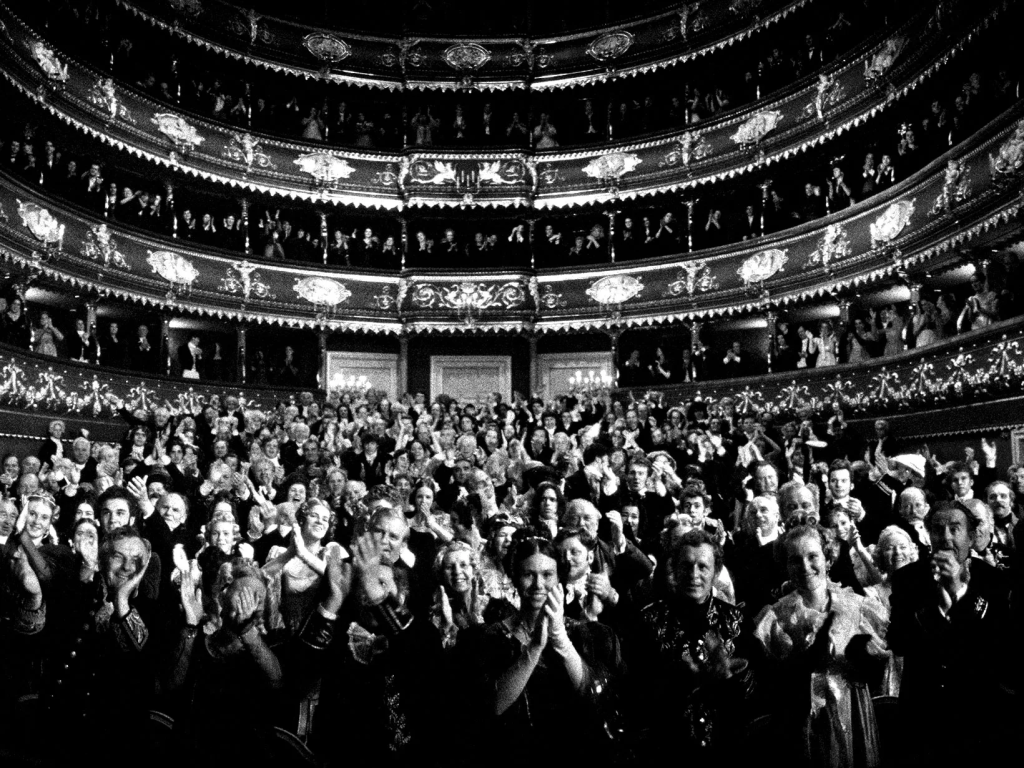
A Japanese Zen Buddhist monk once asked, ‘What is the sound of one hand clapping?’ The question is rhetorical. Do not attempt to answer it. More to the point, how do we express our appreciation to these persevering musicians who slave day and night to bring us elevation and entertainment? We put our hands together and applaud. That is what we do. Nowadays, the more popular artistes are even showered with appreciative cat calls and wolf whistles, but we will put that to one side. I shall focus my essay and attempt to shine a light on ‘The Applause.’ In doing so, let me deconstruct this traditional show of approbation into different categories, since it is not merely a simple matter of clapping hands.
The spontaneous eruption. The singer has just completed a monumental exposition of Kalyani, exploring every nook and crevice of the raga, traversing up and down the scale leaving no stone unturned and no avenue unexplored. The audience sits in stunned silence and as the artist finally lands on home soil, the members in the auditorium rise as one, the applause never seeming to end. This does not happen all that often, which is understandable since a performance of such outstanding calibre is as rare as hen’s teeth. But when it does, it can bring the roof down.
The apologetic applause. For some reason, irrespective of the quality of the performance, the audience has been hardwired over the years into believing that we must put our hands together, never mind if the artist’s effort was demonstrably undeserving of an applause. When a song has been completed perfunctorily, the audience feels it is incumbent upon it to display some kind of gesture. Just to show that there is no ill feeling. This results in a deeply embarrassing and hesitant, underwhelming clapping by a handful, while the singer or the instrumentalist wishes the stage under him would swallow him or her up.
The impromptu applause. Some artists, without meaning to do so, can draw applause right in the middle of an exposition. This could happen when the singer goes all the way up to the highest register on a 7-note scale and stays there for a while. Or when a rapid-fire swara or scalar improvisation threatens to shake hell’s foundations before the violinist and percussionists all join hands with the singer to end the fireworks and drink in the rapturous applause while patting each other on the back on stage. A bit of self-congratulation never hurt anybody.
Applauding on length. This is an interesting one. When an artist essays an alapana and / or a kriti and finishes the whole thing off in double quick time, the audience feels short-changed and fails to show its appreciation. It might have been a brilliant rendition, but the length was too short. The effort was not worth the candle. It did not work up the required head of steam to forcibly extract an applause. The other side of the coin is when the musician goes on endlessly, often in adagio molto (very slow), boringly repeating phrase after phrase and finally, when the audience has virtually given up the ghost, decides to put them out of their misery, the congregation cheers and applauds enthusiastically like the reverberating clap of thunder. More out of relief that the agony has ended than anything else, but try telling that to the performer.
End of concert applause. If you are still sitting at the venue till the final curtain comes down and the traditional Mangalam has been rendered, you have no option but to stretch your hands and legs and give the performers on stage your show of gratitude by applauding. That is the very least you can do, even if you are the last man standing. Never mind if the other 20 or 30 stragglers are rapidly rushing out to catch an auto or a call taxi.
The art of applauding at a western classical concert. If you are a connoisseur of western classical music and particularly if you are not, you will quickly learn that there is a time to applaud and a time not to applaud. They are very particular about this. Take, to provide an example at random, that you are attending a recital of Beethoven’s 5th Symphony at the Royal Albert Hall in London. All very prim and proper. This monumental orchestral masterpiece has four movements, a standard structure of classical symphonies. Opening with the stentorian Allegro con brio, followed by the Andante con moto, then a fast Scherzo and closing out with the grand Finale. In case you are wondering, I got all that from my precious vinyl record album sleeve notes!
An English friend of mine advised me to applaud only after I see the others in the audience do the same. The thing is, when the first, second, third or fourth movement is over, you instinctively feel an applause is due. It is a typical Indian impulse. This can be deeply embarrassing as the rest of those around you, who are more attuned to the idiosyncrasies of attending a western classical music performance, wonder which planet you descended from. You can only applaud when all the four movements have been completed and Zubin Mehta genuflects to take a bow. I have always felt this practice to be quite illogical and that you should be allowed to cheer as and when the mood takes you. Just as we do here in India. Which is why I was delighted when I attended one such classical concert some years ago in Mumbai, when a large group of the uninitiated was present. They kept clapping loudly whenever they felt moved to do so, and they couldn’t give a damn about all the stiff-upper-lips glaring down at them. I turned round and whispered to one of the puzzled foreigners seated next to me, ‘When in India, do as the Indians do.’
As the late irresistible and irascible writer Khushwant Singh once said, ‘There is no wine in the world as heady as applause; and it has the same effect. It temporarily subdues anxiety and restores confidence.’
Deccan Chronicle January 12, 2026.


 Suresh's Corner
Yes, nobody has done a dissertation on the Applause heard at the concerts during the annual music season of Madras now Chennai. Even the late Subbudu who covered every season till his demise wrote only on concerts using humor when devoid of matter. He had the artists in jitters if they found him sitting in the audience. This writer too was no exception when as a mridangam accompanist to my sister’s vocal concert in Delhi years ago, we spotted Subbudu in the last row, chewing pan with tobacco. He probably chose the last row because the brats sitting in the front welcomed him chanting ” Subbudu, unakku oru Kumbudu ” I would like to add yet another type of applause viz ,the Derisive Applause. The instance I quote involves a doyen from Palghat who had a huge following, particularly of young college going types. In one of his concerts, he struck an off- key note, rather very rarely of him, when singing in the upper octaves of a raag. The audience clapped in derision. The singer, unused to such audience behaviour, shouted ,” Romba Kashtamana Idam Aakkum “. At this, one from the audience shouted back ” Pinne Ean Angey Poneer” ! Regards Raman
LikeLiked by 1 person
Thank you. Carnatic music aficionados have so many interesting stories.
LikeLike
Good one, Suresh!
LikeLike