Be yourself; Everyone else is already taken.
— Oscar Wilde.
This is the first post on my new blog. I’m just getting this new blog going, so stay tuned for more. Subscribe below to get notified when I post new updates.
Be yourself; Everyone else is already taken.
— Oscar Wilde.
This is the first post on my new blog. I’m just getting this new blog going, so stay tuned for more. Subscribe below to get notified when I post new updates.
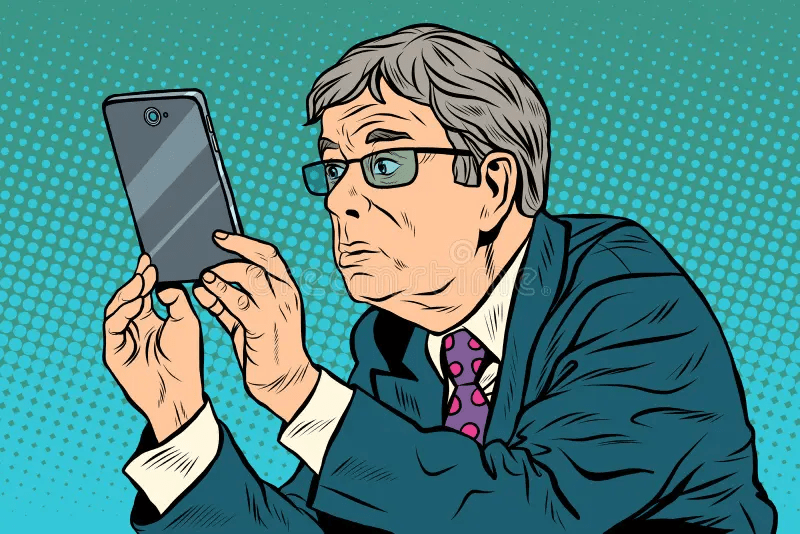
Life was much easier when Apple and Blackberry were just fruits. Anon.
Here is a question for the ages, particularly our present age. Do our mobile phones, or should smartphones be the correct nomenclature, have a mind of their own? We know they, the smartphones that is, can do all kinds of wondrous things at the slightest touch of our digits on their screens, apps or icons. Oftentimes, they do things we don’t even want them to do, but that is a matter for another day. For the most part however, our wish is their command. The search option is a bottomless pit which we mine endlessly for rare nuggets, knowledge, transacting business and entertainment. And to contract a bad case of Digital Eye Strain. We are constantly living in the here and now. I must know, this very nano second, what the BSE Sensex is doing. Ping! Not very well, I am afraid. 1800 points down. A pox on you Trump, and on your slavering war mongrel, Pete Hegseth. And in case he feels we are giving him the cold shoulder, let us throw Netanyahu into the mix as well.
Not to worry, tomorrow a few tramp steamers bound for India will be allowed by the Iranians to pass through the Straits of Hormuz, and the Sensex and Nifty will show their appreciation handsomely, though what they will do the following day is anybody’s guess. That will largely depend on which side of the bed Trump gets up from. But I digress. On a happier note, you can get your smartphone to play music, watch asinine film shorts, follow the cricket scores in real time, read a novel even and worry about your by-now strabismic eyes later. The point is it’s all there for you to mindlessly wallow in. Lest I forget, you can also make and receive simple calls and messages on the instrument (‘Hullo dear, I am running late. Year-end closing. Don’t wait up for me.’) So why am I concerned about my Samsung Galaxy S24 Ultra Android smartphone possessing a mind of its own and acting according to its own volition, whims and fancies? Here is why.
Initially, I did not quite cotton on to this insidious trait that my too clever by half smartphone was ‘gifted’ with. It kind of crept up on me, almost unknowingly. You see, dear reader, it is one thing to pass an idle hour, and ask your handheld companion an inane question like, ‘Can I control my blood sugar without having to give up on chocolates and ice-cream?’ After which you will be flooded with an alarming number of posts on your phone providing you with instant fixes from the world of Allopathy, Ayurveda, Yoga, Homeopathy, Naturopathy, Chinese potions (lizard’s tail and rhino horn powder, anyone?) and a plethora of other solutions from all over the world. ‘We offer you a three-month trial, the first month will be free, all for just $ 99. Full refund guaranteed if you are not satisfied, less postage and administrative costs.’ Furthermore, these busybodies do not confine their curative counsel to blood sugar issues alone. Incontinence, impotence, depression, back aches, neck aches, acne, ingrowing toe nails – you name it, they have a magic potion, pill or powder to take care of your worries. You get the picture. Up to a point, I can understand this avalanche of messages, painful as it is. After all, you went in to their site and made an inquiry on pre-diabetes, and they gave you much more than you asked for. So, stop whining.
My pressing issue is to do with strange things that happen via your smartphone when you have not actually asked or searched, for anything. I can see you are foxed. So was I. Allow me to elaborate. You have just finished reading The Outsider( L’Étranger) by Albert Camus. For the second time, it must be said, because you were barely out of your teens when you ploughed through it the first time, more to impress the boys and girls in college. Reading it the second time round was more satisfying, though it is a grim tale. No, no, not Grimm’s fairy tales. Just a grim, sordid tale well told, about a bloke who kills a complete stranger for no more compelling reason than that the heat, dust and sun on a beachfront in Algiers was driving him crazy. So far so good. Now here comes the eerie part. After putting through a call to my gas agency to inquire about my cylinder delivery (another 15 days), I dive into Google on my trusty mobile to do some searching on inexpensive after shave unguents.
Guess what? The first thing that pops up on the screen bears the legend, ‘You might want to check out more novels by Albert Camus and similar authors.’ I kid you not. Followed by a long list of books by the late Nobel Laureate and a further selection by the likes of Kafka, Sartre, Bertrand Russell, Sylvia Plath and others of that existential, moody genre. This helpful information, which I did not seek, took me directly to Amazon advising me helpfully to ‘Add to cart.’ How did this happen? Am I being watched by some Big Brother type? While you’re at it, add George Orwell to that list. It sent shivers up and down my spine, I can tell you. A few minutes later, I was flooded with after shave brand choices which was on expected lines. From existential literature to after shave balms in the blink of an eye was quite a leap, but that’s the internet for you. The boffins tell me it is something to do with algorithms, AI and data points, but I am not convinced.
A few days on, my wife asked me if I had taken care of the annual household and car insurance renewals, which was due in a week’s time. A timely reminder. I thought I should revisit the terms of my existing insurance companies and trawl through a couple of other competitive options before refreshing my policies. I emphasise that all this was only swirling around in my mind space. I had not actually gone into any website to glean further information. By now, you might have divined what happened next, dear reader. I opened my mobile phone and the first thing that accosts me on the screen bears this bold lead-in, ‘Are you looking for the best deal for your car or household insurance?’ Followed by a slew of enticing information on why they are among the most dynamic insurance companies to work with. As if all this were not enough, my mobile starts ringing incessantly. ‘Good morning, Sir, I am Ashok from Fledgling Insurance Company. Your household insurance expires on blah blah date. Can I fix an appointment to come and meet you? We offer mouth-watering deals.’ Diabolical. And through the next few days, Arun from Smoothy Insurance, Afsana from Dubious Insurance and Ashish from Hole-in-the-Wall Insurance launch an unbearable assault on my time and eardrums. I resisted a strong urge to do a Google search for hearing-aids.
It has been subsequently explained to me (in words of less than three syllables) by those in the know of such matters that all this is not as macabre and ghoulish as one might experience in an Edgar Allan Poe novel. One’s mobile number is no longer a matter of zealously guarded privacy. It changes hands from party to party and before you can say ‘Press 1 for English,’ more than 5000 thousand individuals, corporates and small-time shady operators have your number, in more ways than one. And counting! Ergo, one might as well stop complaining endlessly about invasion of privacy. There is no such thing anymore. If you are into online banking, just make sure you keep changing your passwords frequently; and save or write it down somewhere, else you’re a dead goner. Not that that is any guarantee that you will not be digitally robbed blind soon thereafter. To cap it all, next time you pick up your smartphone and hear a voice over the ether saying, ‘Good evening, this is Akshata from Safety First Insurance,’ cut the line pronto and block Akshata on your instrument. She might sound seductive but you bite into that rotten apple at your own risk. Of course, that is no certitude that you won’t receive a call five minutes later from Dennis representing Desperate Insurance. Just grin and bear it.
As Frank “Ol’ Blue Eyes” Sinatra famously crooned, That’s Life.

This week I come to sing the praises of car brands that use every tool of persuasion at their disposal to sell you a particular brand of vehicle. The marketing and selling effort in a highly competitive field, with several Indian and imported brands vying for the customer’s eyeballs and attention, cannot be overpraised. You are prodded and seduced over every available media channel from television, print and social media to buy that brand of vehicle that will add to your swelling pride and win your girlfriend’s heart. (Advertising invariably targets the younger aspirational age group.) The engine will purr like a satisfied cat and envy will be writ large on the driver of every other vehicle that you will overtake with effortless ease. In short, a real head turner. As a former advertising professional, I am fully in sync with claims and counterclaims that are part and parcel of the marketing mix. Unique Selling Proposition? That is old hat, now resting peacefully with the late advertising guru who coined the term, Rosser Reeves’ soul.
It matters little which brand of car or model you might be feasting your eyes on, because pretty much every brand makes the same claims. A bit like toothpaste. You can go for the petrol or diesel, automatic or manual gear option, though the salesman will convince you to take the automatic, adroitly avoiding mentioning the extra moolah you have to cough up for the privilege. ‘Less work for your legs, Sir.’ The mileage factor will be talked up. ‘14 km per litre in-city, Sir,’ which is a crock of ordure, but he has a job to do. A rainbow choice of colours will also be available. ‘I think Madam is keen on the Cherry Cerise, Sir. An excellent choice.’ Ah well, a sucker is born every minute, as P.T. Barnum said. Now here comes the caveat. Notwithstanding all that, your shiny, new pride and joy could, without so much as a by-your-leave, suddenly stall in the middle of the road, inviting a cacophony of blaring horns all around you, to say nothing of the choicest invective and killer looks directed at you. I will come to that anon.
One such brand claimed me for its own just under a year ago in our garden city of Bangalore. Just in case you get the wrong impression given my opening remarks, the car I purchased was not a luxury model, though the brand is well known in India. It is a decent model, not quite common or garden, not quite ultra-premium, but somewhere between and betwixt; shorn of ostentatious frills, meant for an average middle-class household. I shall refrain from naming the brand because it will be invidious and not relevant to the discussion. Furthermore, I still have issues to sort out with the authorised dealer from whom I had bought the vehicle.
It was a Sunday and we had agreed to lunch with friends at a restaurant approximately an hour’s drive from where we lived. Accordingly, I opted to hire a driver, the more to arrive at our destination in a relaxed frame of mind. There was also a decent chance that good wine was on the menu and the return journey would have inevitably involved a much-needed shut eye. So off we drove, into the wild, blue yonder to this fancy eating house anticipating a hearty repast, made all the more enjoyable knowing mine host was footing the bill. We were barely half way through the journey with nary an indication that anything was amiss when, ‘ayyayyo,’ the car came to a complete halt. Dead in its tracks. The driver tried everything he could to wake the vehicle up – moved the gear up, down and sideways, turned the ignition key clockwise and cursed freely. Nothing doing. The car had downed tools and that was that. Naturally, the air-conditioning system went on the blink and our misery had barely commenced.
It was just a matter of fortuitous happenstance that the car did not halt at a traffic junction. Instead, we were stranded next to Bangalore’s famed leafy, tree-lined Cubbon Park, across the road from the equally famous Chinnaswamy cricket stadium, home to Bangalore’s IPL darlings, Royal Challengers – RCB. (Oh look, there’s Virat!). The weather in March was just beginning to turn warm but it was still bearable. After a few more futile attempts, it became clear that our brand-new car had struck work and decided that it was a stubborn mule and not a mechanical cum technological wonder, as the advertising campaign had so seductively claimed. We were in a mulligatawny soup, good and proper, and my thoughts turned to lunch where our hosts will be mulling over soup and starters, while the vino, red or white, flowed freely. All the while wondering what had happened to us (‘Waiter, another refill please’). As you may have observed by my rambling on incoherently about wine, soup and starters, we were beginning to get disoriented. I was seeing mirages. Like Peter O’Toole reprising Lawrence of Arabia in the desert. It was now clear our lunch was a non-starter, like our car, so we called our hosts to give them the bad news. They offered their sympathy and were deeply saddened at our plight. We wished them bon appétit.
About now, my throat was beginning to get parched and the gastric juices in my stomach, deprived of its lunch time inputs and craving a plateful of Ceasar or Waldorf salad, was beginning to swish around noisily like a bathtub gurgling when you pull out the stopper to let the water drain. We were stranded in a pleasant place but the nearest roadside eatery was miles from nowhere. Not even a bottle of mineral water in sight. Curious passers-by stopped to look, as passers-by tend to do, tut-tutted sympathetically and went on their way. Just then a young couple, cooing sweet nothings to each other, strolled past us. They were carrying a backpack, an integral part of today’s accoutrements, which I was sure contained a bottle of drinking water. Despite my wife’s protests, I waved them down and inquired if they had the bottled H2O to quench our thirst. Bless their tender hearts, they not only handed over their Bisleri but insisted we keep it for ourselves. Their hearts bled for this septuagenarian couple. I made a feeble, insincere protest but they weren’t having it any other way. Mind you, we could have ordered something from Swiggy or Zomato who would have reached the comestibles to our location instanter, but we literally didn’t have the stomach for it.
Time passed. Very slowly. My good wife, the driver and I took turns in diverting the burgeoning traffic away from our car. A passing cop was impressed by our traffic warden act. It was now past 3 pm. We had been stranded there for over three hours. The car service agent sent round a chap in a two-wheeler with a spare car battery to try and fix things, but he soon gave up the ghost after much fiddling. There was nothing for it but to arrange a tow service. The tow van was coming from the other end of the city and finally arrived an hour later. By now my mobile phone battery was showing 15% life left. Crisis loomed. Our car was then winched up by its rear wheels (‘hind legs’ as the late British comedian Tony Hancock memorably described it), photos were taken of the vehicle from all angles and it was driven off as we bade a tearful farewell. Thank heavens the car was fully insured.
We still had a bit more drama to face. The free car service arranged by the company to take us home called at the last minute citing some flimsy reason for not being able to come. It was Les Misérables come full circle! We then managed to hop on to one of Bangalore’s ubiquitous autos to drop us home at extortionate rates, citing Trump and Iran, but we warmed to the driver who spoke perfect English and kept us occupied on the long, bumpy, bone-rattling ride with a sob story of his own – successful business ran aground, family in strife, children to educate and marry, medical issues, no insurance, had to take up this leased auto to keep body and soul together. My eyes welled up. We gave him double the amount we had negotiated. P.T. Barnum surfaces again!
At last, home again, home again, jiggety-jig! When will we get our car back? Who knows? Who cares? I am staying put till the cows come home.
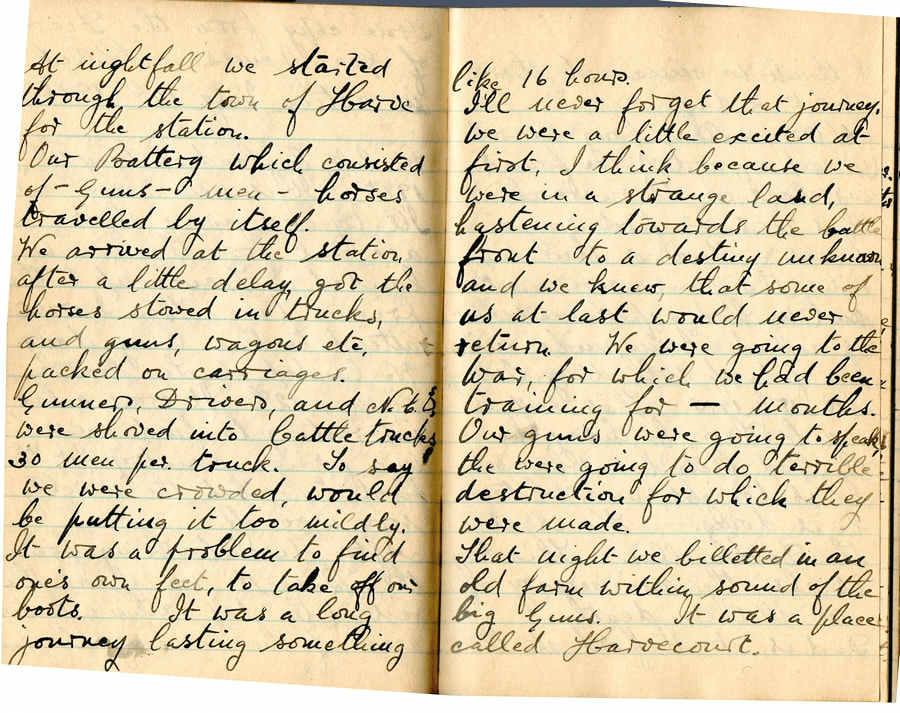
Here’s the thing. Every now and then, I keep getting asked if I am a writer. I give it a brief think and reply that I write. About once a week. If that answers the question. Then there is the counter question. Yes, but does that make you a writer? Good question, for which I do not have a ready answer. I titled one of my compilation books I write, therefore I am. Which sounds a bit existential but whether it makes any sense or not, I am unable to say. A close friend even chastised me for being pretentious. Which immediately prompted me to respond in Sybil Fawlty fashion. Sybil who? you ask. From Fawlty Towers. Of which if you have not heard, you are more to be pitied than censured. In one sequence Sybil Fawlty comments on the person who responded to the accusation of being pretentious thus, ‘Pretentious? Moi?’ I agree that a line like that gains risibility more in the telling than in the written word, but I can live with that.
I was a boarder in a well-known Protestant missionary school in Bangalore during the early 60s. In order that we hone and polish our English, we were given a special assignment whenever we went home for our summer holidays, the killjoys. Those were the days when we would sing on the joyful train journey home to Calcutta, a la Cliff Richard, ‘We’re all going on a summer holiday / No more working for a week or two / Fun and laughter on a summer holiday / No more worries for me or you / For a week or two.’ Except that this assignment during our five-week holiday, on which we will be assessed, involved the maintaining of a personal diary and faithfully recording what happened every day of the week during the long leave, punctuations properly in place. Enough to totally ruin the vacation, but failure to do this invited trouble, our teachers’ motto being, ‘Spare the Malacca cane and spoil the child.’ Capital punishment was not frowned upon.
To add to our woes, our class master wrote to our parents about this unusual ‘homework’ and enjoined upon them the duty to ensure that we did not stray from the straight and narrow. It was bad enough strolling around in school with ink-stained fingers and shirt pockets thanks to our perennially leaky fountain pens. Having to put up with this unsightliness at home and amongst friends on leave, was adding insult to injury. Nevertheless, the exercise book which passed for my diary beckoned every morning. Oh, and lest I forget, we were encouraged to listen to the news on BBC World Service Radio (on the hour, every hour) in order to improve our diction and pronunciation. Given the time difference, here in India that translates into on the half-hour, every half-hour.
In Calcutta, which was located, geographically speaking 22°34′03″N 88°22′12″E (my Geography master would have liked that) the sun, particularly in summer which was about eight to nine months in the year, came up at 5 am, give or take. Even if I wanted to sleep late, my father would draw the curtains to let the rude sun stream in. Meanwhile the pressure cooker in the kitchen would whistle and steam loud enough to wake the dead. My mother could be heard unctuously humming some Carnatic hit while she attended to the coffee fixings for the family, admirably multi-tasking to get the lunch ready. Late rising therefore was a non-starter. Some irony this. Even in boarding school, Saturdays meant late rising at 7.30 am. What price holidays, I asked? To no avail.
My father said we should devote 7.30 to 8.30 in the morning, when the mind is fresh, to writing up the diary to record the previous day’s highlights. After our ablutions we were free to be carefree kids enjoying our summer holidays. Imagine, if you will, this routine was fixed for us spotty-faced kids between the ages of 10 and 14. That being the case, what would my diary have read like. Sadly, I have not retained that precious exercise book that might have presaged my future as an inveterate columnist and blogger. So, I have to rev up my time machine, dive deep into my memory bank and become that early-teen boy again and see how I fare. Shades of The Secret Diary of Adrian Mole, Aged 13 ¾ by the late, delightful Sue Townsend.
What follows is a typical day of the week, jotted down in that precious, sadly missing, diary. Poetic licence has been taken and forgive me traversing freely between past and present tense. This is a summary for the entire week as most of the days were unvarying in their routine, with a few exceptions. Remember, we lived in the pre-mobile, stone age.
Woke up at 6 am after being pushed and prodded by my father from 5 am. He didn’t exactly say, ‘Wakey, wakey sunshine,’ but it was a near thing.
Brush teeth and given a tumbler of coffee by my mother, which was meant to act as a laxative. An old wives’ tale, I’ll wager. At times, a Britannia glucose or thin arrowroot biscuit was provided as accompaniment to provide energy. Fat chance!
Move to the drawing room. Pick out a record for the Grundig radiogram. We could stack eight 45 or 78 rpm ‘plates’ and they would drop down and play one after the other! Elvis Presley’s Wooden Heart or Pat Boone’s Speedy Gonzalez? Decisions, decisions. Mother yells from the kitchen in Tamil, ‘Play M.S.’s Bhaja Govindam.’ Diva M.S. Subbulakshmi wins the day. Wake me up in the middle of the night and I will sing that bhajan for you. On another morning, it could be Semmangudi, Lalgudi, Ariyakudi, GNB, MMI, MLV or DKP. When Carnatic musicians are known only by their initials or village names, they have achieved immortality.
Nearly 9 am. Time for a bath. Father reminds me to switch the geyser off. It is boiling hot in Calcutta, but the geyser must be switched on. And off. It’s a ritual. Something to do with keeping the equipment in trim.
Meanwhile, father has left for work in his Standard 10, suited and booted; as befits a senior bank official. He drives at an average speed of 15 kph, which is slow even by Calcutta’s notorious traffic crawl. He waves to bullock carts to overtake him. He is a cautious driver.
By 11 am, mother announces lunch. We never did breakfast. The mashed potato preparation, ‘podi maas,’ is yummy. Why could she not make more of it? My mother is a frugal cook. She staunchly believed over-eating is bad for health. Not sure what her view on under-eating was.
Post lunch, time to call up a friend or two on the landline. I still remember our number – 459806. The phone is dead. Which is most of the time in Calcutta of the 60s and 70s. The term mobile or cell phone was a few decades away from entering our lexicon.
I have been advised to read a good book, at least 10 pages a day. Our home library is limited but there’s some good stuff. Conan Doyle, Wodehouse, Agatha Christie, Erle Stanley Gardner. Naturally, I opt for Zane Grey’s cowboy stuff – ‘I’ll drill yer like a dawg, you yellow-bellied, lily-livered chicken.’ (The ability to appreciate Wodehouse came later). There were also a couple of Irving Wallace and Harold Robbins tomes, which my father declared was unsuitable for kids. Which meant we read them on the sly.
3 pm. I was packed off to study Carnatic music from a respected guru who lived within walking distance. My family felt I had the makings of a good singer. On the way to music class, I could be heard humming Please, Please Me by The Beatles. And after a heavy bout of Kalyani and Bhairavi at music class, my return walk home would find me in top voice crooning Connie Francis’ Lipstick On Your Collar. Back home, I had to regurgitate whatever I learnt that day to my mother, minus The Beatles and Connie Francis.
4.30 pm. Tune in to BBC World Service Radio on 25 or 31 metre band on our versatile radiogram for the news. Lots of stuff about the eyeball-to-eyeball stand-off between Kennedy and Khrushchev over missiles in Cuba, starving children during the conflict in Biafra, Idi Amin’s shenanigans, the Queen visits the Cayman Islands (among the few colonies the British still have), volcanic eruptions near Java and Sumatra and the cricket scores summary from the ongoing Ashes series. Other than the cricket, nothing else made sense to me, but I learnt how to pronounce Khrushchev and names of cities and some unusual words. Which was the general idea. The spore of a notion of becoming a news reader at the BBC was embedded in my mind, but never germinated.
5 to 6.30 pm. Played tennis ball street cricket with bricks acting as stumps, plumb, spang in the middle of a busy street. Approaching vehicles would be directed suitably by the chaps fielding at deep third man or long on. This was a time-honoured tradition in Calcutta and woe betide anyone who tried to stop us.
Back home by 7 pm. Listen to some more music and await dinner at 8.30. On occasion we would attend a Tamil play or a Carnatic music concert by some maestro. On rare occasions, we would be taken to see an English film (The Sound of Music, My Fair Lady, The Guns of Navarone and The Absent-minded Professor readily spring to mind). Followed by a north-Indian vegetarian treat at the poky, Hindustan Restaurant on Lindsay Street.
9.30 pm was lights out. My father personally saw to that. I may as well have been in school.
That pretty much was it. There were slight variants each week. Sometimes a football match between the two marquee clubs of Calcutta, Mohan Bagan and East Bengal brought the city to a standstill. Other times, some political party or the other declared a ‘bandh’ which meant a forced holiday. Everyone, including shops downed shutters. Had to sit at home and stare at each other all day. Not much fun.
At the end of it all, my class master gave me 8 on 10 for my diary jottings. The effort was worth the candle, after all. If only I hadn’t gone and lost the damn thing.
I have won many trophies in my time, but nothing will ever top helping win the battle for peace in my country. Ivorian footballer Didier Drogba.
At the outset, I must emphasize that I was not really planning to write about cricket as I had already done so just a few weeks ago, and most of us are probably fed up to the back teeth on the subject. However, needs must. I wish to touch upon an aspect of the game that might have escaped the attention of most cricket aficionados.
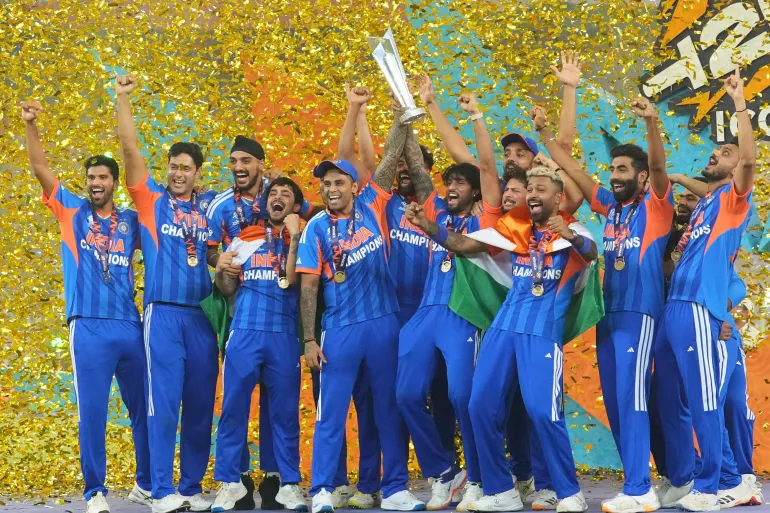
Let me tell you what was the most significant factor that contributed to India’s winning the T20 World Cup in Ahmedabad last week. Oh, all right, you go first. Sanju Samson? Good try but no. Just a few games ago, our selectors did not want to know about Samson. Now he is the best thing since sliced bread. The word fickle springs to mind. Jasprit Bumrah? That’s an even better try, a no-brainer but again, no can do. Ishan Kishan’s belligerence or Shivam Dube’s explosive cameos? Axar Patel’s electric fielding? Look pal, I have already said no to the prime contenders Sanju and Jasprit, let’s get serious. Next thing, you will be telling me it is coach Gautam Gambhir’s unsmiling, implacable strategy and vision that was the key to misfiring captain, Suryakumar Yadav’s (SKY to his friends) calm leadership that won us the cup. All else failing, you will stress on the benign, batting paradise of a pitch which our batsmen ravenously feasted on, having been generously invited to take first strike. Balderdash. Can’t you think out of the box? Why did the New Zealanders unravel spectacularly on that same strip?
Give up? For crying out loud, India’s lifting the coveted trophy had nothing to do with anyone who was present at the Narendra Modi stadium where battle was joined with the hapless Kiwis and won handsomely by the home team. I gave you a big hint there. Still don’t get it? You are beyond help. Then let me spoon-feed you. It had nothing to do with anyone who was actually present at the big game. It was the conspicuous absence of our Prime Minister at the venue that clinched the deal! The secret ingredient that was not added. Remember what happened in November 2023 at the same venue? We played against Australia in the final of the ODI 50-over World Championship. At the starting gates India were firm favourites and fully expected to win under Rohit Sharma’s stewardship, home advantage with massive blue-shirted support and the icing on the cake; the PM’s inspiring presence.
The PM landed up all right, all togged up for the occasion, resplendent in a spanking electric blue waistcoat, blue and orange-lined scarf meticulously matching the Indian team’s colour code and spotless white kurta, to give our boys all the morale-boosting encouragement any national leader would give up his parliamentary seat to provide. Just think of the photo-op. And what happened? The spanking electric blue outfit, far from providing the desired impetus, culminated in a sound spanking at the hands of Australia that completely silenced the 100,000+ crowd. The Aussies won in a canter showing a clean pair of heels to the unfortunate Rohit Sharma and his straggling charges. The Prime Minister’s opportunistic and vicariously hoped-for pride and joy was short lived. Instead, he was reduced to generously lending his broad, consoling shoulders in the players’ dressing room for all the Indian cricketers to lean on and shed copious tears. He came, he saw and did not quite conquer but that was not his fault. The stars were not properly aligned. Congratulations turned to commiserations. That did not prevent Rahul Gandhi from pouncing on the main chance and rubbing it in and dubbing the PM a ‘Panauti,’ one who is a bad omen!
So, as I am saying, Mr. Modi’s decision to abstain from this year’s T20 World Cup final at the eponymously named colosseum in Ahmedabad, was one of his best decisions. And lest we forget, he had plenty to tackle on his plate – Trump, Netanyahu, Trump, Putin, Trump, Iran’s Supreme Leader Khamenei, Trump, Hormuz Straits, Trump, oil, gas, Om Birla, Trump and all the Opposition party members baying for his blood. His wisdom and sagacity, by not putting in an appearance at a cricket match, thus ensuring the cameras at the stadium stayed focused on the players and not on him (had he attended) is to be lauded. The cameras did turn, now and then to our Home Minister’s son and heir, ICC boss Jay Shah and past captains Kapil Dev, M.S. Dhoni and Rohit Sharma and the inevitable odd industrialist and Bollywood star, but that was par for the course. In any case, in the absence of the ubiquitous Sachin Tendulkar and Virat Kohli (where were they?), Dhoni, Rohit and Kapil Dev were inspirational images on screen. After all they were the ones who shepherded India’s previous World Cup victories.
Notwithstanding all that, it is a given that the triumphant Indian cricketers will be invited soon to the Prime Minister’s residence for tea at 7, Lok Kalyan Marg. The TV and still cameras will be working overtime, have no fear. This is in keeping with time-honoured tradition. Quite recently, our women cricketers won the ICC Women’s World Cup for the first time and were feted by the PM at his residence. To give the man credit, he had done his homework on each and every one of the girls and asked them specific questions pertaining to their lives, their families and other titbits that had the likes of skipper Harmanpreet Kaur, Smriti Mandana, Deepti Sharma, Jemima Rodrigues, Shefali Varma and others totally floored. It was a memorable evening our ‘sheroes’ will never forget. Expect more of the same when SKY and his boys turn up for dhokla, khandvi, thepla, sukhdi and tea or rose milk with Mr. Modi.
At least we in India should be grateful our leaders do not behave the way the FBI Director Kash Patel celebrated in the locker room of the U.S. hockey team after they garnered the gold medal at the recently concluded Winter Olympics in Milan. Against Trump’s new bete noir, Canada. Holding a bottle of beer, he was seen jumping up and down in wild ecstasy, yelling and screaming, while the rest of the ‘jock’ hockey team joined him in an orgy of bacchanalian celebration. Frankly, it was all very testosterone-driven and not in the least bit becoming of a man holding such high office in supposedly ‘the world’s most powerful country.’ That said, Kash Patel is one of Trump’s hand-picked men and this kind of conduct is only to be expected. Not that he has anything remotely to do with India, but many Indians, particularly those from our Prime Minister’s home state, dearly wish this American Patel’s ancestors did not hail from Gujarat. We would not have batted an eyelid if Bollywood star Ranveer ‘Dhurandhar’ Singh did a few energetic dance steps in the dressing room with our boys after the win, but we expect decorum to characterise political leaders in a similar setting. If that means proffering a shoulder to cry on, be they tears of joy or sadness, so be it.
In conclusion, it would be ideal if our Prime Minister desists from attending future cricket matches and similar. Bad joss. Let him watch the game from home, and depending on the result, he can decide if he wishes to host the team at his sylvan gardens. Or not. More to the point, we are more likely to win, as we have just witnessed, if he does not grace the game with his presence: even if the venue bears his name. Not for nothing did the poet say, ‘Absence makes the heart grow fonder.’
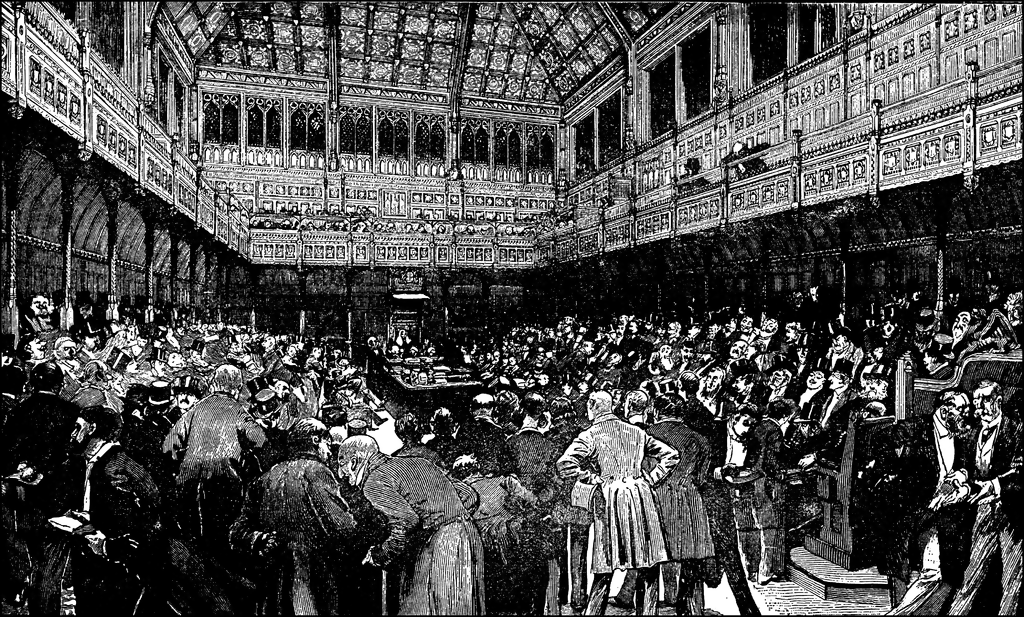
Politicians and diapers have one thing in common. They should both be changed regularly, and for the same reason. José Maria de Eça de Queiroz.
Those of you who are familiar with my weekly ramblings, will know that I am not all that partial towards political commentary. My readership may be limited, to put it diplomatically, but we few, we happy few, we band of brothers and sisters are quite content to mosey along with my light-hearted observations on this, that and the other. It is not that I have never touched upon political upheavals of earth-shattering importance, but I tend to touch upon it ever so lightly and pass on to matters more meaningful and relevant to my oeuvre. Like sidelights at a lit fest, my serendipitous meetings with celebrities over time, the trials and tribulations of bringing up a pet Cocker Spaniel, boarding school capers, the challenges of traversing between western pop and Indian Carnatic music, random visits to our family doctor, the magic of Federer – and so much more. These are all part of the warp and woof (or weft, if you prefer) of my life and one finds so much to share in an engaging way with my covey of readers.
Then again, when I look at the distinguished galaxy of politicians, economists, commentators, bureaucrats, literary giants, journalists and other worthies who regularly hold forth eloquently on a variety of domestic and international issues, I am loath to butt in and jostle among them. Two is company, three is a crowd as the saying goes. Just consider. Here in India, we have the likes of Shashi Tharoor, Mani Shankar Aiyar, his sibling the economist Swaminathan Aiyar, Karan Thapar, Swapan Dasgupta, Ramchandra Guha, Barkha Dutt and so many more from the crème de la crème. Tharoor, we all know, is equally felicitous writing on serious matters of politics and turning his hand towards matters frothy, whenever the mood takes him. Aiyar, Sr. is immensely readable even when he, or particularly when he directs his razor-sharp nib towards his many bêtes noires in the ruling dispensation or for that matter, in his own party’s rank and file. When he goes one step further to heap praise on the rival Communist Party leadership in Kerala, his own party colleagues blanch and run for the hills. I think the point I am making is that I am better off steering clear of politics, if I can help it. Simply lack the heft.
This week I cannot help it. And therein lies the rub, as Hamlet was wont to say. With Trump in the White House directing his troops (fronted by Israel) in Iran, the world is in turmoil – the last three letters of that word bearing special significance. Apart from Trump’s grand design, our own politicians here in India, that is Bharat, have also been giving us plenty to think about. Trump struts around saying he has stopped eight wars and is about to stop the ninth, namely, the Iran imbroglio. Not that anyone is buying. That it is he, Donald Trump, aided and abetted by Israel, who started this particular war unlike the other eight, is conveniently brushed under the carpet. He claims the Ayatollah Khamenei was out to obliterate him, but he got to the Ayatollah first! Tell that to the U.S. Marines, Mr. President. Operation Epic Fury ahoy!
As to the other eight wars he claims to have stopped, notably the recent India – Pakistan skirmish, he is under the illusion that if he keeps on repeating that fib, it becomes the truth. What is more, he has Pakistan on his side to endorse his stand while thanking him brokenly and cravenly. Still and all, the much coveted Nobel Peace Prize continues to elude him. Fortunately, the Indian Government is maintaining a discreet silence on this issue, much to Trump’s chagrin. Furthermore, the Russia – Ukraine war is ongoing with no sign of an end in sight and that confrontation is barely getting a mention these days. However, we cannot stop Donald from blowing his own trumpet ceaselessly and tunelessly. He should be more worried about stories circulating freely about the late Jeffrey Epstein and his strumpets!
It is also not very clear what Madam Sonia Gandhi and her brood aim to achieve by rapping the Prime Minister over the knuckles for not expressing condolence at the death of the Ayatollah Khamenei and his cohorts at the hands of the U.S.-Israel ‘axis of evil.’ Not that I am fully in sync with the arbitrary way in which the United States goes about seeking whom they may devour for highly arguable reasons, but Mrs. Gandhi surely knows the pitiable and less-than-subservient status of women in Iran and how the Ayatollah has done everything he can to take the country back to the medieval ages. This is playing misplaced politics by the Congress Party apparatchiks. That said, news has just filtered through that the Indian government has belatedly opted to be politic and signed in the Iranian condolence book. Trust Mogambo khush hua.
Here in India, the Congress Party’s rapidly greying but youthful head, Rahul Gandhi, has grandly declared that he is more than willing to take over the reins of the government as Prime Minister, as and when he gets the call. This ambitious, if premature, statement was made at the behest of the Telangana Chief Minister Revanth Reddy’s obsequious announcement that Rahul Gandhi is the man tailor-made for the job. Now then, quite apart from the fact that other members of the INDI Alliance have different views on the subject, the issue is at best academic. Consider the facts.
Tamil Nadu Chief Minister Stalin has stated that Mamata Banerjee is best suited for taking over from the present incumbent, namely, Prime Minister Modi – not in so many words but the inference is clear. Stalin has also modestly expressed his view that he cannot be considered PM material because of his linguistic limitations, but that he is more than happy to steer the alliance in some other capacity. As for Mamata Banerjee, she has more than provided enough signals that she is the ‘best man’ for the job. Where all this whimsical playing of musical chairs to move into 7 Lok Kalyan Marg leaves the likes of Akhilesh Yadav, the Pawar clan, Uddhav Thackeray, Tejaswi Yadav, the momentarily reverberating Arvind Kejriwal and others is a matter for speculation. Each one comprising that strange coalition is attempting to drink from the same brackish well. Is it any wonder that the BJP leadership is lolling back comfortably and smacking its lips, like the cat that’s had its cream, secure in the knowledge that they themselves do not need to do anything out of the ordinary to return to power at the next General Elections. The Opposition parties are doing it all for them.
Another thing about Indian politics. The Opposition has defined its role over the years quite literally. Ergo, it must on principle live up to its name and oppose anything and everything that the Treasury benches propose. This bull-headed attitude cuts across party lines. If the current BJP dispensation sits in the Opposition anytime soon (and that is a very big if), they will do the exact same thing – oppose everything that is thrown at them. The only exception to this mulish rule is when India is at war with one of our hostile neighbours. Then the Opposition parties, en masse, will express solidarity with our ‘brave jawans’ but the ruling Government will be pointedly kept out of the honourable mentions. As a British statesman observed many moons ago, ‘The duty of an Opposition is very simple: to oppose everything and propose nothing.’
However, for unvarnished arrogance, Pete Hegseth, U.S. Secretary of War’s (Defence has been jettisoned for the nonce) daily press briefings will take some beating. To put it bluntly, he takes the marzipan cake. In keeping with his master’s voice, Hegseth presents an exaggeratedly aggressive posture telling the world how America is winning the war hands down, and how the Iranian skies are choc-a-bloc with American aircraft raining fire and brimstone on the infidel, who is running for cover but has nowhere to hide. Britain’s wartime Prime Minister Winston Churchill put it rather neatly, ‘In wartime, truth is so precious that she should always be attended by a bodyguard of lies.’
Hegseth also frequently invokes God, reminiscent of Bob Dylan’s ironic lyrics, ‘for you don’t count the dead when God’s on your side.’ Only Pete is not so clever and distinctly off key. If Hegseth has a direct pipeline to the Almighty, the Iranians are bound to make a similar claim. With knobs on. At this rate, the Gods of all denominations will down tools and take a long break. Try as he might, even ‘Pistol’ Pete Hegseth will struggle to match his boss Trump’s address at the Medal of Honor ceremony for three valorous American soldiers. He talked at length admiringly about the ‘beautiful’ gold curtains and drapes, and the ‘beautiful’ $400 million ballroom under construction in the White House to an astonished press, while his soldiers were fighting and dropping like flies in Iran. Try topping that for a tasteless non sequitur. In the words of one of the beloved, zany Goon Show catchphrases, ‘It’s all rather strange, really. Ying tong iddle I po.’
And that, more or less, wraps it up this week for me. As I said, commenting seriously on political developments is not really my bag but I had to make an exception this week. A tad non-seriously, I asked myself as a common man, ‘What will we do without politicians? Then again what will they do without us?’ That’s ample food for thought.
What one can be, one must be. Abraham Maslow (1908-1970).
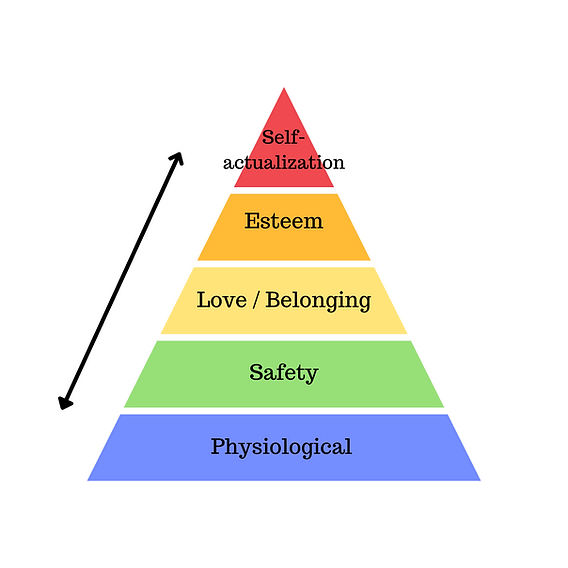
The other day, I was watching some documentary film on Netflix, the name of which escapes me completely for the moment, but there was this professor of psychology from some famous university, never mind from where and his name, who was going on endlessly about Maslow’s Hierarchy of Needs. On the blackboard, a white blackboard (top that for a contradiction in terms), was a triangle with some horizontal lines and other unintelligible stuff chalked (felt-penned) on it. The fact of the matter is I did not even elect to watch this programme. Maslow was a closed book to me as was his hierarchy of needs. What Maslow needs is his business. I had needs of my own to worry about. The fact is, I was hunting for a documentary on rock icon Bruce Springsteen, which had received rave reviews. However, while surfing, this bespectacled, pale, bald grey-suited academic hove into view. There was something compelling about him and I thought, why not I stay with him for a couple of minutes, just to see what he was babbling on about, before moving on to ‘Bruce the Boss’ who was going to explain to his fans why he deeply regretted being Born in the USA. To cut to the chase, I did not get to old Bruce at all. I got stuck with the professor and his theories on old Maslow. He held me in thrall. Let me tell you why.
Before I delve into the details of what Maslow propounded, I wish to make it clear that I had not abandoned the kinetic Springsteen altogether. I was determined to get back to his documentary at a later date. For the nonce however, I had no doubt the American idol had by now satisfied all his hierarchical needs till he was sick to the stomach. And then some. As a normal human being who could actually count how much money he had in the bank (won’t take more than two minutes, tops), I felt I could benefit by paying an attentive ear to what Mr. Abraham Maslow was trying to convey through the medium of this aging, anonymous university professor.
For a common or garden definition of Maslow’s theory, such that simple, unsullied minds like mine can follow it without having to resort to sophisticated search engines, this was the best definition I came across: ‘Maslow’s hierarchy of needs is a motivational theory in psychology comprising a five-tier model of human needs, often depicted as hierarchical levels within a pyramid. Needs lower down in the hierarchy must be satisfied before individuals can attend to needs higher up.’ One thing was clear to me. The pyramid was crucial to our understanding of Maslow’s theory. Without the pyramid, you could be whistling in the dark. Maslow owes a deep debt of gratitude to the ancient Egyptians, and he would have been the first to admit it, had someone bothered to ask him.
The five-tier model that Maslow holds so dear to his heart is key to our understanding of the great man’s theory. What I propose to do now is to go through each tier in brief detail and see where I stack up against them. You can try it yourself, dear reader. If this sounds like one of those Reader’s Digest’s ‘do-it-yourself’ articles pushing self-help and self-actualisation, the resemblance is purely coincidental. I will be speaking only for myself. With these few words.
Topping the charts, I tell a lie, we are starting from the bottom, so it should properly be ‘bottoming’ the charts or bringing up the rear, if you will pardon the expression. The bottom of the pyramid lists Physiological Needs to kick us off on Maslow’s merry, hierarchical jaunt. This involves essential biological requirements such as air, food and sleep, that keep the human body alive. Well, what do you know? What about sex for procreation or sowing one’s wild oats, Mr. Maslow? You left that out. Unless sleep covers that aspect as well. Surely, you are not the squeamish type? After all, long before you Sigmund Freud went on and on about the birds and the bees endlessly. Nevertheless, the human species has added that to the list of Physiological Needs and we haven’t looked back.
Maslow then moves on to Safety Needs. The desire for a predictable and secure life, including protection from danger, financial stability and health. Nowadays, there are those like Elon Musk and Donald Trump who may hold a contrary view, that predictability is passé, and not all that it is cracked up to be. Bring it on Mr. President – 50% tariff yesterday, 25% today, 10% tomorrow (if I am a good boy or if the almighty Supreme Court takes him to the cleaners). Just when you think ‘thank God that is over,’ he is back again, like the proverbial bad penny, with 126% tariff on solar panels! It is like playing Russian Roulette with Trump. Or should that be Putin? No one knows what is coming next, so say goodbye to financial stability which means our health is screwed and danger lurks just around the corner. All of which effectively blows Maslow’s theory out of the water.
Moving up the triangle, Maslow brings us to Love and Belongingness, namely, the emotional need for connection through friendships, intimacy and being part of a supportive group. Aha, so the great man slipped in the intimacy clause here. That’s clever. Sex does raise its ugly head after all, though Maslow is not overly fond of the three-letter word. As for the emotional need for connection through friendships, I have no quarrel with that. What about ‘being part of a supportive group?’ In America, people make millions organising support groups for alcoholics, druggies, sex offenders, broken marriage victims, manic depressives and just plain, run-of-the-mill criminals. In India, our families take care of all that. We don’t believe in paying extortionate sums of money to a shark who asks individuals in a darkened room to stand up, tell everybody else sitting round in a circle what creeps they have been and cry buckets before one of the other creeps puts a sympathetic arm round his shoulder. However, I hold firm in my contention that intimacy, a primordial impulse, and all that it stands for should have, at least in part, featured in the Physiological Needs category.
That hierarchical triangle of Maslow is now narrowing further as we move upwards and arrive at Esteem Needs – which is the pursuit of self-respect and the desire for status, recognition, and appreciation from the people around you. Yes, we have all craved peer group approval on achieving any kind of success, having suffered peer group pressure for long periods of time. Do not believe the recipient of some major award who blubs emotionally in front of his audience, ‘I could not be standing here with this beautiful statuette, without the help of each and every one of you. This belongs to you as much as it does to me.’ Balderdash! Worse than that is the awardee who says, ‘I cannot thank you all individually, but you know who you are.’ Baloney! You wanted it, you got it. You thanked and blew kisses to your beautiful wife, children, housemaid, Spotty the Dalmatian and your driver. Now kiss that statuette for the cameras and put it away in your bank locker for safe keeping.
Finally, Maslow takes us to the very top or tip of his isosceles triangle of hierarchies. Self- Actualisation, or the personal drive to reach your full potential, grow your talents and find true self-fulfilment. This is old hat for most of us in Bharat, that is India. We have been chasing gurus and swamis – some of them genuine and many of them charlatans – hoping to find something beyond our ken, that may or may not be there, a sort of spiritual chimera. In fact, many western celebrities such as The Beatles, Mia Farrow, Leonard Cohen, Allen Ginsberg et al., came to India, ‘seeking the truth.’ Only to discover smoke and mirrors. There is no evidence to suggest they found it, though The Beatles composed some nice songs while they meditated in Rishikesh with the help of the Maharishi Mahesh Yogi, supplemented by some uplifting weed and other banned substances! Then you realise you’re only very small, and life goes on within you and without you, the late Beatle George Harrison was moved to sing, in the raga Khamaj, with sitar, dilruba and tabla, sitting cross-legged in front of the Maharishi. Another guru, Acharya Rajneesh a.k.a. Osho, advocated the Kama Sutra route to salvation, but we will put that to one side for now. So, thanks Mr. Maslow but no thanks. When it comes to Self-Actualisation, we Indians are in a league of our own.
Now that I am done triangulating Abe Maslow’s theory of hierarchical needs, am I any the wiser? Sounds pretty basic to me, his theory. Perhaps therein lies the secret: his ability to make complex principles sound simple. Tell you what, I shall conclude this contemplation with my own take on a man who has been greatly vilified – Epstein. A man whose wants and needs, hierarchical or otherwise, knew no limits. However, I am fully on his side. Go on reader, mock me. Vilify me. O ye of little faith! Without Brian Epstein, we would have been deprived of The Beatles, which is almost tantamount to the end of the world, at least for some of us pimply, adolescents growing up in the 60s. Sadly, he took his own life and we shall never know why. Did someone say Jeffrey Epstein? Dear me, we have been at cross purposes. You mean the bloke who allegedly hanged himself in jail? Or was he mugged to death? The CCTV cameras conveniently went on the blink. Who knows? Who cares, other than Donald Trump, Bill Clinton, Bill Gates, Prince Andrew and a host of other celebs?
All said and done, it’s been A Hard Day’s Night doing this piece. Thank you, Abraham Maslow.
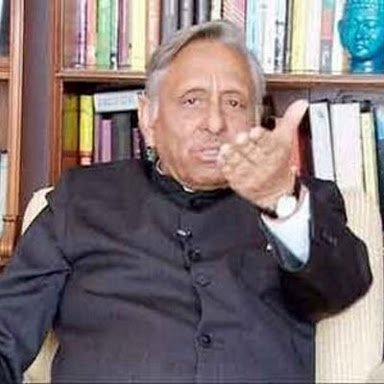
My friend, the redoubtable and irascible Congressman Mani Shankar Aiyar, has never taken a backward step when calling a spade a shovel, irrespective of the consequences. In the present instance, the spade (or shovel) is represented by one Pawan Khera, one of the Congress Party’s many spokespersons, who recently hove into Aiyar’s cross-hairs. While speaking to the media in Trivandrum, he called Khera, whose eyes incidentally are too closely set together for my comfort, a parrot, a ‘tuttoo’ meaning a lackey whose credentials to be the party’s spokesman beggars belief when there are so many others who could have done a much better job: Aiyar’s views, not mine. Aiyar was scathingly caustic about Khera and as far as he was concerned, he invited the devil to take the hindmost, in a manner of speaking.
Aiyar went so far as to describe the Congress party’s General Secretary, K.C. Venugopal as a ‘rowdy.’ He even directed his opprobrium at his party’s poster boy, Shashi Tharoor, characterising the suave politician as an ‘unprincipled careerist’ who is eyeing the foreign minister’s post in the BJP Government! To be fair, it must be said that Tharoor has been fairly even-handed in his utterances towards the ruling dispensation, giving debit or credit where it is due. Whew! Let me get my breath back. Clearly, Aiyar was pulling no punches, as is his wont, and the lascivious media lapped it all up. So far, the Congress high command has chosen the path of least resistance, turned the other cheek despite Aiyar having thrown down the gauntlet, but Khera could be smarting and looking for comeuppance, without the requisite arsenal, keeping the powder dry. The ruling BJP has no love lost for Aiyar either, but opportunism being the name of the game, they are having a field day rolling in the aisles with mirth at their nemesis’ (the Congress Party’s) discomfiture. The Germans have a word for it: Schadenfreude.
My own advice to Khera, not that he is remotely within my ambit of influence, is to quote evolutionary biologist and author Richard Dawkins who said of his late friend, the incandescent polemicist and atheist Christopher Hitchens, ‘If you are ever invited to debate with Christopher Hitchens, decline.’ In India Aiyar, whether you subscribe to his views or not (and not many do), is in a different league when it comes to verbal jousts: the enfant terrible of the Congress Party. In that sense, he is suis generis and many will say ‘thank God for that.’ Significantly, he describes himself as a Gandhian, Nehruvian, Rajivian but not a Rahulvian. Whether the Gandhian includes Indira or just the Mahatma is a matter for conjecture. So put that in your pipe and smoke it, Mr. Khera. Aiyar even stated, should he be shown the door by his party, that he would not hesitate to administer a swift farewell boot up the backside of the errant Khera. Aiyar’s ire is there for all to see in full glare. What you see is what you get. It all makes for great copy and the media lap it up like so many ravenous Cocker Spaniels slavering over a bowl of mince.
Which set me off on another train of thought altogether. I did some research to glean more instances of political leaders giving as good as they got from their rival opponents. And came up with a few nuggets.
Clement Freud, British broadcaster and politician, famously known as Sigmund Freud’s grandson, once described his Prime Minister Margret Thatcher as ‘Attila the Hen.’ There is no known reference to the Iron Lady’s response to Freud’s barb but sources close to her claimed she elected to opt for ‘the lofty ignore.’ Touching on arguably Britain’s most celebrated Prime Minister, she was never short of a witty barb herself, when it came to putting one over her opponents. Legend has it that it was the Soviets who nicknamed her the Iron Lady, with a tinge of sarcasm. Rather than taking umbrage, Thatcher embraced it by remarking, ‘If you want anything said, ask a man; if you want anything done, ask a woman.’ When, at a Conservative Party Conference, Thatcher was being pressurised to perform a U-tun on her right-wing economic policies, she memorably responded with characteristic hauteur, ‘The Lady’s not for turning,’ which was an approving nod to Christopher Fry’s 1950 comedy play, ‘The Lady’s not for Burning.’ And while taking the Labour Party head-on during the 1950s, campaigning as a callow 24-year-old, Margret Roberts, she went to the hustings and appealed to the voters with these memorable words, ‘Vote Right to keep what’s Left.’ Our own Prime Minister Narendra Modi, always on the lookout for a clever put down, might take a leaf out of Thatcher’s book. Suitably rendered in the vernacular, of course.
Speaking of iron ladies, India’s much beloved and equally reviled Prime Minister, Indira Gandhi did not lag behind, giving to her opponents as good as she got. If not quite in the Thatcher mould, she had her own calm and calculated way of putting people firmly in their place. Renowned for her sharp wit, icy composure and rapid, incisive repartee, she often used these skills to dominate political opponents and world leaders. Her ability to deliver ready retorts was considered a hallmark of her leadership. During a particularly tense encounter with her nemesis, U.S. Secretary of State Henry Kissinger, who urged her to display more patience, she cooly responded with a smile, ‘Thank you Mr. Secretary. Although India is a developing country, we possess a strong backbone.’ She even upbraided her party colleagues by issuing this stern homily, ‘There are two kinds of people, those who do the work and those who take the credit. Try to be in the first group, there is less competition there.’
Thatcher’s ‘burning’ parallel did not escape Indira Gandhi either, as she tellingly said, ‘All my games were political games. I was like Joan of Arc, perpetually being burned at the stake.’ Did she suffer from the ‘burning martyr’ syndrome? Not on your nelly. She was too strong and proud to feel sorry for herself. Those party leaders from her own flock who viewed her as a goongi gudiya (dumb doll) had to eat their own words. Finally, on being frequently compared, rather unfavourably with her father, she said, ‘My father was a statesman, I am a political woman. My father was a saint. I am not.’ Canonizing her father might have been a bit much but sadly, her nemesis was the infamous Emergency when she fell on her own sword, but that is another story.
Time was when Parliamentary debates, even when matters got really heated, always erred on the right side of civility and decorum. Those days are gone. We live in a witless age. We may have built a new home for our Parliament in the capital, but the proceedings, more often than not, are an absolute shambles, taking us back to the stone age. Rival parties outshout one another, members often rush to the well of the House, ironically waving a copy of the Constitution while indulging in these shenanigans. The other day, a clutch of ladies (if we can dignify them with that epithet) crowded round the Prime Minister, with what intent has been left to unsavoury speculation. It’s a wonder the Speaker of the House does not contemplate committing hara kiri in full glare of the House.
So I come back to where I started, namely Mani Shankar Aiyar. Love him or hate him, you cannot ignore him. That is amply evident the way the Indian media ravenously clung on to his every word against the beleaguered Congressman, Pawan Khera. And everyone else within firing distance. Furthermore, his podcasts with his wife Suneet – Mani ki Baat, Suneet ke Saath – and his regular column Mani-Talk provide more platforms for the apolitical to lap up his outspoken views. Say what you like about Aiyar, and who doesn’t, he provides immense value for your time.
His utterances are multilingually played on every available news channel, not to speak of YouTube, for all to ‘savour.’ Many of his active party members do not receive the kind of media ‘share of voice’ Aiyar garners. He has survived his ‘chaiwala’ and ‘neech aadmi’ jibes at our Prime Minister, to say nothing of some of his views on Pakistan. About himself he even went so far as to say in 2016 that he has been discarded by his party like ‘soiled tissue paper.’ Notwithstanding all this, he is still there, firing on all cylinders and shooting from the hip, providing endless entertainment for the populace, who are dead tired of having to bear with tired, old cliches day in and day out. If he leaves many of his party colleagues red-faced, put it down to collateral damage. Do I agree with everything Aiyar says? Not in the least, but as the French philosopher Voltaire was erroneously credited with saying, ‘I disapprove of what you say, but I will defend to the death your right to say it.’ For the record, that famous quote is attributed to someone else referring to Voltaire, but the French philosopher and nobleman garnered all the bragging rights. In that gut-wrenching 1964 film Becket, Henry II (Peter O’Toole), in a drunken stupor, rhetorically asks his cohorts, ‘Will no one rid me of this meddlesome priest?’ meaning his closest friend Becket, the Archbishop of Canterbury (Richard Burton). It will come as no surprise if some of our Congress apparatchiks are saying something similar of the indefatigable, combative octogenarian, Mani Shankar Aiyar. Like Abou Ben Adhem, may his tribe increase. Else, life will be so dull.

Those of you who are just out of university, engineering college or one of the many management institutes that dot our country, you must be working hard to bone up on a variety of subjects in preparation for your forthcoming written tests and viva voce that you will be confronted with. Suited, booted corporate executives and human resource consultants will descend in droves at your respective institutions to pluck such bright, low-hanging fruit as they can get their hands on. Word would have already spread that five-figure salaries and untold perquisites, even foreign postings, will be on offer to our budding Nooyis, Nadellas and Pichais. You can even buy books published by companies, ready reckoner they call it, that have scanned and sifted through every possible question on all manner of subjects and topics and made them available for you to rehearse and practice. Just make sure your full-sleeve shirt and grey trousers are well creased. This would apply equally to girls and their chosen attire. You should look and stay sober. And don’t spoil it all by failing to add a bit of spit and polish to your laced shoes. Slip-ons are a strict no-no. Blazer and tie are optional. Finally, stick a mint into your mouth, stand in front of a mirror and sing the National Anthem or Vande Mataram, just to get your voice in good shape. And don’t let all the current brouhaha over Vande Mataram deter you.
As you wait outside the interview room, nervously wiping your brow every now and then the understandable beads of perspiration on your forehead and upper lip, you keep mumbling imaginary answers to imaginary questions. When one of the interviewees, his ordeal concluded, walks out of the room, a whole bunch of you crowd around him hoping to get an idea of what the interrogation was like. ‘Sorry pals, I have been strictly told not to share anything with you, if prospects of my getting the job are worth anything. In case you haven’t noticed, they have installed CCTV cameras all over the place. So please, sorry. My lips are sealed.’ So saying he trots off to the canteen for a hot cuppa and a veg cutlet. His words leave the rest of us in a mystified state.
At last, your name is called. The wait is over. This is it. All those hours of burning the midnight oil is about to be put to its ultimate test. You are well primed to give as good as you get. Lead on, Macduff. You walk in with a heart for any fate. It is you against the two gentlemen and one lady on the opposite side. Fire away, you feel like saying. Instead, you merely mumble ‘Good morning,’ and sit yourself down, and take a sip of water from the glass placed in front of you.
From this point on, the narration is in the first person by the candidate.
‘Nervous?’ asks the centre-forward, who I guessed was probably the leader of the pack. A strange way to start an interview.
‘Not at all, Sir,’ I reply, wiping my brow again, my handkerchief by now quite soggy, displaying a level of confidence I did not feel.
‘So, you are not nervous. Brimming with confidence, are we?’
‘I don’t know about brimming, Sir. Quietly confident may be a more appropriate phrase.’ I was going to brazen it out, come what may.
‘Right then, let us kick things off. Shanti, would you like to take first strike?’
Shanti was a demure, confident lady, probably in her early 30s. An academic topper, I am sure. She made me feel comfortable, smiled disarmingly and spoke.
‘Tell me, you have scored very high marks in Company Law and Mathematics. Why do you think the Chief Minister of Uttar Pradesh is described as “Bulldozer Baba?’’’
Frankly, I did not know what to make of this question. A complete non sequitur. Deep waters. It was not a matter of whether I knew the answer or not. I could not fathom what the question had to do with my excellence in Company Law and Mathematics. Perhaps it was a trick question, just to keep me off-kilter. Anyhow, I kept a straight face and said, ‘Interesting question, Madam. As you must be aware, the Greek philosopher and polymath Pythagoras’ theorem states that in a right-angled triangle, the square of the hypotenuse is equal to the sum of the squares on the other two sides.’
The two male panellists both looked foxed but Shanti continued, unperturbed. ‘I see. And that principle of Pythagoras’ theorem chimes in with our Uttar Pradesh Chief Minister’s nick name of “Bulldozer Baba,” how exactly?’
Two can play the same game. I was beginning to enjoy this. ‘I am so glad you asked me that question, Madam. As you have so rightly noted, Company Law is also a subject I excelled in. Scored 88%, if I may say so myself. In which regard, it is my considered view that Salomon v A Salomon & Co Ltd [1897] AC 22 is widely regarded as the most famous case in company law, establishing the foundational principle of “separate legal personality”. The House of Lords ruled that a company is distinct from its shareholders, even if one person holds almost all shares, protecting owners from personal liability for company’s debts.’
I sat back in my straight-backed chair nonchalantly, looked a bit smug and took a long draught of the glass of aqua. It was not checkmate, but I had my black rook, knight and bishop threatening the white king with decimation. I reached for the carafe placed near me for a refill. It was going to be a long afternoon. I didn’t care about the outcome, which I was sure by now will go against me. The cut and thrust of this strange and unusual interview was affecting me like a drug and I wanted more of it.
The threesome in front of me exchanged furtive glances, got into a huddle and whispered sweet nothings to each other. This went on for a couple of minutes. When they took their seats again, the right winger, who had not spoken so far, found his voice.
‘Tell me young man, if Shakespeare were to appear in your dreams, and said something like “We are such stuff as dreams are made on; and our little life is rounded with a sleep,” how would you respond to him?’
They were clearly goading me. I decided to play along. ‘I don’t recall that I had listed English Literature as one of my subjects in college, but since you decided to take the Bard’s name in vain, I will rise to the challenge. I have read many authors who frequently quote Shakespeare, so my response to your query will be as follows. If Shakespeare appeared in my dreams, mouthing those unintelligible lines, I will look the great man in the eye and say, “By the pricking of my thumbs, something wicked this way comes.” That should be the cue for William to vanish in a puff of dreamy smoke. Then I wake up in a cold sweat, sit bold upright and utter that well-worn cinematic cliché, “Where am I?” I trust that answers your question.’
The three musketeers requested me to leave the room for a few minutes and wait outside. I think they went into another huddle. When I was summoned back and asked to resume my seat, the centre-forward cleared his throat and announced, ‘You are an unusual candidate. You did not get flustered by our deliberate filibustering, side-tracking questions. Instead, you played along with us, displaying an ironic and bizarre sense of humour. Your bio-data more than vouches for your academic competence. You came out with flying colours. You are selected. Congratulations.’
I was flabbergasted and was momentarily speechless. Then the words found utterance. ‘Thank you, Sirs and Madam. I shall await your formal letter of appointment. Meanwhile, I can only quote from Hamlet, ‘My necessaries are embark’d: farewell.’ So saying, I left the room in a flourish. I thought I distinctly heard one of them mutter behind my back, ‘If I don’t hear another Shakespearean quote, it will be perfectly all right with me.’
Expectedly, those waiting their turn, rushed towards me. ‘How did it go? What kind of questions did they ask?’
I replied calmly. ‘As you know, I am not supposed to share anything with you, but I can say this. If you are all up to speed with your Shakespeare, you stand a decent chance of making it.’
Baseball has the great advantage over cricket of being sooner ended. George Bernard Shaw.
I don’t write much about cricket these days. This is a one-off. There are several sound reasons for my growing disaffection. For starters I have gone clean off the game. I don’t watch it like I used to. There is just too much of it on television, and for the most part, T20 internationals, ODIs, IPL or franchise fixtures and even Test cricket, played by Kipling’s ‘flannelled fools’ appear to coalesce into each other all over the world, all round the year. Women’s cricket has caught on and makes for a refreshing change, but even the fair damsels are being overexposed: an absolute cinch for the advertising industry. Not forgetting the Under 19 tourneys that groom our future champs. The Bard may have exhorted one of his characters in Twelfth Night to say, referring to music, ‘Give me excess of it.’ As always, the great playwright nailed it. ‘Others abide our question but thou art free,’ about sums it up. That may have been kosher where music was concerned, but the plethora of cricket being hurled at us is truly beginning to pall. It has been gradually creeping up on us over the years. Of course, I speak for myself, and not for the teeming millions who flock to the grounds to watch Virat Kohli in his red and gold RCB outfit literally flexing his tattooed muscles, or the ageless Methuselah of Indian cricket, M.S. Dhoni striding in, all in yellow to face two balls and hit one of them, fingers crossed, out of the park all the way into the Bay of Bengal.
It was not always that way. When Test cricket first took hold of my imagination, and when I first went to watch this long-format, 5-day affair live at Chepauk in Madras or at the Eden Gardens in Calcutta, I could not sleep for days before the coin toss had even taken place. The frenzied air of expectancy and the rush of adrenaline led to my state of wide-eyed insomnia. As for rushing around the city in the hope of bagging a season ticket – begging, cajoling influential elders and standing in interminable queues in vain hopes of wrapping one’s hands around that precious piece of paper representing the keys to the kingdom, it was pretty much a lost cause. Then some angel in human shape would ring my father and say that he has one spare ticket and would he like to have it, face value mind, not at extortionate black-market rates. It was all a simple matter of economics. Demand exceeded supply by a considerable distance and the city went mad.
Live telecast was yet to establish itself in the 70s and early 80s and such broadcasts as did come our way were in grainy black and white when you were not sure if you were watching Gavaskar or Viswanath (they were of the same height and girth), essaying an elegant late cut. Or for that matter, that text book forward defensive block, bat and pad locked together, so valued by that Bible of cricket, the MCC Cricket Coaching Manual, an art form now one with the dodo. When I tell you that in that golden summer of 1983, while Kapil Dev and his underrated champions were slipping it across the mighty West Indians at Lord’s at the Prudential World Cup final, the telecast was interrupted at a vital moment of the game for Doordarshan’s news readers to bring us up to date on how India’s wheat procurement programme was coming along. When they took us back to the cricket, we had missed another three West Indian wickets that had fallen to the deceptive slow medium pace of the unsung Binny, Madan Lal and Amarnath! To say nothing of that monumental running catch by Kapil Dev to dismiss the legendary Viv Richards. Much wailing and gnashing of teeth ensued, thanks to Doordarshan’s misplaced obsession with wheat procurement, but to no avail. Such was the involvement and passion we youngsters and many oldsters, whose knowledge of the game went way back to Bradman, Hutton and Larwood, brought to bear on the game.
Nowadays, one learns that even the boundary ropes have been brought in a tad to make the grounds that much smaller so that even a mishit will clear the ropes on a regular basis. One’s heart goes out to the bowlers who toil tirelessly in what has basically become a batsman’s game. Sorry, I ought to have said batter’s game in keeping with the revised, gender-neutral vocab. Then again, old habits die hard. What is more, and it’s nothing to do with chauvinism, I just cannot abide by the term batter. A word I associate with the stuff used for making batter puddings, cakes, dosas and other such tasty comestibles. Not to mention, a battering ram. What is more, unless someone tells me otherwise, there is some inconsistency here. For instance, when commenting on the distaff side of cricket, the term batter was introduced to replace the earlier universally employed term, batsman. Understood. However, as far as I am aware, Smriti Mandhana, to take a name at random, would have pouched that excellent catch fielding at ‘third man’ and not ‘third person.’ No change of terminology indicated. Put that in your pipe and smoke it.
Apologies for slightly veering off course there, but I do believe that cricket being played all round the year to rake in the shekels while the going is good, is probably going to end up killing the goose that laid the golden egg. The masses will not agree with me playing Cassandra and the gate receipts might argue differently. That said, in India at any rate, Test match cricket survives at the behest of T20 cricket. Crowds do flock in for the longer format if around the third or fourth day, India are holding the upper hand and victory is drawing nigh. In recent years, even that is no more the case as we are being routinely thrashed black and blue by all and sundry in our own backyard. Ironically, when it comes to Test matches, Indian cricketers draw more crowds, thanks to our ubiquitous diaspora, in England and Australia.
Thus, for all the above reasons, I have become quite disenchanted with cricket. On the contrary, I cannot take my eyes off Grand Slam tennis. I am now officially a tennis buff. Bring on the brilliant young Turks, Alcaraz and Sinner and go breathless at their boundless energy, insane athleticism, shot making prowess and, above all, sportsmanship and charisma. When the two tykes are collectively given an affectionate portmanteau viz. Sincaraz, by the tennis cognoscenti, clearly you recognise something special. Lest I forget, how can I not talk about that other Methuselah, the age-defying wonder, Novak Djokovic? Even Sincaraz acknowledge their debt to this 39-year-old senior citizen from Serbia, who just keeps rolling along, like Ol’ Man River.
I have to conclude this ramble with a bit of humble pie to swallow. All that I said about my recently acquired aversion to the noble game of cricket holds true. However, earlier today, while surfing channels on my TV, I stopped at a live telecast of India taking on England in the final of the Under 19 World Cup being played in Harare. And there was this young genius, just shy of 15 summers, still wet behind the years, Vaibhav Sooryavanshi (remember the name), belting an astonishing 175 runs in 80 balls. He had already announced himself a couple of years ago at the IPL. Just my luck that I was able to watch only the last ten deliveries he faced, of which three of them sailed over the ropes and another couple raced serenely along the carpet for fours. The lad might be Sincaraz’s answer to cricket. In which case, I might have to selectively watch the game as and when he comes in to bat. Tell you what, if I were an Indian selector, I would blood him straight away into the senior Indian team. They did it with Tendulkar, didn’t they? You could accuse me of running with the hare and hunting with the hounds. Then again, we none of us is perfect.
On top of everything else, if there is one thing that will set my face against cricket, it will have to be all the geo-political shenanigans surrounding the game. An IPL franchise is compelled to show a Bangladesh cricketer the door because of that country’s political stance against India. Bangladesh (BCB) responds by pulling out of the ongoing T20 World Cup. Pakistan (PCB), in sympatico with their erstwhile countrymen, refuses to play India (BCCI) in the same tourney. It was bad enough declining to shake hands after they played each other in recent matches, but this latest show of petulant protest is taking it up several notches. Estimable cricket writer Sharda Ugra puts it rather well in a recent article, ‘The stew is smelling bad as ingredients have been tossed in without care: ICC’s weak governance, politically-attuned signalling from the BCCI, reactive posturing from BCB and PCB. Social media outrage is an accelerant onto an already high flame. And everybody knows who started the fire.’
The all-important, rhetorical question is, ‘Who started the fire?’ We can only look collectively at those who control the game and say, ‘If the cap fits, wear it.’ Are you still surprised I am keeping cricket at arm’s length these days? One Vaibhav Sooryavanshi does not a summer make.

From my earliest childhood days, when my younger sibling and I were in boarding school in Bangalore, going home for summer and winter holidays meant catching the overnight Madras Mail from Bangalore Cantonment Station, arriving at the crack of dawn in Madras Central, spending the day with our uncle and aunt, and then taking the long, two-night journey to Calcutta by the Howrah Mail to join our parents, and tearfully returning to Bangalore and school post vacation by the same route in reverse. The journey was nearly as long as that opening sentence. To those of the present generation, I am talking about the 60s when Chennai was Madras and Kolkata was Calcutta. As an aside, it is instructive to note that The Telegraph newspaper still stubbornly sticks to Calcutta on its masthead. Bully for it, say I.
During those long train journeys, I had plenty of time to ponder on the meaning of a metallic sign nailed to the laminate surface on top of the window in every compartment. The legend read, in prominent red capital letters, TO STOP TRAIN PULL CHAIN. Underneath the sign in much smaller letters were the words ‘Penalty for improper use Rs.250.’ This was at a time when I would have been travelling on that same route annually during the age of between 9 and 15. I am sure that sign still exists on our trains with a greatly enhanced penalty component. Initially, the exhortation meant nothing to me. It was just something that was in every compartment, like the rusty fan that never worked, and my innocent mind paid no attention to what it was trying to convey. That said, those words were embedded subliminally in my sub-conscious even if its implications eluded me. Incidentally, I was reminded of all this while watching a British crime serial that involved the main characters travelling by train in their green and pleasant land, and the camera zoomed in on that very sign. Only the ‘penalty for improper use’ was expressed in pounds sterling. No surprise there as they were the ones who first built the railways in India.
Back to my contemplation. After a while, still in my teens, I was moved to analysing the import of that statement from the railway authorities. Why would I wish to stop the train, I asked myself, and how would pulling the chain achieve the desired result? What was the intricate mechanism involved? What mystery lay behind yanking that chain in one compartment, resulting in the entire train coming to a juddering halt? The penalty part of it, which was printed in much smaller letters, escaped me completely. The conundrum consumed me as an existential question, a Brechtian dilemma. Not that I knew what existential or Brechtian dilemma meant at the time. At first, I considered the sign as a personal invitation to stop the train, some kind of sporting challenge and in my naivete, as children tend to do, thought the Rs.250 would be given as a reward to anyone who was able to achieve what most people felt was an impossible task. The word penalty did not register. ‘Uncle, Uncle,’ I asked the elderly gentleman sitting across me in the compartment, ‘Can you stop this train by pulling that chain?’ He replied that it should be possible but that he had never come across anyone who had actually tried it. He went on to elaborate that he had read somewhere that one person did pull the chain, just for a lark. The chain broke, the train did not stop and he ended up paying Rs.500 as the cost for replacing the chain.
As is the practice on our trains, the ticket inspector came along to inspect our tickets with his ticket-punching implement. My fellow traveller, the elderly gentleman, with a glint in his eye told the inspector his young friend (meaning me) wanted to know what would happen if he pulled the chain. The taciturn railway official, without saying a word, merely looked daggers at me as if to say, ‘Just try it kiddo, and see what happens.’ I kept mum after that and flatly refused to speak to my senior citizen for spilling the beans and implicating me. Sneaking, we called it in school; just not done. Some hours passed as we chugged along the vast, baked southern countryside, crossing Andhra Pradesh, when my neighbour offered me a boiled sweet. It was a sort of white flag and I decided not to be churlish, stopped sulking and accepted the sweet. Now that normal service had been resumed, in a manner of speaking, I decided to ask my much older friend an ineptly worded question. I must have been 12 years old.
‘Uncle, have you flown by plane before?’
He looked amused by my query. ‘You can’t fly by train, can you? Not by this slow coach, anyhow. Yes, my young friend, I have flown by plane, as you so colourfully put it. Why do you ask?’
‘I was just wondering. Is there a sign somewhere inside the plane saying “To Stop Plane Pull Chain?” Or pull or push a button or something else?’
My nameless uncle guffawed like he had never heard anything so amusing in his life. I got no answer but he proffered another boiled sweet and our relationship was back on an even keel. That boiled sweet represented a peace offering. Kids have this habit of asking silly questions, but how else were we to learn that you cannot stop a large, passenger aircraft in mid-flight.
Things have changed over the decades. Kids are no longer kids. They are more like pint-sized adults. They do not ask silly questions; a lost innocence. They clutch a tablet (not a medicinal pill but the gizmo with a screen) and are totally absorbed in its arcane secrets. Cut to 2025. I was flying from Bangalore to Chennai, a short haul. Sitting next to me was a 10-year-old girl absorbed in her black screen, playing some computer game or the other. I decided to make polite conversation.
‘Hullo young lady, what is your name?’ No answer. She must have been instructed not to speak to strange men. I try again. ‘You seem to be playing some interesting video game. What is it? Harry Potter and the Goblet of Fire?’ I thought she’d be impressed. Instead, she frowned and went ‘Tsk, tsk’ like Mr. Bean and fell silent again. I thought I should take the hint and proceed no further with this one-way conversation. Just then, the little squirt piped up.
‘Uncle, you won’t understand.’ Gosh, it speaks and what am I? An antediluvian relic? I did not actually use that term as she would not have understood. Instead of which I said, ‘Try me, why don’t you? I might surprise you.’
After another one of those interminable silences that pre-teen, preternatural kids are so expert at nowadays, she turned to me and said superciliously, ‘Uncle, you are so antediluvian. I am playing Little Big Planet Series on my tablet. For your information, in Little Big Planet, kids like me solve puzzles as Sackboy, a humanoid made out of burlap. Harry Potter is so yesterday. Duh!’
After that “duh” there was nothing more to say. She virtually dismissed me from her presence. I buried myself in my Times crossword puzzle. Structures that grow into flowers – 4 letters. Hmm, this needs thinking.
‘BUDS,’ cried the little girl. I didn’t even know she was peering into my folded newspaper. Abashed, I thanked her and wrote as dictated. For the first time, she smiled and offered me a green-coloured jujube candy – her version of my railway uncle’s boiled sweet of several decades ago.
I felt like stopping the plane, but there was no chain to pull. Or button to push. It was going to seem like a long flight despite the short haul, but there was a saving grace. I nailed Large, flightless Australian bird – 3 letters. I quickly wrote down EMU before my precocious companion shouted out the answer. Wordsworth it was, I think, who said The Child is Father of the Man. I now understand exactly what he meant.

 Suresh's Corner