Be yourself; Everyone else is already taken.
— Oscar Wilde.
This is the first post on my new blog. I’m just getting this new blog going, so stay tuned for more. Subscribe below to get notified when I post new updates.
Be yourself; Everyone else is already taken.
— Oscar Wilde.
This is the first post on my new blog. I’m just getting this new blog going, so stay tuned for more. Subscribe below to get notified when I post new updates.
There is a virus floating around in the air. It has been in existence for hundreds of years, but in more recent times, it has taken on the characteristics of an epidemic. It is called the book writing virus. A very prosaic term for a literary pursuit, I admit, but that was the best I could come up with on short order. I have been carrying this infection for the best part of the last few decades. For the most part the contagion has been lying dormant. Let me clarify. I have been writing columns for some considerable time, but to collate them and bring them out in book form was a more recent affliction and one that no vaccine has been able to rid me of. A book with a collection of columns, the toffee-nosed literati might aver, only technically qualifies to be called a book. I realise I am not a novelist and will not be admitted into the hallowed sanctum sanctorum of the authors’ exclusive club. I will have to live with that chip on my shoulder. Then again, Bernard Levin never wrote a novel. Neither did Christopher Hitchens. And they could turn out a pretty nifty sentence, when the muse was with them, which was nearly always. So there! I thumb my nose at the Cassandras.
Getting back to the virus, I had no idea of the number of people in India, forget about the rest of the world, who were burning the midnight oil, swotting and sweating over their word processors writing crime fiction, science fiction, romance, autobiographies, just biographies, learned tomes on classical music, fine art, history, politics, sports and economics – I could go on endlessly. For the moment, I shall leave aside the Narayans, Roys, Seths, Ghoshes, Guhas, Aiyars, Tharoors, to name just a soupçon of Indian writers for taste. There are dozens of others from the elite classes whose masterpieces adorn bookshelves of the good and the great all over the country. I am talking about humdrum wannabe sloggers, such as myself, who would ultimately like to shuffle off their mortal coil with breathless last words like, ‘Able was I. Ere I wrote some books.’ Not quite Napoleon’s palindromic, apocryphal utterance, but I will settle for that.
The result of all this quasi-literary navel gazing is that the writing bug is rapidly progressing from an epidemic to a pandemic. Part of the reason for this not entirely unwelcome situation is that it is now very easy to get a book published and placed online. That is due to the emergence of the relatively nascent ‘self-publishing’ industry. All you have to do is to pay them from a series of package options they provide and before you can say Atlas Shrugged, your book is ready online with Amazon and Flipkart. You dash off triumphant messages to three or four hundred contacts, all of whom send you congratulatory emojis and go completely silent afterwards, waiting for you to send them a complimentary copy. Which you then proceed to do to a select, trusted few who might have sent you books they have published. Noblesse oblige. However, there are a precious handful who fork out the measly cover price and order online. I grapple them to my soul with hoops of steel. The more conventional publishing bigwigs such as Penguin Random House, Harper Collins, Hachette and their ilk will take an age to ‘consider your submission’ before finally issuing a note of regret. ‘We love your style, but it won’t suit our core readers. Why don’t you turn your hand to writing a full-length novel?’ You know I never thought of that. I cannot blame them either as aspiring writers must be hammering down their doors with submissions 24 x 7. As one publisher said to me, ‘They are coming out of the woodwork like termites. We have had to employ a person just to send regret letters.’
That is precisely the gap that these self-publishing chappies have so shrewdly capitalised on and thus a thriving, business model is born. Thanks to this new avenue for budding authors, we are surrounded on every side by somebody or the other who has just published a book, is just on the verge of bringing out a book or is starting on a book, a ‘startling’ debut, and is still struggling to find the right idea for a plot. And don’t even get me started on AI. Fellows who couldn’t put two cogent sentences together are now budding Ernest Hemmingways! As I am very much a member of this clan of writers (not the AI wallahs) looking for bookworms to inveigle into our web, things can get quite interesting at literary soirees or even just a dinner at a mutual friend’s place.
You breeze into your pal’s home where he has invited a mixed gathering of guests, most of them unknown to you. You are introduced to the first person who happened to bump into you, in a manner of speaking.
‘Ah Samir, I hope you are being well looked after. Don’t spare the Scotch. Meet my friend Suresh, a retired advertising professional, now a serious blogger. Samir is heading a mutual fund house and is quite a nob on investment issues. I will leave the two of you to it.’ The host then waltzes off to mingle with another guest.
Samir opens the batting. ‘Advertising, eh? Did you know Alyque Padamsee? Great friend of mine. Went too early, sadly. He was my client with some pretty heavy portfolios. So, you are a serious blogger. What do you write about?’
Alyque lived to a ripe age of 90, but I let it pass. ‘I am serious about blogging but I write non-serious stuff. Humour, satire, that kind of thing. And yes, I once met Alyque fleetingly eons ago, but can’t really claim to have known him. By the way, since you ask, can I interest you in some of the books I have published? Ideal for passing an idle hour.’
Once I mentioned that I wrote books, this mutual fund honcho began to stir uneasily. Then he came up with a strong, counter move with his White Queen, blocking my black Bishop; the Nizmo-Indian defence. ‘Now that you mention it, I too have written a book that has been very well received in the business and financial world. It is called It’s only money, honey! I can send you a complimentary copy if you would spread the word amongst your friends.’
At which point we were both relieved to part company as the host returned with a ‘Come on Samir, you cannot dominate our ad man turned humourist. Let’s all circulate, shall we?’
I then strolled aimlessly and pronged a Galouti Kebab as a waiter passed by with some comestibles. As I was savouring this delicacy, a young lady stopped me and said, ‘I don’t think we’ve met. I am Sheila. I am what is known as an impresario. You know, I sign up prominent musicians, artists and so on with lucrative contracts for organising events. And you?’
‘Good to meet you, Sheila. Myself Suresh, as they say in these parts. Yes, I do know what an impresario is. Must be an exciting job. I am retired now. Used to be a minor cog in the brand building business. Now I spend the evening of my life writing blogs of a trifling nature. I love music. Do let me know when one of your ‘clients’ is performing in this neck of the woods.’
‘I certainly will, but before that. I have just released a book titled Impressions of an Impresario. Someone like you, a writer of trifling blogs, will love it. Do check it out on Amazon. Do you do reviews?’
I thought of telling her about my new book but gave up on the idea. Everybody at this party was interested in selling his or her ‘new book.’ I quickly gulped down my fresh lime soda, stabbed at another Galouti Kebab, mmm, and made a beeline for mine host.
Found him, looking trapped, being buttonholed by a bearded bloke, who might have been a painter. ‘Sorry to interrupt but I must be off. Tummy trouble.’ The host accompanied me to the door. ‘Sorry about your tummy. You must have gorged on the Galouti Kebab. By the way, that bearded chap. He is a rising graphic artist. He has just released a lavish, coffee-table book, Grappling with Graphics. Only 1100 bucks. Buy one. He has fallen on hard times. Spent all his dough on the book.’
I was on the point of asking him if he gets a cut from all this, but merely thanked him, wished him good night and hightailed it to my car. As I turned on the ignition, the words of the polemicist, coruscatingly brilliant writer and speaker Christopher Hitchens, floated into my consciousness. ‘Everyone has a book inside them, which is exactly where it should, I think, in most cases, remain.’

Cockroaches come to the rescue of broken hearts. News item.
Declaration: I swear on the Bhagavad Gita that this piece was written at least five years before the Cockroach Janata Party was even a twinkle in the eyes of Dipke, Dass, Ranka, their associates and mentors. Any faint (virtually non-existent) resemblance to the CJP and its present activist programme is purely coincidental. For some strange reason, I did not post this piece. Now is a good time.
An inconspicuous news item caught my beady eye when I was riffling through my morning newspaper. The piece was headlined, ‘Britons can name a roach after their ex to mark V-Day.’ V for Valentine’s. My sense of intrigue and curiosity thus pricked, I carefully read through the piece, the sum and substance of which was that, if you are dreading the onset of Valentine’s Day because you’ve just split with the erstwhile love of your life, fret not. After all, Valentine’s Day is when young lovers are expected to go all schmaltzy, buying trinkets and baubles for their loved ones. Valentine e-cards are singeing internet lines all over the world, now that printed cards have become all but extinct. That song from the hit Broadway musical of the ‘50s, The King and I, ‘Hello, young lovers wherever you are, I hope your troubles are few,’ could very well have been the theme song for Valentine’s Day. Reverting to our news story, one which addresses sundered hearts as opposed to kindred spirits, an august body that goes by the name of Hemsley Conservation Centre (HCC) somewhere in the United Kingdom, is uniquely addressing those who have just separated from their loved ones.
The essence of the scheme is that HCC breeds cockroaches (it takes all sorts) for a noble cause. Let’s say you have just acrimoniously told your lover to take a long walk off a short pier. Rather than sitting at home, wringing your hands and moping, filled with angst, trying to figure out if arsenic is a better way to do yourself in than throwing yourself in front of a speeding truck or putting a bullet through your head, like the suicidal Richard Cory in Simon & Garfunkel’s eponymous song, help is at hand. You can go to HCC, select a particularly slimy cockroach, and name it after your recently estranged partner. All this for a measly £2. The report helpfully adds, ‘You can name one of the centre’s resident cockroaches after your ex to mark Valentine’s Day. Deciding against the option of adopting a cockroach, the Centre will allow broken-hearted singletons to put it all behind them using its ‘name a cockroach programme.’ A truly novel way of dealing with lovers’ tiffs. The monies collected will go towards a worthy cause, namely to fund projects at a zoo which HCC is associated with. And here I was, wondering why anybody in his right mind will want to breed cockroaches, of all things. It may be a delicacy in China, but seriously. Now I know why Kafka wrote Metamorphosis.
The obvious question then arises. Let’s say an impressionable girl has been hornswoggled by her two-timing boyfriend, who ups and scoots off with another girl, leaving our poor Jane bereft and feeling sorry for herself. That’s the wrong way to go about things, young Jane. All you need to do is trot off to HCC’s nearest branch, identify a particularly slithery male roach and name it after your ex-boyfriend, the odious John. Experts at the facility will help you distinguish between a male and female roach, in case you were wondering. You can then pay frequent visits to the centre, where John the roach will be brought to you in a little box. You can feast your angry eyes on him and call him all the vilest names you can think of. Get it off your chest. For an additional £3, John will be set free, thus enabling you to stamp the scurrying insect to oblivion and scraped off the floor. The exercise can also be done in reverse if the victim is a boy, jilted by a glad-eyed Jezebel.
The matter has come to the notice of Indian authorities, who are seriously considering adapting the idea to our peculiar needs. Time was in our traditional country, once you tied the knot and took your wedded wows, no power on earth could come in the way of the couple staying married ‘till death do them part.’ Though why anyone should stick by one’s spouse if things have gone base over apex is a fit subject for another discussion. For now, let us focus on cockroaches, an insect which flourishes in a tropical country such as ours, along with lizards, beetles, bugs and other nocturnal creatures that infest our kitchens and toilets in gay profusion.
I say this in the light of the fact that India’s young boys and girls are frequently seen in flagrante delicto, only to separate disharmoniously on an idle whim. This has often led to violent behaviour brought about by irrational envy and sheer bloody-mindedness. Taking a leaf out of England’s HCC, instead of calling the pest control chappies, with their noxious gases, to obliterate the domestic insect kingdom, an enterprising NGO can find ways to capture these creatures and keep them in secure habitats. A small contribution of Rs.20 per cockroach, Rs.50 per lizard and Rs.100 per rodent, and the Indian equivalent of HCC will be in clover. What is more, given the relentless reproductive capabilities of these creatures, the lizards will keep eating the cockroaches, the rats will eat the lizards, and the resident cats will feast on the lizards and the rats. It will be an unique self-balancing population programme.
Imagine how India’s young lovebirds will vent their spleen over a quarrel. The spurned Asha will traipse off to the nearest branch of the India Conservation Centre (ICC), place Rs.20 at the counter and wait for cockroach Rajesh to be brought to her, and she can yell and scream, à la Hemamalini or Asha Parekh, ‘kutthe, kameene’ (a strange way to address a cockroach, I grant you and a gross insult to our canine chums) to her heart’s content at this heel of a boyfriend-turned-roach, Rajesh. What relief, what joy! If her budget runs to Rs.50 or even Rs.100, she can watch the rat Rajesh being consumed by Billy the cat. I apologise if all this sounds macabre and Edgar Allan Poe-ish, but needs must. As Poe himself wrote, ‘Sleep, those little slices of death; oh how I loathe them.’
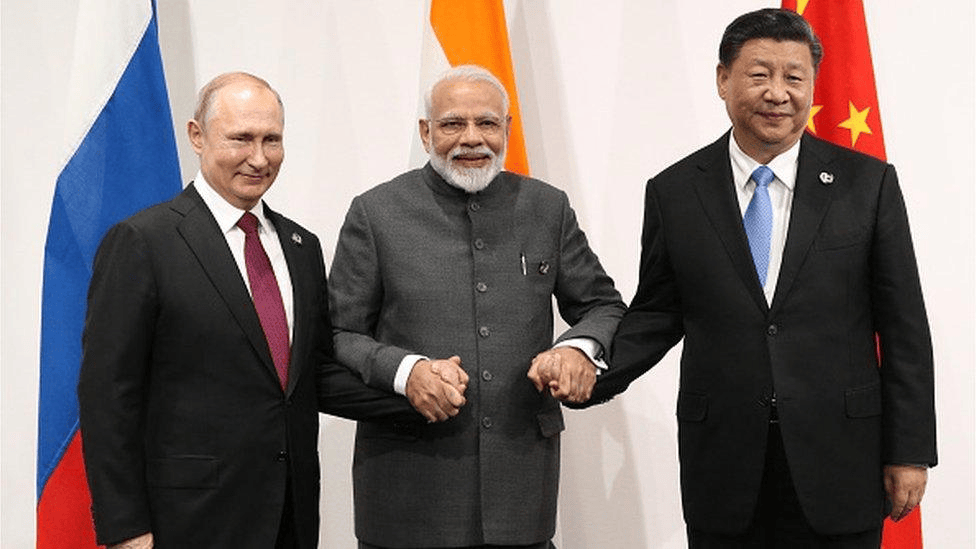
I have decided to send a brief open letter to our political masters, at home and across the globe, who play an important role in shaping our destinies, bar one who is not yet a master but hopes to become one. I do not expect to receive a reply from any of them. I do not even expect a single one of these missives to be read. I am just happy that they are placed on record and at some distant future date, some assiduous historian might come across them and decide to include them, or some part of them, in his or her own recounting of the years gone by.
India’s Prime Minister Narendra Modi
Dear Prime Minister Modi,
The talk everywhere, across the country and on our media channels and podcasts is about when you are planning to put in your papers prematurely. Those who support you and they are legion, while not wishing to see you go, feel that age must catch up sooner than later, and the country must face the inevitable. The bigger talk is around who will be anointed as your successor. The smart money is on the saffron-robed monk who is presently controlling the affairs of India’s largest, bellwether state, Uttar Pradesh. This could leave some of your other senior cabinet colleagues and aspirants somewhat red-faced but needs must. Much will also depend on what your spiritual masters in Nagpur might have to say about the whole business. Speculation is also rife that you might stay the course and go the distance till 2029, and put your hand up again for a 4th term. Oh, what joy! Either way, the suspense is killing us. Please put us out of our misery. The nation wants to know.
Yours with much respect.
India’s Leader of the Opposition Rahul Gandhi
Dear Shri Rahul Gandhi,
Are you not getting fed to the back teeth being constantly addressed as Pappu and those inimical to your interests urging you to settle down with your mother somewhere in Italy? You have been putting up a brave front, crying hoarse every day against the present dispensation, so much so that you appear to have developed a permanent hoarse, sore throat. While your visits to the gym and daily fitness regimen have ensured that your tight, white tee-shirt shows your muscles and abs to your best advantage (no flab), the man with the 55” chest sitting across you in the treasury benches seems to be besting you in the jousts. You mock him daily but for now, he has definitely put the mockers on you. We common citizens would dearly love to have a strong, virile opposition. Perhaps more success will come your way if you spent more time inside Parliament rather than outside it.
Here’s wishing more power to your muscular elbow.
America’s President Donald Trump
Dear President Trump,
No American President in living memory has so completely invaded the minds, if not the hearts of the populace of almost the entire world. You may take that as a compliment, as you doubtless will, even if I meant something entirely different altogether. The God complex has you in its thrall. Speaking of invading, with your recent ‘capture’ of Greenland, hot on the heels of all but taking over Venezuela, and Cuba very much in your crosshairs, you are fast becoming the new-age imperialist, a title vacated by your friends in Great Britain. Iran is proving to be a thorn in your side, the promised two-week war might well be prolonged into a two-year war while Netanyahu refuses to play ball at your beck and call. China and Russia are also keeping a wary eye on you. The battle for the Strait of Hormuz is not quite as straightforward as it first seemed. Talk about pouring oil on troubled waters! As they say, into each life a little rain must fall.
Then again, all else failing, you always have your tariffs to fall back on. We in India are not losing too much sleep as you threaten tariff increases on a daily basis; a bit like crying wolf. In India, the word taareef means praise which we are unable to heap on you until such time as you stop raking up tariffs with every breath you take. We thrive on adversity. You need to worry about those up-coming mid-term polls in your country. Those results might well upend some of your grand plans for world dominance. Take a break, Mr. President, a very long one.
With best wishes.
Prime Minister of the United Kingdom, Andy Burnham.
Dear Prime Minister Burnham,
Before addressing this mail, I had to look up Google to ascertain your exact name. Time was when you could wake me up in the dead of night and I would unerringly name the then PM of the British Isles and Northern Ireland. After all, your forefathers, more than four actually, came to visit us in India over 200 years ago, lapped up our traditional hospitality and decided to stay on for an extended and unspecified period. The guests who came to dinner partook of a royal feast while teaching the natives English. When you finally decided in 1947 that you had more than overstayed your welcome, you divided our country on religious lines, a heavy price that we are still paying. As you left, you divvied up most of our wealth amongst yourselves. The Koh-i-noor sparkles in the Tower of London and still rankles in India. Things have now come full circle and the net result is, you have been changing Prime Ministers like babies’ nappies in double quick time. So please forgive me if I could not readily recollect your name, Mr. Burnham. I know that we in India still look fondly towards Britain (as a tourist destination) and that I cannot throw a stone anywhere in London without beaning a curry joint. So all is well. I wish you well as you navigate choppy waters with Big Brother Trump and other friends and enemies in Europe. You are a seafaring nation, after all.
All the best, Mr. Burnham and may your tenure last longer than some of your recent predecessors managed.
Russian President Vladimir Putin
Dear President Putin,
To the public at large, you seem a man of few words. On the rare occasions when we hear you speak, an interpreter provides us the import of your words in a language we can follow. Since your face is mostly impassive, we are not even sure if the interpreter is only telling us what he has been schooled to say. We think you are a friend of India’s. We buy a great deal of oil and gas from you, much to you-know-who’s immense displeasure. The tariff threat is an ever-present Sword of Damocles hanging over both our heads. However, if push comes to shove, we are the ones who will get it in the neck as Uncle Sam is heavily dependent on you for all kinds of other materials. He knows which side his bread is buttered on. In a sense, you could be having your cake and eating it too. Meanwhile, please find a way to mend fences with Ukraine or end the war expeditiously. Zelensky should go back to doing stand-up comedy. As the song goes, War. What is it good for? Absolutely nothing. Our PM Modi is there to lend a helping hand. That’s what friends are for, in the words of another song.
Vsego khoroshego, Mr. President.
President of the People’s Republic of China, Xi Jinping
Dear President Xi Jinping,
Till the last minute we were not sure if you will be attending the recently held BRICS Summit in New Delhi. We were on tenterhooks. Your arrival was a matter of great significance and our Prime Minister’s ecstasy and relief knew no bounds. Social media was abuzz with talk about your falling ill and all manner of speculation was doing the rounds. It could not have been the vegetarian meal dished out as you skipped the official banquet and, we understand, brought your own chef and mobile kitchen from China. We are greatly relieved to know that you reached home safe and we will follow with great anticipation your upcoming meeting in Washington with President Trump. I am not sure if you have been exposed to American cowboy comics and films, where the Red Indian Big Chief would issue a stern warning to his comrades, ‘Beware. White man, he speak with forked tongue.’ Just a friendly caution.
Stay well, Sir.
Israeli Prime Minister Benjamin Netanyahu
Dear Prime Minister Netanyahu,
You have earned the reputation of not listening to anybody, not even to your dearest friend and ally, Donald Trump. However, the complex world of geopolitics enjoins upon you the need to tone down your aggression in order to secure a lasting peace in your region. I have addressed this mail to you only because of the simple fact that I could not have left you out. Also, I am told you are a friend of India and Mr. Modi. So, let us see you waving a white flag for a change for peace. Not for surrender. Thank you.
I have no doubt these open letters would be deleted / pulped by various underlings in the respective governments and will not see the light of day, leave alone reach their intended, very important recipients. No matter. I have done my duty as a responsible citizen of India and a concerned denizen of the world. Peace be with you.
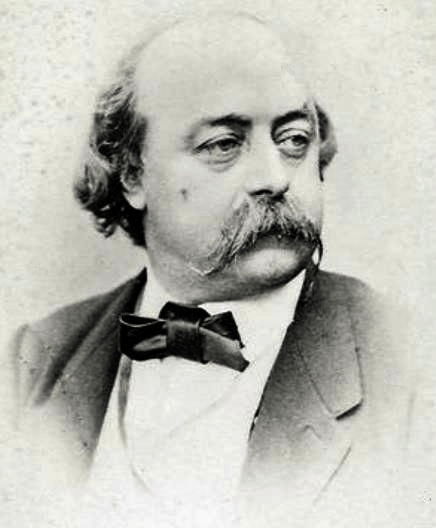
‘If you want to be happy, it is necessary not to be too intelligent.’ This shrewd quote, one that resonates completely with me, is attributed to 19th century French author, Gustave Flaubert (Madame Bovary). Many English writers have described Flaubert as a ‘stylist.’ On what grounds it is unclear to me because the Frenchman wrote in his own mellifluous tongue and those who could follow French, could doubtless relate to the stylistic nuances that he brought to his craft. However brilliant and lucid the English translation might have been, subtleties of the original are often lost in translation. This is not to downplay the vital role highly qualified translators play in bringing world literature into our homes in a language of our choice. The incandescent crime writer Dorothy L. Sayers (of Lord Peter Wimsey fame) whose seminal translation of Dante’s The Divine Comedy from the original Italian alone testifies to what I am saying. Lest you get the wrong impression, I must quickly add that the brilliance of The Divine Comedy, even in its English rendition, has eluded me for the most part. I only came across this epic poem, for poem it was, when I decided to research the line ‘Abandon hope, all ye who enter here.’ Many authors frequently employ this line when the hero finds himself in a hopeless, god-forsaken situation. Which aroused enough interest in me to try and read Dante’s monumental work. After the first canto, I had to abandon all hope. What is more I could divine no comedy, unless Dante was into black comedy. Very black.
To get back to Flaubert, he stirred up a hornet’s nest while questioning the value of being too intelligent, juxtaposed against the happiness quotient. The late Beatle John Lennon added to the confusion when he crooned, Happiness is a warm gun. Make of that what you will. I know some very sharp people, going back to my teenage days, who wore their thinking caps almost all day long. Their grey cells were swishing around like mad things. Oftentimes, they were to be found sitting somewhere all by themselves reading Ibsen, Camus or, god forbid, Dante. The nerds only put those books down when they were eating or sleeping. This had a direct bearing on their overall persona, which gave one the impression that the earth was going to swallow them up any minute. Manic depression, Dr. Sigmund Freud would have diagnosed the condition as. It is worth recording that these lugubrious specimens invariably topped the class and made us feel sorry for them. Happily, for the others that is, these worthies in school or college were in a minority. Which is stating the obvious as they were the only ones among the elite toppers.
I have some very good friends here in India and abroad who do a splendid job of translating Tamil epics into English so that the rest of the country and indeed the world, can enjoy literary and fictional works that would otherwise have been known only to those well-versed in the vernacular. Even I, a Tamilian, am ashamed to admit that I am unable to read my mother tongue with any degree of fluency. Haltingly yes, but that is not good enough to pore through an entire novel. Across languages therefore, the expert translator opens doors to learning and quality reading, a yeoman service for which readers should sing hosannas. To cite just one example, a hugely successful comic novella in Tamil, Washingtonil Thirumanam (A Wedding in Washington), by the legendary Savi was serialised in a popular Tamil weekly magazine, and was widely acclaimed as a comic masterpiece. In order to garner a wider readership, the novel was translated into English by Singapore-based financial analyst, Nandini Vijayaraghavan. On a specific query, she admitted it was a challenge to bring out the finer nuances of descriptions and dialogue that would have been unique to the vernacular, but to the uninitiated, you read the novel ‘straight’ and enjoyed it at its own level in English. From Tamil to English alone, there are numerous other titles doing the rounds, never mind all the others in polyglot India. Translating from one language to another in the world of publishing is a flourishing business and burgeoning by the day. Thank goodness for that. Otherwise, full many a flower would have been born to blush unseen, as the poet had it.
It would not have escaped the observant reader that I have veered off at a tangent. That can, at times, happen to a columnist. You start off by discussing Flaubert’s questioning the need to be intelligent in order to be happy and simply because he said it originally in his native French, you are all over the place. Before you can say excusez moi, you have taken a deep dive into the whole subject of linguistic translation and struggling to find your way back to first base. If you, dear reader, consider that to be a weakness, my weak response is to take refuge under the garb of ‘stream of consciousness.’ You know what I am talking about. Not that I am given to aimless literary perambulations as characterised by James Joyce’s protagonist Leopold Bloom in that monumental work, Ulysses.
Joyce, widely considered the father of the style, famously removed punctuation and standard syntax to capture deep subconscious and conscious states. He didn’t bat an eyelid while casually throwing off lines like, ‘I asked him with my eyes to ask again yes and then he asked me would I yes to say yes my mountain flower and first I put my arms around him yes’ Notice the absence of a comma or full stop. The book is full of lines like that. No wonder another votary of the stream of consciousness school, Virginia Woolf described Joyce’s Ulysses as ‘the work of a queasy undergraduate scratching his pimples.’ Professional jealousy? Or was it meant as a compliment? Who knows? And no wonder that Virginia Woolf herself saw fit to end her life by walking into a river with her coat pockets filled with heavy stones. She suffered from acute depression. Comes from reading too many sentences with no punctuations. As to Edward Albee’s theatrical question Who’s Afraid of Virgina Woolf? it would seem that she was mortally afraid of herself.
All of which, even with my not intending to do so, nicely comes back to how I started this piece. Serendipitous, some might call it. It is clear from some of the examples I have provided that extremely intelligent and sensitive people, particularly from a bygone age, were not very happy in their own skin, lending weight to Flaubert’s declaration. While not meaning to generalise, we cannot escape the fact that many highly driven people from the world of arts and literature were often down in the dumps. I have already talked about James Joyce and Virginia Woolf. Beethoven and Van Gogh had their own reasons for not being the life and soul of the party, notwithstanding that their musical and artistic legacy will be cherished as long as there is oxygen in the atmosphere. And here is the clincher. The man whose quote inspired this piece, Gustave Flaubert, whose style and technique was an inspiration to some of the greatest writers of our generation, himself died in tragic circumstances. A bachelor by choice, his self-avowed, guiding principle of leading a life of unbridled debauchery, in some strange way, aided his creativity. He certainly thought so. It also led to an early grave. Even though wine and women generally go together, it is reliably learned that alcohol never passed his lips. Coffee was his preferred poison.
Times have changed. Today’s brilliant minds lead, for the most part, well-regulated, healthy lives and they prudently salt away their well-gotten gains in secure, high-yielding investments. If Flaubert were alive to see this, he would have expressed great surprise, and even concern, at how happy these successful, intelligent folk seem to be. Or as he himself might have put it in his contrarian style, ‘Happiness is a monstrosity! Punished are those who seek it.’
The term ‘gig workers’ is derived from a jazz-age slang. In the 1920s and 1930s, jazz players in the United States used ‘gig’ to describe a short-term booking or club date where they were paid per show.
In recent times, the term ‘gig workers’ has become an integral part of our lexicon. You cannot miss them even if you wanted to. They ring your doorbell on a daily basis, delivering provisions from Big Basket, pizzas from Dominos, medicines from your neighbouring medico, couriers depositing things you had forgotten you had ordered the previous week (‘Lizard repellent? Moi?’) and unwanted notices from the Income Tax Department. Not to forget the lady who supplies vegetables from just a block away and charges a sinful premium for the service. As a retired pensioner, a pitiful dole I might add, having to trudge up to the front door to collect the stuff at least nine or ten times a day takes care of my intended, but largely ignored, Tai Chi walking regimen. And here’s the thing. For some inscrutable reason, they prefer the afternoon slots, these delivery chappies. My post prandial nap has been shot to pieces.
They are omnipresent, these gig workers. If they are in your face, quite literally, at your doorstep, they are all over the streets, dominating our chaotic traffic conditions as you attempt to wend your weary way through the jams in your jalopy. They whiz past, the gig demons, on their two-wheelers bearing bold legends on their overalls – Swiggy, Zomato, Big Basket, Dominos, Porter, the ubiquitous Amazon and several lesser-known brands. (Nagarjuna’s biryani is to die for, claim some devotees). They twist, turn and swerve dangerously, constantly following the ‘location’ on their mobile GPS to get to their destinations in double quick time. Bonuses and penalties are involved for timely or tardy deliveries. If that causes a few aged drivers missing a heartbeat or climbing the nearest pavement, ah well, that just goes with the territory. When they are not tearing down our pot-holed roads as if getting in tune for the MotoGP World Championship, they congregate in clusters at various street corners, smoking, watching videos on their hand-held or just gossiping while awaiting instructions for their next port of call.
This is not intended to be a rant against gig workers. They contribute enormously to keep the wheels of commerce well-oiled in our frenetic, post-Covid world, where more of the working generation order food in preference to cooking at home. In fact, the government’s statistics on employment would look more flattering if they could take into account all these workers from what is loosely termed ‘the unorganised sector.’ After all, the ruling dispensation receives flak on a daily basis on this score alone from the opposition parties and other bleeding hearts.
That said, it would help if some sort of training in communicating with customers is imparted to these youngsters who earn their daily wages in pretty forbidding infrastructural and climatic conditions. Once in a rare while, you are likely to come across a specimen who can understand clearly what it is you are trying to convey and provide an intelligent reply. That is a rarity. For the most part, my conversation with the average delivery individual will proceed something on these lines.
As I open the door and stick my hand out to collect whatever it is that the fellow is bringing, he pauses and mutters those three deadly letters of the English alphabet. ‘OTP’ he barks. This was a new one on me. Delivery boys didn’t ask for one-time passwords previously.
‘Why OTP? Can’t you just give me that packet which is clearly addressed to me?’
‘OTP,’ he repeats unyieldingly, clearly indicating he won’t budge otherwise. He also appeared to limit his conversational method to parroting that one, single utterance: OTP. Like some mantra.
I went in and brought my mobile phone and could find no message from anyone having sent me those magic digits that could have ended this impasse. I tried again with this stubborn courier from whom a mule could have taken its correspondence course. There was also a language problem. English, Tamil, Hindi, broken Kannada, he received them all with the same indifference. I even tried my rusty Bengali but to no avail. Swahili was out of the question. Maybe he was one of those recruits with special needs? I couldn’t tell. If so, I ought to have been more sympathetic and patient.
‘No OTP’ I said, flashing my mobile at him and employing his own staccato lingo. He then moved away from me and called someone, probably his superior and muttered something I was unable to follow. Then he came back to me and said triumphantly, ‘Now OTP.’ I stared at my intransigent friend, stared at my mobile and waited. Poor signal. The story of our lives. Finally, my mobile lit up and a four-digit number flashed across the screen. I turned the phone towards my monosyllabic visitor’s face. He squinted at it suspiciously, as if I was pulling a fast one on him, punched those numbers on his mobile and waited. Another 30 seconds passed while we continued the staring game with each other. Finally, a ‘ping’ sounded on his wretched instrument. He thrust the packet at me, face wreathed in smiles and was off like a jack rabbit. No thank you, no sorry, nothing. I slammed the door, tore opened the packet. It was an in-house promotional magazine from a television brand. The entire OTP drama for this! Much ado about nothing. For all the trouble I went through being roused at 3 pm, I should have at least received a penalty notice from the Income Tax Department!
As if all this weren’t bad enough, at times you are faced with the bloke who has the wrong address or flat number but decided to pin the tail on the donkey at my door. Naturally, I was not amused.
‘Hullo, this parcel is for one Mr. Anil Kashyap, apartment number 705, Rose Garden Complex. Can you read what’s written on the brass plate on my door? S. Subrahmanyan, 1304. And this is not the Rose Garden Complex. Wrong on all three counts. And yet you rang the bell. Just took a random chance, did you?’
He looked rattled for a minute or so, then recovered. ‘Sir, but you have got OTP?’
Here we go again, with the OTP circus. ‘No bhaiyya, I have not got OTP. Nor will I get OTP if you waited all day long. The cows won’t come home. Not here. Try Mr. Anil Kashyap at the Rose Garden Complex. The cows have all gathered there for a convention.’ He looked alarmed, clearly concluding that I had flipped my lid, banging on about cows coming home. He started to say something but I had slammed the door on him.
I had some very nasty things to say to my security chaps at the gate as to how they could confuse Rose Garden Complex with Oakwood Apartments and allow these misguided poops to have the run of our building, knocking on whichever door that took their fancy. The security guy said he was sorry, but there was a new trainee at the gate, hence the confusion. So, what else is new? It was hardly a satisfactory explanation but I cautioned him that if this happened again, he and his team had better look for a job at the Rose Garden Complex, evidently a safe haven for cows and ‘cow rakshaks.’
Life was so much easier when the postman simply slotted the mail into your letterbox, while you trotted off to the market or shops to buy vegetables and provisions and nobody ever asked you for an OTP. The only thing that woke you up from your afternoon siesta was the blissful gurgling sounds and aroma of the steam going off from the coffee percolator. If, by some strange chance, a letter was wrongly placed in your box, you could always overwrite on the envelope, Return to Sender, address unknown, no such number, no such zone, as Elvis Presley did. And the postman would just take it back from your letter box and have it sent on. Progress, eh? That is strictly for the birds.
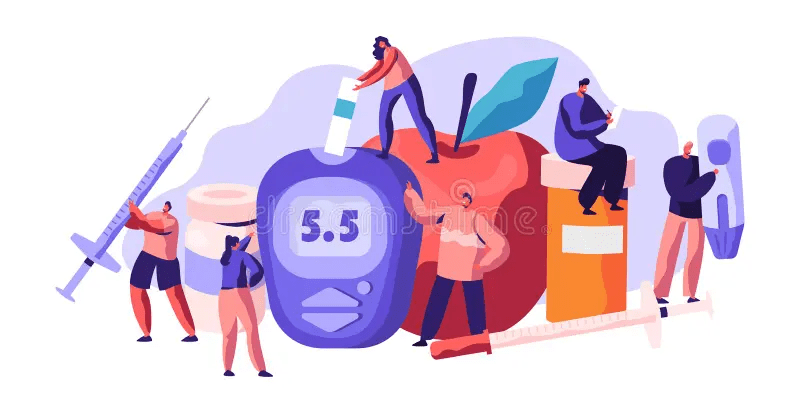
Laughter is the best medicine – unless you’re diabetic, then insulin comes pretty high on the list. British comedian Jasper Carrott.
Diabetics are up in arms. At least, this one is, if this one is at all a diabetic and that is the moot point. Which is the main reason why my arms are up in, pardon the clumsy coinage. Time was when doctors looked at a patient’s blood report, raised their eyebrows and firmly told the patient to knock off sugar, carbs, oil and just about anything else that made life barely supportable. Nowadays things are a bit different. You visit a mammoth hospital with your blood report, having taken prior appointment. Your friendly, neighbourhood GP is a rapidly vanishing breed, if not altogether extinct. After waiting for close to an hour and a half, you are ushered in to consult with the diabetologist.
An assistant trainee medical student, usually a girl barely past her teens, shoves a thermometer into your mouth, takes your blood pressure and pulse readings, checks you out for height and weight and places the duly notated paper on top of a stack of other folders at the senior doctor’s table. Incidentally, what has height got to do with anything? You stop growing once you’ve got your driving license. As for the thermometer, it is my considered view that the fever-measurer being pushed into your mouth is to prevent you from engaging in any form of small talk, a nervous habit most patients are prone to. Placing it under your armpit is now old hat unless you are a newborn baby. You feel like asking her why she can’t just feel your forehead, absorb the resultant coolth and scribble 98.2 or simply ‘normal’ on her A4 sheet.
Anyhow, you thank her while resisting the temptation to tell her that a smile won’t go unappreciated. While these procedures are being completed, the senior doctor is finishing up with another patient who went in before you. You are the 12th patient that morning which does nothing to improve the doctor’s mood. As patient no.11, an elderly lady of uncertain age shuffles out of the room, you take your seat in front of the man who has all but written the book on ‘Sugar. Do We Really Need It?’
While you are debating whether to wish the doctor good morning, he is still busy writing up his brief report on the earlier patient. Finally, he looks up at you while the young trainee girl points to the paper on top of the pile. He then rapid-reads your report and says, ‘Hmmm.’ Which can mean anything but not anything positive.
I decide to be civil. ‘Good morning, Doctor, so what is the verdict?’
He was not amused. ‘Look, this is not a court and I am not a judge.’
‘Sorry Doc, I was just trying to keep matters on an even keel. Do carry on.’
He appeared somewhat mollified. ‘I do not like your blood report readings.’
‘Quite so, I am not a great fan of it myself. A bit grim, are they, those numbers?’
‘That is an understatement. Very grim. There are a whole bunch of things you need to do if you are not to become a basket case very soon.’ Don’t they teach doctors how to talk to patients?
‘First of all, you need to completely cut out sugar from your diet.’
Of course, I knew that was coming. A body blow. ‘You don’t hold back, do you, Doc? Not a votary of leading into a subject gently. A right upper cut to start with. Were you a boxer in school?’ I considered addressing him, light-heartedly, as Dr. Killjoy, but thought better of it.
He did not see the funny side of it. Just my luck to run into an irascible doctor utterly devoid of humour. ‘Look, diabetes is not a joke. So please keep your wisecracks to yourself and listen carefully. If you know what’s good for you.’
‘Clearly Doc, you do not subscribe to Mary Poppins’ view on the sweetening agent. Remember? Just a spoonful of sugar helps the medicine go down. In a most delightful way.’ I didn’t actually sing it but it was a near thing.
I don’t think the doctor was born when Mary Poppins, via the dulcet tones of Julie Andrews, hit our screens. He was not impressed. ‘If you’ve quite finished your pantomime, can we get back to your diet?’
‘But Doctor, those numbers only indicate that I could be pre-diabetic. I freely admit I can’t tell my pancreas from my liver but I checked it out on Google. HbA1c 5.7. That’s just on the borderline, wouldn’t you say? And you have to factor my age in.’ No sooner had I blurted out those fateful words than I immediately wanted to take them back. The medicine man was livid. It was like taking a red rag to a bull.
‘Google! Ha!’ he barked. ‘Why didn’t you just stay at home and consult Dr. Google instead of wasting my time and your time driving all the way to this hospital? You are the seventh patient quoting Google at me. Honestly. I intend getting the administration to put up a giant poster at the entrance. Google is a four-letter word and banned from usage in this hospital.’ I resisted the temptation to tell him that literal-minded visitors will point out that Google is a six-letter word, but I let it go seeing as he was already frothing at the mouth.
‘My fervent apologies Doc, but surely you know that every single person nowadays is trawling through Google for anything from the latest cricket scores, Donald Trump’s shenanigans, the Sensex, deworming your pet and to various ways of treating throat allergies. Not to mention every other disease known and unknown to humankind. Ayurvedic, Homeopathic and Allopathic brands are swamping us online the moment we look up anything medicinal. It’s all very well for you to get hot under the collar about it, but Googling has become second nature to us. Like breathing in and breathing out. I bet you do a bit of Googling yourself when in doubt. Here, get a load of this. Diabetes was not discovered by a single person. Ancient Egyptian, Indian, and Greek physicians first documented the disease and its symptoms thousands of years ago. However, the modern medical breakthrough defining its treatment viz., insulin, was discovered in 1921 by Frederick Banting and Charles Best, along with John Macleod and James Collip. I wouldn’t have known all that but for Dr. Google.’ I was really pushing the envelope. I quickly apologised for showboating and being needlessly verbose. I could sense the trainee girl getting itchy fingers with her thermometer.
This time, to my pleasant surprise, the Doctor kept his cool but only just. I thought I detected a patronising smile. ‘Look, I understand what you are saying and the mobile phone is both a blessing and a curse. Let’s just call it quits on that score. Now getting back to your case, I think it is best if we ran a battery of tests before I start prescribing medication.’ Then he added casually, ‘You have insurance, I take it.’
Aha, now he was talking turkey but I was getting restive. ‘But Doc, surely you are the expert on diabetes. You have already condemned me to a spartan diet that will kill my taste buds forever. Just write out a prescription and I will be on my way. What more tests do you want me to undertake?’
He was not having any. ‘My friend, I have to make sure you have no other complication that your diabetes or if you insist, pre-diabetes, won’t aggravate even further. Diabetes is a very sly and insidious disease. People tend to be careless about it. One gulab jamun here, another chocolate pastry there and before you know it, they will be wheeling you here on a stretcher.’ An alarmist, if ever I came across one. He needed counselling.
‘So, what are these tests you are so keen on subjecting me to before I embark on a course of Metformin? Better still Doc, just ask young Florence Nightingale here to email them to me and I will fix an appointment and come again for the MRI, endoscopy, colonoscopy or whatever form of torture you wish to put me through. As for the Scrooges in the insurance companies coughing up, that’s a laugh. I have guests coming home, so I have to make tracks. Have a good day Doc, and don’t do anything I wouldn’t do.’
On that jaunty note, I traipsed out of the room and ran as fast as my legs would carry me. If that diabetologist thinks I am coming back to him, he’s got another think coming.
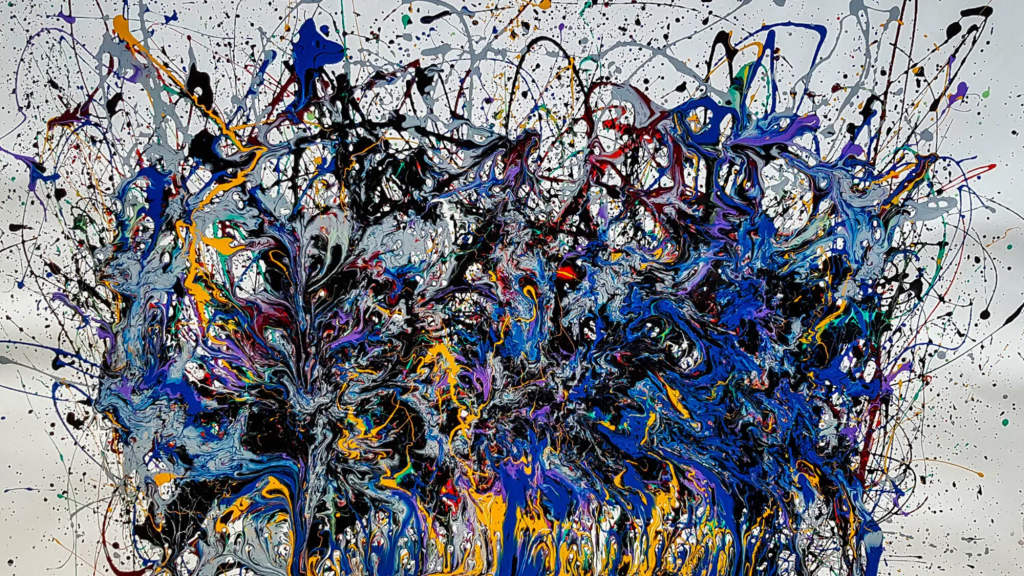
And then you get an artist says he doesn’t want to paint at all
He takes an empty canvas and sticks it on the wall. Dire Straits.
There are moments in one’s life when one can unwittingly enter into a conversation with a stranger and feel somewhat trapped. I say unwittingly because it was not my intention in the first place to attend an art exhibition many years ago in Calcutta. At the time I was more into jazz, rock and classical music concerts – Indian and western. Art exhibitions, be they paintings or sculptures left me largely unmoved. Not unlike one of those sculptures. My bad, to employ a present-day idiom, one that I abhor but needs must. All that changed later but that is another story. This particular exhibition of contemporary, modern art was by a young, up and coming Bengali artist, of whom I knew next to nothing. That was not the artist’s fault because I had not heard of too many Bengali artists at the time.
To be honest, I had not heard of too many artists, period. I was a philistine in these matters. I was surprised at the number of people who had turned up for the opening. I should not have been, surprised that is, as I had only a few weeks earlier heard about a replica of Rodin’s celebrated bronze masterpiece, The Thinker being shown at an art gallery where the crowds were so great they had to let in the art-loving throngs in instalments. Incidentally, this is very much a Calcutta characteristic – a Fellini or Bergman movie hits town and everyone goes bonkers. I was reliably informed that had they brought Rodin’s other famous if a tad risqué, sculpture in marble, The Kiss, matters might have gone completely out of hand. Lest you begin to conclude that philistine was too charitable a term to describe me, I had heard about Rodin. If only just.
Anyhow, a close, upper crust Bengali friend of mine who knew a thing or two about Rembrandt and Van Gogh, to say nothing of Vermeer and Monet, insisted I tag along with him to witness the works of this ‘most promising young painter’ from a remote corner of Calcutta. That was one of the first things I learned about promising or even established artists, particularly in the City of Joy. By definition they had to be very poor. Destitute almost. I have no idea why. The brochures handed out to us had several photographs showing the artist in question slaving away in darkness in a dingy hovel with only a kerosene lamp to throw a shaft of light on the subject. In fact, those photographs could themselves have qualified as serious works of art. I took this up with my friend prior to entering the exhibition hall.
‘Why are artists invariably shown to be living in abject poverty? It appears to be almost a sine qua non. Is it some kind of inverted snobbery?’
My friend was miffed. ‘Look, I know you prefer books to paintings but don’t throw Latin or whatever that was at me to impress. It’s all Greek to me. As to your question, art is all about suffering. You have to feel pain to produce something memorable.’
‘You mean to tell me that Van Gogh never experienced a day of happiness in his entire life? He seemed to have made a lot of people very happy. And very rich.’ I was being ironical. My friend did not get the irony.
‘You are right. Van Gogh was miserable all his life. He hid all his paintings under his bed, cut his left ear off and painted even that. Self-portrait with a bandage. He was depressed. So would I have been had I lopped off my left ear. He ‘selfied’ himself standing in front of a mirror. He finally died in penury. His brother found all the canvasses. The rest is history.’ The only time I had heard about Van Gogh was thanks to a beautiful song by Don McLean, Vincent.
Anyhow, my own views on the subject were somewhat mixed. ‘Mind you, I think poverty and artists are now a thing of the past. Our own M.F. Husain did very well for himself with those Madhuri Dixit interpretations. The Bollywood bombshell was Husain’s “ultimate muse.” Caused quite a stir, those Madhuri paintings. Like many artists, he had his eccentricities. His walking around our cities and villages barefoot was more an artistic affectation than anything else. He has been seen wearing a three-piece suit sans footwear of any kind! A walking art form, our Husain. I once, by sheer chance, ran into the bearded one in Russell Street in Calcutta one afternoon; no slippers. Husain that is, my feet were well-shod. I was so startled I froze, like one of Rodin’s statues. If I had not known any better, I would have dropped a 50p coin at his feet. In the early 70s, that was good money for a mendicant. However, Husain was certainly not down-at-heel, bare feet notwithstanding.’
Dear reader, the meaning of the word serendipity was brought home to me forcefully when that very evening, I was invited by a few friends to take in a movie at the New Empire in the city. The film’s name? Barefoot in the Park!
My exhibition guide was impressed. ‘For a guy who claims to be a philistine, you seem pretty well up on painters and their quirks. Enough of all that. For now, let us see what this young painter has to offer.’ So saying, we entered the main exhibition area, which was choc-a-bloc with all manner of people. The rich, the famous, the intellectuals, college students, art critics from the media and just a whole bunch of lay people such as myself. A brand of cheap red wine was being ‘trayed’ around. Plonk, I believe is the mot juste.
A brief diversion at this point. Bengalis often refer to pseudo-intellectuals, somewhat derisively, as aantel. You will come a cropper if you attempt to pronounce it as written. It is a corrupted or satirical adaptation of the French word intellectuel, or the English term intellectual, spoken with a pseudo-French flair. I mention this only because you are more than likely to bump into a fair share of aantels at any art exhibition in Calcutta. They will hold forth with ringing authority on the subtleties, symbolism and hidden meanings embedded in the canvasses on display. Frankly, there is no fun if you do not seriously engage with an aantel at an art event. That said, if you are buttonholed by one of them, they will not let go. You will experience that ‘being trapped by Coleridge’s Ancient Mariner’ feeling. You have been warned.
I speak with bitter experience. At some point in the evening, my companion pushed off in another direction. While I was rubbernecking over the arrivistes looking for him, an elderly gentleman, smoking a pipe smiled at me, stuck his hand out and announced himself in a baritone, Satyajit Ray kind of voice, ‘Mukerjea, no h and ending with jea.’ His no h and jea business had me groping. ‘And you are, young man?’
I was a young man then. Illogically, a Bob Dylan line came into my head. Ah, but I was so much older then, I’m younger than that now. These weird things happen at art exhibitions. Anyhow, I told him who I was while desperately seeking my absent friend. For want of something, anything, to say, I made bold and said, ‘Is smoking allowed here, Sir? Could taint the paints, yes?’
Mr. Mukerjea, with no h and jea, smiled benignly. ‘If you look carefully, you will observe the pipe is not lit. I just keep tamping down the tobacco. Will light up once I leave the hall. Force of habit. By the way, what do you make of Samiran’s works?’ He punctiliously pronounced the artist’s name, Shomeeron. ‘And one other thing. On no account should you touch the paintings,’ he added rather pompously. He needn’t have worried. I wouldn’t have touched them with the proverbial bargepole.
That was the first time I had become aware of the painter’s name. I was struggling for a response. Where the hell did that idiot pal of mine disappear to? ‘I haven’t given it much of a thought, Sir. Perhaps if I just took in a few more canvasses, I might be better placed to respond to your query.’
Mukerjea remained unfazed. He now held my left arm and did not look like letting go. I was well and truly in his clutches. ‘Never mind, I will give you my impression on Samiran’s unique style of impressionism.’
At which point he started droning on. I suspect he was already three large whiskies to the good before downing the exhibition wine for a chaser. He still held my arm tightly. He seemed unsteady on his feet and spoke haltingly, if not actually slurring. He was staring at one of the canvasses and said, ‘It hurts to look at it, doesn’t it? That is the acute pain of true genius.’ I turned to the painting in question and felt pain, the pain of not understanding the random blobs of paint. And the pain from my arm being held too tight by this inebriated aantel. He wasn’t quite finished. ‘The true avant-garde understood that form is a prison. Impressionism is the liberation of the retinal shudder.’ By now I was shuddering. Mercifully, just then my friend hove into view and saw my miserable plight. He appeared to know Mr. Mukerjea and gently held him by the waist and deposited the senile, old codger into the loving arms of a lady I took to be his unfortunate wife.
‘And not a moment too soon,’ I chided my friend. ‘I don’t know about you but I am catching the 2B double-decker straight home. Thanks for nothing. Next time I will drag you, kicking and screaming, to a 3-hour Carnatic vocal music concert and let’s see how you survive. Not a drop of wine on offer. Filter coffee, if you’re lucky. Good night.’
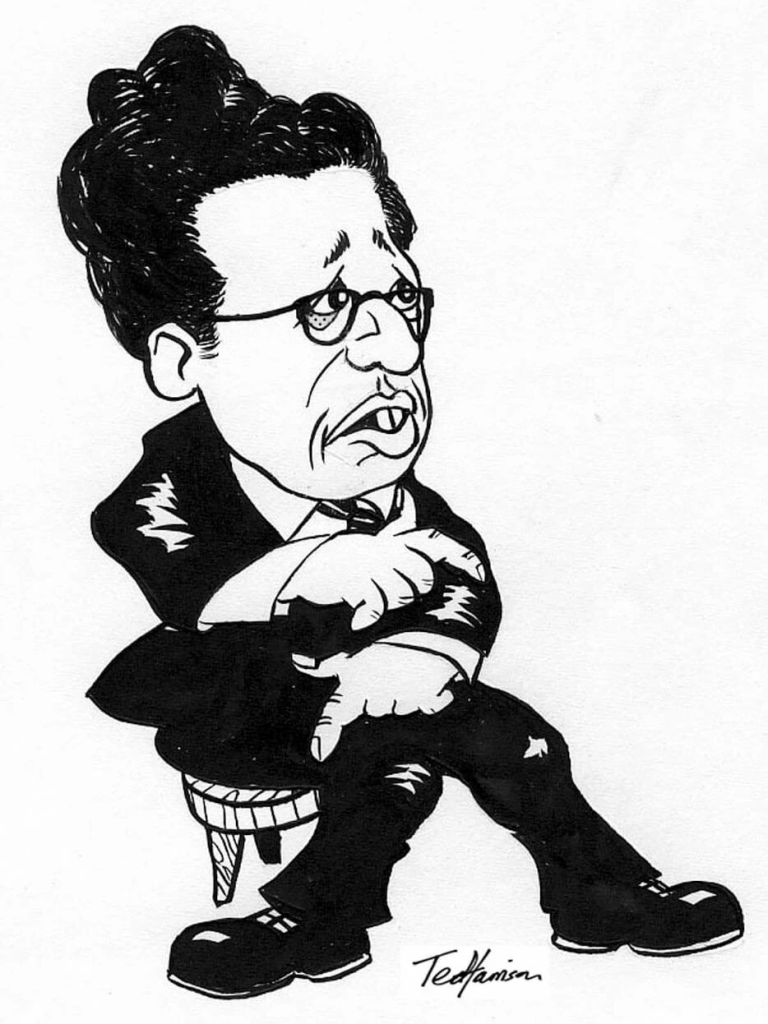
Humerus: The upper arm bone that runs from your shoulder to your elbow. Pronounced like the word humorous. Hence, the elbow area nearby is called the funny bone.
Every now and then, I keep getting asked by friends and by people online I do not know from Adam or Eve, why I don’t comment seriously on the volatile goings-on in our beloved motherland. Or, for that matter, on the perennial Mad Hatter’s Tea Party that is taking place in the Middle East, Iran, Israel, Russia, Ukraine and elsewhere, all masterminded by that maddest Mad Hatter of them all, that Fool on the Hill. It is not that I have never touched upon these issues. When I do, however, I merely inflict a glancing blow at them for a giggle and move on to issues that concern us, me at any rate, on a daily basis. Everyday things, as a friend pointed out. Apart from this, the fact is there are too many distinguished writers from the world of media, politics, bureaucracy, activism and various pressure groups who fill our pages and social media with learned observations on a daily basis. Thus, you have Modi bashers, Rahul Gandhi bashers, Trump bashers and bashers of lesser beings who carve up and occupy the available media space. That being the case, I refuse to go where angels fear to tread. I lack the heft. I may have said this before in a different context, but it bears repeating.
I am posting this on India’s 80th Independence Day. I shall make no more reference to it as all our newspapers are bulging with supplements and reams of articles which no one reads.
When I started my career in advertising several decades ago, I was taught the fundamental concept of brand positioning, the essence of which postulates the theory that you must look for a gap that exists in a product category either in and of itself, or about which claims have not been made by other competing brands. You then latch on to that gap and go to town with it. A marketing pundit in the 1940s named Rosser Reeves famously dubbed it the Unique Selling Proposition. To illustrate the concept in simple terms, all brands of toothpaste could contain a chemical called ‘hexachlorophene,’ but if no other brand has talked about it, you jump in and claim it for your own and shout as loud as you can from the rooftops – The red stripes contain hexachlorophene, thereby firmly shutting the door on any other brand, leaving them lamenting, ‘Why didn’t I think of that?’ The fact that your average housewife and her hubby haven’t the foggiest what hexachlorophene is, is neither here nor there. I must hasten to add here (before some jumped-up, know-all jackboots me) that hexachlorophene has since been banned by the FDA. I employed the example only to make a point. There are similar examples in other product categories but I have always rather fancied the red stripes. That is an oversimplification in defining brand positioning, but ‘tis enough, ‘twill serve.
Lest you are scratching your collective heads in puzzlement, I am not going barmy, prattling on about toothpaste and brand positioning. What has all this got to do with the price of fish, I hear you ask. Hold your horses. I was merely at pains to explain why I did not elect to join the merry bandwagon of political and social commentators who, in their own mellifluous ways, regale us every single day in print and podcasts with their deep insights and extraordinary powers of articulation to bring us varying points of view on why Modi is not good for Bharat and why Rahul Gandhi could be even worse for Bharat. Not forgetting why Donald Trump can be and is a disaster for the entire universe. I am caught in a cleft stick in which my lack of experience and totally inadequate depth of knowledge precludes me from sticking my oar in. Therefore, when I do mention these worthies, I merely touch upon them ever so lightly and move on to my metier. Which is to try and keep us all in good sprits during these vexed times in which we live. My modus operandi being to talk about ‘everyday things’ like visits to doctors, cars breaking down, crossing swords with tax authorities, running into interesting strangers on a flight, the agony and ecstasy of raising a Cocker Spaniel, ditto of playing the stock markets, straddling between Carnatic music and The Beatles, serendipitous meetings with the great and the good, and so on and so forth. All else failing, I have over seven decades of deposits at the Bank of Nostalgia to draw freely from; with interest.
That said, coming up with something burlesque to write about every week is not a joke. In any case, I am not awfully sold on ‘cracking’ jokes and resorting to overwrought puns and one-liners. I leave that to our stand-ups, who are so much the rage these days. At most, I am happy if I can extract a smile from my reader, and that is no laughing matter either. However, satirical humour brings with it its own dodgy pathway strewn with egg shells on which you need to tip-toe ever so carefully. Unless you happen to be one of those brave hearts who says, ‘I’ll write what I feel like and let the devil take the hindmost.’
And here’s the funny thing. As an almost completely unknown blogger, beavering away on one’s desktop in the privacy of one’s home, you can indulge in any amount of leg-pulling of the high and mighty without fear of retribution. Prime Ministers, Politicians, Royalty, Booker Prize Winners, Film and Sports Super Stars – bring them on. The more the merrier. They are all fair grist to the lampooner’s mill. Within acceptable limits of decency, of course. If anything, they are being treated far more harshly by commentators of great eminence. At the other end of the spectrum, you have the likes of contemporary British comic and stand-up, Ricky Gervais, who can go verbally and visually full frontal and still manage to stay on the right side of the law. It is a matter of record that our Prime Minister has openly declared that he receives so many ‘gaalis’ every day that he has digested them fully; and presumably hankers for more. He repeats that gag frequently to quell his rivals’ tendency to draw vicarious pleasure from what they believe is his discomfiture. That ‘gaalis’ remark from the PM usually elicits a few laughs from the faithful.
Au contraire, you need to be careful when you take a dig at people you know; friends or acquaintances close and distant. The moment they see something in print or screen which might obliquely be hinting somewhat teasingly or tauntingly at them, they go all cold and distant and do a fair imitation of a plant which bears the biological name Mimosa Pudica, but widely known to all its friends as Touch Me Not. To stay with the plant idiom, even hitherto brash and boisterous acquaintances become, uncharacteristically, shrinking violets. So thin-skinned they are unable to take a gentle barb against themselves, although they won’t bat an eyelid dishing it out to others. They cast that hurt, ‘Et tu, Brute?’ look at you. It is a cross all writers, professional and amateurs have to bear, but we trundle on regardless. An extreme example of wrath visiting a writer would be the dastardly knife attack on Salman Rushdie in New York in 2022, resulting in the loss of his right eye. The tragic incident gave birth to his book Knife, in which the celebrated author, despite recounting his unbearable pain, is able to convey irony, black humour almost, as he references the Bard’s Hamlet, ‘What a piece of work is a man.’
So yes, it is vitally important to have writers in our midst who constantly analyse the state of the world, objectively critique the politicians who shape our destinies, their strengths and their foibles, harangue and call them to account, who may veer to the left or veer to the right or just stay put at the centre; I am talking about serious scribes who turn their incisive gaze on matters that impact the common citizen – you and me. It is just that I am not of their number. I blithely tinker around on the periphery, observing life as it passes me by and attempt, at times vainly, to tickle that upper arm bone that runs from your shoulder to your elbow – humerus, as the medicos refer to it. Or the funny bone, as we plebians call it. I am reminded of Sue Townsend’s self-effacing quote attributed to her immortal creation Adrian Mole, ‘I always knew I had no small talk, and now I know I’ve got no big talk either.’
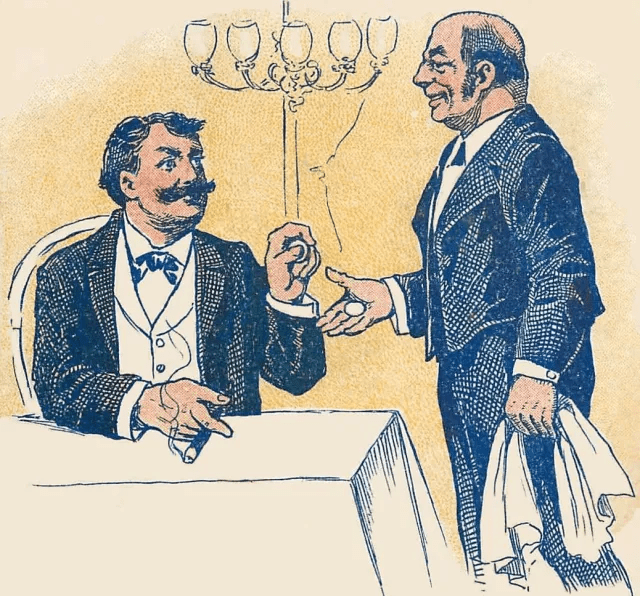
When an employee retires after loyally serving his company, the firm provides him or her a monetary gratuity. This is not an arbitrary sum but is generally based on a pre-determined formula and is a reward for services rendered over a long period. At times a wrist watch bearing the company’s emblem may also be given as an added attraction at a farewell party. Followed, naturally, by a laudatory, ‘he-will-be-sorely-missed’ speech by the boss, at the end of which he mutters to himself, ‘Thank God that pain in the backside has gone. Good riddance. We should have sacked him 10 years ago.’ That is how things are done with finesse in the corporate world.
However, the word gratuity, when performed on a micro scale, such as giving your hired taxi driver a little over the meter or even if digitally prepaid, because he happened to speak well of the political party you happened to vote for, or if he speaks ill of the political party you did not vote for, we call that a tip. Forgive me for stating the obvious. I should add, in parenthesis, that a Pakistani driver who ferried me to Heathrow airport from my hotel in London, could not stop talking about Tendulkar and Dhoni and how much the Pakistanis loved them and how even President Musharraf advised Dhoni not to cut his flowing locks; that all the bitterness between the two perpetually warring nations is caused by the cussed, good-for-nothing politicians. He used some pretty strong language against the leaders of both nations, though he was well up to speed on his cricketing onions. I was so overcome I tipped him handsomely. Above and beyond.
Getting back to my main subject, the quantum of tip can depend entirely on, apart from the driver’s political or cricketing persuasion, a smiling visage and his readiness to step out of the car in a jiffy and take out your luggage and hand it over to a member of the hotel staff who is waiting eagerly to do his bidding.
The satisfied taxi driver then steps on the gas and speeds away. Meanwhile the expectant, if a tad obsequious, bellhop does his bit. He escorts you to the reception, awaits your room key, deftly takes it from you and proceeds to your room while you follow him like a faithful pet, opens the door, draws the curtains, switches on the air-conditioning, explains the contents of the minibar, shows you how to operate the state-of-the-art, smart television set, explains the complex hot and cold water mechanism in the bathroom (why is this never standardised across the globe?) Speaking of bathrooms, during one of my early visits abroad, I came across a normal, western style commode or WC and next to it, a smaller, open version with a built-in nozzle attached to it; a sort of mother toilet and baby toilet in still life. I was puzzled but too ashamed to ask after the baby. I was to learn later that this was something called a bidet (bi-day), intended to clean ‘those parts of the anatomy that cannot normally be reached!’ Really! I think the French had something to do with this cutting-edge development. Anyhow, I still fail to see the point behind this dual toilet facility. Most of us are doing just fine with the one, single throne.
Apologies for that diversion into matters ordurous. To revert to the hotel waiter’s attentions, he finally asks you if there is anything else you need. He then stands respectfully aside and waits expectantly. You pretend not to notice and thank him for the trouble, but he still stands there, now looking a wee bit anxious. Then the penny drops. ‘Oh sorry, silly of me. What did you say your name was? You didn’t? Ah, it’s embroidered on your lapel. Thank you, Rajesh. Sorry, Rakesh. I hope you have a nice day.’ I proffer a Rs.100/- note as he closes his fist round it, with an expression that was an uncertain blend of mild acknowledgment and strong disappointment. What did he expect? One grand? He left without comment, though I thought I heard the word cheapskate emanating from his receding back, but that might just have been my mind and ears playing tricks.
Then there is room service. You check into your hotel after a tiring journey and decide to order something from room service. That one apple (not to forget the knife), a banana and a small dark chocolate kept on a plate with the management’s compliments, is hardly going to satisfy your ravenous appetite. The menu clearly rules out 70% of the items as ‘unavailable after 10 pm.’ So, you settle for a club sandwich and a cold coffee with ice cream. ‘Right away, Sir. 15 minutes,’ assures the friendly staffer at the other end. An hour and a bit pass by. Meanwhile you have polished off the apple, banana and the dark chocolate, which barely whets your appetite. Just then, the room bell rings.
You pause the television set just as Michael Corleone is struggling to retrieve the hidden gun from the high wall-mounted tank of the toilet, the old-fashioned model with a flush chain, to shoot the baddies in the restaurant to smithereens. The bellhop places the fixings on the escritoire, makes me sign the bill and, you guessed it, waits. I hand him a hundred rupee note and tell him to let the F&B manager know that there is a world of difference between 15 minutes and 65 minutes, and that I should be getting a hefty discount due to the incipient formation of ulcers in my stomach. He just stares blankly and leaves. Not to be left out, just as you are about to hit the sack, the concierge calls you to inquire if the room and everything else is to your satisfaction. You reply in the affirmative, but not before lodging a complaint about the tardy room service. The concierge is most contrite signalling that I should keep him in mind for some loose change as I am checking out.
Welcome to the world of tipping. It comes in many avatars. Take a simple matter like visiting a restaurant for lunch or dinner. The bill, couched in a faux leather folder at the end of the meal may or may not tell you explicitly if service charge (shorthand for tips) is included or not. Even if it states that a service charge of 10% is included, the waiter stands around forming imaginary patterns on the floor with his left foot after you have tapped or punched in the pin number on the credit card machine. Depending on how filling or fulfilling the repast was, the Merlot making you even more mellow, you fork out a hundred of the best and brightest and discreetly hand it over to the waiter who pouches it expertly. There has been some brouhaha recently about hotels mulcting the customer for service, but that is a subject for another day.
The matter does not end there. You come out of the restaurant and the valet service chap hares off to fetch your car. As he steps out and waits for you to sidle into your driver’s seat, you proffer more currency. This after a valet service charge has already been paid. What is more, unbeknownst to you, another chap opens the other front door for your wife to get in and gently closes the door and stands there, giving her that ‘I-am-staying-put-till-I-see-some-action’ look. Depending on the wife’s mood, which is always generous, another 100 chips is denuded from the family fortune. In case you hadn’t noticed, a hundred rupees is now the standard bare minimum tipping rate. And even that is scraping the bottom of the barrel. If you offered that to the liveried major domo standing outside the Taj or Oberoi, he will politely return the note and impolitely spit out of the side of his mouth. Mercifully, the days of my dining out at such sinfully exotic destinations is a thing of the past.
Those of you who get your car or two-wheeler tyre pressures checked at a petrol pump would have noticed a prominent sign saying, ‘Please do not tip the staff,’ or words to that effect. It is one command I happily ignore, seeing as the poor chap, come rain or shine, patiently gets down on his haunches and checks your tyres, and of several others all the livelong day. It is punishing work. Your heart and purse strings go out to him.
The mention of Michael Corleone earlier puts me in mind of the many Mafia-type gangster movies I have seen, the Godfather franchise being in a class of its own. There will be at least half a dozen scenes where a fat cat Mafia don will walk into a restaurant accompanied by his platinum blonde, mink-coated escort, a fat cheroot dangling from his fat lips, while he presses a thick wad of dollar bills into the doorman’s greasy palm. ‘Buy something nice for Sophie and the kids, Jimmy,’ says the don, blowing friendly smoke rings at Jimmy. ‘Sure thing, Polly,’ responds the grateful Jimmy. They are all on first name terms, boss and underling alike, and they are all called Jimmy, Tommy, Polly. Or Michael. They give big tips and they receive useful tips, if you get my drift. I can visualise Shah Rukh Khan doing that at the Taj or Oberoi entrance.
Tipping, it’s all discretionary. However, if you refuse to oblige, you can expect the kind of look from the staff that Wodehouse so inimitably describes, ‘He gave me a long, reproachful look, similar in its essentials to that which a black beetle gives a cook when the latter is sprinkling insect powder on it.’
Moral of the story. If you are a skinflint, do not make eye contact with the staff.
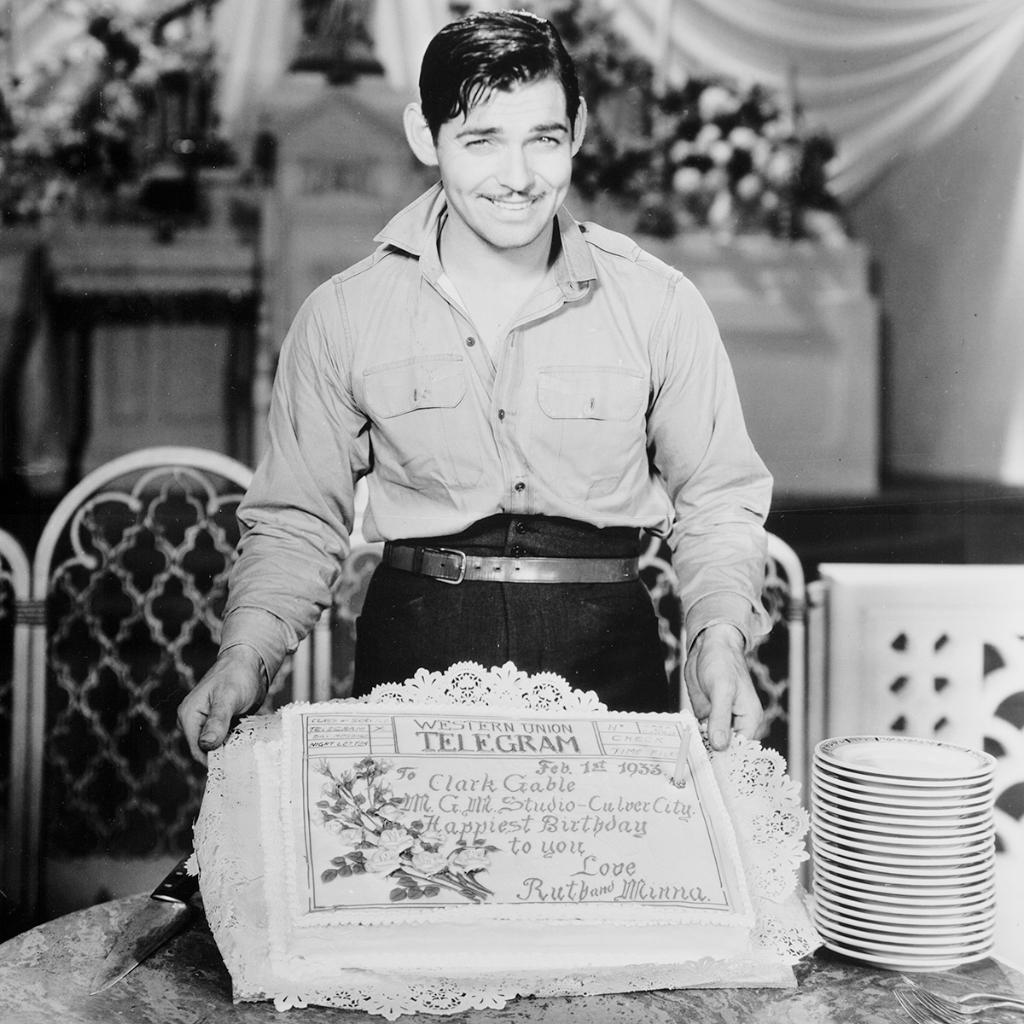
Age is an issue of mind over matter. If you don’t mind, it doesn’t matter. Mark Twain.
A little over a month ago, I celebrated my birthday. On second thoughts, celebrated would be overstating the case at my age. Let us just say I marked the day quietly without fanfare, listening to some good music and reading an improving book. As a treat, my wife and I lunched out unostentatiously at a decent continental restaurant just round the corner from where we live. ‘A jug of wine, a loaf of bread and thou beside me,’ in Omar Khayyam’s quatrain from the Rubáiyát about sums it up to a nicety. That would have been just fine and dandy as the day drew to an uneventful close, not counting all the shenanigans in the rest of our country and the world over. However, ever since I decided some years ago, probably unwisely, that I should be an integral part of the social media community, even though my participation might be minimal, I have had to face a new kind of challenge. Let me quickly add that this challenge is not unique to me.
In order for you, dear reader, to better understand my predicament, let me try and express myself with numbers, since most of you are extremely numerate. On this birthday of which I speak, I received 73 good wishes from Facebook visitors, and as many as 87 greetings on WhatsApp. A further 28 was accounted for by email. Nothing worth talking about from X (Twitter). I am not much of a twit. Should I receive that rarity of rarities, a greeting card nestling in a stamped buff envelope delivered par avion with a personalised message penned by the sender, I shall have it framed for posterity! Other cards with pre-printed quotidian, saccharine messages leave me untouched. Fine words butter no parsnips, as some clever bloke put it, when they come from an assembly line.
Lest I forget, a couple who are close friends, actually called me on my mobile and sang ‘Happy Birthday’ in an unidentifiable raga. They meant well, though I had to hold my mobile a good six inches away from my left ear. Many of these messages were accompanied by lavish downloaded illustrations of bouquets of flowers, animated gifs and much else that are so readily and digitally available, literally at our fingertips. I daresay many of you would be muttering to yourself, ‘You should look at my numbers buddy, compared to which yours is a mere piffle.’ That is perfectly alright. I shan’t quibble. It is the principle that I am more concerned with. Now here is the thing.
How does one respond? Does one respond at all? If I were to parse those numbers down further, 80% of the Facebook greetings were from folks I have never met, nor am I likely to. On WhatsApp, the situation is better. I would say as much as 60% of the well-wishers were well known to me. To all of them one is ever so grateful, even if they were digitally reminded by unseen hands. After all, there are many birthdays that would have almost certainly skipped my mind had it not been for timely reminders flashing on my mobile. It is Sunil’s birthday today. To those that know me, even if only slightly, I take the trouble to respond with a custom-made response. A ‘namaskar’ emoji, while useful oftentimes, is the lazy way out while acknowledging or thanking friends and relatives. Not that I don’t take recourse to it if push comes to shove.
Known or unknown, receiving birthday wishes from human beings is one thing. An avalanche of greetings over email and WhatsApp from inanimate banks or financial institutions, apart from the ones you actually do business with, mutual fund houses who have collectively and substantially eroded my hard-earned savings, ditto for hospitals, vehicle brands, restaurants I have patronised and not to forget, a handful of charity organisations to whom I might have (in a weak moment) parted with a modest sum and who hope against hope that I will unburden myself of my meagre treasure chest once more with feeling. To all of them, I give the lofty ignore. To begin with, it is too much of an effort and furthermore, it will remind them to come back for a bigger touch next time round.
I think you get my meaning. This is an existential dilemma each one of us faces. Unless, of course, you have decided to be a monk and are living out your life contemplating the infinite on a mountain top or in a monastery. I know of a song where the singer with a philosophical bent talks about chopping wood, carrying water and wondering what the sound of one hand clapping is. If you belong to this category, then you are a better man than I am, Gunga Din!
Mind you, on occasion, and here I am thinking about my wife’s birthday, her former employer, bless him, never fails to send her a large bouquet of fresh peace lilies along with a bottle of the finest red vino and a gooey chocolate cake – every year without fail. Truth to tell, on that date, more than her I wait anxiously all morning for the doorbell to ring. And the bearer of glad tidings always rings twice!
As an aside, I would like to dwell briefly on how birthdays are celebrated in Bollywood and Indian pot-boiler films in general from time immemorial. The cake is a must with the requisite number of candles, children being the first choice, followed by the candle-blowing ceremony, cake wedges being first bolted into the waiting, salivating mouths of Mummy and Daddy, the invited guests wishing the boy or girl ‘Happy “birday” Nisha or Rahul,’ as the case may be. The grand finale is the happy “birday” song in which everyone joins in while someone strums ham-handedly on a guitar or pretends to tickle the ivories on a grand piano. If I have witnessed this sequence in one Hindi or Tamil film, I have seen it in at least a hundred movies. If the director wishes to inject a dash of bathos into the proceedings, he will cut to a nearby hutment where an indigent family with four children are trying to keep the wolf from the door. At which point, the song will also turn maudlin. To paraphrase an old folk song, ‘It’s the rich what gets the gravy and the poor what gets the crumbs.’ Time for our handkerchiefs to come out for some eye-dabbing and, at times, nose-blowing if the unfolding tragedy is overwhelming.
All this is a far cry from the way my parents, and I am harking back to the 60s and early 70s, acknowledged their children’s dates of birth. The trigger for my father was when he opened the newspaper at the crack of dawn, while sipping his filter coffee and happened to notice the date of issue on the masthead. At which point he will turn to my mother and say, ‘Do you know what date it is today?’ My mother, having been disturbed over whatever morning chores she was occupied with, would peremptorily ask, ‘How do I know? Mahatma Gandhi’s death anniversary? Why don’t you just tell me? I am busy.’ My father, not put off by the rebuff, would tell her that it is her second son’s birthday and that she should prepare something sweet to mark the day. The fact that her second son is hundreds of miles away in a boarding school or in a corporate house he has just joined as a management trainee is neither here nor there. At least my Appa, a diabetic, could enjoy the forbidden payasam for one brief moment. To be fair to my old man, I would invariably receive an inland post card from him, wishing me on the occasion. The post card would have arrived a few days after my birthday, but what the heck. It’s the thought that counts.
That was another world. We are in the here and now. Everything has to be instant, not just your coffee. If it is your birthday, take a deep breath, sit back and stare unblinkingly at your mobile phone for the best part of the day. Keep a bottle of Refresh tears handy to take care of your dry eyes, while simultaneously working out how and if to respond. Better still, you can follow the advice of this modern sage, ‘My phone battery died faster than my social media birthday notifications today. Thanks for the love, everyone.’
Have a WordPress.com account? Log in now.

