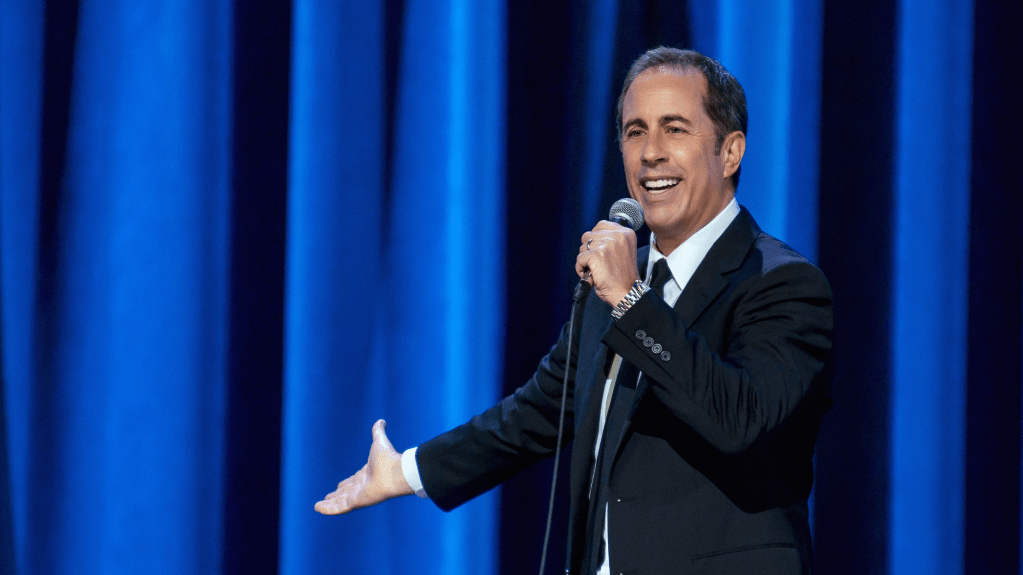
Stand-up comedy is a very hard thing on the spirit. There are people who transcend it, but in its essence, it’s soul destroying. It tends to turn people into control freaks. Film director Mike Nichols.
At the outset, let me make it abundantly clear that I have nothing against stand-up comics. They are probably fine human beings, kind to animals and take great care of their aging parents. Always assuming their parents are old enough to need taking care of. It is just that I am not particularly enamoured of the idea of a man or a woman standing up (ergo stand-up) on a podium and cracking jokes to an intimate audience at the speed of lightning while their fans crack up with uncontrolled mirth at every single utterance of the performer on stage. Jerry Seinfeld was among the early entrants to this form of amusing people, but I greatly preferred his sit-coms in the brilliant company of his partners in crime – Elaine Benes, Cosmo Kramer and George Costanza. Seinfeld must have had good reason to drop the stand-up routine at the start of each episode after a couple of seasons and move straight into the storyline for subsequent versions. A wise move.
Stand-up comedy originated from the English music halls and American burlesque traditions. It has flourished in America though American comedy, by and large, leaves me somewhat cold barring exceptions like Seinfeld or Bob Hope and Buster Keaton from an earlier vintage. The British tended to look askance at stand-up as a genre but the virus has affected the ‘scepter’d isle’ as well. Witness Ricky Gervais, whose stand-up routines seem forced, often offensive and unfunny as compared to his brilliant portrayal of the bumbling, pretentious David Brent in the television series, The Office. The Brits perfected the art of self-deprecating, understated humour and satire. No one comes close to it. As John Cleese of Fawlty Towers fame said, ‘A wonderful thing about true laughter is that it just destroys any kind of system of dividing people.’
The stand-up craze has now caught on in India; big time. Young couples and their friends find nothing more entertaining and elevating than to take in our budding stand-up stars rattling off their own version of satire and low-brow humour, across languages, while they roll in the aisles, delirious tears cascading down their cheeks. In our metropolitan cities in particular, youngsters find nothing more entertaining to pass a late evening hour than to listen to someone regale them with Modi put-downs and Rahul mimicry. You may well ask who the heck do I think I am being superciliously patronising about gifted young people who are doing nothing less (or more) than spreading sweetness and light while all around us we are surrounded by gloom and doom. Good point. Slap on the wrist accepted. Each to his own. If stand-up is your thing, go for it. So long as you allow me to have the freedom to express why I am not a fan of the art form, if one can so describe it. If I am raising hackles, put it down to collateral damage.
A wag once said, ‘Stand up comics say funny things. Great comedians who interact with others on stage or film, say things funny.’ It’s a subtle difference. The operative word here is interact. There is a situation that is created in a play where the audience is primed to anticipate the actor’s response and when the punch line is delivered, the appreciative laughter is instinctive. Hence situation comedy or sit-com. I am not suggesting that comic sequences in films and plays cannot fall flat. Of course they can, but between the script, the director and the actors, when everything gels together, you are the fortunate soul in the audience who will break into a broad smile, and not necessarily roar with guffaws. A stand-up comedian is expected to come up with a punch line every time he opens his mouth. After a point, the strain begins to show; on the performer as well as his audience.
In Indian movies, a comic actor is nearly always a comic actor. Period. Labelled for life. The great Mehmood’s only job in Hindi films was to get film goers to laugh. It hardly mattered what he said or what antics he got up to. From the moment he first staggers on to the screen, the urge to laugh is already embedded into our psyche. Likewise, the irrepressible Nagesh in Tamil films. On rare occasions, the comedian was required to descend into bathos. A bad idea, unless your name was Charlie Chaplin who mastered the art of bathos (The Kid, Limelight). In order to make us laugh, we want our comedians to laugh, not cry. If they must cry, the situation must demand that the lachrymose comedian must get us to laugh our guts out. A good example of this is to be found in vintage Laurel and Hardy films. Laurel is the one who, every now and then, breaks into tears over some disaster or the other. However, the said disaster was intended to be funny and Laurel’s plight leading to tears even more so. No amount of description can convey this unless you actually watch a Laurel and Hardy film and see the former blubbing while the audience roared with laughter.
The extraordinary reception that stand-up comedy has received in India is evidenced by the fact that Amazon Prime Video gave us a series named Comicstaan, which pitted young, upcoming stand-ups in competition against each other. I hear it did pretty well, running for three seasons before Amazon decided to call a halt. Perhaps it was too much of a good thing. Perhaps they have just taken a long break before hitting us with Season 4. The original Hindi version was later followed by a Tamil version, which was also a riot by all accounts. In fact, Tamil stand-ups like Alexander Babu and Bosskey are household names in Tamil Nadu and the folks from down south simply cannot get enough of them. Even our esteemed friend Shashi Tharoor tried it. Once. If you ask me , he is better off doing gravitas.
Given all the facts I have recounted, what is my beef with stand-up comedy and why am I given to perversely boasting that I have never been to a stand-up performance? An inversion of inverted snobbery? Fair’s fair, in order to write this piece, I did watch a few of the stand-up stars on YouTube. Just to see what makes them tick. A couple of valid reasons come to mind. The old, slapstick, slipping-on-a-banana-peel type of comedy has ceased to enthral our younger generation. Not that it holds much appeal for the older generation either. Stand-up is relatively fresh and has an obvious attraction. Smaller audiences gather in intimate venues and the comedian appears to be speaking directly to you. The subjects chosen to tickle your ribs are invariably relevant and topical. All good. The moot point is will it sustain or is it just an ephemeral shooting star? A passing phase. Will our youngsters twenty or thirty years from now still be enjoying stand-up comedy or will they have moved on to something else, attention spans being limited by the confined 6.5” screen of a smartphone? My point being this; when I first watched Fawlty Towers, I was in my late 20s. And I am still enjoying it in my 70s. There is a timeless quality to it and similar productions from that era. One must reserve judgement.
The thing about comedy is contained in the aphorism, ‘different strokes for different folks.’ What is good for the goose is not necessarily good for the gander. If you boil it right down to its bare essentials, I think it has something to do with age. In fact, it has everything to do with age. When I watched those video snippets of Comicstaan, I could not even summon a smile. My bad. ‘The fault, dear Brutus, is not in our stars, but in ourselves.’ Which just about sums it up. As I said at the top of this piece, I have no grouse against stand-ups. Just not my cup of tea. If I am giving it the thumbs down, it is nothing personal. Meanwhile, I offer a peace pipe. Go well, my young stand-ups. If you can make people laugh even for a moment, you are doing a great service to humanity, which has all but forgotten how to laugh. One caveat, do not try to seek me out in the audience. I shan’t be there.
Now then, where is my well-thumbed copy of Uncle Fred in the Springtime?


 Suresh's Corner
👍Suresh!
LikeLike
Yet another tongue-in-cheek piece from your keyboard! Keep them coming!!
LikeLike
Thank you, Ashok.
LikeLiked by 1 person