Here’s the thing. Every now and then, I keep getting asked if I am a writer. I give it a brief think and reply that I write. About once a week. If that answers the question. Then there is the counter question. Yes, but does that make you a writer? Good question, for which I do not have a ready answer. I titled one of my compilation books I write, therefore I am. Which sounds a bit existential but whether it makes any sense or not, I am unable to say. A close friend even chastised me for being pretentious. Which immediately prompted me to respond in Sybil Fawlty fashion. Sybil who? you ask. From Fawlty Towers. Of which if you have not heard, you are more to be pitied than censured. In one sequence Sybil Fawlty comments on the person who responded to the accusation of being pretentious thus, ‘Pretentious? Moi?’ I agree that a line like that gains risibility more in the telling than in the written word, but I can live with that.
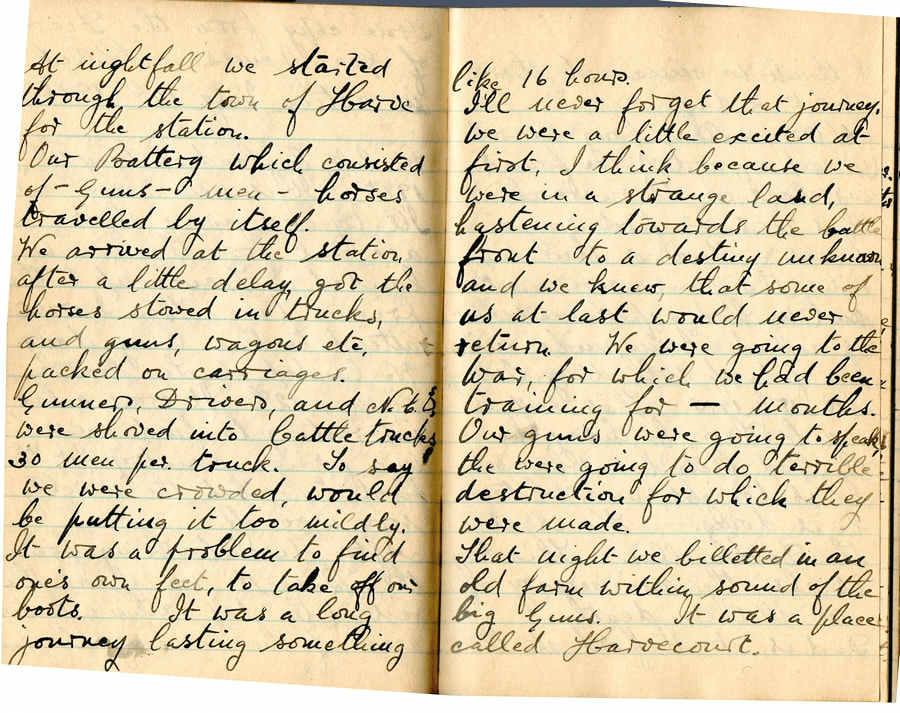
I was a boarder in a well-known Protestant missionary school in Bangalore during the early 60s. In order that we hone and polish our English, we were given a special assignment whenever we went home for our summer holidays, the killjoys. Those were the days when we would sing on the joyful train journey home to Calcutta, a la Cliff Richard, ‘We’re all going on a summer holiday / No more working for a week or two / Fun and laughter on a summer holiday / No more worries for me or you / For a week or two.’ Except that this assignment during our five-week holiday, on which we will be assessed, involved the maintaining of a personal diary and faithfully recording what happened every day of the week during the long leave, punctuations properly in place. Enough to totally ruin the vacation, but failure to do this invited trouble, our teachers’ motto being, ‘Spare the Malacca cane and spoil the child.’ Capital punishment was not frowned upon.
To add to our woes, our class master wrote to our parents about this unusual ‘homework’ and enjoined upon them the duty to ensure that we did not stray from the straight and narrow. It was bad enough strolling around in school with ink-stained fingers and shirt pockets thanks to our perennially leaky fountain pens. Having to put up with this unsightliness at home and amongst friends on leave, was adding insult to injury. Nevertheless, the exercise book which passed for my diary beckoned every morning. Oh, and lest I forget, we were encouraged to listen to the news on BBC World Service Radio (on the hour, every hour) in order to improve our diction and pronunciation. Given the time difference, here in India that translates into on the half-hour, every half-hour.
In Calcutta, which was located, geographically speaking 22°34′03″N 88°22′12″E (my Geography master would have liked that) the sun, particularly in summer which was about eight to nine months in the year, came up at 5 am, give or take. Even if I wanted to sleep late, my father would draw the curtains to let the rude sun stream in. Meanwhile the pressure cooker in the kitchen would whistle and steam loud enough to wake the dead. My mother could be heard unctuously humming some Carnatic hit while she attended to the coffee fixings for the family, admirably multi-tasking to get the lunch ready. Late rising therefore was a non-starter. Some irony this. Even in boarding school, Saturdays meant late rising at 7.30 am. What price holidays, I asked? To no avail.
My father said we should devote 7.30 to 8.30 in the morning, when the mind is fresh, to writing up the diary to record the previous day’s highlights. After our ablutions we were free to be carefree kids enjoying our summer holidays. Imagine, if you will, this routine was fixed for us spotty-faced kids between the ages of 10 and 14. That being the case, what would my diary have read like. Sadly, I have not retained that precious exercise book that might have presaged my future as an inveterate columnist and blogger. So, I have to rev up my time machine, dive deep into my memory bank and become that early-teen boy again and see how I fare. Shades of The Secret Diary of Adrian Mole, Aged 13 ¾ by the late, delightful Sue Townsend.
What follows is a typical day of the week, jotted down in that precious, sadly missing, diary. Poetic licence has been taken and forgive me traversing freely between past and present tense. This is a summary for the entire week as most of the days were unvarying in their routine, with a few exceptions. Remember, we lived in the pre-mobile, stone age.
Woke up at 6 am after being pushed and prodded by my father from 5 am. He didn’t exactly say, ‘Wakey, wakey sunshine,’ but it was a near thing.
Brush teeth and given a tumbler of coffee by my mother, which was meant to act as a laxative. An old wives’ tale, I’ll wager. At times, a Britannia glucose or thin arrowroot biscuit was provided as accompaniment to provide energy. Fat chance!
Move to the drawing room. Pick out a record for the Grundig radiogram. We could stack eight 45 or 78 rpm ‘plates’ and they would drop down and play one after the other! Elvis Presley’s Wooden Heart or Pat Boone’s Speedy Gonzalez? Decisions, decisions. Mother yells from the kitchen in Tamil, ‘Play M.S.’s Bhaja Govindam.’ Diva M.S. Subbulakshmi wins the day. Wake me up in the middle of the night and I will sing that bhajan for you. On another morning, it could be Semmangudi, Lalgudi, Ariyakudi, GNB, MMI, MLV or DKP. When Carnatic musicians are known only by their initials or village names, they have achieved immortality.
Nearly 9 am. Time for a bath. Father reminds me to switch the geyser off. It is boiling hot in Calcutta, but the geyser must be switched on. And off. It’s a ritual. Something to do with keeping the equipment in trim.
Meanwhile, father has left for work in his Standard 10, suited and booted; as befits a senior bank official. He drives at an average speed of 15 kph, which is slow even by Calcutta’s notorious traffic crawl. He waves to bullock carts to overtake him. He is a cautious driver.
By 11 am, mother announces lunch. We never did breakfast. The mashed potato preparation, ‘podi maas,’ is yummy. Why could she not make more of it? My mother is a frugal cook. She staunchly believed over-eating is bad for health. Not sure what her view on under-eating was.
Post lunch, time to call up a friend or two on the landline. I still remember our number – 459806. The phone is dead. Which is most of the time in Calcutta of the 60s and 70s. The term mobile or cell phone was a few decades away from entering our lexicon.
I have been advised to read a good book, at least 10 pages a day. Our home library is limited but there’s some good stuff. Conan Doyle, Wodehouse, Agatha Christie, Erle Stanley Gardner. Naturally, I opt for Zane Grey’s cowboy stuff – ‘I’ll drill yer like a dawg, you yellow-bellied, lily-livered chicken.’ (The ability to appreciate Wodehouse came later). There were also a couple of Irving Wallace and Harold Robbins tomes, which my father declared was unsuitable for kids. Which meant we read them on the sly.
3 pm. I was packed off to study Carnatic music from a respected guru who lived within walking distance. My family felt I had the makings of a good singer. On the way to music class, I could be heard humming Please, Please Me by The Beatles. And after a heavy bout of Kalyani and Bhairavi at music class, my return walk home would find me in top voice crooning Connie Francis’ Lipstick On Your Collar. Back home, I had to regurgitate whatever I learnt that day to my mother, minus The Beatles and Connie Francis.
4.30 pm. Tune in to BBC World Service Radio on 25 or 31 metre band on our versatile radiogram for the news. Lots of stuff about the eyeball-to-eyeball stand-off between Kennedy and Khrushchev over missiles in Cuba, starving children during the conflict in Biafra, Idi Amin’s shenanigans, the Queen visits the Cayman Islands (among the few colonies the British still have), volcanic eruptions near Java and Sumatra and the cricket scores summary from the ongoing Ashes series. Other than the cricket, nothing else made sense to me, but I learnt how to pronounce Khrushchev and names of cities and some unusual words. Which was the general idea. The spore of a notion of becoming a news reader at the BBC was embedded in my mind, but never germinated.
5 to 6.30 pm. Played tennis ball street cricket with bricks acting as stumps, plumb, spang in the middle of a busy street. Approaching vehicles would be directed suitably by the chaps fielding at deep third man or long on. This was a time-honoured tradition in Calcutta and woe betide anyone who tried to stop us.
Back home by 7 pm. Listen to some more music and await dinner at 8.30. On occasion we would attend a Tamil play or a Carnatic music concert by some maestro. On rare occasions, we would be taken to see an English film (The Sound of Music, My Fair Lady, The Guns of Navarone and The Absent-minded Professor readily spring to mind). Followed by a north-Indian vegetarian treat at the poky, Hindustan Restaurant on Lindsay Street.
9.30 pm was lights out. My father personally saw to that. I may as well have been in school.
That pretty much was it. There were slight variants each week. Sometimes a football match between the two marquee clubs of Calcutta, Mohan Bagan and East Bengal brought the city to a standstill. Other times, some political party or the other declared a ‘bandh’ which meant a forced holiday. Everyone, including shops downed shutters. Had to sit at home and stare at each other all day. Not much fun.
At the end of it all, my class master gave me 8 on 10 for my diary jottings. The effort was worth the candle, after all. If only I hadn’t gone and lost the damn thing.


Very evocative piece , Suresh!
LikeLike
Long time back, I used to maintain one. Over time, however, I realised that it was a security hazard! Imagine a just-married spouse going through one’s college time romantic escapades (even if these were mere flights of fancy)! In due course, the habit naturally faded away.
LikeLike