I was interested in both western and Indian classical music. Satyajit Ray.
What with classical music in India being fused by musicians, in tandem with light music across genres, an increasing number of people are now more than familiar with the art, science and practice of Carnatic music. It is a self-evident truth judging by the space devoted to this classical art form over recent years by our media channels. My own musical leanings, as a listener, owes much to Carnatic music which can almost be viewed, loosely, as a family heirloom. I appreciate that several others from a similar background reading this can make the exact same claim. Owing to the peculiar circumstances of my upbringing, I have also been exposed to other musical genres, such as western popular, jazz and classical music and these experiences have been recorded by me at length and do not bear repetition. Of these streams, appreciating western classical music to one who had no exposure to the genre, makes for interesting contemplation. For a first-time listener, when I was in my late teens, it was almost as strange as attempting to understand Chinese classical music – if such a category exists.
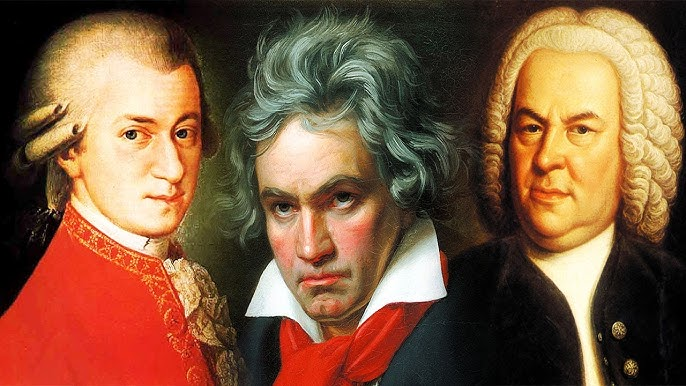
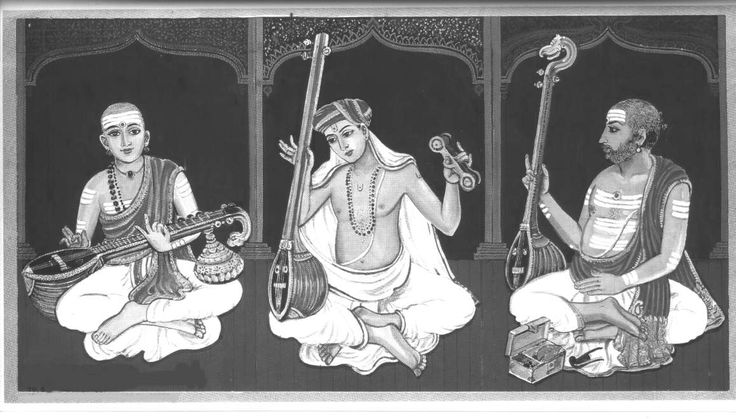
It happened quite by accident. A cousin of mine from London presented me with a set of spool tapes consisting of what he swore blind was the best and brightest of western classical music. An ideal introduction, virtually a ready reckoner, for a beginner who wished to delve more into the treasures of Bach, Beethoven, Mozart and their ilk. In any case, those three named were, arguably, western classical music’s ‘answer’ to Carnatic music’s own revered Trinity, namely, Tyagaraja, Muthuswamy Dikshitar and Shyama Sastri. That can also be stated the other way round depending on chronology. Cursory research also informs us that these Indian and western composers lived roughly around the same time period and plied their genius, completely unbeknownst to each other during the 17th, 18th and early 19th centuries. One must conclude that these serendipitous coincidences happen for a reason that is beyond our ken.
I ignored these precious tapes for many months. As the saying goes, you can take a horse to a water trough, but making it drink is another matter altogether. Notwithstanding, after giving a wide berth to that treasure trove of western classical music tapes for several months (between G.N. Balasubramaniam, M.S. Subbulakshmi, Elvis Presley, Lennon and McCartney, I was pressed for time), I finally decided to roll one of these TDK tapes on to my AKAI machine. Just for a lark. Thoughtfully, the contents of these tapes had been meticulously noted and listed in proper order, so I knew exactly what I was listening to. Beethoven’s Violin Concerto in D, in three movements, was one of the first long pieces I sat back and attempted to understand. This monumental orchestral work by a man who suffered from tinnitus and gradually became completely deaf in his thirties, grew on me as I kept rewinding and relistening to it again and again. The crystal clear, pure sound emanating from the solo violin and the build-up of the concerto from the slow movement to its ethereal climax is an experience never to be forgotten. Even today, after several decades, I keep returning to Ludwig’s D Concerto. When you consider the man’s humongous body of work, that is saying something. I was hooked.
Speaking of the violin, there are those that aver that the stringed instrument, as essayed in Carnatic music, can never achieve the pristine clarity of its western counterpart. It is a debate as old as the hills, the pros and cons cancelling each other out. Yehudi Menuhin and Lalgudi Jayaraman produced a different soundscape from their instruments dictated entirely by the grammar of their respective musical genres. Technical comparisons between vastly different streams of music are ultimately counterproductive. Like comparing apples and oranges. Menuhin and Jayaraman may not have actually ‘jammed’ together but their paths famously crossed at the 1965 Edinburgh Festival, where Menuhin—stunned by the phrasing and tonal precision of Jayaraman’s performance—invited him backstage and gifted him his own Italian violin as a gesture of profound admiration! I daresay the instrument is preserved in a glass case in the Lalgudi household and paid obeisance to by Jayaraman’s son and daughter, themselves noted violinists.
Johann Sebastian Bach was a different kettle of fish altogether. Those in the know of these things say that he was a cerebral composer. He may not tug at your heartstrings or cause an emotional upheaval the way Beethoven could, but the intellectual rigour he brought to his compositions, the harmony and polyphony that was unique to his music made the cognoscenti of the day sit up and take notice. It is interesting to note that a similar parallel is often drawn between Tyagaraja and Muthuswamy Dikshitar, the former more aligned to Beethoven’s instinctive feel and the latter to Bach’s cerebration. The tale is told, and not apocryphally, that Bach composed the Goldberg Variations for the harpsichord as a possible cure for insomnia suffered by the Count Carl von Keyserlingk, the Russian ambassador to Saxony. We are reassured that the Count slept well as a result and Bach, who sired and had to support 20 children (some of whom died) across two wives, was handsomely rewarded. Speaking for myself, I listen regularly to the Goldberg Variations, fully conscious of all my faculties. For sleep, I can always reprise our own Carnatic lullaby raga Neelambari.
A quick sidebar here. By definition, Carnatic music is atonal whereas western classical music relies heavily on harmony. I bring this up because some Carnatic musicians in recent times have attempted to introduce harmony in their renditions during certain improvisational phrases. A laudable experiment but to my heavily conditioned ears, it does not sit well. I am open to correction but I don’t believe the Indian Trinity or other composers ever thought harmonically while composing their devotional kritis. Whereas when Beatles John Lennon, Paul McCartney and George Harrison harmonise on a simple song like If I fell in love with you, the result is complex and magical. Harmony is second nature to the westerners.
Wolfgang Amadeus Mozart could be aptly described as ‘the happy composer’ though Time Magazine’s characterisation of A.R.Rahman as the ‘Mozart of Madras’ is, in my opinion, clearly over the top; even if it can be attributed to poetic license. Pretty much Mozart’s entire oeuvre provided us with a joyous lilt. He was one of those child geniuses who, at the age of 8, could turn out an entire symphony between breakfast and lunch, the same to be played to an appreciative audience that very evening! Prolific is the word that springs to mind. Again, like Bach and Beethoven, his body of work was prodigious. To single out one or two from his works would be virtually impossible, if not invidious. Nevertheless, if push comes to shove, I would pick his Eine Kleine Nachtmusik (a little night music), a delightful suite of pieces that has Mozart’s imprimatur in every movement. If you happen to be down in the dumps (or if you are down with mumps), young Amadeus is just the joyous placebo you want.
It goes without saying that I have barely skimmed the surface in subjectively picking just three out of several other great composers (Schubert, Chopin, Handel, Tchaikovsky and Brahms, amongst others). Not to mention that those three worthies, Bach, Beethoven and Mozart, have a list of compositions to their credit as long as your arm, if not longer. To make that same claim with respect to Tyagaraja, Muthuswamy Dikshitar and Shyama Sastri would be entirely appropriate. I would strongly urge those who may not have delved into the wonderful world of western classical music, wade into your YouTube, Spotify or Apple Music and simply search and click. Things have been made so easy for us in our spoon-fed, digital age.
As for me, I can now turn to the intriguing Ilayaraja / Sanjay Subrahmanyan combo and see how that pans out. A dose of Madurai ‘madhura’ Mani Iyer won’t hurt and, across the seas, Bob Dylan, Joni Mitchell, Leonard Cohen or Van Morrison can keep me ecstatic company. The agony of choice, one that I welcome. After all, even Aldous Huxley, who opened the ‘doors of perception’ for us said, ‘After silence, that which comes nearest to expressing the inexpressible is music.’


 Suresh's Corner
Just loved it
LikeLike
Thank you, Ashok.
LikeLike
A musically stimulating piece, Suresh-I shall now repair to my trustee You Tube to savour some of the delightful pieces you wrote about so eloquently!👍
LikeLike
Thank you JB for your effusive compliment.
LikeLike
I am so glad to find somebody else — sufficiently interested in and curious about music — you! — trying to find links between Indian Carnatic and western Classical musical systems. I believe that “equal temperament” was invented, around Bach’s time, to find a way of modulating from one key to another without the occasional discord (“wolf note”!) intruding. I am tantalised by what these keys would have been originally: presumably the key of C,D,E, etc, from A to G, with true, consistent intervals between each note. I am tempted to compare these to ragas, but do not know enough about either. Ragas, I believe, are associated with moods and seasons and times of day; western music has largely lost this connection and I wonder if this is because it now modulates imperceptibly from one scale to another? I also wonder if this is why works by classical composers are always labelled as being in such and such a key — when, if I understand aright, the music wanders happily (or sadly, as the case may be) and continuously from one key to another. Moreover I presume that the mechanism for producing equal temperament was achieved by tweaking the do re mi etc notes of “the scale” as we call it (codified in the later middle ages by a clever Italian called Guido of Arezzo) to alter the intervals here and there, so that you can sing or play or hear exactly the same intervals between the notes no matter what the starting point is; and our ears are so used to this that we do not realise that the intervals hr soon as you switch to any other scale you have to use one or more of the black keys, sharps and flats to achieve the octave. There is so much more I never knew about ragas — do they have different numbers of notes? do they necessarily start and finish with octaves? how many of them might there be? how do they accommodate western musical characteristics (as in the adoption of pop music harmonies in filmi gaan, etc)? It is an age old system — are any new ragas introduced ever? Does a piece of Indian classical music remain in the same raga throughout? — if not, what are the functions of ragas? for it strikes me that in the Western classical system these are reduced to labels only. And yet some keys are associated with some emotions: the major scale is considered confident and assertive and the minor scale mournful and plaintive — yet in the same piece there are, and probably need to be, continual imperceptible cyclings between the two: not the least of the ways in which music awakens and focusses the emotions and not infrequently takes us to some curious indescribable states which I have not experienced in other arts …
Sorry, this has gone on far too long … happy explorations!
LikeLike
Thank you Leena, for that exhaustive feedback. I shall respond in greater detail to the points you have raised a little later by email. Trust all is well with you. Shobha sends her love.
LikeLike
Yes, Western Classical music has to its credit, composers as great as the Trinity of Carnatic Music. I started out with a 2 (or was it 3?) CD compilation of 50 greatest songs of Western Classical Music. Ennio Morricone’s compositions also found a ready fan in me. Gabriel’s Oboe (from the film The Mission) and Once Upon A Time In The West (Danish Pholharmonic Orchestra) haunted me for days on end after I first heard them. Bolero’s Ravel, the Mexican folk tune set to score by Moncayo (Haupango) are also some of my favourites. But bulk of the time is spent on Carnatic music, though I also listen to country music, Beatles, et al. Will give the songs that you’ve mentioned, a try. Thanks for this nice article.
LikeLike
Couldn’t agree with you more. Thank you for your thoughtful and well-informed comment.
LikeLike