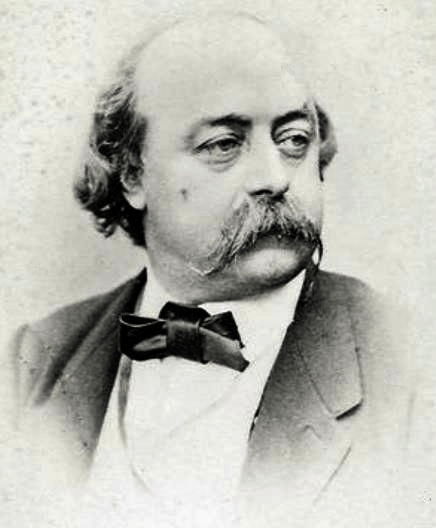
‘If you want to be happy, it is necessary not to be too intelligent.’ This shrewd quote, one that resonates completely with me, is attributed to 19th century French author, Gustave Flaubert (Madame Bovary). Many English writers have described Flaubert as a ‘stylist.’ On what grounds it is unclear to me because the Frenchman wrote in his own mellifluous tongue and those who could follow French, could doubtless relate to the stylistic nuances that he brought to his craft. However brilliant and lucid the English translation might have been, subtleties of the original are often lost in translation. This is not to downplay the vital role highly qualified translators play in bringing world literature into our homes in a language of our choice. The incandescent crime writer Dorothy L. Sayers (of Lord Peter Wimsey fame) whose seminal translation of Dante’s The Divine Comedy from the original Italian alone testifies to what I am saying. Lest you get the wrong impression, I must quickly add that the brilliance of The Divine Comedy, even in its English rendition, has eluded me for the most part. I only came across this epic poem, for poem it was, when I decided to research the line ‘Abandon hope, all ye who enter here.’ Many authors frequently employ this line when the hero finds himself in a hopeless, god-forsaken situation. Which aroused enough interest in me to try and read Dante’s monumental work. After the first canto, I had to abandon all hope. What is more I could divine no comedy, unless Dante was into black comedy. Very black.
To get back to Flaubert, he stirred up a hornet’s nest while questioning the value of being too intelligent, juxtaposed against the happiness quotient. The late Beatle John Lennon added to the confusion when he crooned, Happiness is a warm gun. Make of that what you will. I know some very sharp people, going back to my teenage days, who wore their thinking caps almost all day long. Their grey cells were swishing around like mad things. Oftentimes, they were to be found sitting somewhere all by themselves reading Ibsen, Camus or, god forbid, Dante. The nerds only put those books down when they were eating or sleeping. This had a direct bearing on their overall persona, which gave one the impression that the earth was going to swallow them up any minute. Manic depression, Dr. Sigmund Freud would have diagnosed the condition as. It is worth recording that these lugubrious specimens invariably topped the class and made us feel sorry for them. Happily, for the others that is, these worthies in school or college were in a minority. Which is stating the obvious as they were the only ones among the elite toppers.
I have some very good friends here in India and abroad who do a splendid job of translating Tamil epics into English so that the rest of the country and indeed the world, can enjoy literary and fictional works that would otherwise have been known only to those well-versed in the vernacular. Even I, a Tamilian, am ashamed to admit that I am unable to read my mother tongue with any degree of fluency. Haltingly yes, but that is not good enough to pore through an entire novel. Across languages therefore, the expert translator opens doors to learning and quality reading, a yeoman service for which readers should sing hosannas. To cite just one example, a hugely successful comic novella in Tamil, Washingtonil Thirumanam (A Wedding in Washington), by the legendary Savi was serialised in a popular Tamil weekly magazine, and was widely acclaimed as a comic masterpiece. In order to garner a wider readership, the novel was translated into English by Singapore-based financial analyst, Nandini Vijayaraghavan. On a specific query, she admitted it was a challenge to bring out the finer nuances of descriptions and dialogue that would have been unique to the vernacular, but to the uninitiated, you read the novel ‘straight’ and enjoyed it at its own level in English. From Tamil to English alone, there are numerous other titles doing the rounds, never mind all the others in polyglot India. Translating from one language to another in the world of publishing is a flourishing business and burgeoning by the day. Thank goodness for that. Otherwise, full many a flower would have been born to blush unseen, as the poet had it.
It would not have escaped the observant reader that I have veered off at a tangent. That can, at times, happen to a columnist. You start off by discussing Flaubert’s questioning the need to be intelligent in order to be happy and simply because he said it originally in his native French, you are all over the place. Before you can say excusez moi, you have taken a deep dive into the whole subject of linguistic translation and struggling to find your way back to first base. If you, dear reader, consider that to be a weakness, my weak response is to take refuge under the garb of ‘stream of consciousness.’ You know what I am talking about. Not that I am given to aimless literary perambulations as characterised by James Joyce’s protagonist Leopold Bloom in that monumental work, Ulysses.
Joyce, widely considered the father of the style, famously removed punctuation and standard syntax to capture deep subconscious and conscious states. He didn’t bat an eyelid while casually throwing off lines like, ‘I asked him with my eyes to ask again yes and then he asked me would I yes to say yes my mountain flower and first I put my arms around him yes’ Notice the absence of a comma or full stop. The book is full of lines like that. No wonder another votary of the stream of consciousness school, Virginia Woolf described Joyce’s Ulysses as ‘the work of a queasy undergraduate scratching his pimples.’ Professional jealousy? Or was it meant as a compliment? Who knows? And no wonder that Virginia Woolf herself saw fit to end her life by walking into a river with her coat pockets filled with heavy stones. She suffered from acute depression. Comes from reading too many sentences with no punctuations. As to Edward Albee’s theatrical question Who’s Afraid of Virgina Woolf? it would seem that she was mortally afraid of herself.
All of which, even with my not intending to do so, nicely comes back to how I started this piece. Serendipitous, some might call it. It is clear from some of the examples I have provided that extremely intelligent and sensitive people, particularly from a bygone age, were not very happy in their own skin, lending weight to Flaubert’s declaration. While not meaning to generalise, we cannot escape the fact that many highly driven people from the world of arts and literature were often down in the dumps. I have already talked about James Joyce and Virginia Woolf. Beethoven and Van Gogh had their own reasons for not being the life and soul of the party, notwithstanding that their musical and artistic legacy will be cherished as long as there is oxygen in the atmosphere. And here is the clincher. The man whose quote inspired this piece, Gustave Flaubert, whose style and technique was an inspiration to some of the greatest writers of our generation, himself died in tragic circumstances. A bachelor by choice, his self-avowed, guiding principle of leading a life of unbridled debauchery, in some strange way, aided his creativity. He certainly thought so. It also led to an early grave. Even though wine and women generally go together, it is reliably learned that alcohol never passed his lips. Coffee was his preferred poison.
Times have changed. Today’s brilliant minds lead, for the most part, well-regulated, healthy lives and they prudently salt away their well-gotten gains in secure, high-yielding investments. If Flaubert were alive to see this, he would have expressed great surprise, and even concern, at how happy these successful, intelligent folk seem to be. Or as he himself might have put it in his contrarian style, ‘Happiness is a monstrosity! Punished are those who seek it.’


 Suresh's Corner
Excellent piece ,Suresh!
LikeLike
Thanks JB.
LikeLike