What’s in a name?

One of the most exciting tasks that a married couple anticipates is the arrival of the proverbial stork with their first born, or for that matter, second or even third born. Rarely in our straitened times do couples go for more than two kids, three being a bit of a stretch, probably accidental. Unless, of course, you are Elon Musk, in which case after the announcement of the birth of the eleventh baby, he has just got down to spitting on his hands and getting into his stride. More of Musk anon. It is superfluous to add that in our enlightened age, marriage is not a necessary pre-condition to add to the world’s head count. In fact, as a wedded couple you are not even called upon to be of a different sexual orientation. Same sex couples can have children, just like anybody else. That should cover the whole gamut, unless some new development has taken place in the sphere of human behaviour and physiology that has escaped my attention.

My preoccupation this week is more to do with how couples and their near and dear ones get into a right, royal tizzy over what to name the impending arrival along with the patter of little feet. Those who do not wish to know in advance the sex of their bundle of joy that is still blissfully swimming in its mother’s amniotic fluids, run around with reference books while frantically Google searching, scouring names of boys and girls. In any case, Indian law does not allow parents to know the baby’s gender in advance. Depending on which religious denomination you belong to, Hindu, Christian, Muslim, Sikh, Parsee, Jain, Buddhist or any other, there are loads of names for you to sift through during those nine months of cozy captivity for our little wonder.

Fierce debates rage in the homestead as all kinds of names are scattered about like so much confetti. If it happens to be a boy, Amar, Akbar or Anthony or their variants should do just fine. Sticking with the Bollywood motif, if it’s a girl, one could turn to that notorious vamp Bindu’s cabaret dance line from the 1971 hit film Kati Patang, ‘Neena ya Meena, Anju ya Manju, yaaa Madhu!’ Not that it makes a blind bit of difference, but the vamp’s name in the film is Shabnam, though she is affectionately called ‘Shabbo.’  That is a translation from the opening line of the song. The context is different but still, I think you can see where I am going with this.

To further complicate matters, many couples are keen on nailing both the official registered name for the baby as well as a nick name or pet name. ‘Right, we have all settled on Krishnamoorthy Venkatasubramanian as the final name, if it is a boy, as it incorporates in some shape or form the names contained in the father’s and mother’s family genealogy. However, he shall be known as Kittu to the world. If he migrates to the United States and becomes a billionaire software czar and covets the White House, he shall change his name to Kittu Venky. The same rules apply if the arrival is a girl. Full name, Anahita Ambegaonkar, converted in America to Annie Amby.’ This principle will hold irrespective of which religion the child belongs to. As an aside, I find it rich when Americans moan about difficulties in pronouncing Indian names with more than three syllables, and find the need to shorten them, Yank style. What about former U.S. National Security Advisor Zbigniew Brzezinski then? Wrap that round your tongue.

The process of naming a child, in this modern age when the world is our oyster, or as the poet Wordsworth had it, ‘the world is too much with us,’ has become somewhat universalised. Westerners, who notoriously make a fuss about pronouncing names from the southern hemisphere, have become just that much more familiar. They still behave as if the cat has caught their tongues, but they muddle through. Kamala Harris poses no problem, that’s easy-peasy, Vivek  Ramaswamy is rapidly gaining currency with frequent appearances on American television debates. Britain’s Prime Minister Rishi Sunak is a walk in the park, though his first lady Akshata Murty could prove a handful, if not a mouthful. To the native Brit that is, not to the Asian migrants.

For reasons I am unable to articulate, Indians in India celebrating the impending new arrival with a ‘baby shower,’ a western concept, seems little more than something the marketing mavens of the gifting industry have showered upon us, to expand their business by showering the baby with gifts. Not unlike the ad blitz inflicted on an unsuspecting world on Valentine’s Day. There are those that aver that the idea of a baby shower was originally inspired by ancient Greek and Egyptian rituals. In traditional India, there are certain ceremonies held when the woman is still ‘carrying,’ but we tend to go a bit soft on the gifts!

Now that we have turned to the subject of names in the western hemisphere, I cannot but talk at greater length about Elon Musk and his rapidly expanding familial empire. While I have touched briefly upon the Indian diaspora and the unique challenges that their names could pose to a western audience, the Twitter now X mogul, Elon Musk, has blazed a new and enthralling trail when it comes to naming his eleven offspring. Across three partners (Justine, Grimes and Shivon Gillis), the prolific Musk has fathered eleven children, and I would not bet against more in the pipeline – more partners and more children.

While one gasps at the great magnate’s fecundity, it is more the names his children were burdened with that is noteworthy. Try these on for size. Nevada Alexander Musk, twins Griffin and Vivian Musk which was more conservative, Kai, Saxon and Damian Musk, X AE A-XII Musk (I kid you not), Exa Dark Siderael Musk, nicknamed Y as X AE A-XII had already appropriated the nickname X (makes sense), Strider and Azure Musk and the latest arrival, Techno Mechanicus, nicknamed (what choice did they have?) Tau. Somewhere along the way, they sadly lost Nevada, then resorted to IVF, Vivian declared she was a transgender, the IVF a second time produced triplets, the abovementioned Kai, Saxon and Damian.

At which point Elon and his first wife Justine decided she had had enough and separated, something the Americans do with elan. So with Elon. Presumably Grimes and Shivon Gillis are still in the frame, but honestly, my guess is as good as yours. If you have been able to make cogent sense out of all that, you are a better man than I am, Gunga Din. Overall, not that I am much of a Bollywood follower, I can’t help but paraphrase one of their big hit numbers in doffing my hat to the productive Elon, ‘Tu cheez badi hai Musk, Musk.’ Loosely translated, in case you are reading this Elon, it means ‘You are great, awesome, awesome!’

One thing that really gets my goat with Americans is when the father and the son are given the same name, as in George Bush Sr. and George Bush Jr. It gets no easier when both of them become President of the U.S.A. Obviously not at the same time, but still. In casual conversation at a party for instance, someone says something like, ‘That was quite a victory for George Bush.’ Your natural response to that comment would be, ‘Which George Bush are you referring to? The one that freed Kuwait of Saddam Hussein’s occupation or the one that smoked out Saddam from a hidey-hole somewhere in Iraq, leading to his execution?’ See what I mean? Merely affixing a Sr. or a Jr. just doesn’t cut it. That is taking the lazy way out. I know there is an H.W. and a W that splits the difference between father and son, but that doesn’t help. And why John Kennedy was called Jack at home is even more of a mystery, what with his wife being called Jackie. Ours not to reason why, I suppose.

If it was just the newborn’s name that parents and elders tear their hair out coming to grips with, that is nothing compared with the argy-bargy that goes on in relation to how to spell the name. This is particularly relevant in the Indian context where superstition and old wives’ tales count for a lot. The baby arrives on schedule, spittle generously foaming around the mouth, gurgling away while everybody goes coochy-coo. The father rushes in, brandishing a sheet of paper and announces with much fanfare, ‘I have it. From this day forth he shall be called Nikhil. I have checked it out with the priest. It’s all kosher and official. We can always call him Nikki or Niks at home.’ The mother then peers at the sheet of paper, smeared with sacred ash and kum kum, bearing the bold legend NIKHIL, scrunches up her face and says calmly, ‘The H will have to go. We cannot go beyond five letters, and my family guru says H, being the eighth letter of the English alphabet, portends ill luck. So let us settle on NIKIL.’ Given that the change suggested was not drastic, everyone agrees with a sigh of relief. This is a common occurrence in millions of households around the country. If the baby is a girl, the name could be Riya, Ria or even Rhea. It is all written in the stars.

When all is said and done, the newborn is the victim here, having no say in the matter whatsoever, lumbered with a name he or she will have to live with forever. Techno Mechanicus for crying out loud, you want to change your name? You can, but have a care. Your super rich dad could cut you out of his will and where will you be? What is the point of changing your name to John Doe if you are going to be left skint? Remember what Shakespeare said? ‘What’s in a name? That which we call a rose, by any other name would smell as sweet.’ Though on this occasion, I would prefer to sign off with James Joyce, ‘What’s in a name? That is what we ask ourselves in childhood when we write the name that we are told is ours.’

Way to go James, or should that be Jim?

Bharat, Sanatana Dharma, ONOE et al

India is a fascinating country. Dear me, did I just unknowingly drop an inadvertent brick? Should I have said Bharat is a fascinating country? Or, to hedge my bets and err or the side of caution, should I have said India, that is Bharat, is a fascinating country? Keep both sides happy? Damned if I do and damned if I don’t. That seems to be the predicament in which I find myself. As do many others who are trying to figure out what this India and Bharat palaver is all about.

How did this controversy over our beloved nation’s nomenclature erupt suddenly out of the blue? If media reports are anything to go by, and that is a big ‘if,’ it all apparently started with an innocuous invitation for dinner. The moot point is that the invitation, which was from our President, no less, to the visiting Heads of State and VIPs attending the G20 Summit in New Delhi, was issued by and captioned ‘The President of Bharat.’ This set the cat among the pigeons. I should mention, in passing, that the official logo unit of the G20 Summit incorporates both the names of Bharat, calligraphed in the traditional Devanagari script and India, capitalized in English. An even-handed approach ensuring both terms co-exist harmoniously side by side, as blessed by the Constitution. Pitchforking Bharat to the forefront, almost seamlessly (some may even say slyly) via the Presidential dinner invite was clearly the brainchild of the Government without drawing ostentatious attention to itself. That did not quite work as it stood out like a sore thumb. The Cassandras, read the Opposition parties, spotted it quickly enough and all hell broke loose.

I have no wish to go into the alleged chicanery of the Government in bringing Bharat into the spotlight in this fashion, nor do I have any interest in expounding upon the inconsistencies involved in the argument adduced by those who smell a big, fat bandicoot behind this move, claiming that it is to divert attention away from the Opposition’s political combo, the collective I.N.D.I.A, which appears to be gaining some traction. Keeping Adani off the headlines was also casually thrown into the mix. On balance, whatever the motive, the Government appears to be perfectly within its rights to employ the term Bharat, which has been enshrined in the Constitution.

Patriotic songs in the vernacular including the National Anthem, extol the virtues of Bharat and not India. That is such a no-brainer it does not even need to be explained. There are enough examples from the north of the Vindhyas to bolster this thought, both in classical and film music. Even in the more arcane world of Carnatic music from the South, a certain Mayuram Viswanatha Sastri composed a song called ‘Jayati Jayati Bharata Mata’ in the raga Khamas which was popularised back in the day during the 50s by Carnatic music’s then poster boy and genius, G.N. Balasubramaniam. One can hardly imagine anyone rendering this song as ‘Jayati Jayati India Mata,’ God forbid. Any more than you can chant ‘India Mata ki Jai.’ Other famous doyennes like Bharat Ratna (not India Ratna) M.S. Subbulakshmi and Padma Vibhushan D.K. Pattammal have rendered numerous songs on Bharat on either side of our Independence, particularly those composed by freedom fighter, social reformer and poet, Subramania Bharati. The name Bharati, incidentally, was an affectionate and respectful appellation, and he was often referred mononymously as simply Bharatiyar. His songs and poems moved millions. At least, they did in south Bharat.

Proponents of the more elaborate use of the term Bharat also point to various cities in India having been named differently with nary a whimper raised. Madras and Chennai, Bombay and Mumbai, Calcutta and Kolkata, Trivandrum and Thiruvananthapuram are frequently cited. This trend is not confined to India alone. There are many similar examples on the global map. As is his wont, if we are to ‘credit’ the Prime Minister with this move, he has given no indication that there is a concerted effort to amend the name of the country officially, which will also most likely involve a constitutional amendment, to be approved by Parliament. A headache he can do without. Then again, he is known to play his cards close to his chest. The Opposition’s quandary is that it can only criticise the Government for its real or imagined motive behind the move, and not for freely using the name Bharat. Astute intellectuals opposed to the idea, who have committed their thoughts on the subject to print, need to be mindful that they do not paint themselves into a corner from which it might prove problematic to wriggle out, the ruling party ever ready to pounce and brand them as unpatriotic.

Where Hindustan that is Bharat that is India fits into all this, I do not know, but should be fit for another hornet’s nest of a punch-up. I have little doubt some learned historian has explained all this in considerable detail. For now, we should be grateful the discussion has been confined to just two names.

While fanatic followers of the Indian cricket team often chant ‘Indiaaaa, India,’ in unison on cricket fields around the world, when our fans decided to take a leaf out the English cricket groupies’ brand ‘Barmy Army,’ our patriots hit upon the idea of calling themselves ‘Bharat Army,’ the name boldly emblazoned on the tricolour. The two terms, India and Bharat have coexisted harmoniously and interchangeably. One might add here that some famous Indian cricketers like Gavaskar and Sehwag have weighed in behind the Idea of Bharat. M.S. Dhoni could not be reached for a comment as he was enjoying Alcaraz’s brilliance at the U.S. Open followed by a round of golf with President Donald Trump! (Is there more in this unusual pairing than meets the eye?) The Bharat vs India debate is a capacious bandwagon onto which everyone can jump. Trust our politicians, irrespective of party affiliation, to put a vicious spin on the whole issue allowing the matter to literally spin out of control.

The political pot, always simmering, boiled over last week when actor-turned-politician, Tamil Nadu’s DMK Chief Minister M.K. Stalin’s son Udayanidhi, likened our core Hindu philosophy, Sanatana Dharma, to rampant diseases like dengue, malaria and the corona virus, asking for its eradication – the Dharma that is, not the diseases. As the terms ‘eradicate’ and ‘disease’ are by way of being joined at the hip, it was an unfortunate choice of words by the young scion. Having reflected on his outpourings and deciding he had to go the whole hog, he has now called the BJP ‘a poisonous snake.’ Expect more fireworks. Simply put, Udayanidhi’s intemperate remarks have got him into hot water, landed him right in the soup. Or to put it in terms that he is more likely to be familiar with, dunked him in some hot and spicy rasam. However, he and his paterfamilias are digging their heels in and refusing to budge from their stated position. Reverting to the old ruse of claiming he has been misunderstood and is being quoted out of context. Poor lamb.

To add fuel to the fire, senior DMK functionary, A. Raja, no stranger to controversy himself, went one better and gave it as his considered opinion that Sanatana Dharma is as bad, if not worse than AIDS and leprosy. One wonders what drives these motormouths to utter such arrant nonsense. It was at best politically inept and maladroit, possibly politically suicidal – something the I.N.D.I.A collective, of which the DMK is an important cog, needed like a hole in the head. It is hardly surprising that other major constituents of I.N.D.I.A are rapidly distancing themselves from this fracas. To add to the confusion, any number of scholars and Indologists are expansively and contrarily holding forth on the real meaning of Sanatana Dharma. Net result? Nobody is any the wiser.

As if all this were not enough to keep us fully occupied and entertained, enter stage left One Nation, One Election (‘but you can call me ONOE.’) Pursued by a bear or not, I cannot be sure. The aim is to hold Assembly and Central elections in one fell swoop, and be done with it.  The Prime Minister, in his usual way, came up with a googly while his opponents were expecting the ball to go straight on. It was announced, taking everyone aback, that a special session of Parliament has been called later this month, agenda unspecified. Our speculation factory then went on overdrive, particularly by the print and electronic media. Topping the bill was the ONOE issue (with the Women’s Reservation Bill and possibly the Uniform Civil Code to follow), which has been informally talked about for some years now, and irate members of the Opposition went to town writing reams about the unsuitability and unworkability of the scheme.

The silver-tongued, articulate Congress MP, Shashi Tharoor led the anti-ONOE brigade, writing columns on the subject. That said, he has been unstinting in his plaudits for those in the Government who burned the midnight oil to achieve a favourable outcome at the G20 Summit. Tharoor’s party leader, Rahul Gandhi, revels in taking pot shots at his homeland from a safe distance outside the country, and not for the first time. Others followed suit, presumably in a bid to pre-empt and thwart any such attempt by the ruling party. One assumes Rahul Gandhi will soon return to resume his I.N.D.I.A Jodo Yatra. And we still haven’t a clue what these special sessions are all about. Spewing fire and brimstone was the order of the day, which has been doused somewhat by the enormous optics offered by the G20 Summit (Yippee, the Delhi Declaration happened, Putin and Xi notwithstanding).

Clearly, the main talking point from the Opposition has been to establish that the ONOE policy is impractical and will result in a huge waste of national resources, which runs counter to the Government’s USP on the subject, viz., achieving economies of scale being the primary selling point. It is worth reflecting here that till 1967, both State and General elections were conducted simultaneously. The point appears to have been lost somewhere in the dense thicket of mass verbiage. So what are we dealing with here? A special session of Parliament in the offing, for which no one even remotely knows the agenda.  But everyone is happy to fly kites, play guessing games and shoot in the dark and hope some stray bullet will hit the target. Right now, everyone is shooting blanks. We can only hope that the Opposition members participate in a lively discussion, if at all ONOE is placed on the agenda, and not stage a walk-out in a huff because the PM is not addressing the House on Manipur.

Whatever be the outcome of all these issues that constantly keep us on our toes, I daresay there will be many more to come. We in India, that is Bharat, will never lack for something to talk and write about. With State and General Elections just around the corner, our cups of joy should be overflowing. I rather feel like S.T. Coleridge’s Kubla Khan, For he on honey-dew hath fed /And drunk the milk of Paradise. That is a bit of a stretch but put it down to poetic license.

Bring them on, I say. I am all ready and agog in front of my television set, my favourite dailies rustling by my side, and a large tub of popcorn or spicy snacks  to keep my gastric juices flowing smoothly. It is going to be one heck of a ride, folks. Lie back and enjoy it.

And good luck with the spring cleaning

I have come to grips with one of the great verities of life. It is that your desire to get rid of detritus collected over the years at home, deliberately or inadvertently, grows in inverse proportion to the intention of doing away with it. Like Topsy from Uncle Tom’s Cabin, I think it just ‘grow’d.’ I use the word detritus somewhat loosely. When you have lived for well nigh seven decades and a bit, all kinds of things tend to accumulate. Not really detritus, but possibly timed-out. At the time, they are considered precious and indispensable. Having salted them away, you have barely had the time to revisit the cache. They are kept carefully in shoe boxes, biscuit tins, dark corners in cupboards and drawers, secreted away in suitcases caked with grime and dust, that have not seen the light of day since Noah’s Ark opened its doors to its varied paired fauna. Times without number you have said to yourself, and to your wife, ‘I must get down to do some serious spring cleaning. There’s just too much stuff lying around taking up space.’ The sardonic laugh is from the wife, who herself has much to think about when it comes to cleaning out her invaluable collectibles.

With that pious thought and fully aware that the road to hell is paved with good intentions, I start attempting to sort out the various accumulated articles and knick-knacks. This is how they stack up, category-wise, and I spend more time thinking about what to do with them than in actuality accomplishing anything in the way of discarding them.

Books. There are now so many books around the house, literally bursting out of every nook and cranny. Our staircase to the terrace could be in danger. Let me get cracking. The local lending library will be pleased to get a trunkful of these books. Let’s see. There are 61 novels of P.G. Wodehouse. Can’t touch them. I would rather commit hara-kiri than part with any of Plum’s masterpieces. As far as I am concerned, they are all masterpieces. I must admit many of the Jeeves / Wooster and Blandings Castle escapades are coming apart at the seams, the white-ants have got to them, but I am damned if I am giving any of them away.

What’s this? The Golden Treasury of Longer Poems, presented to S. Suresh, winner of the school elocution contest 1963. You see what I mean? Then there’s Amis, Kingsley and Martin, Spike Milligan, The Complete Works of Italian crime writer, Andrea Camilleri, Christopher Hitchens, Julian Barnes, Ian McEwan, some old Perry Masons, Louis L’Amours and Agatha Christies, learned volumes from my advertising days and so much more. Not to mention books written by my friends and relatives (everybody is publishing books these days). Tell you what, all the fat Encyclopaedias can go for a start, ditto voluminous autobiographies (they are so full of themselves), don’t need so many Wisdens (I can get all the cricket statistics from Google). That should be a decent start for clearing up. I can review the situation a year down the road.

Lest I forget, there is an Eng. Lit. topper at home, namely, my better half whose books occupy several shelves. From Austen and Bronte to Camus and Turgenev, Dumas to Dickens and Eliot – George and T.S. to Mann and Salinger. And that is barely skimming the surface. Shakespeare’s Complete Works is not a space saver either. Can’t touch any of them. And here’s a laugh. I too have published books comprising a compilation of my pieces. Since no one buys them, barring a handful of diehard loyalists, I purchase boxfuls of them at volume discounts and periodically gift them to unwary friends and visitors to our wee home (you are duly cautioned). Those boxes take up space as well.

Finally, the airport pot-boilers for flights. Follet, Baldacci, Cook, Clancy, Francis – you get the drift. From the sublime to the ridiculous, there’s also a stack of comics and Mad magazines to deal with. Net result, after spending over two hours, I have managed to cull out a measly 17 books to dispose of. If I must buy a book in the interim, it will have to be Kindle or some such. More’s the pity.

Compact Discs & DVDs. Music and all manner of film entertainment is a passion with me. Having graduated from vinyls, spool tapes and cassette tapes, VHS tapes and finally CDs and DVDs, I felt I had reached the apogee of technology delivering hi-definition music and drama for home entertainment. Then came the audio and video streaming devices delivering the best of music and films the world had to offer, rendering all my CDs and DVDs redundant overnight. I am now sitting on a mountain of over 700 CDs and DVDs of some of the best and brightest, not knowing what to do with them. Barring a handful of titles, pretty much all of them are streaming on Spotify, Amazon, Netflix, Apple and several other channels. It breaks my heart to throw them all away as the market for same is worse than bearish, and every time I pick up a CD of Bob Dylan or Joan Baez or the Fawlty Towers DVD box-set, I hastily slot them back into the shelf. It’s a good job I stopped buying CDs over five years ago. Incidentally, my CD player went on the blink recently, and there’s no one to repair it. This is a quandary I will have to live with. Does not help the space problem, but that is my problem.

Letters. No one writes letters these days, not for the past 15 years, give or take. I mean with a pen on sheets of paper. It’s all on email or junk mail. However, things were different way back when. Postcards, picture postcards, inland letters, bulky letters arriving in buff envelopes, starting from school friends writing in during holidays, parents writing to us when we were incarcerated in boarding school, pen pals, letters from across the seas and so much more. Because of the effort and trouble taken to sit down and write these letters, we could never throw them away. They are all there in various boxes. It is now time to take stock as you may not want these personal missives to be lying around when you are no longer amongst those present. But when you get down to re-reading them in order to start tearing them up, nostalgia claims you for its own and instead, you start tearing up! In the words of the Bard, ‘letting “I dare not” wait upon “I would,” like the poor cat i’ the adage.’

Miscellany. If books and music have the capacity to give us everlasting pleasure, I am not sure of some of the gewgaws that seem to find their way into every available space around the home. A weathered Cotswold stone from somewhere in those picture-perfect Cotswold villages, some sea shells and pebbles from a beach in the Costa Brava (I have seen more shells on the Marina Beach in Madras), a withered feather from I know not where that serves as a bookmark, theatre and cinema tickets (The Absent-Minded Professor, The Minerva, Calcutta), bus and train tickets from all parts of the globe, even a 20p tram ticket from Calcutta (the no.24 that ferried me to college at the crack of dawn), my late Cocker Spaniel’s dog collar and identity badge – there’s no end to it. Photographs, tons of them. Need to get them digitized. Soon as I put this article to bed, I will be slapping my forehead exclaiming, ‘Gosh, I forgot to include Christmas and New Year greeting cards with all those twee messages, two large-size envelopes full of them. And like letters, greeting cards are also now an almost extinct species what with all the moving images we can conjure from the internet.

In conclusion, I guess what I am striving to communicate is that we humans are inveterate collectors of things. Any ‘things.’ Trying to get rid of them is a mug’s game. It’s over four years since I last examined my hidden treasures. One of these days I will get down to it, but the result will be the same. I will come over all misty-eyed and put them all back. Someone called Josie Brown is credited with saying, ‘The key to spring cleaning is to be ruthless. Throw out anything and everything you never use.’ Sooner you than me, Josie, sooner you than me.

Chandrayaan-3 and Praggnanandha over the moon

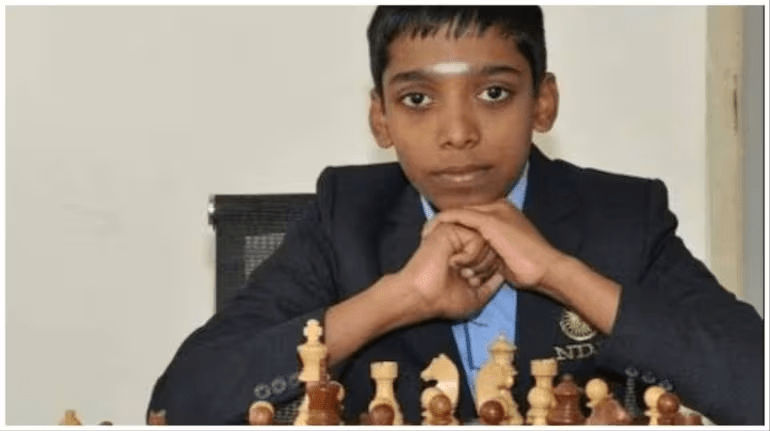
Two events occurred, serendipitously, over the past week, gazillion miles apart, that had pretty much the whole of India’s 1.4 billion people on the edge of their seats. The Indian Space Research Organisation’s (ISRO) pride and joy, Chandrayaan-3, was hurtling towards the south pole or the dark side of the moon, orbiting closer and closer to the landing site of the golden orb, as we waited with bated breath. While that historic space journey was nearing its completion, here on God’s good earth in the city of Baku in Azerbaijan, an 18-year-old chess prodigy from Tamil Nadu, Grandmaster Rameshbabu Praggnanandha, now fashionably Pragg, was creating his own history by pushing Norwegian chess maestro Magnus Carlsen to the limit for the FIDE world title. From India’s point of view, a fairy-tale script would have visualised Chandrayaan-3 make a smooth landing on the moon’s surface, and barely 24 hours later, the young teenager from Chennai checkmating the wizard from Norway. While it did not go exactly according to script, it came agonisingly close to doing so, and India’s cup of joy truly runneth over. Chandrayaan-3 and Vikram Lander had India and the world agog with a perfect touchdown for the first time ever by any nation on the south pole, while the precocious teenager Pragg lost to a more experienced opponent by the skin of his teeth. India celebrated both these events as seminal landmarks. And rightly so.

The wonderful thing about the ISRO saga and the boy wonder’s brilliance was that both these milestones were blessedly free of any kind of political taint. However, our political earthlings can hardly be expected to let momentous happenings pass without diving, deep end first, into a messy, me-too maelstrom. The imbroglio started with the television coverage of the moon landing. As Chandrayaan-3 was nearing its appointed destination on the lunar surface, our idiot box screens were split into two. While one half stayed with the historic descent towards the moon, the other half unveiled our Prime Minister, taking time off from the BRICS summit in Johannesburg, eyes glued to the history-making satellite. Waving our national flag, the PM watched with swelling pride and perhaps a touch anxiously, that all would be well if it ends well. Well, it did, and the PM did what he does best. Took centre stage and spoke eloquently and at length, praised all concerned particularly the scientists at ISRO, and did not miss a trick to ensure his own Government’s inspiring, leadership role was not lost on the populace. Some may aver that the word Government is surplus to requirements, but I will let that pass.

With a plethora of state elections in the offing, culminating in the magnum opus General Elections in May 2024, the ruling party will doubtless take every opportunity to blow their own trumpet, fortissimo, to extract full mileage from any event that positively redounds towards favourable optics. That is only to be expected of any ruling party that has one eye firmly fixed on the forthcoming hustings.

That being said, the opposition parties were quick to denounce the PM’s television appearance at the crucial hour of the moon landing, as little more than a brazen publicity-seeking stunt. In the somewhat low-key (thankfully) verbal slugfest that followed, if slugfests can ever be low-key, the opposition bench took exception to the PM hogging all the limelight, after showering fulsome encomiums on ISRO, and not acknowledging the role played by past leaders like Jawaharlal Nehru in India’s march towards becoming a technological power, driven by science and technology. The nation’s ‘scientific temper’ owes much to the founding fathers of the nation since India’s independence, they cried in unison.

The usual cut, thrust and parry that we have been witness to on a number of occasions in the past, continued apace. The names of Nehru, Indira Gandhi, and Vajpayee were taken in vain by both sides of the political binary. May their departed souls not stir restlessly. The Prime Minister’s name was taken, as is the party apparatchik’s wont, at the drop of a hat to bolster his stature as a leader of unparalleled dynamism and integrity. What all that has to do with the moon landing is neither here nor there. In politics anything and everything goes, so long as we can fit in 22 talking heads at the same time on our news channels, along with a hyper-ventilating anchor frothing at the mouth.

The opposition worthies, just by virtue of being in the minority, find themselves stranded to defend the vigorous onslaught of the treasury bench wallahs. They have no option but to sing hosannas to ISRO, as that august and noble body is beyond the pale of humdrum politics, and the ruling party will always be controlling the narrative just by being there. Bengal Chief Minister, Mamata Banerjee even comically referred to Bollywood actor-director Rakesh Roshan in recalling India’s past space heroes, when she meant to say Rakesh Sharma. If the BJP are all over the place like a rash, the Congress counters by putting out full page adverts showcasing Nehru, Sarabhai and, incongruously, the local Chief Minister and Deputy Chief Minister of Karnataka, and the stellar role played by all of them leading up to the success of Chandrayaan-3, not to mention INDIA without the intervening full stops, but subliminally flagging the opposition alliance. I am speaking only of the Bangalore papers here, where ISRO’s HQ is based. Obviously, no mention of the honourable PM can be expected in what is clearly a Congress party political campaign. 

Not to be outdone (when is he ever?), the PM landed in Bangalore at the crack of dawn on Saturday week, feted the entire ISRO team and was in turn fulsomely feted.  Sensitive to every nuance, the PM had special words for the women at ISRO (Naari Shakti), and their stellar contributions to the success of the project. Never one to miss a trick, a natural born brand guru, the PM anointed the precise points on the moon where Chandrayaan-2 nearly landed and Chandrayaan-3 successfully touched down as – Tiranga and Shiv Shakti respectively. What is more, Chandrayaan-3’s date of landing on the moon, August 23, 2023, will now be celebrated as National Space Day. That is a full plate to savour and the opposition has already started aiming its barbs.

Lest we forget, on November 14, 2008, Chandrayaan-1’s lunar probe had ‘impacted’ at a point near the south pole, whatever that means. The impact point was named Jawahar Point. November 14 also happens to be India’s first PM Jawaharlal Nehru’s birthday. That should set the cat among the pigeons.

On the flip side, a proposed road show in Bangalore was cancelled at the last minute. An eminently wise decision. It would have been too much of a good thing and would have undoubtedly added more fuel to the simmering flame. However, we can expect to hear more on this subject. A bit of argy-bargy surrounding the issue of why Karnataka’s CM and Dy. CM were not on hand to receive the PM at Bangalore and attend the ISRO function, was doused by the PM himself who had requested them and the Governor not to inconvenience themselves at the crack of dawn to pay their obsequies. And did the CM hurriedly visit ISRO earlier to rub some of the sheen off the PM’s visit? Dear, oh dear! Will the carping never end?

A totally needless distraction was the BBC’s not-so-veiled criticism, four years ago, of India’s 2019 Chandrayaan-2 venture, which was raked up and our media went into overdrive. The BBC was rightly chastised for clinging on to a colonial mindset, stereotyping India as it was several decades ago, struggling to feed its starving millions, yet splurging money on space missions it could ill afford. Unless I am missing something, I was unable to understand why the BBC’s 4-year-old broadcast was resurrected now, adding greatly to the noise levels and detracting from our hour of glory. Ironically, I do not recall the subject being discussed when it was first aired. To the best of my knowledge, the Chandrayaan-3 triumph was lauded by most western nations and media, though a tad guardedly.

One thing is clear. The political by-play from the sidelines has been confined to the Chandrayaan-3 mission. We must thank heaven that Pragg’s dazzling moves over 64 squares in Azerbaijan have not attracted any political one-upmanship thus far. Let us hope it stays that way. The PM was one among many dignitaries from across various walks of life who extended his good wishes to the young man from Madras. Doubtless his home state, Tamil Nadu, will shower him with riches and encomiums beyond the dreams of avarice. Here’s wishing that he is not distracted by all the hoopla that will surround him. He looks a well-grounded youngster imbued with solid, middle-class family values. Coincidentally, those values are almost a mirror image of the personality profile of the entire ISRO personnel. That said, it will not be long before Pragg is seen on our small screens endorsing any number of brands. You will get very long odds from a bookmaker if you bet against that prediction.

 It is significant that having landed safely on the moon, Chandrayaan-3 mission’s Rover Pragyan rolled down from the lander Vikram to commence its various scientific investigations. A mechanical Prag, scientifically and technologically driven, is surveying the lunar surface with the proverbial fine toothcomb; here on earth a human Pragg, strategically and mathematically hardwired, is forever scouring 64 squares on a chess board, inspired by tales from the Mahabharat and the Chaturanga, an early version of chess which also served as a brainstorming exercise for ancient war games.

If only our politicians don’t ruin it all.


The right to remain silent etc.

There can be little argument that the genre of crime fiction, whether in book or film form, is the most addictive avenue of diversion that most readers and viewers long for. To be curled up in bed on a cold and wet evening, thumbing through a P.D. James or a Dorothy Sayers mystery with a mug of hot chocolate is a consummation devoutly to be wished, to employ an expression culled from Hamlet’s most celebrated speech. Depending on personal preference, it could also be a Sherlock Holmes or an Inspector Morse that you might take a shine to. One is spoilt for choice when it comes to crime. There are still others, if crime is not your bag, who might plump for a light-hearted Jeeves and Wooster caper, as I often do myself but for the moment, I am focused on crime, as I have some pertinent, if offbeat, views to share. Do I see a hand going up? No Sir, nobbling Lord Emsworth’s noble sow, the Empress of Blandings does not qualify as   serious crime. Not in my book, anyway.

I have lost count of the number of crime-related movies or television serials I must have watched. Books as well, and for the purposes of this essay, the terms books and films can be used interchangeably. Brilliant as most of these films are, they tend to fall prey to a clutch of well-worn tropes which is pretty much unavoidable, but pose interesting questions. Incidentally, as an entertainment form, the British do crime with greater subtlety and finesse than anyone else, and not too many people will take umbrage with that assertion. Getting back to the cliché, imagine if you will, the following scene. A murder suspect has been brought in by the police for questioning. He is anxiously waiting in the interview room, chewing his finger nails, sweat beads beginning to form on his brow. That is exactly how the inspector and his deputy want him, as they watch the probable killer through the one-way mirror, before entering the room. It would also not have escaped anyone’s attention that the inspector’s sidekick is invariably portrayed as one who is slightly challenged intellectually, is patronizingly put upon by his boss and thus carries a sizeable chip on his shoulder. Once in a rare while, he gets his own back, which adds greatly to the charm of the narrative. Holmes’ Watson and Morse’s Lewis are fine examples of this genre of underlings.

The following exchange then takes place, after the junior police officer formally records the interview formalities. For the sake of verisimilitude, I shall dub the pair of police officers Morse and Lewis. With due apologies to their creator, Colin Dexter. Inspector Morse opens the proceedings, addressing the suspect in the time-honoured fashion, ‘Please state your full name for the record.’

 ‘Hyde, Edward. Inspector, you have got the wrong man. I was nowhere near the scene of the murder.’

 ‘So you say, Mr. Hyde, so you say and I don’t, for a moment, believe that is your real name. Tell me, where were you on the evening of the 27th of July between 6.30 and 7.45 pm?’

I have yet to come across an episode without that question being posed to the suspect. Bear in mind that this interview is being conducted roughly three months after the date of the murder, and the suspect, who allegedly committed the dreaded deed, is initially out of his depth faced with this query, but rallies well and is equal to the task.

 ‘With respect Inspector, I can hardly remember what I was doing yesterday afternoon, leave alone something that I am suspected of having done three months ago. Have a heart, Sir. Come to that, can you tell me what you were up to on the 10th of July between 7 and 9 am? Hmmm? Foxed? I rest my case.’

Inspector Morse bridles. ‘Now look here, Mr. Hyde. I ask the questions around here, so let’s have none of your cheek. “Rest my case,” indeed! I am talking about a ghastly, premeditated murder, one in which you strangled the victim to death in her bathtub. Surely, anyone would clearly remember the date and time of such an event?’

At this point, Morse’s deputy, Lewis shoves his oar in. ‘If I might interject Sir, ever since Alfred Hitchcock’s blockbuster Psycho was released, murders in bathtubs and under showers have gone up by leaps and bounds; 33% to be exact.’

 ‘Thank you for that priceless input, Lewis. Can we get back to the strangling? I am pressed for time.’ His boss’ sarcasm is lost on Lewis, but he acquiesces.

At this point, the suspect pipes up. ‘Alleged strangling, Inspector, alleged. You are forgetting your police etiquette. I am here as a suspect, an innocent victim of mistaken identity. I have the right to remain silent, but I am cooperating. You are going to be the laughing stock with the judge and the public at large when we go to court.’

 ‘We shall see about that. And you talk too much.’ With that Morse flounces out of the room, Lewis in tow.

That was an impressionistic sketch of a situation I have frequently come across in crime fiction, where the cops have invariably been found to come up short against a fast-talking suspect who is probably guilty, but knows there is no concrete evidence even if his own alibi is dodgy. I harbour a sneaking sympathy for the suspect, because I can never recall what I had for lunch a couple of days ago, if called upon to reveal the menu. Which brings me to another situation in the police interrogation room, in which the suspect’s solicitor plays an active part.

Inspector Morse opens a fresh line of attack. ‘Mr. Hyde, you were seen loitering with intent in the vicinity of the crime just an hour before the murder took place. What do you have to say for yourself?’

The suspect is about to answer when his solicitor urgently whispers something into his ear and proceeds to reply. ‘My client is not obliged to answer that question on the grounds that it might incriminate him. Furthermore, it was 11 in the morning in a crowded street corner and your CCTV cameras would have captured several other people strolling by in the area. Why should my client be singled out and brought in for questioning? Rather invidious, wouldn’t you say, Inspector?’

Morse was now at his ironic best. ‘Perhaps because he was the only one in that crowded street corner who was seen running away from the crime scene at the speed of Usain Bolt, with a knife soaked in blood in his right hand? And, by the way, you can’t impress me with fancy words. Invidious, shinvidious!’

 Lewis could not let this pass. ‘Sir, invidious means to give rise to offence. In fact, the judge in an earlier case, Carlill vs Carbolic Smokeball, employed that exact word when…’

 ‘My dear chap, can you kindly put a sock in it? I have enough problems to deal with here without your asinine interruptions.’ The deputy crawled back into his shell like a salted snail.

At this point, the suspect butted in, ‘Officer, I was only….’

 ‘Shut up, Hyde,’ snapped his solicitor. ‘I will take that question. Forgive my client, Inspector. He is new to your interrogation techniques. The fact is, my client was helping his friend at a nearby eatery to cut some vegetables and accidentally cut his middle finger which started bleeding profusely. Your cameras caught him when he was rushing out to get some urgent medical attention and first aid at a nearby nursing home. He was in such great pain that he even forgot to leave the kitchen knife behind at the eatery.’

 ‘Left or right?’

 ‘Pardon?’

 ‘Which hand?’

 ‘Er, the right hand. Are you playing mind games with me, Officer? Surely, you can see that from the CCTV cameras.’

Morse’s brows furrowed. ‘Curiouser and curiouser. Nice try, my friend. And you call that a bandage? Let’s get serious. I want the name and address of this fictitious eatery.’

And so the long day wears on, the police team is unable to break through the suspect’s defences. Here’s the thing that always tickles me. What exactly is behind the legal mumbo-jumbo in saying, ‘I won’t speak on the grounds that it might incriminate me?’ I have never understood that. In my books, just saying that alone should indicate that you are trying to hide something, which sounds extremely incriminating. I am sure some legal boffin would put me right on that, but speaking as a layman, it has always been something that puzzled me.

Finally, I touch upon the ‘no comment’ scenario. When all else fails, and the suspect is had by the short and curlies and has nowhere to hide, he falls back on the tried and tested ‘no comment’ strategy.

 Inspector Morse goes for the kill. ‘Mr. Hyde, the murdered victim was a very wealthy man. How do you explain scanned copies of his last will and testament and bank statements turning up in your laptop?’

‘No comment.’

‘We found traces of the victim’s blood on your shirt sleeves. Would you care to explain? And don’t give me some applesauce about tomato sauce from your friend’s kitchen.’

‘No comment.’

‘Mr. Edward Hyde, what is your name?’

‘No comment.’

Lewis is amused. ‘That was quite funny, Sir.’

‘We are not amused,’ says Morse in regal fashion. ‘For the last time Lewis, cease and desist or I will order you to leave the room.’

The detective inspector again turns to the suspect. ‘Mr. Hyde, let me caution you. There is a limit to exercising your right to remain silent. You are not a trappist monk. For the last time, this ‘no comment’ tactic will not help. My assistant and I are going to leave the room for ten minutes. I strongly suggest you consult with your solicitor and come up with some answers. I expect a full confession.’

That is about the size of it. When a suspect goes on repeating ‘no comment’ like a well-trained parrot, it kind of stymies the long arm of the law. What kind of defence is that? Clearly, from a legal standpoint, there is more to this than meets the eye. Like the earlier examples, this too had me struggling for answers. On balance, it is not the worst option to take a leaf out of the suspect’s book and stick to ‘no comment.’ Seems to work wonders for criminals. A lawyer might disagree. After all they are, likely as not, paid by the word. As Franz Kafka observed, ‘A lawyer is a person who writes a 10,000-word document and calls it a brief.’

Much ado over a flying kiss

 The flying kiss, a largely fashionable western affectation (though also fairly common in elite social circles in this country), is suddenly in the news here in India that is Bharat Mata. The airy gesture, also known as an ‘air kiss’, was provided by none other than the tallest leader of the Opposition, Rahul Gandhi earlier this week. Not that he is awfully tall or anything, quite to the contrary in fact, but you get my drift. Before I go any further, let me elucidate that most respectable dictionaries define a ‘flying kiss’ as a symbolic gesture given by kissing one’s own hand, then blowing on the hand in a direction towards the recipient. As gestures go, the flying kiss is quite harmless and friendly and we see sportspersons, particularly cricketers, do it all the time when they reach an important landmark like a century or a five-wicket haul. In other words, on the face of it, one cannot divine anything objectionable in the act itself. Which naturally begs the question as to why there was such an almighty ruckus in India’s lower house of Parliament when Rahul Gandhi blew his now infamous airborne kiss as he was leaving the House while the speaker from the treasury benches, the feisty Smriti Irani was warming to her response to Gandhi’s opening remarks.

Therein lies the rub. Now the television cameras did not actually show the viewer Rahul Gandhi’s gesture. Perhaps they felt, probably wisely, that discretion was the better part of valour. The optics would only have exacerbated an already simmering tension. However, there can be no question of denying that it happened as there were enough official and unofficial mobile cameras clicking every little move of the relatively young leader. One of the news channels even led with the kissing story, continuously showing a grainy grab of the Congressman’s gesture.

So much for what transpired as regards the flying kiss. It is what happened afterwards that led to all the consternation and bad blood. Blood was never good to start with between the rival factions in Parliament, but this incident gave ample opportunity to a host of people in the ruling party to label Rahul Gandhi as a misguided misogynist. The scion of the Gandhi family has a history when one recalls some of his past acts in the Lok Sabha. The hugger of a startled Prime Minister, a mischievous wink at some of his party colleagues and now, the flying kiss into the middle distance, they all tend to add up to a mountain even if the source is only a molehill. I have no wish to go into Rahul Gandhi’s opening remarks, or indeed Smriti Irani’s fiery riposte and finally, Home Minister Amit Shah’s last and exhaustive word on the day’s proceedings. This short piece is concerned with the pros and cons of the reaction to Rahul Gandhi’s gesture and, indeed, to the wisdom of that air kiss in the first place.

Politics is all about making capital out of an opportunity. Rahul Gandhi, whose speech was unexpectedly short both in length and in content, could still have scored a few brownie points with his emotionally charged peroration on the Manipur situation. However, when Smriti Irani began her response, Rahul Gandhi decided to leave the House, which meant he also skipped Home Minister Amit Shah’s speech later that evening. Some might have characterised his walkout as a discourtesy but nothing more. He did have rally engagements elsewhere. However, his strategic departure accompanied by the needless flying kiss, that too when a lady was speaking, was not lost on members of the treasury benches who made a nine-course meal out of it. The misogyny allegation was repeated ad nauseum. A section of the ruling party’s ladies issued a formal declaration to the Speaker in protest, demanding action against the ‘offender.’ However, the Home Minister made no reference to Rahul Gandhi’s faux pas, which would have only made an awkward situation more embarrassing.

The instinctive, if misplaced, gesture by Rahul Gandhi, threatened to reduce the seriousness of the no-confidence motion against the ruling dispensation to a slapstick sideshow. Mercifully, a bit of tact and savoir faire was displayed, at least during the rest of the proceedings and life went on noisily as usual. This is not to say that the matter will die a natural death. A section of the ruling party will doubtless keep harping on the incident on television news channels to portray the young Congress leader as an immature parliamentarian, who is yet to cut his teeth in national politics, particularly when it comes to minding his Ps and Qs in the ‘temple of democracy’ viz., the Lok Sabha. Unfortunately, India’s answer to the fabled Quick Draw McGraw keeps the door ajar to let his carpers get a foot in with their trenchant criticism.

Having said that, obstreperous members of the ruling party should temper their tendency to go overboard on an issue that was, in relative terms, a minor solecism. However, in our dog-eat-dog world of politics, that may be too much to ask. I personally expect this incident to provide a few cheap thrills for the ruling party to gloat, and make some of the members of the Congress Party a shade red-faced. Beyond that, the flying kiss incident is a bit of a non-issue that will have its moments under the sun for a few days, then peter out altogether. At the end of the day, to the overblown incident of Rahul Gandhi blowing a flying kiss in Parliament, the question is, has he blown it?

Deccan Chronicle August 11, 2023.

An orgy of sporting celebration

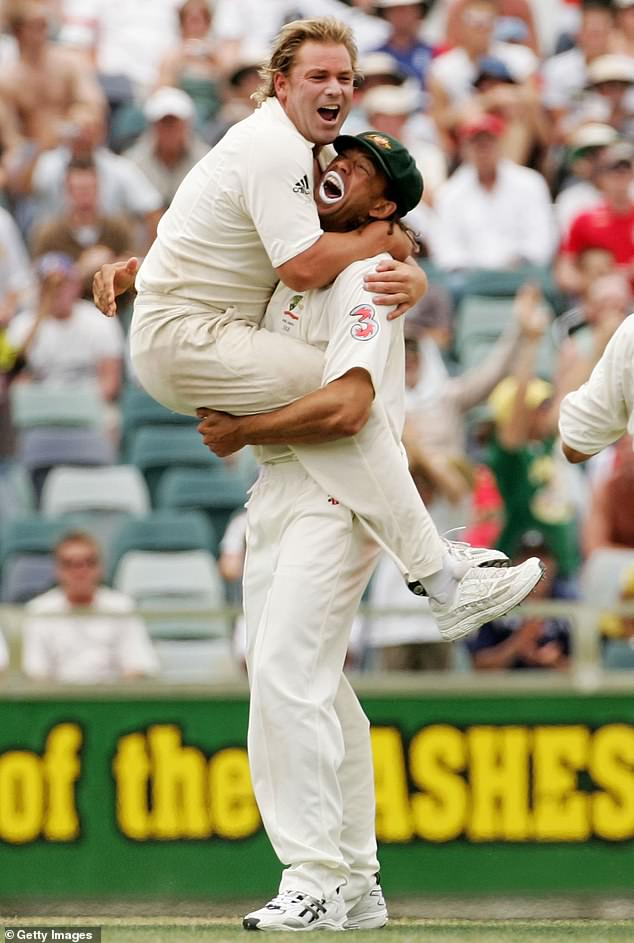
The late Shane Warne and Andrew Symonds celebrating

This week my thoughts turn to an aspect of sport that we do not often talk about. At least, I have not come across much editorial space being devoted to that part of modern sport, details of which I am on the verge of divulging. ‘So why don’t you get on with it, without faffing about it endlessly. We don’t have all day you know,’ I hear you complaining querulously. Your ire is well taken, but you will have to bear with me while I formulate my thoughts clearly. I am not serving instant 2-minute noodles here. More like some cheesy, baked offering with all the garnishing and trimmings. On occasion, not always, I write as the thoughts occur to me in a random, stream-of-consciousness flow. Blame it on James Joyce, whose Ulysses I pick up to read every once in a month or so, but even on the instalment reading plan, I am yet to get through the first 100 pages. This is no reflection on the great Irish novelist. Better men than I have struggled with Joyce.

However, I can relate to one of the novel’s protagonists, Leopold Bloom, who wanders around the city of Dublin, being very abstruse and somewhat incomprehensible. Any writer who casually keeps dropping phrases like ‘All Moanday, Tearday, Wailsday, Thumpsday, Frightday, Shatterday’ or ‘Love loves to love love’ needs close watching. As does Joyce’s compatriot, Irish music legend Sir Van Morrison who was so inspired by JJ that, just under 50 years after Ulysses was first published in 1918, he introduced this line in his song Madame George from his iconic album Astral Weeks – ‘Oh, the love that loves, the love that loves to love the love / That loves to love the love that loves to love.’  Take it from me, those lyrics make more sense, just about, when Morrison sings them.

I shall now jettison all literary pretensions and get down to the res. Where was I? Ah yes, sport. Without being conscious of it, for several years now, I have been wondering about how sportsmen, across various genres, celebrate victory and mourn defeat. It is an interesting area of speculation. In order to assemble my thoughts on this subject without getting into a needless tizzy, I shall concentrate on just two games, Cricket and Tennis. The capitalisation (just this once) is intentionally done to give those two forms of sport the importance they so richly deserve. I could touch on football, The Beautiful Game, in passing but two will suffice for my needs.

I have been watching international cricket ever since the early 60s. Some of them live at the venues, but in more recent times, mostly on wide-screen television. When the first, hesitant stirrings of an idea for this article came to me, I was watching the live telecast of the just concluded 5th and final Ashes Test at the Oval, Australia and England going hammer and tongs at each other at the end of a nail-biting series. I shall not go into the actual details of the game as they are not particularly germane to this piece, and those of you who follow the game know what transpired anyway. I was struck by the surfeit of uninhibited, celebratory joy that was exhibited every time a wicket fell. I am not referring to the mostly inebriated crowd here, but to the on-field players. Mind you this is nothing new, but it has become frenetic during the past couple of decades. It is a commonplace to see players hurling themselves over each other in a heap, hugging, kissing, running all round the field like they were being pursued by an angry swarm of bees. Incidentally, bee or locust invasion on a cricket pitch is not an unknown phenomenon. In a nutshell, everything short of indulging in an orgy of lovemaking is on full display. My heart goes out to the poor bowler who lies at the bottom of the heap under that mass of well-meaning humanity. Footballers are a class apart in this regard. Some of them (unique to Brazilian footers) even mimic the arrival of a baby in swaddling clothes after a goal is scored! The question ‘did you score?’ has more than one connotation. It is a wonder the players do not inflict on themselves serious injuries what with all the hurtling, flailing and jumping around.

Contrast this with something I was watching on YouTube. England’s magnificent fast bowler, Freddie Trueman, getting his 300th Test wicket at the Oval in August 1964 against the old enemy, Australia. He was the first to reach this amazing landmark at the time. He and his English team mates had every right to go bonkers and celebrate, losing all sense of decorum in the process, like their present-day counterparts. Instead, what we see on the grainy, black and white film clips are the players gently ambling up to ‘Fiery’ Fred and politely shaking him by the hand or avuncularly patting him on the back. That includes the opposing batter just dismissed. Trueman, in turn, graciously doffing his cap to the crowd in modest acknowledgment, as if to say, ‘It was nothing lads. All in a day’s work. You can buy me a pint.’

The same could be said of Bradman and Hutton, or even more recently of Gavaskar and Kapil Dev, reaching important milestones in their storied careers and not making a song and dance about it. It must be added here that skipper Gavaskar did blot his copybook when he had unseemly words with his opponents in Australia and almost forfeited the game in a Test match, but that was an exception, goaded by extenuating circumstances, and not the rule. What is more, when a batter was given out, without the benefit of a referral to the third umpire, rarely did he even register the mildest questioning look at the ump. Just walked. As one English coach from yesteryear told his ward who was fuming, ‘I was not out.’ ‘Really? Just look at the scoreboard, lad.’ One realises there is much more at stake these days and emotions run high. Nationalistic fervour, hubris, and above all, obscene sums of money, come into the equation. Among present day stars, I can only think of Zen Master M.S. Dhoni, whose facial expression rarely betrayed any emotion, whether he had just lifted the World Cup or been soundly thrashed. Still and all, it is a matter for reflection. We can keep harking back to times gone by with a nostalgic sigh, but we cannot bring it back. As James Joyce puts it, this time in a way we can follow, ‘Can’t bring back time. Like holding water in your hand.’

On to tennis. We talk about the G.O.A.T. Is it Federer, Nadal or Djokovic? Or will it be Alcaraz? Are those full stops between the four letters that spell ‘Greatest of All Time’ redundant? Are those full stops between I.N.D.I.A. a clever ruse? Who can tell? Not even Joyce, I suspect, but here’s the thing. When the immortal Rod Laver won the calendar Grand Slam on two separate occasions between a 7-year gap (1962 and 1969), he merely essayed a happy hop and a skip, trotted across to his opponent at the net, shook hands, and probably walked off for a beer and a simple pub meal with friends. For the past 20 years or so, we have watched one of those three G.O.A.Ts, great players all, do some or all of the following when match point is done and dusted – fall flat on their backs, get down on their knees and give tearful thanks to the Almighty, chew contemplatively on a blade of grass (if it is Wimbledon and if it is Djokovic), cry when you win, cry when you lose, clamber up the spectators’ gallery to your box, be hugged and kissed by about twenty people, cry some more and finally, when you have to say a few words as winner or runner-up, break down completely. Catharsis. A lady champion is also allowed to lean on Royalty’s shoulder and weep, if said Royalty happens to be the Duchess of Kent or the Princess of Wales, Kate Middleton. Cry and the world cries with you. Tears of joy and sadness witnessed in equal measure. All in all, a lachrymose affair, the prize distribution ceremony.

Which only leaves me with one question. Were players from previous generations impervious to emotion? Were they so philosophical that they took victory and defeat with stoic equanimity? I shall conclude with, no, not James Joyce you will be relieved to note, but with an edited Rudyard Kipling quote which meets the case admirably. ‘If you can talk with crowds and keep your virtue / Yours is the Earth and everything that’s in it / And—which is more—you’ll be a Man, my son!’ In those days, the term Man was employed generically to denote humankind (as opposed to mankind), so ladies kindly hold your horses. I cannot speak for the term ‘son.’ Only Mr. Kipling can answer to that and proffer an adequate explanation from his eternal resting place.

       Taylor Swift’s ‘Love Story.’ Where do I begin?

I have a true confession to make. I am ashamed to admit that I have not heard a single song by Taylor Swift. At least, not till I decided to write this column. I blush to disclose that the lady’s name passes by me as the idle wind. Her records have broken all manner of records, the number of ‘hits’ she generates on Spotify, Amazon Music and other similar portals have hit the roof and gone to stratospheric heights. The Beatles and Ed Sheeran can step aside, else Taylor Swift’s boots will walk all over you. Money, money, money / Must be funny / In the rich man’s world, sang Swedish moneybags ABBA, all those years ago, but even they must be gagging on their Köttbullar (Swedish meatballs), when they get to cast their eyes on Taylor Swift’s bank balance. I say this as a person who voraciously consumes all genres of music from both western and Indian sources. Pop, Rock, R&B, Jazz, Musicals, Classical from the western hemisphere, and from my motherland, Carnatic and Hindustani classical to Hindi and Tamil film songs, particularly those released during the 60s and 70s. That is a pretty full plate and difficult to do adequate justice to, but one does one’s best within the 24-hour time cycle.

Essentially, it all boils down to a generational thing. Taylor Swift represents a generation and a brand of music that I have had neither the time nor the inclination to sit and listen to. Or perhaps, dance to. I also realise that it is not fair to make a virtue out of a lack, and felt, that I ought to listen to the young lady at some length before I pass judgement, one way or the other, on the quality of her music. I should also quickly add that Taylor Swift, for the purposes of this essay, is a symbolic representation of other contemporary musicians like her, most of whom I have not had the pleasure (dubious or otherwise) of listening to, and cannot readily affix names to.

After all, when I was going through my adolescent years, playing The Beatles’ I wanna hold your hand and She loves you, yeah, yeah, yeah, 45 rpms on our Grundig radiogram, my parents were, to say the least, not best pleased. My mother went so far as to say that these were sounds emanating directly from hell and that her sons were doomed and headed for purgatory. In order to steer me back to the straight and narrow, she would make me sit down and take Carnatic music lessons – first from her, and then from a qualified music teacher. Though to be fair to her, she looked more charitably upon Dancing Shoes and Bachelor Boy by Cliff Richard. He was more melodic and pumped less adrenaline and testosterone.

And so it came to pass that it was time to get an earful of Taylor Swift. I simply had to know what magic she imparts that makes her the most sought-after, or perhaps bought-after musician today. Fortunately, one does not have to spend money these days to access her music. It is all there on YouTube or Spotify, not entirely free, but reasonable annual subscriptions do not make that much of a dent in one’s meagre cash reserves, giving one the illusion of getting it all on the never-never. Incidentally, if you are new to Spotify, please dole out a little extra cash and take the ‘no ads’ option. Otherwise, your listening pleasure will be ruined by periodic punctuations of silly ad messages right between your favourite tracks. Take it from me, it is no fun being rudely interrupted by a high-pitched male or female voice urging you to buy this or that brand of insurance, right between the 1st and 2nd movements of Bach’s 3rd Brandenburg Concerto. Sacré bleu!

What is it about Taylor Swift that every time I attempt to start writing something about her, I get side-tracked onto something else? Part of the reason can be ascribed to my lack of adequate knowledge of her evidently impressive body of work, the other part being a deep-seated reluctance to make the effort to get to know exactly what makes her tick. Somewhere in the dark and biased recesses of my mind, I am sub-consciously worrying that I might actually get to like her passionate outpourings, which could very well be the thin end of the wedge. That may not be an entirely undesirable thing, particularly if I run into a group of adolescent teenagers who are sold on Ms. Swift. I could keep the conversation going for a while, if not actually impress the hell out of them (‘Uncle, you are so cool’). That being the case, a crash course on the music of Taylor Swift was in order. ‘Greatest Hits of Taylor Swift,’ I googled. As ever, Google obliged with 30 of her smash hits for me to savour.

At which point I discovered that Taylor Swift was not just about songs and music. It was about short films, lavishly and expensively made, over which her songs were played and she acted, sang and danced with gay abandon assisted by a ‘cast of thousands.’ Songs like Love Story, Shake it Off, Blank Space, You Belong with Me, Anti-Hero and All Too Well: The Short Film. The last named goes on for a full 15 minutes, where our protagonist shows off her acting and singing skills. In other words, you do not merely listen to Taylor Swift (you can if you close your eyes), but you must necessarily watch her as well in order to derive the full benefit and impact of her talent.

 After a while of ‘watching’ this I felt like closing my eyes. None of those songs meant anything to me. They do not easily roll off the tongue like Imagine, Mrs. Robinson, Yesterday or My Way. If anything, Taylor Swift reminds me a lot of a souped-up version of Madonna from the 80s. Not that I had much time for Madonna either. The problem is, I am searching hard for the music, based on which these ladies have been raking in the shekels like you wouldn’t believe, and I am not finding it. If there is a smidgen of melody in any of these songs, it is being kept a closely guarded secret. Rhythm, there is plenty of I admit, but too much of an insistent, driving beat can only result in a splitting headache. I could be inviting howls of protest from the hordes who are yet to obtain their driving licences, but that is a chance I am going to have to take.

It is easy for me, long in the tooth as I am, to sit back and be hyper-critical of a present-day superstar who, with hardly any effort, can sing her way to the top of the charts even if she merely mouthed Baa-baa, black sheep. When I came across Swift’s Love Story music video I thought, ‘Ah, at last she is doing a modern-day cover of that lovely Andy Williams classic, Where do I begin? from the 1970 Hollywood tear-jerker, Love Story. Such, however, was not the case. A false dawn. This was Taylor Swift’s original version which bore no resemblance to the 1970 hit release. More’s the pity.

There is a school of thought that with some songs, a single listening won’t do justice. You need to play it a few times before the song sinks into your consciousness and grows on you. Other songs click instantly mainly because of a catchy hook or tune. Thus, I went back and watched / listened to Taylor Swift’s hit songs three or four times. I put them to the litmus test of going to sleep on them, waking up the next morning to determine if I could still recall the tunes. No dice. Complete blank. Which led me to the ultimate conclusion that Taylor Swift and her ilk have a massive fan following but clearly, I am not of their number. As I said before, it could be a generational thing, but I wouldn’t be holding my breath on the assumption that these songs will still be remembered and sung 50 years from now. Like Strangers in the Night or Autumn Leaves, for example. Something like Swift’s Blank Space is in the now, for the moment, purely ephemeral with no thought of the morrow. Her bank balance, however, could last several generations. Provided she does not spend it all on her wardrobe and make-up. Not to mention fancy cars and plush mansions.

In sum, I have to say that my not being able to appreciate Taylor Swift’s music has nothing to do with her performing skills. She is strutting her stuff and is adored by her millions of fans who are singing her praises. More power to her shapely shoulders. I have to look inwards and psychoanalyze why I am unable to rise to the level of musical sophistication being demanded of me by Swift’s oeuvre. As Shakespeare, who couldn’t help commenting on anything and everything under the sun, succinctly put it, ‘The fault, dear Brutus, is not in our stars but in ourselves.’

Postscript: Taylor Swift’s recent performance at a Seattle stadium generated seismic activity equivalent to a 2.3-magnitude earthquake by the dancing fans. As Carole King sang all those years ago, I Feel the Earth Move Under my Feet.

How long is a piece of string?

Of late, I have been receiving a few friendly comments from a handful of readers who have my best interests at heart, to the effect that my columns tend to be a tad too long. Happily they are in the minority, but I tend to take any feedback seriously. I reflect. If not exactly riddled with self-doubt, I contemplate and cogitate. Rather like Macbeth, I am not even sure if it is a dagger that I see before me or something less lethal. Do many of the others in my circle feel the same way, and are only keeping their counsel out of a sense of propriety? The very fact that someone has bothered to write in and comment at all, is generally a welcome sign. In order to be even handed, I should also mention that there are many who write extremely nice things about my blogs, and thank you very much indeed. You know who you are. You buck me up no end.

Getting back to the vexed issue of the length of my blogs, I responded to one of my good friends’ comments about the piece being too long with a snappy, philosophical, almost Kierkegaardian ‘how long is a piece of string?’ To his credit, he responded with a terse ‘long enough to become a noose.’ On my part, this was not taken amiss. This is good-natured banter, but he had given me food for thought. Not that I had entirely agreed with him, but still, something over which to chew the cud.

Now here is the thing. On average my columns tend to weigh in at around 1500 to 1600 words. I go in for what is fashionably called ‘the long form essay.’ I could add here that, as long-form essays go, mine will come under the shorter version of the category. There are many distinguished, and some not so, writers who think nothing of spitting on their hands and dashing off four to five thousand words! Without batting an eyelid. Almost the length of a not-so-short story. So, I repeat my cardinal question, ‘how long is a piece of string?’

In the past, when I used to contribute regularly to a few newspapers, I had to cut my coat according to my cloth and restrict the verbiage to around 1000 words or less. Which is not something to be sneezed at, but one was constantly worried about having to curtail one’s natural instincts to spread oneself high, wide and handsome, in a manner of speaking. On the odd occasion that I erred in length, to employ a cricketing terminology, I darkly visualised some junior sub sweating under a naked light bulb in front of his desktop till late at night, burning the midnight oil and resenting the fact, sadistically wading into my piece with a hatchet. Apostrophes going haywire, semi-colons where none should exist, transferred epithets being re-transferred ruinously, sentences and paragraphs getting mixed up. It was a nightmare. Next morning, I would scan the broadsheet with trepidation. Furthermore, it did nothing to enhance my reputation when folks opened their newspapers of a morning with their hot cuppa. At least, now if a hawk-eyed reader swoops down on a clumsy mixed metaphor or a grammatical solecism, I can gallantly put my hand up and say, ‘mea culpa.’

Back to the topic on hand. You see, that is another thing. One aims to stay on the straight and narrow path sticking to the essentials of one’s subject, but every now and then, the main path leads us on to some interesting side roads, turn-offs and alleyways that require a bit of explaining. That is how, without even being conscious of it, the words tend to multiply. I could, of course, suggest to some of my readers that if ploughing through 1600 words feels like a steep climb, perhaps they ought to read my burnt offerings in two easy instalments. 800 words a day should be a leisurely stroll in the park. The downside, however, is that the suspense involved in the wait to get at the second instalment might be too stressful. Was it the butler who put the strychnine in the soup or was it the housemaid? So much simpler to read the whole, damn thing in one go and get a good night’s sleep. Incidentally, it was the squint-eyed gardener!

I am not sure how many of you have heard of the late Miles Kington. He was on the editorial staff of Punch and contributed prolifically to many of Britain’s leading newspapers and magazines. His stock-in-trade, as one would expect of a Punch staffer, was humour. I discovered him during my early days in a reputed advertising agency in Calcutta, where the librarian had the good sense to subscribe to Punch. More for the glossy adverts than anything else. I devoured the magazine and Miles Kington was my favourite columnist. In more recent times, I have been fortunate enough to access his books online and not a day passes when I don’t read and re-read his delightful musings.

The reason I brought his name up was that he apparently wrote a column a day, anything from 1000 to 2000 words. Yes, you read that right. For nearly forty years, almost till the day he breathed his last, this indefatigable humourist wrote a piece every single day! It would greatly surprise me if he is not featured in the Guinness Book of World Records. What is more, his editors swear Miles’ quality never wavered, and his choice of subjects could be just about anything under the sun or nothing at all. So here I am, wondering how to manage to write one column every week, huffing and puffing, without being gently rapped on the knuckles for contaminating my mailing list’s inboxes with tiresomely long pieces, when good, old Miles Kington could do it on a dime.

There is a personal postscript to the Miles Kington story. A story I might have told before, not that anyone will recall, and at my age, repeating myself is an occupational hazard. In my callow, ad agency days, people like Miles inspired me to write little snippets purely for my own pleasure. On one occasion, I decided to write a longer snippet, if that is not a contradiction in terms, and in a rash moment of bravado, dispatched it par avion, by registered post to Miles Kington ‘for favour of publication in your esteemed magazine.’ Which, of course, was Punch. We are talking mid-70s here. The post office charged me a pretty penny for the stamps to London. Rather ambitious, you might say, but what the hell. Young blood. Nothing ventured, nothing gained. Or, if you prefer, in for a penny, in for a pound.

Nothing was precisely what I heard for quite a few weeks. Just when I had all but given up the ghost, a light blue envelope with a postage stamp bearing the Queen’s silhouetted bust arrived. Next to that was franked the Punch logo in black. My heart leapt upstream like a young sockeye salmon in season. I opened the envelope with great care, lest I should inadvertently damage part of the precious contents, took the letter out with trembling fingers and opened it. There it was, a Punch letterhead with a brief, handwritten note from none other than MK himself, which I reproduce from memory. ‘Dear Suresh,’ it read. ‘I found your contribution most interesting, but the format needs some working and as such we will, regrettably, be unable to carry it. Keep writing. Best wishes, Miles.’ A bit of a blow of course, but I do not believe I have received a regret letter that made me happier than this one. It is preserved in aspic. If only I could find it. For what it is worth, that article which Punch declined to publish carried approximately 1600 words. As you can see, I am wearing Miles’ polite nolle prosequi like a badge.

Eliza Doolittle, the charming, Cockney flower girl from the hit musical My Fair Lady (born out of G.B. Shaw’s Pygmalion) tells off her language guru, the irascible Prof. Henry Higgins with these opening lines of a memorable song, ‘Words, words, words / I am so sick of words / I get words all day through / First from him, now from you / Is that all you blighters can do?’ She makes a powerful point. Today, you switch on your television set to any news channel and what do you get? The Tower of Babel. Perhaps the Tower of Babble would be more appropriate, given how all the participants shout in complete disharmony and we grope to make any sense out of the proceedings. We are on far more civilized ground when it comes to words in the written form.

So, there you are. I had very pious intentions of making this a short and sweet piece, in order to please my friend who first pointed out the lengthy error of my ways. Once, however, I started putting pen to paper, speaking metaphorically, the urge to let myself go was too great. The blog took on a life of its own. You might say it is a kind of affliction, this craving to be long-winded but, as Novak Djokovic said recently, it is what it is. My English teacher in school during the swinging 60s would have approved, but in this day and age of short attention spans, the same teacher would probably have given me detention, six of the best and ordered me to write 500 times, ‘From now on, I shall not write an essay consisting of more than 500 words.’

There you have it. I have crossed the finishing line. Breasted the tape. The verdict is in. 1640 words. Au revoir.

Yorkers and a Deep Third Man at Wimbledon

John McEnroe and Tim Henman at Wimbledon

Tennis: the most perfect combination of athleticism, artistry, power, style, and wit. A beautiful game, but one so remorselessly travestied by the passage of time. Martin Amis, celebrated novelist and essayist.

‘Anyone for tennis?’ Why those three words became a cliché for books published and stage plays enacted during the turn of the twentieth century and beyond, is a bit of a mystery wrapped in a conundrum and couched in an enigma. Typically, if you could visualise a light-hearted comedy of the sort Oscar Wilde was so partial to writing, the curtains will part to reveal the main characters going about their lines with all the sophistication and espièglerie you would have come to expect from a Wildean drama. All of a sudden, without any notice, without so much as a by-your-leave, a character will come bounding on to the stage, dressed all in whites, long flannels as prescribed by the sporting wardrobe of the times, wielding a wooden Dunlop tennis racket still encased in its wooden frame, exclaiming ‘Anyone for tennis?’ This unexpected and, let’s face it, asinine entry line leaves the rest of the cast somewhat bemused and befuddled.

The best response one can imagine is for a Lady Bracknell (The Importance of Being Earnest) or some such grande dame drawing herself up to her full height, her lorgnette flashing on all cylinders, ‘Don’t be silly, Algernon, we are discussing your forthcoming nuptials and you are clearly surplus to requirements. So be off with you.’ Thus chastised, poor Algernon does a quick about turn and disappears off stage, muttering something on the lines of, ‘Well in that case, righty ho, pip pip, toodle-oo and all that sort of rot.’ Which of course, is more Wodehouse than Wilde but I shan’t quibble.

That needlessly elaborate opening paragraph was only to impress upon you the fact that I have been completely engrossed in tennis this past fortnight. And if you still have not cottoned on to why that is so, you are more to be pitied than censured. If you are feeling a bit foxed or indeed, befuddled or bemused like the cast of that fictional play I referred to at the top of this piece, the answer is ‘Wimbledon, silly.’ The crème de la crème of tennis tourneys is the one that takes place in this leafy suburb, after which the tennis fortnight is eponymously named. In England’s green and pleasant land, Wimbledon, adorned by its pristine grass courts, is widely regarded as the one all tennis buffs want to watch or follow, and all players want to win above everything else. Not that the Grand Slams held in Melbourne, Paris and New York are any the less in stature but it is all a matter of perception. For us in India, the exploits of the Krishnans, the Amritrajs, Bhupathi, Paes and Mirza will always be inextricably intertwined with and benchmarked against the green, green, grass courts at London SW19.

However, I am not about to embark on a detailed analysis of how the tournament panned out this year. By the time you get to read this, Wimbledon will be on the verge of bidding a tearful goodbye to fans, players and royalty – not the money, but the sceptre and crown folk from the House of Windsor. The results will be in and we will know whether the human machine, Djokovic added yet another feather to his cap or if the precocious Alcaraz, the inscrutable Medvedev or the wafer-thin Sinner held aloft the Gentlemen’s Singles Trophy for the flashbulbs. On the distaff side, I include the likes of Jabeur, Sabalenka, Svitolina and Vondrousova*. (This is being typed up while the semi-finals are in progress). The influx of new East European and Russian stars every year, particularly on the women’s side of things, has led to our tongues being twisted like nobody’s business. In short, you can get all the results and how they were achieved without my having to weigh in with my two-bit.

In lieu of which, I felt it would be a good idea to concentrate on a different aspect of Wimbledon tennis to share my thoughts with you. Namely, watching the game on television and enjoying the running commentary that goes with it. For the most part, the commentary on TV consists of former tennis champions, mostly British and American, as well as a handful from other nationalities. Our own Vijay Amritraj has been reduced to an insignificant, walk-on part this year. If only the wretched, reverberating advertising commercials in between games were not so intrusive, denying us the pleasure of experiencing the contrasting emotions of the players. And what good do they do for the brands, when our thoughts turn so hostile towards them? If I were in the market for a new car, Renault will be the last on my list of preferences. Ironically, I say this as a former advertising professional!

At this juncture, I would request the readers of this column to indulge me in a small sidebar. Around the time that players in skirts and shorts have been whacking the ball cross court and down the line, not to mention the odd double fault, the Ashes cricket series has been gripping the British nation like never before. If you are a cricket buff, you will know exactly what I mean. The stadiums have been packed to the rafters, while England and their arch enemy, Australia have been going hammer and tongs at each other. No holds barred. Test cricket is alive and well. Even to disinterested watchers, this is not India playing Pakistan after all, the cricket has been riveting and we have been glued to our sets, switching frantically at times between Centre Court and Headingley.

So, what has all this got to do with the tennis commentary, or for that matter, cricket commentary? Tarry awhile. All shall be revealed. Imagine, if you will, American tennis superstar and super-brat of yesteryear John McEnroe in the commentary box at Wimbledon Centre Court, alongside former British tennis ace Tim Henman, describing play. Bear in mind that while Henman, being English, is fully familiar with the niceties and nuances of cricket and tennis, McEnroe knows next to nothing about the game ‘played by flannelled fools,’ but has a few aces of his own up his sleeve. This provides for some interesting exchanges. What follows does not purport to be a word-for-word accurate description of the proceedings. Rather, treat it more as an impressionistic word picture.

Henman – ‘Alcaraz goes for a monstrous forehand, mistimes it, ball flies off the edge of his racket, and is pouched safely at deep third man in the stands. And now a brilliant, deep return from Djokovic. Almost at yorker-length to Alcaraz.’

McEnroe – ‘What the hell was that, Tim? Deep third man? Yorker? You got me there, buddy.’

Henman – ‘Those are cricketing terms, John. Deep third man is a fielding position. A yorker is…well I’ll explain later.’

McEnroe – ‘What the %$#@? Are we watching tennis or cricket? Anyhow, Alcaraz lobs, Djokovic rises to smash for a clean winner. Slam dunk!’

Henman – ‘Well done, John. Touché.’

McEnroe – ‘I say, Tim. I hope I was off camera when I used the %$#@ word? I will get the sack otherwise.’

Henman – ‘Not to worry, John. They know you and know what an incorrigible crosspatch you are. They will be disappointed if you did not throw the odd unprintable expletive. Meanwhile, Alcaraz plays an exquisite forehand pass. Smooth as silk. Like a Joe Root straight drive.’

McEnroe – ‘Who or what is Joe Root? And what is a straight drive? Come to that, what is a crosspatch? I am going nuts here, Tim.’

Henman – ‘Tell you what, John, stay on in England for a few more days after Wimbledon. I will take you to watch the 4th Ashes Test in Manchester. Just for a day, mind you, and I will give you a full cricket education.’

McEnroe – ‘How do you mean, just for a day? How many days does the match go on for?’

Henman – ‘Why, five of course!’

McEnroe – ‘Christ almighty! Five days? You cannot be serious!’

Henman – ‘Now you are starting to quote yourself, John. I can sense the italics. Yes, Test matches are played over five days, and guess what John? Even after that, sometimes we may not get a result. We could have an exciting draw or some very unexciting rains.’

McEnroe – ‘I am not sure I am coming to Manchester. I’ve had all the rain I can take right here in Wimbledon. I think I’ll take a rain check. Ha ha! While we have been faffing around on cricket, Alcaraz is clearly behind the eight ball in this set.’

Henman – ‘Hmmm. Behind the eight ball. I know that one. Baseball?’

McEnroe – ‘You’ve lost it, Tim. You are behind the eight ball. Billiards, buddy. A game you guys in England play so well.’

Henman – ‘My bad, John. Bowled, lock, stock and barrel. Let’s grab a beer at the Wimbledon pub. Oh, and look who is here! Ben Stokes, as I live and breathe. Taking a break from the cricket? Ben, let me introduce you to John McEnroe. John, Ben. Ben, John.’

Stokes – ‘An absolute honour meeting the great, all-swearing McEnroe. May I take a selfie with you and Tim?’

McEnroe – ‘No problem. Any friend of Tim’s. And what do you do for a living, Ben?’

There can be no snappy answer to that amazing question. Stunned, England’s celebrated cricket captain and Tim Henman hurriedly disappear into the milling crowds while McEnroe is left bemused and wondering if Tim has vanished with this stranger, Ben Woakes or Stokes or Foakes or whoever, without paying for the beer.

Cheapskates.

*Unseeded Vondrousova of the Czech Republic shocked Tunisian crowd favourite Ons Jabeur to win the women’s singles title.