Writer’s Block

15 Ways to Stop Writer's Block - ScreenCraft

‘Sometimes the ideas just come to me. Other times I have to sweat and almost bleed to make ideas come. It’s a mysterious process, but I hope I never find out exactly how it works. I like a mystery, as you may have noticed.’ ~ J.K. Rowling

More out of a sense of mulish determination than anything else, I try my hardest to get out a weekly column for my blog. I achieved this with reasonable success when I had a contract with a daily newspaper as there was pressure to meet a deadline. The newspaper industry is presently going through the doldrums and light-hearted columns such as mine are generally given the short shrift. Apparently, nobody wants to laugh these days, and who can blame them? I exclude those that do include a very short, humorous column once in a while, but they are the exceptions that prove the rule. And the imported cartoon strips featuring Dennis the Menace or Charlie Brown cannot be taken seriously either, if you get my drift. I am talking about writing. You know, words, sentences, paragraphs – that sort of thing. Humorous writing is a serious business, not to be trifled with. It is a craft that is shaped and honed over many years.

 Ever since I started my own blog, I experience a sense of freedom. No time or word limit, but somehow that has not come in the way of being able to consistently churn out risible columns which a handful of my friends have found worthwhile to skim through. If I can raise even a few giggles, I consider myself that much ahead of the game. However, there are moments when one is stumped for a topic. I mean, how many times can one write about the Covid19 situation, even as it mutates in its own scary way, which keeps the medical profession all excited and the world at large, all of a twitter. Pun intended. Speaking for myself, the subject is done and dusted. I have covered Christmas and New Year jollifications extensively in previous years, and other than wishing you all a very Merry Christmas and a Happy New Year, giving the receding 2020 a swift kick in the pants will give me immense pleasure.

Then there’s India’s alarming debacle on the cricket field in Australia that everyone’s had their fill of. Those not terribly funny and overwrought jokes about our batsmen’s single digit, ‘telephone number’ performance in the recently concluded Test match at Adelaide are also sorely testing the law of diminishing returns in terms of public interest. ‘Nuff said, is the expression that springs to mind. As for the China situation, all the poor soldiers on both sides are clearly snowbound, and only muffled noises are coming through. They could be echoing singer-songwriter Donald Fagen’s lyrics, Snowbound / Let’s sleep in today / Wake me up / When the wolves come out to play. The farmers and the government are involved in a never-ending game of footsie, also known as ‘who-blinks-first.’ Amit Shah and Nadda are making Mamata go ballistic in Bengal while the Prime Minister’s flowing beard grows longer and longer by the day. All he needs to do is don a fur-lined red suit and cap, and he could be a doppelganger for Santa Claus! All these topics are in a reverberating mode, an absolute nightmare for aspiring column writers seeking fresh pastures.

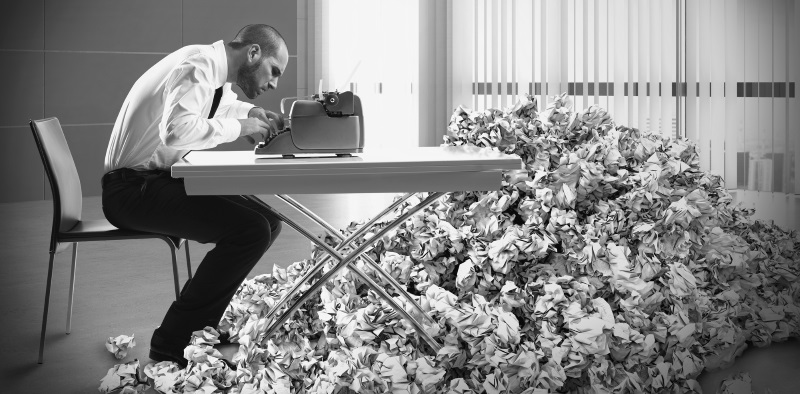
They call it Writer’s Block. This is the problem statement. With the best will in the world, inspiration eludes you. The big idea is not even a speck on the horizon. No light bulbs going off in your brain. Wallowing in a bathtub and waiting for the Eureka moment like Archimedes, is a non-starter. For one thing, my bathroom is not fitted out with a bathtub as there’s not even enough room to swing the proverbial cat. Secondly, the thought of rushing out of the non-existent tub in my birthday suit, yelling something unintelligible, simply because I might have hit a upon a brilliant thought, is not going to make me hugely popular in the household. The domestic staff will have a fit and the good lady wife will throw one. To say nothing of all the displaced water to swab.

An American going by the name of Jameson Parker whom I have never heard of (my bad) and whose provenance is a closed book to me, has a nice line of thinking on dealing with writer’s block. My research reveals that this Parker is a part-time actor and a part-time writer. Little wonder that I have not come across his oeuvre, but he came up with a snappy one. ‘I work on multiple projects simultaneously, so if something stops up on one article/book/story/whatever, I move to another and let my sub-conscious work on the problem. Of course, like P.G. Wodehouse’s Bertie Wooster, I’m not entirely convinced I have a sub-conscious.’ My thoughts, exactly. The fact that he delved into one of Wodehouse’s treasure trove of gems makes Mr. Parker a man after my own heart. That said, I asked myself why not turn to the Master himself? What did the humourist nonpareil have to say on the vexed subject? It was simplicity itself. ‘I just sit at my typewriter and curse a bit,’ observed the creator of Jeeves and Lord Emsworth. Believe you me, it works. The level of profanity you wish to expend on your laptop or desktop, is entirely a matter of personal choice.

I have said this before, that the daily fare that our newspapers provide or television channels spew out can often give us little nuggets of information of an off-beat nature that can provide fertile ground for a writer to explore. ‘Villager cuts off unfaithful wife’s head’ or ‘Woman cuts off unfaithful husband’s John Thomas’ or better still, ‘MP caught watching mobile porno during parliamentary proceedings,’ – headlines like these are fecund grist to a satirical writer’s mill. The comic possibilities are endless. I once wrote a piece based on an actual news story of a villager, deep in India’s agricultural heartlands, who ceremoniously married a block of wood (suitably attired and made up) because he failed to find a bride! Sadly, these things don’t happen all the time. Which is when one finds oneself mulling over where the next idea is going to come from.

In the final analysis, sitting in front of your computer screen and hurling filthy abuse at it may not always be the best way to invite the muse. A tried and tested method is to just think of something completely at random, never mind what it is, and just type out a couple of sentences. And just walk away from it. Even if it is complete nonsense. When you come back to it after a day or two, you will find the opening sentence leading on to another sentence, then on to another and so on. Before you know it, you have managed an entire paragraph. After that, it should be smooth sailing. Perhaps this is what Jameson Parker meant when he talked about the sub-conscious mind going to work. While you sleep, I should add in parenthesis. I guess I cannot provide a better example of coming out of a writer’s block quandary than this very piece that you, dear reader, have been patiently going through. I started off having no idea what I wanted to write about, having exhausted most of the current hot topics in my earlier blogs. I just kept rambling on about my predicament and before I could say ‘writer’s block,’ I have almost completed an entire column. Writing a piece on not being able to write? Now there’s a thought plainly pregnant with potential, with a neat alliteration thrown in to boot. As the German-American novelist and poet, Charles Bukowski so pithily put it, ‘Writing about a writer’s block is better than not writing at all.’ I second that.

Keenan and Shakespeare tread the boards

Scene from Romeo and Juliet
A scene from William Shakespeare’s Romeo and Juliet

The interminable wait for the Covid19 vaccine seems almost over, the United Kingdom leading the pack, while other nations are hot on their heels playing catch-up. 90-year-old Margaret Keenan was the first to receive this long-awaited shot in the arm at her local hospital in Coventry on Tuesday, December 8, 2020. Mark this day and mark it well, for it will go down in our history books as mankind’s latest version of Vaccine Day, or V- Day as the wordsmiths have already dubbed it. Not awfully original, but V-Day holds a special resonance in the United Kingdom, the Brits having rid themselves of another pestilence – a short, megalomaniacal Austrian with delusions of grandeur, a funny, toothbrush moustache and an Oedipus complex. Nurse Mary Parsons holds the bragging rights for being the first to administer the injection. Normally, the nurse in question would be of scant importance to the public at large, but this being a landmark moment in the history of modern medicine, every single detail will be meticulously recorded for posterity. Nurse Parsons, you are as much a celebrity as your nonagenarian patient. Latest reports indicate dear old Maggie is feeling fine and fit as a fiddle.

As if all that was not cause enough for unrestrained joy and good cheer with Christmas and New Year just around the corner, professional scribes in Britain were over the moon with the next beneficiary of the vaccine. A gentleman going by the name of, wait for it, William Shakespeare. Aged 81, this patient from Warwickshire bearing a famous English name, became yet another senior citizen to be administered the Pfizer vaccine to fight the deadly virus that has been, literally, plaguing all of the human race for the best part of 2020. What is more, Shakespeare received his jab, again at a hospital in Coventry not twenty miles from Stratford-upon-Avon, which I need hardly remind you, was the birthplace of the immortal playwright of the same name. Social media have been quick off the blocks with inane vaccine jokes inspired by the Bard’s plays. ‘The Taming of the Flu,’ and ‘The Two Gentlemen of Corona,’ to cite just two examples. I can add my own humble contribution to this dubious list, namely, ‘Julius Sneezer,’ and ‘Coronalanus.’  An apocryphal tale has it that people asked if Margaret Keenan was patient 1A, then was William Shakespeare patient 2B or not 2B? Excuse me while I turn away and retch. More godawful puns and word play can be expected from a country that gave us Shakespeare, the playwright, who may well be turning in his grave, with all the mauling his words are being dealt. I fully expect journos and advertising copywriters to not allow the grass to grow under their feet. They must all be rushing to the nearest pub to celebrate and get as ‘Tight-as-Andronicus.’ You see, it’s catching.

Since both these fortunate recipients were inoculated with the magic vaccine at the University Hospital in Coventry, it is more than probable that they met over a nice cup of tea at the hospital canteen. I cannot place my hand on heart and swear to the precise nature of their conversation, in the event of their having met, but talking to a couple of nurses who were standing by in case of an unlikely emergency, I was able to glean that the two VIP patients were happy as an exaltation of larks (as I’ve heard it described), chattering away like a couple of garrulous magpies. I only have the nurses’ word to go by but the following exchange appears a very credible possibility. One thing puzzled the nurses and others who happened to overhear the animated exchange between the two spavined citizens, which was the strange way in which they spoke. It was not like the way normal people conversed these days. It was slightly worrying, but amusing as well. Worrying because of the nagging fear that the vaccination might have in some way discombobulated the two old-age pensioners. Amusing because they appeared perfectly at ease speaking in this strange tongue.  It was also to be noted that the two of them spoke in a slightly louder volume than normal, as if they were trying to throw their voices from a stage. The term stage whisper springs to mind. Naturally, more and more people, including other doctors and visitors, curious onlookers and passers-by, stopped in their tracks to take in the entertainment. The vaccine appeared to have taken effect. Only too well.

Margaret Keenan – ‘Forsooth William the Younger, it is December, the cruellest month of the year / Now is the winter of our discontent / Made glorious summer by this sunny vaccine of Pfizer.’

William Shakespeare – ‘But soft, what light through yonder window breaks? / It is the east and Margaret is the sun / Thou art truly sagacious, my dear Margaret the Elder / Now are our brows bound with victorious wreaths / Our bruised arms hung up for monuments / Our stern alarums changed to merry meetings.’

Margaret – ‘By the pricking of my thumbs, or do I mean my arms, something wicked this way vanishes forever, the dreaded Covid19 / How now, you secret black and midnight germs / Do your worst / It will pass me by as the idle wind.’

William – ‘As to that, dear Margaret, if I may make so informally bold to address you thus, pin thy ears back and hearken / Tomorrow, tomorrow and tomorrow we keep peering at in anticipation, our eyes optimistically peeled / As all our yesterdays have lighted fools the way to dusty death / Out, out brief Covid, you are nothing but a walking shadow, a poor player that struts and frets his hour upon the stage / And is heard no more.’

Margaret – ‘Thy words flow like divine treacle, gifted William / To inject, or not to inject, that was the question / Whether ‘tis nobler in the mind to suffer the slings and arrows of outrageous Covid / Or to take arms against a sea of troubles with the magic vaccine / And by opposing end them / ‘tis a consummation devoutly to be wished / To sleep, perchance to dream.’   

William – ‘I can see, noble Margaret, that your native hue of resolution is sicklied o’er with the pale cast of thought / But fret not / The vaccine is slowly taking hold / The inevitable pain will give way to immeasurable pleasure.’ 

Margaret – ‘You mock me, William.  At my age, what pleasure can I hope for? / With no wish to hurl insults at you, wishing pleasure on me at my age causes pain / It is like a tale told by an idiot / Full of sound and fury signifying nothing.’ 

William – ‘The lady doth protest too much, methinks. Reflect well, wondrously wrinkled Margaret / Sweet are the uses of adversity which, like the toad, ugly and venomous / Wears yet a precious jewel in his head.’

Margaret – ‘Thou art veritably a philosopher, William. / And let me complete your thought process / And this our life, exempt from public haunt / Finds tongues in trees, books in the running brooks / Sermons in stones, and good in everything.’  

William – ‘Quite, quite. And now, balmy sleep beckons, tired nature’s sweet restorer / We most royally shall now to bed / To sleep off all the nonsense we’ve just said. Good night, sweet Princess.’

Margaret – ‘Good night, sweet Prince; And flights of angels sing thee to thy rest.’

William – ‘Oh, Margaret.’

Margaret – ‘Oh, William.’

At this tender moment, there was a rapturous round of wild applause from all the nurses, doctors and other spectators who stood around hooting and whistling in wild abandon. Romeo and Juliet magnificently reworked and revisited. The Director of the hospital came rushing out to see what the commotion was all about, but soon joined in the festivities. He approached Margaret and William and asked them if they can do a repeat at a later date to an invited audience. The unsung heroine and the hero looked completely blank. They seemed oblivious to what had just transpired, claiming they were just enjoying a refreshing cup of tea, discussing the possible side effects of the vaccine, Brexit and the fine weather they were having in that part of England.

Footnote: Word has just filtered through that the government of Great Britain has placed orders for an undisclosed quantity of that particular batch of vaccine from Pfizer, that has so energized 91-year-old Margaret Keenan and 81-year-old William Shakespeare to wuthering heights of literary and theatrical excellence. To the uncharitable accusation that our Maggie might have been a ‘crisis actor,’ one paid to promote the vaccine, she dismissed the frivolous charge in typical Shakespearean fashion. ‘A pox on you,’ she cried, in affronted indignation. ‘If it was good enough for one of our finest dramatic actors, Sir Ian McKellen, it’s good enough for me,’ she added. And a final word to all those who are about to take the vaccine. Think. For one, brief shining moment, you too could wax eloquent, if disjointedly, through the words of William Shakespeare, the genuine article from Stratford-upon-Avon.

‘O Sole Mio!

Rajinikanth birthday wishes pour in as Thalaiva turns 67, here is how  industry, others wished superstar - The Financial Express
‘It’s now or never,’ says Superstar Rajinikanth

In case there are those amongst you, gentle readers, who are scratching your heads and going, ‘What has the title of this piece got to do with Superstar Rajinikanth?’, tarry awhile and I shall enlighten you. When our Thalaivar, (literally meaning the head honcho but metaphorically, the monarch of all he surveys) decided to formally announce his decision to enter politics and start his own party, he kept repeating the phrase, ‘It’s now or never.’ A line that has now taken on the attributes of a campaign slogan. Naturally, he said it in Tamil (Ippo illenna eppovum illai), but the newspapers and TV channels were full of the English translation. Presumably, he was trying to convey to his millions of adoring fans that the time has come, and not a moment too soon, to set things right in the state of Tamil Nadu. What is more, he is the man to do it, and there is no time like the present. His legion of faithful have been waiting for this announcement for what seems an eternity, and when it finally did come, their joy was unconfined. They were dancing on the streets, bursting crackers and generally behaving like men and women possessed. Covid19 precautions can go take a flying jump.

Explaining the relevance of this piece to its title is a two-step process. ’O Sole Mio (literally ‘My own sun’) is a Neapolitan song written and composed in 1898 and has become one of the most popular songs rendered in the traditional Italian operatic style. The likes of Luciano Pavarotti and Placido Domingo could not conclude their concerts without a curtain call that invariably featured ’O Sole Mio. Such was its immense appeal. That was step one. Moving on to step two, the tune was copied and achieved international fame when, in 1960, King Elvis Presley, recorded this song with English lyrics, It’s Now or Never. The resultant single broke all records and, to this day, remains one of the biggest selling discs ever released. As love songs go, Elvis’ rendition of It’s Now or Never may never be displaced from the top of its residing perch.

We move from the sublime to the cathartic. Whether Superstar Rajinikanth was at all aware of the musical significance and connotations of the ‘It’s now or never’ slogan we shall never know. Chances are he was not. However, since he may have fortuitously hit the jackpot in terms of globalizing his Tamil exhortation to the Indian electorate, I was keen to bring this happy serendipity to the great man’s notice. I will count on some helpful Samaritan to pass this vital information on to our adored Thalaivar. There are many who may take the view that the veteran thespian has no particular need to exploit and take advantage of western popular melodies, be they Neapolitan or English. His raging fame in his home state will be more than adequate to see him through, with a little help from powerful electoral allies. That, to my way of thinking, will be taking a limited, narrow view of Rajini Sir’s explosive potential to garner world fame, particularly in light of the fact that our non-resident Indians living abroad abound in their millions. I am also given to believe that Rajinikanth enjoys serious traction in, of all places, Japan! These are important issues that any shrewd campaign planner should bear in mind. Tamil Nadu today, world domination tomorrow!

This train of thought set me thinking on the lines of extending the idea and arming the Rajinikanth camp with a series of songs that could have special relevance and resonate with his constituents, keeping in view the global audience that needs to be inveigled into the net. Rajinikanth hardly needs any help in his native Tamil Nadu where he is worshipped with the same reverence as all the godheads of India. When I employ the phrase ‘in his native Tamil Nadu,’ I realize that I am paltering with the truth. There are those punctilious types who will be up in arms to ‘correct’ me. So, let me set the record straight. As pretty much everyone knows, Rajinikanth was born into a Maharashtrian family settled in Bangalore. His original name was Shivaji Rao Gaekwad, who in his early days worked as a coolie and a bus conductor in Bangalore. He finally strayed into Chennai where he was spotted by famed director K. Balachander and debuted as a villain alongside fellow star and now turned fellow, or perhaps rival, politician Kamal Haasan in the hit film, Apoorva Raagangal (1975).

 It is a unique peculiarity of Tamil Nadu politics that celluloid superstars turned politicians emerged from states outside Tamil Nadu. To take just two examples, Chief Minister M.G. Ramachandran came from Kerala and his close confidant, iron lady J. Jayalalitha was from Karnataka. Rajinikanth joins that unique migrant club. What is more, achieving superstardom on the silver-screen has a direct positive bearing on political success, notably in south India. Witness the career of former Andhra Pradesh Chief Minister, N.T. Rama Rao, whose mythological roles (Rama in Sampoorna Ramayanam, 1958) assured him a literally holier-than-thou place in people’s hearts and minds.

Now that Rajinikanth has set the cat among the pigeons by jumping into the political fray he is, not surprisingly, attracting unwelcome attention. The DMK have already dubbed him an ‘instant politician,’ and he will be called harsher names in time to come. That’s politics. Knowingly or unknowingly, since he flagged a famous song title as his main campaign plank, I felt it proper to help him with a further clutch of western pop songs that he could profitably use to his advantage. After all, just the one song could run the risk of running aground through campaign fatigue. On the age-old theory that variety is the spice of life, here is my suggested list of songs for Rajini, over and above It’s Now or Never. I am sure the thespian’s PR machinery will find the appropriate Tamil equivalents for these songs.

I Want to Hold Your Hand – The Beatles launched themselves into orbit in 1963 with this classic pop song that captured the imagination of all teenagers and older people as well. In a sense, that is precisely what Rajinikanth should be saying to his fawning public as he stakes a claim for political stardom. Bollywood, long before it acquired that moniker, shamelessly copied this song with Hindi lyrics for the film Jaanwar in 1965, the great Mohammed Rafi ghosting for India’s jumpin’ jack, Shammi Kapoor. S.P. Balasubrahmanyam would have done a brilliant job of it in Tamil for Rajini.  Sadly, SPB is no more, but I am sure a suitable alternative could be found.

You Can’t Always Get What You Want – The Beatles’ alter ego, The Rolling Stones were in philosophical mood when they released this lovely hit in 1969. This should be a salutary reminder to all our mad fans who vote in film stars to the highest office that they should temper their expectations, and help their candidates by setting realistic goals. Rajinkanth would do well to take heed of the Jagger / Richards lyrics and tweak it for his own campaign requirements.

My Way – Ol’ Blue Eyes, the inimitable Frank Sinatra had the world swaying to this immortal classic, released in 1969. Although the song talks mainly about a man who is singing his swan song, these words would resonate with our Thalaivar as he embarks on an exciting, new political career. I planned each chartered course / Each careful step along the byway / But more, much more than this / I did it my way. That said, it would appear that Sinatra had already foreshadowed Rajini who thrilled us with his now unforgettable catchphrase, En vazhi thani vazhi (‘My way is my own, unique way’) in his superhit film, Padayappa in 1999.

Don’t Think Twice, It’s All Right – The eternal troubadour with a message for every occasion, Nobel Laureate Bob Dylan nailed it in 1962 with this brilliant composition. Our once and future leader, Rajinikanth could be saying just that to his army of fans and potential voters. As long as they are with him, they need have no fear, no second thoughts, it’s all going to work out just fine.

I’m Your Man The great Canadian singer-songwriter, Leonard Cohen, assured his fans in this wonderful song with these lyrics, If you want a boxer, I will step into the ring for you / And if you want a doctor, I’ll examine every inch of you. Our Superstar could profitably take a leaf out of Cohen’s songbook and rework the message in Tamil, to the delight of his ardent fans. In his screen-life, Rajini has boxed his way out of many tight situations and healed the wounds of the sick and the lame. He has always been ‘their man.’

Here, There and Everywhere Another hit from The Beatles, this melodic song was released in 1966 and should have special resonance for our beloved hero and aspiring political leader. Rajinikanth will be travelling the length and breadth of Tamil Nadu, India even, exhorting the voters to cast their ballots in his favour. He will be here, there and everywhere and his humongous fan club simply won’t get enough of him.

I Just Can’t Stop Loving You – The heartthrob of millions, Michael Jackson had his fans swooning to this wonderful ballad. Rajinikanth will be pulling out all the stops to let his audience know that he will love them till the sands of time give over. Not that his fans need any convincing. They simply can’t stop loving their Baasha (1995).

There you are, my selection of a clutch of songs to add to Rajini’s repertoire, including his own contribution of It’s Now or Never. His fans have been waiting for a long time for this announcement that he is ready to join battle, with a heart for any fate. But they ought not to have been fretting. Surely, they can recall what he said in another of his many hit films, Muthu (1995). Naan eppo varuven, eppadi varuvennu yaarukkum teriyadu. Aanaal varavendiya nerathila correcta varuven (‘No one can tell when or how I will arrive, but I unfailingly will, when the time is right.’)

His Tamil accent may still be a bit dodgy, a work in perennial progress, but that won’t worry the voters. In fact, it’s part of his unique charm. They see Rajinikanth as the man of and for the moment. It’s now, or never.

Separating the wheat from the chaff

Wheatfield with crows. Vincent van Gogh, July 1890

Whoever makes two ears of corn, or two blades of grass to grow where only one grew before, deserves better of mankind, and does more essential service to his country than the whole race of politicians put together. Jonathan Swift.

The recently introduced farm bills passed by voice-vote in Parliament has expectedly stirred up a hornet’s nest, largely in states not under the ruling BJP’s dispensation. Punjab and Haryana have been the most vociferous and the farmers have taken to the streets, marching towards the capital, doing their own version of Gandhiji’s Dandi Salt march. The bills were formally tabled as Farmers’ Produce Trade and Commerce (Promotion and Facilitation) Bill, Farmers’ (Empowerment and Protection) Agreement on Price Assurance, and Farm Services Bill and the Essential Commodities (Amendment) Bill. These bills, as is the norm, received formal approval from the President of India and became Acts. They aim to provide farmers with multiple marketing channels, break the so-called monopolies including that of government regulated mandis (market yards), the avaricious role of middlemen and provide a legal framework for farmers to enter into pre-arranged contracts among other things. That, of course, is the government’s position and avowed intention. The opposition, as is their wont, read insidious motives and are up in arms over what they consider to be a grave injustice to the entire farming community. Battle lines have been drawn, and we can expect this struggle to go right down to the wire. The Government has invited the farm lobby for discussions, but both sides are playing footsie, keeping their cards close to their chests. Plenty of political brownie points are up for grabs.

It is always fascinating for a disinterested observer to ruminate on how a piece of far-reaching legislation can turn so acrimonious. The government claims the new laws are revolutionary, long overdue and frees up the farmer to deal with and buy from any party, while retaining his existing option to engage with the mandis. On the other hand, those opposed to the bill view it as draconian, intended to hurt the poor farmers and put more money in the pockets of a few rich corporates. Depending entirely on where one’s political sympathies lie, you can take sides with either of the two attritional protagonists, ranged on either side of the binary, who are going hammer and tongs at each other. The Government sees this as a win-win situation for the farming community, while the naysayers cry ‘shame-shame.’

On television any number of experts, self-appointed or otherwise, are holding forth on the subject. Some provide studious, long-winded, academic dissertations while others merely froth at the mouth. Clarity of thought is a scarce commodity. The average viewer is not fully abreast of the nuances of APMC (Agricultural Produce Marketing Committee), a fancy name for the mandis and MSP (Minimum Support Price), and wonders what all the fuss is about. MSP is at the heart of the matter. Under the circumstances I thought it prudent to approach an economist with whom I have a nodding acquaintance and buttonhole him for an interview. I explained my predicament, which included a complete lack of understanding based on the daily ruckus on TV and requested that he answer my questions in a clear and concise manner, such that it will make sense to the meanest intelligence. He readily agreed on condition of anonymity. I am therefore giving him a pseudonym, Jogendranath, Jogi to his friends. We chatted on Zoom.

SS – ‘Good morning, Jogi. Thank you for agreeing to this virtual meeting on a vitally important matter. I won’t beat around the stubble bush, and will get straight to the point. Why do we find ourselves in a situation where something being viewed as good for the farmers is also being castigated as being terrible for them?’

Jogi – ‘That is a very good question, very good question indeed.’

SS – ‘And you are about to enlighten me with an answer?’

Jogi – ‘Patience, my friend. There are all sorts of factors at play here. The issue is complicated and there are no easy answers. As Adam Smith said, “I have never known much good done by those who affected to trade for the public good.” What is also worth noting is the support expressed for our farmers by Justin Trudeau of Canada.’

SS – ‘What has what Adam Smith said, god-knows-when, got to do with anything? As for Justin Trudeau, he is famous for dropping diplomatic bricks, particularly on matters concerning India. He is actually currying favour with the Sikh community in Canada. Forget about Trudeau. Just tell me why so many people seem to think, fallaciously some aver, that these new Acts will summarily do away with MSP and APMC, meaning the mandis.’

Jogi – ‘I am an economist. Adam Smith is my god, kindly do not speak ill of him. And you don’t have to spell things out for me. If I have to start from something as basic as MSP and APMC, then I am wasting my time. I can do no better than to quote Philemon, “A farmer is always going to be rich next year.”’

SS – ‘Who on earth is Philemon and what on earth does he mean?’

Jogi – ‘That’s two earths you employed in the same sentence. Well done. Agriculture is all about the earth – tilling the land, growing the crops, selling the produce in the markets and praying for rain. Not necessarily in that order. It’s a simple business demanding simple solutions, when you think about it. Why politicians have to go and complicate it I shall never know. And since you ask, Philemon is a Biblical character. That’s all you need to know. Occam’s razor.’

SS – ‘How much?’

Jogi – ‘Occam’s razor. A theory propounded by William of Ockham in the 14th century that postulated that from a set of alternative solutions “the simplest explanation is usually the right one.” But try telling that to our farmers and politicians.’

SS – ‘Look Jogi, I can’t understand a word of what you are saying. Can you stick to the subject on hand, which is to do with the farmers’ agitation over the recent Government announcements?’

Jogi – ‘Ha ha! Reminds me of what Alan Greenspan said, “If you think you understand what I am saying, you do not understand what I am saying.” Does that answer your question?

SS – ‘Have you anything to say for yourself Jogi, or are you going to keep throwing quotes at me, that too all by foreigners?’

Jogi – ‘I’ll have you know I went to the London School of Economics. But I am not without an Indian sensibility. Let me quote the father of India’s green revolution, Dr. M.S. Swaminathan, who said, “If agriculture goes wrong, nothing else will have a chance to go right in the country.” Happy?’

SS – ‘No, I am not happy. All very well you showing off about LSE. It’s JNU that matters here. Even our Finance Minister is an alumnus of JNU. I want you to throw some light on whether these announcements are good or bad for the farmer. If so why, and if not why not? You keep saying you are an economist. You are an economist, aren’t you? Is that too much to ask? And if we must trade quotations, here’s John F. Kennedy on farmers, “The farmer is the only man in our economy who buys everything at retail, sells everything at wholesale, and pays the freight both ways.” Try that on for size.’

Jogi – ‘JFK, eh. Nice one, but don’t become agitated, my friend. You are not a farmer. Leave the agitation to them. Remember what Samuel Johnson said, “Agriculture not only gives riches to a nation, but the only riches she can call her own.” You ask me, rather naively, if these measures are good or bad for the farmer. What is sauce for the goose is not always sauce for the gander. Capiche?

SS – ‘Capiche? What are you, a card-carrying member of the Mafiosi? I am at the end of my tether here. For the last time Jogi, do you think the government will be able to bring the farmers round to their way of thinking? Right now, neither side is willing to yield an inch. One side says no rollback, and the other side refuses to roll over and die. Where does that leave us, and what is more, how is the government planning to explain the scheme and convince the farmers of their good intentions?’

Jogi – ‘Boy, you do ask a lot of questions. Good intentions? The road to hell is paved with good intentions, my friend. What we have here is a face off, with neither side wanting to lose face. The need of the hour is a bit of give and take. I believe the government’s proposals are fundamentally sound. Only they have not sold the idea articulately to the stakeholders. Remember Marshall McLuhan’s famous line, “What we’ve got here is failure to communicate.”’

SS – ‘I thought that line was from the Paul Newman classic, Cool Hand Luke. You’re getting all mixed up, Jogi. Marshall McLuhan was an advertising guru who said, “The medium is the message,” which is quite appropriate in the present context. I really don’t know why I invited you over. Anyhow, I am calling time now. Next time, I’ll invite a farmer. I am sure he will be better informed. Thanks for nothing.’

 Jogi switched his monitor off, muttering strange oaths. As for me, I’ve tried everything. Observing pundits over television and the press, as well as talking to reputed economists, and I am none the wiser for it, other than learning a few new aphorisms. This vexed subject of agricultural reforms announced by the government has foxed me. We have an ace communicator in our PM and yet the message has been lost in translation. I think I’ll take a leaf out of my friend Jogi’s book and sign off with a snappy quotation from the Mahabharata. This is Ashwatthama to Duryodhana, ‘Passion, engagement, skill and policy – these are the means to achieve objectives.’

Top that, Jogi.

How does my garden grow?

Claude Monet Irises in Monet's Garden painting anysize 50% off - Irises in  Monet's Garden painting for sale
‘The Artist’s Garden at Giverny’ by Claude Monet c.1900

Gardeners don’t get old. They go to pot. Anonymous.

I come from a family that knew next to nothing about gardening. My earliest recollection of a private garden was one that fronted our bungalow in Kuala Lumpur, where my father was stationed with a reputed Indian commercial bank with branches in the Far East. It was a well-maintained lawn that served as a badminton court, and come to think of it, some flowering plants grew around the periphery of the patch. Not that we took much notice. We played badminton with our Chinese amah (housemaid), and a gardener would potter around during the day attending to the shrubbery with a watering can or strolling up and down with a lawnmower, and extinguishing the lives of a few snails and green fly, squirting them with patent mixtures. For the life of me, I cannot recall my parents talking in an informed way about roses, tulips, lilies, gerberas or peonies. Even the common-or-garden bougainvillea would have challenged them. Our garden just seemed to take care of itself.

A few decades later, I married into a family for whom gardening was an article of faith. In whichever city we happened to be located, the nearest horticultural centre would be identified and fortnightly or monthly visits were pretty much de rigueur. It was part of the job list. The boot of our car would be jam-packed with all manner of potted plants, branded manure, shears, spades, insecticide sprays and sundry other gardening implements. My wife would evince the same level of heightened excitement on her fresh botanical purchases, as I would on returning from a record store with an armful of LPs or CDs. This contrarian parallel can also be drawn when it came to owning pets. My family had no time for the furry animals. In fact, we grew up with a morbid fear of dogs. An aunt of mine, on visiting a dog loving family, famously clambered up on to the guest’s drawing room table and refused to alight till the frisky pooch was locked up in the bedroom. Whether she exclaimed ‘Eeeks’ (in Tamil) or not will remain a subject for speculation. The reverse was true for my wife’s family, who were dog lovers to the core. Making the switch, for me, was not easy but I did learn to love and be loved by our canine chums. Then again, periodic visits by my mother to stay with us were fraught with tension. Her distaste for our spaniel was made plain, and the doggie made no bones about his reciprocal hostility. Plants were a different matter.

With the efflux of time, I began to appreciate, even if it was at arm’s length, why people found gardening such a soul satisfying hobby. Not unlike those who go gaga about the thrills of cooking, so long as help was at hand to cut the vegetables and wash the dishes. Now that we have retired from active professional life, our terrace garden atop our apartment is my wife’s haven for peaceful solitude and contemplation. Potting new plants, re-potting old ones, knowing exactly how much water each plant needs and climatic conditions governing the same, looking for pesky insects and fungus that could be injurious to a plant’s health and dealing ruthlessly with them – all these form part of the amateur gardener’s stock-in-trade that ultimately leads to nirvana. In case you get the wrong notion that I was some species of static wall flower during these gardening activities spearheaded by my better half, let me hasten to add that I was no slouch with a helping hand, now and then. Like taking down dried or dead leaves from creepers and other tall plants and helping to move heavy pots, if the need arose. What’s more, to provide the right mood I could always sing a snatch from that old hit by Lynn Anderson, I beg your pardon / I never promised you a rose garden.

That said, I have to confess that I have never quite been able to get the hang of the art or science of watering the plant. On the odd occasion when my wife is out of town and leaves me with the onerous task of watering, I never seem to get it right. Either I stand guilty of overwatering or not watering nearly enough. Nor surprisingly, I tend to adopt a ‘one size fits all’ approach, a democratic method of the same amount of water for all the plants, the theory being that I ought to get it right at least half the time. Judging the degree of moisture and adjusting the water level accordingly is a closed book to me. It is an inexact science and requires fine tuning on a daily basis. Net result, my wife returns to find more drooping plants than bright and cheerful ones. She has, in common with other successful gardeners, what is commonly referred to in the trade as ‘green fingers.’

There were many other household activities and chores I knew very little about and found myself, post marriage, having to take an active part in – they kept things from me. Changing a light bulb, for instance. It is incredible that I had never actually changed one in my family home. If a bulb went on the blink with a pop, it was Pop who changed the bulb. Simple as that. Forget about changing a fuse. Fuse? What is that? It was no different when confronted with a flat tyre. Just stood helplessly by the roadside pavement and allowed a couple of unscrupulous operators, who always appeared magically out of thin air, to do the needful and charge me an arm and a leg. Perhaps the most difficult chore I have faced is with respect to hanging a photo frame or a painting on the wall. The way I saw it, all that was required was to climb on to a stool, decide on a suitable height on the wall, hammer a nail in and hang the frame, and hey presto, Bob’s your uncle! The risk of a hammer blow on one of my delicate fingers was high, given that I was all thumbs. How little I knew. My wife would approach the same task, only she would be armed with the whole paraphernalia like white cement, spirit levels, an electric drill, a hammer, little chips of wood and a couple of other stuff I can’t remember. Several iterations later, the job was complete, though she would never be fully satisfied with the alignment of the frame with the rest of the wall, constantly squinting her eyes and muttering to herself. When my opinion was sought, I would unhesitatingly say, ‘It’s perfect.’ Let sleeping frames lie, was my motto.

Finally, to get back to where we started, viz. gardening, we were distinctly fortunate to have had the opportunity to visit several countries in Europe where the plant life and blossoming flowers were taken for granted by the locals. For us, however, the manicured gardens and the dazzling variety of flora simply took one’s breath away. Particular mention must be made of that green and pleasant land, England, where we were spoilt for choice when it came to wallowing in greenery. A trip to London invariably found us at Kew Gardens or some such botanical attraction, where my wife had her fill of what the poet Andrew Marvell described so beautifully, Annihilating all that’s made / To a green thought in a green shade.

Our garden – my wife dedicates herself untiringly to its upkeep. I do admire nature’s beauty, but for me, it is too much like hard work. To quote Jerome K. Jerome from ‘Three Men in a Boat,’ I like work; it fascinates me. I can sit and look at it for hours.

When Lutyens became an adjective

Architecture Misfit #35: Edwin Lutyens | misfits' architecture
Sir Edwin Landseer Lutyens (1869 -1944)

Those amongst you who are glued to a specific set of television news channels or read only a couple of newspapers that lean towards a particular side of the Indian political divide, will have frequently come across the term ‘the Lutyens lobby.’ The expression is usually employed in a distinctly pejorative manner, and on television, the anchor or the panellist on the debate will sport a somewhat superior and unpleasant smirk while delivering himself or herself of this nomenclature. To cut to the chase, let me attempt to describe how the name of a great British architect, Sir Edwin Landseer Lutyens, has become an unfortunate metaphor for all the less endearing qualities of Nehruvian socialism, left of centre thinking and at this point in India’s political history, a somewhat wobbly place to be in. Especially if you belong to the Congress Party or you happen to be addressed by the surname of Gandhi without the Mahatma prefix. Not to speak of all the acolytes who speak on their behalf.

How and why has this come about, this strange name-association calumny? The reasons are not far to seek. Edwin Lutyens it was, who played an instrumental role in designing and building the modern city of New Delhi and its impressive edifices including the India Gate and the Rashtrapati Bhavan, originally christened Viceroy’s House. Thus, New Delhi also acquired the affectionate moniker of Lutyens’ Delhi. It should be mentioned, en passant, that Lutyens collaborated with another British architect, Sir Herbert Baker, in designing much of New Delhi. However, in public perception here in India, Baker appears to have been given short shrift and Lutyens has cornered all the glory, his name up in lights, though flickering and dimming in more recent times. Sir Christopher Wren has been widely celebrated as Britain’s greatest architect, but there are those who believe that Lutyens was not far behind, and fully deserved to rub shoulders on an equal footing, if you’ll pardon the mixed metaphor, with the man who designed the wondrous and imposing St. Paul’s Cathedral in London. Similarly, Swiss-French architect Le Corbusier has enjoyed basking in the limelight for his contribution in designing the modern city of Chandigarh, but he has not quite achieved the fame (or notoriety) that Lutyens has, for entirely different reasons through no fault of his own.

To those in political and media circles who are presently dictating the agenda of the nation, namely the Bharatiya Janata Party (BJP), its allies and media channels who are openly sympathetic to the ruling dispensation, the Congress Party’s precipitous decline on the national scene has provided them with an ideal whipping boy. The typical perceived profile of a Lutyens product is a person who generally speaks faultless English, at times with an Italian accent, probably graduated from Jawaharlal Nehru University (JNU), refuses to recognize the rapidly changing political landscape, is forever bemoaning the lot of the poor and the underprivileged, but for the most part lives in comfort and at times, even opulence. That is an exaggerated image but that is how they have been projected and kept stewing between a rock and a hard place. They appear out of joint with the times. If and when the Indian National Congress does come out of the doldrums and returns to its former glory, which seems very far away at the moment, perhaps they will find a suitable title to crown their formidable opponents with. Till such an unlikely event actually fructifies, it is they who are being crowned and very painfully at that.

Idiomatically speaking, one can speculate that if Edwin Lutyens could witness the hullabaloo that is being made in India over his name, he would be turning in his grave. Even that would be factually and technically wrong because he was cremated at the Golders Green Crematorium in London, and his ashes are buried in the crypt of Wren’s St. Paul’s Cathedral – a nice touch of irony. Why he was cremated and not buried, as is the standard western practice only an assiduous historian can enlighten us. Perhaps his long association with India made him partial to our customs. We can but hazard a guess.

In attempting to plumb the depths of our understanding of how a brilliant architect in life, finds himself the object of a political tease in death, I was driven to investigating if there are other examples of the Lutyens variety. Predictably, another British luminary’s name came to mind, that of Anthony Wedgwood ‘Tony’ Benn. A member of the Labour Party, he served as a Cabinet Minister during the ‘60s and ‘70s. Tony Benn was widely seen as a key proponent of democratic socialism (sound familiar?) and Christian socialism. He was identified as a left-wing politician and the term ‘Bennite’ was ascribed to anyone who favoured left-wing politics. In a country which is widely regarded, particularly after Margaret Thatcher’s extreme right-wing stance, as capitalist America’s staunchest ally, a Bennite solution to any problem is frowned upon. The term has been satirised by many British commentators, scriptwriters and playwrights. The Benn example is not an exact parallel to the Lutyens scenario, but it does show how a person’s name, over time, becomes a descriptive adjective.

Yet another British politician, Conservative MP Norman Tebbit, advocated ‘the cricket test’, a controversial phrase he coined in 1990 with reference to the perceived lack of loyalty to the England cricket team among South Asian and Caribbean immigrants and their families. Tebbit suggested that those immigrants who support their native countries rather than England at international cricket matches ‘are not significantly integrated into the United Kingdom.’ This became known in popular parlance as the ‘Tebbit test.’ Ergo, if you raucously applaud the fall of an Indian wicket at Lord’s, you have passed the Tebbit test. Some years later, ironically, Chennai-born England captain Nasser Hussain, took up the Tebbit cry when he found venues at matches against India or Pakistan a noisy cauldron of overwhelming support for the opposition from the migrant community. With travel now becoming much easier and tourists from the sub-continent thronging the Oval and Lord’s, it is virtually impossible to distinguish between a visiting Indian tourist and a migrant Indian holding a British passport.

Morbid fear and revulsion of communism in the United States during the ‘40s and 50s led to McCarthyism, when innocent people were hounded for alleged subversion or treason, particularly when related to communism. The term drew its etymology from US Republican senator Joseph McCarthy, who led the campaign against the ‘Red Scare’, characterised by political repression and a campaign spreading irrational fear of communist influence on American institutions and of espionage by Soviet agents. McCarthy embarked on a foolhardy plan to root out communism altogether. Fortunately, the courts intervened and put a stop to this rabid movement, thus effectively ending McCarthyism. Never one to miss an opportunity, Hollywood gave us Good Night, and Good Luck in 2005,directed by George Clooney, a smartly produced black and white film on the travails of broadcast journalism during the draconian McCarthy era. 

Perhaps the most dramatic instance of a name morphing, this time into a verb, was when American Lorena Bobbitt, after suffering years of physical abuse by her husband John Wayne (no relation), decided to cut off his ‘John Thomas’ while he slept. This swift, if drastic, act of vengeance in 1993 came to be known as ‘bobbitisation.’ It appears that the bobbitised John Wayne acted in pornographic films, a vocation that would have been severely hampered due to the loss of his silly willy!

Those are just a few examples I elaborated upon where names acquire the halo of an adjective for everyday usage, inspired primarily by the fair name of Edwin Lutyens’ unfortunate descent in India to a byword and a hissing. There are many more in history who have achieved this distinction, creditably or dubiously. Sadistic (Marquis de Sade), Sapphic (Sappho), Pyrrhic (Pyrrhus of Epirus) Machiavellian (Niccolo Machiavelli), Elizabethan (Queen Elizabeth I), Victorian (Queen Victoria), Kafkaesque (Franz Kafka), Hippocrates (Hippocratic Oath), Charles Darwin (Darwinian), Sigmund Freud (Freudian), Charles Dickens (Dickensian) and more recently, Chairman Mao (Maoist) and Margaret Thatcher (Thatcherite). While the mood is upon us, we may as well include the terms Nehruvian and Gandhian to this impressive roll of honour.

You can liberally add to that list and have the time of your lives, but remember this. Next time somebody asks you if you belong to the infamous Lutyens’ Lobby, you can give a tart reply by saying, ‘I am not sure what you mean but you Sir, have clearly been drastically Modified.’ Who is to say that our present Prime Minister has not earned that distinction!

Pardon me, your rejection slip is showing

Love letter :Dealing with Rejection - The Moving Quill

‘I love my rejection slips. They show me I try.’  Sylvia Plath

Those amongst you like me, who belong to the amateur writing fraternity, will be familiar with the dreaded ‘rejection slip.’ I am referring to the poor sap who toils night and day burning the midnight oil, thinking up crazy ideas for the opinion pages. Drafting, redrafting, crafting, polishing, honing and finally, sitting back and admiring his literary handiwork with smug satisfaction. ‘There, it’s done and dusted. Let me see any newspaper or magazine that won’t jump hoops and fall over backwards to publish this masterpiece.’ We amateur writers are not known for our modesty. Don’t be fooled by our casual affectation of shyness. When someone pats us on the back with a ‘well done, old chap, loved your piece on why birthdays are such a pain in the neck,’ we kind of simper, draw imaginary patterns on the carpet with our big toe and go, ‘thanks friend, it wasn’t exactly War and Peace, but it’s big of you to say so.’

Which is why many of us, aspiring Wodehouses or Vikram Seths, find it so unendurably difficult to entertain the publication’s rejection slip – a term I employ loosely because nowadays everything is done through the electronic mail, and no actual paper slip, pink or otherwise, passes hands. It set me thinking. I have been involved in this column-writing lark for the best part of twenty-five years and have had time to reflect on the different ways in which editors, sub-editors and other journo types swotting and slaving away in their beehive newspaper offices, go about assessing submissions from myriad wannabe writers like this one. Publishing a book is still a faraway twinkle in the eye. I have also been the recipient of numerous letters and mails telling me why my piece could not be entertained by the publication. Truth to tell, I have never really given much thought to these real or imagined slights. Every time I receive a ‘Sorry, no can do’ mail, I just stalk off and sulk for a few minutes, nursing my bruised ego and get back to work, feeling abjectly sorry for the magazine or newspaper that has just turned me down like a bedspread and missed out on a real peach.

I must stress here that I never felt sorry for myself. Like any other writer, I am way too immodest for that. My object of pity was always the poor publication. When you consider that James Joyce’s Dubliners, Margaret Mitchell’s Gone with the Wind, William Golding’s Lord of the Flies and more recently, J.K. Rowling’s Harry Potter books were all rejected many times over by publishers before they saw the light (of day), then surely, all is not lost. There is also a stunning parallel in the glitzy world of pop music. The Beatles were first turned down by Decca Records in London before the Parlophone label picked them up. The rest is history. Seeing the monumental error of their ways, the chastised Decca lost no time in signing up The Rolling Stones, a band that is still raking in the shekels.

One of the earliest, and most memorable, letters of rejection I received came all the way from London. I was barely out of my teens when I made bold to post a messily typewritten article to that venerable satirical magazine, the now sadly defunct Punch – a weekly I devoured at the local British Council library in Calcutta. I had no expectation of any kind, not even a curt response. I had merely sent it off on a wing and a prayer, lavishing Rs.25/- on postage stamps. Not small beer in those days. One month later, lo and behold, I received a brief letter Par Avion, from one of Punch’s most brilliant columnists, Miles Kington, the man who famously said, ‘Knowledge is knowing that the tomato is a fruit. Wisdom is not putting it in a fruit salad.’ All he said to me in his succinct missive was, ‘Interesting idea, but needs a bit more working. Keep trying.’ The note was handwritten and signed. I was thrilled to receive this in my dingy advertising agency office in power-starved Calcutta. We are talking early ‘70s here. It’s a souvenir I shall cherish, if the ink doesn’t fade to white.

That said, I thought it would be instructive to reflect on the different ways in which you, the writer and wide-eyed submitter of columns, is told by somebody in the newspaper office, nearly always faceless, that ‘this simply won’t do.’ That is assuming you receive any response at all. I have attempted to categorize them in different slots for a clearer understanding. Let me hasten to add that not everything I have offered has been met with a nolle prosequi. Not by a long shot. I have received as many acceptances as rejections. However, it goes without saying that the subject of failure and its inevitable post-mortem makes for far more entertaining copy, and perhaps, provides a few learnings as well. As the fellow said, ‘Failures are but stepping stones to success.’ After all, if you keep writing about how your piece was carried in such and such leading daily to wide acclaim, your reader is bound to be put off by what he or she will doubtless regard as mere braggadocio. On the other hand, when you pour your heart out and tell your reader how some highly regarded newspaper rejected your magnum opus, you invite sympathy and interest. Everyone identifies with failure. They are in simpatico, they feel good about you, and themselves. ‘He was rejected by The Times. Tsk tsk.’ So here we go. For your exclusive delectation, a typical list of reasons or non-reasons adduced by the media houses on why they could not carry your article.

‘Sorry, we are not able to take in your piece.’ Granted that brevity is the soul of wit, but surely, you can stretch yourself a wee bit and key in a few more words explaining why, instead of stating the bleeding obvious. The worst that can happen is that the lettering on your keys may wear out a bit more rapidly, but you can always put in a requisition for a new keypad.

‘Sorry. We have covered opinion pieces on cricket (or classical music) extensively.’ And you continue to do so. And it’s always the usual suspects you patronize. Why can’t you try a new face for a pleasant change? I am sound on punctuations and apostrophes, to say nothing of declensions and split-infinitives, which is more than I can say for most of your subs, judging by what I read every day. Not to put too fine a point on it, most of them can’t tell their its from their it’s. Or for that matter, their opposite from their apposite. One leading newspaper, till quite recently, did not even have a capital I in its digital library of fonts. The perpendicular pronoun, as Sir Humphrey Appleby from the Yes Minister / Yes Prime Minister series so memorably dubs it, was always printed i in lower case by this widely read paper, even at the start of a sentence! Frankly, i was appalled. Good job reason has returned to its throne. The lost font has been found.

‘Sorry. We have changed our pagination.’ This hoary old chestnut is euphemistic for ‘we have reduced the number of pages, because we are running short of advertising to support more pages.’ If that be so, then I would sooner scan a cheerful piece or two on how to liven up our humdrum, pandemic-restricted lives, than to trawl through reams of copy on the endless travails that beset the common man. Not to speak of the add-on supplements which focus mostly on scantily clad wannabe actors and models, their dietary preferences, their exercise regimen and their pet pooches. Surely, space can be found to titillate the reader’s grey cells instead.

‘Sorry. We don’t do humour or satire.’  Incredibly, one publication actually said this to me. Sorry, but I am the one who is deeply sorry. Sorry that you do not possess an iota of ironic self-deprecation, a quality that elevates banal criticism to the level of artistic eloquence. Where the actual views expressed, whether you agree with them or not, become secondary to subserving the glory of the language. Oscar Wilde, who had a throwaway line for every occasion said, ‘Art is the only serious thing in the world. And the artist is the only person who is never serious.’

‘No sorry, no reply.’ Nothing puts the aspiring contributor more completely off his stroke than to receive absolutely no reply from the publication. Surely, we have moved beyond the age when we had to send a self-addressed, stamped envelope along with our submission if we sought a reply. If nothing else, the periodical, broadsheet or tabloid can extend the minimum courtesy of an email response. Like ‘Sorry.’ I once tried to be clever and wrote to the paper saying if I don’t hear from them within a week, I shall take my valued custom elsewhere. I might as well have been howling at the moon, for all the effect it had. Even The Beatles moaned about this lack of response, ‘This happened once before, I came to your door, no reply.’

‘Sorry seems to be the hardest word.’ Rock star Elton John certainly thought so, but our whiz kids in the editorial department don’t seem to have the slightest trouble strewing trite apologies about like Christmas confetti. I suppose we poor writers should take whatever crumbs of comfort we can scrape off the floor, whenever they deign to show a modicum of regret. I can only revert to Elton from the same song. ‘It’s sad, so sad, it’s a sad, sad situation.’

All said and done, if you’re one of those writers who finds the door slamming in your face on a regular basis, don’t lose heart. Start your own blog, instead. Like yours truly. It won’t pay for your keep but you can write what you want without a word limit hanging over your head, take pot shots at whoever you want, design the page exactly the way you like it and send it to as many people as you want, post it on your chosen social media platforms and you are on velvet. No tensions about sentences being hacked willy-nilly, or the slovenly misplacement of apostrophes. Finally, remember what the great science-fiction author Isaac Asimov said, Rejection slips, or form letters, however tactfully phrased, are lacerations of the soul, if not quite inventions of the devil – but there is no way around them.’ If that was good enough for Asimov, it’s good enough for me.

The world is their oyster

Top: Priti Patel, Indira Nooyi, Padma Lakshmi, Chitra Banerjee Divakaruni, Soumya Swaminathan
Bottom: Priyanca Radhakrishnan, Kiran Desai, Gita Gopinath, Kamala Harris, Jhumpa Lahiri

As a woman I have no country. As a woman I want no country. As a woman, my country is the whole world. Virginia Woolf.

I am raising one-and-a-half cheers for 41-year-old Priyanca Radhakrishnan. She is a New Zealander by citizenship, born in Chennai, Keralite by birth, Singaporean by early domicile and finally settled in the pleasant surrounds of Auckland. Why am I raising this tentative goblet in honour of Priyanca (that’s how she spells her name, by the by, with a ‘c’ as opposed to the more traditional ‘k’)? We can put that oddity down to one of those numerological-alphabetical superstitions. My daily newspaper tells me she is the first Indian-origin person to be inducted as a minister into the New Zealand cabinet by their Prime Minister, the estimable Jacinda Ardern, another brilliant card carrier for Women in Power. The report also states that Priyanca is a ‘minister outside the cabinet.’ I am not quite sure what that means precisely, but the Kiwis must have their own way of doing things. Presumably the young lady will perform her ministerial duties from an ante-chamber situated just outside the main cabinet room and work her way gradually into the main hall. She is young with time on her side. It is also possible that the main cabinet has too many ministers at the moment and fresh inductees will have to wait their turn prior to sitting at the high table. I don’t know really, just indulging in some fanciful guesswork. All I can say is, if that is the case, it’s a lot of ministers jostling for space in such a small country.

However, the purpose of this piece is not to comment on the size of the New Zealand cabinet. This latest appointment of a lady of Indian origin to a prestigious post in Kiwiland has put me in mind of the number of Indian-origin women who have and are continuing to make it big abroad. None bigger than Kamala Harris, the Democratic Vice-Presidential candidate of the United States of America who may very well become Vice-President-elect by the time this missive is posted. Or not, if Trump has his way. I have already devoted an entire blog to Ms. Harris earlier and will refrain from expounding any further on her credentials. One must qualify that she is half Indian and half Jamaican, though for obvious reasons, her Indian Tamilian progeniture has received inordinate play here in India, including rituals and prayers at her ancestral village. We have so little to cheer about our own politicians. Still and all, it is something for a women-suppressed country like India to vicariously take heart from Kamala’s ongoing and, perhaps, impending success. If Kamala Harris does move into the West Wing after the results are in, frothy south Indian filter coffee will be in very short supply in Chennai and its environs – the beverage of choice for all manner of celebratory toasts.

Moving swiftly on, we come to Indira Nooyi, Chennai-born, who rose to the very pinnacle of corporate office in the US of A, as the head of Pepsico Worldwide. To be numero uno of a company like Pepsi (the soft drink brand and the conglomerate are the same to me) places you amongst the crème de la creme of corporate royalty where you rub shoulders with heads of state and every other description of bigwig movers and shakers you can possibly imagine. As an aside, since this piece is primarily about women of Indian origin, the fact that the likes of Sundar Pichai and Satya Nadella also head up blue chip companies in the United States, adds a certain gravitas to the whole Indian diaspora conversation. I will need to write a separate piece if I were to start on ‘men of Indian origin’ making waves outside their homeland.

During the ongoing Covid19 pandemic, we have been highly impressed with the measured and analytical responses from Soumya Swaminathan, Chief Scientist at the Geneva-based World Health Organization, who is also a qualified paediatrician. Science and a sense of inquiry runs in her veins. Her father, Dr. M.S. Swaminathan was deservedly known as the ‘Father of India’s Green Revolution.’ WHO was the target of a great deal of opprobrium recently from Donald Trump (that man, again) who decided he will not support the international body, alleging that it was under his bete noire, China’s thumb. That should hardly matter, now that he is almost certainly making way for the more moderate and accommodating Democrat Joe Biden. Indians, who have a nose for such things, will keep an eye peeled for, hopefully, increased bonhomie between the two bright ladies from Tamil Nadu, Kamala Harris and Soumya Swaminathan. Incidentally, Wikipedia informs us, in separate columns, that Swaminathan was born in Chennai and Kumbakonam. Somebody ought to tell them it can either be one or the other! Reminds me of my childhood days in Calcutta when anyone hailing from the south of the Vindhyas was collectively dubbed ‘Madrasi.’

More recently, Indian news channels have grown accustomed to seeing the native sapience and intelligence of Gita Gopinath, Chief Economist of the International Monetary Fund, shining through. Calcutta born, parents hailing from Kannur in Kerala, this brilliant young lady occupies a pivotal post at the influential IMF. Cogent and articulate, she never fails to impress the viewers every time she is posed a variety of probing questions by our television anchors. Of course, our anchors are mainly pre-occupied with India’s economic situation (if they are not being arrested for talking too much or too loudly) allied to political progress and Ms. Gopinath’s views on the same, whereas the IMF whiz is expected to take a more global view of matters, but that does not stop them from trying to get the young lady to say things which may or may not be politic, leave alone economic. It is to her credit that she refuses to be drawn in and carries herself with dignity and equanimity.

Priti Patel is the distinguished Secretary of State for Home Affairs in the Boris Johnson led British cabinet. Though she is London born and no more Indian in speech and manner than V.S. Naipaul is Trinidadian, her grandparents and parents came from Gujarat and finally settled in the United Kingdom via Uganda. There were a large number of Gujaratis holding British passports who fled Uganda under the tender ministrations of Idi Amin and flew to the UK, a mass migration that caused much consternation in Whitehall, giving birth to Enoch Powell’s brand of ‘the Rivers of Blood’ rhetoric. Priti Patel’s powerful presence in the British government and her strong personality that is so essential to handle the Home portfolio, can be put down to her ancestral Indian genetics. Whether she herself accepts that premise or not, we Indians are only too ready to take credit where it may or may not be due. Her equally powerful colleague, Chancellor of the Exchequer, the youthful Rishi Sunak adds more spice and dash to the Indian connection. Touted as a future British Prime Minister and like Priti Patel, born in the UK, his parents also migrated from East Africa. He is now even more firmly joined at the hip with India, thanks to his being married to the daughter of one of our pioneering IT czars, N.R. Narayana Murthy. Perhaps the much-married Boris Johnson, whose estranged second wife Marina Wheeler was half Punjabi, has a soft corner for anyone with an Indian orientation.

Other women with an Indian background who have made a name for themselves in spades and live abroad, include award-winning authors Jhumpa Lahiri (Interpreter of Maladies), Kiran Desai (The Inheritance of Loss) and Chitra Banerjee Divakaruni (The Mistress of Spices), as well as stunning model and latterly celebrity TV host and author of cookery books, again Chennai-born, Padma Lakshmi. (What is it about Chennai that it engenders such a fecundity of talent and brilliance?) All of them have garnered fame and fortune in their respective spheres. Incidentally, Kiran Desai is the daughter of the equally celebrated writer, Anita Desai. While Padma Lakshmi, not that she needs to, also basks in reflected glory in terms of public perception through her ex-husband, the highly decorated author, Sir Salman Rushdie, himself an Indophile and Mumbai born.

As I wind up this essay, I hasten to add that my choice of women (or men) of Indian origin who have carved a niche for themselves outside the shores of India, is by no means complete. Far from it. For every name I have selected, others could come up with half a dozen more candidates from other disciplines. My selection was random, as they suggested themselves to me off the top of my head, and the object was more to make a point about how the Indian mind and brain power is a much sought-after treasure across the world. I sometimes question if we in India, specifically the powers-that-be since Independence, have realized the value of this extraordinary asset and given our gentler citizens the unfettered freedom to express themselves without let or hindrance. Do I hear a stentorian, ‘What about Indira Gandhi?’ Dynastic succession, even if electorally mandated, will not count. Not in my books. I do concede that there have been a clutch of women in India who have left an indelible mark across many categories but they are the exceptions that prove the rule. A flight of swallows do not a summer make. With time, that will change.

 I suggest to you, dear reader, that our time-honoured policy of protectionism and restriction, has often come in the way of more radiant flowers blooming in our own country; as opposed to their moving to far-off lands to realize the full value of their potential. As the poet Thomas Gray had it, ‘Full many a flower is born to blush unseen, and waste its sweetness in the desert air.’ Today, our Prime Minister exhorts Indians from every nook and cranny of the globe to return home and contribute their considerable gene pool of talent for the betterment of our nation. A bit late in the day. We should have thought about this in 1947. In the words of Sir V.S. Naipaul, ‘After all, we make ourselves according to the ideas we have of our possibilities.’

Bharat Mata Ki Jai!

So, what will you be doing this Season?

The Madras Music Academy’s imposing auditorium. What’s missing?

Flight booking. Check. Hotel booking. Check. Car booking. Check. Music Academy season ticket. Check. All present and correct. That was last year.

It’s getting close to twenty-five years now and I don’t believe I have skipped the Chennai or Margazhi music season even once. Not that I spent the whole of December in the cultural capital amidst the carnival of Carnatic music and canteen camaraderie, but the latter half of December was my preferred time frame, when everything kind of boiled over, and the musicians were well and truly primed and warmed up for the final, climactic push. This is when the artists’ creative juices really flowed and the adrenalin rushed to reach its apogee. Rushing between sabhas, cross-referencing musicians and venues, keeping an eagle eye out for two of your favourite stars performing during the same time slot in different sabhas and craftily managing the complex logistics, catching up with old friends and relatives come down for the music and before you knew it, it was time to catch your flight or train back to wherever you came from. Time flies when you are having a good time. It was all one magical blur of Todi morphing into Kambhoji, Sudha Raghunathan’s soaring sancharas vying with Sanjay Subrahmanyan’s breath-taking kaarvais, raconteur Sriram V’s acerbic wit regaling audiences over a Sunday morning breakfast, swishing pattu podavais, spotless veshtis and always the coffee, endless tumblers of coffee permeating our olfactory senses. In short, in the immortal (if paraphrased) words of the late Tony Greig, ‘It’s all happening right here at the Music Academy.’

Sad to say, the good news has to be narrated in the past tense, your chronicler wearing a sporty pair of nostalgic tinted glasses, eyes moist with unshed tears. As any dispirited Carnatic aficionado will tell you, the music season this year is a non-season. A non-starter. We all know why. Covid19 has claimed its ultimate prized scalp, the feast of reason and flow of soul that is our beloved Season. Those of us coming into Chennai from other parts of the country or further afield from across the seas, are going through a sense of being left bereft – a hollow emotion that fans normally experience after the full season is over. The calm after the storm. To have to go through the anguish even before the season could commence is a bit thick what, as Bertie Wooster might put it.

 Most musicians have attempted, gamely, to alleviate their fans’ deprivation by resorting to technology. Facebook, Twitter and Instagram are choc-a-bloc with musical Zoom chats, songs being sung by artists and their students, stars posting snippets from their concerts over the years – in short there is no dearth of Carnatic music activity on a variety of digital platforms. In many cases, the musicians have even taken the help of slick producers to create mood films with the help of professional lighting, pleasant locales, sound management and smart computer graphics. It’s a reflection of the technological age we live in and perfectly understandable that every trick in the book is deployed to keep the musicians creatively occupied and their fans actively engaged with them over the hyperactive social media.

However, when all is said and done, it is not the real thing, is it? To illustrate,let me move briefly away from Carnatic music to sport. In recent months, we have witnessed a Grand Slam tennis tournament, the French Open, a succession of IPL T20 games played out in the Middle East and the Premier League football games – all being played to empty stadiums. Obviously, TV viewership would have grown exponentially, the now notorious TRP bandits having a field day. However, the feeling of watching sporting events which unfailingly find stadiums bursting at the seams, now conveying a ghostly emptiness was eerie, to say the least. To add insult to injury all these spectaculars featured doctored sounds of crowds chanting and cheering to add verisimilitude: a sloppy, shabby device that only exacerbated the sense of loss. A dozen over-excited faces projected on the screens gesticulating wildly every time a wicket fell or a ball was hit out of the park, was hardly an endearing novelty. A Nadal – Djokovic final played to empty stands? Now I’ve seen it all. But then, this is the new normal, to tout the oft-repeated cliché. I guess we should be grateful that we are at least getting to watch something worthwhile ‘live’ on our television sets.

Notwithstanding the aforementioned, it is instructive to take a close look at what multi-hued columnist and ardent music lover, G. Pramod Kumar has to say on the subject of crowd-less concerts in a recent article in The Hindu – ‘Digital is no longer an alternative, but a new performance and revenue paradigm. One that the Carnatic music establishment should have embraced much earlier, like elsewhere in the world.’ He then proceeds to draw a parallel with Berlin’s Digital Concert Hall, home of the legendary and venerated Berlin Philharmonic Orchestra. and how they have coped with the pandemic through offering western classical music lovers a high-quality digital experience, one that has found favour with their clientele and proved to be a robust revenue model for the orchestra. Coming angrily from left field, contrarian superstar Sir Van Morrison wants the crowds back in full force, ‘The new normal is not normal. We were born to be free,’ wails the Irish blues shouter, somewhat naively, in his new anti-lockdown song.

It is in this context that the attempt being made by the Music Academy Madras to hold a limited number of concerts, time-abbreviated, to be digitally broadcast or telecast to their members free and to others on payment during the December season, holds out some promise for those who will be missing all the live action. Whether other organizations are doing something similar or not I am not privy to, but we can surely expect many more such initiatives. It will give the fans something to look forward to and for the artists, who must have been going stir crazy cooped up in the confines of their homes, to say nothing of the dent in their incomes, a chance to sit on stage and give full vent to their creative urges. As the pandemic shows stuttering signs of abatement, and let’s hope it’s not a false dawn, perhaps the Academy could consider a limited number of appropriately-distanced members to attend the concerts.

As a music lover, my own take is somewhat blasé on these innovations. While lauding the efforts of the Music Academy to try something different, forced by extreme circumstances, it is certainly no substitute for the amazing experience of sitting through a live concert. Any music lover who can distinguish a Kalyani from a Sankarabharanam will tell you that. The electricity, the frisson that runs through an audience as the artist essays a tremendous volley of swaras, returned with interest by the violinist and the percussionists can never be viscerally felt sitting in front of your desktop, laptop or even, for that matter, your giant LED television screen with surround sound. You can add to your enjoyment with cups of coffee, or something even stronger, being served to you while you relish the concert in home comfort. But you will sorely miss that octogenarian sitting next to you in the auditorium, who has seen it all and who will cynically go, ‘this boy is very good, but he is no GNB or Semmangudi.’ Or for that matter, the cute, precocious 8-year-old girl armed with a notebook and biro, who turns to you and plaintively asks, ‘Uncle, Uncle, what ragam is this?’ And you looking flustered and responding, ‘Why don’t you ask your Amma, dear?’ while Amma looks daggers at you.

Yes, we will all be missing our Season in our own different ways. However, the last word must go to one struggling artist who railed thus, ‘I don’t know what all the fuss is about. I get to sing in the afternoon slots, and all these years I have never seen more than 30 people in the hall, all snoring and socially distanced.’ My heart bleeds for him.

The Unbearable Tyranny of the Password

25 passwords you should never use - plus the best password manager apps
Keep it simple

Sorry, your password must contain a capital letter, two numbers, a symbol, an inspiring message, a spell, a gang sign, a hieroglyph, and the blood of a virgin. Anon.

Last time I checked, I was the custodian of something of the order of thirty-seven passwords, and counting. That would be around thirty-five more passwords than any man or woman possessed of above average intelligence, can reasonably be expected to commit to memory. It’s an absolute nightmare.  I know, I know. You are about to bestow upon me a patronizing smile, and ask me why I don’t write them all down on a sheet of paper and cunningly hide it under my pillow, thus stymieing any would-be nocturnal password hunter with a sub-20 IQ. Or better still, secrete this precious sheet of password-scribed foolscap right on top of my work station, plumb spang in front of the desktop. Hidden in plain sight, as it were. By a strange inversion of logic, it would be such an obviously idiotic place to conceal anything that no one would dream of looking for it there. Except, of course, for the wife. Unless you don’t even want her to find it, in which case you are a fit case for the loony bin.

Honestly, not a day passes when I am not required to key in a password for a myriad number of important and often routine matters. Just to get into your internet on the computer or mobile phone for starters. Since this is an activity you perform virtually every day, the punching in of your precious password should not strain your faculties over much. The first thing you wish to do of a morning along with your steaming cup of tea or coffee, is to read the newspaper. As many of us are still wary of catching Covid from the newsprint, we have opted to take in the digital version. In fact, you have subscribed to the newspaper of your choice to appear on your computer screen. To open which, you are called upon to key in your username and password. The former is a breeze, the latter a giant headache. A quick aside. A smart aleck advised me, if I am keen on the real McCoy (the one with the smelly, newsprint ink), to give it the microwave treatment for 30 seconds to effectively destroy any virus that might or might not have attached itself to the Finnish imported newsprint. So, I did that. Unwisely. Unless you wish to have the edges of your favourite newspaper blackened and curled up at the edges, rapidly threatening an incendiary incident in your kitchen, you are well advised to steer clear of the microwave. Cup of tea or hot water, YES. Newspaper, NO.

The head scratching exercise for password recall now begins in right earnest. What was it? ‘67b&*duh5%’ or wait, wait, I tell a lie, it was ‘67c@*duh7#.’ Of course, you have written this down somewhere but damned if you can recall where you kept that blasted piece of paper. Your morning has already been effectively ruined by this password puzzle. Why couldn’t I have just devised a simple password like ‘dumbo1’? You couldn’t because your smart computer flashed a mocking ‘weak’ in response to ‘dumbo1.’ You then went for the complex numero / alphabetico option which your desktop heartily approved. ‘Very strong,’ it roared in assent. That’s how I dug a hole for myself. Of course, you have the option of saving your password on screen, but you then run the risk of any smartass nerd getting into the system and playing merry hell with it. Welcome to the digital world.

At times, sensing your discomfiture, the screen very shrewdly asks if you have forgotten your password. Have I ever? Anyhow, help is at hand. Get ready for the complex process of ‘changing your password.’ One thing bugs me.  If my system was that smart, why does it not just tell me what the bally password is, as my aunt is wont to say. Oh no, nothing as straightforward as that will do. I will now be asked a number of inane questions like what my favourite colour is, what the name of my pet cocker-spaniel is, where my distinguishing birthmark is emblazoned, and so on. Enough to drive one batty. As for the requested revelation of my birthmark, where mine is situated cannot be revealed to anyone, never mind how distinguished or distinguishing it is!

Then there is the all-important internet banking system that most of us nowadays have perforce fallen prey to. Again, there is the username to be filled in, followed by the password and if you have managed to enter both these panels to everybody’s satisfaction, you have now entered the hallowed portals of your own savings bank account. You go into the page, constantly looking back over your shoulder, just in case your housemaid or your driver has shimmered into the room silently, Jeeves-like, on padded feet and are looking intently at the screen and getting a load of all your ill-gotten gains. Actually, in my case if such a situation were to eventuate, my domestic staff will only be horrified at the appalling state of my finances and will stop pestering me for a raise.

Getting back to internet banking, if I do get to the stage where I wish to transfer funds to a third party, I will then be asked to provide something called a profile password, which I had forgotten all about, though I know it is there. Stashed away somewhere in that elusive sheet of paper. As if all this was not maddening enough, just when I am about to transact the money transfer, my mobile phone will go ‘ping’ and I will be given a One Time Password (OTP), which I will have to punch in, in record time (‘Where is my effing mobile?’) because the OTP will expire in seven seconds flat or some such hair-raising time frame, else I will have to request for it to be resent. Incidentally, have you ever tried to scroll down your SMS message to decipher the precious OTP, while keeping the home page displayed on your mobile active? Again, with an impossible, Damocles sword deadline hanging over your head? Whoever designed this system has clearly read Dante’s Inferno.

 I am aware that today’s IT generation kiddos can do all this in their sleep, but we senior citizens get the heebie-jeebies while going through the process. Finally, I am forever petrified about keying in that additional zero. I fret and I fume. Did I type in Rs.10000 or Rs.100000? In the days of yore, when we used our fountain pens to write out something called cheques, we could always tear it up if a mistake was detected. Now you have to watch your fingers, your keyboard and your screen like a hawk. One wrong move and you have made some undeserving sap a very rich man! Those with fat fingers, be ever mindful – they tend to overlap on the keys. Why can’t the algorithms or software, or whatever the heck it’s called, respond (prior to the completion of the transaction) with some timely warning like, ‘Are you sure you wish to splurge a lakh of rupees on this good-for-nothing wastrel?’ After that, you will always be doubly careful.

I think you get the point I am striving to make in my circumlocutory way. The password pestilence keeps bugging you all the livelong day when you visit Amazon, Flipkart, online service for anti-virus protection (not Covid but McAfee), Tatasky, credit card issues, mobile telephony, car rentals, travel bookings, dental appointments, Swiggy, Zomato – there simply is no end to it. Then again, being the smart one, I feel safe and secure. I have all my usernames and passwords, mushroomed to 42 since I commenced this column, ensconced, snug as a bug in a rug under my pillow. Perhaps I should consider slipping it into my pillow case. What care I if it makes a crackling sound each time I toss and turn in restless slumber? And snore. I am a sound sleeper, irretrievably lost in the Land of Nod but my sleep-deprived wife stares, ceiling-wards, wide-eyed. What’s more, my searches have provided me with the ultimate password solution through this anonymous quote – I changed my password everywhere to ‘incorrect.’ That way, when I forget it, it always reminds me, ‘Your password is ‘incorrect.’ On a more serious note, the words of celebrated American digital artist, Christopher-Stoll are salutary, Treat your password like a toothbrush. Don’t let anybody else use it, and get a new one every six months.

Crikey, I must remember to order my Oral B Cavity Defense Soft Black toothbrush next time I visit Amazon.