It is that time of the year again

Image result for sanjay subrahmanyan images
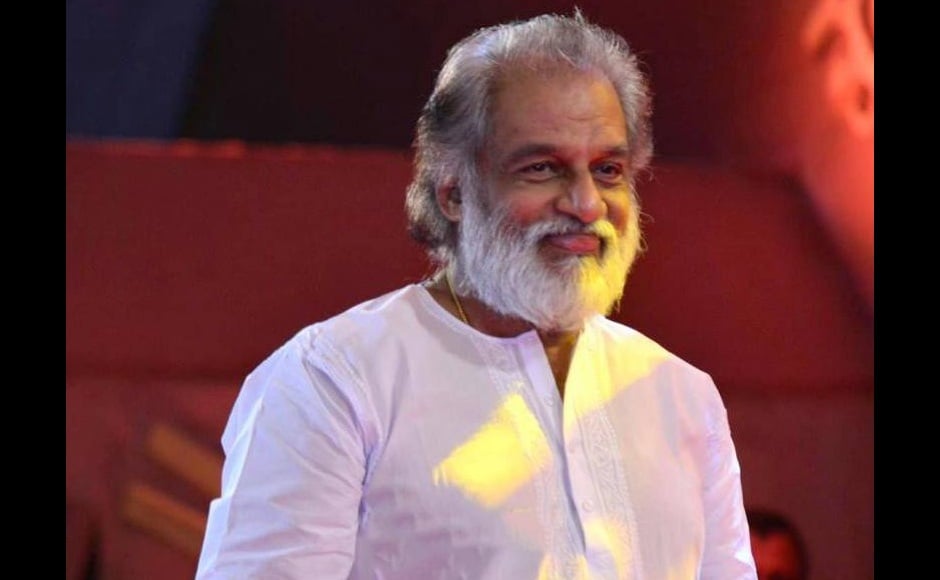
Sanjay Subrahmanyan in full flow

After silence, that which comes nearest to expressing the inexpressible, is music. Aldous Huxley.

The 2019 Chennai Music Season is upon us. The 2018 Season seems just like yesterday. A pleasant aural illusion. Over recent decades, we have witnessed a massive upsurge in the interest and enthusiasm evinced in Carnatic music. Those who brought about this tectonic shift to the Carnatic music scene at the turn of the millennium are today’s superstars. In their wake, another clutch of youngsters has put their hands up, and are packing the audiences in. The sabha managements are deliriously happy, and for a brief period of 3 or 4 weeks, the secretaries and committee members rule the roost, possessively handing out tickets and passes like they are going out of fashion. Yes, we are aware that full houses are the sole preserve of a few big names, but that has always been the case.

It is therefore a challenge to write a refreshingly original piece on the Season, because most of the observations, once considered novel, now appear trite. However, one thing can be said. In more recent years, we have had happenings (not always savoury) that have riveted the public’s attention. The ‘Me Too’ brouhaha had everybody talking about things other than Sanjay Subrahmanyan’s Todi or Ranjani Gayatri’s abhangs. Fortunately, the pruriently exaggerated interest shown in these salacious news reports were relatively short lived, and the named and shamed appear to be carrying on with their professional lives with insouciance. Speaking of ‘savoury’, the only savouries worth giving a once over are those to be found in the sabha canteens.

If you ask me it is a good thing that public memory is short. Nobody went to court, nothing was demonstrably proven but a bit of muck stuck. Doubtless it is now completely washed off and consigned to a rapidly distant and fading memory bank. Let me hasten to add that it is not my case that those who were the alleged victims of these alleged misdeeds should not be given a sympathetic and fair hearing. The same applies to those charged as well. The problem is, once you start talking to the media in high dudgeon and play the victim card, you’ve got to be prepared to go all the seamy way, if you’ll pardon the unintended double entendre. That involves muck raking and finger pointing which no one, least of all in this environment wants. My best advice to anyone who knows for sure that she is being harassed, just administer a tight slap with plenty of wrist work and follow through, or a swift kick at the offender’s nether regions and move on, and make sure he does not darken your doors ever again. You will feel elevated about it and the glad-eyed Casanova will never bother you. Caution: You had better be right and not merely vindictive, else retribution will be swift.

On to more pleasant subjects. While Carnatic music is the dominant presence on display during the Season, other art forms find their own dedicated space. There are classical dance performances, primarily Bharatanatyam which most sabhas try to fit in. In fact, the Music Academy has an entire fortnight dedicated to a classical dance festival close on the heels of the music series. Then there are Tamil dramas staged by some sabhas during the festival, plenty of lecture demonstrations every morning where experts go into the theory and practice of Carnatic music. Unlikely as it may seem, some of these lecdems can get quite tense at times, with gnarled veterans crossing swords over some obscure technical issue. The moderator has a hard time maintaining the peace.

 In recent times, programmes of a more eclectic variety have begun to make their presence felt. The likes of Anil Srinivasan (The Piano Man), Sikkil Gurucharan, Jayanti Kumaresh and U.Rajesh (to shoot a clutch of names off the cuff) think outside the box to perform and discuss various aspects of Indian and global music to entertain and enlighten the audience. The coup de grace, (I have said this before, and I will say it again) is historian Sriram V’s morning illustrative lectures on past masters:  always a blockbuster. Even standing room is not available if you’re tardy in arriving. He has an easy, jocular, laidback, conversational style of presenting his celebrated subjects, speaking ambidextrously in English and Tamil. He is unfailingly introduced to the audience as ‘the Neville Cardus of Carnatic music.’

At the end of the day, however, it is the music that must take pride of place during what everybody and his uncle refers to as ‘the Music Season.’ A frenzied air of anticipation and excitement is palpable in the ether. If you hang around in the portals of the venerable Music Academy, Madras (I am glad they didn’t change the nomenclature to the populist Chennai) during The Fortnight, the corridors will be buzzing with self-appointed experts, poseurs, academics, young hopefuls, music lovers and, of course, the odd sprinkling of foreign culture vultures who visit to take in what is arguably the biggest classical music festival of its kind. Groups of aficionados can be seen huddled in corners or in the canteen (always the canteen) animatedly discussing some arcane points of music. The sweet strains of Kalyani and Kambhoji literally suffuse the air. Lately, some of the bigger stars, if seen in public view, are avidly approached for selfies and autographs. Last year, Sanjay Subrahmanyan T-shirts were being worn by a large group of fans (bhakts), many from across the seas. Move over, Ed Sheeran.

As we slip into December, and as the musical tempo rises, a whole phalanx of supremely talented musicians, who have been laying down a marker this past few years, is making its presence felt. There are many such potential stars on the horizon, and subjectively naming a personal selection would be invidious. Suffice it to say that the health of Carnatic music is sound and in tune. To paraphrase Mark Twain, reports of the demise of Carnatic music are greatly exaggerated.

Kind permission of Deccan Chronicle 11/12/2019

When foes become friends

Image result for maharashtra election results images

Power corrupts and absolute power corrupts absolutely. Lord Acton.

I was attempting to explain the recent, messy Maharashtra imbroglio to my English friend, John. He lives in London and travels frequently to Mumbai and Delhi. He is something of an Indophile. We were chatting on WhatsApp, and he was posing some awkward questions on the murky, political goings-on in India’s richest state. One of the problems of long distance conversations is that you cannot always find the right words, particularly when your friend has been following the Indian political scene closely. He is well prepared, shooting from the hip, and I am respondng on the hoof as it were, trying not to sound like an ignoramus. To obviate this problem I suggested we ‘type chat’ over Skype or some such, giving me time to frame considered responses. John thought it was a sound idea. So there we were, tapping away furiously on our keypads. I had made a decent fist of educating my friend on the rapidly shifting political sands that we have been wallowing in with voyeuristic delight these past few weeks.

John – ‘I say, old fruit. Can you put me wise on what exactly has happened in the just concluded Maharashtra assembly elections? I got the gist, that no single party won an absolute majority. That the pre-poll alliance of the BJP and the Shiv Sena came a cropper and all hell broke loose. To start with, why did the   alliance go kaput?’

SS – ‘One word. Greed. I can add more words. Naked, self-serving ambition. The whole shebang was about sharing the Chief Minister’s post over the five year tenure. The minor player in this dodgy coalition Shiv Sena, claimed the BJP had promised two-and-a-half years of the CM’s seat to them. The BJP said “balderdash”, or words to that effect. The long and short of it was the BJP told the Shiv Sena to take a long walk off a short pier.’

John – ‘And I understand the Shiv Sena supremo, Uddhav Thackeray wanted his son to be the Chief Minister during their period of ascension to the throne.’

SS – ‘That is correct, but the young man is barely out of his teens, completely wet behind the ears. It was an absurd demand. All that, however, was neither here nor there. The BJP firmly refused to entertain the idea of a split Chief Ministership, never mind if their alliance partner’s candidate was a gnarled veteran or a baby in swaddling clothes. Devendra Fadnavis, the erstwhile and incumbent CM made it clear he will take some shifting. In short, we had what you Brits call an impasse. They tried to stare each other down, but to no avail.’

John – ‘That much even I could follow. It’s what came after, that was baffling. It would appear that the Shiv Sena now started talking to the Nationalist Congress Party (NCP) and the Indian National Congress (INC) to forge a workable alliance with a view to government formation. Which would have left the single largest party, the BJP, high and dry. Incidentally, can you tell me the difference between the Nationalist Congress Party and the Indian National Congress?’

SS – ‘Good question, John. The NCP is a breakaway group from the INC and was formed in 1999 under the leadership of Sharad Pawar. They were booted out from the apex Congress Party.’

John – ‘Pawar. Hmm. The same guy who was the Chief of the International Cricket Council some years ago?’

SS – ‘The very same.’

John – ‘My word. He does get around. From politics to cricket?’

SS – ‘In India, politics is cricket and cricket is politics. Most of our leading politicians have a finger or two in India’s massive cricket pie. And do you know why this Sharad Pawar-led rebel group was expelled from the INC? Because they objected to Italian-born Sonia Gandhi being made head of the party! Now it’s all hunky-dory and they are back together again.’

John – ‘Mamma mia, that’s rich. So both the INC and NCP came from the same Congress stable, split up acrimoniously and have joined forces in a Faustian pact with their perennial bête noire the Shiv Sena? Just to keep the BJP at bay?’

SS – ‘That’s about the size of it. You might call it “an unholy congress.”’

John – ‘I might indeed. I have another query. The Shiv Sena are, if anything, even more rabidly pro-Hindu than is attributed to the BJP, and by definition, anti-Muslim. They did not even allow the Pakistan cricket team to play in Mumbai. So how come this sudden bonhomie and keenness to make nice with the supposedly more egalitarian parties like the two Congresses?’

SS – ‘Wah, wah! You have certainly boned up on the political landscape in India. The only answer to that question is that politics makes strange bedfellows. Necessity is the mother of invention and all that sort of rot. Mao Zedong said “Power grows out of the barrel of a gun,” but in India “Power grows out of the slit of a ballot box.”’

John – ‘I can see that plenty of puns and jokes on the “Pawar” name (Pawar Play, Pawar hungry, Sharad Power etc.) are doing the rounds in your social media circles, with ‘horse trading’ an oft repeated term. A gross insult to our equine chums. Which brings me to the other Pawar. Ajit, Sharad’s nephew. What the hell was he up to with all his “Spy vs Spy” shenanigans?’

SS – ‘Yes, John. We are now approaching the climax of this amazing real life soap opera which kept the whole country glued to their televisions sets. What followed was mind boggling. Ajit Pawar, who is (was) the head of NCP’s legislature, in what seemed a kamikaze act, ups and runs to the BJP with a list of signatures from a majority of the members of his party, supposedly swearing allegiance to a newly forged BJP – NCP alliance. In return for this munificence, he is awarded the post of Dy. CM under CM Fadnavis.’

John – ‘Goodness me, real cloak and dagger stuff.’

SS – ‘You had better believe it. Party members from the BJP and the NCP are roused from their beds even before the break of dawn and rushed to the Governor’s residence at the imperially splendiferous Raj Bhavan. The poor Governor’s beauty sleep was ruined as well. Fadnavis and Ajit Pawar are sworn in as CM and Dy. CM respectively. The nation woke up to this unreal reality, flabbergasted. Those of us who saw it first on our mobile internet, were convinced this was fake news. We should have known our politicians better.’

John – ‘And, as I saw these bizarre events unfolding, with MLAs being herded from hotel to hotel in luxury buses, there was a further twist to the tale, yes?’

SS – ‘Absolutely, John. To cut a long story short. Ajit Pawar had clearly taken Fadnavis and the BJP for a jolly good ride. Sharad Pawar and the rest of the family shed crocodile tears on Ajit’s shoulders and this oleaginous man melted, resigned from his newly appointed post, and slunk back to the NCP fold. All was forgiven. Leaving the BJP red faced. At which point, CM Fadnavis had to put in his papers as well. To his credit, Fadnavis served Maharashtra well during his 5 years and 3-day tenure.’

John – ‘All rather nefarious. As you say, this one beats all soap operas. So now we have the two Congresses who could not stand the sight of each other, and the Shiv Sena who cannot stand the sight of anyone other than themselves, who are all ideologically violently opposed, getting together to form a government. The Sena gets the plum CM’s post and together this bizarre troika cock their snooks at the BJP.’

SS – ‘I couldn’t have put it better myself, John. The BJP are left to lick their wounds, but as they say, beware the wounded lion. They could have held the high moral ground by abstaining. Alas, greed and unwonted naivety won out. We have not heard the last of this saga. 5 years is a long time in politics. Expect action in just a few months from now. Watch this space. The long and short of it is that no one came out of this smelling of roses. More like horse manure. There has been no winner.’

John – ‘One last thing. Who is this Chanakya character everyone in India talks about?’

SS – ‘Ah. The original Chanakya (371 BC – 283 BC), the author of the definitive Arthashastra and the original master of statecraft, is our equivalent of the scheming Machiavelli, who famously said, ‘Politics have (sic)* no relation to morals.’ Chanakya was a master strategist and manipulator. In the present context, there are many claimants to the nom de guerre ‘the modern Chanakya.’ Sharad Pawar and Amit Shah to name but two pretenders, with the former presently leading by a short head.’

John – ‘Tell you what. I thought British politics right now was getting pretty confusing, what with Boris (Johnson), Jeremy (Corbyn), Brexit and the forthcoming general elections. But when it comes to political chicanery, India stands alone.’

SS – ‘We had good teachers, John. The British taught us for 250 years. Rubs off. Good night, John.

John – ‘Touché and good night.’

*For the pedantic, I have inserted a (sic) because Machiavelli’s exact quote, ‘Politics have no relation to morals’ sounds wrong, as opposed to ‘Politics has no relation to morals.’ However, grammarians aver that in the quoted context, ‘have’ is more correct than ‘has’. I am sticking to my guns.

The Pink City – a reprise

Image result for pink kolkata images

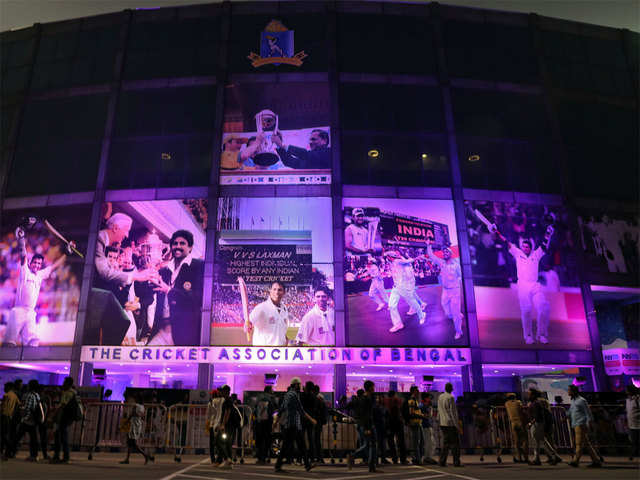
The city of Calcutta (a moniker I greatly prefer to Kolkata) recently went pink. We know that the present ruling dispensation’s favourite colour is blue. However, needs must. When a cricket crazy city like Calcutta decides to host the first ever day / night Test Match in India at the storied Eden Gardens, to be played with a pink cricket ball, the powers-that-be have little option but to go pink in the face. From what we could see on television, pretty much the entire city was gaily converted into a brilliant profusion of pink buntings, banners and floats. Doubtless the brainchild of some marketing guru’s fertile mind, the local administrators went to work in feverish haste to get the city all dolled up in garish pink before the first pink ball was bowled. Building facades, lampposts, streetlights, public transport – you name it, they had ‘pinked’ it.

As for the stadium at the Eden Gardens, no effort was spared to ensure that the arena metamorphosed into a sea of pink before the game commenced. Public response was brilliant for a Test Match, and the day night affair ensured a full house. People were face-painted and decked out in pink attire of every possible description, and the ‘festival of pink’ was truly joined. Sourav Ganguly, Calcutta’s favourite son, recently crowned supremo of the BCCI, and a former India captain of no mean provenance, basked in the pink afterglow. The gentlemen and ladies of Calcutta were in the pink of health and good cheer.

Rumours that the political bigwigs at the original Pink City, Jaipur were planning to take the state government of Bengal to court for wrongly appropriating its legally protected nom de plume, proved to be just that – a false rumour. Just some well-timed spice by social media mischief makers.

It is entirely incidental, almost trite, to report that India vanquished the brave, but ill-equipped Bangladesh team comprehensively by an innings, well inside three days. That the spectators at the Eden Gardens were deprived of a further two days of play in this Test match in no way dampened their spirits. In retrospect, perhaps the occasion warranted a stronger opposition – an Australia or an England, but we will let that pass. This particular game was more of an occasion, a celebration to inaugurate an exciting new innovation aimed at reviving public interest in Test cricket, and that objective was achieved in spades. That captain Kohli essayed another brilliant hundred and India decimated the opposition through a troika of fearsome fast bowlers was a novel and invigorating sight. Let us doff our hats to the city of Calcutta, its sports mad denizens and its administrators. When it comes to putting on a sporting show, few cities in India can match the passion and élan with which Calcutta trundles its wares.

There was much erudite discussion on television by self-appointed experts about how the pink ball would behave, the extra lacquer applied on it allowing the proud seam ‘to talk,’ that it will swing more after twilight – on and on went our commentators. Given half a chance the Sanjay Manjrekars and Harsha Bhogles can talk the hind legs off a donkey. To add spice, the two worthies crossed swords as well. Still and all, they had something new to talk about, and we must cut them some slack. After all, they are paid to do just that.

As I had suggested earlier, it was not just the cricket that was subject to this striking wave of pink. Elsewhere in the city, there was much brain picking on how the ‘pink fever’ can be taken advantage of to add to the frisson. I can only hazard an educated guess as to what might have happened in the City of Joy. I am speculating that the most popular drink in clubs, pubs and other watering holes of Calcutta would have been pink gin or pink champagne. The establishments would have announced a ‘one for one’ offer and Calcutta’s casual imbibers and serious topers would have been raising merry hell. Themed parties across the city would have exhorted guests to arrive in predominantly pink attire.

Baby girls born in the city during Test match week would have, without exception, been named Pinky. This would have greatly added to the already existing profusion of Pinky Bagchis, Pinky Bhattacharyas and Pinky Boses. The baby boys would have had to make do with sucking their thumbs and being called Pintu. The pious nuns at Mother Teresa’s Missionaries of Charity might have considered wearing pink saris during the week, which would have cheered the inmates up no end, though Mother T might have turned in her grave.

The once famous, but now closed discotheque in Calcutta, The Pink Elephant, would have reopened on the wave of an emotional upsurge over the pink Test Match. Giant screens featuring the game would have streamed continuously while the young men and women danced to golden oldies such as Cherry Pink and Apple Blossom White, Theme from the Pink Panther, Lily the Pink, Pink Moon and Pink Cadillac.

A specially curated film festival with a ‘Pink’ theme would have played for a week at the Nandan theatre. The following films select themselves – Pink, The Pink Panther (the entire Peter Sellers and Steve Martin franchises), Jonah and the Pink Whale, and Pink Floyd – The Wall. Amitabh Bachchan and Aishwarya Rai Bachchan, who starred in Pink and Pink Panther 2 respectively, would be the chief guests. Chief Minister Mamata Banerjee would have cut the ribbon, clad in a white sari with a pink border. A pink sari with a white border might have been striking, but the strong lady might have thrown a fit at the idea.

As a final coup de grace, a grand dinner, under the auspices of the BCCI with Sourav ‘Dada’ Ganguly as mine host, would be arranged at one of Calcutta’s swank hotels. The who’s who of the city would be invited. Again, pink being the primary dress code. The cricketers from India and Bangladesh would be the cynosures. Selfie seekers would be well advised to take Dada’s help in identifying the largely anonymous Bangladesh cricketers. All the dishes would be garnished with pink topping. This might be off-putting turning the guests a bilious pink, but the sensation will pass. Pink rosogollas and pink mishti doi will go down a treat.

The greeting protocol for the evening would be to cross or hook pinkies (little fingers), instead of the conventional handshake. So there you go. Calcutta, as is its wont, will leave no ingenious stone unturned to mark the inauguration of the pink game. As the party winds its weary way to an end, the band strikes up the well-known Indian nursery rhyme, Inky pinky ponky. Padma Shri Usha Uthup, decked up in a brilliant pink sari, her forehead adorned with a large pink bindi, with the Bengali letter ‘ক’stencilled in, leads the chorus and all the guests join in lustily. As the guests troop out of the hotel, Sourav Ganguly is overheard stage whispering to wife Dona, ‘If I don’t see the colour pink again, it will be perfectly all right with me. Boledilam!*

*Boledilam! (Bengali) – Literally, ‘I’ve told you.’ Idiomatically, ‘Just watch it.’ Or in Rajinikanth’s immortal phrase, ‘Mind it.’

The Mousetrap

Related image

‘I mean, imagine how some unfortunate Master Criminal would feel, on coming down to do a murder at the old Grange, if he found that not only was Sherlock Holmes putting in the weekend there, but Hercule Poirot, as well.’ – Bertie Wooster / P.G. Wodehouse.

The world can broadly be divided into two discrete parts. Those who have seen the play, The Mousetrap, and those who have not. In the fashion of today’s argot, let’s call it ‘The Mousetrap Binary.’ This Agatha Christie classic has been playing in the United Kingdom for more than a millennium. Forgive the exaggeration, but it does seem that way. Though I am reliably informed that it made its debut in London’s West End in 1952, and has staged well over 25,000 shows worldwide (and counting), and thousands of actors have trod the boards under its banner. Any tour operator, herding holiday makers on a chartered flight to London, must necessarily include The Mousetrap (tickets pre-purchased), along with compulsory visits to the Tower of London, Madame Tussauds, Piccadilly Circus, Trafalgar Square, Kew Gardens, National Museum, Buckingham Palace, the West End and other well-known attractions. Shopping at Oxford and Bond Streets is a must to lighten your wallets. I have travelled to London, several times over the decades, but have shrewdly managed to avoid The Mousetrap, like the plague. A serendipitously apt description.

However, my singular sense of overweening and inverted pride in claiming to be among the very few not to have seen this two-act whodunit, came to nought recently. The British, being British, still smarting from having lost their ‘Jewel in the Crown,’ constantly seek to keep their ‘subjects’ entertained and reminded of the grandeur that once was. And most of us are suckers for their smooth sales talk. Some of us even talk and write like them. C’est la vie, if you’ll pardon the French. It is entirely possible that the average Englishman, some more average than others, does not want to have anything to do with The Mousetrap. One must doff one’s hat to his sound common sense and judgement. Then again, he may have been stricken by a crushing ennui, having watched it so many times, including having to escort friends and relatives from all over the world, come to visit. One sympathises. Even the avid tourists to the UK are beginning to blanch every time someone mentions The Mousetrap. Phantom of the Opera, Cats and The Lion King are now the pre-eminent favourites and even these wonderful musicals are starting to fray at the edges.

However, the determined management of The Mousetrap franchise is not about to curl up and die. No way, Jose. I should have said James, but it doesn’t rhyme. Undeterred, they have decided to take the play to the far corners of the globe, particularly to areas where large swathes of the population continue to hold dear, all things British. And what better place to start than right here in India, a country that was in British thrall for over 250 years. Catering to the thousands of Anglophile Indians who may or may not have seen it in England, who may or may not have read the play, who may or may not have watched it on YouTube – but all of them keen to be seen at the venue. A peer group thing. (Were you at The Mousetrap on Sunday? Which row?) After all, in a few decades from now, Indians may not even be conversing in English any longer, if the present ruling dispensation had its way.

Thus it came about that, when we saw the advertisement in the newspapers, here in the once garden city of Bangalore, tickets online sold like hotcakes. ‘The longest running play in the world,’ ‘The original production from London’s West End,’ screamed the headlines. Never mind that the price spectrum of the tickets ranged between Rs.1000/- and 7000/-. Give or take (I gave). I must bow down and confess that I was among those who went online and did the deed. I bought the cheapest available tickets for the family. It turned out to be a wise call.

We were seated in the balcony which was all right. The ticketing information did warn us that these were seats with ‘partially obscured view.’ I had no idea what that meant, precisely. On taking our seats we discovered that this in no way hindered a full view of the stage. It’s just that a mottled glass fencing, about four feet high at the front of the balcony, could prevent a perfectly clear view. The glass barricade could also prevent people from falling over to their instant deaths on to the ground floor. At least, that’s my best guess.

There was, however, one problem. While the glass barrier did not block our view completely, it did present us with a strange viewing sensation. The top half of the actors was clear of the glass, while the bottom half had to be viewed through the glass. As the glass itself was of dubious quality, the bottom part of the actors’ anatomy was somewhat distorted. We were thus treated to watching a play where all the protagonists looked like something out of a ‘Hall of Distorted Mirrors’ in Disneyland. Comic it was but we hadn’t come to watch a slapstick affair. Can’t blame the organisers, though. They gave us adequate warning that if we wanted to go on the cheap, we had to be prepared for a partially obscured view. Distorted would have been a more apt description.

Then there is the inevitable nuisance. The mobile phones. They do request us over the tannoy, to switch off our mobiles. An instruction that is scrupulously observed in the breach. The over-excited members of the audience frantically WhatsApping messages to friends and relatives worldwide, along with photographs and video snippets of ‘their unforgettable evening at The Mousetrap.’ At one point the darkened auditorium looked like a gathering of mourners at a silent candlelight vigil for the loss of their favourite pop idol! Predictably, someone gets strangled in complete darkness. In the play, I mean. All we hear is a scream and a dying gargle. The stage is pitch dark so we don’t know whodunit.

At this point, a twenty minute interval is announced, during which half the hall disgorge themselves to do those things people do when they disgorge themselves after being strapped to their seats for over an hour. Most of them trot off to the loos, others for a snack or smoke, and quite a few to call their homes to check with their domestics if their pet dogs have had their din-dins and walkies. Everyone then rushes back when the second bell rings just before the curtain goes up. It’s time to reveal the murderer.

The final denouement takes an age. Everybody is assembled on stage and we ‘suspect everyone’, as the advert advised us. We know who was ‘done in’ because she is no longer among those present on stage. As to who did the dastardly deed, nobody has a clue. In keeping with all Agatha Christie stories, we look for Opportunity and Motive, which all the characters appeared to have had in spades. And we are still clueless. Remember, there’s no Poirot or Miss Marple in the play to handhold us. Finally, all is revealed. Goodness me, so that was the culprit. Fancy that. I would never have suspected him, not in a million years. I always thought it was the butler, only to learn after the play was over that there was no butler in the cast! That’s how well I followed the play.

So there you are. The Mousetrap was presented to us with much advance fanfare and grossly overpriced tickets, not to forget that the play’s reputation greatly preceded it. For all that, I felt the play was a bit of a let-down. An anti-climax. When it came to the curtain call, the actors took their customary bow, curtsying elegantly to rapturous applause. One of the actors then proceeded to tell us not to reveal the murderer’s identity as it might spoil it for those coming to the subsequent shows. He needn’t have worried. I still have no idea who the murderer was.

Book Cricket

Image result for book cricket images


‘It’s not cricket’ – Anon.

In India, cricket is all-pervasive. Kipling’s ‘flannelled fools’ are to be seen day in and day out on our television screens. Though, apart from being attired in pure whites, you will also find them in blues, yellows, greens and a variety of rainbow hues, depending on the variant of the game that is being dished out – Test cricket, ODIs, T20s, Indian Premier League (IPL). Give me excess of it, is the cry. It is not traditional cricket, however, that presently engages my attention. For that matter, it is not even French Cricket we played in school that concerns me. Remember French Cricket? You stood still, your feet unmoving with only a bat to protect your legs, and a ring of fielders to throw a worn tennis ball at your legs. If the ball catches any part of your leg without first touching the bat, you are out. If you manage to hit the ball, eluding the fielder, you twirled the bat round and round your legs, as fast as your hands would allow, and each successful circular motion earned you a run. The fielder, retrieving the ball, can also attempt to ‘run you out’ by striking your leg while you essayed a roundhouse swing without moving your legs. A skilful and challenging game, French Cricket, but my thoughts are on an entirely different cricketing pastime, one that required no skill whatsoever. If you were born after 1970, chances are you may not have heard of it.

I am talking of Book Cricket. The beauty of Book Cricket is that two of you can compete against each other, or you can just play all by your dog self. As I said before, skill is the last thing you require to be a champion in Book Cricket. Dame Fortune is the overriding factor, and if you are playing solo, you can even cheat! No one will be any the wiser. Allow me to explain the simple rules of the game.

The first requirement is a reasonably thick book. Around 300 pages is ideal. Agatha Christie may be too thin, and The Complete Works of Shakespeare too fat. I would go for something more manageable like Wodehouse’s Right Ho, Jeeves or any of Dick Francis’ equestrian mysteries. This is not to be taken literally. Naturally, whatever is readily available on your bookshelf should suffice. A word of caution. Avoid Hitler’s Mein Kampf. You simply cannot play Book Cricket, or any form ofcricket, knowing you are holding a book by an author who couldn’t tell the difference between Buchenwald and Bradman. Incidentally, paperback or hard cover will do equally well, if the earlier criteria are adhered to.

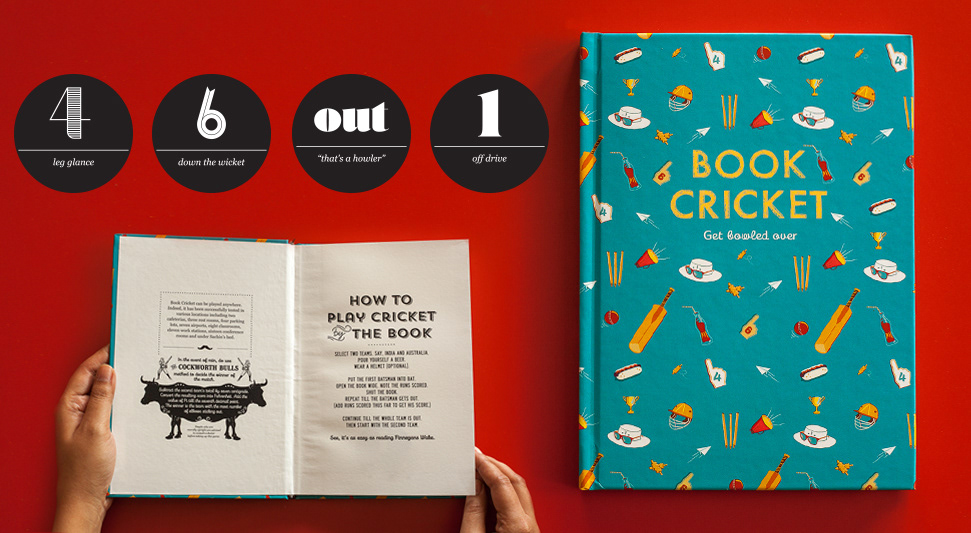
On with the game, then. There’s just the two of you. And the book. After tossing for who bats first (inserting the opposition is futile), we start the game. Let’s assume you are taking first strike. You place the book on your lap, say a little prayer and open the book, completely at random. This is how the runs are scored or a wicket taken. When the book is open, two sets of page numbers confront you, left page and right page. You go with the left page first, followed by the right page. If the page number is 124, the last digit, 4 in this case, counts as runs. So you have scored a boundary, and if the last digit is a 6, say page 86, then you’ve cleared the ropes – sixer. Bravo! Likewise for any numeral under six. If you happen to cop a 7, 8 or 9, that will count as a wide or a no-ball, giving you an extra run and an additional turn. Then comes the biggie. If the last digit, woe betide, happens to be a 0, as in 170, then you are OUT! Back to the pavilion. Caught, bowled, LBW, run out, makes no difference. In a nutshell, that’s the game.

Bearing in mind these simple rules, you are all set to play Book Cricket. A sheet of foolscap paper or an exercise book, if you are a stickler for maintaining records, is a must to keep score. The two of you can then decide who wants to be India, or toss for it. The opposing team can be anyone – Australia, Pakistan or England, whoever you hate more. You then write down, in batting order, the names of the playing XI of both sides, and the names of the opposing bowlers as and when the captain throws them the ball, speaking metaphorically. The game can be of one innings duration or two, choice is yours. The rest is easy, if you follow the rules adumbrated earlier. One last point. The batting captain gets to open the pages and the bowling captain keeps score and a hawk eye on the page numbers, to ensure no funny business takes place. In other words, he is the umpire. The roles are reversed when the second team bats.

If you cannot find a partner to play with, you can play the game solo. How cool is that? There are great advantages to be accrued from this solitaire version of the game. Say your favourite batsman, Tendulkar, takes strike. First ball, left hand page, 140. Ayyayyo! Damn and blast. Tendulkar, out, golden duck. ‘I cannot allow this.’ So you pretend as if nothing has happened, look around you guiltily and start over again and do whatever you like till the great little man gets a hundred. During my younger days, the likes of Umrigar, Hazare and Pataudi would regularly score double and triple hundreds. I only allowed Bradman or Sobers to score centuries for the opposition, provided they did the decent thing and got out immediately thereafter. Otherwise a page number ending with 0 was only a flip away! India had to win, at all costs. By the time my book cricketing days were over, I was easily the most well-read person in town!

‘Ayyayyo!’- Tamil colloquial expletive for ‘Omigosh!’

I write, therefore I am

Image result for person writing image

Will the things we wrote today, sound as good tomorrow? Elton John

I don’t know what it is, something in the air perhaps, some non-malignant bug that seems to affect (in a nice way) most people I know. In case you’re wondering what this incoherent babbling is all about, I am referring to the hobby of writing. I employ the word ‘hobby’ advisedly, as this is aimed at amateurs such as yours truly, and not the gnarled professionals who receive obscene advances from publishers even before they have put pen to paper, or finger to keypad. Everyone I know seems to be afflicted by the writing virus. This is a fairly recent phenomenon. As is self-evidently true, I am doing it myself even as I write this. If that makes any sense. Persiflage apart, I have not known a period of time, this past decade, when so many people from all walks of life have been smitten by the act of committing their thoughts and feelings to the written word. Blogs, newspaper columns, short stories, full length novels, biographies, translations of little known, albeit notable, vernacular efforts into English – the list is endless. Journalism and authorship are taking mincing steps, hand in hand, if you’ll pardon the mixed metaphor. And those steps appear to be morphing into giant strides. Fiction or non-fiction, they are all grist to the budding writer’s insatiable mill, even if the harried readers are hedging their bets. And a very good thing too.

Part of the reason for this flurry of literary activity can be put down to a friendly ecosystem, to employ a very au courant expression, that has made it easier for the armchair writer, so to speak, to find his or her efforts instantly on the printed page. If not actually on paper, as in a magazine or a newspaper, then certainly in the online space, where you are constantly being exhorted by a plethora of blogs and other digital platforms to write, write and write. What is more, if your vaulting ambition runs to publishing a book, there are a number of organisations that are ready to extend a helping hand. There is a cost attached to this, and not too much rigour goes into the assessment of quality, so before you can say ‘Midnight’s Children,’ your book is out – both in printed and digital formats. Goosebumps time. These publishing outfits are also well organised and anyone can buy your book through one of many online shopping sites.

The presence of Google search and similar engines precludes the risk, for the budding writer, of committing silly mistakes by way of spelling, erroneous quotations and the like. Unless you are doing it deliberately. Though you need to state a clear preference towards either American English or the Queen’s English, if you get my drift. I tend to lean towards the latter, but that’s just me. If your taste runs to saying ‘My bad’ instead of ‘I am sorry’, that’s your funeral. Though Microsoft Word gives you an option to plug in to British English, the software reverts to the American default setting, when your attention is drawn elsewhere. Sneaky devils. Which is why I find it inexcusable when errors abound like a rash even in established newspapers. Double negatives, apostrophes wrongly placed, the colon /semi-colon confusion and much more. Lazy is what I call it. For a highly readable tutorial on the subject, get hold of Kingsley Amis’ The King’s English. It should reside permanently at your workplace.

That being the case, there is a profusion of wannabe writers who are putting out their material at a phenomenal rate. During the course of the last few years, it has been my experience that I cannot throw a stone at a large family or social gathering without beaning someone who is either in the process of commencing a novel, or someone who has just put out a novel. ‘Pssst, have you read my new novel?’ is a standard conversational ice breaker. If not a novel, certainly a book of some description or the other. Uncles, aunts, sisters, brothers, cousins, nephews, nieces, they are all at it. The same goes for friends. As I am tapping at the keys of my desktop, I have at least four good friends who have mailed partial drafts of their recent efforts for me to give an ‘unbiased opinion.’ As I belong to the same fraternity, I am honour bound to go through the material and offer my free and frank views. Be warned, however. It’s always a challenge to divine how frank is frank! If you’re too frank, you may find yourself one friend short! Oftentimes, this can eat into your own writing time, but hey, that’s what friends are for, as that famous hit song tells us.

Speaking for myself, I prefer to keep my writing counsel to myself, and unleash the verbiage on an unsuspecting audience, and the devil take the hindmost. I am essentially a writer of columns, like this one, so I do get fairly swift feedback which I can either take serious note of or loftily ignore. The general rule of thumb being that if you do get a response from friends, it is bound to be constructive, and if others have not responded, it’s a bummer or worse still, it has not even been read. Sometimes, not always, I ask my wife to cast her beady eye over the material, she being a student of literature and a former publishing and advertising workaholic. To such a one, proof reading and informed comment come naturally. As a former advertising professional myself, I can vouch for that. Those long hours burning the midnight oil at sweaty printing houses in Calcutta, proof reading annual reports and corporate brochures, did not go to waste. What is more, the distaff side is quite adroit at pointing out inconsistencies in logic or dodgy development of an idea, and I usually defer to her delicately expressed nolle prosequi.

There is a much touted school of thought that youngsters don’t read any more. This is a gross exaggeration, even patently untrue. They may not read the newspapers, but they do all their reading on their mobile phones, which, admittedly, is done more functionally than to in any way enhance their literary appreciation. Books continue to be sold in large quantities worldwide and there is no evidence to suggest there is a general falling off in the reading habit. Cynics have commented that the Harry Potter or Lord of the Rings tomes, while grandly adorning bookshelves across the world, don’t actually get read. Kids, so say the naysayers, watch the subsequent movie releases and all their knowledge comes from the celluloid versions. Anyhow, neither Rowling nor Tolkien are complaining. The marketing mavens at the publishing houses are doing a sterling job and the cash tills are ringing like every day was Christmas. To cap it all, the books come in handy if the famous author is visiting your neck of the woods, and you can cadge an autograph! Not to mention, a selfie.

That’s another reason why so many people want to write. You never know. You could, out of the blue, luck it and hey presto, you’ve written a best seller. Here in India, the Chetan Bhagats, Amishes, Shobha Des and quite a few others of their ilk are providing inspiration to so many to sit in front of their computers and await the Muse. And I haven’t even mentioned the Arundhati Roys, the Amitav Ghoshes and the Vikram Seths whose literary avoirdupois is on a higher plane than those mentioned earlier.

All in all, I can think of worse things for people, young and old, to be obsessed with than writing. If you have a penchant for it, go grab a pen or start depressing those keys on your word processor. And don’t fret yourself over writer’s block. What was that someone said about the monkeys? That the law of probability will see to it that The Complete Works of Shakespeare will get typed up if a clutch of monkeys kept going at it long enough!

Finally, there are many eminent writers who have said some wonderfully inspiring things about the art and craft of writing. I settled on this quote from Franz Kafka, who wrote some pretty grim stuff in his time, but he was brilliant at it. ‘Don’t bend, don’t water it down, don’t try to make it logical, don’t edit your own soul according to the fashion. Rather, follow your most intense obsessions mercilessly.’

You said a mouthful there, Comrade Franz.

Breaking wind is breaking news

Ready, steady, go.

‘….full of sound and fury, signifying nothing.’ William Shakespeare, Macbeth.

Are you the squeamish type? Then you should read no further. People close to me are beginning to click their tongues admonishingly over elements of smut creeping into some of my blogs. The fault, dear reader, does not lie with me. Not guilty. Ergo, I would not have, in a million years, contemplated the idea of doing a piece on the subject of breaking wind. Clearly, my reticence was misplaced. I needed to change my tack and get rid of my inhibitions. Let us not get all coy about it. Let us call a spade a shovel. I am talking about farting. And why pray, am I talking about farting? Simply because India’s largest circulated daily newspaper, The Times of India (TOI), the Old Lady of Bori Bunder chose in its infinite, if misplaced wisdom, to report in excruciating detail the goings on at a ‘farting contest’ that was held recently in Surat. I kid you not, cross my heart and hope to die. The competition was branded ‘What The Fart (WTF)’. Not an awfully inspiring title for this awfully conceived contest, but there you go. It takes all sorts. The TOI report is silent, unlike the farting, on whether this extraordinary event was live telecast. Given man’s unspeakable taste for prurience, the programme could have grabbed millions of eyeballs, and there would have been no dearth of sponsors from the pharma and Ayurveda industries.

 While the world was spinning round and round with tales of Trumponomics, Modinomics, BoJonomics, Brexit, Kashmir, Hong Kong, Greta Thunberg, bank frauds and potential global Armageddon, here was our No.1 daily, leading off with three columns devoted to an admittedly curious contest in the Prime Minister’s home state of Gujarat. Was this some sort of sly, underhand, opposition inspired message directed at the PM? I wouldn’t have thought a handful of people getting together to determine which breaker of wind achieved maximum decibel rating, thus walking away with the dubiously coveted First Prize, rated top billing. A piffling Rs.2500/- was what the winner took away. Not worth farting over, I should have thought. They even had a machine (pic) in front of which the stupefied contestant had to stand and ‘let fly.’ Obviously, some form of meter gizmo was programmed to measure wind velocity, sound barrier and, I can’t be sure of this, olfactory issues as well. The report was strangely shy on this cardinal aspect of the competition. I smell a rat.

I shan’t go into all the gory details of this unusual contest – about how the contestants prepared for the event, the actual response (which was unsurprisingly poor), and the overall performance levels one expects at a match- up of this magnitude, which was underwhelming. The competition was open to men and women. Evidently the women chickened out, and who can blame them? Actual number of performers compared to the number of entries received was unflattering. Last minute butterflies in the stomach, one surmises. Though a family of lepidoptera fluttering around in your belly should have aided churn and flatulence in the equatorial belt, but I am no expert. The details are available to any interested reader at TOI’s website. Just key in ‘Farting Contest, Surat.’

Nevertheless, I would like to quote Dr. Rajesh Chandnani, a surgeon who was invited to the event ‘in case of an emergency.’ Meaning what, exactly? Muscle tear? Exploding rectal fissures? Loss of consciousness due to noxious gases reeking to high heaven? We are but mere mortals and can only guess. Here’s what the estimable Dr. Chandnani had to say, speaking with his nostrils smothered with a scented handkerchief to keep the all-pervading pong at bay. ‘People think it’s bad to fart. It is socially unacceptable, but it is not good to hold a fart long-term. It can lead to dementia and early forgetfulness.’ He went on to helpfully add, ‘Women don’t fart less. They just speak about it less.’ Thank heavens! We can only applaud the good doctor for his invaluable insights into this little-known and little-discussed subject. I do have a query though. What does the doctor mean precisely when he says it’s not good to hold a fart long-term? What are we talking about here in terms of timelines? An hour, three hours, 24 hours, a few days? Come on Doc, out with it. The suspense is not just killing me, but causing all kinds of unrest in my intestinal regions.

While we await clarity on many of these quasi-medical issues, I blanch at the thought of what would happen if other states in the country decide to follow the Gujarat Model. The States and Union Territories of the country all holding a farting contest simultaneously could not merely raise an almighty stink, but the resultant gas emissions could imperil the ozone layer and cause an environmental disaster of unimaginable proportions. The United Nations, which holds a pathetic record in intervening on any substantive issue anywhere in the world, can at least find it within its limited capacity, to try and talk some sense into those responsible for this contest, which can only be of interest to the Guinness Book of World Records. Congress MP, that loquacious windbag Shashi Tharoor who is a champion gasser himself, by virtue of having served at the UN in the past, could be persuaded to do all the coordinating. It will be a bi-partisan portfolio and should be perfectly acceptable to all political parties. A job that will suit the suave debater down to the ground. One can even now visualise Tharoor clearing his throat to address Parliament on the subject. ‘Mr. Speaker and Members of the House, with regard to the subject of tackling a matter of great delicacy, to say nothing of pith and moment, namely, the human proclivity to multivibrate  the molecules of the air, consequent upon gastric upheavals, and its possible concomitant worldwide environmental consequences, I deem it a great honour…’ I think you get the picture. We will never hear the end of it.

All this leaves me wondering. How low will our brethren sink, in order to adorn the sacred pages of TOI? After all, the publication seems only too eager to cover such inane stories of ‘human interest.’ The Kashmir issue appears moribund, our Defence Minister auspiciously broke a coconut on the Rafale jet (which may need a small paint job costing upwards of Rs.50 lakhs), South Africa is being slaughtered by India on the cricket fields, watched by about 100 people, the PMC scandal will soon cease to be newsworthy….. So what else is new? Or rather, news? Enter stage left, WTF, to fill the void.

What can we expect next? A burping contest? That will definitely draw a great many more contestants than WTF, because in India, the sign of a satisfied trencherman is to let out an almighty belch. The louder, the more grateful and happy the hostess will be at the satisfaction gastronomically derived and expressed by the guests. There’s also a free meal involved to aid the process, so everyone is happy.

In conclusion, I will be the first to acknowledge that, while nature has endowed us with great natural beauty is so many different ways for us to feast on, the reality is that there is a not so endearing but necessary side, involving our personal habits and ablutions that we would like to keep to ourselves and our toilets. We used to hold the same view on sex, but that went out of the window eons ago. Watching a movie with the family is no longer an idle pastime. The family head has to be alert and ready with his finger on the remote, in case the screen suddenly and without warning, turns from Mary Poppins to Emmaneuelle, or its equally pornographic sequel, Emmanuelle 2. Or even 50 Shades of Gray. There is a fun side to this. Just when a censorable, steamy bedroom sequence is about to commence, the television screen suddenly becomes an ear-splitting Tower of Babel led by Arnab Goswami. ‘Daddy, I want to watch Emmanuelle,’ wails your 8 year old son. ‘Chup, go and do your homework and straight to bed.’ That’s telling the little tyke!

Point to ponder. Do we really need a farting contest? And does our leading newspaper really need to give the subject prime space? Which old fart’s brainwave was this? A discreet footnote, or fartnote, would have sufficed – if that. Begs the question –‘Did I have to write this piece?’ Well, what can I say? At the end of the day, we are all gas pots.

The pugilistic idiocy of world sports

Image result for tennis players breaking rackets images

Aiden Markram and Mitchell Marsh, names that don’t lightly trip off the tongue, but two promising cricket internationals representing South Africa and Australia respectively, simultaneously hogged the sporting headlines recently. Incredibly, for almost identical reasons. Each of them decided to take out their frustrations over their own poor performances, by punching their fists on hard surfaces, thereby rendering them hors de combat for an extended period of time. Markram, on a tour of India where the South  Africans have been punched almost unconscious by the rampaging Indians, apparently went on a ‘self-flagellation’ exercise after his poor show, and rammed his fist into a ‘solid object.’ I put that in quotes because that is what all the media dutifully reported. As to what the solid object was will presumably remain a closely guarded secret. It could have been the nearest concrete pillar or his bathroom mirror in the hotel. Perhaps he landed a juicy right hook on his coach’s jaw, which meant a new set of dentures (for the coach, that is), but we can only hazard a guess. All we know was that Markram was told to pack his bags, his right hand in plaster, and put on the next flight to Jo’burg. Or perhaps, Cape Town. Who knows? Who cares?

Then there’s Mitchell Marsh, a middling all-rounder, younger brother of the talented southpaw Shaun Marsh and son of former Aussie opening batsman, Geoff Marsh. The younger Marsh sibling, after being dismissed in a Sheffield Shield game against Tasmania, rammed his fist with considerable velocity against the dressing room wall. Result? A fractured right hand complementing his fractured career, which literally lay in tatters. Australia’s manager and former opening batsman, Justin Langer, understated while dubbing Marsh ‘an idiot’. One understands Langer’s ire, but under the circumstances, it was a mild rebuke. Perhaps the ‘idiot’ comment was meant for the media and something far more unparliamentary and unprintable followed, which would have been fit and proper. We expect nothing less from an incensed Aussie coach.

What is it with many of these sportsmen that they keep getting into street fights and bar room brawls? Not so long ago, England’s premier all-rounder and World Cup winning hero, Ben Stokes, put his career in serious jeopardy when he got into a most unpleasant scuffle with some roughs in a pub. The police took a keen interest in the matter, and things had to be finally settled in court. Stokes had to sit out a few matches to nurse his mental wounds. Presumably he took time off to reflect on the folly of his ways and is now fully rehabilitated. Now that England have won the cricket World Cup for the first time, by the skin of their teeth and in somewhat dubious circumstances, all is forgiven and Stokes can go swanning around the world in hero’s garb.

Then we have the fat cat, super egotistical tennis players. It would appear that the only way they know how to vent their spleen when things don’t go their way, when a close line call goes against them and they have exhausted their referrals, when they double fault at a crucial moment, and horror of horrors, when the chair umpire calls ‘foot fault’ or docks a penalty point for bad behaviour – all hell breaks loose. And nearly always, it is the super expensive, state of the art racket that bears the brunt. Bang, bang, bang goes Djokovic, Kyrgios or Medvedev on the court surface or against the chair at the change of ends, shattering the poor racket to smithereens, for no fault of its own. I guess there are plenty more where that came from! A lesser evil is to violently and frustratedly smack the ball high into the stands. Even the great Federer has been found guilty of such a misdemeanour. I dread to think what happens in the locker rooms, post the game.

What about top level football? This is virtually a contact sport, played at a frenetic pace, with opposition players eyeballing each other pretty much for the entire duration of the game. The referee is holding both the red card and the yellow card, ready to fish one of them out and hold it aloft, spelling curtains for the player, who only poked his opponent violently in his left eye, or deliberately tripped him up in the penalty box, thus earning his team the double whammy of instant dismissal and a penalty kick for his opponents. Are you not aware of the Video Assistant Referee (VAR), you great oaf? The funny thing is, every time a player is booked, he will go into a massively exaggerated and dramatic, ‘Moi? What me?’ placing his hands piously to his mouth, gesticulating wildly while protesting his innocence. It is true that once in a blue moon, the referee might get it wrong, but usually the errant player has been served his just desserts.

Finally, it does not get more physical or contact oriented than boxing. I mean, the whole raison d’etre of boxing, the defining reason, is to bash the living daylights out of the opposing pugilist. This is one sport where you are paid millions to be nasty and violent. All perfectly legal, a blood sport with brains. Of course, there are rules like not hitting below the belt, behind the head and so on, but no one takes a blind bit of notice. The crowds, who are allowed to drink while watching, go atavistically bonkers, though it seems a crying shame when someone is knocked out in the first round in less than a minute. Quickest way to make a fast buck. Talk about spectators getting short changed! Betting is legally rampant, which adds to the unbearable tension. Nowadays the boxers are compelled by the rules to wear a helmet, which somehow misses the whole point of this violent sport. Imagine Muhammad Ali vs Joe Frazier or Mike Tyson, wearing helmets. Ugh! Mind you, Tyson is no oil painting even without a helmet. That said, there is artistry involved in boxing. Ali was the master craftsman – ‘float like a butterfly and sting like a bee.’

As for all this ‘got up’ world wrestling stuff we get on television, it is a gross insult to the human intelligence. Just trying to watch it gives me peptic ulcers. My 102 year old father-in-law is a WWF addict. He thinks the wrestling is genuine and wonders how those obscenely fat slobs keep getting up and ready to go, when they have just been hurled right across the ring into the waiting arms of the insane spectators! I don’t have the heart to tell him it’s all fake. When I once tried to disabuse him of his naively idealistic take on this mindless sport, he merely popped another chocolate bomb into his mouth and said, ‘You youngsters think you know everything.’ Youngsters? I am pretty long in the tooth myself, but I guess when you’re 102, everybody else is a youngster.

I’ll leave the final word to that brilliant British comedian, the late Tony Hancock. His ironic take on wrestling. ‘It’s a marvellous sport. Sitting back in the ring side seat, a big fat cigar, watching two great idiots thumping the life out of each other. Marvellous.’

Those idiots again. I couldn’t agree more.

The Visit

Image result for indian kids singing cartoons

Today’s generation may find it strange, almost incomprehensible, that when I was growing up during the ’50s and ’60s, avenues for entertainment were severely restricted. International cricket matches and other sports were unavailable on television. Come to think of it, television itself was going through birth pangs. We were big on live commentary on the radio, and in hindsight, listening to the great describers of the game was even more pleasurable than watching it on the box – but that’s just me. My home base was Calcutta, and if a Test Match was being played at the Eden Gardens, obtaining a ticket was akin to seeking the Holy Grail. We were taken to the cinema now and then, provided the genre was wholesome comedy or family drama. Absent Minded Professor, Parent Trap and My Fair Lady spring to mind. The evening show was invariably followed by ‘dinner’ at the homely Hindustan Restaurant on Lindsay Street, specialists in north Indian vegetarian delicacies – a much sought after culinary diversion from our daily rice and sambar routine. A Sivaji Ganesan starrer was a Sunday morning treat at Menoka or Basusree in south Calcutta, theatres that traditionally screened only Bengali or Hindi films.

Being brought up in a Tamil Brahmin environment, Carnatic music concerts by leading artists, whenever they visited the bustling metropolis, was something the family patronized avidly. Madurai ‘Somu’ Somasundaram and violin maestro Lalgudi Jayaraman were eternal favourites. There was never much else to do other than hanging out with friends, striking up impromptu singalongs featuring Kishore Kumar and Mohd Rafi hits. Pots and pans provided percussion support. In those days, you had to take your pleasures where you could.

The only other diversion was ‘the visit’. This needs explaining. My parents’ friends, collectively dubbed ‘family friends’, tended to live within a 5 km radius of each other. Accessibility was easy, just a short drive or a brisk walk away. All it took was for my father or mother to put a call through to make the appointment. If phone lines were down, which was often the case, we simply barged in. This usually happened over a weekend or a public holiday and the time of the visit was invariably early evening. We would never presume to land up during dinner time. This enabled the host to serve the ubiquitous filter coffee and a plate of toothsome crunchies. Not to forget, the visit had to be reciprocated and eftsoons. That was the etiquette.

All that was fine and dandy. The problem was we children had to be lugged along, like excess baggage. It was a necessary part of the ritual. ‘Nathan Mama and Saraswati Mami are very keen to meet both of you, and you can play with Ravi.’ This Ravi being their teenaged son. Problem was my brother and I found the aforementioned Mama and Mami crashing bores, and they always served the same plateful of stale, ribbon pakodas. And if we politely declined their coffee, you can bet your bottom dollar a tepid tumblerful of Horlicks or ‘Oval’ will be thrust upon you. As for the lad Ravi, he was an obnoxious snob, having stood first in his class for the umpteenth time, the achievement fulsomely repeated by the nauseatingly proud parents. A feat beyond my academic capabilities. Thus, some of these outings were more visitations than visits.

That particular routine, with minor variants, pretty much held sway wherever we landed up. If it was not Nathan Mama, it would be KS or JB Mama. Many of my father’s friends were referred to by their initials. En passant, the terms Mama and Mami generally meant Uncle and Aunty, not necessarily related by blood ties. Once in a way, we would come across an Uncle who would introduce us to Wodehouse or some comedy tapes from the BBC (The Goon Show and Hancock’s Half Hour), which he had brought along from England, and we couldn’t wait to make a beeline to his place. At times he would even offer us a sip of the smooth, brown nectar from Scotland! My mother took a dim view of this corrosive Uncle. People like him were shining exceptions to the rule.

Among the more unsavoury prospects of these visits was that I was invariably called upon to sing. I was learning Carnatic music at the time and was thought to have a penchant for it. Sadly, my reputation had preceded me, not without some gratuitous help from my mother! After much fussing and squirming (‘Don’t be such a fusspot’) I had to face the inevitable. ‘I have a sore throat’ was utterly useless for an excuse. I thus took the easy way out and belted out Cliff Richard’s ‘Dancing Shoes’ or ‘Bachelor Boy’, much shorter and easier to render than, say, ‘Vatapi Ganapatim’ in the raga Hamsadwani! And a fresh plate of stale ribbon pakodas was proffered for my troubles! If you’ll pardon the contradiction in terms.

Besides attending Carnatic music concerts, as and when music soirees were held, the South Indian community had their own clubs and associations that periodically staged plays. Mostly in Tamil, given the largeness of the expatriate Tamilian diaspora in the city. Oftentimes, well-known drama companies from Chennai were invited to perform. We were regaled by a feast of plays in various genres like Comedy, Satire, Historical, Social etc. The likes of the late Cho Ramaswamy’s troupe were a massive attraction and the halls would be jam-packed for days together. Stage sets and choreography were primitive with microphones hanging from the rafters atop and across the stage, which the actors would inadvertently bump into, providing unintended mirth. The make-up, to say the least, was garish with a tendency to smudge in the non-air conditioned halls and extreme humidity of Calcutta. As we didn’t know any better, our enjoyment of the fare on offer was not diminished.

Religious discourses by famed messiahs were another big attraction for most of the families. I well remember attending a few lectures by the entertaining godman, the late Swami Chinmayananda (not to be confused with the present  Chinmayanand, the swami with the glad eye), who was spreading the good word across the length and breadth of the country. Though I drew the line when my parents insisted that we should touch his feet and seek his blessing. My protests, however, fell on stony ground as the Good Book says. Kicking and screaming (metaphorically speaking), I duly prostrated before the great man while being shoved from the back by an interminable queue of ecstatic ‘blessing seekers.’ That I came down with a severe bout of viral flu the same evening, and was declared hors de combat for the next fortnight may or may not have been down to the Swamiji, but I continue to harbour dark suspicions.

That was pretty much the way it was, till I entered college. We are talking early ’70s now. University campus exposed us to a slightly more eclectic and cosmopolitan circle of friends. All of a sudden, one was being invited to the odd party at somebody’s place which necessarily involved returning home late. My mother’s interpretation of ‘coming home late’ was 9 pm at the very outside. It was a gargantuan struggle to make her understand that the party hadn’t even started before 9.30 pm! The thought of her lying in the drawing room, pretending to be asleep, eyes tightly shut while I stealthily let myself in through the front door well past midnight, was hardly conducive to my having a good time. A frosty grunt was as much as I could expect by way of a greeting. To her credit, she did not insist on a breathalyzer test. The generation gap never narrows, only widens.

In college, we strutted about in faded blue jeans, puffing on our Charms, talking of Ingmar Bergman, Satyajit Ray and Mrinal Sen. When it came to books, we were into Kafka, Camus and Salinger, but that was more to impress the Eng. Lit. girls from the neighbouring colleges. (‘In the room, the women come and go / Talking of Michaelangelo’). Grateful Dead, Led Zeppelin, Creedence Clearwater Revival and Jimi Hendrix were considered more ‘in’ than The Beatles, The Rolling Stones and Bob Dylan. Also, early exposure to Hindustani classical music with the likes of Bhimsen Joshi, Vilayat Khan and Kumar Gandharva provided an alternative take on Indian classical music.

It was about now that we kids were, mercifully, kept out of having to visit our parents’ friends. Grown to man’s estate, as it were, the parental apron strings were gently severed. Which is not to say that I was completely averse to tagging along if I particularly liked a family whose personnel were good company, across the age spectrum. And if they had children, so much the better. Sometimes, we kids were invited to spend the night at their place, if the next day was a holiday. Whether it was the novelty of sleeping somewhere else or what I am not sure, but there was a peculiar thrill attached to the prospect of a long night of gossip and waking up late in a strange ambience. Can’t put a finger on it but there it was.

Times have changed. Most kids are quite happy being alone, with their smartphones, Facetime, online groupies – truth is, you’re never alone these days. To answer Elvis Presley’s plaintive question, ‘Are you lonesome tonight?’ No Elvis, we may be alone but never lonesome.

‘Tut-tut, you did wee-wee on the carpet?’


Related image
‘Tut tut, it looks like rain’ – A.A. Milne, Winnie the Pooh

Ever since I retired from active service, precluding my having to take a tedious drive to some drudge of an office in unendurable traffic conditions, leaving me scarcely fit to be of any constructive use once I arrived at my place of work, and the same torturous routine repeated all the way back home, I took up reading in right earnest, and writing in even greater earnest. The former complements the latter and helps me write long-winded sentences like the one this essay begins with. At the present time, I am ploughing through a rather elaborate novel by that modern stylist extraordinaire, Martin Amis. Suffice it to say that no sentence written by the son of the late Sir Kingsley Amis, can be taken lightly. You need to read it at least twice over to appreciate the tone and felicity of language, even if you’ve lost the plot after the 50th page. Is it any wonder that Nobel Laureate Saul Bellow has described Martin Amis as the new Joyce, the new Flaubert! More pertinently, Martin Amis does not simply indulge in grandiloquent linguistic puffery to impress the hell out of his readers. That comes naturally. Push comes to shove, he is quite happy to get right down and dirty if that is what it takes to convey the way in which Mr. Everyman expresses himself, if moved to profanity.

Let me add that this piece does not purport to represent a critique of Martin Amis’ style. I can claim no level of competence to even attempt such an onerous task. The reason I brought up the subject of Amis Jr. (an Americanism Sir Kingsley would have cringed at) is that, in common with his fellow distinguished contemporaries such as the late Christopher Hitchens, Salman Rushdie, Julian Barnes and Ian McEwan, I found an appealing tendency to introduce words that aren’t actually words at all. At least, not in the sense in which we understand words. They are more like onomatopoeic sounds that eloquently express a person’s emotions in a specific context. All of us, unconsciously, indulge in this habit in our daily conversations. If Martin Amis’ indulgence is à la mode, P.G. Wodehouse was the original Master. So much for genuflection to British writers.

Before I get down to the heart and soul of this piece, here’s some amazingly nonsensical gems from Amis, justly celebrated as the modern master of flawless prose. ‘Puckapuckapuckapucka. Bar bar dee birdle dee boom: ploomp!’ And just to round it all off nicely, ‘Derdle erdle ooom pom.  Meemawmeemawmeemaw.’  (Source: London Fields). I’ve read that in context seventeen times and still flailing and groping to grasp. That’s genius for you. Not that Amis can claim pioneering status to this kind of literary gobbledygook. I recall, several decades ago, cracking up at The Goon Show on Radio and TV, starring Spike Milligan, Peter Sellers and Harry Secombe when they sang in joyful disharmony, ‘Ying tong iddle I po.’

Thus inspired, I fell to thinking about how most of us, who converse daily with our family and friends, use expressions almost without thinking, and if I were to painstakingly list them out, it would cover the entire English alphabet. A challenge I decided to take up. Not all the words, and I use the word ‘words’ loosely, contained herein are to be found in the Oxford English Dictionary (OED). Some of them will qualify, others will be pidgin derivatives from local languages, particularly Indian languages. I am acutely aware that covering all the 26 letters of the alphabet might be viewed by some as a trifle contrived. Poetic licence is taken by exception. As this is a stream of consciousness effort, I am not yet in a position to know if everything will turn out just so. If not, that’s just ‘my bad’, to use another cringe-worthy Yank colloquialism.

With that wordy introduction, we will start with the letter A and work our way assiduously, putting one foot in front of the other, all the way through to Z.

Ayyayyo! – Microsoft Word, in that snarky way it has, shoves in a red squiggle to caution me that there is no such word. Well, Mr. Gates, I have news for you. Wherever the ancient tongue of Tamil is spoken, ‘Ayyayyo’ is an expression used to denote extreme anguish, despair and disappointment. If someone called you to say that a dear friend has kicked the bucket the first sound that will escape your lips would be ‘Ayyayyo.’ Ditto if you’re told India have lost five wickets for 20 runs in the first hour of a Test Match. It is the equivalent of ‘Oh my God,’ but not a direct translation. With internationalism on the rise, I fully expect ‘Ayyayyo’ to gain global currency. ‘Are you listening, OED?’

Bleah! – Those of you who follow the Peanuts comic strips will be familiar with Charlie Brown’s all-knowing star beagle, Snoopy. Whenever anything upsets Snoopy, he will make a face and go ‘Bleah’, now an integral part of comic book lexicon.

Crikey! – Commonly used exclamatory interjection generally denoting surprise, amazement or any intense surge of emotion. Bernard Woolley from the memorable Yes Minister / Yes Prime Minister TV serials frequently went ‘Crikey’ when agitated.

Duh! – A sarcastic and derisive conversational term to indicate what somebody has just said is stupid, dumb or inane.

Eeeks! – Mostly screamed by members of the gentler sex whenever a rodent, lizard, cockroach or any creepy crawly scurries past.

F**k! – My upbringing and innate prudery prevents me from spelling out the entire word, but this is an all-encompassing, comprehensive and commonly employed expletive to denote any extreme negative emotion, but can also be employed in a positive context. As in, ‘F**k, you’re a genius bro.’

Gadzooks! – This old-fashioned exclamation dates back to the early 1600s but remained in vogue through to the late Victorian era. It’s an example of what’s known as a ‘minced oath.’ That is to say you actually want to say ‘F**k,’ but need to water it down to ‘Gadzooks.’ Add ‘Grrrr’, if you approach Snoopy gnawing on a bone.

Ho-hum – Indicates extreme boredom or resignation. Nowadays, people just rudely interject with ‘boring.’

Ick! – Gross.

Jiminy cricket! –  An archaic muted oath for ‘Jesus Christ’, expressing shock, horror or revulsion. Today, we just say ‘Jeeez-us.’

Ka-boom! – ‘I heard an explosion, “Ka-boom.” Like a gas main going off. It was only a car backfiring.’

La-di-dah – Pretentious and snobbish. ‘She and her Gucci bag and la-di-dah accent. Makes me sick.’

Mar gaya! – You’ve just got news that the Sensex has tanked 1000 points. That’s when you go, ‘Mar gaya!’ If it tanks 2000 points you go, ‘F**k my brains.’

Nyet – ‘No can do’ in Russian, which we often employ to impress others of our knowledge of a foreign tongue!

Ooh-la-la! – Very French, very Maurice Chevalier. When you want to appreciate anything beautiful, especially the female of the species, you go ‘Ooh-la-la.’ Then there’s ‘Ouch’ when your finger is caught in a door jamb, and ‘Oops!’ when you spill hot tea down your guest’s shirtfront.

Pssst! – The hissing sound you make when you wish to draw someone’s attention without anybody else noticing. Also ‘pooh pooh’, when you’re being dismissive, and dog ‘poo’ for you-know-what.

Quack – derived from the sound made by ducks, and also used to describe a doctor who doesn’t know his arm from his elbow. Arm can be substituted with a colloquial term beginning with ‘a’, to describe the human bottom.

Rah-rah – to display exaggerated fervour and excitement as in, ‘a great deal of rah-rah was witnessed during Modi’s visit to the US.’

Shush!As the sound of the word suggests, indicating to someone to ‘shut the f**k up.’

Tut-tut – A traditional sound of disapproval, as in, ‘Tut-tut, mind your language.’ Or Winnie the Pooh’s memorable ‘Tut tut, it looks like rain.’ In India when a baby does its No. 2 business, one would say ‘Baby tuttee kiya.’ Forgive the frequent scatological references. Needs must.

Ugh! –  You go ‘Ugh’ when something disgusts you, like Snoopy’s ‘poo’ on your front doormat. There I go again!

Voila! – Magicians say ‘Voila’ when they pull the rabbit out of a hat or cleave a hapless woman in twain. Common folk use it to let others know they know one word in French.

Wee-wee – Your three-year old has done its No.1 business on your friend’s Persian carpet. ‘Mummee, I went wee-wee on the carpet.’ And let’s not forget the pig that ‘cried wee wee wee all the way home!’

XXX – Do not smuggle in a DVD into your home with an XXX rating. Waste of money. You can get it all on Netflix.

Yuck! – Same as ‘ick’, only more gross.

Zap – A non-word denoting utter and startled surprise. ‘I was “zapped” out of my mind when Beyonce wafted into my room.’ And if you’re famished, you can order a ‘Zinger’ from McDonald’s.

That’s it. I am done. ‘Phew.’