No case to answer

The trial, in a curious case of a cyclist accused of rash driving, is currently under way at a local high court. Even more curiously, the person accusing the cyclist of reckless driving is the owner / driver of one of the newer, luxury models of a BMW. We take up proceedings at the trial with the cross examination of the cyclist, a Mr. Ashokan, aged 17, by the Counsel representing the owner of the BMW.

Counsel – ‘Mr. Ashokan, what model or brand of bicycle do you own?’

Ashokan – ‘I am not sure. Possibly a Sen-Raleigh. It has been handed down to me by my father, who in turn inherited it from his father. The brand name of the bike is now completely illegible.’

Counsel – ‘By my rough calculation that would make your Sen-Raleigh bicycle at least 60 years old. Am I right?’

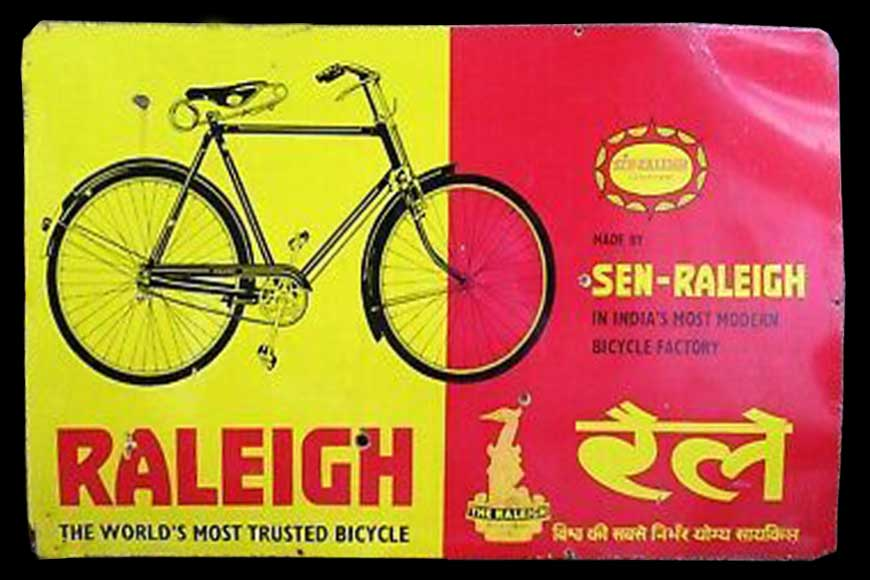
Ashokan – ‘If you say so. I was not even a twinkle in my parents’ eyes when my father got the bike from his father. As to whether my father was a twinkle in my grandparents’ eyes going back in time, I am in no position to hazard a guess. Just for your information, the Raleigh brand of bicycle was the first to be brought into India from Britain. Then one Mr. Sudhir Kumar Sen, an enterprising entrepreneur from Bengal, entered into a collaboration to make the brand in India around the turn of the 20th century. The Sen-Raleigh brand was born and soon became a household name.’

Counsel – ‘Thank you for the history lesson, Mr. Ashokan. I will sleep the better for it. For a 17-year-old, you are precociously well-informed and possess an interesting conversational style. You can talk the hind legs off a donkey.’

Ashokan – ‘Thank you. You are not too bad yourself.’

Judge – ‘Counsel, where are we going with this? Can we get to the point and keep the back slapping for later?’

Counsel – ‘I beg your pardon, your Honour. It is just that one does not come across too many young kids who are well-spoken. Let me, as you so succinctly put it, get to the point. Mr. Ashokan, have you clearly understood the charge made against you?’

Ashokan – ‘A millionaire driving a swank BMW is accusing me, a first-year college student of riding a 60-year-old bicycle rashly. That is what I have understood to be the laughable charge against me.’

Counsel – ‘Bicycle riders are meant to pedal their bikes at the edge of the road. You were zig-zagging in the middle of the road while singing a song from one of the latest Hindi films, perhaps trying to impress some of the college girls strolling by. My client, driving his car, was in grave danger of sustaining a dent to his car bonnet had an unfortunate accident taken place. Do you know how much it costs to repair a dent in a BMW?’

Ashokan – ‘What about the grave danger of sustaining a fatal dent to my head, being run over by a BMW? I would have been sent to the grave post haste. And what do you mean edge of the road? There is no edge to the road, only a big ditch. And I was not zig-zagging. The tyre had, just as the BMW was about to overtake me, developed a puncture and I momentarily lost control of the bike. By the way I do not know any Hindi film song. I was singing a snatch from one of A.R. Rahman’s latest Tamil offerings. In the event, there was no actual collision. So what imaginary dent are you talking about? If there was no collision, where is the case to answer?’

Judge – ‘The boy is making a valid point, Counsel. Why is he on trial if no accident, in fact, took place? Why are we wasting the court’s time when we have so many arson and murder cases still pending resolution?’

Counsel – ‘Your Honour, while it is true that the boy’s bicycle did not collide with the BMW, the driver of the car had to apply his brakes suddenly. This resulted in his being hurled forward, thus hitting his head against the steering wheel violently. He is now in hospital is a semi-comatose state. We are holding the boy, Ashokan, solely responsible for this unfortunate injury to my client.’

Ashokan – ‘Fiddlesticks! Was he not wearing a seat belt? And what about the inflatable safety cushion installed in all modern cars. Ha! That’s got you by the short and curlies.’

Counsel – ‘Why don’t you speak like normal people? About the seat belt, the complainant insists he was wearing it. As regards the inflatable safety cushion, there might have been a malfunction.’

Judge – ‘Fiddlesticks, if I am not infringing on Mr. Ashokan’s copyright. Just get on with it, Counsel. The boy’s vocabulary is clearly superior to yours.’

Counsel – ‘Your Honour, I strongly recommend that this boy be sentenced to serve in a correctional facility for riding a bicycle that was obviously not road worthy and that the vehicle itself be sent to the scrap yard.’

Judge – ‘A heritage museum would be a better house for this ancient vehicle, I think. My father too owned a Sen Raleigh. The vehicle is gone, but the cycle pump is still there collecting dust in our attic. Sorry, I get carried away. Back to business. Does the boy have a defence counsel to plead his case?’

Ashokan – ‘The boy does not, your Honour. I mean I do not have a defence lawyer to plead my case. Complete waste of money given their sinful fees. This BMW owner will get an even bigger headache when he comes out of his semi-coma and sees his lawyer’s bill. I am studying for law myself and given the idiocy of this ridiculous charge, I am defending myself. What we have here, Sir, is a David and Goliath situation. Me David, Counsel Goliath. Unfortunately, I left my slingshot at home.’

Judge – ‘Very well put. Biblical references, as well. However, the records show that the boy is 17 years of age. Which means, technically he is a minor. Counsel, how come you have agreed to a minor conducting his own trial? Are we not breaking some laws here?’

Counsel – ‘You should be the judge of that, Your Honour, if you will forgive the unintended pun.’

Judge – ‘We are not amused. I have no time for puns, intended or otherwise. Does the defendant, Mr. Ashokan have any closing remarks to share with us before I pass judgement? I would much rather hear you speak than our learned Counsel for the Prosecution.’

Ashokan – ‘Thank you, Your Honour. I may be, technically as you so delicately put it, a minor but I will be celebrating my 18th birthday in three months’ time. At which point, I shall apply for a car driving licence. I have already passed the driving test informally. The Sen-Raleigh bike is a family heirloom and we shall not part with it to rot in some woebegone museum which no one visits. That said, I would urge this court, most humbly, to dismiss this heinous charge made against me by this filthy rich BMW owner who, but for having to apply his brakes suddenly, would most certainly have sent me to the great bicycle factory in the sky. I seek punitive damages with costs, if you please, Your Lordship.’

Judge – ‘Your Honour should meet the case, young man. Lordship is surplus to requirements. As I anticipated, that was a fine closing address. Counsel, you should learn a thing or two from this child who will become a fine litigant in the years to come. I rule in favour of the defendant, as no adequate case has been made out against him. He rode his Sen-Raleigh bike which developed a puncture while singing a Tamil film song. By A.R. Rahman, I am reliably informed. No accident occurred. As a sidebar, I would like to add that Indians, however rich, should buy cars manufactured in India, even with overseas collaboration, and not import extortionately-priced foreign brands like the BMW in question. Their brakes are too sensitive for Indian conditions. You can be severely injured even without an accident occurring, as has happened to our unfortunate BMW owner. Case dismissed.’

(This is a work of fiction, loosely based on several such incidents that take place in our country).

   Looking in the rear-view mirror. Longingly.

The ‘good old times’ – all times when old are good. Lord Byron

Nostalgia. Those who wallow in it are almost certainly, and let us not mince words, long in the tooth. They are defined by the length of their teeth. I freely admit that I belong to this category. As I write this piece, armed appropriately with my rose-tinted glasses, a flood of memories comes rushing by. If you belong to a generation that was born post 1990, much of what follows is likely to be yawningly boring. That has never stopped those from an earlier vintage holding forth ad infinitum, ad nauseum on any subject that harks back to events that took place over forty or fifty years ago. We revel in it. It is an article of faith. The warning signal is any sentence starting with the words, ‘You know, I remember it as if it happened yesterday…’   At which point you can look at your mobile, which you pretend was on silent mode, and exclaim, ‘Sorry guys, I have to take this.’ You rush out, never to return. The younger generation has described us varyingly as insufferably boring, cynical, curmudgeonly, cantankerous, intolerant (and intolerable) but we have our faults too.

Those of you who are Wodehouse fans will readily recall his rib-tickling golf stories and the central character, the Oldest Member, who sits in the clubhouse and button-holes one of the unsuspecting, hapless young members to reel off his interminably long tales of golf and romance. All this over a gin and tonic or some other health-giving libation. By the time the young golfer tries to dodge the ancient sage, it is invariably too late. This is how the story usually unravels, as I hand you over to the Master.

‘…It is curious that you should have brought up this subject, [said the Oldest Member] for only a moment before you came in I was thinking…but perhaps I’d better tell you the whole story from the beginning.’

The young man shifted uneasily in his chair.

You get the drift, methinks. Allow me to get back to my narrative. Here is a typical snippet of a conversation between two senior citizens for whom the game of cricket has ceased to hold any interest once the rapid-fire limited overs variant of this once pristine game, came into being.

‘I say Mehta, do you recall that Test match when M.L. Jaisimha batted on every single day over two innings? Across five days. It still stands as some kind of record. The details escape me, but you can easily look it up. Whether he saved the game for us or not is neither here nor there. It is one of those obscure landmarks we cricket aficionados, with long teeth, hold dear.’

‘My dear Venky, of course I recall that innings by Jai, the victorious lion as veteran commentator of yesteryear Vizzy, Maharajkumar of Vijayanagaram dubbed him. Transliterated his name. ‘Jai’ for victory and ‘simha’ for lion. Quite clever. Speaking of arcane cricketing records, few that I can recall could have been more dubious than Sunny Gavaskar’s ignominious 36 not out in 174 balls, in a losing cause, over an entire 60-over innings at the inaugural World Cup against England at Lord’s in 1975. Somebody forgot to tell Sunny it was not a Test match.’

‘Your ironic observation is well taken, Mehta Saheb, but let us not dwell too harshly on the little master. He went on to redeem himself many times over with his record- breaking feats, becoming an icon of the game.’

‘Touché. Speaking of little masters, Sunny’s alter-ego, little Viswanath, later to become his brother-in-law, played alongside him throughout their distinguished careers. Gavaskar scored tons of runs, but the crowds loved Vishy for his delectable 30s and 40s and the odd hundred. His wristy flicks and cuts square of the wicket had fans on their feet, drooling for more. All this without a protective helmet, though Sunny fashioned a skull cap for himself later on. We were fortunate to have both these greats playing contemporaneously. Meaning at the same time,’ added Mehta gratuitously.

‘Yes yes, I know what contretemp-whatever-it was means. No need to spell it out.’ Venky was clearly miffed at this perceived slight to his vocabulary.

The evening inexorably wears on but the two raconteurs keep the conversation going till they realize it is well past their dinner time and they could face the wrath of their better halves if they do not step on the gas, homeward bound.

I shall close this reflection on the boredom of nostalgic reflections with some thoughts on how the sexagenarians and beyond look back on the music they loved in years gone by, as opposed to the stuff that is dished out ‘nowadays.’ I will cite contrastingly different streams of music that I have grown up with, starting with Carnatic music. Once again, we are overhearing two geriatrics, enjoying a tumbler of coffee at the Chennai Music Academy’s canteen while the December music season is in full swing.

‘Okay Bhaskaran, I agree with you that the girl performing right now in the main hall shows much promise. Flexible voice capable of reaching the upper and lower registers with ease, but too much speed. No soul. Remember MS or DKP? So meditative and melodious.’

‘I agree Ramky, but contrastingly GNB and MLV exhibited a real burst of speed and they were hugely popular as well. Their renditions were not entirely soulless, either. Even Ariyakkudi, Semmangudi, Madurai Mani, Maharajapuram, TNS and TVS were confirmed votaries of the madhyama kala style. Some of today’s stars swear by this school of music. Let us not be so biased.’

‘I can also counter you, Bhasky, by citing MDR and Brinda & Muktha who took the slow train to stardom. But yes, I must concede they were worshipped more post their demise than when they were actively performing. It is one of the great ironies. Incidentally, bias is the lifeblood of Carnatic music rasikas like us. It is embedded in our DNA.’

This debate has no ending. It is stream-of-consciousness running on an endless loop. You will observe that the performers are often referred to acronymically. MS, GNB, MLV and so on, or by their village names like Ariyakkudi and Semmangudi – terms of endearment triggered by intense familiarity. Decades from now, the then elderly ‘experts’ at the Academy’s canteen will be saying pretty much the same thing about Sudha, Sanjay, Bombay Jayashri, Sowmya, Ranjani & Gayatri, TM Krishna and others who rule the roost today. No village prefixes to their names as today’s urbanite musicians don’t live in villages any more.

It is no different in the case of western or Indian popular music when it comes to the ‘boring’ generation. The Beatles and Bob Dylan will take the honours against Ed Sheeran and Taylor Swift. Mohammad Rafi, Kishore Kumar and Lata Mangeshkar will be the overwhelming favourites against Alka Yagnik, Kumar Sanu and Sonu Nigam, while T.M. Soundararajan, SPB and P. Susheela will clearly have the edge over Hip Hop Tamizha Adhi, Shreya Ghosal and Chinmayi.

Nostalgia is a continuum. Our children can gently mock us today. Till they come face to face with it tomorrow, when they will wake up and smell the coffee.

Extracted from an article published in the Deccan Chronicle dt 26/8/24.

What price the Nobel Peace Prize?

 A man can’t soar too high, when he flies with his own wings. William Blake.

Our Prime Minister Narendra Modi, whose brand equity suffered an appreciable dent after the recent General Elections in the country, continues to hold the reins of power, albeit tenuously, at the Centre. If he were a fan of The Beatles, which I doubt very much, he would have recalled the title of one of their hit songs, With a little help from my friends. Those friends, fair weather or otherwise, being the Chief Ministers of Bihar and Andhra Pradesh. The threesome shook hands so firmly one got the impression they were loath to un-shake their paws, to coin a phrase, lest their house of cards should quiver at its foundations. The results of the forthcoming assembly elections will tellingly inform us if Mr. Modi’s popularity is waxing afresh or waning further. Some television channels, despite having egg on their face last time round, continue to stick their necks out to predict the likely outcome of these elections. Based on these studies Mr. Modi, unlike Usain Bolt, is not showing a clean pair of heels to his opponents. Typically, the PM remains unfazed. Nonchalantly scattering all that to the four winds, our PM shows he is clearly made of sterner stuff. He can take the rough with the smooth, like any seasoned politician. And they don’t come more seasoned than him. He is Teflon-coated and is firmly digging his heels in for the long haul. By which I mean the remainder of this, his third term.

While domestic issues of varying hues are doubtless exercising the men from the ministry, particularly with state elections looming, the PM is traversing the eastern bloc of the western globe with special focus right now on Russia and Ukraine. Not forgetting Poland. His stated objective being to talk to the heads of the two warring nations like a Dutch uncle and bring about a lasting peace. He has touched base earlier with Putin in Moscow, but meeting with Zelenskyy in Kyiv will be a first. Modi will be walking a tight rope attempting to beard these two antagonistic lions in their own dens. All the while, the bullets continue to be fired from both sides and the rest of the western powers shoving their collective oar in to ensure the Russians are held at bay. Under the circumstances one wonders what the Indian Prime Minister is likely to achieve, but he is pressing forward with his vaunted diplomatic skills. And hugging anyone within reach. He may have made efforts to reach out earlier to the battle-scarred adversaries with not much to show for it, but ‘once more unto the breach’ seems to be his watchword, if he is familiar with the Bard’s rousing battle cry in Henry V. Again, a moot point.

Those in India who are not PM Modi’s greatest fans, might be raising questions like why he should be so bothered about what is going on in Russia and Ukraine, or even Poland for that matter when Bharat Mata is currently having to deal with the crisis in Bangladesh which puts our ‘friendly’ neighbours like Pakistan and China in pole position to do some lasting mischief to our country while metaphorically shooting from Dacca’s shoulders. Even the United States appears to be cozying up to Bangladesh. For now, an uneasy calm prevails in the region. Which brings me to an interesting area of speculation.

There is a school of thought, though I have no means of confirming its veracity, that India’s PM extraordinaire is being widely considered a ripe candidate for the Nobel Peace Prize. Those who admire Narendra Modi, and they are legion, are firmly of the conviction that he should be a shoo-in for the award. The cynics, and they too form a large part of the body politic, are convinced that the PM is traipsing around the globe when he ought to be addressing domestic issues, to draw attention to his burgeoning stature as a global leader and to bump up his southward trajectory at home. Hubris, they cry.

The PM’s tireless peregrinations could go a long way in favourably impressing the Nobel boffins at Stockholm. After all, when you think of some of the Nobel Laureates who have been awarded the Peace Prize in the past, Indians could seriously pin their hopes on our current PM, who is serving his third term, being decorated with the laurel wreath. Should he be so recognised, and eftsoons, it will be a feather (or a laurel) in his cap which he and his party will put to optimal use leading up to the next General Elections. Everything has to do with elections. Never one to miss a half-chance, our PM and his henchmen will grab the opportunity with both hands and make capital out of it. From the Nobel, should it eventuate, to the Bharat Ratna is but a foregone conclusion. In fact, the latter is a given, unless a new dispensation comes to power in New Delhi.

When you carefully look at some of the distinguished Nobel Peace Prize awardees from the years gone by, you must wonder what the Committee was thinking. Try these on for size, not in any particular order. Yasser Arafat, Yitzhak Rabin, Shimon Peres, Dag Hammarskjöld, Kofi Annan, Henry Kissinger, Lê Đức Thọ and Barak Obama. Hammarskjöld and Annan, as with other Secretaries General of the United Nations, were seen largely as acceptable decorative heads. The Security Council, with its powerful members clearly divided on almost all issues, call the shots. One veto is all that is required to put the kybosh on any resolution. The UN could never actually achieve peace anywhere in the world, though you can proffer a weak applause for trying. What’s the sound of one hand clapping? Henry Kissinger and Lê Đức Thọ of North Vietnam presided over years of bloody battles and enormous loss of young lives in Vietnam. The war ended finally out of sheer ennui. The palpable relief prompted the Nobel Committee to award the Prize to those two worthies. As for the others, their contributions were invariably described in a typically vacuous and anodyne fashion by the Nobel Committee. Something on the lines of ‘extraordinary efforts to strengthen international diplomacy and cooperation between peoples.’

If that is all it takes, it should surprise no one if Narendra Damodardas Modi throws his hat in the ring and lays legitimate claim to be given the Nobel Peace Prize. Not that the candidate himself puts his hand up, but there are wheels within wheels behind the scenes that work tirelessly to put forward the claims of their candidates. Lest I am misunderstood, let me hasten to add that many others, particularly those not from the political arena, have truly deserved the award. The Dalai Lama and Mother Teresa, to name just two from an impressive galaxy. While on the subject, why did world icon, apostle of peace, M.K. Gandhi miss out on the Nobel? Why was such an obvious choice not in the running, though he was nominated a number of times? Think on that.

If you ask me, politicians of all hues, worldwide, should not be considered for the Nobel Peace Prize. Given their record over centuries, their nominations must surely be an aberration. By definition, every political leader in the world has a hidden agenda. Serving the people is good as an election plank. Good intentions are expressed, but the road to hell is paved with them. The primary objective is to gain or retain power. At all costs. Gaining a Nobel Peace Prize is a bonus, an optional extra.

Exorcising a transformer’s demons

The candle flame gutters. Its little pool of light trembles. Darkness gathers. The demons begin to stir. Carl Sagan.

In the year 1973, when I was barely out of college, the talk of the town was a movie called The Exorcist, based on William Peter Blatty’s magnum opus novel of the same name and directed by William Friedkin. A Hollywood production, it was dubbed a supernatural horror film boasting a cast that included the likes of the admirable Max von Sydow and Ellen Burstyn. Not to mention the young Linda Blair, who is possessed of a demon she is unable to rid herself of. To this day, I have no idea why I went to see this hair-raising, blood-curdling, stomach-churning film. I guess it was one of those things we did those days. A kind of herd mentality. Everyone else is going, so must I. Why did I not like The Exorcist, I hear you ask. For one thing, there were too many vomiting scenes for my refined taste. Allow me to explain.

Every time the young protagonist of the film felt the dreaded demon acting up inside her, she would start puking all over the place and generally behaving like a raving lunatic. She was possessed, yes, but that did not make for pleasant watching. While her mother and some priestly type tried to help her out, waving a wooden cross at her and chanting incantations, she (or her demon) was having none of it, throwing up – wave after heaving wave. The Alien had the same effect on me several years later, only there the monster ripped itself out of the victims’ innards. In plain sight, as it were, leaving little to the imagination. Getting back to The Exorcist, by now I was feeling awfully queasy myself, and rushed to the cinema’s toilets, only to discover that it was already full of grown men hawking and retching their guts out. There was nothing for it but to run out of the hall and bring up my lunch on to the pavement, much to a passing stray dog’s annoyance. Fussy pooch. Nauseating would be an apposite word to describe The Exorcist, though it has been hailed as an artistic triumph. One can never account for taste, I guess. Many countries banned the film on grounds of depicting untold horror associated with demonic possession. India was quick to ban it but not before it was screened for a few days when some of us managed to catch it. Couldn’t sleep for a few nights after that for running frequently to the loo, but the feeling passed. Incidentally, a short film titled Sartre’s Nausea, based loosely on Jean Paul Sartre’s famous novel was produced in 1962. Just as well I did not see it.

This column was not intended to be a quick review of The Exorcist, 50 years after its release. However, I felt it was a good way to introduce the subject of demonic possession in the light of a typically absurd story I came across in my esteemed daily newspaper a few days ago. Now here is what happened. Somewhere in the boondocks in the state of Bihar where power outages are a commonplace, the local villagers swore blind that one of their transformers, probably the only one, which was in the habit of tripping and catching fire frequently leaving the community in total darkness, was haunted. Having thus convinced themselves, it was the work of a moment for the village chieftains to approach an exorcist, one who was wise to the ways of demons and devils unknown and unseen. Our rural folk place immense faith in sorcery and witchcraft when it comes to battling ghosts and phantasms. What followed was something that could have attracted the attention of India’s film industry.

The village exorcist, most likely a charlatan, duly arrived covered in sacred ash and clad in vermilion, accompanied by a bevy of dancers and local percussionists who drummed feverishly away vaguely at the transformer. Mantras were chanted while the exorcist and his aides danced the night away, trying desperately to get the reluctant equipment to respond. Doubtless aided and abetted by the finest, illicit local hooch, invocations were petitioned with incense sticks but no dice from the object of their prayers. If an animal sacrifice was performed as part of the propitiation, that has not been reported, though I would not rule it out.

The recalcitrant transformer, however, hid its secrets well and flatly refused to cooperate. The demon slept soundly inside the bowels of the giant transformer, biding its time. Frankly, I would refuse to play ball if a bunch of loonies, claiming to be sorcerers or exorcists kept leaping up and down in front of me, mouthing all manner of unintelligible nothings, keeping the entire neighbourhood awake. To be fair to the villagers, it appears their attempts to engage a local electrical or mechanical expert to deal with the problem did not yield the desired result. Evidently the man told the villagers that this transformer was beyond repair (and hope) and that it was probably haunted by an evil spirit. ‘Abandon hope, all ye who enter here,’ as Dante warned in The Divine Comedy. Only the villagers were not laughing. Who can blame them if they decided to fall back on their tried and tested method of summoning the exorcist?

Whether the local black magic man ever had the opportunity to view The Exorcist or not, I cannot say with any degree of certainty. That possibility cannot be pooh-poohed away in these days of the internet and YouTube. I only raise this point as being somewhat pertinent, because the village transformer was heard making strange, belching type of noises in the dead of night accompanied by sparks of flashing lights. Some saw this as the transformer’s way of communicating to the local denizens that it was sick to its stomach and was attempting to bring out the evil spirit by making these retching sounds. We know this to be credible thanks to the Linda Blair character’s shenanigans in the much-quoted film.

At this point one is well poised to pop the question as to why the local electricity board was not consulted in the matter. Apparently, there were many reasons for this including the fact that the nearest office of the nobs who run these matters in this remote village was several miles away and the villagers reposed greater faith in, well, faith healers. That may or may not have been true, but when the local scribes finally managed to reach out to them, the electricity officials were understandably dismissive of the entire affair. ‘Stuff and nonsense,’ proclaimed the official. In the native lingo, of course. ‘Probably the result of a short-circuit, faulty connection or an overload. Happens all the time.’ Very dismissive he was, accusing the wide-eyed local yokels of being needlessly alarmist and attempting to create a sensation amongst the gullible village folk. He promised to have the matter looked into soonest. The reports did not provide the reader with a happy ending to the story. We do not know if any qualified electrical or mechanical engineer visited the site to set right the transformer’s strange, undiagnosed malaise. We will have to let sleeping transformers lie.

What I can tell you is that here in urban Bangalore a few days ago, at the witching hour when the city was fast asleep, we were rudely awakened by a loud bang, a long hiss and several sparks flying all over the place. It was the transformer that serviced our apartment block! We had no power for the rest of the night. Happily, the electricity board people put things right by the time dawn had well and truly broken, but just for a moment there…

 One final word of advice. If anyone invites you to an evening at home promising beer and popcorn to watch the new and improved version of The Exorcist on Blu-ray DVD, decline. It may be new and improved with more vivid colours but it will still be sickening, in more ways than one. You are probably better off paying obeisance to your transformer and performing a special puja.

 India is praying for Kamala and Usha

I am baffled beyond words as to why so many of us in India are going ga-ga and being insanely suffused with vicarious joy and pride whenever a person of Indian origin makes a mark in the world of politics, industry, sport or any other field of endeavour in the western hemisphere. When Rishi Sunak was tipped to become the Prime Minister of the United Kingdom, our television channels and newspapers just could not get enough of him. Going berserk would be an understatement. We are not inclined to do that when the Prime Minister of Poland is elected. Unless, of course, his grandparents happened to be natives of Kumbakonam. At least Sunak’s wife is the daughter of one of India’s original IT czars and she hails from true blue Indian stock. The erstwhile incumbent at No. 10 Downing Street is no more Indian than our PM Modi is British. Now that Rishi has been shown the door, in a manner of speaking, and the Labour Party chief Keir Starmer has assumed office as Prime Minister, the occidentals in the UK are heaving a sigh of relief. But not before Starmer went around visiting Hindu temples and Gurdwaras to pay obeisance to the Indian diaspora. Every single vote counts. Welcome to Little India, Keir. We are everywhere. Others like Priti Patel and Suella Braverman will be breathing down your neck if you make one false move.

Then there is Kamala Harris. Joe Biden finally decided he will step down as the Presidential candidate for the upcoming election and after some hesitation, make way for his Vice President Harris to be his party’s nominee for the White House. For this to happen, Biden had to remember Kamala’s name, but his staff came to his rescue and bailed him out.  Earlier he had introduced his good lady Vice President as ‘a great President’ at a function. Perhaps he knew something he himself did not know at the time. That may sound nonsensical, but the man, in recent times referred to Ukraine’s chief Zelensky at a NATO Summit in Washington as President Putin. Ye Gods! Zelensky put a brave face on it. Not quite sleeping with the enemy but close enough. Biden could have built a mansion with the number of bricks he kept dropping. That he has decided to call it a day has been received by the American public with undisguised approbation. Not a day too soon, they seem to be saying.

Enough of the stuttering detour about Biden who, let’s face it, could just about manage to put one hesitating foot in front of the other. To get back to Kamala Harris, as the whole world knows, she is part Indian and part West Indian. By that I do not mean Mumbai or Maharashtra but more like Jamaica. Kamala’s mother, as every Indian is aware, hails from Tamil Nadu. More specifically, her maternal grandparents live in Chennai, and Kamala speaks with practiced ease about idlis and dosas, than which, you cannot get more south Indian if you tried. Kamala certainly tries hard which, at times, can get a bit trying.

If Kamala Harris is equally at home with quintessential Jamaican dishes like ackee, saltfish and jerk chicken, then that is something we in India are yet to learn about. Perhaps the burghers of Jamaica can put us wise on her culinary preferences. Meanwhile, pujas are being performed in various parts of Tamil Nadu to ensure the Gods look favourably upon Kamala when the results are gathered in come November. The market for the lotus flower in various parts of Tamil Nadu is distinctly bullish. All part of the offerings to propitiate the Gods. To those who may not have cottoned on to the connection, the Sanskrit term for lotus is kamala. Since I am drawing a parallel with a species of flower, the capitalisation of the word is redundant. LOTUS for POTUS, or its Tamil equivalent, is the cry ringing out in many parts of Tamil Nadu.

Lest we forget, the wife of the Republican Party’s vice-presidential nominee J.D. Vance, is none other than Usha Chilukuri. A few weeks ago, we would have said ‘Usha who?’ A highly qualified lawyer, Usha’s family originates from the West Godavari and Krishna districts of Andhra Pradesh. That being the case, one can expect celebrations and divine propitiations galore in various parts of Andhra Pradesh and Telengana. Sworn enemies in domestic politics in India, the populace from both these twin states will be visiting holy shrines to ensure their daughter Usha, her husband Vance and the boss supremo of their party, Donald, come up trumps at the upcoming hustings. Respective Chief Ministers Chandrababu Naidu and Revanth Reddy could find themselves on the same side of the fence because Madam Chilukuri, thousands of miles away in the United States but boasting a Telugu bloodline, could be America’s second lady.

What a prospect all these political rumblings in the USA promises to reflect here in India that is Bharat. The people of Tamil Nadu are hurling lotuses and other goodies at their places of worship to ensure a Democrat claiming half-Tamil Nadu origin will grace the White House. Whereas, their next-door neighbours, Andhra and Telengana are doing everything they can to bring in a Republican to the same White House, such that they can enjoy bragging rights over their daughter Usha, holding the Vice-President’s hand. And who knows, perhaps move into the White House if the next mad marksman atop a building manages to hit bullseye as his crosshairs zero in on the President, God forbid. Now that India’s own election circus is well and truly over, we can all have some fun watching Indians or People of Indian Origin shine on either side of the political divide in America.

Over the past couple of decades, Indians have come to dominate the business landscape in the west, particularly in the United States. The Nadellas, the Pichais, the Bangas, the Nooyis, not to mention the Vivek Ramaswamys and the Nicky Haleys and so many more have been calling the shots in various fields of endeavour. And now, our brethren and sistren (even if only by accident of birth) are showing their mettle on the world’s biggest political stage. In a sense, therefore, we can take some pride in these developments, but it is little more than a chimera, and the comfort we in India derive is cold. America is a melting pot, the proverbial land of opportunity with the pot of gold at the end of the rainbow. Their egalitarian ways allow every denomination of the public to live and prosper, if it has what it takes. Some of them migrated from India, some of them were born there but their inborn, genetic brain power is now finding full and glorious expression. Why do so many Indian-origin boys and girls routinely win spelling bee contests abroad, I ask rhetorically. To say nothing of crooning their way to ecstatic, tear-jerking glory on American Idol. Increasingly, on American and British television serials, more and more Indian migrants are featuring in important roles. In recent years, many American-Indian children have taken to Carnatic music and have made a significant mark in their ancestral homes in the four main states of south India.

I guess the point I am striving to make to all my gloating friends in India is this. Kamala Harris, Usha Chilukuri and Rishi Sunak are not Indians. They are full-blown Americans or British, even if they pay obeisance to Lord Ganesha and celebrate Deepavali. They will not go soft on India if and when they come to power simply because they happen to be brown-skinned and their parents speak Tamil, Telugu or Punjabi at home. They may enjoy a plate of idli, chutney and sambhar for breakfast or aloo parantha and chicken tikka masala for lunch. I too enjoy fish and chips, Yorkshire pudding or shepherd’s pie once in a rare while, washed down with a tall glass of Guinness. Does that make me a dyed-in-the-wool Englishman?

I rest my case.

Singin’ in the Rain


It is that time of the year when everyone who is anyone starts talking about the rains. A date has been set for the monsoons to hit our shores. The boffins at the meteorological department look at their wall calendars, with some trepidation, close their eyes and stab a forefinger somewhere on the sheet displaying the month of June. On opening their eyes and inspecting the location of their forefinger, they declare with much fanfare, ‘June 7th!’ They call in all the press and television channels and make the announcement. Those in the state of Kerala, also known as ‘God’s Own Country,’ gird up their loins, hold their collective breath and wait for the moisture to break over their coast – the first port of call. June 7th comes and goes and no sign of rain. The only moisture visible comes from the perspiration oozing from the populace caused by the extreme humidity of that very moist state. There is a bright side to this, apart from all the lush greenery. Sales of raincoats and umbrellas in Kerala go through the roof, even if the roofs themselves have yet to display the least sign of damp or leaks.

The late, much loved British humour columnist (he wrote a column a day for over 30 years) Miles Kington had this to say about the rains, ‘Yes, that’s right. Rain. The wet stuff that falls from the sky and later clears from the west. The liquid that comes in under doors or on cats and dogs. The magic stuff that makes taxis impossible to find. The only thing that can make cricketers run.’ Kington was talking about English rains, which tend to be gentle for the most part, though cricketers and tennis players do run for cover whenever there is a ‘sharp shower’ only to be followed immediately by glorious sunshine. Yes, yes, I am fully aware of the state-of-the-art roof covering on Centre Court and Court No.1 at Wimbledon, but even they take a goodish time to make their leisurely way over the courts.

 Even Shakespeare, who likes to muscle in on any conversation, while mulling over the quality of mercy, decided to introduce rain into the subject. ‘The q of m is not strained; it droppeth as the gentle rain from heaven / upon the place beneath.’ Setting aside for the moment that the rain can, by definition, only fall beneath, one must give it to the Bard that he had the nous to bracket rain with mercy, and had people quoting him centuries later. Even if they were not completely certain what he meant by it.

The word gentle does not quite cut it when we talk of monsoon rains in India. As I had indicated earlier, even our experts may not be able to predict with complete accuracy the precise date of the arrival of the monsoon. However, when it does arrive, it does not mess about. Nothing gentle about it. It arrives with a ferocity that strikes terror amongst those who live in coastal areas. Fishermen in their rickety boats, ever after being warned, insist on pursuing their livelihoods in the high seas and end up paying a heavy price, often with their lives. Not that our urbanites are spared from the rain’s ravages. Our metropolitan cities, still struggling with drainage systems installed by the British two hundred years ago, reel under severe floods. People living in ground floor apartments are often forced to move upstairs to their neighbours’ flats for succour. Images of floating animal carcasses are a commonplace. Rescue teams arrive in their rubber dinghies but theirs is often an uphill (or upstream) task. Funny thing, rains. You send up prayers to the rain gods when the sun beats down unrelentingly on the parched earth, and when the gods finally oblige and turn up the shower heads full blast, they don’t quite know when to stop. Damned if you do and damned if you don’t.

Speaking for myself, at times like this I turn to music. With a mug of hot cocoa. Not quite from the legendary Tansen’s catalogue, a man who could reputedly produce heavy clouds and searing fire merely by essaying certain ragas that pleased those respective gods. I have a list of popular songs, culled mostly from my school days, which I start warbling to myself whenever the weather puts me in mind of those compositions. Here is a brief selection from a huge library of songs extolling (or not) the virtues of rainy days.

 A Hard Rain’s a-Gonna Fall. When Nobel Laureate Bob Dylan wrote and performed this iconic song in 1963, the experts were of the firm view that he was making a veiled reference to a nuclear fallout. Dylan vehemently denied it, claiming it was merely a song about heavy rains, tongue probably firmly in his cheek. There were not too many takers for the singer-songwriter’s simplistic interpretation. Bob Dylan never wrote anything for the literal-minded.

Singin’ in the Rain. Gene Kelly’s eponymous song from the 1952 film of the same name has been on everybody’s lips for over 70 years. Add to the song, Kelly’s unique dance steps with his unfurled brolly inspired even our own legend Raj Kapoor to doff his hat in salutation to Kelly in his classic film Shree 420 to the evergreen hit Pyar hua ikraar hua. More recently, popular Tamil comedian Vadivelu murdered the song in a stomach-churning rendition in the film Manadhai Thirudivittai (You stole my heart). Enough said.

Raindrops Keep Falling on my Head. If B.J. Thomas was known for no other song, he will forever be remembered for rendering this melodic, hummable number from the soundtrack of the 1969 mega hit, Butch Cassidy and the Sundance Kid, starring Paul Newman and Robert Redford. Picturised on Newman and his heroine Katherine Ross, riding away on a bicycle into the sunset, strangely on a perfectly clear, rainless day, giving us one of the memorable scenes from this film.

Have You Ever Seen the Rain? Creedence Clearwater Revival had a huge hit with this song in 1970. The lyrics were predictable but the tune was so catchy, everyone was singing or humming it at the time. Someone told me long ago / There’s a calm before the storm / I know/ It’s been comin’ for some time / I want to know, have you ever seen the rain / Comin’ down on a sunny day?

Crying in the Rain. Composed by the peerless Carole King, the song was a huge hit in 1960 for The Everly Brothers. The lyrics are mushy, the way they liked it those days, but the tune was an absolute winner. If I wait for cloudy skies / You won’t know the rain from the tears in my eyes / You’ll never know that I still love you so / Though the heartaches remain / I’ll do my cryin’ in the rain.

Rainy Days and Mondays. The sibling duo, Karen and Richard, aka The Carpenters had a string of hit releases during the 60s and 70s, none more popular than Rainy Days and Mondays. Talkin’ to myself and feelin’ old / Sometimes I’d like to quit / Nothin’ ever seems to fit / Hangin’ around / Nothin’ to do but frown / Rainy days and Mondays always get me down. Mondays are a bummer but I am quite okay with rainy days.

Just Walkin’ in the Rain. Only a handful of diehards in India remember Johnny Ray, but he sang this lovely song to the top of the charts in 1956. Just walkin’ in the rain / Getting soaking wet / Torturing my heart / By trying to forget. Poor old Johnny might have been nursing some secret sorrow, but he left us a song to recall fondly when the rains visit us.

That should do it for now, methinks. There are many more songs about rain, but I shall be guilty of overkill. Dear reader, you can add your own favourites to the theme. One thing strikes me about all these songs. It does not seem to matter much whether it is actually raining or not, so long as some kind of nostalgic love angle can be introduced in the lyrics and the tune sticks in your head. You can then sit on your window sill with that mug of cocoa. And reflect on why the rain in Spain stays mainly in the plain.

India’s Edward Scissorhands

A housewife was arrested recently in Bangalore for attacking her husband with a pair of scissors. She was deeply upset over his refusal to eat dinner her mother had specially cooked for him.  She is being questioned by the police. Press Reports.

‘Madam, do you realise you could have killed your husband? Why did you attack him with a pair of scissors?’ the investigating officer asked quite politely, under the circumstances.

The housewife replied calmly. ‘Because I could not readily find anything more lethal in my fit of rage than a pair of scissors. I regret that I did not kill him.’

The police officer harrumphed impatiently. ‘I did not mean why the scissors, Madam. My question was why did you attack him at all?’

‘What did you expect me to do, Officer? He calls me from his place of work to say that he will be coming home late, and would I rustle up something substantial for dinner as he is already quite famished. I requested my mother, who lives close by to prepare his favourite mutton biryani along with some side dishes, and now this happens.’

‘What happens?’ asked the puzzled cop.

‘Surely, he must have told you. Have you not spoken to him?’

‘At the moment Madam, the nursing home where he is admitted is dealing with several deep cuts and quite a few bruises, resulting from his struggles while you went after him with your weapon of choice, a pair of scissors. He is not in a talkative mood. Why scissors, for God’s sake?’

“I already told you…’

‘Of course, yes. Don’t bother answering. You could not find anything more effective at the time that could have killed him. You botched it up. Yes, I get it. Instead, you are left with a live witness, or should I say victim, namely, your husband who will spill the beans once the stitches from his upper and lower lips are removed. For now, his lips are sealed. I must say, Madam, things are not looking good for you. Aggravated assault and causing hurt with a dangerous weapon are very serious crimes.’

‘You have not heard my side of the story fully, Officer.’

‘I am all ears, Madam. Shoot.’

‘An odd but appropriate choice of word, shoot. If only I had a gun lying around in the house, you would have been questioning me on a murder charge and not aggravated assault. Pity.’ She sounded very sorry for herself.

The policeman was quite intrigued. He pressed on. ‘Are you feeling sorry that you find yourself neck deep in the soup or that you could not finish the job with a pair of scissors? As an aside, could you not find a sharpened kitchen knife or something instead of a rusty pair of paper cutters?’

‘Ah, so you sympathise with my quandary, do you? And they were not rusty.’

‘That was just a figure of speech. I was being facetiously ironic. Sir Winston Churchill once famously said, “Give us the tools and we will finish the job.” Obviously, you were not happy with your tools. Then again, remember a bad workman blames his tools.’

‘You have lost me completely, Officer. Who is this Churchill, and who was he trying to kill? Anyhow, it was a spur-of-the-moment thing. Not quite a crime of passion. I was livid. Try going late home tonight, while your wife waits anxiously at the door with her mother’s biryani in the microwave and tell her you have already eaten and got sloshed at a nearby bar and restaurant. See what happens. I wouldn’t fancy your chances, Officer. Expect a black eye and hide the scissors.’

The policeman was not amused, ‘Ha ha, very funny. Since you ask, Churchill was trying to kill the Germans but I do not have time to give you a history lesson. Tell me, why did you ask your mother to cook? I am curious. Were you not well?’

‘I was out of doors and was forbidden from entering the kitchen. That is why I asked my mother to cook.’

The police officer was foxed. Then realisation dawned. ‘Out of doors? Oh, I see. That. I understand. Sorry.’

Mr. Plod made some notes in his diary. “Accused out of doors, three to four days out of action” he scribbled as if it was an important breakthrough. ‘Boozed as well, did he? I see your point Madam, but why do you feel so aggrieved simply because he ate out and had a couple of large pegs at a restaurant? Maybe he did not want to disturb you and your child that late at night? Hmmm?’

‘You have not been listening to me, Officer. The fact is he wanted to insult my mother. I had specifically told him before he left for work that my mother will be cooking for us that night. She is a great cook. Had it been his mother, he would have been home by eight in the evening to gorge on her tasteless bise bele bath. You see where I am coming from?’

‘Look here young lady, I am a police officer. It is not within my jurisdiction to judge the relative culinary abilities of your mother and your mother-in-law. If your hubby does not hold your mother’s cooking in high regard and finds an escape route, you cannot go after him with the nearest weapon you can lay your hands on. I still cannot believe you chose a pair of scissors, of all things. Thank God you did or else you would have been looking at the noose.’

‘What is that? Noose?’

‘Believe me Madam, as far as you are concerned, no noose is good noose.’ Then he made a gesture with his hand encircling his neck, his eyes bulging out and his tongue hanging out to one side.

‘You are a good mime artist, Sir. They can hang me for this? Then, please tell me what are my legal options?’

‘Divorce springs to mind. Your husband will almost certainly be thinking along those lines. He is most concerned about your child. The duty nurse at the hospital claims that he was extremely worried about a bottle of rat poison in one of the kitchen cupboards which will give you more bad ideas. It could just be delirium. He is heavily sedated, but we will need to talk to him once he comes to, when he can comfortably part his sutured lips and say a few words.’

‘That rat poison expired long ago. Even the rats won’t expire on consuming it. Why can’t we just talk it over and try and settle the matter out of court?’

‘Yes Madam, that option can be explored. Get a lawyer first. Is there anything you want now? Tea, coffee?’

‘Coffee please, thanks. And Officer, do you know how to play rock / paper / scissors?’

The policeman abruptly concludes the interrogation and flounces out of the room in a huff. The case continues.

 Jousting with newspaper editors

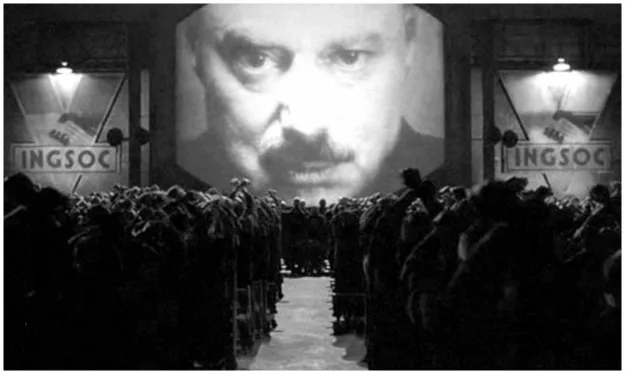
I am often asked, sometimes asked, somebody asked me once – why I do not write more often in leading newspapers and other online publications. The operative phrase here is ‘more often,’ meaning thereby that I have contributed to newspapers and online sites, but infrequently. There are several reasons for this and rather than list them out in a prosaic manner, the following correspondence / exchanges, which are representative samples of my interactions with editors and sub-editors of varying hues, will better enable the reader to understand my predicament in this regard. To those of you who may not have sampled my light-hearted offerings before, let me state that I go for gentle satire and humour such that I steer clear of being hauled off to court for libel or defamation. That has never stopped well-meaning friends from cautioning me to be careful as Big Brother might be watching me. I am aware that George Orwell had his beef with Big Brother (ref: 1984), but I let him pass me by as the idle wind. Big Brother that is, not George Orwell.

As and when the creative juices flow and the spirits soar, I decide to make bold and dash off a column or two to the powers-that-be in the print media in the fond hope that said columns will see the light of day, as the broadsheets reel off those giant offset machines at the crack of dawn. In fairness, I must state that I have had sporadic success in this regard, but they have been few and far between. Which is a very good reason why I fall back on my own blog site when all else fails. Let us now look at some of these friendly exchanges, shall we?

To the Editor of a leading newspaper.

Dear Sir / Madam,

I am attaching a humorous piece on ‘Politicians I would love to have lunch with,’ for favour of publication in your esteemed daily. Your early response will be appreciated.

Yours sincerely.

Dear Mr. Subrahmanyan,

Thank you for sending us your article. We regret this piece cannot be carried as there are references to living politicians which are not complimentary and could be taken amiss. Thank you for showing an interest in our publication.

Yours regretfully.

Dear Sir / Madam,

Perhaps I could attempt a flattering column on dead politicians? Would that be more in line with your paper’s policy?

Yours sincerely.

The correspondence ended abruptly here as I received no reply.

To the Sub-editor of a leading newspaper.

Dear Sir / Madam,

I am pleased to submit a 1200-word article, in humorous vein, the subject headlined ‘Are we being fleeced by our doctors?’ I am sure you will find it worthy of publication.

Yours sincerely.

Dear Mr. Subrahmanyan,

We hold the medical profession in the highest esteem and it is not our policy to publish material, humorous or otherwise, that could show our doctors in poor light. We wish you well.

Faithfully yours.

Dear Sir / Madam,

It is clear to me that your medical bills are being taken care of by your company. Otherwise, you would be laughing on the other side of your face.

Yours disappointedly.

To the Editor of a leading newspaper.

Dear Sir / Madam,

I am attaching a satirical piece on ‘Politicians I would love to have breakfast with,’ for favour of publication in your reputed daily. Your early response will be appreciated.

Yours sincerely.

Dear Mr. Subrahmanyan,

We have been through this before. Simply by changing the meeting with politicians from lunch to breakfast will not cut much ice. What do you take us for? We would request you to refrain from suggesting dinner or tea with politicians next time round as no response will be forthcoming.

Yours irritably.

To the Sub-editor of the Opinion page of a leading newspaper.

Dear Sir / Madam,

I am keen to make my debut in the Opinion page of your admired paper by contributing a piece on the subject titled ‘Are Carnatic and Hindustani classical music strictly comparable?’ A 1500-word piece is attached for favour of publication.

Yours in anticipation.

Dear Mr. Subrahmanyan,

We accord the privilege of contributing to our Opinion pages only to a limited number of empanelled writers. As such we are sorry, we cannot accommodate your contribution. Thank you for writing in.

Yours etc.

Dear Sir / Madam,

Did you even read my piece? And what does it take to become an empanelled writer? What does that mean anyway? At the risk of being rejected outright in the future, I must say this clearly smacks of a ‘cosy club’ culture. May I remind you that London’s Decca record label rejected The Beatles in 1962 and have been eating their hearts out ever since.

Yours in high dudgeon.

Naturally, the scent on that trail went irrevocably cold.

To the Sub-editor of a leading newspaper.

Dear Sir / Madam,

I am delighted to submit a laugh-out-loud 1200-word piece on the subject of ‘Laughter is the best medicine,’ an appreciative nod to a column of the same name that adorned the much loved, now virtually defunct, family magazine, ‘Reader’s Digest.’ I trust you will find it worthy of publication. Kindly let me have your assent.

Yours in hope.

Dear Mr. Subrahmanyan,

We admire your persistence and feel you should be given an opportunity to have your piece carried in our paper. However, we do not have room for 1200 words. If you can edit the article down to around 500 words, we might be in business.

Best wishes.

Dear Sir / Madam,

While I am overjoyed at your first-time positive response, I can’t help feeling that it is but a false dawn. I was quite proficient at précis writing in school, but to redact 700 words from the original version is tantamount to, if you will pardon a cricketing analogy, asking a team to score 75 runs in three balls to win the game. No way José, is my answer. Thanks for nothing. Do you pay your contributors by the word? Just asking.

Yours very miffed.

Lest you get the wrong impression, dear reader, there have been a couple of editors who have shown great faith in my efforts and taken in my articles unquestioningly, but I can count them on the end of two fingers. For the most part, it has been an uphill struggle. However, the wooden spoon should go to one national daily where our exchange of words went like so.

To the Editor of a leading national daily.

Dear Sir / Madam,

I have published several books of my blogs and columns and these have been well received. I am sending you a copy for you to get an idea of my oeuvre. Can I interest you in considering a fortnightly regular column, the sort of stuff Art Buchwald was celebrated for? If I am not being presumptuous?

Awaiting your positive response.

Dear Mr. Subrahmanyan,

You are being presumptuous. Art Buchwald, indeed! We already have a columnist who contributes a humorous piece every week. Regret we are therefore unable to consider your ambitious suggestion which will be surplus to requirements. Thank you for the book, which promises to be most engaging. If our present humour columnist should, for any reason withdraw from his assignment or be gored by a bull, we shall certainly approach you.

We wish you only the very best.

Dear Sir / Madam,

Thank you for your prompt response. I have no ill will towards your current humour columnist and should he cross paths with a raging bull, I am sure he will have the presence of mind and adroitness to avoid a fatal collision which you, rather tastelessly, seem to foresee. I wish the present incumbent a long life and many more witty columns. I also note that you accepted the gift of my book with alacrity. That said, why you cannot entertain more than one writer to provide some light relief to your readers ‘is a riddle wrapped in a mystery, wrapped in an enigma,’ to quote Sir Winston Churchill.

Yours mystified.

As I conclude this circumlocutory rant, I hasten to add that there are no sour grapes involved. Once in a rare while, when my article has been carried by the newspaper, my emotions have been mixed. Happy that the blessed thing went into print. Mortified that the piece had been hacked beyond recognition, apostrophes unilaterally and generously scattered about in places where none should exist, paragraphs merged or excised to meet space requirements and more such disasters. I put this down to some junior, wet-behind-the-ears sub whose command of the English language can be gauged by watching some breathless, young reporter on our television news channels who cannot distinguish between ‘few’ and ‘a few.’ His / her grasp of the language is clearly ‘very less.’

All said and done, I am happy with penning my own blogs. At least the responsibility for errors will be down to me, and me alone. As that peerless wit Oscar Wilde put it, ‘Experience is simply the name we give our mistakes.’

This number does not exist


So that’s the telephone? They ring, and you run. Edgar Degas.

I don’t know about you, dear reader, but over the past few months I have been receiving some strange calls on my mobile phone. I would not classify them as crank calls exactly, but apparently the aim is to fool you into believing that someone in authority has something incriminating on you and unless you acquiesce in some way or the other, you could find yourself in extremely hot water; a crude attempt at blackmail. As to what you are expected to do to steer clear of the looming threat is a closed book because I cut the line within 10 seconds of the call coming through, if not sooner. My mobile service company usually tries to be helpful on these occasions but their efforts are futile. Oftentimes, when my phone rings and a ‘Suspected Spam’ flashes across the screen, I disconnect immediately. Such, however, is not always the case. When the call displays just a set of digits, one knows it is not from your contact list, but you still respond in case it is something important from a source whose number you had not saved or its provenance unknown. It is on such occasions that the conversation takes an unsavoury and confrontational turn. I responded to one such call just the other day.

‘Hello, am I speaking to Mr. Subrahmanyan?’ inquires the caller.

‘Yes, you are. Who is this?’

‘I am calling from Customs at the Bangalore Airport. A parcel has just arrived in your name from Cuba, your address and mobile number clearly marked, and we have reasons to believe the package contains contraband material.’

‘What, just because it arrived from Cuba? Could have been a box of Montecristo cigars, though I don’t smoke and was not expecting its arrival. Anyhow, what is the sender’s name?’ I was peeved and curious.

‘There is no sender’s name mentioned on the parcel, which is very suspicious. We would request you to come to the Customs office at the Airport and discuss the matter with us.’

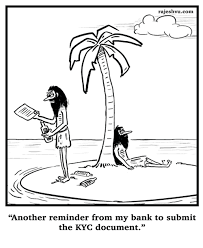
‘Look, my dear old Customs official, I am not expecting any parcel from Cuba. I know no one in that country. At least, not after Castro died. I have no intention of responding to your request to travel for over two hours to come to the airport. I am reporting this matter to the police. Kindly text me your name and designation in Customs, which will help both of us get to the bottom of this mystery.’ The line went dead. I tried calling that number a few times and a recorded voice informed me that ‘this number does not exist.’

Then there was that unpleasant call from someone claiming to be from the Vigilance Cell of the Mumbai police.

‘Is this the mobile number of Mr. Subrahmanyan?’

‘Yes, it is. What can I do you for?’

‘We are calling from the Vigilance Cell of the Mumbai Police.’

‘And a very good morning to you too. Do we have a name, Mr. Vigilance Cell?’ I was at my acerbic best, but my sarcasm went over the caller’s head. He got quite shirty.

‘My name is not important. You have been making obscene calls to several ladies in Mumbai who have registered their complaints with us. You are to report to our Malabar Hill station within 24 hours.’

‘Listen carefully, my vigilant friend. I live in Bangalore and you’ve got a snowball’s chance in hell of my taking a flight to Mumbai. I would like to know your name and ID proof, names of the ladies who have made this ridiculous complaint and at least one recording of this mythical, obscene call. Merely the sound of heavy breathing will not do. And if I do not receive the requested information within 24 hours, I shall be making a very obscene call to you and turn into a vigilante myself. Am I getting through to you?’

Clearly, I was not getting through as the line suffered a sudden cardiac arrest and breathed its last. I tried calling the number and, once more, received the helpful recorded message that the number did not exist. I was advised to block such numbers, but these charlatans are canny. They keep calling from different numbers, the sods. In more ways than one, they had my number.

As if all this was not nuisance enough to distract me from my attempting to unravel P.D. James’ supreme prose while solving a murder mystery, which alone is enough to put anyone off one’s equilibrium, there are the courier service chaps who will call you to reconfirm your address and phone number because they are holding a parcel from FedEx in my name.

‘So why don’t you just deliver it to me like every other two-bit courier does, ringing my door bell and ruining my afternoon nap? Why do you need to reconfirm my address and phone number? You have just called me on this number and I am he whose name supposedly features on the parcel.’

‘You could have misplaced your phone Sir, and we could be talking to someone else and not Mr. Seetharaman.’

‘But I am not Mr. Seetharaman.’

‘Then who are you, Sir?’

‘That is for me to know and for you to find out. Why should I reveal my identity if that blasted parcel is intended for a Mr. Seetharaman, whoever he is. Maybe he fancies Cuban cigars.’ Finally, I was starting to enjoy this exchange.

‘Then how is your mobile number featured on the address? Gotcha.’ He sounded like the chap whose Bishop had just dealt a death blow to my Queen and was about to say ‘Checkmate.’

‘Search me.’ Go and ask the mobile service company and I am sure they will give you short shrift. If you fellows cannot distinguish two similar sounding but entirely different names, then that is your problem. There, I have even given you a hint as to what my name might be. Have the time of your life and next time I hear from you, I am calling the cops. Capiche?’ I cut him off before he could ask me what ‘capiche’ meant.

It has always been a matter of wonderment to me as to what these guys get out of making these crazy calls with misleading messages. I cannot see any reasonably educated person falling for these telephonic tricks. If you know for certain that you are not expecting a parcel from Cuba, you will certainly not respond and the ‘threat’ vanishes. There could be an element of blackmail if you had ordered sex toys and were embarrassed to admit it, though no crime is involved. Or so I am told. I read about something like this recently in my daily newspaper where a small-town teenager had placed an order for an inflatable, life-sized doll from Bangkok which got our officialdom most interested, leaving the pimply, pubescent adolescent red-faced. I think the cops get off on cases like this.

There is always a downside to this problem involving fake calls. What if the call was genuine? An executive from a mutual fund house called to tell me that a largish sum in a particular equity fund was about to expire and what would I like to do with it. As I had forgotten all about it, I assumed this was another one of those fraudulent calls and I was quite rude to the fund manager. When he explained himself curtly, I had to hurriedly proffer my apologies. After all, this was real money. Not an inflatable doll.

The newspapers inform us regularly that strenuous efforts are being made to catch these culprits and many of them are cooling their heels behind bars. However, the calls keep coming and old people are getting gypped of their hard-earned savings. I am considering changing my mobile number. Not that that is going to help. The cyber crooks are always one step ahead of the game. Worse luck.

   Statutory warnings are injurious to your entertainment

Humphrey Bogart – ‘Here’s looking at you kid.’

A number of films or television serials these days open with a black screen sternly informing the viewer in bold, reverse type that ‘Smoking is injurious to health.’ That is old hat of course, and we have been seeing that health warning or its variants on cigarette packs – ‘Smoking causes cancer’ visually aided by skull and crossbones, for several decades now. Nobody pays a blind bit of notice for various reasons. The thing of it is, there are not too many people smoking these days, though I could be contradicted on that point by some market research wag representing the interests of the tobacco lobby. Smokers at international airports are treated like outcasts and provided with a separate glass cabin where they all gather in the haze and smoke their lungs out, coughing and sputtering the while. Smoking inside the aircraft, of course, is a strict no-no, and if you are nabbed sneaking a drag inside the loo, you could be thrown out in mid-flight. Without a parachute.

 As for the pernicious habit having declined worldwide, I am speaking more for myself and those I run into on a regular basis. And as I am on the subject of films, the first thing you notice as soon as the film or episode commences, is the hero fishing out a fag from his soft pack and taking a deep, contemplative drag. Who remembers ‘You’re never alone with a Strand’ – a classic 1950s British cigarette commercial? Which kind of puts the kibosh on the preceding health warning premise. That is perfectly fine from the storyline’s point of view. One is not expecting the hero, or the bad guy for that matter, to be overly consumed by potential health hazards.  It is all to do with style.

Can you imagine Casablanca without Humphrey Bogart and a cigarette dangling from his lips throughout the film? For those of you reading this who are too young to have heard of Casablanca or Humphrey Bogart, you could do worse than get on to Google search. ‘Here’s looking at you, kid,’ became a tagline for the ages, on par with Gone with the Wind hero Rhett Butler’s ‘Frankly, my dear, I don’t give a damn.’ Staying with the Bogart reference, there is a saying (and a song) Don’t Bogart that joint, my friend (featured in the soundtrack of the 1969 counterculture classic Easy Rider), meaning don’t keep the weed dangling. Pass it round. Needless to add, the joint referred to contains substances far more potent than your normal, everyday cigarette. Once your name, in this case Humphrey Bogart’s, goes into legend and song, there is nothing more to be said.

This raises an interesting question. Why do purveyors of tele-cinematic entertainment confine themselves to tobacco when it comes to warning us of dire health consequences? Truth to tell, it is the government’s film censor board that insists on the warning being displayed at the outset, not the producers themselves. The point I am making is, I don’t come across the scolding strap line with regard to drinking. Are we to conclude that it is perfectly kosher with the authorities if we watch our blotto heroes drink like fish? I am not aware of the drinking habits of our Piscean friends and I am convinced these underwater vertebrates are being needlessly dragged into the subject of alcoholism. It is bad enough that we grill, boil and fry them for our gastronomic delectation. Should we also set them up as a benchmark for human intemperance?

When it comes to Indian popular films courtesy of Bollywood, Tollywood and others, a sozzled hero is almost a sine qua non for a lovelorn, lugubrious song sequence. So many memorable Indian film songs have been composed and screened featuring the protagonist staggering around clutching a bottle of VAT 69 firmly in his hands. It’s always VAT 69. Contrary to what I said earlier, I am informed that some Indian films do warn the viewer of the evils of drinking at the bottom of the screen whenever the actors shout ‘Cheers’ and raise a glass or three. However, I have not encountered this warning on drinking, so I will keep my counsel. Or perhaps I should watch more Indian films.

Taking this argument further, crime movies and murder mysteries revel in criminal acts of varying kinds. That is precisely why the genre is so dubbed. That said, I have yet to witness a film sequence where, just as the killer shoots down his victim, knifes him in the gut, poisons his cup of tea or strangles and gags him to death, a warning line flashes across the screen letting us know that committing murder is a crime, injurious to the health of the victim and can attract capital punishment for the perpetrator. If any of you reading this has seen anything on our screens approximating to these typographic legends, do let me know giving details of the film and where I can access the same.

What price, Gluttony? Listed among the Bible’s Seven Deadly Sins, there are any number of films which feature our bulimic movie stars gorging themselves on meat and drink and all manner of other comestibles till they are sick to the stomach. At least, the viewer is filled with nausea. Is this not a fit sequence to let the audience know that eating too much is not just extremely bad for health, but a sin to boot? The religious angle is always rife with possibilities. The poet Dante, in his seminal work Inferno, dealt unspeakably harshly with those found guilty of Gluttony. He was not too kind with those guilty of the remaining six deadly sins either – Pride, Greed, Wrath, Lust, Envy and Sloth. Dante was like that. A morose individual, he loved getting into gory and graphic details of how sinners of every hue received their comeuppance. Just imagine. If all those sins were to be highlighted in bold type every time they were committed on screen, we will not be able to follow the storyline from start to finish. I experience that problem with subtitles as well, but I have to live with them if I am watching an award-winning Italian or Japanese film.

I guess what I am questioning is the relevance of warning the public on the ills of smoking or drinking in cinema halls and on our television screens, when there is no evidence to suggest that the audience is carefully considering the admonishing, wagging finger and taking remedial action. My point is further underscored when we are treated to surrogate adverts singing the praises of Kingfisher soda water, Royal Challenger sports drinks, Wills casual wear, not to mention the stunning, Absolut series of advertisements. All these brands trigger their original, ‘mother’ brands purveying liquor or tobacco. What do they take us for? Chopped liver?

In conclusion, I can only say that the wool is constantly being pulled over our eyes. And we know it. So, my fervent appeal to the powers-that-be is that they should stop frequently interrupting our enjoyment of visual entertainment by asinine comments about the ills of smoking, plumb spang in the middle of a sequence in which the smoking hero is about to say something priceless. Like who choked to death the attractive typist with her nylon stockings? If push comes to shove, let them (at their expense) do a 30-second commercial showing a doctor taking us through our decaying lungs or calcified intestinal tract due to smoking or mindless eating. This can be screened along with other commercials like eateries, life insurance, potato chips, automobiles and so on. That’s fair dinkum, as the Aussies love saying. I’ll leave you with this thought. When did you last see an arty black and white photograph of the genius film maker Satyajit Ray without a cigarette between his fingers or his lips?

I rest my case.