Idioms for idiots

I do not believe in pure idioms. I think there is naturally a desire, for whoever speaks or writes, to sign in an idiomatic, irreplaceable manner. Jacques Derrida.

The word idiom, if one were to be pedantic, means ‘an expression whose meaning is different from the meanings of the individual words in it.’ I picked that up from one of the many dictionaries that are readily available to us if one made a reference to any of the established search engines on the internet. I would not set too much store on their spellings as most of them are locked into the American school of English, about which the less said, the better. Anyhow, getting back to idioms, we are also provided with a helpful example. The idiom ‘bring something home to somebody’ means ‘to make somebody understand something.’ As a quick aside, if anyone knows how to switch to English (UK) on my Word document from the dreaded English (US), please let me know pronto. The option is available but never works. If I take my eyes off my keypad for a heartbeat, ‘honour’ quickly becomes ‘honor.’ And to rub it in, ‘honour’ sports a red underline as if to say, ‘watch it buddy, we don’t hold with that needless “u”. Get rid of it. Then again, don’t bother, we will do the needful.’ Don’t miss the sneer. You see what we have to put up with? My response is clear. ‘Up with it, I will not put. My honour is at stake.’ I shove the “u” back where it belongs. Sorry, I digress, I ramble, but all in a good cause.

Let me get back to idioms. From a writer’s point of view, idioms are an excellent tool to drive home a point. In fact, to bring home something to somebody, as my digital dictionary so artlessly and inelegantly puts it. We employ idiomatic expressions all the time, often without even being conscious of it. They are so ingrained in our psyche. One assumes that many of these expressions have been with us for hundreds of years. The greatest writers of the English language have honed their writing skills by introducing homespun idioms which, over time, have become part and parcel of the way we speak and write. All fine and dandy, which ought to mean, everything is hunky-dory, but evidently it is now said in a patronising, sarcastic tone, meaning just the opposite of what it was originally meant to convey. Excuse me while I bang my head against the wall.

 That said, I do have a gripe against quite a few of these idioms that have gained currency over the centuries. If you examine them closely, as I am about to, you will find that quite a few of them do not make much sense. I could be inviting vitriol and the wrath of God to rain down on me. And the devil take the hindmost, to employ another idiom. Which is as good a place to start as any. I am reliably informed that the origins of the expression ‘and the devil take the hindmost’ date back to the 1500s. Apparently, the idea is that if everyone is running away, the devil will get its nasty hooks on those who are farthest away from the front. So much for nice guys finishing last! Implying, presumably, that those who get left behind from the group, are at great risk. From what? That is the question. The devil? Give me a break. For some obscure reason, from the 16th century onwards, the meaning of the expression was simplified to mean selfishness. Confusing? Of course. Which is why, at times, it may be better to employ some of these idioms without being overly conscious of its meaning. Let it just flow naturally, like James Joyce’s stream of consciousness passages. If you followed with clarity some of JJ’s outpourings from Ulysses, you are a better man than I am, Gunga Din. If people don’t quite get it, hard cheese. And the devil take the hindmost!

Did you notice what I just did, without even thinking about it? Hard cheese. An idiom, to understand which I have never sought any learned soul out to ascertain what it actually meant. By itself, hard cheese sounds nonsensical, but in the context of the flow of a running dialogue, you get the gist of it. I must have come across it in a book or a play or something. What it means, and I need hardly spell it out, is ‘tough luck, old chap,’ said sympathetically. It can also be used with a dose of irony, ‘you spurned my offer, hard cheese, go and cry on someone else’s shoulder.’ Just two words, and so much to explain.

How often have we come across someone who is described as being so gentle and soft that ‘he wouldn’t hurt a fly.’ This one really beats the bejeezus out of me. Let us assume, for one insane moment, that I actually wish to hurt a fly. Let’s face it, they are annoying things, flies, and we keep trying to swat the damn things with a folded newspaper, more in hope than with any real intent. But how does one go about hurting it? I suppose if you are one of those sadistic boys in William Golding’s Lord of the Flies, you might be inclined to inflict harm to a fly, as they do to a pig, but that is fiction. If I did catch a fly, even by a huge stroke of luck, I will just let it out of the window, dead or alive. I make no such promises about cockroaches or lizards, but flies? I can take them or leave them. And the devil take the hindmost!

How about ‘burning the candle at both ends?’ A well-known, if idiosyncratic, idiom that means a person working his socks off, round the clock, virtually working himself to a standstill until he is drained of all energy. My question to the nutcase who thought up this phrase is this. Is it possible to burn a candle at both ends? And to what end? By definition, a candle has a wick at one end, and is flat at the other, such that you can make the candle stand on any smooth surface after a drop of wax from the wick end (if you are still with me). If you light the wick and show a flame to the flat end, surely the wax would melt, rendering your ability to make the candle stand upright, a non-starter. You are now free to call me a literal-minded idiot, as we are discussing idioms and idiots. I shall, however, firmly stand my ground. The person who burned the midnight oil (there’s another one) to come with this candle classic clearly did not think it through. He would have been better off lighting one candle at one end than to risk waxing lyrical by daftly burning it at both ends. As a complete non sequitur, I am reminded of a line one of my teachers wrote in my autograph book, ‘better to light one candle than to curse darkness.’ Make of that what you will.

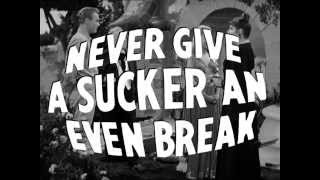
When I first heard the expression ‘never give a sucker an even break,’ I could not make head nor tail of it. After much asking around and researching, I arrived at the conclusion that the idiom was just another way of saying ‘one should not suffer fools gladly.’ However, the ‘sucker’ idiom gained a great deal of currency after a 1941 Hollywood film starring the incomparable W.C. Fields, with the same title. The expression started appearing frequently in American novels, pop song lyrics and of course, movie scripts. To say nothing of P.T. Barnum’s immortal contribution to our idiomatic lexicon, ‘there’s a sucker born every minute.’ Now here’s the thing. Every time I have attempted to use this idiom (I refer to the W.C. Fields version) in casual conversation, people tend to look at me strangely. Whether this is because they did not understand it, or thought I was being pretentious, I cannot say, but I am a bit chary of using it these days to avoid being branded as a bumptious idiot.

I can go on in this vein till the cows come home, but then, all those carpers who are already fed to the back teeth with these tired, old aphorisms, will come crawling out of the woodwork, and I might end up laughing out of the other side of my mouth. Why in heaven’s name would you ask someone to break a leg, when you intend to wish him good luck? And why is something you are deeply impressed by, the best thing since sliced bread? The problem is that when it comes to scattering idioms about, everyone wants to jump on the bandwagon and grab a piece of the action. I bash on regardless, in for a penny, in for a pound. Tell you what, I shan’t beat around the bush anymore. I have bitten off more than I can chew and between you, me and the gatepost, I am ready to hit the sack. I am calling it quits.

Good night.

   Calling out names in Meghalaya

The assembly election results for three important north-eastern states of India, namely, Tripura, Nagaland and Meghalaya are just in. And surprise, surprise, the incumbent BJP has come up smelling of roses in all the three states. They won by a comfortable margin in Tripura and Nagaland, bagging the requisite number of seats, along with their allies and romped home. In Meghalaya, however, they could barely scrape together two seats off their own bat, and still ended up on the winning side! As one BJP foot-soldier was overheard stage-whispering to a friendly (is there any other kind?) television reporter, ‘You win some, you win some!’ They are a winsome lot, the BJP party workers. And why not? It appears all they need to do is turn up for an election and the results are virtually a foregone conclusion, barring in a handful of states. I am stretching a point here, but what the hell, in politics exaggeration is the name of the game.

Mind you, it was strongly rumoured that the erstwhile Chief Minister of Meghalaya, Conrad Sangma, had a run-in with one of the BJP bosses and decided to part company prior to the assembly polls. However, when the results came in and the guitar-strumming Conrad found himself a few seats short he, like any astute politician, decided to make nice with the BJP and they are friends again. Politics throws up strange bedfellows, even if the lay public feels like throwing up now and again. Still and all, in the words of that lovely Burt Bacharach song, That’s What Friends Are For. Bottom line, ‘the double-engine sarkar’ is enjoying a lip-smacking, flavourful triple sundae in the north east and it will stay that way for the next five years. To the victor go the spoils.

Meanwhile there are more assembly elections on the anvil. Word on the street is that bell-weather state Karnataka will be difficult to hold on to by the ruling dispensation, and with stacks of cash being found recently under the beds and floorboards in some BJP MLA’s home, the opposition will get its chance to rub it in, good and proper. Time for some good, old fashioned whataboutery to fill the airwaves. And Rahul Gandhi is helping the BJP in that regard with some strange statements in Cambridge, of all places, about seeing ‘eye to eye’ with militants in Kashmir, his stunning discovery of harmonious China as a force of nature, Pegasus spyware in his phone et al. Wonder who his speech writer is. In passing, I must say the now not-so-young scion’s decision to trim his erstwhile, outrageously straggly beard is a welcome change. The optics just went up a notch. Contrarily, it’s a bit rich his branding the BJP as a ‘suit-boot ki sarkar.’ He was dressed to the nines at Cambridge, suited and booted to the gills. Spiffy. Savile Row, Rahul?

That said, let me get back to the north-east. Like most other people in our country, I plead guilty to not knowing very much about this bountiful and beautiful region. Evidently, even most of our political parties in the past paid scant attention to the ‘three sisters,’ Meghalaya, Tripura and Nagaland. Now that politics has seen to it that these almost-forgotten states are dominating, at least for now, dining room conversations in many parts of India, we are all frantically searching websites to learn more. However, what has caught my attention is not so much the unspoiled beauty and grandeur of the region, though that alone is worth the price of an air-ticket to Shillong, but the evocative names of the people who belong to these states. In elaborating on this somewhat unusual theme, I leave out Nagaland and Tripura for now, and concentrate instead on Meghalaya. This is because most people’s names in Tripura are of familiar origins from other parts of India, and those of Nagaland, while interesting, don’t quite have the exotic magic or music of those who have been christened in Meghalaya. Christened, incidentally, being the operative word, given the Christian dominated nature of the state. My observations include names of some of the small constituencies as well.

Let us then, you and I, dive in and examine these names that I, for the most part, have not come across before. To employ that horrendous present-day expression, ‘my bad.’ First off, let us get the common or garden Sangma and Lyngdoh out of the way. It appears that you cannot hurl a brick in Meghalaya without beaning a Sangma or a Lyngdoh. Rather like a Chatterjee or a Banerjee in Bengal. Not that one wishes to, heaven forbid. Hurl a brick, I mean, but you get my drift. Instead, let us feast on some of the other incredible names, shall we? For starters, there’s Dr. Wanweiroy Kharlukhi, which is such an evocative name. Had I been on first name terms with him, I would probably have called him ‘Wanny’ or perhaps just a vanilla ‘Roy.’ Incidentally, I cannot blithely assume that the name belongs to the male and not the female of the species, for there’s no way of telling until I come across a picture. We move on to Prestone Tynsong and Hamleston Dohling, whose names put me in mind of church bells chiming. Come One Ymbon must surely vie for the top three spots if one were to rank these names in terms of favourites.

Not that it is easy to pick favourites. One is spoilt for choice in Meghalaya. Take Matthew Beyondstar Kurbah or if you must, Brightstarwell Marbaniang. Clearly the stars are propitiously well aspected for these bright candidates. They will go far. The stars are the limit! Methodious Dkhar reminds me of American jazz legend, Thelonious Monk and don’t ask me why. If you know your jazz, I wouldn’t at all be surprised if Methodious trumpets his political success most melodiously, with Conrad Sangma accompanying him on guitar. Politicians are expected to be ardent and keen about their work and who better than Ardent Miller Basaiawmoit to deliver, whichever portfolio he might be offered. If the CM needs some heavy lifting to be done on his behalf, he need look no further than Heaving Stone Kharpran to do his bidding. The Red Indians of yore had names like this.

In case you thought the Lalus of the world came only from Bihar, Meghalaya says ‘what the heck, we have our own Alexander Lalu Hek.’ Legend has it that revered Greek statesman Demosthenes was one of the world’s greatest orators. Who is to say that Meghalaya’s very own Sosthenes Southun is not inspired by the oratory skills of the ancient Greek? Questions, questions. I am not betting against Walmiki Shylla being named after the great Indian sage, Valmiki, who gave us the epic, Ramayana. I love Gavin Miguel Mylliem and Gabriel Wahlang, whose names remind one irresistibly of colourful Latin American and Spanish flavours. Remington Momin’s ancestors may have introduced the first typewriters to Meghalaya, but that is just an educated guess on my part.

Those are just a handful of glorious samples of the names of the beautiful people of gorgeous Meghalaya, and let us just take a quick peek at some of the constituencies that these worthies represent. Sutnga Saipung, Mowkaiaw, Mawrengkneng, Pynthorumkhrah, Nongthymmai, Rambrai-Jyrngam, Chokpot, Mawthadraishan, Bajengdoba and Rongieng. Those are just a brief soupçon mined from a field of infinite, if unpronounceable, riches. A vowel or two, casually thrown-in between the consonants, would have helped but hey, we shouldn’t be fussy. I am sure the Meghalayans will be similarly up against it with Madal Virupakshappa, the BJP MLA who is drowning in his own, ill-gotten hard cash. By the way, just to show there is no ill-feeling, Nagaland’s likely Chief Minister is called Neiphiu Rio. Not bad, but wouldn’t stand much of a chance against his Meghalayan neigbhours in an ‘exotic name’ competition.

That said, it strikes me that the BJP can consider themselves fortunate that their representation on the Meghalaya cabinet will be barely skeletal. Had it been otherwise, the likes of our Prime Minister and Home Minister attempting to wrap these amazing Meghalayan names round their tongues would have been a task well beyond their levels of articulation. It is well beyond mine! They will do well to stick to ‘Good morning, Mr. Sangma. Would you like another airport?’

In conclusion, I would like to share an amusing, personal anecdote, entirely true, of my own experience with an unusual north-eastern name. I made an appointment with my local salon for a much-needed haircut a few days ago. They gave me a pleasant, industrious, young lady, clearly from the hilly regions, to take care of my grooming. I have to say she did an extremely competent job – hair-cut, shampoo, head-massage, the works. I felt like a million dollars at the end of it all. Out of courtesy, I thanked her profusely and inquired as to her name for future reference. ‘So So,’ she replied.

‘I beg your pardon?’ I responded, somewhat baffled.

Once again, she repeated the words, ‘So So.’

‘Ah so, I get it. Your name is So So, but your hair-dressing skill is anything but. Glad to meet you, So So. My name, as you might have gathered from the booking slot, is Suresh Subrahmanyan, but you can call me Su Su.’

So So merely giggled as I strode confidently out of the salon.

To ‘Sir,’ with reservations


The Oxford dictionary defines the respectful appellation of ‘Sir’ as follows, ‘used as a polite way of addressing a man whose name you do not know, for example in a store or restaurant, or to show respect viz., Good morning, Sir.’ The operative phrase here is ‘way of addressing a man.’ From the time we were toddlers in school, we have grown accustomed to addressing male teachers or masters as ‘Sir,’ while lady teachers were invariably referred to as ‘Miss,’ irrespective of their marital status. Now, why am I at pains to belabour this rather obvious point? The reasons are not far to seek. My newspaper this morning carried an arresting headline, ‘Woman or man, address judge as “Sir.”’ This confusing instruction was given by the Chief Justice of the Gujarat High Court.

Reportedly, the hoary, old subject of whether judges should be addressed with the deferential, some may even say obsequious, British-era-hangover ‘My lord’ or ‘Your Honour’ was resurrected in the Gujarat High Court, presided over by a lady Chief Justice. The honourable lady passed a verdict in favour of ‘Sir’ as a gender-neutral alternative. The vexed question of what is the proper way of addressing judges of either gender has been raised in earlier years, but there has been no clear-cut direction such that lawyers or the accused can find themselves on safe ground when they clear their throats to address their Lords or Ladyships. I can hardly say ‘to address their Sirs,’ which quite frankly, sounds ludicrous.

You see my quandary here, readers? The problem arose in the first place because a lawyer, addressing a division bench comprising a lady and a gentleman judge, decided that discretion is the better part of valour, took the chivalrous approach and addressed both of them collectively as ‘Your Ladyship.’ It is my guess that that was what he naively intended to do, though the chagrined judges took the view that he was addressing only the distaff member of the bench, and was peremptorily told, if not actually reprimanded that he should be acknowledging both of them and not just the lady judge. In short, the unfortunate lawyer found himself between a rock and a hard place.

Thus chastised, the lawyer meekly apologised, lest he should be found in contempt. At which point, in order to put this issue to bed once and for all, as the debate over terminology issues was eating into precious time of court proceedings, the judges declared that ‘Sir’ would be an acceptable and gender-neutral way of addressing their Honours. In order to arrive at this facile conclusion the judges, as is the way with judges (and with lawyers and solicitors), proceeded to quote several precedents drawn from past learned judges to buttress their case and declared their verdict. ‘Sir’ it is and ‘Sir’ it shall be. Case closed.

Some interested, or even disinterested third party do-gooder could contemplate approaching the Supreme Court and seek the opinion of their Lords or Ladyships or Sirs as to how they felt about the whole rigmarole. However, our courts are already at bursting point and facing considerable pressure to hear important cases expeditiously and will not look kindly upon being asked to pass judgements over what they will doubtless regard a trivial matter.

Let me now declare, straight off the bat, that I feel a great sense of unease over the Gujarat High Court’s view on how judges ought to be addressed. While I have no wish to bring back practices that would smack of our colonial past, I have to say that this decision could have unintended consequences for the larger sphere of general discourse. The way I see it is that, if judges wish to become neutral-genders (sounds weirder every time I utter it) and have no issues with being addressed by a ‘one-size-fits-all’ appellation of ‘Sir,’ that is their business and good luck to them. However, one should also have some consideration for the wider Indian populace, or ‘the great unwashed’ as somebody (perhaps a judge) once described them.

For decades now, we the people of India have grown accustomed, thanks to Bollywood, Tollywood and all other filmy ‘woods’ regaling us with emotionally charged scenes of Dilip Kumar, Amitabh Bachchan and Sivaji Ganesan addressing our wigged sentinels of jurisprudence dramatically with a thunderous ‘Objection, My Lord.’ Are we going to be denied such heightened histrionics with a lame ‘Objection Sir’? In any case, I cannot get my head round the prospect of having to address a lady judge as ‘Sir.’ My English teacher in school, Mrs. Scott, would have administered ‘one hit on the back of the head’ if I called her ‘Sir.’ Just not cricket, Your Honour. To think that a lady Chief Justice has actually suggested this is all the more befuddling.

Writers sometimes face a unique problem when referring to a person in the abstract (gender-neutral), and choose to be politically correct by writing ‘she’ or ‘her,’ only to lapse reflexively later on into ‘he’ and ‘him.’ As in, ‘a person is expected to be resourceful if he seeks to be successful.’ Why could that not have been a ‘she’? Or, if you wish to hedge your bets, you could say ‘he or she,’ which over several sentences and paragraphs, can get tiresome. Old habits die hard.

If I were to do a quick sketch for a short one-act play dealing with judicial nomenclatures, it would go something like this.

Defence Counsel – ‘Your Worship, my client is innocent of all charges levelled against him. The prosecution has failed to provide any substantive evidence. I humbly request your Lordships to dismiss this farcical case. With costs. Thank you, Your Honour.’

Male Judge – ‘I would strongly urge Defence Counsel to make up his mind whether to address the bench as “Worship” or “Lordship.” We cannot entertain both.’

Lady Judge – ‘Counsel also added “Honour” for good measure. In my view, none of these terms is suitable. With due apologies to my learned colleague. Why call us “Worship?” We are not Gods.’

Defence Counsel – ‘No? Not Gods? You could have fooled me your… your… your… Sirs? You see how tame that sounds? On your banging of the gavel and pronouncing “Guilty” or “Not Guilty” depends the future of so many undertrials. In a sense, you are Gods and rightly worshipped. Not unlike doctors and surgeons.’

Male Judge – ‘What is wrong with “Sir?” It is respectful and as my colleague keeps reminding us, it is gender-neutral. What is your problem with “Sir?”

Defence Counsel – “Hardly gender-neutral. With due respect Sir, to address a lady as “Sir” is both conventionally, technically and grammatically wrong. An abomination. The term gender-neutral also, unfortunately, brings to mind people of an indeterminate sexual orientation. If you are against terms like “Lordship, Worship, Honour” etc., then we have no option but to address a lady judge as “Madam.” In school we used to call them “Miss” but that will not be appropriate here in court.’

Lady Judge (stage whispers to her male colleague) – ‘I should hope not. I did not come prepared for a tutorial on terminologies and court etiquette. Not from this chit of a lawyer, at any rate. Can we get on with the case and forget about how we are addressed for the moment? We can meet separately with our other colleagues and issue a set of instructions approved by the Supreme Court on this matter. Yes, Sir?’

Male Judge – ‘Yes Sir. I mean, Yes Madam. Oh, what the hell! Even I am dithering. Let us deliver a verdict and be done with it. I have had it up to here with name calling.’

You see what is happening here, readers? Confusion confounded. We may have noble thoughts in wishing to gradually divest ourselves of painful reminders of our British colonial past, but in trying to set things right in a hurry, we could be digging a bigger hole for ourselves. Even ‘Sir’ is still an English word and, for the most part, court proceedings are still conducted in English. It would be better if our legal luminaries bent their minds to the expeditious disposal of cases, (the ever-growing pending litigations are as long as several arms), rather than getting hopelessly mired in how they should be addressed. ‘Judge not, that ye be not judged,’ say I. A smidgen of humour won’t hurt. Your average denizen on the street cannot fathom what all the fuss is about, ‘I don’t understand why judges get paid so much. Others judge me for free.’

I guess what I am striving to say is that, there are more bizarre pronouncements we have received from judges than an obsession with how they should be addressed. Personally, my favourite, laugh-out-loud, throwaway line from the bench occurs in a brilliant satirical sketch by the late comedian Peter Cook, portraying a judge. During his summing up, he winds up his long peroration with this sage advice to the jury, ‘You will now retire and carefully consider your verdict of “Not Guilty!”’

Now that is something for their Lordships, Ladyships, Right Honourables, Worships and Sirs to mull over. After all, what’s in a name?

When the BBC was a three-letter word

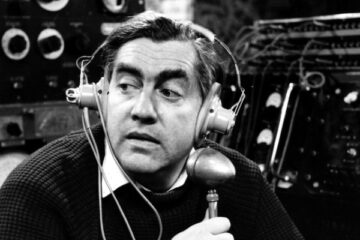
The inimitable Tony Hancock as The Radio Ham

 Prologue.

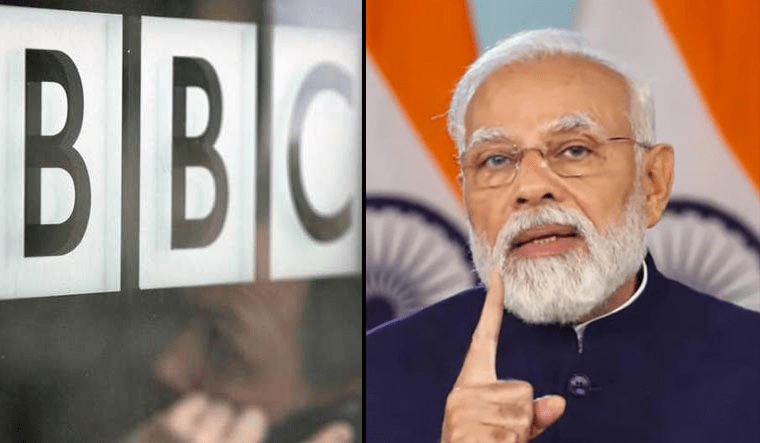
The British Broadcasting Corporation (BBC) has been in the news in recent weeks. For all the wrong reasons. From a celebrated purveyor of the news worldwide, the BBC has become the news. Principally, for putting out a two-part documentary on India’s Prime Minister Modi, and not a very flattering one at that. Naturally, the knives are out and the recent search / survey / raid at the BBC’s premises in New Delhi and Mumbai has drawn much ire. The ire has emanated more from those violently opposed to PM Modi’s ruling dispensation in India rather than from BBC’s HQ in London or from the British Government. Ironically, the naysayers are crying hoarse that freedom of speech is being throttled in India, while enjoying that very freedom to vociferously condemn the action against the BBC by the powers that be. That said, I do believe the government erred big time in making an almighty song and dance about the documentary being screened in India, drawing more attention to itself, though why the storied broadcaster decided not to air it on the BBC India channel remains a mystery.

 I have no wish to go into the whys and wherefores, pros and cons of this raging controversy (enough has been said), which will doubtless play itself out over the coming weeks and months, and like all such brouhahas, ultimately peter out into nothingness. I am taking this opportunity to reproduce an article I wrote some years ago about my own experience with the BBC. It has to do primarily with the BBC World Service Radio, an all but forgotten medium now. Today’s argy-bargy is all about BBC’s current affairs television arm, which is a completely different kettle of fish.

Here it is then, my love affair with the BBC as I was growing up during a more innocent age. Nothing controversial or unpleasant. A lot of this may not find much traction or resonance amongst those who are less than 50 years old, but they can still read it, if only to understand that once upon a time, BBC was just an entertaining, three-letter word. Or do I mean acronym?

Growing up with the BBC

BBC radio is a never-never land of broadcasting, a safe haven from commercial considerations, a honey pot for every scholar and every hare-brained nut to stick a finger into.

From a CBS TV broadcast

In the ‘60s and ‘70s, during my school and college years, my constant companion was the BBC World Service radio broadcasts. Whether it was the trusty Grundig radiogram at home, or the powerful Sony transistor, you would have unfailingly found me tuned into the 25 or 31 metre band short wave, receiving the crackling, but clear signals from the Beeb (the BBC’s affectionate moniker) at Bush House, London WC2.  Once in a while, I would tune-in to Radio Australia for some Test match cricket or the Australian Open tennis. Rarer still would be visits to the Voice of America. As for All India Radio, it was mostly during live cricket commentary of matches played in India, or the news in English, read by Melville De Mello, Lotika Ratnam, Pamela Singh, Surajit Sen and V.N. Chakrapani. Radio Ceylon was a domestic favourite, beaming Indian film songs back into India! Only the BBC had the nous and savvy to offer a variety that catered to every possible taste.

The magical lure of the radio is all but lost now, notwithstanding the Prime Minister’s periodic tete a tete with the masses, Mann ki Baat which, strangely, is also telecast but viewers can only hear the PM’s sonorous voice drone over a visual of a radio set! Television, for better or for worse, has invaded and consumed our lives. It’s a brave man or a dishonest one, who will admit to not being touched by the idiot box. More’s the pity, because one of the great qualities that radio possesses is its ability to concentrate the mind and free up the imagination. Rather like reading a good book. Listening to John Arlott’s rasping voice describing Colin Cowdrey’s cover drive was almost as beautiful as the great batsman’s artistry. At the first historic tied Test between Australia and the West Indies in Brisbane in 1961, I was glued to Radio Australia early morning on all five days of the match. Alan McGilvray, Lindsay Hassett and company, brought the pulsating moments alive to me. Ditto India’s Davis Cup tilt at the windmills when we progressed to the Challenge Round in 1967, only to be brought down by the mighty Australians.  Sitting at home, we willed Krishnan, Lall and Mukerjea to super human heights. Krishnan and Mukerjea even took the doubles rubber against all odds. No TV, but no matter. I was Radio Ga Ga, to invoke rock band Queen’s song title.

During my school days in Bangalore my English teacher would exhort us to listen to the BBC, the better to improve our English grammar and diction. In particular, we were told to catch the news, ‘on the hour, every hour,’ Greenwich Mean Time.  I would listen to the world news on BBC Radio whenever I could, more to imbibe the ‘correct pronunciation of the Queen’s English,’ as opposed to boning up on happenings in the House of Commons or keeping track of Idi Amin’s shenanigans in Uganda. I kept a handy Oxford dictionary by my side, just in case. Google search was eons away from entering our lexicon.

Then there was the entertainment side of things that really caught my fancy and virtually made me a BBC addict. Live sports, comedy, drama, music (popular and classical), quiz shows, royal weddings, and the odd funeral, even. Tarry awhile and indulge me as I delve into some of these unforgettable programmes.

The weekly Saturday Sports Special was a treat. Depending on the season, Association (now Premier League) Football, County and International Cricket, Wimbledon and Racing at Ascot – you simply couldn’t get enough. Master of Ceremonies Paddy Feeny, sitting in his London studios, would expertly navigate the listener from event to event, keeping us informed of the scores and state of the game. Week in, week out, I felt Paddy was talking to me personally! All this, peppered with constant light hearted banter with his wonderful fellow commentators on the ground – the aforementioned John Arlott, Brian Johnston, Christopher Martin-Jenkins, Henry Blofeld, Trevor Bailey, Freddie Trueman and many more. Even the football scores held a certain poetic cadence – Sheffield Wednesday 2 Wolverhampton Wanderers 1, Hamilton Academical 3 Heart of Midlothian 0, Partick Thistle 1 Inverness Caledonian Thistle 1.

Ajit Wadekar’s team, winning at The Oval in 1971 along with the series, was a seminal moment for BBC followers in India. People dancing on the streets with transistor radios pressed to their ears after Abid Ali hit the winning runs, was an unforgettable sight. Come Saturday, I would sit in front of my wireless from 6.30 pm and not move till well past midnight. My mother would yell at me to come for dinner. I would rush to the table, fill up my plate and be back again at the tuning dials. Radio dinner!

For western music buffs, there was no better place to turn to than the BBC World Service. Programmes like Top Twenty and Desert Island Discs, were an absolute must. While the former kept us abreast of the pop hit parade, with The Beatles and The Rolling Stones, not to speak of balladeers like Tom Jones and Engelbert Humperdinck invariably topping the charts. Desert Island Discs put the spotlight on famous personalities who had to imagine being castaways on a desert island, and select their favourite music during their unexpected solitude, hoping someone would find their message in a bottle.  The conversations with the presenter, the plummy voiced Roy Plomley or the charming Sue Lawley, were invariably urbane and witty. Then there were hilarious quiz programmes like My Word and My Music, involving some of Britain’s most eloquent raconteurs regaling us with their quirkily erudite answers. Finally, if classical music was your thing, BBC at the Proms was a delight, featuring some great orchestral performances.

What about comedy? What, indeed! Nobody does comedy better than the British. BBC Radio virtually spawned some of Britain’s finest comedians, many of whom shone on television as well. Hancock’s Half Hour, Round the Horne, The Goon Show, Beyond the Fringe, The Men from the Ministry (an audio precursor to the celebrated Yes Minister / Prime Minister series on television) and several more. These great radio programmes showcased the massive talents of the likes of Tony Hancock, Peter Sellers, Spike Milligan, Harry Secombe, Alan Bennett, Jonathan Miller, Peter Cook, Dudley Moore and others of their ilk. David Frost was a worthy addition, though current affairs and biting satire were more his stock-in-trade. That Was The Week That Was was a huge hit for Frost on British television but here in India, we were treated to choice excerpts on BBC Radio. These stalwarts considerably predate the likes of John Cleese and Rowan Atkinson, who were products of the burgeoning television era that gave us everlasting hits like Monty Python, Fawlty Towers, Blackadder and Mr. Bean.

Notable one-offs on BBC radio (and television) included the ill-starred Royal nuptials of Prince Charles and Diana Spencer, the entire event and the church service was given the full treatment – a meticulous ‘ball by ball’ running commentary. How ironic to reflect on this wedding pageant in the light of the subsequent tragic events that unraveled. Piquantly, Lady Diana and Mother / Saint Teresa died within a day of each other, and our television channels in India literally split the difference, simulcasting live both the funerals from London and Calcutta!

It would be remiss on my part not to mention my brief encounter with the legendary Mark Tully, BBC’s voice in India. Tully’s dispatches from his adopted country were full of empathy. During a brief working stint in Delhi in 1971, I perked up enough courage to track him down at his residence in the tony suburb of Jor Bagh. I had no appointment but he let me in to his warm home without demur. I told him I would like to work for the BBC and would he put in a word to the boffins in London and get me an opening – even as a tea boy. I could work my way up from there. I still cannot believe I actually did that, but youth knows no fear. He was all ears, but nodded his head in an east-westerly direction, indicating that it was next to impossible. I had to be satisfied with tea and sympathy. That was about as close as I got to working for the BBC! If all this makes me seem a bit of an Anglophile, I make no apologies. It was what it was.

One can go on and on, but I will conclude with a brief mention of what I consider among my most prized possessions – a double CD celebrating 75 years of BBC Radio, which I picked up at a BBC shop in London. Don’t think these outlets exist anymore, but the recordings take us on a roller coaster ride of the finest, landmark presentations on BBC Radio since its founding in 1922, ranging from the voices of King George V, H.G. Wells, Neville Chamberlain, Winston Churchill’s ‘finest hour’, John Lennon hours before he was fatally shot, Dylan Thomas’ Under Milk Wood with Richard Burton reciting, The Berlin Wall’s fall, and much, much more. Truly, a collector’s item.

In the words of Burmese statesperson Aung San Suu Kyi, ‘When I was under house arrest, it was the BBC that spoke to me – I listened.’

As did I.

Epilogue.

That was the BBC of my callow youth. Radio, audio and I was all ears. There was nothing not to like about it, and I have no regrets for having been Bush House’s ardent fan. The situation today, however, is completely different. All visual, nothing left to the imagination. One of our hyperventilating television anchors has even dubbed it ‘Boring Broadcasting Corporation,’ a cheap shot with which I strongly demur, at least in so far as the BBC on the radio I knew all those years ago, was concerned. In the final analysis, everything has now become acridly political. And toxic. And it sucks.

A parrot is grilled

And when I awoke, I was alone, this bird had flown. The Beatles.

Once every so often, we come across some weirdly amusing nuggets of information from our daily newspapers. Not all of them do I find arresting enough to expound upon, but here’s one that aroused my interest. Even if I wasn’t actually rolling in the aisles with helpless mirth, it had my dormant creative juices flowing. A few days ago, I came across a headline in my daily, tucked away in one of the inside pages, which went something like, Police interrogate parrot at crime scene. Swear to God and hope to die. That may not have been the exact wording of the headline, but it comes within a toucher of being accurate. The nub of this apparently true event is that, somewhere in the vast hinterlands or boondocks of our country, a bunch of well-heeled thugs were enjoying a raucous, Rabelaisian party with plenty of booze, illicit drugs along with a bit of raucous sex thrown in on the side. As I am unable to find the said issue of the newspaper, the exact location and date of this wild revelry remains a closed book. You will simply have to take my word for it, though much of what follows is admittedly a product of my imagination.

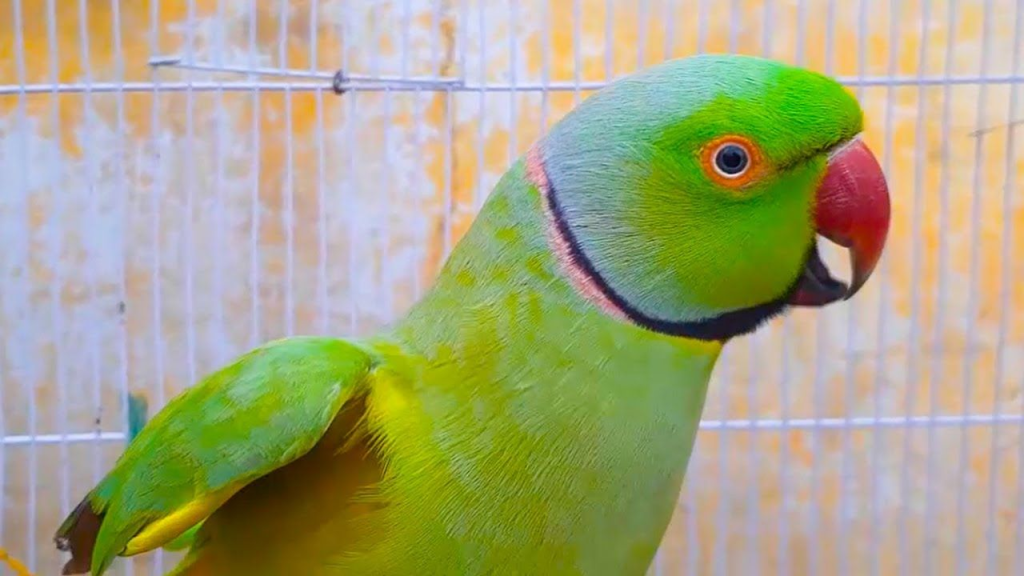
Getting back to the scene of action, clearly plenty of unwanted ruckus into the small hours was generated causing much disturbance to the neighbours, who decided to invite the long arm of the law to put a stop to the unseemly and, in their eyes, immoral shindig. Somehow, word got round to the party revelers that the cops were on the way to play the role of party poopers, and they had better hightail it to somewhere safe. When the police duly arrived at the shady (as in illegal or immoral) villa or bungalow, there was not a soul to be seen. Plenty of empty liquor bottles and glasses but no sign of human habitation. One of the cops even lamented that the goons could have at least left a few bottles of beer for them. It’s thirsty work, the job of a policeman and one entirely sees his point of view. It was as they were about to dejectedly leave the premises, empty handed, that one of the policemen caught sight of the caged parrot. He was a sharp one, this young cop. ‘Parrots are supposed to be smart aren’t they,’ he told himself. ‘They observe and they can talk, nineteen to the dozen. My smart phone is full of snippets of talking and warbling parrots posted on social media. With a bit of encouragement, they can even sing the national anthem. A bit off key, but still. Well then.’

The earnest, young policeman motioned to his boss to join him in front of the parrot’s cage. The inspector, one suspects that was the boss’ designation, walked across to his junior and looked somewhat bewildered. The young man was staring at the parrot, and the parrot was doing exactly the same at the cop, with a fixed glaze. Unseeing eyes, if you get my meaning. At this point, the inspector gave tongue.

‘What exactly are you trying to do, constable? And why have you called me to stand in front of this bird.’

‘It’s not just any bird, Sir. It is a green parrot.’

‘I can see that. I am not colour blind. So, it is a parrot, green in colour, all present and correct. Well done. What of it?’

‘Parrots talk, Sir. It might have seen something. We can try and engage it in a bit of a chat. No harm in trying. We have nothing to lose.’

The inspector was cynical. In his long career with the police, he had never been called upon to interrogate a parrot as a material witness. In fact, barring humans, he had never spoken to anyone from the animal, vegetable or mineral kingdom. He turned to his young charge.

‘Next you will ask me to hug a cow. Well go on, then. You seem to know all about parrots. Say something and see if it responds. This ought to be fun, should brighten up our evening.’

‘Right ho, Sir. Hullo there, Polly. Can you talk to us?’

There was no answer from the winged one. The boss butted in.

‘Look, the parrot’s eyes are open, which means it is awake. Do you think the bird is deaf.’

‘Sir, there are many birds that sleep with their eyes open. Could be playing possum. Let me try again.’

‘Gosh, we have an avian expert in our midst Who would have guessed! Go ahead and have the time of your life.’

Ignoring his boss’ sarcasm, the young constable raised his voice. ‘Polly, POLLY! How are you?’

The startled bird finally cocked its head up and spoke. ‘I am not Polly. Why does everyone think my name is Polly? If all the parrots in the world were called Polly, imagine the confusion that would create. Next thing you’ll be asking me to put the kettle on. Call me Solly.’

The two cops, after their initial surprise and delight at this sparkling piece of dialogue from Solly, whispered among themselves. The boss spoke. ‘I say, is Solly male or female? Can you check it out? I don’t want to offend our fine, feathered friend in any way. As you said, he or she could be a vital witness.’

‘Sir, how can I check it out? The gender, I mean. They are not like dogs. Things are not immediately apparent with birds. It will be rude to ask. And how does it matter, anyway? Let me continue.’

The inspector resignedly agreed. ‘Make notes.’

‘All right, Solly. So glad to have made your acquaintance. We have some questions for you. Do you mind sparing the time?’

‘Not at all, but no recording. I am just sitting in this cage. It is not even gilded. I have all the time in the world. Do you have a nut?’

‘Pardon?’

‘Nut, you nut. Almond, cashew, walnut, even your common or garden groundnut will do nicely. I am starved. And while you are about it, pour some drinking water into that little bowl, there’s a good chap. Nuts first, then we talk.’

‘Sir, where do I go for nuts at this time of night?’

‘Don’t worry son. You keep talking to Solly. I am sure there’s some nuts in the house. They always keep nuts and small eats when they drink.’

‘Fine, Solly. Nuts and some drinking water coming up. Tell me, why is there no one inside the house. The neighbours were complaining about some awful noise and plenty of boozing and other funny business going on. Frankly, I am not worried about alcohol and the proverbial roll-in-the-hay with the girls, but do you think drugs were involved? You know, snorting and shooting up, that kind of stuff?’

‘Listen brother, some of those who scooted when they got wind of you lot approaching, happen to be my masters. I have been with them for nearly four years. I owe them big time. I am afraid my beaks are sealed.’

‘Look here Solly, my master has gone hunting for nuts and things. Just for you. I expect something in return. Otherwise, your masters will find you lying on your back, legs pointing upwards, stiff as a board. Now what is it going to be? Starvation or cooperation.’

‘Boy, you cops drive a hard bargain, but be warned. You can ruffle my feathers only up to a point. As I am hungry and could, speaking metaphorically, eat a horse, I am willing to part with some information. First let me see the colour of those nuts. Then we will talk turkey. Till then, you can clip my claws.’

‘Sorry Solly, I am not a vet and I do not have a nail-clipper handy. Ah, here comes my boss. Found some nuts, Chief? Solly is really being difficult.’

The inspector whispers to his constable. ‘Look, I just found some dried peas in the freezer. Everything else has been cleaned out. Solly will just have to make do. Who the hell does he think he is, anyway? Walnuts and almonds indeed. Even I don’t get that at home.’

Solly squawks angrily. ‘Who told you I was a he, inspector?’

Caught off-guard, the inspector sputters, ‘Well I mean, I have no way of confirming, what with all the feathers covering everything. Lovely feathers, by the way.’

‘Relax inspector, I am a “he.” Just pulling your leg, else you should have been calling me Sally. Ha, ha.’ A parrot with a sense of humour, though laughing at his own jokes.

The inspector, red-faced, turned to his deputy, who was desperately attempting to hide his broad smile. ‘Listen you, I don’t think I can take any more of this parrot. It’s a pity it’s an endangered species and I can’t harm it. For the last time, try and get something out of this blasted Solly.’

In a conciliatory tone, the junior cop turned to Solly, ‘Look, for your own sake, give us something to take back to the station, else our jobs are at stake. I know these frozen peas are not quite up to your exacting standards. Promise I will bring back something really yummy if you can tell me something, anything. Just throw me a crumb.’

Solly seemed somewhat mollified. ‘Look fella, I do feel for you. Your boss is a louse, but I will whisper into your shell-like ear, as you have a nice face. Ask that idiot, your boss, to take a hike. First, push those peas in and pour the drinking water into the bowl. You will need to take the bowl out first. At which point the cop opened the cage door, and ‘whoosh,’ Solly flew clean out of the cage to freedom. The two policemen distinctly heard a squawky version of  Frank Sinatra’s Fly Me to the Moon, as the bird flew higher and higher, up, up and away into the late night meeting the first light of dawn.

Crestfallen, but recovering fast, the young cop told his senior, ‘Obviously, the renegade gang had a nice collection of CDs, Sir. I mean, Sinatra and everything.’ Before his bilious boss could explode, the young man added helpfully, ‘Not to worry, Sir. I have made copious notes as instructed.’

The two guardians of the law drove wearily off into the bleary sunrise.

Geriatric gossip

Old friends, old friends / Sat on their park bench like bookends. Simon & Garfunkel.

There were these two elderly gentlemen, hang on, what the hell, let’s call a spade a shovel, there were these two old gentlemen taking their early morning constitutional at their nearby park. Early to mid-eighties, if I am any judge. One of them was somewhat bent over with a walking stick for support. The other was relatively sprightly with an easy gait. Then there was me, an elderly denizen, an apt description for one who was giving the two oldies about twelve years, if a day, at an educated guess. The two spavined gents seemed to be involved in an animated conversation, which aroused my curiosity. After a short while, an inviting park bench beckoned and the two senior citizens decided to sit themselves down to continue their chinwag. As there was no other bench in the vicinity, I too parked myself at the edge of the bench, closed my eyes and did some deep breathing, apparently oblivious to any other goings-on. While my pretend posture was yogic, my actual intention was that of an inquisitive fly on the wall. Only, this was a fly sitting on a park bench. The oldies were unmindful of my presence, which was just as well, and my auditory canals were sharply attuned to the slightest chesty cough. Thus, I was privy to this fascinating chit-chat between the two gnarled, self-appointed wiseacres.

‘I say Chandran, what a lovely morning eh? The lark’s on the wing; the snail’s on the thorn; God’s in his heaven – all’s right with the world.’

‘Nice one, Mathew. Is that one of your own, or is it something you lifted from one of the Wodehouse novels?’

‘I wish. You are right about the Wodehouse bit Chandran, but the Master of farce himself took it from Robert Browning’s Pippa’s Song. He was always doing that, Wodehouse. Quite often, deliberately misquoting.’

‘Right, so what you are telling me is that this lark and snail quote is probably a line that can be drawn from Bertie Wooster through Wodehouse and the copyright resting with Browning.’

‘That’s about the size of it.’

‘Right, let’s put all this poetry and literary stuff to one side, shall we? Tell me Mathew, what’s your take on this godawful brouhaha about the BBC documentary on our revered PM?’

(Now we were getting somewhere. I was beginning to tire of Browning, Wodehouse, Wooster et al).

‘Look here Chandran, you will need to speak up a bit. You know I am a bit hard of hearing in my left ear. What was that about the BBC?’

‘The problem is your right ear is worse. Not that my ears are in any great shape either. Why don’t you get one of those hearing aids that are so widely advertised these days?’

‘What, and let the whole world know I am deaf as a doorpost? No, thank you! What is more, those hearing aids are pretty useless. They make awful sounds that drive you insane. Let’s get back to the subject, Chandran. What has the BBC gone and done now?’

‘They have produced a documentary film trashing our Prime Minister.’

‘Why did they have to do that? There are enough and more people in our own country doing that on a daily basis.’

(Good point, Mathew. Nicely put.)

‘That’s all very well, Mathew, but no one takes a blind bit of notice when opposition parties make a song and dance about these things in parliament. However, when a foreign news channel, particularly a reputedly hallowed institution like the BBC, takes up the cudgels, then the opposition goes to town making a song and dance about what the BBC said. Get my meaning?’

‘Sort of, but what is BBC’s beef against our PM?’

‘I say old chap, don’t use words like beef when we are discussing the PM. Not done, not cricket. Anyhow, to answer your question, the government will have us believe all this is motivated propaganda, raking up the past when the highest courts in our land have cleared the PM of any wrong doing. They have a point, but the opposition, thanks to this BBC film, have got the bit between the teeth and are going hammer and tongs. State and central elections not far away, see what I mean?’

(This Chandran pensioner is quite something. Follows politics closely and is able to see both sides of the argument. The kind of chap we need as a TV anchor instead of the one-dimensional ghouls we have).

‘It’s a pity, Chandran. I mean, Britain has an Indian at Number 10 and although he makes simpering noises about what a nice bloke our PM is, he just shrugs his shoulders when it comes to telling the BBC where to get off.’

‘Look Mathew, Rishi Sunak is no more Indian than Narendra Modi is an Englishman. So, stop calling him an Indian and his wife, who was an Indian is now totally English, and she has the papers to prove it. As for the BBC, it is a law unto itself and that’s that.’

‘I guess, but I loved those old BBC programmes on their world service radio. My school English teacher would encourage us to listen to their news just to be able to speak “propah” English.’

(By now, I was growing weary of this BBC discussion and hoped the fogeys would turn to something else. And right on cue, Chandran obliged).

‘Listen Mathew, let’s dump the BBC subject, you will hear a lot more of it from our media, social and conventional, every day. My lungs are also protesting having to shout into your left ear. Tell me, what do you think is going on with this Adani fiasco and the Hindenburg report.’

‘Heidelberg? Didn’t they produce those great offset printing machines. I worked at a printing house once upon a time.’

‘No, no. Not Heidelberg, Hindenburg.’

‘Never heard of them. Must have been a small printing outfit.’

‘Negative, nothing to do with printing. Where have you been, Matt? This is a hole-in-the-wall American company that tinkers around with corporate houses’ stocks and makes a lot of money. The owner is a short seller.’

‘What has the owner’s height got to do with anything?’

(By now, my yogic breathing had gone for a six. I was desperately trying to avoid breaking out into raucous laughter).

‘Are you trying to be funny or just being dumb?’

‘All right Chandran, you’re the clever git. What is a short seller?’

‘Ah, now that’s asking. Something to do with buying long and selling short, then selling it again and making pots of money.’

(At this point I burst into an uncontrollable fit of laughter and managed to pretend I was coughing).

‘Thanks for that Chandran, now I know everything. But how does all this tie in with Adani?’

‘Look Matt, you must have read that Adani is a big fish with massive interests all over the world. He even owns a port in Israel. So, this Hindenburg chappie found a few, big holes, real or imagined, in Adani’s businesses and splashed it all over the place. Net result, Adani shares came tumbling down like a ton of bricks. The markets exploded, like the Hindenburg zeppelin disaster in 1937 that slayed 36.’

(This Chandran fellow can enter any quiz competition and show all the others a clean pair of heels).

‘And the Heidelberg shark had already bought and sold Adani’s shares short.’

‘Brilliant Matt, at your age, with just one functioning ear, you cracked it straight out of the box. And for the last time, it’s Hindenburg. Don’t sully Heidelberg’s fair name.’

‘Then there’s plenty of stuff in the papers about tax havens, Cayman Islands, shell companies, the role of SBI, LIC, SEBI, RBI, Finance Ministry and so on. With the PM’s benevolent shadow always in the background. And the opposition are again trying to make a hearty meal of it. That really sticks in my craw. How am I doing Chandran?’

(‘Sticks in my craw.’ I like that, must use it sometime).

‘You are really cooking, my friend. And don’t forget, once again the timing is impeccable. Nirmala ji presented what most people thought was a budget for the ages. But the Adani fiasco and the Hindenburg nutter decided to rain heavily on her parade. The government is crying conspiracy and the opposition is crying JPC.’

‘And the common man is crying hoarse. I think I have had as much of this as I can take for one day. Let us get back home. One last thing, if I may, Chandran. Can you email me in about five easy steps how to buy shares, sell them short and make a bit of moolah on the side. My pension, coupled with the present rate of inflation, is killing me.’

‘That makes two of us Matt. We will do this together. It is perfectly legal, by the way. However, we will not throw mud at anyone. I will call my grandson to help us out at my desktop. Much better way to spend our time than worrying about osteoporosis, dental work, prostate, health insurance etc, don’t you think?’

‘You said a mouthful there, Chandran.’

The two of them wended their weary way back home. I watched their receding behinds with unabashed admiration. Shakespeare said ‘sweet are the uses of adversity.’ These two gentlemen, in their sunset years, showed me it is never too late to learn, even from somebody else’s misfortunes.

The Noise without the News


I know there’s nothing to say….I’m just second hand news. Fleetwood Mac.

We are talking about The Great Indian Debate on the idiot box. Every evening, from around 8 o’clock and going on till about the witching hour, our television news channels conduct something they call a debate. We only have their word for it. I was brought up to believe that a debate is a civilized exchange of opposing views on a given proposition, with one set of speakers proposing the motion, or speaking in favour of it, and the other set of speakers opposing the same. Each speaker is allotted a time limit which must needs be strictly adhered to. The Chairperson or Speaker of the House will provide a discretionary extra minute or so for the speaker to wrap up. Failing which the bell will toll, and it tolls for thee. Jokes and jibes at each other’s expense are a commonplace during these debates, as are relevant literary quotes, but they are all kept within the bounds of civility and good taste. A ready wit helps the proceedings to move along swimmingly. At the end of it all, the Speaker will put the motion to vote and the audience, representing the members of the House, will show their approval or dissent by a show of hands, signaling if the motion was carried or rejected. All very parliamentary. Once the debate is over, the speakers retire to the green room to enjoy a convivial cup of tea and biscuits. If blood was spilt, it is left on the stage to be mopped up and no animus remains.

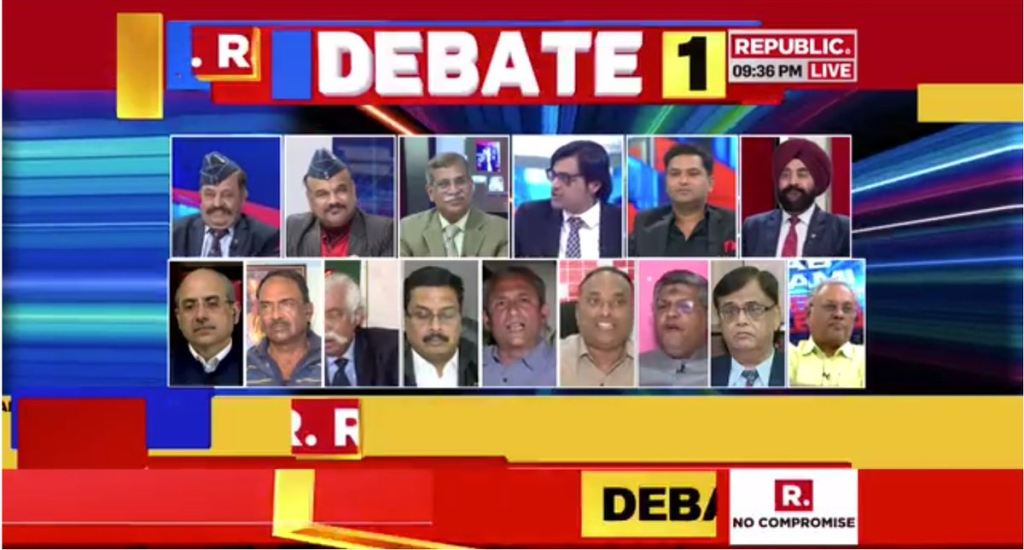
How very different from the ‘debates’ that we now witness on our small screens. In the first place, it is patently unclear to the viewer what precisely is being discussed, or indeed, debated. The word debate is in itself a gross misnomer. There is an unsightly hashtag that precedes the topic, as if to give the subject a degree of graphic authenticity. There are about a dozen or more talking heads on the screen, nearly all of them with strong political affiliations, and the entire tasteless verbal jousting is dominated by mud-slinging and incoherent rambling such that no one is able to follow what each speaker is attempting to convey.

The holier-than-thou anchor, who is supposed to take a neutral, apolitical stance, makes his or her sympathies quite plain and only adds to the confusion and cacophony. Impartiality and lack of bias are conspicuous by their absence. Nothing of what I have just said is new to anyone who is familiar with our purveyors of news on the small screen. I will consequently be unable to add any substantive value to the reader’s already advanced understanding of the news and current affairs debates as brought to you by the likes of Times Now, India Today, CNN IBN, Republic TV (gawdelpus) or for that matter, NDTV. The last named having recently sold their interests, and perhaps their soul, to a recently arrived industrialist with very deep pockets , in which some holes are beginning to allegedly appear.  Rather, as is my wont, I shall seek to share my personal thoughts on some of the more ridiculously risible moments on these channels that our anchors and the participants are prone to unintendedly deliver on a nightly basis.

I did not interfere when you spoke. This is arguably the most oft-repeated line you will hear from our speakers on the debate. Reasons are not far to seek. Whenever a speaker begins to speak on some subject or the other, he or she will be immediately interrupted by one of the other talking heads, breaking with impunity all the known canons of civilized debating. Predictably, no heed is paid to the exhortation resulting in both parties jabbering over each other while chaos reigns supreme. At times a third or even fourth party could join in the melee and we then have a mad free-for-all. The anchor, strangely, makes no attempt to nip this nonsense in the bud until it is almost too late and the viewer decides enough is enough and switches to another channel, where a similar pandemonium is in progress.

I have kept quiet for the last 25 minutes. When you have a situation where the television screen is crammed with so many participants, one or two poor lambs get left out of the conversation. When they finally get their chance and are told by the insensitive anchor that they have 30 seconds to air their views, they are naturally chagrined. Playing the burning martyr to the hilt, they are likely to say something like, ‘I did not interfere when the others were speaking endlessly. Now you give me just 30 seconds to make my point? Why did you even invite me?’ Point well made, even if it does not get across to the anchor, who simply proceeds with his inane summing-up, while we watch stupefied, the audio-less participant continuing to mime silently, frothing at the mouth. My online friend, the former diplomat and master of the elegant put-down, Avay Shukla, once likened regular debater Major General G.D. Bakshi, à la Wodehouse, to ‘an apoplectic walrus,’ which seems just about right. Speaking for myself, the good General has always reminded me of Wodehouse’s irascible Duke of Dunstable, whose own enormous, walrus moustache ‘was rising and falling like seaweed on an ebb-tide.’

You heard it first on this channel. I have referred to this childish piece of breast-beating in a different context in some of my earlier columns, but it is worth repeating here. Since pretty much every news channel makes this ridiculous claim every time there is ‘breaking news,’ the viewer cannot recall and cannot be bothered in the least who broke the news first. What is more, it is not even a provable gloat. It is a matter of complete indifference to viewers, and I am clueless as to why the channels continue to play this silly, childish game of one-upmanship. A totally futile exercise, which is made worse by being frequently indulged in during the so-called debates where such a boast is completely irrelevant. And don’t even get me started on the mythical research figures for viewership which the channels routinely trot out. I suspect this is more for the benefit of the advertisers than the viewers.

One second, one second, one second. Some of our celebrated anchors need to be given a crash course on the physics of time and space. They appear to have no idea of what a second or a minute, or even an hour, constitutes. When three or four of the participants keep putting their hands up, attempting to get a word in edgeways, the obstreperous anchor will invariably scream ‘one second, one second, one second.’ Take my word for it, he is not speaking metaphorically to indicate that one second, in actuality, denotes 20 seconds. I know this because 20 seconds later, he is apt to say ‘one minute, one minute, one minute.’ In casual conversation, we mere mortals are likely to say something like ‘hang on a sec, will you?’ Which we do not mean literally. However, our hyperventilating news anchor is so worked up trying desperately to keep the ‘debate’ under control that he loses all sense of time. To put the lid firmly on it, he will finally announce that he is giving each speaker 10 seconds to sum up, as he is running out of time. Predictably, as the first speaker is just about to blabber something, the anchor will horn in and announce ‘Time’ in the time-honoured fashion of a tennis umpire indicating resumption of play. Only in this case he means the debate is at an end.

One can provide many more such examples of absurdity on our news channels, but I am sure most of you are well aware of what I am ranting on about. On a more serious note, perhaps the most disturbing trend we have observed over the past couple of decades is how our news channels firmly align themselves to one political party or the other, and woe betide the participant who happens to have a point of view not in sync with the channel’s house diktat. Such a person, male or female, will be roundly abused or insulted and in general, not allowed to utter a single, dissonant syllable. At least, that is my take on how the news is purveyed and debated on our television screens. Truth be told, I sometimes watch these programmes more to be entertained with a spot of unintended slapstick than to be informed or enlightened in any way. A word of caution. Take it in small doses lest you take leave of your senses. On the contrary, perhaps it is better to leave your brains behind in the closet. As celebrated actor Morgan Freeman famously said, ‘Maybe if we tell people the brain is an app, they’ll start using it.’

There is a crack in everything

‘It always does seem to me that I am doing more work than I should do. It is not that I object to the work, mind you; I like work: it fascinates me. I can sit and look at it for hours.’ Jerome K. Jerome, Three Men in a Boat.

Every once in a while, say about once in every four or five years, the distaff side of the family decides that it is time to do a spot of spring cleaning in our modest apartment. Now you might be forgiven for harbouring the impression that this involves some general cleaning up, perhaps a bit of polishing of the furniture here and there, and a lick of paint on some of the walls that may have developed a crack or two, owing to the inexorable ravages of time, as I once heard someone describe it. Perhaps a couple of days of minor inconvenience, but well worth the small effort and expense. And before you can say ‘Mansion Floor Polish,’ it’s all done and dusted. Everything back to how it was, only much cleaner and more spic-and-span. With any luck, I should have been lolling back on my cushions, a bag of crisps and a glass of chilled beer at hand, watching Nadal and Djokovic slipping it across their rivals at the Australian Open.

That, of course, was the pious intention as we started out on our getting-the-home-shipshape project, but matters have a way of running a somewhat different course. Man proposes and the wife disposes. My goodness, you won’t believe the amount of stuff there was to dispose, but more of that anon. I was all gung-ho for getting this job done on the quick-and-easy method, but I reckoned without my better half’s cunning plan to lull me into a false sense of security. Now that we are well stricken into our 70s, it was always fully understood that hard manual labour will necessarily have to take a back seat even at the cost of minor compromises on the cleaning up, painting and polishing side of things. There are able-bodied men who can be paid to do the heavy lifting, quite literally. However, as The Beatles once so tunefully put it, I should have known better (with a girl like you).

It’s a funny thing about cracks in walls. I am never able to spot them, however much I squint. ‘Cracks? What cracks? Where?’ Remember that memorable line from Leonard Cohen’s song, There is a crack, a crack in everything. That’s how the light gets in. That just about sums up my wife’s side of things when it comes to blemishes on walls. Cracks, chips, peels, damp, discoloration – none of these apparent symptoms of degeneration catches my eye. My bad, as today’s generation might inelegantly put it. And yet, there’s my good lady wife, leading me by the nose with a powerful torch-light trained on those very spots which obviously need urgent attention. ‘This will involve scraping the walls in the affected areas, applying putty, and finally painting the walls with two coats. Colour matching is vital and we will have to watch these workers like hawks.’ The Oracle has spoken. Things are only going to get tough from here on in.

The thing of it is that, during my innocent childhood, stuff like wall painting, furniture polishing and redecorating the home never even remotely formed part of my consciousness. If such things did happen, I was blissfully unaware. I led a sheltered life. My wife came from a different background, where work was worship, preferably with hands – an article of faith. Her family members would speak with an easy familiarity about things like spirit levels, sandpapering, paint rollers, drill bits, steel wool, rawl plugs, putty knife and many more such items which were nothing less than Double Dutch to me. I was thrown into this mysterious, arcane world, which now became a part and parcel of our lives. I will leave it at that.

Wall painting (sounds so simple, does it not?) has many allied consequences of the temporary kind in order to enable work to proceed on an even keel. For starters, all the furniture has to be covered with every available bedsheet to avoid paint blotches from falling on the wood. The furniture must needs be moved to a central position in the room to enable the painters to move about without let or hindrance. More bedsheets must be found to cover all the curios and artefacts that we have collected over the years. To say nothing of our TV set, desktop computer, refrigerator and so on. And why on earth did I buy so many CDs, nearly 500 of them! Had I known that Spotify would have every piece of music for me to enjoy for just a small subscription (if I didn’t want the intrusive adverts), I could have avoided all the expense. Then again, Spotify was not even a twinkle in the eye of its discoverers when I first graduated from LPs and cassette tapes to CDs way back when during the early 80s. When we travelled abroad, I would nip off to Oxford Street or Orchard Street, depending on whether we were in London or Singapore, and come back with an armful of CDs, sometimes hidden from my better half. These things tend to accumulate over time. Anyhow, the stacks of CDs needed to be covered as well to prevent dust from slipping through. And I haven’t even started on the books yet.

Then there were the books, on cue. If you thought the CDs were coming apart at the seams, you ain’t seen nothin’ yet. Every available shelf space in our home is crammed with books. My wife is a student of English Literature, so she started collecting books long before we even got married. From Jane Austen to Kafka, Camus to Blake, Dickens to Chekov, Trollope to D.H. Lawrence and everything else in between. Not to mention the de rigueur, voluminous Complete Works of you-know-who. And given the amount of travel we had done over the decades, light reading in the form of P.D James, Robin Cook, Dick Francis, Robert Ludlum and their ilk as well. To start with, the space allotted to me among the tomes was small. Wodehouse and some books on cricket and tennis were my oeuvre, but as the years passed, I too dived into the reading habit with vigour. With online ordering making things easier, I have been buying more books than I have been reading. I have now cried a temporary halt to this insane buying and decided to start reading some of the books that are still snug as a bug in a rug in their original Amazon packaging. There is Kindle of course, which is cheaper and only takes up data space on your mobile, but somehow it is not quite the same thing. The smell and tactile experience of a printed book can never be matched by anything that comes online. Rather like the look and feel of a brand, new long-playing record as opposed to the instant convenience and gratification of Spotify.

Now that I have taken your breath away with our in-depth love for music and literature, allow me to turn to art and nature through some of the canvasses that adorn our walls and thence, finally on to plants. Seriously though, the idea is to share the physical challenges of moving and protecting these precious possessions while sprucing up our wee home. To start with the paintings, and without dropping names, let me just say they are the works of some of India’s finest artists who ever dipped a brush into a pot of paint. More to the point, in their glass frames, they are heavy. To remove them from their parent walls, place them delicately on an unoccupied bed and cover them with bedsheets is a task that can test the strongest. Once the walls have been given the once (or twice) over, the whole process is to be reversed, which is even tougher. And if we have been able to achieve all this without breaking or damaging any of these master works, we can sit back and take a long draught of iced Coke and heave a huge sigh of relief.

Finally, there’s the plants, which require special attention. Shift them, if you must, but with care. One false move, a snapped twig and there will be hell to pay. They come in all shapes and sizes. Tall plants, ferns, creepers, small potted plants – these are all very much the good wife’s area of competence. What I know about plants can be written on the head of a pin with a pneumatic drill. Oftentimes, she and the domestic staff do all the lugging and heaving, leaving me out of the action altogether. Her charitable explanation being that I have a sore back and should not risk a crick or two amidst the lower vertebrae. She does have a point, but I suspect the real reason is her concern over my tendency to operate on two left feet, and the disastrous results that could follow.

Now to the ultimate challenge, while all the painting and cleaning is being completed. ‘It’s a good time to get rid of some of the rubbish we keep sitting on purely out of silly sentiment. They take up too much space and it will mean nothing to whoever ultimately inherits all this.’ That pearl of wisdom from the wife, naturally. She says that every time we do up the house. While I agree wholeheartedly, the actual process of getting rid of the rubbish is more challenging than we had envisaged. So, what else is new? ‘How about this set of 32 volumes of the Encyclopedia Britannica, gathering dust for 32 years? The local library would love to have them,’ I tentatively suggest. ‘No, we can’t give that away. It was a present from my much-loved aunt.’ ‘Right, how about those two rickety rocking-chairs. Nobody ever sits on them and the termites are feasting on them.’ ‘Yeah, they can go. Only I bought them on a charity sale run by my dearest friend. It will be a wrench. I can have them repainted.’ ‘Surely, that battered HMV record player can be given the heave-ho. It does not work and we don’t play records anymore.’ ‘I agree, but it is a genuine antique, and that dealer down the street said he could crank it up again. Could fetch a decent price at an auction house. What’s more, we still have those old Bach, Satchmo, South Pacific, G.N. Balasubramaniam and M.S. Subbulakshmi vinyls on LPs and 78 rpms.’

Ten days on, our home looks as good as new. And nothing went into the scrap heap. We are sitting on our own scrap heap, greatly treasured.

   Open flies in open skies


At the very outset, let me make it plain as a pikestaff that being urinated upon by an inebriated idiot is no laughing matter, even at a light-headed 40,000 feet up in the air, on Air India’s business class service. The 71-year-old lady who was thus obscenely assailed was certainly not amused. Neither is being snuffed out prematurely and chopped into little pieces, a pastime many of our insane murderers seem to be overly partial to. Add to this list of macabre horrors, being trapped under a car full of drunken louts and dragged for miles after which it is only a matter of picking up the pieces. We are left dumbfounded and speechless. Which, of course, is an affliction that garrulous talking heads on our television news channels do not in any way, shape or form suffer from.

Let us examine the Air India incident first. Celebrity anchor, shouter and fist-waver Arnab Goswami on Republic TV went berserk and ballistic (this time with some justification), throwing hashtags around like confetti and repeatedly referring to the ‘drunken creep’ who ‘exposed his private parts’ in order to do his number one business on business class on an elderly lady. Not that the dastardly deed would have carried even an iota of merit had it been perpetrated on a younger person. Without getting too technical about it, I suppose the drunken slob’s pathetically weak defence would have been that exposing one’s private parts inevitably goes hand in hand, as it were, with having to relieve oneself, and that he was not quite himself after several large single malts. Had he been well-read, he might well have paraphrased King Lear and protested his innocence by claiming he was more pissed against than pissing.

 Where this misguided poop went horribly wrong was in supposing that the reclining seat, where the unfortunate victim was enjoying her forty winks, dreaming of home and hearth, was a convenient toilet receptacle for him to unzip his fly and blissfully disgorge the liquid contents of his bloated bladder. Imagine the lady’s shock and horror. She could not have had a ruder awakening than the poor girl who found herself trapped under a swiftly moving car in Delhi.

As if all this was not ridiculous enough, news reports tell us that another similar incident occurred on an Air India international flight of a man mistaking a passenger seat for his private bathroom to aim (not very well), shoot and flush. Is this a nasty habit that one catches, like the flu? This time, mercifully, the passenger was not physically present in the plush, seat urinal. Actually, you can forget about the flushing bit. These sloshed sons of Belial were only interested in drawing and shooting, wherever and whenever it took their urges and fancy. A modern-day Quick Draw McGraw of yesteryear cartoon fame! One of the perpetrators now has a name, but I shan’t demean my column by giving him publicity, even if it is of the extremely cheap variety. Our television, print and social media are doing the honours, with knobs on.

Inevitably, the endless, tasteless jokes must follow on social media. Toilet humour has been with us for centuries and when provided with an opportunity on a plate, such as in the present instance, Facebook and Twitter go to town with puns, cartoons and wisecracks to keep them all rolling in the aisles with helpless mirth.  The Air India fracas is presently enjoying top billing in the media and is, by some distance, the lead story. Keeping close company is the pathetic tale of the girl who was fatally trapped under a car. The girls who were killed and vivisected have, for the nonce, faded into the background, if not complete oblivion. My preoccupation is not with the criminality or otherwise of all these grim tales. The law, if there is one operating in our country, can take care of such matters, even if our dilatory justice system often moves at a snail’s pace to pass sentence and mete out justice. They are far too tied up jousting with the government over appointment of judges and other such weighty matters. I can see where the Supreme Court is coming from. If you don’t have the requisite number of judges, who will do the judging?

My primary focus of attention is on our television media channels. There can be no arguing on the fact that heinous crimes like grisly murders are grist to our channels’ voracious mills. What I am not able to come to grips with is why, for a certain length of time, say a week to ten days, they behave as if nothing else is happening anywhere in the country, or indeed, in the universe that is worthy of even a passing mention. If a lady has been defiled by a drunken passenger on an international flight, by all means report it, give it the due coverage it deserves. Then, for crying out loud, move on to other things. Make Air India, deservedly, the whipping boy. Come back later to the urinary track if things move and you have some important development to convey. Perhaps Arnab’s ‘creep’ had a prostate issue and couldn’t keep it in. Who knows? Who gives a toss?

However, if every channel has nothing better than to, day after dreary day, hour after lurid hour, repeat the same story, raising an almighty stink to high heaven, you have irretrievably lost the plot and the viewer’s interest. As we used to say as school kids, ‘stale news stinks, and so do you.’ And guess what, after a week or so, the story dies a natural death and all the channels grow tired of it and we hear no more on the subject. It is as if nothing ever happened. Once the goons are apprehended, it is pretty much curtains as far as that story is concerned. The viewers have switched off and so have the television channels. Perhaps the Tatas are counting on this familiar pattern. We can now revert to Rahul Gandhi’s Bharat Jodo Yatra, scuffles in parliament, analyses on forthcoming state elections, the Nifty’s erratic behaviour, the never-ending Russia-Ukraine war, India’s decline in world cricket, and so on and so forth.

Let’s face it. There must be innumerable other horrendous happenings taking place all over India and elsewhere in the world that we may not even be aware of. So let us display a sense of proportion in how much coverage we allot to these stories, and not inundate the public with minutiae of these incidents that have no bearing on the overall development of the newsbreak. In assessing the seriousness of a crime, a man urinating on a lady, in-flight, disgusting as it is, cannot compare with the severity of a girl being put to death under the wheels of a car. However, you could be forgiven for feeling otherwise, judging by the way the respective news items are covered. My own sense is that our channels love a high-profile target to lash out at. And who could be more high-profile in India’s corporate ether than the venerated Tatas and their pride and joy, India’s very own flagship airline which they once owned, lost and regained recently. It was too good an opportunity for the media to miss and they are going about it with a vengeance. This will be a supreme test of the Tatas’ resilience and PR skills to see how this highly admired institution will deal with the situation. Thus far, they have maintained a stoic silence, doubtless burning the midnight oil with their PR and advertising agencies to chalk out a suitable response. I am not sure about what the nation wants to know and how our TV channels are responding to this insatiable thirst for knowledge. Speaking for myself, I shan’t be holding my breath.

Finally, as a note of abundant caution, all passengers, if they are finicky about being pissed upon, should make a special request to the airline to provide a seat next to an abstemious teetotaler. An extra charge may apply, but look on the bright side. You will save big on laundry and dry-cleaning charges. On a less flippant note, it is high time airlines placed a cap on how much alcohol a passenger should be allowed to consume during the journey. There ought to be a cap, after which a red sign should flash, ‘THE BAR IS CLOSED.’ This may tempt some hopeless, gone-case lush to tank up before boarding, but that is a chance we are going to have to take. And it lets the airline off the hook.

Postscript: As I put this blog to bed, news is filtering in that the CEO of Air India has expressed regret at the unsavoury incident. This has set the cat among the pigeons, again, as the hyperventilating news channels go yakety-yak over whether an expression of regret constitutes an apology. Or not. I cannot even say ‘watch this space,’ because I have no intention of revisiting the subject again.

India’s World Cup

The World Cup football jamboree is over. Thank heavens for that, say I. For the best part of the past four weeks, one could scarcely strike up a conversation on anything other than the frenetic happenings in Qatar. Even those who knew next to nothing about football had a point of view, and not afraid to express it. ‘The goalie went the wrong way, else he could have saved that penalty.’ Quite so. ‘Did you see Harry Kane miss that second penalty against France? What was he thinking? England could have been in the final.’ And how about this for a classic from one who knows his human physiology. ‘Messi has a very low centre of gravity, quite like his legendary compatriot Maradona. That is why he is able to twist, turn and shoot, all in one swift motion with three defenders crowding him.’ Personally, I liked this one best from one of my old school mates, ‘Look, the guy was clearly offside, hatching eggs and the linesman was ogling the girls in the stands.’ Beyond my school days, I have never heard the word hatching employed to mean offside in hockey or football.

Then there was the inevitable social media chit-chat. With a mobile in your hands, a Twitter handle or a Facebook / Instagram account to obey your every command, the world cup is your oyster. Bash away on your keypad and let your friends know that you were there in Qatar, in person. Day after tiresome day, we were treated to photographs of ‘Me and Messi with his kids,’ ‘Buying gold for the wife at some shiny souk,’ ‘Me and Ronaldo kicking sand at the beach,’ ‘Look who I ran into at the stadium, tennis superstar Novak Djokovic. He even obliged with a selfie. As to who he fancied will emerge the champions, his reply was a classic. Since Serbia, Spain and Switzerland went out early, I have no fears of Rafa and Roger giving me the third degree. I am here to enjoy the game.’ I wished him well for the upcoming Australian Open, where he can now play, unvaccinated. ‘Nole, Nole,’ yelled his fans. All these attributed statements are to be taken with a liberal pinch of salt. In short, one’s presence in Qatar provided one with a status symbol to be shared only with high-profile celluloid stars, politicos, business tycoons and journalists. And a winsome, charismatic Swamiji as well. And splashing it all over social media.

The next FIFA World Cup is to be played in the United States, Mexico and Canada in 2026. We can safely assume India will not qualify. However, that should not prevent a robust Indian presence during the games. People of Indian origin in the US and Canada are legion and our social media will brim with colourful stories during the games. Not forgetting the bucketloads of well-heeled Indian tourists landing up for the kick-off. Better start your travel plans right this very minute.

In Qatar, India did have an important decorative presence. Bollywood diva and brand ambassador for French luxury brand, Louis Vuitton, Deepika Padukone unveiled the FIFA trophy, along with former Spanish international Iker Casillas, prior to the start of the final. I mention the Spaniard goalkeeper for the record. No one in India had the faintest clue who he was! And his eyes appeared to be fixed on a different kind of trophy, viz., Ms. Padukone. And who can blame him! We know Deepika has a strong badminton bloodline, but can she tell the difference between a free kick and a spot kick? Hmmm. Social media in India promptly took to trolling Ms. Padukone for her strange and outlandish LVMH attire. Couldn’t they have designed a smashing sari with a lotus motif or something? Just asking. That would have got a thin-skinned section of the nation’s dander up and set the cat among the pigeons here in India.

Ah well, there’s no pleasing some people.

Published in the Deccan Herald dt. 24/12/22.