Venomous sideswipes with sidewinders


I have written at length in the past on the vexed subject of having to deal with the well-known affliction bloggers like me periodically confront, viz., Writer’s Block. I marvel at many professional columnists who, at the drop of a Homberg, can reel off three 2000-word columns a week without batting an eyelid. The operative word here is ‘professional.’ If some publication is paying you good money to churn out a certain number of columns a week, and you are paid by the word, then you jolly well hitch up your trousers and get down to it. I am, happily, under no such compulsion. Au contraire, I pay this blogsite a pretty penny every year to allow me to use their space in order to spread the good word to my faithful, if limited, reading public. The commitment to write one blog a week is entirely of my own making. For the most part, I keep reading my own blogs times without number (having already proof-read them several times) and marvel at my own brilliance, saying to myself in the manner popularised by Little Jack Horner, ‘What a good boy am I.’ I have been advised to get urgent psychiatric help.

 Once in a rare while, I do dash off a piece or two to some friendly newspaper which will carry the piece, if the editor is in a good mood. In the fullness of time, they may (or may not) pay me. A pittance, I’ll trouble you. I suppose the honour of being published ought to be payment enough. I take the moral high ground and exclaim, ‘I do it for the sheer pleasure of it, and not for cheap dross.’ However, I do not cavil, even if some junior sub mangles my prose beyond recognition. ‘The apostrophe was meant to be after the ‘s’ and not before, you cretin.’ And that is the least of it.

Just when all seems lost, someone of substance somewhere, says something stupid and the creative juice, for what it is worth, starts flowing. A couple of days ago, the President of the redoubtable Congress Party of India, Mr. Mallikarjun Kharge, likened the Prime Minister of India to a poisonous snake. I wish to make no comment on the appropriateness or otherwise of this hare-brained remark. To quote the Congress President, if the English translation from Kannada in leading newspapers is accurate, he said, ‘Modi is like a poisonous snake. Don’t try to lick this snake to check whether it is venomous or not. If you taste it, you are dead.’ I am not sure of Kharge’s familiarity with the works of Shakespeare. Had his school syllabus contained the play Julius Caesar, he would have quoted Brutus word for word, ‘It is the bright day that brings forth the adder and that craves wary walking.’ In Kharge speak, that translates roughly into, ‘tread warily before you get within licking distance of the Prime Minister.’ Not much chance of that Sir, what with all the hawk-eyed security detail in place.

There is no lyrical beauty here, and I refer to Kharge’s quote, not the Bard’s.  That could be just the translator’s fault. Perhaps in Kannada, the dormant poet in Kharge came to the fore. We can but surmise. Nevertheless, the good Mr. Kharge evidently had a rethink on his unthinking faux pas, issued a hurried apology and ‘clarified’ that it was not a personal remark targeting the Prime Minister but at his party and their ideology. Nice try, Sir. Had Mr. Modi been aware of the phrase, he might have riposted with a ‘you can tell that to the marines, Kharge Saheb.’ Or in schoolboy banter, ‘put it in the Ripley’s Believe It or Not!’ This will be scrumptious cannon fodder for all our television channels for a few days, before someone from the ruling party returns the compliment in kind, and we will be off again.

Almost on cue, as I keyed in those words. an over-zealous BJP MLA in Karnataka unwisely decided to get his own back, presumably on behalf of his party, by reportedly calling former Congress President and MP, Sonia Gandhi a vishakanya, meaning a venomous woman. The snake poison motif has clearly caught the imagination of some of our politicians. With the number of loose cannons that abound in our political circles, there is never a dull moment. Battle is now truly joined. Seconds out of the ring, first round, fight. I could have added, and no hitting below the belt, but I would have been laughed out of court.

One can only hope someone does not go to the courts with a defamation suit against Kharge, whereby the latter finds himself holding hands with his young leader, Rahul Gandhi who is already facing the prospect of a sentence for defamation against the Modi collective, both wondering what the harvest will be. With elections looming, the last thing anyone would want is for these two worthies playing patience on the wrong side of the iron bars. And who knows, they may even have for dubious company, the errant BJP MLA who shot his mouth off indiscreetly against Madam Sonia Gandhi.

Vile invective being hurled at political leaders, particularly at hustings during the elections, is not a new phenomenon. Not in India, not anywhere in the world. In fact, if history teaches us anything, it is that political leaders from time immemorial have never been short of an abusive word when it comes to describing their political opponents. For the most part these politicians give as good as they get. Prime Minister Modi has himself brushed off these diatribes against him by quipping that he has digested several kilos of gaali (insults) and is none the worse for it. While that may be so, his party apparatchiks as well as those of other parties, are so thin-skinned that they are quick to take offence at any comment made against them and as we are witnessing, ready to run to the judiciary and the media and make maximum capital out of it. It is in this regard that one can take a few salutary lessons from those leaders from other nations who abuse and have been similarly abused in much viler, if wittier, fashion.

At the dawn of the 19th century, former U.S. President John Quincy Adams described his predecessor Thomas Jefferson as ‘a slur upon the moral government of the world.’ This may be regarded as high obloquy given the less vituperative times in which these two worthies operated on the political landscape. Contrast that with this salvo from erstwhile British PM Boris Johnson who greeted Labour leader Jeremy Corbyn as ‘a mutton-headed old mugwump.’ Never one to hold back, the garrulous Boris did not hesitate to take a sideswipe at former U.S. President George W. Bush characterising him as ‘a cross-eyed Texan warmonger.’ Speaking of British PMs, even the iron lady, Margaret Thatcher was not spared. Parliamentarian Jonathan Aitken opined that Mrs. Thatcher ‘probably thinks Sinai is the plural of sinus.’ Arguably one of Britain’s most fearless and dynamic political figures, Thatcher’s authoritarian ways tended to rub a lot of people the wrong way. Politician Tony Banks was at his acerbic best, ‘she behaves with all the sensitivity of a sex-starved boa constrictor.’ Again with the snakes! As I have not had the privilege of observing a boa constrictor on heat, I am unable to visualise the level of sensitivity they exhibit at such charged moments.

 In Syria, where they go straight for the jugular, their defence minister General Mustafa Tlass said of PLO Chief, Yasser Arafat, ‘He is the son of 60,000 whores.’ Religious heads were not spared, as Zimbabwean President Robert Mugabe had no hesitation in calling the much respected and admired Archbishop of South Africa, Desmond Tutu ‘an angry, evil and embittered little bishop.’ We will let the feisty Boris Johnson have the last word as he describes former US Secretary of State, Hilary Clinton thus, ‘she’s got dyed blonde hair and pouty lips, and a steely blue stare, like a sadistic nurse in a mental hospital.’ Boris probably had Nurse Ratched, the main antagonist from Ken Kesey’s One Flew Over the Cuckoo’s Nest in mind.

I guess what I am driving at is that we in India should try and not get too hot under the collar if our leaders are called names, even vile ones, during the frenetic cut and thrust, rough and tumble of elections. It does not make for very civilised discourse, but then, with rare exceptions, who ever expects politicians to be civil to one another? Certainly not at the hustings. Our judiciary is already creaking under the intolerable strain of too many cases and too few judges. Give them a break and stop running to court, wailing, ‘Mamma, he is calling me bad names.’

I would like to end with a quote from a contemporary writer, the brilliant satirist Marina Hyde, who had this to say on former British PM Theresa May’s final days in office. ‘May loses her majority and is effectively left on life support for the rest of her premiership. (Boris Johnson spends a lot of time hanging around the plug socket looking shifty.)’ At the end of the day, even the most reviled politicians are not known for their Dickensian Uriah Heep’s  ‘umble, ‘umble persona. When asked how he would rate his performance as President, Donald Trump said, ‘I would give myself an A+.’ Not for him all that false modesty, school exam report stuff like ‘could do better,’ ‘room for improvement,’ and all that guff. Only a straight A+. What a man!

So, I say to our politicians in India. Develop a thick skin. You can shed it later, as the snakes do. On the other hand, like Cleopatra, if you have ‘immortal longings,’ slide your hand into a little basket of figs containing a venomous asp, and let the slithery reptile do its deadly stuff.


Get married, be gay

In recent months, I have been shadowing two of my senior-citizen, nodding acquaintances (they are no more than that), as they take the air of a pleasant morning at a nearby park in our leafy Bangalore suburb. Their conversations, while they go about their lung-filling, oxygenated perambulation, oftentimes can be quite riveting. When I am privileged to be a serendipitously unseen auditor to such a free and frank exchange of views, I have seen fit to report the same to my band of readers. Not all that big a band mind you, more of a sextet or an octet, but as the great man said, ‘’tis enough, ’twill serve.’

By sheer dint of observation, I have placed our two protagonists as being somewhere in the vicinity of 75 to 80 years of age. As is their usual routine, three gently ambled rounds of the periphery of the park, suitably accoutred with walking sticks, earns them a well-deserved rest on one of the comfortable park benches. It is here that they are able to give vent to their pent-up views on the state of the nation, nearly always based on news reports gleaned from their morning daily. While they are not averse to watching television, they appear to give more credence to the news purveyed through their broadsheet. You can put that down to decades of the reading habit ingrained in them. And a very good thing too.

The subject that appeared to be animatedly engaging them on this particular morning was somewhat unusual. As always, I took my place comfortably on a neighbouring bench, pretending to be thoroughly engrossed in P.G. Wodehouse’s classic, Psmith in the City. In the normal course of events, I do not need to pretend to be involved in that great work by the Master of humour, but on this occasion, I was all ears for the approaching feast of reason and flow of soul. I have been in this situation before and looked forward to the upcoming treat, one that provides occasional grist to my writing mill. As I was saying, the unusual topic of discussion this morning was ‘Same Sex Marriage.’ The Government of India and our Supreme Court have been giving this rather delicate matter the full weight of their combined intellect, resulting in some well-mannered, verbal fisticuffs as is now the norm between the judiciary and the executive. As the two septuagenarians were chewing the cud over the respective merits and demerits of the case, a final resolution of the bone of contention is still a work in progress, and it may take a while before the apex court delivers its verdict. We take up the conversation of my senior citizens in the park. Let us call them Bhatia and Rao, the better to monitor who is saying what.

Bhatia it was, who decided to take first strike, if one might be pardoned a cricketing metaphor. ‘I say Rao, what is all this hullabaloo about same sex marriage and related subjects that seems to be engaging the attention of our Supreme Court and the government?’

Rao appeared a bit preoccupied. ‘Look Bhatia, before I answer that question, do you see that chap sitting on the next bench? I think he is trying to spy on us. Better watch what you are saying.’

‘Spy on us?’ Bhatia was puzzled. He was vaguely aware of his friend’s creeping senility and paranoia, but this was a bit much. ‘Why should anyone spy on two old farts discussing matters of public interest? Your imagination is running away with you. Actually, if you look carefully through your powerful bifocals, you will observe that he is reading good old Wodehouse’s Psmith in the City. A young man with excellent taste, I’ll wager. And he is laughing, which is hardly surprising if you have read the Master.’

‘Sniggering, more like. He is holding the book upside down, or haven’t you noticed? What does that tell you?’ Rao was getting quite agitated.

‘It tells me, Rao, that he has read the book umpteen times and is challenging himself to read it upside down. Happens all the time with us literary folks. Bit like doing Sudoku in double quick time.’

Rao was not convinced. ‘Literary folks? Us? Pull the other one. I suggest we keep our voices down. You never know these days. He might be a plant from RAW. Anything is possible.’

‘If that is true, I have to say the chaps at RAW have a fine sense of humour. Listen, my friend, forget about your Kim Philby, Anthony Blunt or Guy Burgess. I think you’ve been reading too many John le Carré novels. Wodehouse is an infinitely better option. Let’s get back to our subject. What is your view on two individuals of the same gender taking wedding vows?’

Rao stole one more nervous glance at the Wodehouse fan and turned to Bhatia. ‘As I have understood the situation, our laws now recognise the legitimate existence of gay couples. Decriminalised, as the legal boffins have it. The government’s problem is with them gaily, excuse the unintended pun, tying the knot and pronouncing themselves man and wife, or man and man or wife and wife, or whatever. That is where the government wishes to draw the line. And, between you, me and the gatepost, I think they might have a point.’

Bhatia looked at his friend scornfully. ‘Come on Rao, which world are you living in? Grow up. I never thought I would say that to a 77-year-old man. However, there is one thing that startled me during these court proceedings. Out of nowhere, the judges and the lawyers started throwing the G-word around.’

Rao looked lost. ‘What G-word? You speak in riddles, Bhatia. Explain yourself.’

‘You have obviously not been reading the papers carefully. The word they kept repeating in court,’ and here Bhatia stage-whispered loudly enough for me, exaggeratedly buried in my Wodehouse, to hear the word ‘Genitals.’ At which point, I dropped the book and went into an uncontrollable spasm of laughter.

Rao was aghast. ‘I told you that fellow was spying on us. He is very clever, you know. Reading Wodehouse is an excellent cover. We don’t know if he is laughing at our conversation or at something hilarious Psmith said in the city.’

Bhatia was not having any. ‘Look Rao, forget about your spy. What is your take on our judicial beaks and civil servants throwing words like ‘genitals’ around like confetti?’

‘Why do you keep repeating that obnoxious word? And I don’t mean confetti? Walls have ears or didn’t you know?’

‘What walls?’ Bhatia riposted. ‘Which walls? We are sitting in a park, open to sky, birds chirping all around us, and people walking their dogs. Or just jogging. Unless you meant trees have ears.’

‘Don’t be so literal, Bhatia. It’s just that I do not want this spy sitting there with his, ha ha, upside-down Wodehouse, thinking the worst of two old men using words like that. He will think we are sick. He might even think we are that way inclined.’

‘No wonder that chap is laughing. Words like what? Genitals? The Times of India’s front page was littered with it this morning, and it was quoting the judges and the solicitors and other legal luminaries. What is your problem?’

Rao was still uneasy, if not actually squirming in his park bench. ‘Why couldn’t they just say PP?’

‘PP? Now I am really foxed. Please expand PP.’

Rao went close to his friend and hoarsely whispered, ‘Private parts.’

This time, I lost it. Psmith in the City went flying out of my feeble grasp, the cover went one way and the inside pages the other way, while I held my stomach for fear of collapsing with helpless mirth.

Rao could take this no longer. He strode aggressively up to his imagined Kim Philby, namely, moi.

‘Listen, young man. I don’t know what your name is, but I’d watch it, if I were you. Why can’t you go and sit somewhere else instead of eavesdropping on us and mockingly laughing at us. Where’s your manners? Left it at home?’

I must confess I was totally taken aback by this unexpected onslaught from Rao, but I had to politely defend myself.

‘My dear Sir, I am equally at a disadvantage in that I too do not know your name. Nevertheless, let me put your mind at rest. My laughter has nothing to do with whatever conversation you and your friend were having,’ I lied. ‘I am reading Wodehouse, and if you are familiar with his works, you will know that people who read him in public are often embarrassed by not being able to control their emotions. The man is a genius. You should read him sometime, Sir. He will instantly lift your mood from ‘dark and gloomy’ to ‘bright and sunny.’

Rao was not sure if he should be offended by this upstart’s gratuitous advice or take him at face value. He seemed to possess an honest face. He decided to climb down from his high horse.

‘All right, I am sorry if I was a bit peremptory. It’s just that one never knows these days who is who and what is what, if you get my drift. And you were holding it upside down. Anyhow, here is your book, or whatever is left of it.’

At this point, Rao’s friend Bhatia joined us. ‘Everything all right? We should be on our way home, Rao, before our wives start calling the police and the hospitals. Nice book, by the way, young man. Seen better days, I daresay. Seeing as you are a Plum bhakt, I would also recommend highly, Leave it to Psmith. Bye for now.’

As the two senior citizens strolled away, they passed by another couple laughing their heads off while scanning a newspaper. What is more, they distinctly heard one of them say, ‘Genitals, for God’s sake!’

‘I am never coming to this park again,’ exclaimed Rao. ‘Wild horses won’t drag me here, ever again.’ Bhatia merely sighed resignedly and added, ‘And stop reading newspapers.’

Drown a rat, go to jail

‘You dirty, yellow-bellied rat…’ James Cagney in Taxi

Let me state, straight out of the box, that I am not terribly fond of rats. That goes for mice, bandicoots, hamsters and other representatives of the rodent species. I could add lizards to this list but they are not rodents. It is rats that I am focussed on for now. It is a prejudice I share with millions of people all over the world. Never mind if these critters are black, brown or white, rats are rats, even if cuddly, and I do not fancy spending a relaxed evening with one of their number. The comic book cliché of a woman screaming, ‘Eek, a rat,’ is well documented. This is no reflection on the female of the species. I don’t mind admitting that I will do the same on sighting a dormouse, except that my expletive, as opposed to ‘Eek,’ might not be printable. One appreciates, somewhat reluctantly, that scientists and medical researchers, in the line of duty, are compelled to spend most of their waking hours communing with members of the rodent family. Lab rats, they are called (not the scientists, the rats) and usually they are white in colour (the rats that is, not the scientists), if Hollywood is anything to go by. I have not analysed this leaning in favour of white mice against black or brown, but I am satisfied that there is no racial bias involved. Injecting these furry creatures with all manner of germs and viruses is part of the research ritual, and good luck to them. They seem quite happy doing it and observing the results, even if the rodents are not.  Mark Twain once said, ‘Nothing is made in vain, but the fly came near it.’ He could have added the rat to his quote.

Now let me come to the nub of my piece and the provocation behind this rather unsavoury obsession with rodents. Earlier this week my daily brought the cheerful news that a gentleman, if one can so describe him, from the state of Uttar Pradesh, where bandits and bandicoots abound in profusion, was arrested, address unknown but residing somewhere in that vast state, on the charge of killing a rat. To protect his identity let us just call him Ratso. Those of you who are going, ‘What a horribly contrived pun of a name,’ I would urge you to hold your horses. Remember Dustin Hoffman in that classic film noir, Midnight Cowboy all those years ago? His name was ‘Ratso’ Rizzo. If it was good enough for Dustin Hoffman, it should be good enough for our anonymous rat killer.

I can detect many of you reading this piece clicking your tongues restlessly (if tongues can be clicked restlessly) and exclaiming, ‘Why don’t you come to the point and what is the big deal about some guy snuffing out a rat? We are doing it all the time. Government agencies are employed to put to death rats on an industrial scale. Why the fuss?’ Good point, and your irritation is understandable. You see, this Ratso was no ordinary rat killer. Not for him the spraying of an insecticide or leaving a bit of chemically treated poisoned cheese in a caged rat trap. Even employing the services of a predatory cat was not in his complex scheme of things. To cut to the chase, here is how our Ratso went about killing his rodent victim.

Apparently, the Indian version of Ratso the rat killer’s modus operandi was simple in the extreme. Or was it?  We dig deeper into the criminal’s method. Curiously, Ratso’s weapons of choice were a brick and a piece of string. Once thus armed, he apparently goes about looking for a stray rat. Now here’s the damndest thing. When rats are the last things you have on your mind and all you are seeking is a bit of mindless television, watching some pervert being arrested on charges of vivisecting and refrigerating some poor, innocent teenager, rats will appear out of nowhere, completely destroying your sleep-inducing, idiot box goggling. You get up with a start, look for broomsticks or other lethal domestic implements and by the time you wrap your hands round the rusty can of Flit, the gas having evaporated eons ago, your agile Stuart Little has scurried away. Yet, when an avowed rat-seeker like Ratso is searching high and low for a rat, never mind black, brown or white, he draws a blank. Where is the local Pied Piper of Hamelin when you desperately need him? It’s a cruel world. However, Ratso is a determined, young man. He will have his rat.

Clearly this obsession with wanting to bring a rat to book is some sort of mental disorder. And since rats were brought to this earth only to be killed in their millions, no one took a blind bit of notice of Ratso’s strange way of spending his nocturnal hours. Nocturnal, because that is when the rats come out to play. And since cats do the same to catch the rats, the problem for Ratso increases manifold. No sooner does he tell himself, ‘I smell a rat,’ Grumpy Cat gets ahead of the game and the chase is on. Now my interest in Ratso’s rat-hunt expedition is not so much to do with why he does it as how he does it. As stated earlier and duly recorded by the police, a brick and a piece of string play a vital role in the plot. As to being interrogated with the philosophical question, ‘How long is a piece of string?’ Ratso was equivocal.

‘It does not matter, one way or the other,’ he replied, ‘so long as the rat cannot slip out of the loop and make good its escape.’

‘And what part does the brick play in your murderous scheme of things?’ continued the insistent police officer, trying to make sense of this complexity.

‘It provides the weight to take the rat down to the bottom of a well, pond or drain. If there is no brick, the rat can swim back up to safety. Simple physics.’ Ratso was a failed science graduate, which is a contradiction in terms, but let us not nit-pick. Suffice it to say that he knew a thing or two about Archimedes’ displacement of water principle and that sort of stuff.

The local cop had barely scraped through high school, so he was a bit fogged. ‘Why could you not just bonk it on the head with a hockey stick or something?’

‘Good question, officer. Firstly, I am not in possession of a hockey stick and before you ask, no cricket bat either. And even if I had either of those, the rats run very fast and hide. Impossible to bonk them on the head and run the risk of waking up the household at one in the morning. It would have been simpler to bonk Grumpy the Cat.’ Ratso was persuasive, but the cop was not convinced.

‘In that case, how did you catch this rat alive and tie it with a string to a solid brick? Surely, the creature would have struggled and even attempted to bite you. You might even have contracted rabies.’

‘Another good question. You are in fine nick, officer. I do not want to reveal trade secrets. I do this for other households in the neighbourhood for a fee and I have no wish to have some copycat rat killer imitating my methods. Competition can kill my business. Incidentally, rats do not carry rabies. I have checked it out.’

By now, the cop was getting exasperated. ‘Look, you are aware that there is a government rule prohibiting the killing of rats with bricks and strings and so on. It constitutes cruelty to animals. Rats can only be exterminated by authorised government agencies, if the problem is brought to their notice.’

Ratso was also beginning to get peeved. Refraining from inquiring about cruelty to humans, he protested, ‘Look officer, in the middle of the night, if I am bothered by rats, I can’t be calling the government rat catchers. They will all be asleep. Are you not worried about the plague?’

‘The plague? The plague was gone hundreds of years ago. History. I have read Camus’ The Plague, the local translation, naturally. So please, don’t get too cute with me. Now look, you will be in the lock-up for a day or two till the local magistrate arrives and decides on the final punishment. For the last time, just to satisfy my curiosity, how exactly did you secure a live rat with a brick and a length of string?’

‘Right, ask me nicely and I will tell you, provided you put in a good word for me with the magistrate and help me get off lightly. Deal? Good. Now here is what you do. Get hold of a strong piece of string, preferably a twine and tie it tightly to a brick, which must be lying around somewhere in your shack. Having done that, you now sit with your kerosene lamp and wait for the rat to appear.’

The policeman was not impressed. ‘Suppose the rat does not oblige and sees through your ruse. What then?’

‘You just go back to sleep and try again the following night. It is a chance you take – a game of patience.’

‘All right, into the lock-up you go. And here is a piece of string and a brick. Also, a large bucket of water for the drowning act. There is a huge bandicoot resident here and we can’t seem to get rid of it. I will leave it in your capable hands. It’s against the law but I’ll look the other way. Good night.’

‘Pssst,’ Ratso was not done. ‘I’ll let you into a little secret. I actually kill the rat with the brick, tie it with the string and chuck it down a well, but don’t tell a soul. Bad for my image.’

The cop was aghast. ‘Then what is the point of it all? Why confess to cruelty when you are not guilty? Bashing a rat to death is not a crime. Drowning it alive is.’

Ratso’s lips were sealed. He just smiled enigmatically. He was released immediately.

Postscript: Well, what do you know? As I am putting this reflection on rats to bed, news comes through that the Mayor of New York City has appointed one Kathleen Corradi as the city’s first director of rodent mitigation. In plain speak, rat catcher, or as Mayor Eric Adams grandiloquently put it, NYC’s first ever ‘Rat Czar.’ Her task? To send the rats packing and create a cleaner New York. In the Mayor’s compelling words, ‘The rats are going to hate Kathy, but we’re excited to have her leading this important effort.’ All together now, three ‘eeks’ for Kathy! Rats will no longer be nibbling at the Big Apple.

Oh, and one other thing. If I am invited out for dinner and find ratatouille on the menu, I shall give it a wide berth.

Bling it on!

The Hermes mini handbag. If you blink, you might miss it

Money, money, money / Always sunny / In the rich man’s world. ABBA.

Here is a simple question. Would you pay a tad over Rs.52 lakhs or even Rs. 2 crores (not that it matters), as some sources will have it, for a lady’s handbag? You would if you happen to be an Ambani and you wish to lavish your soon-to-be daughter-in-law with a gift fit for the occasion. The occasion being the inauguration of the state-of-the-art Nita Mukesh Ambani Cultural Centre (NMACC) which recently opened in Mumbai at an eye-popping gala function, at which Fashion was the primary theme. As we all know, the Ambanis do not do things by halves. It was the full Monty, the whole nine yards and yes, they threw the kitchen sink as well for good measure, at this inaugural do. Nothing left to chance. Celebrities? You could hardly throw a stone without conking one. Sadhus and Sadhgurus, Bollywood and Cricket, Industrialists and Politicians – they were all there, predictably agog. ‘Staggering,’ gushed Deepika Padukone. ‘Staggering,’ echoed her husband Ranveer. ‘Staggering,’ cried Saif Ali Khan and Kareena in unison. Without a script to aid them, these Bollywood stars were constricted in their vocabulary. Shah Rukh Khan’s mouth was bursting with some expensive paan, so what he blurted out while trying to control the red spittle, was unintelligible. Sachin Tendulkar piped up with an original, ‘Spectacular,’ repeating it twice. The godman Sadhguru was more circumspect. He merely stroked his flowing white beard and chanted, ‘Om.’ In a sense, it was a double-engine (if I am not trampling on copyright) affair – the inauguration of the cultural centre and, presumably, the announcement of the forthcoming nuptials of the younger of the Ambani scions. As I did not receive a gilt-edged invitation for the function, my information is necessarily dependant on the scraps of news I picked up from media sources, not renowned for their accuracy.

However, if one were to go by what one read in the newspapers, online publications and society channels, all the excitement at the function was apparently caused by this little handbag, that could almost pass for a wallet, that was being quite ostentatiously displayed by Radhika Merchant, the young lady who would soon be welcomed into the bosom of the Ambani household as a fully paid-up member of the family. Stands to reason. After all, it was not just any old, understated little handbag picked up from Crawford Market. This was no meretricious gewgaw. This, hold your breath, was a Hermès Kelly Morphose miniature bag that grabbed all the headlines and limelight. A sure-fire head turner. Incidentally, dear reader, do not conclude, simply because I casually threw in a name like Kelly Morphose, that I am some kind of authority on the subject of luxury handbags. To be upfront with you, I had never heard of Kelly Morphose before. I did once consult with a niche, Indian luxury jewellery brand and am familiar with the reverence with which French luxury brands like Hermès and Louis Vuitton are held the world over. Beyond that, my knowledge on the subject is a closed book.

Expensive accoutrements come naturally to the Ambani family. The younger of Mukesh Ambani’s sons Anant, the bridegroom-to-be, even sports a Patek Philippe wristwatch costing over Rs.18 crores, the most expensive in the world! The point I am striving to make is that this Hermès handbag worth Rs.52 lakhs (or Rs. 2 crores) need not raise too many eyebrows in the midst of such exalted finery. It is pretty much par for the course. Nevertheless, to put the record straight, the mini handbag, we are reliably informed by the nobs, is in actual fact a piece of frightfully expensive jewellery. The bag itself is quite incidental and probably surplus to requirements. Radhika might just about manage to fit in a platinum credit card into that precious receptacle. To quote from the news item, ‘the iconic bag can be deconstructed and transformed, so you can use it as an ornament for the neck, wrist and fingers, instead of just slinging it across the body. The one that Radhika Merchant chose is the Hermès Kelly Sac Bijou Chaine in sterling silver.’ I guess it would sound even more impressive if you could pronounce that in the time-honoured French patois, which is as though you are on the verge of sneezing but the ‘ah-choo’ just refuses to arrive. We have all experienced that feeling, though not because we were attempting to pronounce that Sac Bijou whatever.

So much for the Ambanis, their handbags and watches. I can already hear murmurs from certain quarters about the wisdom or otherwise of ostentatious and lavish spending. Before anyone gets the wrong idea, let me state straight out that it is no concern of mine how many lakhs or crores anyone splurges on their personal clothing, jewellery, cars, watches or even, palatial residences. If you have the stuff in sackfuls, and you have worked hard for it, or merely inherited it, it is not for others to raise eyebrows. It is all very well to say trite things like, do you know how many poor families can be fed and for how long with Rs.52 lakhs (or Rs.2 crores), leave alone Rs.18 crores? If you are well-heeled and have earned the right to be a billionaire many times over, the best one can do is to ask you how you did it. So let us refrain from all this inverted snobbery stuff and look down on the rich and famous, while secretly wishing you were in their Gucci shoes. I would merely, as a mute and staggered bystander, wish the young couple well in their wedded bliss and may their tribe increase. That is the way they did it in the old days, which should hold good even now.

When all is said and done, I am reminded of how that great British thespian, Richard Burton honoured his wife, Hollywood queen Elizabeth Taylor at their wedding. It was quite amusing really. Liz Taylor was taking no chances. She went out shopping with her celebrity beau, calmly picked out a Bulgari necklace featuring a 32 carat Burmese sapphire pendant, and a Krupp diamond. The bill came to a modest $305,000 in 1968. Adjusting for inflation for today’s prices, you can do the sums. Burton swallowed twice, complained of stomach cramps, but footed the bill. Love is, etc. And lest we forget, Richard Burton played Marc Antony to Liz Taylor’s Cleopatra, in the eponymously named blockbuster film, Cleopatra, involving many a romp in luxury ships on the river Nile. These things tend to take their toll. In keeping with the finest Hollywood traditions, Taylor and Burton decided to part company after about 10 years, and surprisingly, got married again a few years later. Whether the second attempt involved another visit to Bulgari or Cartier is not clearly recorded. The fact that Liz Taylor was married to eight different men during her turbulent life, tells us that she did extremely well on the jewellery front. On the other hand, Burton was no slouch either. He tied the knot five times, which meant he drew the short straw, having to buy expensive trinkets each time his woman cooed, ‘I will.’ No wonder he took to drink, big time.

Happily, the Ambanis, coming as they do, from a far more traditional, conservative background, are bound to ensure that no reckless conduct will be tolerated. They will spend freely when the occasion demands, but they will be keeping a keen eye on the bank balance, which, at last count, was not easily countable. As for all those glamour watchers going ga-ga over Radhika Merchant’s precious accessories including the necklace, ring, pendant or bangle, masquerading as a micro-mini handbag, eat your hearts out. And if you are nursing ambitions of putting up iconic art spaces and inviting the high and mighty for the gala, while swanning around in a Cartier, Tiffany or Harry Winston solitaire, go and drill some oil wells and hope like mad something black and gooey gushes out.

Moral of the story – if you want to make plenty of money, you have got to get your hands dirty.

IPL turns up the sound and light

India’s cricket-mad public can never get enough of the game. There is no such thing as ‘too much of a good thing’ in their lexicon. Mind you, one can debate endlessly on whether excessive cricket watching is a good or bad thing, but let us put that to one side. Only recently, two nations from the Antipodes, New Zealand and Australia visited our shores to play a series of limited-overs games and in the latter’s case, four Test matches as well. Three of the four Tests finished well inside three days on what appeared to be heavily doctored pitches to suit our bowlers. The first two encounters delivered as per the script written by India’s team management. In the third Test, we were hoist with our own petard, and the Aussies scored a resounding win, their spinners seemed to be saying, ‘Anything you can do….’ The momentum shift in the series made the Aussies an odds-on cinch to square the series. India’s grounds staff, egged on no doubt, by the powers-that-be, decided to produce a dead-as-a-dodo wicket for the fourth and final Test, calculated to ensure that no result was possible even if they had played over 10 days. India got their way, their blushes were spared but it was a Pyrrhic victory. The Aussies then roundly thrashed us in the ODIs and that was that. Many of us decided to concentrate on world tennis instead, and vicariously bask in the glow of brilliant emerging talents like Carlos Alcaraz and Jannik Sinner.

However, before one could even begin to appreciate the subtleties of a back hand cross court pass or a delicate drop shot, the IPL cricket circus is upon us. Once more with feeling. With all the refined subtlety and finesse of a wild rhinoceros on heat hurtling through a barn door. Even a couple of weeks before the tourney could commence, we have been assailed by full page newspaper adverts and non-stop television commercials. With that kind of persuasive power, one feels almost a deep sense of obligation to watch some of the games. I am not sure about how many of these matches I am going to actually sit through, but I thought I should spare some time to witness the opening ceremony at the, ahem, amazing and mind-blowing (can it be anything else?) Narendra Modi Stadium in Ahmedabad. We were promised that the show was going to be ‘like nothing you have ever seen before.’ A claim I can fully vouch for as being true. As a codicil, they could have added, ‘and like nothing you will ever want to see again.’

The opening match between the hosts and last year’s winners, Gujarat Titans and the four-time winner and insanely popular Chennai Super Kings was to commence at 7.30 pm on March 31st. The telecast and the build-up, however, started a couple of hours before that. The biggest stadium of its kind in the world was packed to capacity, the audience squeezed in the stands like the proverbial tin of sardines. ‘We love Dhoni’ banners were fluttering everywhere. Then the actual show began. A dazzling combination of son et lumière, Bollywood and Tollywood dance sequences and an Indie-pop, 10-piece band that seemed to play on forever, like they were fitted out with super-charged Duracell batteries. Their lead singer just kept on singing for hours together, showing no sign of fatigue. He was even driven round the stadium in a strange looking vehicle, and still he sang. The crowd seemed to love it. Speaking for myself, I had no idea what the music was about and I have no wish to put on airs and turn my nose up, all because it was not my kind of music. After all, I could hardly expect them, on an occasion like this, to play Carnatic or Hindustani classical music, any more than I could expect the dancing girls to do a couple of turns of Bharatanatyam or Kuchipudi. That goes for Bach, Beethoven and The Beatles. That said, the crowds loved it and the colourfully choreographed song-and-dance sequence climaxed with their own take on the Oscar-winning Naatu Naatu, which I was fully anticipating and which was delivered with all the oomph that we have come to expect.

Once in a rare while, the camera would shift from the performance on stage and the wild crowds to zoom in on the man of the moment – M.S. Dhoni, who seemed to be sitting all by himself in the dugout, looking a bit lost, in a Zen-like trance. One suspects he was contemplating his possible final stint with CSK. Then again, with MSD, all bets are off. Perhaps the music and the dancers had a catatonic effect on him. At which point, the crowds would go berserk, seeing the legend on the big screens in the stadium. None of the musicians or dancers came anywhere close to being applauded or cheered on the way India’s greatest cricket captain was being received. It was hardly surprising therefore, that when the captains of the two teams, Hardik Pandya and M.S. Dhoni were called to the stage, they were driven-in on some outlandishly designed, Mahabharat-meets-Ramayana chariots powered by an automobile, the musicians and dancers rushed to touch Dhoni’s feet to be snapped with him!

It struck me that this being Ahmedabad, the stadium being named after our Prime Minister, it would have been too good an opportunity for the government’s PR machinery to miss, what with so many elections in the offing, swinging into action and inviting El Supremo to grace the occasion in some shape or form, even through the digital medium. It is with great relief that I am able to report that that did not happen. The last thing anyone wanted was someone, even the PM, to put in an appearance and rain on Dhoni’s parade. We are grateful for small mercies. At this very venue, they did just that in the final Test against Australia (with a bemused Australian PM in tow) and had to face a great deal of flak on social media. Lesson learnt; we hope. Of course, we still have the closing ceremony to come, so I shan’t be holding my breath. We did spot a few middle-weight leaders of the ruling dispensation as well as the opposition enjoying the game, and why not? So long as they do not make long-winded speeches, there is no harm done.

For the next couple of months, whether you enjoy ‘pyjama cricket’ or not, be prepared to be bombarded by all manner of IPL blandishments. Not necessarily from the cricket establishment to watch the games (Indian fans don’t need much encouragement on that score), but by marketing companies with their deep pockets and endless tie-ins with cricketers past and present, goading you on to buy this brand of car, or that brand of flavoured yoghurt, not forgetting how to responsibly park your money in mutual funds. Tendulkar, Dhoni, Kohli, Yuvraj, Kumble – they are all playing their roles, not as discreet Hidden Persuaders but as a group of in-your-face, door-to-door salesmen. There’s money in them thar advertising. And frankly, we should not complain. As a former advertising man myself, I can state with hand on my heart that the wheels of commerce must be kept well-greased and turning unceasingly. For that to happen marketing and advertising must go hand in hand. I will freely admit that there is excess of it in our media, particularly during high-profile sports events, but it is what it is. After a while, the consuming public cannot differentiate between which brand is being promoted by which brand ambassador. It is all one noisy blur. Truth to tell, it brings in the moolah (to somebody) and enables millions of cricket-crazy fans to enjoy their favourite pastime, namely, binge-watching on television. Now that Navjot Singh Sidhu has been released from jail, we can hope to hear more cringe-worthy classic put-downs like ‘If one-day cricket was pyjama cricket, then T 20 is underwear cricket.’ Long live IPL.

Postscript. As I put this piece to bed, some sad news has just filtered through that former Indian all-rounder, Salim Durani, has passed away at the age of 88. Those of us who were fortunate enough to witness live Test match cricket during the 60s and 70s can never forget the flamboyant, charismatic southpaw, who would hit sixes on demand and break important partnerships just when the team needed it. He was a crowd pleaser and crowd puller and women swooned at the sight of him. In a different era, IPL franchises would have paid millions to secure the services of ‘Prince Salim.’ He is gone, the memories linger. RIP.

This and that over a few beers

The other day, at the local club, I ran into an old friend of mine. Old friend, meaning we have known each other for a very long time, also that we are both pretty long in the tooth. Not that I wish to compare ourselves with the equine species, but you know, just saying. All right, enough of all this shilly-shallying. Let me place the cards squarely on the table. We are both in our early 70s, which means we are perfectly at liberty to provide a red-carpet welcome to the creeping onset of senility. Not that we are completely gone-case, non-compos mentis or anything like that, but our conversations can be somewhat trying to those who may be giving us a handicap of around 15 to 20 years, age-wise. A tendency to repeat oneself is a marked symptom. Nevertheless, here we are at our friendly club, with a tall mug of the frothy stuff and ready to bend our elbows for as long as it takes. The conversation was, as is to be expected, when two old rogues get together, sparkling. So, if you are a human fly on the wall, pin your ears back and soak in the feast of reason and flow of soul, as someone whose name momentarily escapes me, once described it.

I decided to open the batting. ‘I say, I hear these Khalistani terrorists are revolting in London?’

My friend took a long, contemplative draft of the chilled stuff and said, ‘The Khalistani terrorists are revolting period. They are revolting, be they in London or in Montreal or even here in Delhi.’

I had to quickly butt in. ‘Yes, yes, I get that. They are revolting, but what I meant was that they are revolting about or against something or the other at our Indian Embassy in London. You know, destroying property and climbing the walls to bring down the Indian flag from the top of the Embassy building in Old Blighty.’

‘Didn’t they try some such trick a couple of years ago in Delhi at the Red Fort? I recall there was a major humgama about it on all our television news channels. Perfectly revolting.’ His memory was in pretty good shape, the old codger’s.

I was patient. ‘Yes, my friend. I fully get your point that these Khalistanis are revolting per se and they are revolting about something. Question is, what is it that they are revolting about?’

‘Ah, there you have me,’ he sighed. ‘Even our television anchors and reporters are so caught up with all this stuff about pulling down India’s national flag from turrets of forts and buildings that the reason for doing so has been given a by-your-leave. And to cap it all, the British Government, with an Indian at the helm and another Indian as Home Secretary, have decided to keep mum. Not a yip out of them. And here we were, drinking to Sunak’s health and sending flowers to his in-laws in Bangalore. Makes you want to throw up.’

‘They should be outlawed. The British, I mean, not the in-laws. Look, I can understand your chagrin, if that’s the right word. However, please understand Sunak and Suella are no more Indians than Modi and Shah are British. I feel sorry for Sunak’s wife though. Caught between a rock and a hard place.’

I felt it was time to move on to some other subject. We had come to a dead end with the Khalistani terrorists. Market was going distinctly bearish on the subject. Pausing only to snap my fingers at the bartender for another round, I carefully steered the topic in another direction. Before I could start, my friend gave speech.

‘I say, what about this Khalistani Amritpal chap? Some say he is on the run and the cops in Punjab are unable to trace him. Others think he is in custody but carefully preserved in mothballs. A third opinion has it that he has been bumped off in a staged encounter. Which one are we to believe?’

Meanwhile, the bartender placed two more overflowing mugs, with a nice head of froth, in front of us. I took over the narrative. ‘Look, we more-or-less agreed to put a lid on this Khalistan business, so let’s just forget about Amritpal and taking down of flags and so on. Unpleasant subject. One final thought on Amritpal. I think they should grill the barber who gave him such a smart haircut. Moving on, did you hear about this 30-year-old woman somewhere in Telangana and a 55-year-old man in Bhopal, both dropping dead while dancing?’

My friend was impressed. ‘What, you mean they were both dancing with each other and died at the same time? Talk about dying in each other’s arms! Extraordinary. Guinness Book of Records stuff.’

‘No, no. The woman was dancing in Telangana at some wedding function. The man, evidently a government official snuffed it while shaking a leg at some other do in Madhya Pradesh. The two incidents were unrelated, but the newspapers reported it under one headline.’

My friend was taken aback. ‘That is the problem with our media. They conflate two different incidents and give us a totally false impression. What a let-down. By the way, conflate is the right word, is it not?’

‘Spot on, my friend. You are on top of your game. Have another one.’ A nod at the bartender and the third round duly arrived. ‘Let’s just say, it was one of those weird, if tragic, coincidences. However, for the papers, it makes for good copy. T’gana woman and Bhopal Govt official die while dancing. I cannot blame you for thinking they were doing the Naatu Naatu together. Enough to give anyone a cardiac.’

It was time to change the subject again. Also, I could see that my friend’s speech was beginning to slur. I daresay he felt the same way about me. We were on our fourth. I bashed on regardless.

‘Why is the government so hell-bent on giving poor Rahul Gandhi the third degree? Not a day passes when he is not in the news. If you ask me, he is getting more media coverage than the PM. If that is possible.’

My friend laughed. A hollow laugh, spilling some beer in the process. ‘Surely, you exaggerate. The PM stands alone. He is nonpareil, but I see your point. Rahul Baba does let fly, often without thinking. The words fly out, and its too late to push them back in. Which lands him in a right, royal pickle.’

‘Absolutely. This time he is really in the soup, and for something he said in 2019. That anyone with the name of Modi must be a cheat, or words to that effect.  Maybe it was the other way round. That is surely asking for trouble. He is looking at a possible two-year jail sentence. Although Lalit and Nirav spring to mind right away, I think he had a much bigger Modi in mind. What has our public discourse come to?’

My friend was beginning to get maudlin. The bartender came round and looked expectantly at me, but I shook my head, indicating that enough was enough. ‘The tragedy of all this is that we may not see Rahul in parliament if he gets disqualified which, for the moment, is a done deal.’

‘He could get a reprieve from the Supreme Court, but yes, that will be a great loss. Where will we get our entertainment from if Rahul is not there to regale us with his intended or unintended faux pas? Tell you what though, the last word on this subject has not been spoken. The Congress and other opposition parties are sharpening their knives. He may not attend parliament, but Rahul will hold forth outside the precincts, along with his Bharat Jodo walkathoners. We saw the Sadhu Gandhi with his flowing beard, then we saw the Cambridge Gandhi with his trimmed beard, impeccably suited and booted, smart as a whip. And now, it is time for Martyr Gandhi, created entirely by the ruling party. And in the fullness of time, who knows? Mahatma Gandhi 2.0?’

I heard a gentle snore emanating from my friend, who was by now in dreamland. I signed off and escorted him out towards the car park. His driver was on hand. On days like this, when the libation is generously sloshing about in our innards, I too hire a driver. As we tooled along the congested Bangalore roads, homeward bound, I was left to thinking about what we had in store over the coming months. Elections in several states, parliament proceedings just short of fisticuffs, the ruling party counting on Adani becoming a fading, distant nightmare, the opposition scrambling to unite behind Rahul but still conflicted over who becomes the adversarial face to The Modi. As for The Modi himself, He will continue to traipse the globe, holding forth (and fifth) on global issues, the environment and the universality of man (and woman). The heavy lifting on ground will be undertaken by all the heavies He has at His disposal.

All the while, I metaphorically toss and turn, fret and fume, restless at the thought that Rahul Gandhi may not be among those present. Then again, with appeals and counter-appeals in the offing, hope springs eternal. Fate might yet hand the young scion an iron fist in a velvet glove.

There will be joy in the morning.

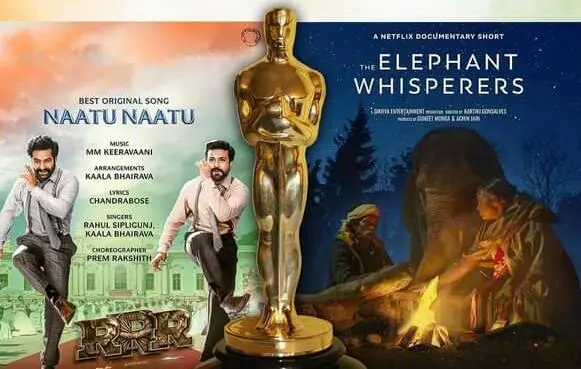
Naatu Naatu in step with Baby Elephant Walk

For the past few days, I have been wracking my brain trying to make a modicum of sense out of Naatu Naatu, the whirling dervish of a song-dance sequence from the film RRR, a fictitious period piece set during British colonial times. So much so that my brain has become addled and frazzled. If you watch, goggle-eyed at that mind-bending, foot-stomping number more than a couple of times, I guarantee your grey cells will be nicely fried to a crisp. Now I need to be very careful here and tread gingerly on sensitive and fragile egg shells. If I were to express, even for the sake of being just ornery, a view that Naatu Naatu is a ridiculous work of non-art, enough to make you wonder what the composers and choreographers were thinking of, and that one’s whole concept of Man as a sentient being, needs to be completely revised, what then? I have little doubt that I will be branded and pilloried as an unpatriotic philistine, whose own cerebral development was arrested while a mewling and puking infant. ‘Dropped on the head as a baby,’ they will whisper to one another. That said, the Academy of Motion Pictures, at their 95th Awards extravaganza in Hollywood, saw fit to decorate Naatu Naatu with the Best Song award. Raise a toast, if you must.

Notwithstanding my churlish views on the subject, and I can rant all I want, the whole world is dancing to Naatu Naatu. My ill-timed comments will be met with the scorn they so richly deserve. The Prime Minister of our great nation has weighed in with laudatory words. Unconfirmed reports have it that he did a few, smart goose-steps while making those congratulatory remarks. They were dancing to the irresistible, driving hook-step rhythms of Naatu Naatu at the Korean Embassy in New Delhi, the Ambassador himself leading the troupe. Lest we forget, South Korean rapper PSY had the whole world literally at his feet and dancing to his tune about a decade ago, with his Gangnam Style, of which Naatu Naatu would appear to be a vibrant Indian reincarnation. Does anyone remember Gangnam Style now, unless prodded? Most of all, on Oscar Night at the glittering, not to say glitzy, Dolby Theatre in Los Angeles (that’s Hollywood, baby), the jam-packed audience was stunned and bemused by India’s fabulous contribution to the arts. World culture, here we come. Naatu Naatu will sweep you off your feet.

Forget India’s Bharat Ratna gems M.S. Subbulakshmi, Lata Mangeshkar and Pandit Ravishankar, amongst others. Naatu Naatu is the new India, beamed across the entire globe, that is going to be richly celebrated. India’s Bollywood diva, Deepika Padukone, looking resplendent in a fetching cut-away, Louis Vuitton black gown, her top half adorned only by a Cartier (why not Tanishq?), diamond-studded statement necklace and yellow solitaire (not forgetting her perfectly set pearly teeth), glowingly introduced the winners, the two gentleman who wrote and composed Naatu Naatu, Messrs Chandrabose and M.M. Keeravani respectively.

Keeravani by name, but his Academy award-winning composition for RRR was anything but redolent of that contemplative Carnatic raga of the same name. Floating on air, and who can blame him, it took courage on the part of the music composer to belt out a few lines from that old Carpenters hit, Top of the World. Lyrically, and given the largely western audience present, it was an appropriate song to warble a snatch from. Judging by Mr. Keeravani’s performance, one must modestly conclude that his singing is not a patch on his talent as a composer. Then again, I would hate to judge his abilities as a film music composer purely on the basis of Naatu Naatu. Keeravani undoubtedly has composed, and will compose far more beautiful songs than Naatu Naatu, and they will go unnoticed and waste their sweetness in the desert air. That is how the pop industry cookie crumbles. However, there is a sliver of an icing on the cake, as one half of the legendary American pop sibling duo, Richard Carpenter (his sister Karen had died tragically in 1983 at the age of 32) played and sang a reimagined snatch from Top of the World with his family members and put it out on social media as a congratulatory message to Keeravani and Chandrabose. Their cup runneth over.

For what it is worth, it is also my considered view that Naatu Naatu, in all probability, won the Best Song award, primarily due to the fact that the visual support the song received from the superhit film RRR, helped in no small measure. The lavish setting (shot somewhere in Ukraine, would you believe?), the hyper-kinetic dancing by the two male heroes, Ram Charan and N.T. Rama Rao Jr., the supposedly British support cast (they could easily have been local-yokel Ukrainians) who are given a royal ‘one in the eye’ by the Indian heroes, the lavish choreography – all of which contributed to the adrenalin rush of this hit number. If the song had been considered purely as a song, as the other contenders evidently had been, I wouldn’t have given Naatu Naatu a snowball-in-hell’s chance, but hey, that’s just me. Lest you get the wrong idea, I do not wish to look a gift horse in the mouth. I am as happy as any lark that India grabbed not one, but two awards at this year’s Oscars. Eat your hearts out, Rihanna and Lady Gaga.

Without making a fuss and almost passing unnoticed, the silent elephant in the room grabbed its chance without any loud trumpeting.  Amidst all the dust and din over RRR and Naatu Naatu, The Elephant Whisperers made a dignified bow and earned its rightful place in the spotlight. This sensitive Tamil documentary, made by Kartiki Gonsalves, examines the close bond that develops between a couple, Bomman and Bellie and an orphaned baby elephant, Raghu. The natural beauty of the Mudumalai National Park provides a stunning backdrop to this movingly told real-life story. Like the elephants, the film moves in a gentle, majestic gait. The leading ‘stars’ of the film, including the elephants, just live their parts on celluloid, evidently unaware of the cameras around them. No acting or emoting called for. They just go about their daily chores. If a screenplay and script was written for them we, the audience, were blissfully unaware – a sure sign of great film making. A tribal couple in tune with their natural habitat, The Elephant Whisperers was a shoo-in for best short documentary. Receiving warm applause from a packed house against the raucous hullabaloo accorded to Naatu Naatu, the stark contrast was palpable. One caveat. The Elephant Whisperers has been billed as an Indo-American co-production, but no matter, India will grab its share of well-earned encomiums.

Flying under the radar, The Elephant Whisperers’ producer Guneet Monga later expressed justified disappointment that her acceptance speech was ‘cut off’ on Oscar night. She also graciously expressed her warm congratulations to Shaunak Sen’s touchingly-filmed nominee, All that Breathes for just missing out on winning an Oscar for best feature documentary film. Which was nice of her and a gesture Keeravani, sitting on top of the world, should have made. Clearly, all the rah-rah-rah was reserved for RRR.

Let me get back to Naatu Naatu. Whether I like it or not, this is the song that is grabbing the eyeballs. Apparently, YouTube viewership of the song sequence is going through the roof, the number of zeroes after the digits virtually uncountable. It is all very well for me to hoity-toitily say, ‘there’s no accounting for taste.’ After all, I myself have seen it at least four times, notwithstanding my excuse of collecting material for this blog. Right, here is what I attempted to do, on the monkey-see-monkey-do principle. I did not try to sing Naatu Naatu, that is for sure. I had to draw the line somewhere. Since I do not wear suspenders, I had to forego the, presumably painful, suspender snapping moves of the heroes, to say nothing of the flailing arms and legs at insane speeds, calculated to do incalculable damage to one’s shoulder and knee joints. Given my age, what I thought was within the purview of practical politics was the neck jerks to either side, in tandem with the rhythm of the song. In any case, I do this every morning in slow motion to take care of my cervical issues. Doing it a bit faster could not have made much of a difference. So I did that.

What was I thinking? I jerked my neck leftwards, at which point, it refused to return to base. My neck was locked painfully looking leftwards, and I am not even a left-leaning sort of chap. I have heard of lockjaw, but lock-neck was a new experience, and quite painful. A lock-neck monster! So, I did what any physiotherapist would have recommended. Waited for Naatu Naatu to revert to the chorus line and, at the risk of a nasty cervical incident, jerked my head back to neutral. It worked! Not before I thought my head had parted from its moorings. No pain, no gain. I apologise for all the intemperate things I said about Naatu Naatu. I recommend the song be adopted by all physio therapeutic outfits as their default musical theme, to be played on an endless loop. Royalties will be heavy but they can recover the costs from their long-suffering customers.

So, here is my final verdict on India’s day at the Oscars. Well done RRR and The Elephant Whisperers. As well as All that Breathes. India is mighty proud and puffing its chest out. With Naatu Naatu and The Elephant Whisperers hogging the limelight at the Academy, the 1961 hit Baby Elephant Walk ought to have been played over the public address system, with due acknowledgment given to Henry Mancini and Hatari! That said, the Naatu Naatu gang can take a well-earned break. They need it.

And so do we.

Idioms for idiots

I do not believe in pure idioms. I think there is naturally a desire, for whoever speaks or writes, to sign in an idiomatic, irreplaceable manner. Jacques Derrida.

The word idiom, if one were to be pedantic, means ‘an expression whose meaning is different from the meanings of the individual words in it.’ I picked that up from one of the many dictionaries that are readily available to us if one made a reference to any of the established search engines on the internet. I would not set too much store on their spellings as most of them are locked into the American school of English, about which the less said, the better. Anyhow, getting back to idioms, we are also provided with a helpful example. The idiom ‘bring something home to somebody’ means ‘to make somebody understand something.’ As a quick aside, if anyone knows how to switch to English (UK) on my Word document from the dreaded English (US), please let me know pronto. The option is available but never works. If I take my eyes off my keypad for a heartbeat, ‘honour’ quickly becomes ‘honor.’ And to rub it in, ‘honour’ sports a red underline as if to say, ‘watch it buddy, we don’t hold with that needless “u”. Get rid of it. Then again, don’t bother, we will do the needful.’ Don’t miss the sneer. You see what we have to put up with? My response is clear. ‘Up with it, I will not put. My honour is at stake.’ I shove the “u” back where it belongs. Sorry, I digress, I ramble, but all in a good cause.

Let me get back to idioms. From a writer’s point of view, idioms are an excellent tool to drive home a point. In fact, to bring home something to somebody, as my digital dictionary so artlessly and inelegantly puts it. We employ idiomatic expressions all the time, often without even being conscious of it. They are so ingrained in our psyche. One assumes that many of these expressions have been with us for hundreds of years. The greatest writers of the English language have honed their writing skills by introducing homespun idioms which, over time, have become part and parcel of the way we speak and write. All fine and dandy, which ought to mean, everything is hunky-dory, but evidently it is now said in a patronising, sarcastic tone, meaning just the opposite of what it was originally meant to convey. Excuse me while I bang my head against the wall.

 That said, I do have a gripe against quite a few of these idioms that have gained currency over the centuries. If you examine them closely, as I am about to, you will find that quite a few of them do not make much sense. I could be inviting vitriol and the wrath of God to rain down on me. And the devil take the hindmost, to employ another idiom. Which is as good a place to start as any. I am reliably informed that the origins of the expression ‘and the devil take the hindmost’ date back to the 1500s. Apparently, the idea is that if everyone is running away, the devil will get its nasty hooks on those who are farthest away from the front. So much for nice guys finishing last! Implying, presumably, that those who get left behind from the group, are at great risk. From what? That is the question. The devil? Give me a break. For some obscure reason, from the 16th century onwards, the meaning of the expression was simplified to mean selfishness. Confusing? Of course. Which is why, at times, it may be better to employ some of these idioms without being overly conscious of its meaning. Let it just flow naturally, like James Joyce’s stream of consciousness passages. If you followed with clarity some of JJ’s outpourings from Ulysses, you are a better man than I am, Gunga Din. If people don’t quite get it, hard cheese. And the devil take the hindmost!

Did you notice what I just did, without even thinking about it? Hard cheese. An idiom, to understand which I have never sought any learned soul out to ascertain what it actually meant. By itself, hard cheese sounds nonsensical, but in the context of the flow of a running dialogue, you get the gist of it. I must have come across it in a book or a play or something. What it means, and I need hardly spell it out, is ‘tough luck, old chap,’ said sympathetically. It can also be used with a dose of irony, ‘you spurned my offer, hard cheese, go and cry on someone else’s shoulder.’ Just two words, and so much to explain.

How often have we come across someone who is described as being so gentle and soft that ‘he wouldn’t hurt a fly.’ This one really beats the bejeezus out of me. Let us assume, for one insane moment, that I actually wish to hurt a fly. Let’s face it, they are annoying things, flies, and we keep trying to swat the damn things with a folded newspaper, more in hope than with any real intent. But how does one go about hurting it? I suppose if you are one of those sadistic boys in William Golding’s Lord of the Flies, you might be inclined to inflict harm to a fly, as they do to a pig, but that is fiction. If I did catch a fly, even by a huge stroke of luck, I will just let it out of the window, dead or alive. I make no such promises about cockroaches or lizards, but flies? I can take them or leave them. And the devil take the hindmost!

How about ‘burning the candle at both ends?’ A well-known, if idiosyncratic, idiom that means a person working his socks off, round the clock, virtually working himself to a standstill until he is drained of all energy. My question to the nutcase who thought up this phrase is this. Is it possible to burn a candle at both ends? And to what end? By definition, a candle has a wick at one end, and is flat at the other, such that you can make the candle stand on any smooth surface after a drop of wax from the wick end (if you are still with me). If you light the wick and show a flame to the flat end, surely the wax would melt, rendering your ability to make the candle stand upright, a non-starter. You are now free to call me a literal-minded idiot, as we are discussing idioms and idiots. I shall, however, firmly stand my ground. The person who burned the midnight oil (there’s another one) to come with this candle classic clearly did not think it through. He would have been better off lighting one candle at one end than to risk waxing lyrical by daftly burning it at both ends. As a complete non sequitur, I am reminded of a line one of my teachers wrote in my autograph book, ‘better to light one candle than to curse darkness.’ Make of that what you will.

When I first heard the expression ‘never give a sucker an even break,’ I could not make head nor tail of it. After much asking around and researching, I arrived at the conclusion that the idiom was just another way of saying ‘one should not suffer fools gladly.’ However, the ‘sucker’ idiom gained a great deal of currency after a 1941 Hollywood film starring the incomparable W.C. Fields, with the same title. The expression started appearing frequently in American novels, pop song lyrics and of course, movie scripts. To say nothing of P.T. Barnum’s immortal contribution to our idiomatic lexicon, ‘there’s a sucker born every minute.’ Now here’s the thing. Every time I have attempted to use this idiom (I refer to the W.C. Fields version) in casual conversation, people tend to look at me strangely. Whether this is because they did not understand it, or thought I was being pretentious, I cannot say, but I am a bit chary of using it these days to avoid being branded as a bumptious idiot.

I can go on in this vein till the cows come home, but then, all those carpers who are already fed to the back teeth with these tired, old aphorisms, will come crawling out of the woodwork, and I might end up laughing out of the other side of my mouth. Why in heaven’s name would you ask someone to break a leg, when you intend to wish him good luck? And why is something you are deeply impressed by, the best thing since sliced bread? The problem is that when it comes to scattering idioms about, everyone wants to jump on the bandwagon and grab a piece of the action. I bash on regardless, in for a penny, in for a pound. Tell you what, I shan’t beat around the bush anymore. I have bitten off more than I can chew and between you, me and the gatepost, I am ready to hit the sack. I am calling it quits.

Good night.

   Calling out names in Meghalaya

The assembly election results for three important north-eastern states of India, namely, Tripura, Nagaland and Meghalaya are just in. And surprise, surprise, the incumbent BJP has come up smelling of roses in all the three states. They won by a comfortable margin in Tripura and Nagaland, bagging the requisite number of seats, along with their allies and romped home. In Meghalaya, however, they could barely scrape together two seats off their own bat, and still ended up on the winning side! As one BJP foot-soldier was overheard stage-whispering to a friendly (is there any other kind?) television reporter, ‘You win some, you win some!’ They are a winsome lot, the BJP party workers. And why not? It appears all they need to do is turn up for an election and the results are virtually a foregone conclusion, barring in a handful of states. I am stretching a point here, but what the hell, in politics exaggeration is the name of the game.

Mind you, it was strongly rumoured that the erstwhile Chief Minister of Meghalaya, Conrad Sangma, had a run-in with one of the BJP bosses and decided to part company prior to the assembly polls. However, when the results came in and the guitar-strumming Conrad found himself a few seats short he, like any astute politician, decided to make nice with the BJP and they are friends again. Politics throws up strange bedfellows, even if the lay public feels like throwing up now and again. Still and all, in the words of that lovely Burt Bacharach song, That’s What Friends Are For. Bottom line, ‘the double-engine sarkar’ is enjoying a lip-smacking, flavourful triple sundae in the north east and it will stay that way for the next five years. To the victor go the spoils.

Meanwhile there are more assembly elections on the anvil. Word on the street is that bell-weather state Karnataka will be difficult to hold on to by the ruling dispensation, and with stacks of cash being found recently under the beds and floorboards in some BJP MLA’s home, the opposition will get its chance to rub it in, good and proper. Time for some good, old fashioned whataboutery to fill the airwaves. And Rahul Gandhi is helping the BJP in that regard with some strange statements in Cambridge, of all places, about seeing ‘eye to eye’ with militants in Kashmir, his stunning discovery of harmonious China as a force of nature, Pegasus spyware in his phone et al. Wonder who his speech writer is. In passing, I must say the now not-so-young scion’s decision to trim his erstwhile, outrageously straggly beard is a welcome change. The optics just went up a notch. Contrarily, it’s a bit rich his branding the BJP as a ‘suit-boot ki sarkar.’ He was dressed to the nines at Cambridge, suited and booted to the gills. Spiffy. Savile Row, Rahul?

That said, let me get back to the north-east. Like most other people in our country, I plead guilty to not knowing very much about this bountiful and beautiful region. Evidently, even most of our political parties in the past paid scant attention to the ‘three sisters,’ Meghalaya, Tripura and Nagaland. Now that politics has seen to it that these almost-forgotten states are dominating, at least for now, dining room conversations in many parts of India, we are all frantically searching websites to learn more. However, what has caught my attention is not so much the unspoiled beauty and grandeur of the region, though that alone is worth the price of an air-ticket to Shillong, but the evocative names of the people who belong to these states. In elaborating on this somewhat unusual theme, I leave out Nagaland and Tripura for now, and concentrate instead on Meghalaya. This is because most people’s names in Tripura are of familiar origins from other parts of India, and those of Nagaland, while interesting, don’t quite have the exotic magic or music of those who have been christened in Meghalaya. Christened, incidentally, being the operative word, given the Christian dominated nature of the state. My observations include names of some of the small constituencies as well.

Let us then, you and I, dive in and examine these names that I, for the most part, have not come across before. To employ that horrendous present-day expression, ‘my bad.’ First off, let us get the common or garden Sangma and Lyngdoh out of the way. It appears that you cannot hurl a brick in Meghalaya without beaning a Sangma or a Lyngdoh. Rather like a Chatterjee or a Banerjee in Bengal. Not that one wishes to, heaven forbid. Hurl a brick, I mean, but you get my drift. Instead, let us feast on some of the other incredible names, shall we? For starters, there’s Dr. Wanweiroy Kharlukhi, which is such an evocative name. Had I been on first name terms with him, I would probably have called him ‘Wanny’ or perhaps just a vanilla ‘Roy.’ Incidentally, I cannot blithely assume that the name belongs to the male and not the female of the species, for there’s no way of telling until I come across a picture. We move on to Prestone Tynsong and Hamleston Dohling, whose names put me in mind of church bells chiming. Come One Ymbon must surely vie for the top three spots if one were to rank these names in terms of favourites.

Not that it is easy to pick favourites. One is spoilt for choice in Meghalaya. Take Matthew Beyondstar Kurbah or if you must, Brightstarwell Marbaniang. Clearly the stars are propitiously well aspected for these bright candidates. They will go far. The stars are the limit! Methodious Dkhar reminds me of American jazz legend, Thelonious Monk and don’t ask me why. If you know your jazz, I wouldn’t at all be surprised if Methodious trumpets his political success most melodiously, with Conrad Sangma accompanying him on guitar. Politicians are expected to be ardent and keen about their work and who better than Ardent Miller Basaiawmoit to deliver, whichever portfolio he might be offered. If the CM needs some heavy lifting to be done on his behalf, he need look no further than Heaving Stone Kharpran to do his bidding. The Red Indians of yore had names like this.

In case you thought the Lalus of the world came only from Bihar, Meghalaya says ‘what the heck, we have our own Alexander Lalu Hek.’ Legend has it that revered Greek statesman Demosthenes was one of the world’s greatest orators. Who is to say that Meghalaya’s very own Sosthenes Southun is not inspired by the oratory skills of the ancient Greek? Questions, questions. I am not betting against Walmiki Shylla being named after the great Indian sage, Valmiki, who gave us the epic, Ramayana. I love Gavin Miguel Mylliem and Gabriel Wahlang, whose names remind one irresistibly of colourful Latin American and Spanish flavours. Remington Momin’s ancestors may have introduced the first typewriters to Meghalaya, but that is just an educated guess on my part.

Those are just a handful of glorious samples of the names of the beautiful people of gorgeous Meghalaya, and let us just take a quick peek at some of the constituencies that these worthies represent. Sutnga Saipung, Mowkaiaw, Mawrengkneng, Pynthorumkhrah, Nongthymmai, Rambrai-Jyrngam, Chokpot, Mawthadraishan, Bajengdoba and Rongieng. Those are just a brief soupçon mined from a field of infinite, if unpronounceable, riches. A vowel or two, casually thrown-in between the consonants, would have helped but hey, we shouldn’t be fussy. I am sure the Meghalayans will be similarly up against it with Madal Virupakshappa, the BJP MLA who is drowning in his own, ill-gotten hard cash. By the way, just to show there is no ill-feeling, Nagaland’s likely Chief Minister is called Neiphiu Rio. Not bad, but wouldn’t stand much of a chance against his Meghalayan neigbhours in an ‘exotic name’ competition.

That said, it strikes me that the BJP can consider themselves fortunate that their representation on the Meghalaya cabinet will be barely skeletal. Had it been otherwise, the likes of our Prime Minister and Home Minister attempting to wrap these amazing Meghalayan names round their tongues would have been a task well beyond their levels of articulation. It is well beyond mine! They will do well to stick to ‘Good morning, Mr. Sangma. Would you like another airport?’

In conclusion, I would like to share an amusing, personal anecdote, entirely true, of my own experience with an unusual north-eastern name. I made an appointment with my local salon for a much-needed haircut a few days ago. They gave me a pleasant, industrious, young lady, clearly from the hilly regions, to take care of my grooming. I have to say she did an extremely competent job – hair-cut, shampoo, head-massage, the works. I felt like a million dollars at the end of it all. Out of courtesy, I thanked her profusely and inquired as to her name for future reference. ‘So So,’ she replied.

‘I beg your pardon?’ I responded, somewhat baffled.

Once again, she repeated the words, ‘So So.’

‘Ah so, I get it. Your name is So So, but your hair-dressing skill is anything but. Glad to meet you, So So. My name, as you might have gathered from the booking slot, is Suresh Subrahmanyan, but you can call me Su Su.’

So So merely giggled as I strode confidently out of the salon.

To ‘Sir,’ with reservations


The Oxford dictionary defines the respectful appellation of ‘Sir’ as follows, ‘used as a polite way of addressing a man whose name you do not know, for example in a store or restaurant, or to show respect viz., Good morning, Sir.’ The operative phrase here is ‘way of addressing a man.’ From the time we were toddlers in school, we have grown accustomed to addressing male teachers or masters as ‘Sir,’ while lady teachers were invariably referred to as ‘Miss,’ irrespective of their marital status. Now, why am I at pains to belabour this rather obvious point? The reasons are not far to seek. My newspaper this morning carried an arresting headline, ‘Woman or man, address judge as “Sir.”’ This confusing instruction was given by the Chief Justice of the Gujarat High Court.

Reportedly, the hoary, old subject of whether judges should be addressed with the deferential, some may even say obsequious, British-era-hangover ‘My lord’ or ‘Your Honour’ was resurrected in the Gujarat High Court, presided over by a lady Chief Justice. The honourable lady passed a verdict in favour of ‘Sir’ as a gender-neutral alternative. The vexed question of what is the proper way of addressing judges of either gender has been raised in earlier years, but there has been no clear-cut direction such that lawyers or the accused can find themselves on safe ground when they clear their throats to address their Lords or Ladyships. I can hardly say ‘to address their Sirs,’ which quite frankly, sounds ludicrous.

You see my quandary here, readers? The problem arose in the first place because a lawyer, addressing a division bench comprising a lady and a gentleman judge, decided that discretion is the better part of valour, took the chivalrous approach and addressed both of them collectively as ‘Your Ladyship.’ It is my guess that that was what he naively intended to do, though the chagrined judges took the view that he was addressing only the distaff member of the bench, and was peremptorily told, if not actually reprimanded that he should be acknowledging both of them and not just the lady judge. In short, the unfortunate lawyer found himself between a rock and a hard place.

Thus chastised, the lawyer meekly apologised, lest he should be found in contempt. At which point, in order to put this issue to bed once and for all, as the debate over terminology issues was eating into precious time of court proceedings, the judges declared that ‘Sir’ would be an acceptable and gender-neutral way of addressing their Honours. In order to arrive at this facile conclusion the judges, as is the way with judges (and with lawyers and solicitors), proceeded to quote several precedents drawn from past learned judges to buttress their case and declared their verdict. ‘Sir’ it is and ‘Sir’ it shall be. Case closed.

Some interested, or even disinterested third party do-gooder could contemplate approaching the Supreme Court and seek the opinion of their Lords or Ladyships or Sirs as to how they felt about the whole rigmarole. However, our courts are already at bursting point and facing considerable pressure to hear important cases expeditiously and will not look kindly upon being asked to pass judgements over what they will doubtless regard a trivial matter.

Let me now declare, straight off the bat, that I feel a great sense of unease over the Gujarat High Court’s view on how judges ought to be addressed. While I have no wish to bring back practices that would smack of our colonial past, I have to say that this decision could have unintended consequences for the larger sphere of general discourse. The way I see it is that, if judges wish to become neutral-genders (sounds weirder every time I utter it) and have no issues with being addressed by a ‘one-size-fits-all’ appellation of ‘Sir,’ that is their business and good luck to them. However, one should also have some consideration for the wider Indian populace, or ‘the great unwashed’ as somebody (perhaps a judge) once described them.

For decades now, we the people of India have grown accustomed, thanks to Bollywood, Tollywood and all other filmy ‘woods’ regaling us with emotionally charged scenes of Dilip Kumar, Amitabh Bachchan and Sivaji Ganesan addressing our wigged sentinels of jurisprudence dramatically with a thunderous ‘Objection, My Lord.’ Are we going to be denied such heightened histrionics with a lame ‘Objection Sir’? In any case, I cannot get my head round the prospect of having to address a lady judge as ‘Sir.’ My English teacher in school, Mrs. Scott, would have administered ‘one hit on the back of the head’ if I called her ‘Sir.’ Just not cricket, Your Honour. To think that a lady Chief Justice has actually suggested this is all the more befuddling.

Writers sometimes face a unique problem when referring to a person in the abstract (gender-neutral), and choose to be politically correct by writing ‘she’ or ‘her,’ only to lapse reflexively later on into ‘he’ and ‘him.’ As in, ‘a person is expected to be resourceful if he seeks to be successful.’ Why could that not have been a ‘she’? Or, if you wish to hedge your bets, you could say ‘he or she,’ which over several sentences and paragraphs, can get tiresome. Old habits die hard.

If I were to do a quick sketch for a short one-act play dealing with judicial nomenclatures, it would go something like this.

Defence Counsel – ‘Your Worship, my client is innocent of all charges levelled against him. The prosecution has failed to provide any substantive evidence. I humbly request your Lordships to dismiss this farcical case. With costs. Thank you, Your Honour.’

Male Judge – ‘I would strongly urge Defence Counsel to make up his mind whether to address the bench as “Worship” or “Lordship.” We cannot entertain both.’

Lady Judge – ‘Counsel also added “Honour” for good measure. In my view, none of these terms is suitable. With due apologies to my learned colleague. Why call us “Worship?” We are not Gods.’

Defence Counsel – ‘No? Not Gods? You could have fooled me your… your… your… Sirs? You see how tame that sounds? On your banging of the gavel and pronouncing “Guilty” or “Not Guilty” depends the future of so many undertrials. In a sense, you are Gods and rightly worshipped. Not unlike doctors and surgeons.’

Male Judge – ‘What is wrong with “Sir?” It is respectful and as my colleague keeps reminding us, it is gender-neutral. What is your problem with “Sir?”

Defence Counsel – “Hardly gender-neutral. With due respect Sir, to address a lady as “Sir” is both conventionally, technically and grammatically wrong. An abomination. The term gender-neutral also, unfortunately, brings to mind people of an indeterminate sexual orientation. If you are against terms like “Lordship, Worship, Honour” etc., then we have no option but to address a lady judge as “Madam.” In school we used to call them “Miss” but that will not be appropriate here in court.’

Lady Judge (stage whispers to her male colleague) – ‘I should hope not. I did not come prepared for a tutorial on terminologies and court etiquette. Not from this chit of a lawyer, at any rate. Can we get on with the case and forget about how we are addressed for the moment? We can meet separately with our other colleagues and issue a set of instructions approved by the Supreme Court on this matter. Yes, Sir?’

Male Judge – ‘Yes Sir. I mean, Yes Madam. Oh, what the hell! Even I am dithering. Let us deliver a verdict and be done with it. I have had it up to here with name calling.’

You see what is happening here, readers? Confusion confounded. We may have noble thoughts in wishing to gradually divest ourselves of painful reminders of our British colonial past, but in trying to set things right in a hurry, we could be digging a bigger hole for ourselves. Even ‘Sir’ is still an English word and, for the most part, court proceedings are still conducted in English. It would be better if our legal luminaries bent their minds to the expeditious disposal of cases, (the ever-growing pending litigations are as long as several arms), rather than getting hopelessly mired in how they should be addressed. ‘Judge not, that ye be not judged,’ say I. A smidgen of humour won’t hurt. Your average denizen on the street cannot fathom what all the fuss is about, ‘I don’t understand why judges get paid so much. Others judge me for free.’

I guess what I am striving to say is that, there are more bizarre pronouncements we have received from judges than an obsession with how they should be addressed. Personally, my favourite, laugh-out-loud, throwaway line from the bench occurs in a brilliant satirical sketch by the late comedian Peter Cook, portraying a judge. During his summing up, he winds up his long peroration with this sage advice to the jury, ‘You will now retire and carefully consider your verdict of “Not Guilty!”’

Now that is something for their Lordships, Ladyships, Right Honourables, Worships and Sirs to mull over. After all, what’s in a name?