Here we go again

The people who cast the votes decide nothing. The people who count the votes decide everything.  Joseph Stalin.

If you are a responsible citizen who believes in the democratic process and who takes pride in voting governments in and governments out, depending on their performance during their tenure in power, take a bow. Always assuming that you are one of those, irrespective of age, who will make that journey to the nearest election booth, stand in a long, sweltering line, wear some species of headgear to ward off sunstroke, cast your ballot and come out of the school or college which happened to be your voting venue, stick your almost indelible, clumsily ink-smudged digit up in the air, your face wreathed in a broad smile, for all the world to see what a good boy or girl you have been. Some of the younger smart alecks rudely show their middle finger, as if to say ‘this is what we think of the whole rigmarole.’ If you happen to be close to or above a hundred years old, you can bet your bottom rupee some television news channel or the other will push its camera into your benign, crinkled face and ask you who you voted for and why. Of course, your 75-year-old son and 69-year-old daughter-in-law will be on hand to ensure you are steady on your feet, provided they themselves are steady on theirs.

Leading newspapers will carry the centenarian’s mug shot next morning in the city pages. If he is still standing after all the exertion, he can lie back at home in his comfortable armchair and enjoy a refreshing cup of tea, secure in the knowledge that he has done his bounden duty as a citizen of his country. And wait anxiously in front of his idiot box to see himself on television. WhatsApp messages zinging to and fro. ‘Just saw Uncle Ram on NDTV. Wow, that is so cool!’ We place our trust every five years on a particular political party, either at the state or centre and trust to God they will deliver. Man proposes, God disposes. Alas and alack, not too well! The bar is lowered every five years.

My contemplation here is not so much to analyze the respective merits or demerits of different political parties and how they are likely to fare at the hustings. There are enough experts doing that on a daily basis, firmly tilting to one side or the other of the political divide. I am more concerned with the entire process of elections, at the national or state level, and what we citizens can look forward to, to entertain us during the weeks that precede these elections. At the end of the day, that is all it is, some harmless time pass entertainment. The results themselves are quite incidental. As to why I have chosen this particular juncture to write on this subject should be clear enough to the meanest intelligence. Two very important state elections are just round the corner in India. I am, of course, talking about Himachal Pradesh and Gujarat. And before you can say Narendra Modi, the mega circus of them all, India’s general elections will be at our doorstep, or rather, on our television screens and dailies. Even now, the newspapers are full of double-spread adverts from the concerned political parties, particularly those with very deep pockets, extolling their virtues and all that they have accomplished and promise to do so if elected or returned to power. Television commercials are even more fulsome, supported by a soaring, emotional music soundtrack and moving images of our leaders that rarely move those who will trudge to the ballot boxes. The news channels do not lag behind when it comes to advertising. I was startled early one morning when I turned the first page of my newspaper. There she was, adorning the entire full page, the doughty Navika Kumar of Times Now, bearing all 32 in a seductive smile. A bit unnerving at six in the morning.

Psephologists and party apparatchiks will hold forth through our home screens. Pro-incumbency, anti-incumbency, pre-polls, post-polls, plenty of graphics and numbers will fill our screens, and the one singular quality all the presentations will possess is one of utter confusion. Clarity will be a major casualty. The Congress chap will smugly announce that they have inside information that they are winning by a landslide. The hyper-kinetic lady from AAP will rubbish the Congress claim with a smug riposte, ‘in your dreams.’ Finally, the heavyweight from BJP will steamroll everyone else while invoking PM Modiji’s name at least 27 times during his stormy, concluding peroration. The anchors will add to the mayhem. It is infinitely wiser to wait for the final results. Advertising revenues of the channels will climb exponentially during these pre-election shows. And why not? They are working night and day to keep us abreast of VIPs from the world of corporate India, the film world, sports stars and of course, the politicians who came to vote. Let the TV channels and newspapers make some moolah during these straitened times. We should not begrudge them that.

Speaking for myself, I find the whole election tamasha a continuous entertainment platform, what with all the speculation, the suspense, the research numbers which the politicians will refute or approve depending on which way the wind is blowing. Not to mention the television anchors whose own biases become more than apparent as they attempt to control the ‘debates’ this way and that.

That is all very well, but what about those death-trap potholes that pockmark our roads? What are you politicians doing about them? We are talking about the garden city (that’s a laugh) that is Bengaluru. I live there. ‘Don’t worry about the potholes,’ the powers-that-be assure us. ‘We are patching them up in double quick time. What is more, we are giving you a spanking new, state-of-the-art airport terminal that will be the pride of India. Not to mention the gigantic statue of Kempegowda, the founder of Bengaluru as you approach the airport. What more do you want?’ Patchwork solutions that will barely last the duration of the PM’s inauguration of the new airport terminal. The late, lamented cartoonist, R.K. Laxman’s fabled ‘common man’ is bound to be wearing his endearingly puzzled mien, asking himself, ‘I have never even seen the inside of an airport, never mind spanking new terminals. What good is that to me if I have to navigate my two-wheeler through intolerable traffic jams and craters the size of swimming pools? But I am happy about the statue. Will take a bus ride to the airport, stand in front of the bronze marvel with the good wife and take a selfie.’

The election jamboree is a great relief from the daily tedium of scandals, court cases, murders, corporate honchos being brought to book, more court cases etcetera, etcetera, etcetera. I prefer to spell those words out fully in preference to the untidy ‘etc.’ I am inspired by Yul Brynner’s reverberating throwaway line in The King and I. And speaking of murders, the recent case of a lunatic who hacked his girlfriend into 35 pieces, kept the remains in his refrigerator for a while and finally scattered them to the four winds in a nearby wooded area, caught the prurient and ghoulish imagination of the newscasters and, I daresay, half the nation as well. Film producers around the country are already spitting on their palms and rubbing their hands in glee, while scouting for a script and screenplay writer who can come up in double quick time with the goods.  In short, if you are a disinterested viewer, who couldn’t care less about which party finally wins a particular election, then you can sit back and enjoy the fun. Rather like watching England play Australia in a cricket international. From an Indian perspective, you enjoy the game irrespective of who wins or loses. Which, I need hardly tell you, is never the case if we are taking on Pakistan.

At the end of the day, there is a smidgen of sense in the ruling dispensation wanting to open a dialogue on the merits of holding state and central elections at the same time. The thinking seems to be, let us get this thing over and done with in one fell swoop, post which the states and the centre can get on with the business of governing. Otherwise, the country seems to be beset with a never-ending shenanigan of some kind of election or the other happening all over the country throughout the year, leaving politicians with no time to repair roads and improve infrastructure. Their sole preoccupation has been with how to survive in politics and stay in power. The opposition, true to its name and calling, will oppose this idea tooth and nail, on the premise that such a move will only further aid the ruling party’s avarice to ‘gain the world and lose their soul.’ Speaking for myself, I can only say that elections just once a year will rob the citizens of year-round entertainment, as we will have to make do with one mega jamboree, and remain bereft of the cut and thrust of politics on our TV screens for the next five years. In saying that, I underestimate our politicians’ ability to keep doing crazy things and keep us all on tenterhooks. They are made of much sterner stuff. To say nothing of psychotic nutcases who become vivisectionists because they were dropped on their heads in their infancy.

Wailing and gnashing

I know it was you, Rohit. You broke my heart. With apologies to Godfather Michael Corleone.

India is out of the ICC Men’s T20 World Cup, to accord the tournament its proper nomenclature. The word cricket is missing from the title, but that is typical of those who run this game worldwide. They think everyone must know what they are talking about. How could those living in the Outer Hebrides or Mongolia not have heard about this Maharaja of Sports. Being a rhetorical question, I shall eschew the customary interrogatory squiggle. As I said, India’s players are coming back home, suitably chastened with tails securely tucked between their legs, after being roundly, mercilessly and comprehensively beaten by England in the semi-final. It would not be an exaggeration to say that England wiped the floor with our boys. The much hoped for and hyped-up India – Pakistan final will not take place in Melbourne come Sunday. Let the customary wailing (or weeping) and gnashing of teeth begin. If you are moved to extremes, breast beating will not be looked askance at.

 I do not wish to go into the details of the hows and whys of our manner of defeat, as our newspapers and television channels will be full of it anyway, and every single one of our humongous citizenry will have his or her opinion on the subject, and will be airing them, often abusively, through Twitter or Facebook or whatever. On cricketing matters, I only wish to say that if India managed to cobble together 168 runs, puffing and panting, thanks to some late innings heroics, and England hammered out those runs with 10 wickets in hand and 4 overs to spare, then something is clearly rotten in the state of Denmark. I will leave the painful post-mortem to the millions of social media pundits, who are already at it with a vengeance. Long live cancel culture. ‘Dravid should resign,’ ‘Rohit and K.L. Rahul should be shown the door,’ ‘Make Pandya the captain,’ ‘Bring back Dhoni,’ ‘Our bowlers should be pensioned.’ If you are one of those REM (Rapid Eye Movement) readers, the word is ‘pensioned,’ not ‘poisoned.’ Have yourselves a ball guys.

Then again, there are those who console themselves by saying that it was better that we lost to England than to go into the finals and get thrashed by Pakistan. That would have been intolerable, an ignominy worse than death. Mamma Mia! Even my driver used to wax eloquent, ‘never mind who we lose to Saar, but NOT Pakistan!’ These feelings run deep. And who do those slimy Pakis think they are, anyway? They pretend to play badly initially, lose a couple of games, leaving their opponents wallowing in a false sense of security, and before you can say Babar Azam, they sneak up on you when you are not looking and start beating the living daylights out of everyone in sight. Their bowlers suddenly become unplayable and their batsmen go berserk. Just not done. Not cricket. This is exactly what they did, the Pakis, in 1992 under former Prime Minister Imran (isn’t he gorgeous!) Khan and went on to win the ODI World Cup in Australia.

Anyhow, who gives a toss what happens now? For all I care, Pakistan can beat England black and blue or, for that matter, Captain Buttler can serve up a royal feast, like he did against us in Adelaide. It won’t matter a jot. Many avid followers of the game in India take vicarious pleasure in seeing Pakistan lose to some other opponent, if India were not in the mix. This dog in the manger attitude is baffling. Not that I will be jumping for joy if Pakistan lift the trophy, but why should we want England, a country that ruled us for close to 200 years and was the primary cause for India and Pakistan to undergo a Caesarian section and become two perennially warring nations, to be victorious? Purely on an emotional plane, I mean. Subsequently we helped give birth, normal delivery, to Bangladesh. At least this young nation does the decent thing and keeps losing to us more often than not. That is gratitude. Let me quickly add that I have many very fine English friends, and I travel often to that ‘green and pleasant land,’ so this is nothing personal. However, history is history. And cricket is cricket.

All right, let me admit to being somewhat hypocritical here. I do care about winning or losing a cricket match against our neighbours from the western borders. When we lost to England in the semis, thus denying ourselves another opportunity to slip it across Pakistan, I did not exactly lock myself in the bathroom and blub my eyes out, but it was a near thing. I blamed my inflamed red eyes, when my concerned wife inquired, on a fictitious errant gnat that got wedged in my right eye, and an imaginary fly that took care of the left eye. It was a weak excuse and the better half was decent enough not to probe any further. By now she is fully seized of what happens metabolically to grown men when sporting results go base over apex. Anyhow, the brief moment of madness passed, and I am now ready to get back to watching top-class tennis at the Nitto ATP Finals in Turin. As a spectator sport, tennis is my first love anyway. And that is not sour grapes. No India or Pakistan representative there to destroy my equilibrium. ‘Go Rafa!,’ ‘Go Djoko!,’ about sums it up.

Eminent Marxist intellectual, political activist and Trinidadian cricket lover C.L.R. James, in his brilliant book Beyond a Boundary wrote, ‘What do they know of cricket who only cricket know?’ He was paraphrasing Rudyard Kipling’s similar observation pertaining to England but the saying resonates across many of us cricket enthusiasts from an earlier generation. The game could be appreciated, win or lose, for the glorious literature it produced, for the unforgettable comments it evoked on radio and television, for the lyrical press coverage we devoured every day of a Test Match, whereby merely reading such reports by writers of repute would induce most readers to first turn to the sports pages. Politics could go hang. My eyes are welling up again, but this time out of nostalgia’s rose-tinted glasses and not because we lost a silly cricket match.

Now that cricket is momentarily placed on the back burner, and big-time tennis will ephemerally keep me interested, we are approaching, just round the corner in fact, FIFA World Cup Football. Qatar, the middle-eastern kingdom got the nod to host the event, amidst some controversy, but the games will go ahead. The mother of all sports galas comes around once every four years, and keeps most sports aficionados glued to their television screens. Once again, for those of us in India, we can enjoy the brilliance and artistry of Messi and company for its own sake. No patriotic fervour involved as India is unlikely to be a participant during my lifetime. One is thus an extremely involved, if disinterested, spectator. One can also derive much fun out of the colourful gaiety displayed by the devout fans of their respective countries. Brazil and Argentina will be leading the Latin American challenge while Germany and France will hope to keep the European flag flying. Astonishingly, former champions Italy failed to qualify. England, despite their huge build-up, invariably flatter to deceive, but for some strange reason, they have a strong following in India. English football fans do no credit to their country, but they had better mind their Ps and Qs in Qatar if they value their lives and limbs. Quite literally! The authorities there deal with hooliganism rather summarily.

I end, as I started, with cricket. A very dear English friend of mine sent me this message minutes after England had trounced India at the T20 World Cup in Adelaide. ‘I won’t mention Adelaide. Oops too late, I just have.’ I am already fashioning my telling response to him depending on what happens in the final when England take on Pakistan. Do I wish for Pakistan to win so I can get my own back on my English pal? Or do I hope for an England victory so that Pakistan’s bragging rights are nipped in the bud and all of India will find joy in schadenfreude?

It is a Hamletian dilemma.

PS: I am deliberately posting this blog a day before the start of that final game between England and Pakistan. Knowing the result will add nothing to this piece and probably ruin it for me.

Two cheers for Permacrisis

It is that time of the year again. You might even call it the brief silly season when some dictionary or the other decides to name a word that should be anointed with the grand title of ‘Britain’s Word of the Year.’ Since we are discussing the English language, what Britain thinks today, the world will think the day after tomorrow. At least, that would appear to be the fond hope of Collins Dictionary which, after much head scratching, comes up with a word it deems fit to be given this dubious honorific. Clearly the chosen word must necessarily be of recent coinage, if not vintage, and not one that the dictionary has featured in its pages since its inception, perhaps hidden in obscurity and never seen the light of day. As the poet had it, ‘Full many a flower is born to blush unseen, and waste its sweetness on the desert air.’ What is more, the champion word would have come through a phalanx of other words with similar credentials. Criteria for selection would have been rigorous and for the year 2022, the wordy nerds at Collins shortlisted, from among a laughably asinine field, gems such as Kyiv, sportswashing, partygate and permacrisis. The last named, permacrisis, won hands down and has been crowned ‘Britain’s Word of the Year.’ Deafening applause all round.

The winner, Permacrisis (the upper-case P is my recognition of the title winner and not to be confused with a proper noun) has been defined as ‘an extended period of instability and insecurity.’ Ergo, permanent + crisis = permacrisis. QED. Evidently it has crept into our everyday lexicon, reflecting the upheaval caused by Brexit, the Covid pandemic, severe weather, war in Ukraine, political turmoil and a cost-of-living crisis. If multifarious crises of various denominations are the sole raison d’etre for the birth of the word permacrisis (we can now dispense with the capital P), then countries all over the world, including India, can lay claim to adopting the word, the runners-up included. Microsoft Word indicates its unease with these new entrants (barring Kyiv) and is quick to underline them in vermillion, even as I finish typing them. I can see where Word is coming from.

That said, I personally find the chief contestants for ‘Britain’s Word of the Year’ a pretty poor selection. Apparently, sportswashing refers to the staging of high-profile sports events, or the takeover of well-known teams by ‘unsavoury regimes.’ Are they referring to football teams from the high profile English Premier League? And what on earth is an ‘unsavoury regime?’ One will have to assume, by the application of common sense, that the reference is presumably to teams bought over for ‘thirty pieces of silver’ by enemies of the state (of Britain) such as Russia, rogue nations from the Middle-east or despotic Chinese deep pockets. The ‘Gunners’ at Arsenal may have greater firing power, but the decision to invite massive sponsorship money from airline major ‘Emirates,’ highly respectable brand though it is, does not seem to sit too well with the vox populi. All I can say is that you cannot have your Black Forest cake and eat it too! Russian oligarch Roman Abrahamovic smartly sold off his stake in Chelsea Football Club to American interests once his close friend, Vladimir Putin started playing violent footsie with Ukraine. Politics makes strange bedfellows. Still and all, sportswashing doesn’t quite wash.

Then there is Kyiv, the spelling changed from the original Russian Kiev, presumably a nod of approval to the new, preferred spelling as a defiant snook-cocking exercise in support of the Western Bloc’s alliance with Ukraine against Moscow’s aggression, poster boy Zelensky being the current flavour of the season. This is nothing more than lip service, but I suppose in war time, every little bit counts. As one can divine, two of the shortlisted words take a direct line through the Russkraine (my coinage) conflict. However, a pretty pedestrian choice for rubbing shoulders with the elite ‘Britain’s Word of the Year’ candidates. Not, as I have already stated, that the other contenders are any great shakes either.

Finally, we have partygate. The natural reaction would be, ‘Oh no, not another bloody gate suffix!’ Ever since Watergate hit the headlines all those years ago, we have been inundated with one scandalous gate after another. So much so I won’t even bother mentioning any of them. English publications in India, which are usually one step behind their western counterparts, have been quick on the draw with all manner of sleazy gates to deal with on a daily basis. Try Morbigate on for size, red-flagging the recent bridge collapse tragedy in Gujarat.

Every time a scandal breaks out in any corner of the world, the gates open wide and it is open season for headline writers with impossible deadlines to meet and calcified imaginations. Partygate, Collins? Give me a break. All because Boris Johnson’s reckless party shenanigans brought down his government, making way for Truss and Sunak to foxtrot their way out (and in) respectively of No.10. Surely, the country that gave us ready wits like Oscar Wilde, Winston Churchill and Spike Milligan, could have come up with something far more risible. It was the irreverent Goon, Milligan who famously said, ‘All I ask is the chance to prove that money can’t make me happy.’ To say nothing of Samuel Johnson, the man who did so much to fashion the quintessential English dictionary.

The best word I can think of to describe this contrived selection of words by Collins and their brains trust is ‘humdrum.’ While I do appreciate that current affairs such as wars and pandemics do play an important role in coming up with specially coined words, the point of the exercise defeats me. The language already contains many words that are rare and seldom used that Collins could have dredged up. Many of us are frequently criticized for using words that others consider bombastic and showy. Ask our voluble and loquacious MP from Trivandrum, Shashi Tharoor, a perennial butt of stand-up satire. Thankfully, he has a sense of humour and will endorse my view, with knobs on. However, our fit-to-burst dictionaries can well do without frequent new additions that seem superfluous. I hope Mr. Collins is listening.

It has also been noticed that English dictionaries, in recent years, have displayed a penchant for including words of Indian origin on a fairly regular basis. This could be a tacit acknowledgment of the burgeoning Indian and Asian diaspora in the United Kingdom, and now that a Prime Minister of Indian origin has been installed at No.10 Downing Street, we could justifiably expect more of the same. In anticipation of which, may I make a few suggestions to Collins, Oxford, Cambridge, Mirriam-Webster and other word spinners, of India-centric words that could fit in seamlessly without anyone even being aware. I grant you that this goes against the grain of my stated position that there are already too many words in our dictionaries for us to digest, but I am merely going with the flow. Who knows, some of them may even qualify for ‘Britain’s Word of the Year’ award in 2023.

So, here goes nothing. Laabh, meaning profit, but in Bengali, illogically, due to a pronunciation quirk unique to Bengalis, translates to love, as in ‘I laabh you.’ I am not a great fan of puns, but it could help the case for inclusion. Tamil films are full of macchi these days, meaning pal or friend. ‘What macchi, coming to watch Dhoni’s farewell game at Chepauk?’ It has a certain crude ring to it. Saala, literally translates to brother-in-law in Hindi (along with less innocent connotations) and a few other Indian languages, but is colloquially frequently employed as a pejorative banter, as in ‘Saala, what does he think of himself the son of a so-and-so?’ What good is a language if it does not have its share of homespun, vile abuse? Those are my three candidates, Collins or Oxford or whoever, Laabh, Macchi and Saala. I humbly offer them for your weighty consideration.

As a quick aside, it is pertinent to point out that kids of Indian origin are precociously regular in winning spelling bee contests in the United States and elsewhere. While India’s States are politically and linguistically divided and squabbling over Hindi being declared our national language, the country’s projected world dominance over the next century could well witness Sanskrit as the universal lingua franca of preference. Like the Max Mueller Bhavans of worldwide German fame, I see Sanskrit Bhavans sprouting all over the world. Ah well, hope springs eternal.

It is worth noting that the latest edition of the Oxford Advanced Learner’s Dictionary features 26 new Indian English words, including Aadhaar, chawl, dabba, hartal, shaadi and even mouth-watering delicacies like vada and gulab jamun. Words have been drawn from Tamil, Telugu, Hindi, Urdu and Gujarati vernaculars. That should keep some of our overly touchy Chief Ministers in good spirits. The total count in this category could be well over 100, and I am not even counting the old British Raj legacy contributions like kedgeree, dungaree, khakhi, bungalow, jungle, pundit etc.

Meanwhile, with winter fast approaching, I fervently hope the comity of western nations, already reeling under ‘political turmoil, war and severe weather,’ do not fall victim to permafrost, and that Mr. Collins’ permacrisis will be given a decent burial.

Larry, King at No.10

By now, the whole world knows that Rishi Sunak, at the ripe young age of 42, is the youngest Prime Minister that the United Kingdom has had over the past 216 years. If you are not aware of this earth-shattering, historic statistic, you must be in deep meditation in the dark, damp caves of the Himalayas, your blissfully ignorant body encrusted with anthills. These political milestones are invariably expressed within the limits of certain time frames. Reason being, prior to a couple of hundred years and a bit, there was one William Pitt the Younger, who took the oath of office as PM when he was barely 24 years old, just a few years after he passed his driving test, always assuming one drove cars during the Younger Pitt’s reign. Wet behind the ears? Tell me about it. If William Pitt the Younger made his precocious mark in British politics, could William Pitt the Elder have been far behind? Not on your nelly. The father of the son was also the Prime Minister several years before the chit of a scion walked into No.10, always assuming there was a No.10 during that time. Not that it matters really, as one is merely employing the expression No.10 as an imperishable symbol of Britain’s highest executive official residence. Anyhow, as we in India know only too well, these things run in families – fathers, daughters, sons, grandsons and granddaughters – they all tilt ever so frequently at our own political windmills.

As for Rishi Sunak, since we set much store by numerology, there is a statistical, serendipitous symmetry at play, if you’ll excuse the serendipitous alliteration, between him and the Younger Pitt. Sunak is 42 as he takes over as PM. Flip that number round and what do you get? 24 of course, which was Pitt’s age when he took over the reins to reign. This must be a good omen for Rishi. Why that must be so, I haven’t the foggiest, but then, the logic of numbers brooks no argument. Rishi, his wife Akshata, their two daughters, pet dog Nova and the Downing Street cat Larry, are by now, well ensconced at No.10, toasting their feet with the logs crackling merrily at the fireplace, what with winter almost at their doorstep and energy costs soaring through the chimneys.

When I say, ‘the Downing Street cat’ in that off-hand way, I am doing a great disservice to this brown and white tabby, Larry. This is no ordinary cat mate, this is the officially designated ‘Chief Mouser to the Cabinet Office’ who has served for 11 years in that distinguished capacity, seeing off four Prime Ministers, namely, David Cameron, Theresa May, Boris Johnson and Liz Truss. And now the fifth, Rishi Sunak to contend with. Most people would view Larry as just a regular house cat but in political circles, his status is akin to the magical Jellicle cats of T.S. Eliot’s Old Possum’s Book of Practical Cats, later set memorably to music by Andrew Lloyd Webber for the musical, Cats. In her immensely readable, best-selling book of satirical columns, the incandescent Marina Hyde posits thus on PM David Cameron’s priorities, ‘The Prime Minister was at pains to address one of the dominant news preoccupations over the past 48 hours. To wit: the future of Larry, the Downing Street cat.’  Furthermore, Downing Street’s tryst with cats goes all the way back to 1929. Among the many cats that have served at No.10, two of them in more recent times were christened Humphrey and Sybil, named after two unforgettable characters from British sitcoms, Sir Humphrey Appleby from the Yes, Minister / Yes, Prime Minister series and Sybil Fawlty from the hilarious Fawlty Towers.

When I started writing this column, it had entirely skipped my mind that only a few weeks ago, when Boris Johnson was eased out of office, while Liz Truss and Rishi Sunak went hammer and tongs at each other, attempting to cajole the British public to make the right choice for PM, I had written an extensive piece on Rishi’s chances, how such a result might resonate in India blah, blah, blah, the relevance or otherwise of his Hindu Indian origins, his billionaire Indian in-laws – in fact everything that everyone is now talking about after Liz Truss’ brief and disastrous sojourn at No.10, and Rishi’s dramatic entry into that storied residence. We will have to live with American Presidents murdering the new incumbent’s name, Biden called him Rashid Sunook, for crying out loud. No better than Trump’s Swami Vivekamundan!

Point being that rather than going over all that guff again, I thought it would be better from the point of view of public interest, to speak with Larry the tabby cat and get a unique perspective on these amazing goings-on at one of the most famous addresses in the world. After all, no one has had a closer view of the frenetic comings and goings in and out of No.10 than Larry, the residence’s celebrated feline mascot. Accordingly, I approached Larry cautiously. You never know with cats. They can be temperamental.

‘Good morning, Larry. I trust you are well. Can you spare a few minutes and take some questions?’

Larry looked at me with suspicion, his hackles rising ever so slightly. ‘Have you been cleared by Security? I cannot speak to any old hobbledehoy without the PMO’s clearance. No offence.’

I quickly scribbled “hobbledehoy” in my note pad. Some vocabulary! For a cat, I mean. ‘None taken Larry, I have obtained permission from the authorities. Here’s my card issued by the PMO. Can we start? I hope you don’t mind the cameras. This will be a great photo-op for you.’

‘Look I will give you 10 minutes, not a second more. And what do you mean, great photo-op for me? More like, for you. I am the most photographed cat in the world, and you should be grateful I am giving you the time of day. Better get a move on, because waiting in line are the New York Times and Washington Post, those rags The Sun and Daily Mirror from my neck of the woods, and nearly a dozen newspapers and television channels from India. Pravda and Izvestia from Russia are also trying to muscle in, but I have refused on account of the Ukraine – Russia war. I am a very busy and principled cat.’

‘Right, Larry. Noted and understood. Why don’t you give me a quick, snappy sketch of the four PM’s you have served so far?’

‘I am prevented by the Official Secrets Act from saying too much about them but just for you, here goes. Cameron was fairly pleasant, a hail-fellow-well-met kind of guy, May was up a gum tree, tying herself up in knots over Brexit, Bo Jo was a one-off, gave the impression of being mad as a March hare but he was sharp as a tack. And great fun when in the mood. He scratched my belly every time he stepped out. And that hair! As for Truss, she was hopping around like a cat on a hot, tin roof. She was not here long enough for me to judge her properly, but she blinked a lot.’

‘Blinked a lot? Meaning?’

‘Meaning, blinked a lot. Are you dumb? It must have been the tension. Makes people do strange things.’

‘And now you have Rishi. What do you make of him?’

Larry took a long stretch and yawned before answering, ‘Yes, now as you so shrewdly point out, I have Rishi Sunak. Early days yet, but he was occupying No.11 when he was Chancellor under Boris, and he used to keep popping into No.10 frequently. However, I am the Chief Mouser at No.10, and don’t fraternize much with the lower orders at No.11.’

‘What, by the way is a mouser?’

‘That’s Mouser to you, with a capital M. Show some respect.’ Larry was pretty haughty at this unintended solecism of mine. Mouser, because I make short work of the rats and mice that keep scurrying around these parts. Ever since The Plague.’

‘The Plague? Spotted those capitals this time. But that was way, way back in..…never mind. Getting back to Sunak and family, are they looking after you well, Larry?’

‘I have to wait and watch. For a start, he is a teetotaler, which is fine with me as I am abstemious myself. Three saucersful of milk is my limit. But I am dead in the water if he is a vegetarian, as some rumours seem to suggest. Where will I get my daily supply of fish from? I’ll have to swallow my pride and sidle through Chancellor Jeremy Hunt’s cat flap at No.11. He is bound to have a portion of salmon or tuna, or even a tin of sardines in the fridge.’

‘Good thinking, Larry. And how are you on the subject of Rishi being the first brown Briton from an Asian background becoming the PM of what has thus far been a Caucasian preserve?’ I thought that would fox Larry, but I was wrong.

‘Aren’t we getting a bit racist here, Mr. Whatever-your-name-is? We did have Gordon Brown, but that doesn’t count. Ha, ha that was just me being witty. Look, I am more or less colour blind, so it does not make a blind bit of difference to me what colour Rishi is. I am only worried about the food. I’ll go batty if they keep dishing out rice and dal, morning, noon and night. Can’t eat rats all day long, either. My digestion will go for a six.’

‘One last question, Larry, after that I am out of here. I hear Rishi has brought a dog, Nova, along with him. Where does that leave you in the pecking order?’

‘A brown Labrador, yes. Had to be brown! Look, as long as the canine keeps to herself, I have no issues. I’ll stay aloof, but if she pulls any tricks and tries to be super Nova, she will feel the benefit of my sharp, manicured claws. Previous PMs have also brought in dogs to No.10, but the dumb chums knew their place. One good thing, though. I can’t see the pooch surviving on rice and dal. So, I am looking forward to some left-over mince or steak or something I can get my teeth into.’

‘Brilliant, Larry. Bon appétit. Unlike your PMs, you have nine lives. Make the most of it. Thank you for your time. Much appreciated.’

Before I knew what was happening, the security detail had thrown a ring of guards round Larry. It was time for his afternoon siesta. As I walked away, I could hear a gentle, musical purr, which, to my fevered brain, sounded like Memory from Cats. Larry was in dreamland, tucking into a juicy halibut. The Chief Mouser may or may not have been awake, but he showed himself to be very woke.

Once is not enough

How well he’s read, to reason against reading! William Shakespeare, Love’s Labour’s Lost.

I have long since come to the profound conclusion that really good books ought to be read more than once if one is to derive full value from all the riches of the language that the author has sought to so joyously share with his or her readers. Not unlike listening to your favourite piece of music, repeatedly. It is entirely possible that a whodunnit could have been written extremely deftly, but once you know who it was who put the strychnine in the soup, there is little point in revisiting the narrative. The suspense has been laid to rest. You will always know that it was the butler who did it. As a category, by definition, murder mysteries do not generally merit a second reading, however well written. With due apologies to Agatha Christie, Raymond Chandler, Ruth Rendell and their ilk. The other issue I have with best-selling crime novels, even those written by éminence grises of the supreme quality of Arthur Conan Doyle, Dorothy Sayers or P.D. James is that most of their works have also been adapted to film and television serials, and very well produced too. In fact, in the case of the Sherlock Holmes oeuvre, over the decades many of his famous stories have been filmed in a variety of adaptations such that we have a surfeit of The Hound of the Baskervilles, A Study in Scarlet, The Sign of Four, et al. There is such a thing as having too much of a good thing. Let me reiterate, lest you get the wrong impression, that I yield to no one in my admiration for these great authors and their works. I am merely emphasizing that the genre tends to preclude a second reading for its own sake. I am open to a divergence of opinion.

Speaking of building suspense and climaxing with the final denouement, I would urge readers of this blog to key in on YouTube, The Missing Page, featuring that lugubrious British comedian of the 60s, Tony Hancock. The episode hilariously demonstrates what happens when our protagonist, Hancock, borrows a murder mystery novel, Lady Don’t Fall Backwards, from his local library, only to mortifyingly find the revelatory last page missing, presumably torn out by the previous sadistic reader. He spends sleepless nights trying to outguess the author and takes the librarian to task for his lack of diligence in keeping books with pages missing. He even attempts to locate the author to uncover the mystery only to learn that he has died, and the book is out of print. It’s a laugh-a-minute episode, not slapstick, brilliantly scripted and wonderfully acted. A single viewing will not suffice.

Let us now take P.G. Wodehouse. Between you, me and the gatepost, I can take Wodehouse all the year round. Weaned on the master of farce, as he has often been described, from an early age, I have read most of his famous novels at least twice, if not more. You may well ask why. As I write this column, I am well into chapter five of The Code of the Woosters, a Jeeves / Wooster classic. This could quite possibly be my 10th reading of this ageless wonder involving Bertie Wooster’s escapades in an old English country pile, with his gentleman’s personal gentleman, Jeeves, on hand to rescue his master at every turn from a fate worse than death. A silver 18th century cow creamer plays a sterling part! There are, of course, several other novels by Sir Pelham featuring the likes of Lord Emsworth and his frightful sisters, not forgetting his magnificent sow, the Empress of Blandings, Galahad and Freddie Threepwood, Uncle Fred, aka Lord Ickenham and his greatly put-upon nephew, Pongo Twistleton, the Mulliner tales, the Golfing stories, Ukridge, Psmith (the P is silent), Gussie Fink-Nottle and so many more. On reflection, why do I waste words when I can quote one of our contemporary comic geniuses, Stephen Fry (who essayed Jeeves on television) on Wodehouse.

‘Had his only contribution to literature been Lord Emsworth and Blandings Castle, his place in history would have been assured. Had he written of none but Mike and Psmith, he would be cherished today as the best and brightest of our comic authors. If Jeeves and Wooster had been his solitary theme, still he would be hailed as the Master. If he had given us only Ukridge, or nothing but recollections of the Mulliner family, or a pure diet of golfing stories, Doctor Sir Pelham Grenville Wodehouse would nonetheless be considered immortal. That he gave us all those – and more – is our good fortune and a testament to the most industrious, prolific and beneficent author ever to have sat down, scratched his head and banged out a sentence.’

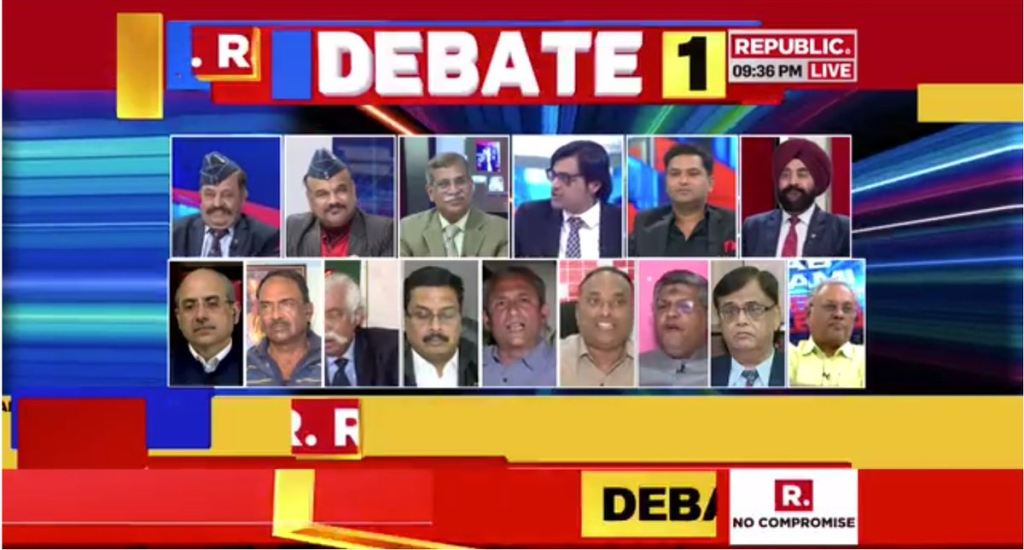
I will move on from Wodehouse, but not before leaving you with a couple of gems, among hundreds, that demonstrate why we read the man over and over again. ‘The fascination of shooting as a sport depends almost wholly on whether you are at the right or wrong end of the gun.’ The Adventures of Sally. ‘The great thing in life, Jeeves, if we wish to be happy and prosperous, is to miss as many political debates as possible.’ Much Obliged, Jeeves. The last quote resonates like a ton of bricks with me every evening when I tune in to the chaos that is our so-called television debates here in India. As to those unfortunates who have never laid their eyes on a Wodehouse tome, they are more to be pitied than censured.

Evelyn Waugh, a contemporary of P.G. Wodehouse’s, had this to say of the great humourist, ‘Mr. Wodehouse’s idyllic world can never stale. He will continue to release future generations from captivity that may be more irksome than our own. He has made a world for us to live in and delight in.’ It is a quote that adorns many of Wodehouse’s book jacket covers. Waugh himself was no slouch when it came to the telling phrase that rousingly celebrates the English language. Author of some of the finest novels you could hope to get your hands on, special mention must be made of Brideshead Revisited, Put Out More Flags and The Decline and Fall. Mr. Waugh clearly did not care much for newspapers, about which he said, ‘News is what a chap who doesn’t care much about anything wants to read. And it’s only news until he’s read it. After that it’s dead.’ As with any great writer, words are Waugh’s stock-in-trade. As he memorably puts it, ‘One forgets words as one forgets names. One’s vocabulary needs constant fertilizing or it will die.’ That’s one in the eye for the lay person who keeps carping about writers ‘who use big words.’ Evelyn’s son Auberon, himself a journalist and satirist of note during the 80s, didn’t quite achieve his father’s everlasting fame.

It is rare, in the world of English Literature to witness a father and his son achieve stardom almost contemporaneously. The exception to the rule, Sir Kingsley Amis and his son Martin Amis, managed to do just that. Overly fond of his daily libation than was good for him, Kingsley Amis nevertheless wrote a clutch of highly acclaimed novels, most notably his 1954 debut Lucky Jim, a trenchant, rollicking send-up of the literary world, academia and those who peopled it. Here is the highly articulate atheist commentator, gadfly and essayist, the late Christopher Hitchens on Amis’ novel. ‘If you can picture Bertie or Jeeves being capable of actual malice, and simultaneously imagine Evelyn Waugh forgetting about original sin, you have the combination of innocence and experience that makes this short romp so imperishable.’ Lucky Jim requires to be read twice, at least, to savour its subtle and heady flavours. Again, not to miss the reverberating Wodehouse reference. Two great quotes from Lucky Jim – ‘If you can’t annoy somebody, there is little point in writing.’ And this classic, ‘His mouth had been used as a latrine by some small creature of the night, and then as its mausoleum.’

The Amis scion, Martin, a close friend of Christopher Hitchens’ has earned the sobriquet of being the enfant terrible of contemporary English Literature. A prolific novelist, essayist and memoirist, Martin Amis is a modern-day literary celebrity on a par with the likes of Salman Rushdie, Ian McEwan, Julian Barnes and of course, Hitchens himself. Among his many books, he may be best remembered for three novels, collectively referred to as the London Trilogy – Money, London Fields and The Information. Martin Amis’ stories and essays are often dark, dense, thickly portentous and his descriptions and dialogues can take you into uncharted territory. Hence the need to re-read and get a grip on his amazing felicity and razor-sharp observations. His elegant prose can traverse comfortably from high-minded sublime to absolute down and dirty, but the Force is always with him. ‘Someone watches over us when we write,’ he says disarmingly. ‘Mother. Teacher. Shakespeare. God.’ How true, even if we are not aware of it and even if we are non-believers. And my personal favourite – ‘What we eventually run up against are the forces of humourlessness, and let me assure you that the humourless as a bunch don’t just not know what’s funny, they don’t know what’s serious. They have no common sense, either, and shouldn’t be trusted with anything.’ Strong stuff, but as a lifelong follower of humour as a genre, I concur unreservedly.

What I have shared with you, dear reader, is only a smidgen of a sample which does not even begin to scratch the surface of the riches that are available in terms of reading material. Before you hastily order your next best-seller from Amazon, take a quick look at the stack of books in your home library and ask yourself this question, ‘Should I be re-reading some of these great novels and discovering hidden literary treasures that might have escaped me at the first reading, ‘born to blush unseen and waste its sweetness in the desert air,’ before splurging on new books with no space to keep them?’ You might duck that issue by turning to the digital Kindle, which obviates the space problem but that, in my humble opinion, would be indulging in prevarication.

As Oscar Wilde, who can never be kept out of any literary discussion, said, ‘If one cannot enjoy reading a book over and over again, there is no use in reading it at all.’

PS: In case you’re wondering, I have excluded Shakespeare from the ambit of this discussion for obvious reasons. We quote extensively from the Bard’s complete works, as I have at the top of this piece, but we do not pass an idle hour reading his plays from cover to cover, inviting cervical cricks. Unless, of course, it was part of our school or university syllabus, or if we were treading the boards in fancy dress, playing Richard III or Hamlet.

Taking smokers down a peg

Giving up smoking is the easiest thing in the world. I know because I’ve done it thousands of times. Mark Twain

How times have changed. Not all that long ago, actually it was a long time ago in the 70s, when I first started working in an advertising agency in Calcutta, smoking was all the rage. I’ll come to drinking in a while. At the ad agency, pretty much everybody, men and women, lit up a Wills Filter or a Charminar or, if you belonged to the higher echelons of the corporate ladder, India Kings would be the order of the day. Those privileged few who returned after a trip to the United States, United Kingdom or any other part of the world, flashed a duty-free carton each of Dunhill, Marlboro or Benson & Hedges, courtesy Indian Customs’ munificence. A pack or two was all it took to grease the palms of some of the customs officials to chalk a tick mark on your bulging suitcase, enabling it to pass unhindered through the green channel. If you were an inverted snob, as some of our creative writers and designers at the agency were, even the humble rolled up beedi was in the mix. For the more discerning, a pouch of Prince Henry scented tobacco (peeping out of a shirt pocket) was also part of the smoker’s paraphernalia. Pipe or cigar smokers were sighted, though rarely, but there were the odd big shots who sported them with much ostentation.

I am not certain if the poet and novelist Rudyard Kipling was a male chauvinist of the porcine persuasion, but he is ‘credited’ with the quote, ‘A woman is only a woman, but a good cigar is a smoke,’ whatever that was supposed to mean. Speaking of women, in the late 60s in America, Virginia Slims launched an eponymous brand of elegantly slim cigarettes, with the women’s lib inspired catchphrase, ‘You’ve come a long way, baby.’ All in all, there was so much smoke swirling around the office you would have been hard pressed to see the person standing in front of you. All right, so I am exaggerating a trifle here, but put it down to literary hyperbole to drive home a point.

This was a phenomenon that was not unique to our organization. The whole of corporate Calcutta, or for that matter corporate India and possibly the world, was lighting up like there was no tomorrow. To employ celebrated British author Nancy Mitford’s coinage, very au courant during the 60s and 70s, smoking was U and an abstaining non -smoker was, well, non-U. In other words, if you smoked you were ‘with it’ while the non-smokers were out of the charmed inner circle. ‘You’re never alone with a Strand,’ was a famous cigarette ad slogan in the UK. Here in India Wills’ ‘Made for Each Other’ swept the honours boards in the popularity charts. When you consider the fact that one of India’s largest advertisers of the day, ITC Ltd., market leaders in branded cigarettes was headquartered in Calcutta, the biggest client for some of the leading ad agencies at the time, one smoked the company’s brands almost out of a sense of bounden duty. If ITC told you to jump you asked, ‘how high?’

In sharp contrast, in my own family circle, smoking was considered not just an abhorrent habit, but calculated to shorten your life by at least a third. Medical science strongly supported that view. More to the point, the filthy habit was seen as the worst kind of moral turpitude. Smoking was placed on par with immorality of the highest, or do I mean lowest, order. Debauchery might have just about pipped smoking to the post, as far as scraping the bottom of the morality barrel was concerned, but not by much. My father would view anyone seen with a cigarette dangling from his lips like something the cat had brought in. If it happened to be a woman puffing away, she was a gone case, banished to everlasting perdition. Even if he had to reluctantly tolerate a smoker in his midst, say at an official party, if the showoff smoker had the temerity to blow smoke rings in the air, that spelt the end of their relationship. Since my pater was still in service when I started my career in advertising, I would dread the day he would decide to casually walk into the agency to see ‘how his son was faring.’ That is, of course, if he could have floundered through all the smoke and found my cubicle in our ‘den of vice.’ Fortunately, that day never arrived and he retired soon after and settled down in pious Madras.

Speaking for myself, I was not a great fan of the habit. However, on the specious reasoning that one had to keep up with the Joneses, one would puff the odd fag now and then in a spirit of camaraderie, just to show there was no ill feeling. As I was a bachelor at the time and living with my parents, a couple of strong mint chewing gums on returning home provided rigorous exercise to my dentures, in the hope that any residual evidence of tobacco odour would have been obliterated. I think it worked, else my mother would have thrown an apoplectic fit and my father would have had to manage anger and depression (my mother’s) at the same time.

A quick word about drinking. Alcohol, I mean. Much as my folks would not have been patting me approvingly on the back for downing a couple of beers or something even stronger, the lack of overt visual unsightliness while drinking, unlike smoking, did not seem to greatly bother them. Gin and water would look just like a plain, odourless glass of water. An uncle of mine was overly partial to this innocuous looking, but lethal, potion. Kindly bear in mind that we are talking about someone, that’s me, who had just broken out of his teens, in his early twenties, stepping out into the big, bad world where vice and sin stalked the innocent lamb at every corner. Or so it was perceived. Another uncle of mine, who did not wish to utter the word beer within his wife’s earshot, would invite me to go out with him for a spot of ‘malt and yeast.’ By the same logic, chewing paan with treated tobacco and shaved betel nuts, was considered kosher. Subterfuge was the order of the day. My father was an occasional, social imbiber. He sedulously stored a bottle of Chivas Regal in his cupboard for what I believe was at least twenty-five years! Whether that gave it an extra vintage halo or not, I could not say. What little was consumed of it was usually by our next-door neighbour, who would pop round once in a while to down a convivial peg or two, much to my mother’s chagrin.

At some stage, I found even casual smoking provided little joy and much discomfort, and the world had started talking aggressively about the ills of the habit. Advertisements of tobacco and related products were banned and even cigarette packs carried ghastly visuals of skeletal bodies at terminal stages of cancer or lung disease. Ad agencies were going bankrupt. International airports were fitted out with special booths for smokers to congregate, shoulder-to-shoulder and smoke their hearts, or lungs, out to kingdom come. In fact, it’s been a complete turnaround. Mitford’s U and non-U appellation has been totally reversed. Smokers are now almost treated like pariahs (outcasts). In offices, they need to step out of the premises if they desperately need a drag. Thankfully, the little I myself indulged in the habit, after a fashion in the 70s, I gave up soon thereafter. You wouldn’t catch me touching a fag with the proverbial bargepole. Hardly anyone I know smokes nowadays, barring an occasional gasper or two at a party where alcohol is flowing freely. Somehow, even those who puff on a ciggy infrequently are tempted to light up when they are involved in some serious elbow-bending with a glass of single malt or Bloody Mary.

As for drinking, as I had suggested earlier, if you are an alcoholic beyond repair you don’t belong to the land of the living. Abandon hope. However, a glass of beer, a goblet of wine (red or white), or even something stronger in strict moderation, comes under the definition of social drinking, and not too many eyebrows will be raised. Assuming, of course, that you are an adult and know how to hold a drink. This hocus-pocus of ‘my doctor told me two large pegs a day does wonders for my heart,’ is just that, absolute balderdash. The problem is that most doctors lead tension-filled, hectic professional lives, and feel the need to let their hair down once in a while, and who can blame them? Have a civilized drink or two by all means, but don’t justify it by pretending it’s great for health. Only a loony doctor will ever actually say that. Let’s face it. At the end of the day, there will always be smokers in our midst, but at least they cannot say they were not warned of the consequences.

I’ll raise a small peg to that!

‘Hello, this is Vande Mataram’

Those of you who follow current affairs in India will doubtless have heard that a recent pronouncement by the big nobs in the Maharashtra Government has declared that, henceforth all telephone calls to government offices or officials will be greeted by a cheery Vande Mataram, presumably spoken and not sung. In other words, it’s goodbye to hello. Or as The Beatles so presciently and harmoniously put it all those years ago, Hello, Goodbye. This edict will need to be strictly followed by all government and quasi-government officials. In due course, it is hoped the habit will spread to all sections of the society in that state. While I have yet to read the small print in the form of an official circular, if there be one, presumably it would have been written in Marathi for starters, a language I am not familiar with, then translated into Hindi, thence to English, by which time the trial run of greeting all and sundry in the corridors of Government establishments in Maharashtra with a Vande Mataram, will have run its course. Or run out of gas, with any luck. This is not unlike forcibly thrusting the National Anthem down our throats in cinema halls at the start or at the end of watching three hours of Ben-Hur or Gone with the Wind. Doesn’t quite gel, if you get my meaning. Thankfully, wiser counsel prevailed, the courts took a dim view of it and we are now spared the ignominy of watching people rushing to the exits to get to the loos first, while the anthem is just about gathering up a nice head of steam.

Loosely translated, Vande Mataram means ‘salutations to the motherland.’ Written by Bankim Chandra Chattopadhyay in 1875, it is officially designated the national song of India, not to be confused with India’s national anthem which, of course, is Rabindranath Tagore’s Jana Gana Mana. One should be mindful of how one employs those two terms – anthem and song. Why we need to have a national anthem as well as a national song is beyond all understanding. There was much heated debate in our media on the subject, but as with so many such controversies, it all came to nought and we are back to the comfortable status quo. What is more, Vande Mataram has so many musical variants that its real personality gets obfuscated. From the 1952 Anand Math film version, based on Bankim Chandra’s story of the same name, down to A.R.Rahman’s latter-day, much-loved rendition (Maa tujhe salaam), the song has gone through several gears – lyrically and musically. What is more, in south India over the decades, Carnatic musicians have rendered in a garland of ragas (ragamalika), the Devi shloka ‘Vande Mataram Ambikaam Bhagavatim,’ an essential part of a Carnatic music concert repertoire.

That said, the thought of tinkering around with two anthems is not without precedent. When the great British mystic poet, William Blake wrote his rousingly patriotic poem Jerusalem in 1804, little did he know that it would be set to music a century later and dubbed Britain’s national song, as opposed to their anthem God Save the Queen / King. Musically, Jerusalem is more melodic and rousing than the preferred anthem, but these are matters for the denizens of Great Britain to mull over. Even now, Britishers constantly debate if Jerusalem would make for a better choice as their anthem. As we in India usually tend to follow our erstwhile masters in many respects, it was refreshing to see the present dispensation in Delhi take the road less travelled and replace the hymn Abide with Me with Kavi Pradeep’s seminal poem, Aye mere watan ke logon (immortalised by Lata Mangeshkar) at our Republic Day parade. This has not gone down very well with the many who go misty-eyed and nostalgic for all things past. That Mahatma Gandhi too was reportedly extremely fond of Abide with me only added to the contentious confusion.

For myself, I love the movingly composed Biblical hymn. We sang it often during chapel service in school, but I can see where the government is coming from. We are making moves, whenever an opportunity presents itself, to divest ourselves of long-time symbols of colonial subjugation. Thankfully, this patriotic logic has not been extended to great monuments and the like (Ye Gods!), though replacing British royalty with Indian stalwarts on existing plinths and canopies is perfectly acceptable. Netaji Subhas Chandra Bose in place of King George V at India Gate was widely welcomed, and the current political masters in New Delhi milked it for all it’s worth. However, being a contrarian fellow, I would hate to see the magnificent statue of Queen Victoria sitting on the throne at the entrance to the grand Victoria Memorial Hall in Calcutta, being replaced by someone like, say, Ashoka the Great. Not that I have anything against the great Mauryan Emperor. It is simply an artistic genuflection, nothing to do with patriotism. Meanwhile, cities and street names all over the country are constantly renamed such that the Post Master General is tearing his hair out trying to keep abreast.

While on the subject of British relics, there is an interesting, and somewhat saucy, footnote pertaining to the Queen’s recent funeral ceremonies. On television many Indian viewers were pleasantly taken aback when they were shown a group of British children reciting, most proficiently, a well-known Sanskrit vedic shloka from the Upanishads. It was wrongly assumed this was performed specially as part of the dedication obsequies for the late Queen Elizabeth II. Now here comes the twist. It turns out that the video, which dates back to 2009, showed the children reciting the shloka at the Commonwealth Games, The Queen’s Baton Relay 2010, which was held on 29 October 2009 at Buckingham Palace, London. Whether this was stated upfront by those responsible for the telecast or not is unclear. To give the organisers of the funeral telecast the benefit of the doubt, they probably meant well and most of us were impressed with the recitation.

Little wonder that some states in India like Karnataka have arranged to have their own state anthem in the local language, in this case Kannada. There has been much argy-bargy over this issue and I am not sure if a final decision on the matter has been taken. Depending on the length of these anthems, the start of an international cricket match, say between India and Sri Lanka in Bangalore could be a long-drawn affair. The Indian team will have to mouth the national anthem and keep their eyes closed during the Kannada anthem, since the players will not know the lyrics or the tune, followed by the Sri Lankan anthem which, I happen to know, goes on forever. The toss will, literally and metaphorically, go for a toss.

To get back to the raison d’etre of this piece, it would be fascinating to speculate on what prompted the Government of Maharashtra to come up with this knee-jerk decision to disband the familiar ‘hello’ salutation with part of the first line of our national song, not to be confused with the anthem. One assumes the Chief Minister and his colleagues have more pressing issues on their plate, including the vexed question of which of the two warring factions of the Shiv Sena has the right to take legal possession of their brand name and symbol. The courts are still chewing the cud over that matter.

There must be so many other everyday problems to be tackled by the ruling coalition in Maharashtra. The problematic question of which faction of the Shiv Sena can address their multitudes at the legendary Shivaji Park in Mumbai during the Dussehra celebrations has been settled by the courts, and they have many more issues to fight over. Yet with all these distractions, out of nowhere the Chief Minister walks into his morning meeting with his cabinet and declares, ‘From this moment on, we stop using anglicized words like “hello” to greet one another. It is going to be Vande Mataram. Got it? Please pass this message down the line to every single government servant. Thank you. Vande Mataram.’ Caused quite a shindig, did CM Shinde. All that would have, naturally, been said in Marathi. I take it that ‘thank you’ will pass muster for the time being till an acceptable vernacular alternative can be agreed upon. I shudder to think what would happen if this initiative from Mumbai’s Mantralaya becomes a national movement! Tamil Nadu’s Vanakkam some of us are already familiar with, though not enforced officially and Bengal could have the time of their lives and go the whole hog with Nomoshkar.

This naming and nomenclature sickness, not to speak of language politics, always on the boil, has reached endemic proportions in our country. It keeps happening in dribs and drabs but, like the proverbial canary in a coal mine, could presage a major linguistic fracas in the making – a Tower of Babel we can well do without in polyglot India.

Rediscovering the joys of shopping

Image by Speedy McVroom from Pixabay

I went window shopping today. I bought four windows. British comedian Tommy Cooper.

A few weeks ago, I had sounded off on the unintended perils of online shopping, regretting our inability to actually shop at shops, if you get my drift. All that is fast changing. What with the pandemic and everything, for the past couple of years or so, we have hardly ever stepped out of hearth and home to do a bit of shopping. The operative phrase there is ‘stepped out.’ Shopping, as in finding a place to park the car, wheeling around the premises pushing a cart, looking at packs and bottles, squinting at the almost unreadable expiry dates and price tags, going through that touchy, feely, tactile experience that real-life shopping entails.  The other kind of shopping we have done aplenty, all of it online from the comfort of our drawing room or study or wherever the mood took us. Highly impersonal of course, but the convenience cannot be denied. Press a few keys on your smartphone, select the items, approve the amount, tap in the OTP and literally in the blink of an eye, 4 tetra packs of mixed-fruit juice and 2 packets of salt have arrived in place of the 6 cans of Coke and 2 packets of sugar you had ordered. No problem. The complaints procedure online is smooth, somebody will rush round to your place by the evening to collect the erroneous deliveries, but you will have to re-order the original items you wanted. No, the amount will not be refunded, but will be held in suspense and adjusted against the fresh order, which will be delivered the following day provided said items are in stock. Which is often not the case. Some of them agree to send the money back to your credit card account, but tracking the credit to see if Rs.153.40p has actually been returned is tedious in the extreme. The only hassle with this arrangement is that we might have invited guests over that very evening. Woe is me. Let me try another portal.

I should not be too harsh. Fair’s fair. Most of the time the online giants get it right, but until we have actually opened the delivery bags, we will have no clue what surprises and shocks are in store for us. That said, now that the pandemic appears to be behind us, more or less, most of us have ventured out to enjoy the real, and at times dubious, pleasures of real-life shopping, something we had almost forgotten about. Virtual shopping will be there till the cows come home but now we have an alternative option, one that we are accustomed to. I am, of course, referring to those of us who were born before the new millennium.

The nearest departmental store is just a stone’s throw away from where we live, so thither we repaired in good spirits, the wife and I, suitably masked up. Parking was not an issue as we set out fairly early. As we approached the entrance, we observed, to our dismay, that the shutters were three-quarters of the way down, and there was a handful of other customers waiting to get in. I turned to the nearest gentleman and inquired of him what the problem was. ‘The uniformed chap at the entrance says they are taking an audit of the inventory, and that the sales boys and girls are being given a quick briefing. All this could take some time and we will have to wait.’

 ‘Was the shop burgled overnight or something?’ I asked. ‘It’s 10.30 in the morning. Surely audits and stuff take place during the small hours of the morning.’ The equally miffed customer merely shrugged his shoulders.

Anyhow, after another 20 minutes or so of idling and goggling (and Googling) at our mobile phones, the shutters clattered up. Open sesame. We all rushed in like there’s no tomorrow. An assortment of smells assailed our olfactory senses. Fishy from the meat corner, heady perfumes wafting from a nearby shelf and spices catching our throats and nostrils from the condiments and provisions space further down. A strange, smelly concoction this, one that I was quite happy to experience though they could have spared us the fishy pong. It was time to hurry along and not waste time tarrying. The poet might have said, ‘What is this life if, full of care / We have no time to stand and stare.’ Unless we were standing and staring at our mobile phones, naturally. The adrenalin was now coursing through my veins as I looked forward to that touchy, feely experience I was talking about. While my wife traipsed off to some section specialising in branded astringents and cleaning agents, I made tracks for the food section. I was looking for some interesting salad dressing and dips for our cocktail snacks. My intense searches having revealed zilch, I cast around for a shop assistant. There were not more than three in the entire shop, so I walked across and cleared my throat behind a slender, uniformed girl, who looked not more than 17 years old and who was bending down inspecting some nameless bottles in a cardboard carton. She turned round, startled, on hearing my catarrhal throat-clearing.

‘Yes Sir?’

‘I need some help. Can you please point me to where I might find dips and salad dressing?’ That was plain enough but the adolescent looked out of her depth.

‘Fruit salad, Sir? This way, please.’

‘No. no, not fruit salad. I am looking for salad dressing. As well as some interesting dips.’

‘Dips?’

‘Yes, got it first time, well done. And salad dressing.’

The girl scrunched her nose, raised her eyebrows and said, ‘Sir, we have got chips. Also clips in that section,’ she pointed vaguely towards the middle-distance behind her back. Why she would word-associate chips or clips with dips and salad dressing was a mystery, but I let it pass. I felt like giving her a clip round the ear, but wiser counsel prevailed. I decided to put her out of her misery. ‘Why don’t you call your supervisor?’

Relieved of the inquisition, she rushed off to some back office. After another ten minutes had passed, a tall, not-so-young man presented himself – an authority figure. I felt reassured.

‘Good morning, Sir. I understand you are looking for drips. Saline, would that be? Sorry Sir, we do not have a pharmacy section here. There’s one just across the road.’

What was wrong with this place? Was everyone hard of hearing? ‘Thank you,’ I replied not hiding my irritation very well. ‘How about salad dressing? Are you going to send me into the waiting arms of a nearby Italian restaurant?’ He didn’t quite catch my bitingly sarcastic dressing down.

‘Salad dressing,’ he repeated thoughtfully spelling the syllables out, like he had never heard of it, which he probably hadn’t, ‘you mean like that gooey liquid they mix all those leaves and vegetables with?’

Now we were getting somewhere. I had wronged the man. I knew how to leap on the back of dawning intelligence and make it gallop, as I once heard someone describe it. ‘Exactly. Gooey liquid. I couldn’t have put it better myself. I am talking about Vinaigrette, Thousand Island, Honey and Mustard, Bleu Cheese, that sort of thing.’

The dawning intelligence took three steps back towards fading dusk. We were back to square one. He whipped out his mobile phone and called up someone, presumably another colleague sitting in that mysterious back office. He moved further away from me so I couldn’t follow the conversation. After five minutes or so, he stuffed the mobile into his shirt pocket and returned with a half-smile.

‘Sir, we can do some imported olive oil and vinegar dressing, nuts and seeds, beans and legumes as well as a variety of dried fruits. Not to mention baked tortilla, pita chips, shredded hard cheeses and fresh fruit. I am told you can make an excellent salad from these ingredients. We are well stocked with all these items.’ I was irresistibly reminded of the Waldorf Salad incident in that hilarious television comedy, Fawlty Towers.

I was on the verge of stealing Clint Eastwood’s Dirty Harry copyright with a threatening ‘Go ahead, make my day,’ but by now, in a strange turn of mood, I started feeling sorry for the staff of this establishment. I mean, they have also been suffering without a single customer walking in for over two years. This sudden deluge of walk-ins had left them unprepared and caught off-guard. Fresh, wet-behind-the-ears trainees were being put through the mill. Inventories were out of whack. It was a mess. Still and all, actually interacting with another human being made for a refreshing change. I was simpatico.

‘I fully understand, my old Supervisor. We have to give you all time to differentiate between dips and drips and salad dressings can be tricky. Tell you what, I’ll take 250gms of all that stuff you just listed and we’ll see how it goes.’ The supervisor beamed and the adolescent was all smiles, 32 pearly teeth in good order. I had made their day!

As I was proceeding to the check-out counter, I saw my wife approaching with what looked like a fancy, stainless steel pedal trash can and a roll of black, perforated rubbish bags. ‘What happened to the branded astringent and cleaning agent?’ I asked. ‘Not in stock, but they helpfully gave me these’ she replied, not without a touch of irony. We paid for the items, after some drama with the recalcitrant credit card machine and soon were home again, home again, jiggety-jig.

Settled in my favourite reclining arm-chair, I got my mobile out and logged on to my Amazon account.

King Federer I

Image credit: Eurosport

Ever since Roger Federer announced that he is hanging up his racket for good, there has been an avalanche of goodwill messages from all over the world wishing the maestro well. Copious tears have been shed. That was only to be expected, given all that the great man has achieved in the world of tennis. Nadal and Djokovic, Federer’s greatest rivals, have been leading the charge with their emotion-filled missives on social media, followed by any number of other tennis personalities, both from the men’s and the distaff side of the game singing hosannas to the player who defined elegance, style and class on a tennis court. We saw it coming, his exit that is, over the last couple of years (he is 41 years old) but when the announcement actually arrived, most tennis aficionados felt that this was a vacuum that may never be filled. Nadal and the Djoker are still there, not for long one suspects, and brilliant, young upstarts like Alcaraz and Sinner are putting down a marker on the world stage. The moot question is, can anyone capture the public imagination like the genius from Basel did? Time, and it will be a very long time, will tell. The GOAT debate has raged for a while and depending on whether you are from Spain, Serbia or Switzerland, the accolade for the greatest will vary. If the vote was not based on sheer numbers and only on emotion, the Fed will win hands down. For when the dust has settled and the fat lady has sung, that is how Roger Federer will be remembered – an Emotion. As our magnificent Lone Ranger rides off into the sunset on his white steed, swinging for one last time his Wilson Pro Staff RF 97 Autograph racket, we can hear a distant ‘Hi-yo, Silver! Away!’

I have been asked by some of those who read my blogs (about five of them when I last checked) why I have not yet joined the clamorous bandwagon of gushing fans penning an appreciative paean on arguably the greatest tennis player ever to whip a single-handed, backhand cross court winner past a bemused opponent. I have succumbed to pressure as you can see, if you are reading this. My initial hesitancy was due to the fact that I could hardly add anything of value to the reams of copy already circulating around the globe, across media, telling us why we are all going to miss this icon of the game. Not that we needed any telling. Furthermore, Federer’s timing of his retirement coincided with the passing of a much-loved British monarch, give or take a few days. That meant the King of tennis had to vie with the Queen of Great Britain and Northern Ireland for public attention. For all that Federer is an adored superstar, Her Majesty, regally holding nothing more than her Sceptre for some 70 years, now interred at Windsor, was going to win that particular contest hands down. Queen Elizabeth II could not do much about when she was going to pass on and join her royal ancestors at the great palace in the sky, but the sultan of the tennis court could have deferred his announcement by a couple of weeks. That may sound facetious (I speak as a tennis buff) but Federer certainly deserved to be given a proper send-off without high-profile and protracted royal obsequies raining on his parade.

Roger Federer may not be a royal in the sense in which members of the Windsor family are, but anyone who understands the difference between a second serve and a double fault will tell you that the balletic Swiss is regal. Regal in a way no tennis player before him has been, certainly not on a tennis court. Federer’s racket skills can only be compared to Zubin Mehta’s baton waving while conducting the Los Angeles Philharmonic. His personality off court was as winning as his achievements on court. Measured purely on the scale of fan following, he reigns supreme. All he needed was the Ermine cape, the Orb, the Sceptre and the Crown and he could have walked into Buckingham Palace, no questions asked, though King Charles III might have thrown a hissy-fit like he did recently when his fountain pen leaked. However, Federer is certainly the King of Wimbledon measured by the number of singles titles won, unless Djokovic goes past him in the near future. However, let us not get completely carried away. Roger Federer was and is human. Almost. As a callow youth, he had to deal with anger management issues and was known to throw temper tantrums like you wouldn’t believe. The broken rackets at the Federer homestead would have kept the family warm at the fireplace during the chill winters of his home country.

Fortunately, unlike some other famous tennis stars I could name, Federer quickly learnt how to disport himself on the world stage, particularly when he started winning the biggies on the circuit. All the world was, indeed, a stage for him. He smiled a lot when he won, cried a lot when he won, and lost. A lachrymose chap, our Roger. I had mentioned earlier that Federer was an Emotion with a capital E, but he was also emotional on court and wore his heart on his sleeve. And didn’t his fans love him for it. It’s not that they loved Nadal less, it’s just that they loved Federer more. As for Djoko, even he knows nobody loves him (his compatriots aside), and the feisty Serb draws strength from that. When the crowd yells ‘C’mon Roger,’ Novak hears ‘C’mon Novak.’ But that’s another story. Incidentally, I am glad Roger got rid of that pony tail he flaunted in his initial days on the circuit.

Federer’s retirement has also unleashed the dreaded punning epidemic amongst headline writers in the print and social media. A rash of puns, some clever, some plain asinine, mostly overwrought has assailed readers this past week. ‘End of the FED-ERA’ screamed one, ‘PeRFection’ was not bad, ‘Roger and Out’ went another, ‘Roger that!’ was repeated ad nauseum. War comics clichés are clearly still an inspiration. The transportation major, FedEx lapped up a lot of cheap publicity every time Roger won somewhere with copywriters falling over each other to come up with lines like ‘Fedex delivers on time.’  In slightly cruder, impolite usage, we have also heard the phrase, ‘So-and-so was Rogered in straight sets.’ I need hardly elaborate on that. One headline in the French newspaper L’Equipe puzzled me slightly. The paper dedicated its front page to Federer with the phrasing ‘God Save The King.’ Apparently, the tribute to the tennis legend is a reference to the accession of King Charles III in the United Kingdom but as an attempt at the telling double entendre it was a bit of a stretch and did not quite make sense. That is the problem with punning for its own sake. You can miss the wood for the trees.

It is axiomatic that you cannot compare players of one generation with that of another, purely on the basis of numbers. By any reckoning, Australia’s finest sportsman (a photo finish with Don Bradman) would be Rod Laver, the tennis colossus who won, back-to-back, all the four Grand Slam singles titles in the same calendar year, and he did it twice with a 7-year gap in 1962 and 1969. Djokovic came within a whisker of achieving that feat in 2019 but fell at the last hurdle at the US Open. The ongoing Laver Cup, pitting Team Europe against Team World being played in London, featuring the present-day giants of the game, including for one last time Federer, is a fitting tribute to ‘The Rockhampton Rocket.’ As I put this piece to bed, I have just seen Roger’s final match partnering Rafa at the Laver Cup, post which the tears flowed freely. Roger, as is his wont, choked up while trying to speak, Rafa was almost inconsolable as was the sobbing full-house at the magnificent London 02 Arena. Rumours that a super-sopper had to be employed to mop up and dry the court for the next game, was a tad exaggerated.

 Over the last century many changes have been wrought in court conditions, quality of equipment, physical fitness and so on. Then there’s the money. Enough said. Even taking all those changes into consideration, for three players to win, between them over roughly the same period, 63 Grand Slam singles titles (and counting) is staggering. Longevity is being redefined. Novak and Rafa will enjoy superiority in numbers over Federer and that is not to be pooh-poohed in our unabashed adulation of Federer. I would only like to end by throwing one challenge, the ultimate acid test. Just walk out onto the street and buttonhole one hundred people at random, and ask them who their favourite tennis player in the world is. If Roger Federer does not overwhelmingly win that statistically valid dip-stick survey, I will eat my non-existent and metaphorical hat. Vox populi! King Federer has retired. Long live the King!

Now then, where’s my box of Kleenex tissues?

To be perfectly honest

Former US President Richard Nixon – ‘I am not a crook.’

I am always deeply suspicious of anyone who starts a sentence, particularly in answer to a question, any question, with the words, ‘To be perfectly honest with you…’ It matters not a whit what the question is. I have watched several eminent personalities resort to this reflex-induced, often irrelevant, for the most part dishonest, kick-off to their response. I suppose it is slightly better than the patronizing ‘I am so glad you asked me that question.’ Then there is the present-day abomination where almost anyone on television starts a sentence with the monosyllabic So. ‘Do you think inflation will be a problem in the near future?’ ‘So, let me be perfectly honest with you.’ You get the picture. This does not include Indian politicians at the very highest echelons because most of them prefer to converse in Hindi or some other vernacular of their preference. The local lingo does not quite possess an equivalent to ‘To be perfectly honest…’ Not literally, but metaphorically. Furthermore, most of our political top guns are never unduly worried about whether they are going to be scrupulously honest (ha ha) or, as some prefer to describe it, ‘economical with the truth.’ There are exceptions of course, even in political circles, but finding such gems of purest ray serene would be akin to hunting for a needle in a haystack.

Take Shashi Tharoor for instance, the silver-tongued Congressman, who speaks English as to the manner born, Oxbridge accent et al. Not that he went to Oxford or Cambridge, but he somehow developed his plummy, English accent while studying, debating and treading the boards in Calcutta. That helped him enormously at the United Nations and other august international bodies where doors opened for him the moment he sonorously intoned, ‘Good morning, Mr. Kofi Annan.’ He even gave a lecture at the Oxford Union (so he did go to Oxford after all, in a manner of speaking) and told the Brits off in no uncertain terms for their 200 odd years of misrule in India. However, if I have heard him say this once, I must have heard him several times. To the question, ‘Mr. Tharoor, how did you come to speak English with a pluperfect accent and in such an orotund a manner that even the English are floored?’ His answer? ‘I am so glad you asked me that question. To be perfectly honest with you, your question incorporating words like “orotund” and “pluperfect” leads me to the inescapable conclusion that you are having a spot of risible fun at my expense.’ That may not be a verbatim reproduction of the hypothetical question posed or the imagined answer proffered by the loquacious parliamentarian, but near enough. I’ll say this in his favour, he does not start his sentences with the semi-literate So.

One last, if contentious issue about our eloquent MP from Trivandrum (or Thiruvananthapuram, if you want to be pedantic). I recently watched him on YouTube trying his hand at stand-up comedy and my sincere advice to him is to cease and desist. Just not his bag. I found his jokes contrived, flat and very unfunny. That he was reading these one-liners off handwritten notes made it only that much worse. He is much better off taking the strips off his political rivals with his Shakespearean flourishes and Wildean wit as his potent weapons. For one thing, his opponents don’t know what on earth he is saying which in itself is half the battle won. Only that they are being vaguely put down. Stick to your strengths, Shashi. As an incidental aside, dear reader, try saying Thiruvananthapuram slowly, provided you are sober, without tripping up around the fourth or fifth syllable. It is not easy if you do not belong to Kerala or the south of the Vindhyas. BJP’s cherubic and feisty spokesperson Sambit Patra tried it several times recently on television and came a cropper. He kept saying Thiruvanthpuram on numerous occasions without hitting the bull’s eye. I invite readers, even while ploughing through this blog, to closely compare Thiruvanthpuram with Thiruvananthapuram to spot the difference. The doughty Sambit Patra struggled manfully, unaware of his dysarthria. In similar fashion most of our news readers and north Indian politicians can never pronounce Karnataka. For inexplicable reasons, they will insist on pronouncing the name of the state as Karnatak. Ditto Keral for Kerala. Are they dyslexic or something? How would they take it if I pronounced Haryana as Haryaan?

To be perfectly honest, our Prime Minister set the ball rolling to send out friendly smoke signals to his fellow brethren in south India, Tamil Nadu in particular, when he quoted a line from poet and freedom fighter Subramanya Bharati, in Tamil, during the newly named Kartavya Path inauguration and the Netaji Subhas Chandra Bose statue unveiling in New Delhi. As a Tamilian myself, I would give the PM full marks for effort and displaying great courage. However, as the complex Tamil syllables (for a Gujarati, that is) Parukulle nalla nadu, engal Bharata nadu (India is the greatest nation in the world) hesitantly escaped the PM’s lips, many of us might have been excused for feeling that discretion could have been the better part of valour. Aren’t there any great Gujarati poets? I can do no better than seek recourse in Hamlet’s words, Speak the speech, I pray you, as I pronounc’d it to you, trippingly on the tongue; but if you mouth it, as many of our players do, I had as lief the town-crier spoke my lines. The Bard of Avon was the master of the mot juste.

My point being, what is there to be ‘perfectly honest’ about while making a simple and logical point. Let me now take another example, this from the world of management and business. ‘You must learn to think outside the box,’ is a phrase much favoured by business school students and their bosses in the corporate world, most of whom are also products of the same hallowed portals of management academia. As I had not graduated from a business school, I had problems with some of my better qualified colleagues and superiors in corporate life, who had the wood on me and kept asking me to think outside the box. Or square, if they wanted a bit of jargon variety. When this particular cliché was first thrown at me, my immediate response was, ‘To be perfectly honest, I am not sure I follow you. How do you mean outside the box? What box, which box?’ I was quite pungent with my reaction, which endeared me not one bit with my toffee-nosed colleagues. It was suggested to me that I might not climb very high in the corporate ladder, if I insisted on being ‘too clever by half.’ There’s another one, I thought. My response was a real zinger. I replied vaguely, ‘Ah well, what you lose on the swings, you make up on the roundabouts.’ The recipient of this remark had no clue what I was talking about, as I flounced out of the room in high dudgeon.

Clichés, when used sparingly, can help one make a telling point. However, more often than not, we tend to scatter them around like confetti, more to impress than to advance a serious case for its usage. I was once scolded by my history teacher in school for ‘taking one step forward and two steps back,’ and told that I will not make much progress in class.  At the time, I was happy just to put one foot in front of the other. I was 12 years old and I used to walk around the school grounds taking one step forward and retreating two steps back, wondering if that would throw some light on what my teacher meant by that strange admonition. In so doing, I discovered that I was standing at the same place and not making any progress in terms of moving forward. Then the meaning of the phrase hit me. Voila!

At the end of the day (that’s another favourite), my heart is heavy with whatever hearts are heavy with. To be perfectly honest, I concur with the homily that a bird in the hand is worth two in the bush and that you can’t go through life with your head buried in the sand. What’s more, no man is an island, necessity is the mother of invention and one should always let the shipwrecks of others be your seamark, so long as you remember that for things unknown there is no desire. Always keeping in mind that there are horses for courses, so long as you don’t look a gift horse in the mouth and never forget that you can take a horse to the water trough but you can’t make the stubborn equine drink.

To be perfectly honest, I don’t know what on earth I am talking about any more, my head is all abuzz with aphorisms and other sayings we tend to come across and employ in our daily lives, oftentimes without even knowing what they mean. Nevertheless, nothing ventured, nothing gained. I take refuge once again in Shakespeare from ‘Measure for Measure,’ Our doubts are traitors and make us lose the good we oft might win by fearing to attempt.

C’est tout.