Mind those medical check-up offers!

Say ‘aaahh’ and cough twice

I don’t know about you, but for some time now, my mail inbox has been inundated with all manner of freebie messages. Notoriously regular among them are offers of ‘full body medical check-up at unbelievable prices.’ There are others such as servicing of my car (including free washing and special chemical cleaning), free inspection of my apartment for delousing and routine electrical line checks, and not to forget, combo cleaning offer of all our carpets and curtains by specially imported machines, all done in situ. However, it is the medical check-up wallahs, pounding my inbox daily like there’s no tomorrow, who hold my particular attention. A word of caution. Do not get taken in by the seductive ‘free.’ There is nothing free in any of this. What they mean, in their own elliptical way, is that they will not charge you for coming over and taking a close look at your carpets. Once they unleash their sales spiel, they have you by the short and curly. When they start the actual work, the meter starts ticking. Caveat emptor applies. Get a close look at the estimate first, sign on the dotted line and the devil take the hindmost.

That said, let me get back to the subject that interests me most. Every day, without fail, I will receive a mail from some pseudo-medico organization (their provenance a big question mark) stating dramatically that ‘YOUR APPOINTMENT FOR A FREE MEDICAL CHECK-UP IS CONFIRMED FOR 11AM ON SEPTEMBER 1.’ When I first came across a message of this nature, I naturally thought I had fixed an appointment and that it had slipped my mind. I had no idea all this was being offered gratis. Perhaps I should check out one of those ayurvedic concoctions to aid memory power. Closer inspection revealed the truth, that this was just a crude, sales hoax. One has to read the small print carefully with a magnifying glass to figure out there’s nothing free here. The following day I would receive an almost identical message from some other lab testing company. It did not take me long to realise that these messages should be ignored and deleted straight away. I even tried to block these evangelical messengers so concerned about my health. No way, they just kept coming back like a reverberating echo. Skins as thick as buffalo hides.

Gone are the days when you just trotted round the corner to a pharmacy, behind which in a small, dank room sat a sad-looking general practitioner reading the daily newspaper. When you told him you had a slight tummy upset or thought you were running a temperature (actually it did not matter what you were ailing from), his course of action was unfailingly the same. ‘Stick your tongue out, say aaahh,’ then out comes the stethoscope which will be pressed at different points on your chest and back during which you had to essay a cough or two, just to ensure your lungs are clear. When all that was done, he will write out a prescription for some awful-tasting patent mixture to be taken for three days. The ‘compounder’ at the pharmacy actually mixed the liquid concoction. No second visit to the doctor was required. Life was simple.

Truth to tell, I was a bit of a sickly child. Every couple of months or so, I would invariably come down with some form of streptococcal infection (sore throat), graduating to high fever and if the mood took me, my stomach would start playing up and all in all, I was a miserable wreck for about a week to ten days. I was once told I had para typhoid, which sounded very impressive to relate to your friends who hadn’t had it, like some dubious badge of honour! At heart, we are all hypochondriacs. The funny thing though, not that anyone was laughing, was that I do not recall blood being drawn and ten pages of platelet count, red blood cells, white blood cells, hemoglobin, clotting factor and all manner of other nauseating details of my A+ blood group being revealed. Maybe I was too down in the dumps to have noticed all these sly tests taking place behind my back. I think the general theory those days was that you just lay around feeling like death warmed up, drank plenty of fluids (provided you didn’t bring it up) and your natural immunity system would kick in and fight off those awful germs attacking your frail body. However, if the doctor came round to administer an injection, you feared the worst, the jab being worse than the disease.

Let me stress that such treatment as one received in the days gone by happened only when you actually fell ill. Things are different today. You could be in perfectly robust health, but you are encouraged to take an annual medical check-up. Just in case. Any number of hospitals and private clinics offer this service, and it is an excellent revenue stream for these institutions. Now, I do not wish to sound too cynical about all this, but the fact is most of us have fallen prey to these medical blandishments, and we dive headlong into the waiting arms of their seductive offers. Next thing you know, after another ten months or so, you get a call saying your next check-up is due in a fortnight’s time and can we confirm your appointment. Rather like the reminders you receive nowadays from your car service company.

It helps that if you are over the age of 60, you are entitled to special discounts on the tests. Medical insurance does not provide coverage for diagnostic tests, but you had better take one out on the off-chance that you might get knocked over by a bus and be wheeled in for emergency surgery. Or worse. It is a carefully calibrated world, this whole medical check-up lark, but you have been sucked into it, so you had better lie back and enjoy it. A brief word on medical insurance. When you actually need it, you have to work doubly hard to get the compensation you deserve and have paid for, year on year. Extracting blood out of a lump of rock could be easier, such is the runaround you are given by the companies. That said, I must confess that if you have the ability and the patience to fill up hundreds of forms and answer all their questions to their satisfaction, they usually cough up. My own advice is to take out a policy by all means, but try not get into a situation where you must make a claim. Better you take advantage of the ‘no claim bonus.’

I come back to these regular advertising mails one receives on one’s mobile phones luring me to come and take a medical check-up on the never-never, because they have apparently actually ‘fixed an appointment’ for me. Do not touch these invitations with the proverbial bargepole. If, out of curiosity, you respond in any shape or form, you are done for, my friend. You will get calls, day and night, at the end of which you may need to actually go and get yourself tested for high blood pressure. Leave well enough alone, is my sage counsel. Stay with your trusted family doctor, if such a tribe still exists, or visit a reputed hospital and consult the same doctor every time, as he or she will get to know you, your family history and will ensure that you do not need to go haring off to get tested for all manner of ailments, real or imagined. I do realise that I reckon without those who simply love visiting doctors, and spend a pleasant morning or evening chatting about their innards and perhaps politics and the cricket scores. To them I say, you are beyond hope and you may as well have the time of your lives discussing your gout, lumbago or sciatica in excruciating detail with your doctor. If that is what gives you your jollies. Speaking for myself, if I do not have to visit a doctor or wait to take a blood test for the next five years, it will be too soon.

‘We have a blackout. Call the doctor.’

Unconfirmed reports indicate many doctors in the country are looking for alternative jobs.

All of a sudden, everybody and his uncle is talking about the unemployment situation in our country. Let me rephrase that. All those who are opposed to the present ruling dispensation are spewing venom on the government for allegedly turning a blind eye to the plight of the huddled masses who cannot find work and could well be on the verge of starvation, if not extinction. On the other hand, those favourably disposed towards Prime Minister Modi and his policies, aka bhakts, point to the sterling work his government is putting in, not only to get the economy kick-started after the pandemic (‘which we have tackled better than any other country in the world’), but to generate employment on a pan-India basis. Employment and unemployment are the two key words in this political binary that we are going to get a lot of in the coming months, what with several key state elections in the offing. To say nothing of the blockbuster General Elections in 2024.

As matters reach fever pitch at the hustings, the populace will be inundated with mind-numbing statistics on the entire employment scenario. Without a shadow of doubt the jungle of figures will be suitably massaged and finessed by all the stakeholders at the elections in a manner to suit their own argument, given that employment is a highly emotive issue. As a matter of policy, I pay scant attention to these numbers, a) because I am numerically challenged and b) its all lies, damned lies and statistics anyway, as Mark Twain so pithily put it. Let all the economists, financial and political pundits make what they will of the verbal diarrhoea soon to be unleashed on an unsuspecting populace. I am much more intrigued by something else I heard recently. It may just be an irresponsible rumour, but there is some talk that the medical profession is worried about losing jobs in large numbers because the coronavirus is in swift recession, while hospitalisations and visits to doctors are almost back to pre-pandemic days. Into each life, a little rain must fall. I am then contemplating a situation where doctors, for want of adequate work in their chosen area of medical expertise, are offering themselves to undertake other jobs, even in relatively uncharted waters, just to keep the wolf from the door.

The scene opens in an upper middle-class family home in one of India’s urban cities. The husband has gone to work. The wife has just called one of those 24 x 7 service companies, who can take on any task from fixing a gas leak, checking on the plumbing system, cleaning the carpets, fumigating the house, and taking the little doggie out for ‘walkies.’ In this particular case, the power supply system at their semi-detached villa has collapsed. The wife is desperate, she rings her husband at the office and brings him up to speed. The hubby, taking no chances, also calls the service chappies, and the next thing you know, the doorbell rings and the harried, but now relieved wife rushes to open the door. Quick correction. The doorbell does not actually ring because there is no power. The wife runs to the door on hearing the horse-shoe, brass metal door knocker going ballistic. She is confronted by a pleasant looking young man displaying a stethoscope sticking out of the pocket of his large, white waistcoat.

The Service Chap – ‘Good morning, I understand you called for an electrician. Perhaps you could let me in and tell me exactly what the symptoms are.’

The Wife – ‘Symptoms? I am sorry, I am a bit confused. You look more like a doctor than an electrician. What is that rubber tube thing sticking out of your pocket?’

The Service Chap – ‘Don’t worry about that. Just tell me exactly where the pain is?’

The Wife – ‘Pain? You mean the electrical problem. Yes, for a moment there I thought you said pain.’

The Service Chap – ‘It’s this howling wind. Storm brewing. Plays tricks with one’s ears. Right, let’s get down to brass tacks, shall we? Are we talking about a complete power failure, or just partial blockage?’

The Wife – ‘Blockage? Look there’s power in all the neighbouring homes. I called many of them and checked. So, it is not the electricity company’s problem. What? Of course, we have paid our monthly electricity bills. It’s one of those auto-debit things with our bank. ECS or something. It could be our back-up UPS system that has gone kaput or some kind of undetected electrical fault. That is what we want you to check and, hopefully, rectify, if you are up to it. The food is beginning to get rancid in the fridge. So could you kindly get a move on?’

The Service Chap – ‘Madam, we cannot just rush these things. This is a serious case. I would go so far as to describe it as critical. I need to conduct a battery of tests before arriving at the correct diagnosis. Only then can a proper course of treatment be recommended.’

The Wife – ‘What on earth are you chuntering on about diagnosis and treatment? Next you will be recommending surgery. Are you sure you are not a visiting doctor accidentally come to the wrong address? You certainly look like one. Some poor patient might be at death’s door even while you are wasting your time at my place. I’ll call the company again.’

The Service Chap – ‘No, no. Ha, ha. Madam, don’t be so hasty. I read a lot of medical thrillers in my spare time. You know, A.J. Cronin, Robin Cook, Michael Crichton, that kind of stuff. It’s a passion. So, I tend to use medical terms at times. Metaphorically. Take no notice. Just point me to your generator room.’

The Wife – ‘Follow me. It’s part of our garage, actually. There, that’s where the UPS system is. I checked the batteries, and they have all been properly serviced just a week ago. We have an AMC with the company.’

The Service Chap – ‘AMC, UPS, ECS, we only speak in acronyms these days. Now then, Madam, may I request you to leave me alone with the patient for a while. I need to concentrate fully without any distraction.’

The Wife – ‘Patient? Did I hear you say patient?’

The Service Chap – ‘Did I, I mean did you? Gosh, must have been a slip of the tongue. Force of habit. Sorry. Allow me to continue with my investigation.’

The wife thought she heard this strange chap mutter under his breath, ‘and I don’t even have a nurse to assist me,’ but she let it pass. At least, he didn’t blurt out, ‘scalpel.’ Instead, she went back to her room and called her husband on the mobile.

‘Listen dear, sorry if I disturbed you at a meeting or something, but this so-called electrician that the service company sent down appears to be a complete nincompoop.  Non compos mentis. He keeps talking about symptoms, tests, patients and so on. I am at my wit’s end. He might burn the entire place down.’

My husband went into a controlled spasm of laughter. ‘My dear light of my life, I think I know what the entire confusion is in aid of. Didn’t you read in the papers that a large number of doctors could be out on the dole, looking for employment in other fields? I am sure this bright spark, whom you fear might be a potential arsonist, is one of those. I wouldn’t worry. They have been properly trained. I am sure he knows what he is doing. Even I could have managed it, if I had had the time.’

‘You! Please. Last time you tried to change a light bulb, you brought the entire crystal glass chandelier crashing down on our dining table. And don’t even get me started on your changing the fuse. I am on a short fuse here, myself. Thanks for nothing. I’ll take care of this lunatic.’

The wife went anxiously back to the garage and found the ex-doctor fiddling furiously with some wires. He even carefully placed his stethoscope on one of the batteries and listened attentively! And hey presto, next thing you knew, the house was awash with blazing lights and whirring fans. Even the refrigerator was purring contentedly.

The Wife – ‘My God, you did it! It’ll probably go off again in a few minutes, but well done. For a moment there, you really had me worried sick. I feared that we will all be sitting on a mound of ash and rubble. For an ex-doctor, you do seem to know something about electricity. What was the problem?’

The Service Chap – ‘Thank you Madam. Who told you I was a doctor?’

The Wife – ‘Oh, I don’t know. That stethoscope sticking out of your white coat pocket was a dead giveaway. Then all those references to diagnoses, symptoms and so on. I smelt a rat. Anyhow, thank you. I’ll go and make us a nice cup of tea. We’ve both earned that.’

The Service Chap – ‘Thank you Madam. Most kind. I also notice that you are suffering from a hacking cough, and your eyes are watering. If you wish, I can do a quick check up of your pulse and BP, give you the once over and prescribe some medication. And that will be on the house. I am not moonlighting.’

The Wife – ‘Wow, a two-in-one pro. Would you check me out? Terrific! You still haven’t told me how you fixed the electrical problem. I need to know. It could happen again as soon as you leave.’

The Service Chap – (enigmatically) ‘Ask me no questions and I’ll tell you no lies. Trial and error, more error than trial.’

They both laughed heartily and enjoyed their cups of tea and cheese and tomato sandwiches. As the service chap-cum-doctor drove away in his battered-up van, he thought he heard a loud blast coming from very close to the villa he had just left, along with a muffled scream from a woman. From his rear-view mirror, he could see a thick black cloud of smoke rising in the receding distance. He jammed his foot on the accelerator pedal right down to the floor and sped off as fast as his rickety vehicle would take him.

Chess diplomacy. Making the right moves.

PM Modi, CM Stalin and GM Anand at the inaugural ceremony

Chess is in the air. More to the point, the game of chess has been pervading the city of Chennai, as this great cultural and sporting centre has just been hosting the 44th Chess Olympiad, popularly referred to as the Chennai Chess Olympiad. By definition, chess is not a game calculated to get the adrenalin flowing amongst the masses. It is not cricket or football. Its cloistered indoor format with the participants staring down their kings, queens, pawns, rooks, bishops and knights over 64 black and white squares is hardly calculated to engender an atmosphere of wild, raucous cheering. Bridge comes closest to chess in terms of the participants sitting across a table and wondering what to bid. That said, at the end of a marathon, such as we have been witness to over the years, featuring the likes of Korchnoi, Spassky, Karpov, Kasparov, Fischer, and more recently Anand, when the winner finally whispers the ultimate death knell ‘checkmate’, the crowds watching behind glass screens have been known to erupt in joy; as much out of relief that the ordeal is over as in celebration over the winner’s triumph.

I have no intention here of providing a laundry list of the names of the winners and runners-up in the aforementioned Chennai jousts or in attempting to describe any of the games. I have no competence in that regard. What is more, all that has been done and dusted and the media has been fulsome in its coverage. Challenged as I am in the finer aspects of this board game, I could at best pick up that India has a bunch of brilliant youngsters, some of whom may not even have had their first shave. I am, of course, referring to the boys here. The brilliant girls too looked barely out of their teens. So, it is clear that Indian chess is in safe hands.

That our Prime Minister and Tamil Nadu’s Chief Minister chose to be present at the inaugural gala, sitting side by side, speaks volumes for the importance attached to this tournament at the highest levels. The two prominent political honchos were seen whispering sweet nothings to each other during the song and dance sequence that was unfurled for their delectation. What priceless exchanges took place between them will remain forever a matter of speculation, given that they don’t speak the same language, in more ways than one! Rumours floating around that someone sitting close to them heard the PM ask CM Stalin, ‘Do you prefer the Ruy Lopez opening over the Queen’s Gambit? Personally, I favour the Sicilian Defence; if I am playing black, naturally,’ were just that – rumours. In any case, Stalin looked quite blank and was not heard answering. He turned helplessly to his PA who merely shrugged his shoulders. My own instinct tells me that the PM was probably saying something like, ‘Stalin Bhai, why are you wasting your time with these Mahagathbandhan losers? Align with the NDA and we can fly sky high.’ At which point, the PM applauded lustily as one of the Bharatanatyam tableaux came to an end. Stalin continued to look befuddled while he carefully patted his hair in place.

Given that PM Modi and CM Stalin are on opposite sides of the Indian political divide, this may have been the first time they came together on a common cause. The Chess Olympiad fandango was probably just a smokescreen for the two strong leaders to engage in some confidential and informal backroom chats. Two Grandmasters picking their way carefully through the squares! The machinations of politicians are unpredictable and sometimes can make strange bedfellows. This may, and this is pure conjecture on my part, have been a first-time effort at chess diplomacy in our country. In the international arena of political intrigue over the years, journalists have frequently used chess as a metaphor to describe diplomatic moves and manoeuvres. 

While my own light-hearted speculation on the just concluded Chess Olympiad in Chennai, against the backdrop of Indian politics was precisely that i.e., satirical speculation, there is a lot more to the game in the global arena. On the international stage, over the years, the game of chess has reflected in deadly earnest, the more serious political conflicts that sparked worldwide interest. When precocious American child prodigy Bobby Fischer took on his Russian counterpart Boris Spassky for the World Championship title at Reykjavik in 1972, the entire world was agog.  It was almost as if Nixon was facing off against Brezhnev. Even those who could not tell the difference between a rook and a knight sat up and took notice. Because this was not just any ordinary chess game. It was widely projected as the ersatz cold war between USSR (as it then was) and the United States being played or fought out over a chess board in neutral Iceland’s capital city. For the record, the enigmatic, unpredictable genius, Fischer defeated Spassky to be crowned world champion, while America and most of the world representing capitalist interests, went berserk. It was as if the USA had militarily annexed the USSR. Even the world’s most popular rock band, The Beatles, in a different context, had the world dancing to Back in the USSR.

India has always had a close association with chess. Historians aver that the game shatranj or chaturanga, was first discovered and developed in India during the 6th century AD. In more contemporary times India could boast of many fine chess players, but none of them hit the headlines globally. However, it was not until the 80s and 90s that a quiet, unassuming lad from Madras, Viswanathan Anand, blazed a phenomenal trail of glory for his country. He became the first Indian grandmaster and was awarded the Padma Shri at the age of just 18 and in 2007, he was awarded the Padma Vibhushan, the first sportsman to have been so honoured. (The Congress party’s politically opportunistic awarding of the Bharat Ratna to Sachin Tendulkar came later). The rest of ‘Vishy’ Anand’s fabulous career needs no elaboration as it is well recorded for anyone who is interested. He has just this year been elected Deputy President of the FIDE (World Chess Federation). If India today boasts a clutch of highly talented young chess players, the meteoric rise of ‘Lightning Kid’ Anand has undoubtedly been the primary inspiration. It is worth adding here that the late film director and maestro Satyajit Ray’s film, Shatranj ke Khiladi (The Chess Players), set in circa 1857 during the Indian mutiny against the British, won international plaudits and reaffirmed India’s pioneering role in developing the game of chess, though the game itself played a subtle, metaphorical backdrop to the main storyline.

Having said earlier that chess is not a mass spectator sport, if you are even remotely interested in the game and find two people at a roadside table, heads bowed in deep concentration over a chess board, you will gravitate towards them along with several other passers-by already studying the moves closely. It is a powerful, magnetic attraction. Vladimir Putin once said, ‘Chess makes men wiser and clear-sighted.’ Judging by recent events in Ukraine, the Russian strongman was clearly not a particularly good exponent of the game. I end this reflection with an amusing, though true, anecdote that demonstrates the enormous influence the game has had over people from all walks of life. Some legendary musical and chess names feature in this story.

The eminent Soviet composer and pianist, Dmitri Shostakovich was an avid chess player. Whenever he and Serge Prokofiev (Romeo and Juliet, Peter and the Wolf) were at the same musical event, they would go to one of their hotel rooms for a serious game. He frequently collaborated with violinist David Oistrakh, and they spent every free minute at their chessboard in the green room. His love of chess was well known in the Soviet Union, a nation where chess was big news. A reporter once asked Shostakovich ‘Who is the strongest player you have faced?’ Shostakovich told them this story: When a student at the Saint Petersburg Conservatory in the early 1920s, he made a little money playing the piano accompaniment in silent movie theatres. One day, walking through the lobby after the film finished, he noticed a man looking over a position on a chessboard. Shostakovich asked if he’d like to play a game, the stranger accepted.

Shostakovich tried a new opening idea he and his friends had seen in the latest German chess magazine. The stranger seemed puzzled, studied the position for 4 or 5 minutes, then crushed Shostakovich with an idea the German magazine hadn’t mentioned. ‘I have never been so quickly and decisively defeated,’ Shostakovich admitted. He thanked the stranger and introduced himself, ‘Shostakovich, Dmitri Dmitriyevich. The stranger, in turn, introduced himself, Alekhine, Alexander Alexandrovich. That was my toughest opponent,’ he told the reporter. Judging by the great composer’s laconic reaction, it is not fully clear if the renowned composer actually realised that he had just moved the ivories, not too astutely, against one of the all-time great chess players, one who dominated the world of chess at the turn of the 20th century. It makes one ponder on the existential question of why Russians have had a vice-like stranglehold on this game since time immemorial.

With so much chess and its allied subjects occupying my mind during this past couple of weeks, I leave you with my opening gambit (I am playing white). All set? King’s pawn, 1.e4. Good luck and take your time.

Shall I compare thee to a summer’s day?

‘Not everyone who drinks is a poet. Some of us drink because we’re not poets.
 
Dudley Moore.

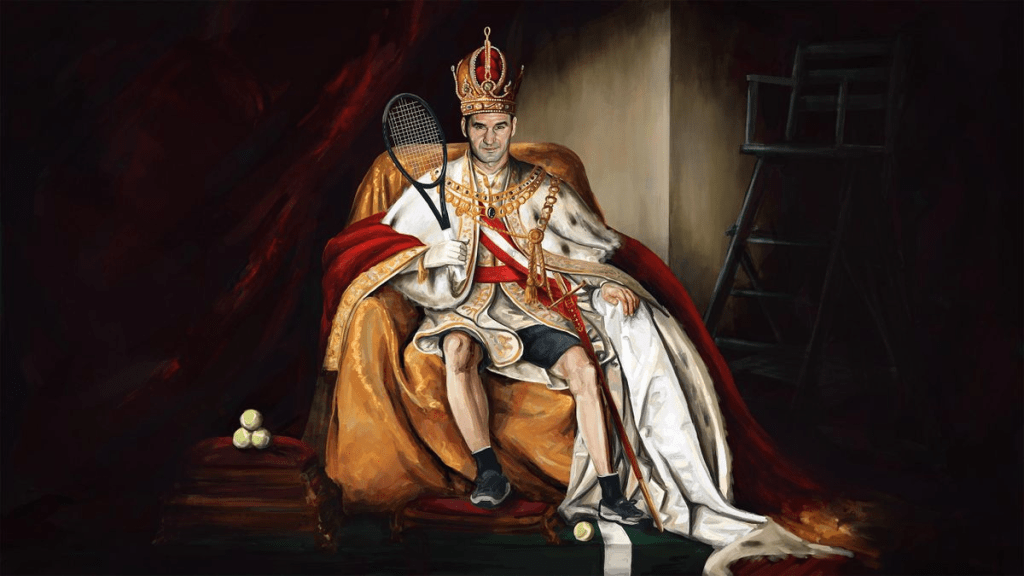
It has always been a matter of wonderment to me why, in the overall realm of things, poetry has invariably been placed a notch above prose in the pantheon of English Literature. I grant you that this is more a perception than a reality, but that is the general feeling one takes away. For instance, excellence in certain forms of sport is often likened to poetry. ‘Roger Federer’s backhand crosscourt is sheer poetry,’ you will hear television commentators gush. Ditto Diego Maradona’s ‘Goal of the Century’ against England in the 1986 World Cup in Mexico City. It was a close-run thing between Maradona’s magical goal and the Uruguayan television commentator, Victor Hugo Morales who went poetically berserk describing it. Similar poetic praise is reserved for a Virat Kohli cover drive, though we have not been seeing much of that in recent times. The late American poet and music critic Amiri Baraka (previously known as LeRoi Jones) once said, ‘Poetry is music, and nothing but music. Words with musical emphasis.’ He was a jazz enthusiast and an avowed admirer of the legendary Miles Davis, whose trumpet playing has often scaled poetic heights.

We all know that Shakespeare wrote many beautiful sonnets, but he is justly celebrated for the sheer magnitude and magnificence of his immense body of plays. We quote the Bard, day in and day out, consciously or otherwise, whenever we speak or write in English. And yet, to a lay person of the present generation, his plays read more like poetry than prose. Perhaps that is one of the reasons why it is more enjoyable to watch an enactment on stage of Hamlet, than to actually sit down and read the entire play, as you would a novel. After all, wasn’t it Shakespeare himself who said, ‘The lunatic, the lover and the poet are of imagination all compact.’? And just to drive home the point, the great man adds, ‘The forms of things unknown, the poet’s pen / Turns them to shapes and gives to airy nothing / A local habitation and a name.’  This is perhaps one reason why heightened sensations in any field of activity draw comparisons with poetry, whereas things more mundane tend to be described as prosaic. That’s just my impression and I am open to be taken issue with. Gently please, don’t land on me like the proverbial ton of bricks.

If I were to reel off a few names of great poets at random, say, Donne, Dante, Blake, Keats, Shelley, Wordsworth, Coleridge, Eliot, there would be a tendency on the part of people to roll their eyes heavenwards and heave a deep sigh as if to say, ‘those men knew what life and beyond was all about.’ Whereas if I were to invoke the names of a few great novelists, say, Dickens, Hemingway, Kafka, Conan Doyle, Austen, Brontë (all three of them), Waugh (the Elder), Wodehouse, V.S. Naipaul, the general reaction would be one of awe and respect. The crucial difference lies in the ability of poets to evoke a kind of ethereal ecstasy while the novelists, though hugely revered, tend to be viewed in more down to earth terms. This is not to put one literary form over the other. As I said earlier, it is just the way I perceive them. Truth to tell, I have never been much of a one for poetry. The poetry fanatics from English Literature classes would wax eloquent about Free Verse, Blank Verse, Sonnet, Acrostic, Villanelle, Limerick, Ode, Elegy, Haiku (you can never keep the Japanese out), to say nothing of sub-categories like Quatrain, Cinquain, Couplet, Sestet and several more. In more modern times, we have seen the emergence of Rhyming Slang, which the British hoi polloi is pretty adept at. Once the conversation gets into things like Iambic Pentameter, I scoot for the hills. Who knows, it is entirely possible that when John Keats felt a thirst coming on, he made a beeline for the nearest pub and declared to the bewildered bartender,‘O for a beaker full of the warm South / Full of the true, the blushful Hippocrene / With beaded bubbles winking at the brim.’Whereas a simple, ‘a large tankard of your finest ale please, bartender, and here’s a shilling for your trouble,’ would have more than met the case.

I felt, therefore, that I should set the record straight and turn my hand to a bit of poetry, if this be the first and last time I attempt it. I have tried my luck with limericks earlier, and according to most experts, I came a cropper. This time, I shall curb my ambition and go for a straightforward four-liner verse format. Quatrain, is it? Let’s just call it poetic license. So, here goes nothing. With apologies to all poets, past and present.

Let’s hear it for poetry
Though I am partial to prose 
If I can’t quite rhyme it
Don’t think me gross.

In India, politics is all
If Modi can’t crack it
We are up the spout
And Rahul just can’t hack it.

Then there’s the doughty Mamata
Forever crying hoarse
With an eye on the PM’s chair
Is it with her, the Force?

Yogi quietly watches the fun
Some say he is next in line
If Modi drops a hint
Watch the saffron sadhu shine.

What of the beleaguered Sonia?
On all sides being corralled
Can she find a way out
Of the mess that is the Herald?

All the while Tharoor speaks
Nineteen to the dozen
No one understands a word but
In social media he is buzzin’.

In Bengal the TMC frets
Over ill-gotten moolah
Arpita cries, ‘Not me, not me’
While Partho da swings on his jhula!

Over in bustling Mumbai
The ED closes in on Raut
‘I’ll see you in hell’ says our Sanjay
But for him it augurs a rout!

Arnab brings the roof down
On the Vadra-Gandhi clan
Rajdeep does much the same
Only with far more elan.

The Opposition was up in arms
‘Let’s talk GST, let’s talk inflation.’
The Treasury turned the other cheek
And said, ‘Why not corruption?’

China threatened to blow up Pelosi’s plane
Xi tried hard, the visit to stall
But Biden held firm
The lady sure has some gall.

Meanwhile, the US took out al Zawahiri
Who didn’t know what hit his shack
Biden celebrated from his secure White House
And told all Americans, ‘Watch your back.’

In old Blighty, the race is on
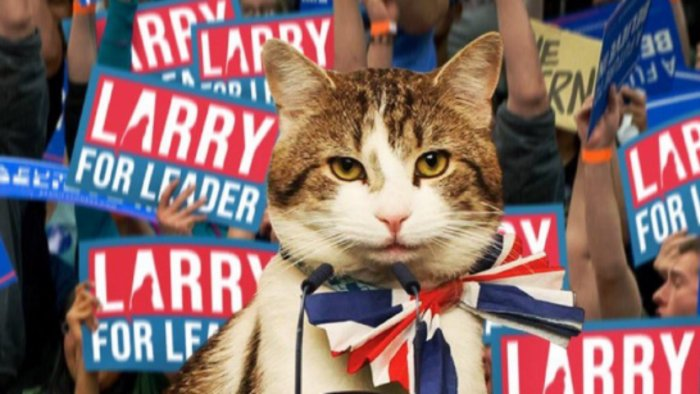
To see who will let the cat out
Nightly at Number 10
Is Rishi still in with a shout?

Russia’s shelling of Ukraine is unceasing
No one knows when this will end
Putin is pulling out all the stops
But Zelensky will not bend.

They say cricket and politics don’t mix
Ha, ha, who are they kidding?
Ask ex-skip Virat Kohli
Whose career is up for bidding.

The legend MSD they left alone
With him they had no beef
Captain Cool was too clever
From whose book they should take a leaf.

India is playing in the Caribbean
Is anybody following?
Does anybody care?
Only the BCCI seems to be wallowing.

What about the Commonwealth Games?
Some say we shouldn’t be there
Shuttling and wrestling for a few medals
Ah well, let’s dream to dare.

Shed a tear for poor, old Djoko
They said ‘no vax, no Slam’
‘No way, Jose,’ said the champ
‘I am Novak(s), you can all scram!’

Covid, please make up your mind 
Are you coming or going? 
Monkeypox has its foot in the door 
It's our minds you're blowing.

And that’s where I’ll end this try
Tilting at poetic windmills
I am no dab hand at it
Only prose will pay my bills.

I told myself at the outset that poetry is not my bag, but I am not very adept at taking good advice. Not even my own. But what the hell, one has to try something out in order to plumb the depths, as it were. Nothing ventured, nothing gained. Not that I have gained much from this exercise, but I have to say it was fun. I shall now proceed to inflict these rhymes on an unsuspecting world, and hope they will be a wee bit more charitable than I have been on myself. A few luminaries from the Dead Poets’ Society could well be turning in their graves on reading my overwrought rhymes. Serve them right, I say, for making me go through all that stuff in school about Skylarks, Country Churchyards, Highland Lasses, Mists, Mellow Fruitfulness and so on. They were all compressed in very small print in a fat, red book called Golden Treasury of Longer Poems. By the time we got to the 17th verse, we couldn’t wait for the end-of-class bell to ring. The only time the boys got excited was during Coleridge’s Christabel, when the eponymous heroine watches her well-endowed, dodgy pal Geraldine disrobe herself, and our English Master quickly turned the page to avoid having to read, at least for us impressionable teenagers, some graphic anatomical descriptions. Not content with this, Coleridge got right up our noses and proceeded to write his longest poem ever, The Rime of the Ancient Mariner. Poor Coleridge. Poor English Master. Poor students. All said and done, I shall stick steadfastly to prose, barring the odd poetic quote punctuated here and there, to show there’s no ill feeling. And finally, if someone can explain to me why (and how) ‘the mirror crack’d from side to side’ as Tennyson’s The Lady of Shalott cried, ‘The curse is come upon me,’I should be much obliged.


Tell me about it

Sharing the same language but……

There might be some debate as to exactly what percentage of the world’s population speak the English language, but there can be little doubt that it covers a very large swathe of the globe. After all, not for nothing did the Brits sail around the world a couple of centuries ago, seeking whom they may devour. While their avarice to conquer and stay on as uninvited guests for long periods has been resented by the colonised, and rightly so, we need to graciously acknowledge their sagacious contribution in leaving behind a language that binds many nations and keeps the wheels of commerce well oiled. Else we might have been bumbling our way through with French, Dutch or perhaps, Portuguese. It is true that in each geographical region, the English language has been suitably adapted to cater to its own vernacular needs, resulting in uniquely different accents and emphases on words and phrases. Why, in India the way a typical Bengali speaks English is vastly different from how his compatriot in Chennai would hold forth in the same lingo. The native mother tongue influences the English pronunciation and phraseology. In that respect we Indians laugh at ourselves all the time, good-naturedly mocking our fellow countrymen and women.

The rapid spread of English has been, by and large, helpful though it has provided much comic relief when people attempt to mimic the way English is spoken in different tongues. All those years ago, British comic actors Peter Sellers and Spike Milligan, through their immensely popular Goon Show, attempted to create a ‘one-size-fits all’ Indian accent and had their admirers from all over the world helplessly rolling in the aisles. Listen to the song Goodness, Gracious Me! featuring Peter Sellers and Sophia Loren, recorded as a promo for the film The Millionairess (though excluded from the main film) and you will know what I mean. A more recent reprise of the same song, enacted by Rowan Atkinson (whom I otherwise admire) falls way short of the original.

My own preoccupation for some years now, has had to do with the wonder that is the way English is spoken in the United States of America. Notwithstanding allowances made for marginal differences in the way a Texan would drawl as opposed to a New Yorker’s staccato, rapid-fire way of communicating, one can safely club American English into one unique slot. In India, for obvious reasons, most of us have been more used to the British way of speaking and writing English when it comes to spellings, idioms, phrases, aphorisms and so on. Bernard Shaw’s fictional Professor Henry Higgins (Pygmalion and My Fair Lady) famously complained that ‘in America, they haven’t used it (English) for years.’ The reason American English intrigues me is that, while they seem to be speaking English, there are many phrases and expressions they employ that continue to baffle me. The Australians too speak English in their own, unique way. Listen to former Australian cricket captain Ricky Ponting or eccentric tennis star Nick Kyrgios, speak. You will need an interpreter to translate what they are saying into decipherable English, but that is simply the accent. The Americans appear to have a vocabulary all their own. That said, now that we have cable television and any number of American TV serials and films readily available at our finger tips, English as she is spoke, particularly by the younger generation in India, is slowly but surely morphing from the Union Jack to the Stars and Stripes. And who are we fuddy-duddies to complain?

Several years ago, on my first visit to New York City, I called my hotel from the airport where I held a reservation. The conversation went something like this.

‘Good morning, my name is Subrahmanyan. Not Submarine. No, no, I am not from Suriname. My name is Subrahmanyan, and you are holding a single room for me. Could you kindly confirm the same? I should be arriving in about an hour.’

‘Can you spell that for me, please? I didn’t quite catch that. Just the first five letters should do it,’ replied the chap at the reception.

‘Right, here goes. S U B R A…’

‘Got it. Pretty long name, huh?’

‘Sub-rah-man-yan. Just four syllables. No longer or more unpronounceable than Zbigniew Brzezinski.’

‘How much?’

‘Never mind. The name, for the last time, is Subrahmanyan, Suresh.’ I was beginning to get just a little peeved.

‘Check. Copy that.’

‘How do you mean check, and copy what? Anyhow, you can copy it wherever you like. Just wanted to be sure of my booking. And by the way, Zbigniew Brzezinski was a former National Security Advisor of your great country. Just so you know.’

‘Whatever,’ he responded, laconically. I also suspect he was chewing gum.

I was to learn later that copy that means ‘noted and understood.’ We hear that often enough now in American movies. Back home in India, we were entertaining an NRI family from New Jersey. The husband and wife were to land up at our place for high tea along with their teenage son, who was finishing his schooling in the US. The couple arrived bang on time, the youngster was coming from elsewhere. While we were chit-chatting, the time flew by and their darling boy was yet to put in an appearance. The mother became quite agitated and called the tardy scion on the mobile and spoke in an exaggerated Yank accent. ‘Where are you, Raja? You were supposed to join us an hour ago, da. Will you drop whatever you are doing and come here already?’

Come here already? Never heard the word ‘already’ used that way before. Sounded like a contradiction in terms. In more recent times, particularly on streaming video, this phrase has become increasingly commonplace, and Indian kids, be they from the US or from India’s urban elite, are quick to latch on. To complete that high tea story, when the errant boy did arrive, he examined the generous fare on the dining table and exclaimed, ‘Goody, goody gumdrops! Am I going to pig out.’ Ah well, each to his own, I suppose. Speaking for myself, immense hunger would have driven me to venture, metaphorically, that ‘I could eat a horse.’ As for G.G. Gumdrops, the Americans and the British have been squabbling for long over who owns the copyright.  Let me quickly add here that phrases like I don’t care in place of ‘I don’t mind’ and my bad in place of ‘I am sorry’ have already become passé, a cringe-worthy part and parcel of our daily lexicon, such that I shan’t elaborate on them. Suffice it to say that, so far, so bad.

Let’s move along to behind the eight ball. The phrase, drawn from the game of billiards or pool, is meant to indicate that you are falling behind the competition in whichever subject is under discussion. ‘My friend, let me caution you that in the matter of winning the confidence of your boss, you are clearly behind the eight ball as compared to that greaseball, Jack. You had better buck up.’ I actually like this phrase, but if used indiscriminately, you will just come across as a boor and a show off.

I first came across the word period, when I joined school; 9 am to 10 am was Geography period, 10 am to 11 am was History period and so on. To say nothing of the British Period, the Mughal Period, the Chola Period, et al. We now know that this word has very many different meanings and shades, and I shan’t go through all of them here. (If she is having her period, show some understanding.) It is a common enough word. Period can also mean ‘full stop,’ and in the bygone days when we dictated letters, we would use the word frequently. ‘Dear Sir, Thank you for your kind enquiry about our tyres for animal-drawn vehicles period.’ Your smart secretary would automatically translate that to full stop. In the more trendy, conversational style of the present day, one is apt to say something like, ‘I do not wish to dwell on this subject anymore. Period.This, to indicate firmly, that the topic is irrevocably closed.

Here’s one that has not quite gained currency in India, but it will only be a matter of time. ‘Hey look, I have no time for late night parties. I am working the graveyard shift.’ Those swotting away in India’s IT and services sector speaking to clients all over the world, who start work at around 11pm and slog all night till the sun comes up, work the graveyard shift. It won’t be long before some of your friends start mouthing this phrase, if they aren’t already at it. I was also struck by yet another unheard-of beauty. ‘Wow! Where did you get your hair done? It’s absolutely on fleek!’ I have it on good authority that the expression denotes appreciation for a job perfectly done.

I end this far from comprehensive rumination on spoken or written expressions one comes across from ‘the land of the free and home of the brave,’ spreading like a rash to other parts of the world. If you have come this far with this piece, lolling back and going out of your way to find nasty things to say about it, you are nothing more than a mean, old Monday morning quarter-back. The phrase is obviously derived from American football, which is not football at all. At least, not as we know it. Why this hyper-critical quarter-back chooses Monday mornings to vent his spleen on his colleagues is an even greater mystery. I will now need to scour Wisden’s cricket almanac to find a suitable local riposte. At that I may not even get to first base. I think I’ll just take a raincheck, ride shotgun with my friend in his Audi and shoot the breeze.

American English. Some may say it sucks. Will my English masters in school have approved? Not on your nelly (that’s British), and they are unlikely to have said, no can do. My 21-year-old grand nephew just called me from Chennai. As we were ending our brief chat, he said, ‘I’ll ring off now. Peaceful.’ This, for a change, may be a recent Indian coinage but puzzling, all the same.

Tell me about it.

Are we ‘Ready for Rishi?’

When Joe Biden assumed office as President of the United States on January 20, 2021, here in India there was much excitement. Not because anyone in India gave a toss about Joe Biden. The appeal of American Presidents to the Indian public, both domestic as well as the diaspora, depends largely on whether they are good looking or so ridiculous that you have to pay close attention. On that score both John Kennedy and Donald Trump, for those very reasons (you can work out which applied to whom), merited our keen interest. In the case of Biden, our curiosity in India had much more to do with his vice-presidential candidate, Kamala Harris because of her Indian antecedents. That she was also part West Indian on her father’s side did not seem to matter. Perhaps some sections of the Indian public interpreted West Indian to mean Mumbai and not Jamaica. However, for a few, brief shining moments, those of us from south India, particularly Chennai and its environs, went ballistic with joy. Reams were written in Indian newspapers about Kamala’s maternal family background from a conservative Tamil Brahmin household. Unknown relatives crawled out of the woodwork. Which also meant that her love of the cuisine from that part of India, including idli, vada, dosa and curd rice received as much billing as her untested political nous. If she also enjoyed spare ribs and beef steak, we did not mention it.

All very droll. That was over a year ago, when Kamala Harris was sworn in. In that period, even if she was not being publicly sworn at, it was a near thing. At any rate, she appears to have gone clean off the radar. Not even a blip. No one talks about ‘our Kamala’ any more. Not even in suburban Chennai. Lotus (Kamala in Sanskrit) is unlikely to become POTUS, unless Biden decides to throw in the towel before his term ends. I have heard tell that a soothsayer has predicted the lady could get the top job before Biden’s term ends!  Such is the fickle, ephemeral nature of fame.

That preliminary introduction about Kamala was prompted by the current hullabaloo we are witnessing over the possible ascension of an Indian-origin candidate, Rishi Sunak, as a potential successor to the ousted Prime Minister of the United Kingdom, Boris Johnson. The Indian media, social circles, our neighbours, friends, relatives and possibly their pet dogs, are all waiting with bated breath to see if young Rishi (he is only 42) can become the first non-white Prime Minister of Great Britain, albeit a tad wet behind the ears. Incidentally, my friends who are clued up on these things, assure me that the terms United Kingdom and Great Britain (and by inference, even England) are freely interchangeable. The golden rule appears to be that if they win the football World Cup, which they did against West Germany 4 – 2, in 1966 at Wembley (aided by a controversial third goal), or an Olympic gold, the cry will ring out, ‘another triumph for Great Britain.’ Whereas if they lose, it will change to ‘England loses again.’ It’s complicated but it is what it is. Scotland, Wales and Northern Ireland don’t count.

Let’s get back to the bright-eyed and bushy-tailed Rishi Sunak. Straight off the bat, let us recognize that the aspiring PM is no more Indian than Boris Johnson is Punjabi. Sunak’s parents came over to the UK from East Africa in the 1960s, as did thousands of others of their ilk, thanks to the tender ministrations of Idi Amin, and ran a successful if modest pharmacy, which may or may not have been a traditional corner shop. Sunak was born in Southampton and the rest of his meteoric academic and political career has been well documented. I shan’t go over them again. My preoccupation is more to do with why we in India are going all gaga over someone who is attempting to become the Prime Minister of a nation that ruled India for close to 200 years. Is it the Indian origin thing? I haven’t even heard of a family in India called Sunak! Nasser Hussain captained England’s cricket team and worked overtime to convince his countrymen that he was English, and not just a fair-complexioned lad from Madras with a posh public-school accent. Is it the pigmentation? Could be, but if you walk around Central London and hurl a brick randomly into the middle distance, you are more likely to bean someone of an Asian, African or Middle Eastern descent. Let’s cut to the chase. I’ll tell you why we in India are getting super excited about Rishi. He is married to a true-blue Indian girl. That’s why! He is our son-in-law; Daamaad, Jamai babu or Maapillai, depending on which part of India you hail from.

There’s more. Rishi’s father-in-law, N.R. Narayana Murthy can safely be described as one of the fathers of India’s IT revolution. A highly principled, self-made man, he is one of the many poster boys in India’s rise as an economic power house, thanks to the company he founded, Infosys. Not that Mr. Murthy would himself care to be described as a poster boy, he being of a somewhat modest and self-effacing disposition. His educationist and philanthropist wife Sudha Murty (she drops the ‘h’ in her surname, insists her husband’s name is spelt incorrectly!), is a woman of substance in her own right, seen as a role model for the betterment and upliftment of women, children and the downtrodden. She is a prolific writer having authored many books, in particular for children, and is ever ready to reach out to the needy with a helping hand. And their daughter Akshata it was who said ‘Yes’ to Rishi Sunak when he popped the question to her on bended knee in the sylvan surrounds of Stanford. And now, dear reader, can you at all be surprised that in India, it is a completely different kind of rishi all the way from the UK who is hogging the headlines as opposed to the ones we are so accustomed to seeing? This one is suited, booted and clean-shaven, and speaks with an Oxbridge accent. Not a tinge of saffron anywhere.

The rishi double entendre is even more apt when you consider the fact that Rishi Sunak is reportedly a practicing Hindu, and that he took his oath as Chancellor of the Exchequer with his hand placed firmly on the Bhagavad Gita. Should he ascend to the exalted office of Prime Minister and take that short hop from No.11 to No.10 Downing Street, Britons will be counting many ‘firsts’ in their rich political history. This also raises a pertinent question. When push comes to shove, is a predominantly Christian nation such as the United Kingdom ready to entertain a devout Hindu (one assumes he is devout) as their chief executive? In order for that to happen, Sunak has to take on some stiff headwinds from his shortlisted colleague, Liz Truss, who is fond of saying, ‘we’ll hit the ground running.’ While the lawmakers from Britain’s Conservative party have selected these two worthies, the complex voting process will take place through a balloting system involving some 200,000 party members in early September. Notwithstanding Sunak receiving more votes than his rivals in the initial phase, Liz Truss could well be holding all the aces. She could be following in the footsteps of Margaret Thatcher and Theresa May as the third woman Prime Minister of ‘this sceptered isle.’ There’s everything to play for. At some point during these proceedings, erstwhile Prime Minister Boris Johnson will quietly make his way out of what can surely be described, in his case, as ‘10 Drowning Street.’ If you read that gag in one of the British tabloids, remember you saw it here first!

Meanwhile, not to be outdone, we in India are witnessing our own history in the making. The ruling dispensation’s candidate, Droupadi Murmu, is all set to take the oath as India’s 15th President, and the second woman to do so. The uniqueness is derived from the fact that President Murmu (get used to that name) hails from a tribal community in the state of Orissa. The BJP has once again caught everyone, particularly the opposition parties, completely off guard. The move is seen as being far-reaching, statesmanlike and above all, a sure-fire vote catcher – depending on whether one is a supporter or a cynic of the government in power. India’s Prime Minister, meanwhile, sits back comfortably and smiles beatifically. Like the cat that’s had its cream.

A final thought on what it could mean for India if Rishi Sunak does, indeed, make it to 10 Downing Street, provided he can get past Liz Truss. Not very much, I don’t think. Rather like Kamala Harris, Rishi will need to keep an arm’s length distance from his ancestral nation, lest his countrymen come down on him like a ton of bricks. The British press are already pooh-poohing his ‘humble-humble’ background claims. His wealth and their sources are being closely examined with a fine toothcomb. In other words, he will have enough problems running the country without pointedly cosying up to India. This may create some domestic unrest at the Sunak household at No.10, but that’s the way the cookie crumbles when you sit on the hot seat. However, let us not get ahead of ourselves. As I put this piece to bed, the smart money has Liz Truss with her nose in front as the odds-on bookies’ favourite. She may well pip Sunak to the post in this two-horse race, in what could be a photo finish. Sunak’s nick name to some of his close friends is ‘Hedgie,’ derived from the fact that he had earlier worked in the hedge fund business. He will certainly be hedging his bets now. But just in case Sunak defies the odds and pulls through, is India, in the words of his campaign plank, ‘Ready for Rishi?’ Maybe, maybe not. Either way, I shan’t be holding my breath.

Postscript: This could be apocryphal, but a group of Indian tourists to the UK, visiting Winston Churchill’s burial site at St. Martin’s Church, just outside Blenheim Palace grounds, swore they felt something turning in his grave!

Music that shakes and stirs

Monty Norman and Sean ‘Bond’ Connery

I haven’t understood a bar of music in my life, but I have felt it. Igor Stravinsky.

Monty Norman died earlier this week at the age of 94. I am sure most of you are going, ‘Monty who?’ Which is hardly surprising. My reaction was no different. Then again, on reading his obituary and discovering that this was the man who composed the unforgettable signature theme music for the James Bond films, I sat up and took notice. The music was indelibly imprinted on my mind, but the composer was an unknown quantity. Which is often the way. People of my generation have lived with the James Bond theme since we were barely into our teens. Never mind if the screen Bond switched from Sean Connery to Roger Moore to Daniel Craig and a few other lesser mortals in between, Monty’s theme tune remained constant. There were a few songs as well, thrown into the mix of this famous franchise by the likes of Matt Monro (From Russia with Love), Shirley Bassey (Goldfinger, Diamonds Are Forever, Moonraker), Paul McCartney (Live And Let Die) and more recently, Madonna (Die Another Day), Adele (Skyfall), Billie Eilish (No Time To Die) and several others too numerous to mention. Those of you who remember the very first James Bond film Dr. No (I watched it again recently on cable), will recall a popular calypso/reggae-inflected number, Underneath the Mango Tree, set in the sunny beaches of Jamaica. The credit for that composition also goes to the self-effacing Monty Norman. Lest we forget, many of us also devoured Ian Fleming’s Bond books, which attained glamour and an iconic status on the silver screen.

To get back to the main, unforgettable James Bond theme music, I was fascinated to learn that the composer, Monty Norman, while struggling to hit upon the idea for a tune, arrived at his jackpot theme from something he had composed much earlier but was put away in cold storage. At the time, he was invited to compose the music for a stage play based on V.S. Naipaul’s acclaimed novel, A House for Mr. Biswas, and he came up with this very Indian type of raga-based, bouncy melody – tabla and sitar thrown in for good measure. As it happens, for reasons unknown, the play never saw the light of day and the tune remained hidden; ‘born to blush unseen and waste its sweetness on the desert air,’ as the poet Thomas Gray might have put it. The composer, our Monty, decided it was high time the tune received its due recognition. He unearthed the song from obscurity, reworked it completely and voila! History was made. Ironically, the Bond franchise, over the decades has been celebrated for a variety of different reasons but Monty Norman was never one of them – at least not in the glare of public limelight and it was only in his passing that his name has received its overdue accolades. The Monty(s) most people I checked with in India were aware of included the zany sitcom Monty Python, General ‘Monty’ Montgomery and even lesser-known English cricketer, the Sikh Monty Panesar. This despite the fact that the Monty under discussion was honoured with the Ivor Novello Award for the ‘James Bond Theme,’ used in the films’ opening sequences or most intense action scenes.

There is a spicy twist to this Monty tale. In London, the producers of the James Bond films decided to hire composer John Barry to rearrange Monty Norman’s original track. He tweaked it around a bit and over time Barry’s name became inextricably linked with the Bond sound and he was credited as its creator. Naturally, this did not sit well with Monty. Hackles raised, he approached the courts in 1997 to claim authorship of the work. In 2001, a jury returned a unanimous and popular verdict in his favour. Bully for him, say I. Credit where credit is due. I can express it no better than The Wall Street Journal’s correspondent, Marc Myers. ‘For millions of baby-boomer males who saw their first car chase and sex scene in a Bond film in the ’60s, the theme song stirs powerful psychological coals, flipping a primal switch as images of silencers, casinos, bikinis, gin and gadgets flood the male brain.’ Not forgetting the ‘medium dry vodka martini, lemon peel. Shaken, not stirred.’

While we remember the signal contribution of Monty Norman’s music to the James Bond franchise, I would like to take this opportunity to put together a brief and highly subjective selection of other movies where the theme music has, in my personal opinion, been truly stirring. I hasten to add that I am not talking songs here, just the music that the film has come to be inextricably associated with. These are not in chronological order. I am merely putting them down as it occurs to me. A kind of top-of-mind exercise, if you like. In keeping with my observations on Monty Norman and the Bond films, the composers of the music for these films were not known to me. I had to look them up, which only underscores the whole point of this piece. I am not here referring to musicals like The Sound of Music, My Fair Lady, West Side Story, South Pacific, The King and I, Hair, The Phantom of the Opera, Cats and so on, which were peppered with songs every few minutes. My preoccupation is with dramatic films enhanced by a powerful and emotive musical score.

Let’s start with Lawrence of Arabia (1962). This David Lean spectacular with a multi-star cast swept us off our feet in 70 mm splendour and magnificence. When the theme music broke some time well after the opening sequence (flashback to Lawrence’s fatal motorcycle accident) and kept being repeated time and again, rising to a crescendo, the experience was truly elevating. Many of us went to the theatres to see Lawrence multiple times as much to enjoy the music as to wallow in the histrionic brilliance of Peter OToole, Alec Guiness, Anthony Quinn, Omar Sharif and the rest of the glittering cast.

We again turn to a David Lean magnum opus, Dr.Zhivago (1965), starring Omar Sharif (he was everywhere) and Julie Christie and ‘a cast of thousands.’ The theme music, composed by Maurice Jarre (I looked it up) became a musical leitmotif to remember for all time to come. The tune was so hummable that popular singers fell over each other, with lyrics added, to record a memorable hit song, Somewhere my love. Connie Francis and Paul Webster were among the earliest to clamber on to the hit parade bandwagon as Lara’s Theme was on everyone’s lips.

Speaking of Lara’s Theme, I will now expend a few lines on, believe it or not, Tara’s Theme. The close similarity of the two names is entirely coincidental. We are now turning the clock back a few decades to that other all-time classic, Gone with the Wind (1939). With Clark Gable and Vivien Leigh heading up a strong cast, the film as well as Margaret Mitchell’s book on which it was based, is indelibly stored in our collective memory banks. Contrary to what I might have imagined, Tara is not the name of a character in the film but that of a fictional plantation in the state of Georgia where much of the action takes place. The theme music again, is one for the ages. Over the years, including quite recently, there has been some controversial static over the film (and the story) being ‘racially insensitive’ and some theatres even pulled the movie under public pressure. That has never come in the way of the film retaining its iconic status. As the hero Clark Gable’s character, Rhett Butler’s throwaway line at the end of the film says in a different context, ‘Frankly my dear, I don’t give a damn.’

The list of Hollywood movies with a memorable theme music soundtrack is long and many of you reading this can add sumptuously to the list. This is to prevent people writing in with ‘What about Casablanca?’ or ‘You forgot to mention Bridge on the River Kwai.’ And so on. However, I shall end this nostalgic contemplation of great film musical themes with The Godfather trilogy. Nina Rota, remember the name, will forever be celebrated and lionised for the music soundtrack of the entire Godfather franchise. As I had suggested at the top of this piece, the name does not roll off the tongue easily, but that does not detract from his monumental contribution to the success of The Godfather I, II and III (1972, ‘74’, ’92). As much as we loved Brando, Pacino and DeNiro as well as those unforgettable sequences that all but idolised the Mafiosi’s way of life, the haunting musical theme and its umpteen variants in the trilogy quietly sank into our subconscious and has remained there, never to be forgotten.

Theme music in films. It is a vast subject worthy of a doctorate dissertation paper. I should be surprised if somebody has not already done it. I have merely attempted to share a soupçon from my own experience. While songs are great and we all love to sing them, pure, wordless music can at times ineffably express the inexpressible. We have much to thank Monty Norman and the movie industry for.

Dear diary

A faded page from Anne Frank’s diary

The nicest part is being able to write down all my thoughts and feelings; otherwise, I’d absolutely suffocate. Anne Frank, 16 March 1944.

Anne Frank’s diaries are now part of literature’s legend and song. The young Jewish Dutch girl, who was gifted a diary in 1942 when she was barely 13 years old, poured her heart out in those invitingly blank pages. Over the next couple of years, hiding in a secret attic in Amsterdam to keep away from the depredations of Nazi occupation, she wrote prodigiously; about her growing up in such forbidding conditions, about her sense of self and above all, about the ever-present danger of capture and the dreaded concentration camps. In spite of all that, she constantly exuded positivity in her pages and thought nothing but good in the human soul and spirit. The best-selling book, The diary of Anne Frank ends on a high note of optimism. Describing herself as a ‘bundle of contradictions,’ Anne Frank had this to say about her general outlook on life. ‘As I’ve told you many times, I’m split in two. One side contains my exuberant cheerfulness, my flippancy, my joy in life and, above all, my ability to appreciate the lighter side of things.’ She could have been speaking for me as far as ‘appreciating the lighter side of things’ is concerned. I can barely bring myself to imagine what the darker side of things must have been for Anne.

My thoughts, however, are concerned more with the humdrum aspects of life that we used to post in our own diaries many moons ago. If that suggests going from the sublime to the ridiculous, so be it. Question: do people maintain personal diaries nowadays? I have met the odd person who does, odd being the operative word, and chances are that these oddities were born during the forties and fifties or perhaps even earlier. This is not to say that stationers, book sellers and some organizations do not print diaries (and calendars) which are avidly sought after, particularly during the dawn of a new calendar year. These specimens are essentially meant for those who are not quite au fait with the digital versions on their mobile phones or personal computers. I have also been amazed at how, when November and December came around, so many people would be seen running helter-skelter looking for diaries or calendars to cadge from wherever they could lay their hands on. It was almost as if diaries were about to become extinct. And that is almost true.

 For the most part these diaries are the exhaustive repositories of laundry lists, provisions purchased, sundry expenses, not to mention birthdays and other milestones that one needs to be reminded of in order to send flowers or make that courtesy phone call. It carries infinitely more weight than being reminded by Facebook. My father, who passed on in his late eighties about twenty years ago, was a stellar example of a man who jotted down all manner of details about his family and close friends in a tattered and torn diary that was well past its sell- by-date. His diary would also contain faded newspaper clippings of anything that he thought might be of interest for future reference. If I was lost in trying to hunt down some old news item about somebody in the family, all I needed to do was ask him. Why his personal diary was considered a safe haven for these snippets, which also worked as bookmarks, was a closed book to me. That said, I know many people who acquired several diaries and simply stowed them away in a safe place, never having even opened them! However, try prising one of these moth-eaten items out of them and they will get all cagey and evasive.

During our boarding school days, and here I am harking back to the swinging 60s, some of us boys maintained little pocket diaries, or just a plain exercise book which worked just as well. Only we had to write in the date on which we were entering our profound thoughts. The school administration encouraged this activity during our spare time and holidays, as they felt it would improve our writing skills. That was a laugh. Most of the boys would vent their spleen on other boys, or even on the masters, in ways hardly calculated to improve their knowledge of the language. If the school honchos got their grubby hands on these incriminating tomes, there was hell to pay but that was a risk the boys were willing to take. Here are some samplers, drawn from varying imaginary dates. I have randomly chosen the year 1963 for no reason other than the fact that President John Kennedy was assassinated that year, Martin Luther King made his famous ‘I have a dream’ speech and not to put too fine a point on it, I discovered The Beatles. These milestones leave a lasting impact.

25th July, 1963 – Acted in our school play, ‘The Language Shop.’ Was cast as the Weak Verb. Hell’s bells! Why couldn’t the director give me the role of the Proper Noun or something. I got awful stick from the Transferred Epithet and the Definite Article. The Indefinite Article, like the Weak Verb, was considered a pariah. Enough to drive anyone up the wall. I was the laughing stock of the school.

Actually, the play was pretty smart. Plenty of puns and humour calculated to enable us boys to appreciate the language better. But Weak Verb? I deserved better. I could have been the Strong Verb, if there is such a one. Wren & Martin, what say you?

17th August 1963 – Somebody has torn a huge hole in my mosquito net. I think I know who it is. It has to be that cowardly cur, Charlie the Chump. You’ve got it coming Charlie boy. Where is that old bottle of ink?

Not the finest example of the language of Shakespeare, but more on the lines of Enid Blyton’s Famous Five. Always remembering that we were in our early teens. As to what the chronicler proposed doing with ‘that old bottle of ink’ is anybody’s guess.

21st August 1963 – I got just 27 marks for my geometry paper. I first thought it was out of 50, until I was told by our maths teacher Mr. Caleb, that it was out of 100! Meaning I plugged! Shit -o! What am I going to tell my pop when I write to him this weekend? Bloody Pythagoras!*

That was a typical entry. ‘Plugged’ by the way, was schoolboy slang for failed. I don’t know what it is, but we always came out of our exam halls exuding disproportionate confidence. ‘I think I maxed it,’ was the standard, hubristic response to being asked how we fared. We might have cried into our pillows after lights out at night, but no one noticed. Matron had to deal with plenty of moist pillows in the dormitory next morning.

*As this blog is being put to bed, news has just filtered through, that educationists in India have questioned Pythagoras’ theorem and Newton’s apple gravity claim as being possibly fake and that they have most likely taken their posits from ancient Indian texts. Mera Bharat Mahaan!

29th August 1963 – I told the skip not to place that fat slob Ganga at first slip, but does he listen? He goes and does just that, and a dolly catch spilled off my bowling. Butter fingers! Screwed up my bowling analysis. I shall make sure to grass the next catch that comes my way. You wait and watch.

Ah, school cricket politics. It was worse than what we witness now at the BCCI. The fight for a place in the school eleven for any representative game was fiercely intense. Those who missed out made no bones about what they thought of the selector, namely, the poor games master. Invective was hurled, behind closed doors; or closed pages, naturally.

2nd September 1963 – How the hell did he pick Yousuf ahead of me? And why Ranjit, for God’s sake? Neither of them can hold a bat straight and they are the biggest, what’s the word, ah yes, liabilities on the field. Something very fishy going on here. I shall send an anonymous letter to the Warden.

22nd November 1963 – One of the house prefects comes barging into our dormitory early in the morning shouting, ‘John Kennedy is dead. Shot by some crazy lunatic.’ Big deal. What was John Kennedy to me? I was much more interested and excited by the news that The Beatles have released their second album ‘With The Beatles’ on that very day. Their debut album, ‘Please, Please Me’ was also released earlier in 1963. I mean, for a 14-year-old in the early 60s, given John Kennedy vs The Beatles, who will win? Go figure.

There you go. Most of us boys were not precocious beyond our years to grapple with deep, contemplative thoughts about the world, the theory of evolution or delve into theocratic or philosophical thoughts. Cricket, comics, classroom capers and pop music tended to fill our waking moments. Oh yes, girls did occupy our thoughts now and then and a typical diary entry would go something like this:

November 26th – Four of the boys went to visit their sasses today. They came back with autograph books for some of us boys to sign on the ‘Wall of Friendship.’ Guess what, I am on the list of three of them. What do I write on them other than signing the damn things? And why was I not on the fourth list? Woe is me! I shan’t sleep tonight.

In case you were wondering, ‘sasses’ was school shorthand for sisters. Anyhow, such was the childish silliness that our diaries were filled with. If you ask me why we were not inspired by the likes of Anne Frank, the answer is simple. We were not even aware of her till many decades later, and then too only because of her diaries. If there are those in 2022 who maintain diaries and jot down their thoughts and activities, I doff my metaphorical hat to them. I would like to maintain a diary again but the moment has long since passed. I write blogs instead. Oscar Wilde, who always had something memorable to say about anything at all said, ‘I never travel without my diary. One should always have something sensational to read in the train.’ Most of us don’t lead the kind of sensational life Mr. Wilde did. Which is just as well.

The law is not an ass

The sitting judge at the Delhi High Court (take a bow, you wigged worthy) has just ruled that a woman is perfectly within her rights to donate any organ from her body to a cause she deems fit without seeking prior permission from her husband. In the legal argot so favoured by judges, it was noted that applicable rules did not mandate any ‘spousal consent’ in case of organ donation to a close relative. Adding, quite tersely, that ‘she is not a chattel, it is her body.’ Hear, hear. All you husbands out there contemplating sympathy from our justice system, you are duly warned. If your wife comes home one of these evenings and announces that she has just divested herself of one of her body parts in a good and noble cause, you cannot fly into a mad rage and start flinging the crockery around and haring off to courts. In this particular case, the body part concerned was one of the woman’s kidneys which she decided to donate to her father. Her kidney, her father, she may do as she pleases. No prior consent from her hubby required. As any student of medicine will tell you, a human being can lead a perfectly normal life with just one kidney, so what is all the fuss about? Two kidneys are not entirely surplus to requirements (they were placed there for a purpose) but push comes to shove, one is enough, ‘twill serve.

That appeared to be the broad view of the honourable judge of the Delhi High Court. Not sure if the estimable purveyor of justice, while pronouncing the verdict recalled Hamlet’s memorable line, ‘There are more things in heaven and earth, Horatio, than are dreamt of in your philosophy.’ Had he done so, he would have been moved to paraphrase Shakespeare while admonishing the husband, ‘there are more things to worry about than your ego. Your wife donated her kidney to her dad. The matter ends there, the law does not require her to obtain an NOC from you, so let’s have less of your chauvinistic protests. Mr. Bumble from Oliver Twist might think “the law is an ass,” but we beg to differ. Take her to a nice movie, and dine out afterwards. That’s the least you can do to show your appreciation to a noble gesture.’ Well said, m’lud. A judge after my own heart. Knows his Dickens as well.

This unambiguous ruling clearly puts the husband in a bit of a quandary. Taken as a precedent, as all judicial rulings generally are, husbands across the land will be fretting every time their wives come home late in the evening, wondering if they are in possession of all their anatomical parts with which they were born, or have they been scattering parts of their body to the winds, unmindful of domestic consequences? Enough to put any husband off his dinner. The following exchange could be a typical conversation at a couple’s home, after the husband returns late from work to an empty home, his wife yet to return from work. She is normally back earlier than her beau. He has just helped himself to a drink when their merry cocker spaniel lets out a piercing, happy yelp indicating that the good wife has just driven in. Dogs know these things. She lets herself in quietly.

The husband opens the proceedings. ‘Hullo darling, long day? You are never this late. You look a bit bushed. Everything all right?’

The wife, after dealing with the customary passionate greeting from the spaniel, responds. ‘Why do you ask? Why should everything not be all right?’

‘No, no, simply asking. Another tiring day at the office, eh? You normally get home by six, it’s half past eight now. Just wondered, that’s all. Are you sure you are feeling fine?’ The husband was obviously fishing and his better half could sense that.

‘You seem to be wondering about things a great deal. I come late one evening and you seem to be imagining all kinds of things. Precisely what is it that you are concerned about? I am not having an affair, if that’s what is bothering you.’ She was clearly a bit tetchy, and it showed.

‘That is uncalled for and beneath you. Look, any responsible husband would be concerned if his wife comes home unexpectedly late. You should be happy, not become irritable simply because I asked after your welfare. But since your brought it up, why have you covered your left ear with the end of your sari?’

‘What?’ The lady of the house was beginning to lose it.

‘Just curious, that’s all,’ replied the hubby trying to sound calm. ‘I mean, you normally never cover your head with the pallu, and yet here you are, only your left ear covered whereas the right ear is fully exposed and looks as normal as any right ear should. What gives?’

‘My dear husband of fifteen years, can you please explain what is behind this incoherent jabbering. Is that your first, or seventh large peg? You are not making any sense. Are your sodium levels dropping again? Should I call the GP?’

As she was making these inquiries after her husband’s health, the offending sari end dropped to her shoulder and it was plain that her left ear was fully in place.  No bandage, no Van Gogh syndrome visible. While that brought him some relief, he now started worrying about other parts of her body. He muttered to himself, ‘thank heavens for that.’

She was beside herself. ‘Thank heavens for what? Look, I am going batty here. What is your problem, exactly? I’ve had a difficult day at the office, and I come home to this. Will you kindly explain what’s biting you? Perhaps we should drive you to the hospital and get a quick check up done.’

He calmed down. ‘Look my dear, let me come clean. I have been reading about how a judge in Delhi ruled that a wife need not seek her husband’s clearance to donate any part of her body to someone, especially her close relative, if she so desires. If you have any such intention, you will talk to me first, won’t you? Don’t think of it as seeking permission or anything like that, but just to let me know. A second opinion is always useful, if you wish to go through life without one of your big toes. Albeit in a good cause, of course.’

‘You really have gone bonkers. And you thought I might have donated my left ear to someone? I know where you are getting all this from. I too read the papers. That was a case of a woman who donated her kidney to help her father’s critical medical condition. The judge was merely emphasising that her husband’s permission was not mandated by law. End of. Tomorrow, God forbid, if you needed a kidney, would I not come forward, even without your permission?’

‘Thank you, light of my life. That is most comforting. I simply wanted to make sure you don’t suddenly turn up and go, “ta da, look ma, no hands.”’

‘I honestly think you are suffering from an acute case of paranoia. Every time I return late from work, you will start imagining me with something missing from my body. Lung perhaps? Eye, people do donate eyes, don’t they? You’ve already lopped off my left ear. Dread to think what else you’ve been chopping off. I would suggest you stop reading the papers. TV news is much better. You won’t follow anything for all the cacophony and you might even go to sleep.’

And so, in hundreds of thousands of households in India, similar heated exchanges are taking place even as this piece is being put to bed. The Delhi High Court ruling has set the cat among the pigeons and husbands are lying awake in their beds, tossing and turning restlessly, unable to sleep and wondering if their wives are levelling with them or is there something missing and they are in the dark? Last we heard on the subject many males of the species were examining their bodies closely to see if they can get rid of some unwanted parts without their wives knowing. After all, they now have a precedent. And judges love precedents.

The Office Secretary – a vanishing breed

No one needs a word processor if he has an efficient secretary. Robertson Davies.

Let me declare at the very outset I had no idea who Robertson Davies (1913-95) was, when I came across that quote, and like any diligent writer I looked him up. Evidently one of the foremost novelists, playwrights, journalists and poets to come out of Canada; if I had not heard of him, that is down to my ignorance and no reflection on the man’s reputation. His relevance to this piece is his quote on the office secretary which I came across quite by accident, and the subject on which I was spurred to expound. Now the curious thing about that particular pearl of wisdom by Mr. Davies is that in the context of the present day automated, mechanized world in which we live, it could so easily be flipped, with much relevance, the other way round, viz., ‘no one needs an efficient secretary if he has a word processor.’

I have no wish here to wander aimlessly into a meaningless debate on the numerous advantages in terms of overall efficiency the word processor and the computerized age, with its improvements by the nanosecond, have brought to our lives. Ipso facto, nor will I get into the relevance or otherwise, in this day and age, of a human secretary, expert on Pitman’s shorthand, typing and making a nice cup of tea, adding to our overheads as conventional present-day wisdom appears to suggest. That is old hat, and not germane to this piece. Au contraire, I am about to get misty-eyed about an age when our work places (I abhor the term work stations), were full of bright-eyed and bushy tailed lady secretaries, smart as a whip, sashaying through office corridors with a welcoming smile first thing in the morning, ready to face anything you had to throw at them, barring the glass paperweight.

During my early working days in Calcutta, from the early 70s till the end of the 90s, I had the good fortune to put in a long stint in one of India’s best known multinational tyre companies. In keeping with the practice of nearly all such establishments in the city, and indeed the country, the company I served had an impressive retinue of lady secretaries working exclusively for officers of a certain grade and above. On the very first day that I joined the company, I was guided to my ‘chamber’ and introduced to my secretary. Never having worked with one before, I was a bit lost. My own personal secretary? Crikey! My earlier jobs in a couple of advertising agencies, in a far more junior capacity, involved using pool (or shared) typists to whom we would hand over handwritten notes to be typed up as drafts, followed by the final version. Suddenly confronted with a bright secretary, armed with notepad and pencil and a sheaf of correspondence to be attended to, it dawned on me that I had to dictate my letters. A new experience. After a few days of stuttering and stammering, I got into the groove of things, and became more comfortable with this business of dictating letters and notes. ‘Dear Sir/Madam, with reference to yours of blah, blah, blah, I find your quotation for printing 5000 radial tyre posters in 4-colour offset unreasonable and extortionate. Kindly revise your estimate drastically downwards else I will have to look at other options. Yours blah, blah, blah.’ I was beginning to get the hang of it, and my secretary was full of words of encouragement. ‘You seem to be a natural. Nice word, extortionate. Your predecessor was a nightmare.’ Well, I mean to say! I was chuffed.

There was a clear pecking order in the way in which corporates of those days arranged the boss-secretary set up. In ascending fashion, at the junior level, once you were entitled to your own secretary, she sat in the same room as yourself. If you wanted to have a confidential chinwag with someone, you had to politely ask her to leave the room. Also, slyly picking your nose was out of the question. One level up and there was a partition between the two of you, allowing a certain amount of privacy. At the very top of the tree, general managers, vice-presidents, directors and the like worked out of what seemed like plush 5-star suites. The boss himself had a large room, with wall-to-wall carpeting and at least one window overlooking the street, a corner office would fetch you two windows; their secretaries wallowed in their own luxurious ante-chamber, with a sofa thrown in for those who had to wait anxiously in the queue to see the big chief.

That was the broad geographical set up. The secretaries themselves were an integral part of the company’s working. Without them the office would not have been an office. I don’t hold with the cynical smart aleck who said, ‘happy is the man with a wife to tell him what to do and a secretary to do it.’ That is so old hat. Our secretaries brought colour, positive vibes and a sense of frenetic activity. If our offices, at times, resembled beehives it was thanks to the whizzing secretaries. Some of them just walked around, it seemed, for the exercise but it all added to the atmosphere. At a junior level, we executives made it a point to ingratiate ourselves to our boss’ secretaries. With our own we were equally informal, but we had to earn their respect by frequently establishing our sense of importance with those at the top. My own philosophy was to be always friendly and approachable. Be pleasant, crack a few jokes, compliment them on their dress sense, anything at all, just the right balance of friendly banter and business-like efficiency. Anything more would have seemed like flirting. ‘Mmmm, lovely perfume you’re wearing’ was strictly to be avoided. Not that that didn’t happen once in a rare while, if corridor gossip was to be believed. Once you won over your secretary’s confidence, you were half way through to corporate success. Peerless British actor and writer Stephen Fry’s words spring to mind –  ‘I’m afraid I am very much the traditionalist. I went down on one knee and dictated a proposal which my secretary faxed over straight away.’ As for me, every once-in-a-while I would stroll into my office, dead serious, poker-faced, and tell my secretary to book me on a round-trip flight, first class of course, to London / Paris / Geneva return. After the customary double-take, she would burst out into a tinkling laugh and bring me my correspondence to sift through.

Our band of secretaries, and that included the receptionists and the telephone / telex operators, were from all sections of India’s multi-cultural, polyglot society. Anglo-Indians topped the list, but there was no dearth of Bengalis, Parsees, north and south Indians and quite a few from further east and west as well. Nationally integrated. As you would expect, they all spoke good English and at least one vernacular. Their dress sense and grooming, by and large, was impeccable. Skirts, dresses, sarees, salwars – you name it, they were perfectly attired. They were trained in every aspect of their skill set and job description, including the human side of things. All the bosses during my time in the company were men, so the ladies were well-versed in the art of their version of ‘man management.’ Always remembered our birthdays, with a nice card waiting for you first thing in the morning. Barring the rarest of the rare case of improper funny business between boss and secretary, I think every one knew their place and behaved in an exemplary fashion. There were so many instances of intra-company politics and feuds and the secretaries would be fully aware of the goings-on, but they were the very soul of discretion. Once in a while, when you needed to let off a bit of steam after being given a dressing down by your boss, your secretary was always there to lend a sympathetic ear. ‘Don’t let him get to you, his bark is worse than his bite.’

As the British influence waned and Indian tycoons took over these multinationals, things started changing and not for the better. Many of the new bosses preferred to bring in their own male secretaries. Sacré bleu! Cost-cutting became the watchword, and personal computers virtually rendered the human secretary redundant. It’s not that they don’t exist even today, but you have to hunt for them with a long-range telescope for a sighting – a vanishing breed. It was during this period of turbulent change that I myself put in my papers. I am proud to say that I was one of the very few, if not the only one, who was given a rousing farewell party by a group of about twenty-five secretaries. Not with the company’s blessings, I might add. They shelled out from their own pockets. Or handbags. There was cake with a nice message, some lovely (and teary) speeches to which I had to respond with equanimity and a lump in the throat, which I just about managed to do. I consider that the best unwritten assessment or appraisal I received from my company. If anyone took a photograph or three on the occasion, sadly I do not have a copy. This was well before mobile phone cameras came to plague our existence.

As I conclude this paean to all the secretaries and office doyennes I knew – the Diannes, Sarasus, Gayatris, Saritas, Bakhtus, Michelles, Roses, Felicitys, Olives, Mayas, Bimlas, Stellas, Colleens, Jackies, Marys, Maureens, Christines and so many, many more whose names I cannot off-hand recall, I say thank you for being part of a culture that added so much value, spirit and happiness to a work place that could otherwise have been a drudgery. It is also a matter of immense satisfaction that many of these outstanding ladies went on to take up positions of responsibility in other organizations, realizing their full potential in executive capacities. Clearly multinationals of those days proved to be fertile training grounds for them to actualize their dreams of higher goals. This piece started off by comparing the virtues of the human hand against the machine and vice-versa. Today, there is no liveried bearer who walks in first thing in the morning with the tea fixings on a tray (liquor, milk and sugar kept separately), and your secretary to utter those magic words, ‘shall I be mother?’