The Two Musketeers of Tennis

Jannik Sinner and Carlos Aclaraz

Whoever said, ‘It’s not whether you win or lose that counts,’ probably lost. Martina Navratilova.

We had the Big Three. We now have the Big Two and a half. I am, of course, talking tennis. Federer and Nadal hung up their rackets recently, at different times, amidst much emotional, tear-jerking fanfare. The third of that triptych, Djokovic, is still in the mix but only just. At nearly 39 years of age, he is good enough to reach the semi-final stage at all the four Grand Slams, but unable to breach the dynamic, young Alcaraz-Sinner wall. That makes the Super Serb the half along with the ‘Sinacraz’ duo, who now bestride the tennis world with virtually no rivals in sight. It won’t be long before Novak bids adieu and joins his illustrious mates Roger and Rafa in their luxurious Senior Citizens enclave. The Joker is playing his cards close to his chest, refusing to contemplate retirement and promising to turn up for the Slams, but it is clear that while the spirit is willing, the flesh is dithering.

The mind-boggling achievements of the Big Three have been well documented and I have no wish to delve into the details of the 66 Grand Slam titles the trio have garnered over the past couple of decades. A golden era in which the likes of Murray and Wawrinka, great players in their own right, played just the occasional spoiler role. As walk-on parts, they made their exits and their entrances. As the inevitable decline of these warriors became evident, the tennis buffs turned to the likes of Medvedev, Thiem, Zverev and Tsitsipas to take over the reins. Thiem opted out prematurely due to injury concerns, while the other three, still active on the circuit, have flattered to deceive. And before you could say double fault, two precociously talented aces, barely out of their teens, shattered everybody else’s dreams with their incandescent brilliance. We are of course, talking about the Spaniard Carlos Alcaraz and the Italian Jannik Sinner. These two have shared the available eight Grand Slam titles equally between them in 2024 and 2025. Need we say more? The GOAT debate resumes afresh.

Alcaraz, with his boyish, toothy grin and extraordinary wizardry is bringing back the genius X factor to world tennis after the exit of Federer, who has long been regarded as tennis royalty. He even has a permanent seat in the Royal Box at Wimbledon these days! At his best, Federer on court was a ballet dancer, all sinewy grace and flourish, pirouetting and gliding around the courts without breaking sweat. When the great Swiss maestro was doing his stuff on Wimbledon’s Centre Court, you could almost hear the Swan Lake overture playing in the background. Is that Nureyev? Is that Baryshnikov? No, it’s Federer. Whence comes such another, the fans cried when Roger called it a day.

We did not have to wait long. Alcaraz is here, with knobs on, and all is well. The young Spaniard is Federer plus his compatriot Nadal multiplied manifold. Alcaraz is all that those two greats were plus a burst of speed, strength, athleticism and dexterity that is breathtaking. At times his on-court pyrotechnics defies gravity. A generational talent. And he is just 22. However, it takes two, sometimes three, to tango. Federer and Nadal were a beloved twosome. Nobody wanted a third. Djokovic was an unwelcome interloper but the great Serb upended and put paid to the dominance of the other two by sheer force of spirit and sweat. Finally earning the somewhat reluctant admiration (if not love) of the fans. A modern-day anti-hero.

Today, we are back to the era of the commanding twosome. Enter stage left, Italian Jannik Sinner, a deceptively shy, redhead. Former American star and coach Brad Gilbert said recently in an interview, ‘If you put Agassi and Djokovic in a blender, you get Sinner.’ An apt description. What Sinner lacks in instinctive flair his rival Alcaraz possesses in spades. Sinner makes up with his amazing agility, the metronomic consistency and power of his ground strokes, not to mention a smooth and silky service motion. He may not provide the frequent glory shot, that out-of-the-blue magic moment that Alcaraz can dazzle us with, but Sinner is proving to be the ideal foil to his Spanish matador. Understated, soft-spoken and quietly determined, he goes about his business without fuss. And he is 24. Two contrasting styles, with plenty of years ahead of them, Alcaraz and Sinner have, for the moment, firmly shut the door on any other aspirant to major triumphs in tennis. If a latter-day Federer, Nadal or Djokovic does come along, tennis buffs can only wait, salivating with bated breath, if you will excuse the mixed metaphor.

Which leaves the tennis world with the existential dilemma – should Djokovic retire instanter? There are two points of view. His die-hard fans argue that many young players today would give anything to be in all the Slam semi-finals (and one final), win an Olympic Gold Medal and be a constant threat to the top players as Novak has been. So why should he not keep playing if he enjoys the thrill of the thrust and parry? The contrarian view is simply this. You have done enough, bagged a record-breaking 24 Slams and finally won the love and affection of the sporting world. Time now to bow out gracefully. Go when people ask ‘Why?’ and not ‘Why not?’ Here in India, the ageless M.S. Dhoni is being asked the same question as he looks to wear the yellow CSK jersey one last time in 2026. A six or two over mid-wicket and, with any luck, he should be limping off into the sunset.

As for me, I shall luxuriate in the sheer joy of watching Alcaraz and Sinner take on all comers. The two musketeers, Athos and Porthos are here to stay. Is there an Aramis waiting in the wings?

Published in the Deccan Chronicle dt. 13/9/25

In my own write

The emerging new troika

There is a growing trend amongst several prominent personages in our country and around the world to shoot off letters, usually in high dudgeon, to various heads of state. Errors of omission and commission, on the part of Presidents and Prime Ministers are pointed out in pitiless detail, and advice is freely offered on how those in positions of power should conduct themselves and fashion their policies, if they are to achieve anything like satisfactory results for their nations. It is worth mentioning that quite a few of these inveterate letter writers have been in government service and / or in bureaucracy, and distinguished themselves. This was brought home to me recently when my good friend, the indefatigable, and often irascible, Mani Shankar Aiyar told our Prime Minister exactly where to get off when it came to the latter’s tentative dance steps with his Chinese and Russian counterparts at the just concluded Shanghai Cooperation Organisation (SCO) conclave, in an effort to effect a dramatic change in the world geopolitical order. That is a tall order, but trying never hurt anybody.

There are questions that arise in the specific instance of Aiyar’s recent missive, an open letter to our PM. Will Mr. Modi actually take the time and trouble to read his letter? If he does, will the letter have to be translated in Hindi or Gujarati for his benefit, as Aiyar’s mellifluous, Cantabrigian English, liberally inflected with aphorisms and oblique references may prove beyond the PM’s homespun familiarity with the English language? It is also entirely within the realms of possibility that the PMO, having looked at the bottom of the page and recognised (with alarm) the signature, consigned the letter to the electronic trash can, saving their boss the trouble of having to plough through Aiyar’s circumlocutory eloquence.

The ‘return to sender’ option is also obviated unless Aiyar despatched his letter in a scented envelope by registered post with acknowledgment due. The GPO, close to achieving dinosaur status, could have done with some business coming their way during these instant, digital times. Questions, questions. To give credit to the impassioned scrivener, Aiyar has freely admitted in his opening paragraph that there is no love lost between him and Prime Minister Modi – ‘I am fully aware of the contempt in which you hold me even as you are aware of my low esteem for you.’ That is ‘laying it on the line’ as the Americans might put it. The gloves are off and its no-holds barred.

With that preamble, I have no desire to delve further into that particular one-sided correspondence, which I am sure did not elicit a response from the PM. Aiyar’s letter is ‘open’ and half the English-speaking universe, at least here in India, would have gone through it with a fine toothcomb. Instead, taking a leaf out of Aiyar’s book, I decided to dash off a series of letters to a clutch of world leaders, in hopes that some footling 3rd under-secretary, a Bernard Woolley type, in some ministry somewhere in the world might have glanced at it perfunctorily and brought it to the notice of his boss. Hope springs eternal in the not-so-young man’s breast. And even if not one single person gets to read these letters of mine, at least I would have had the passing satisfaction of putting out an ‘open letter’ into the public domain, a first for me. And let the devil take the hindmost.

Xi Jinping, President of the People’s Republic of China

Dear Respected Comrade President Xi Jinping,

You have had your hands full this past week, what with so many heads of state to be entertained at the just concluded SCO meet. If what we have been witnessing on our television screens in India is anything to go by, you have had time only for President Putin and Prime Minister Modi. Your handshakes were warm, though you smartly eschewed hugging, which our PM is partial to. That Pakistan’s big nobs appeared to have been given the brush-off gladdened all Indian hearts. Your impassive facial expressions gave very little away but that has always been the Chinese way. The poker face originated in China. You have made encouraging noises about China’s ongoing and future relationship with India, rightly condemned the Pahalgam attacks, which we take to be an oblique rap on the knuckles for Pakistan, tactfully avoided any reference to Arunachal Pradesh and stapled passports, agreed on most issues barring the Belt & Road Initiative. Then again, we need to keep a few things up our sleeves to chew on for future dialogues. Finally, now that Donald Trump is playing footsie with Pakistan, you might want to reset your relationship with our unreliable neighbours. The dragon should breathe some fire in that direction. Just some chop suey for thought.

With warm friendly regards.

——————————–

Vladimir Putin, President of Russia

Dear Honourable and Muscular President Vladimir Putin,

It is now a well-accepted fact that India and Russia need to embrace each other if our relationship is to be kept well oiled, oil being the operative word. As you know, our Prime Minister Modi is willing to embrace anyone, given half a chance, and you have been more than ready to reciprocate. The Russian bear hug is much prized by us in India. This augurs well for both our great nations particularly when the rest of the western world, led by that ‘incredible hulk’ in the White House, is doing all he can to spoil the party for us. The Russia-China-India troika, with our much-touted combined global GDP and population strength is already giving Donald Trump a nasty hand rash. We need to keep up the pressure, and who better than the man sitting on all that oil, natural gas and rare earth minerals to lead the way, namely you, Vladimir Vladimirovich Putin. It is time to pour oil over these troubled waters. As for your pesky neighbour whose name you doubtless do not wish to take and with whom you are in perennial armed conflict, we will let the EU and NATO worry about it. Clearly, Mr Trump appears to have washed his sadly-infected hands off the whole matter, even as the Z-man of Ukraine is trying to make nice with PM Modi. At least, we hope you enjoyed your trip to Alaska and keenly look forward to your visit to New Delhi soon.

With fraternal greetings.

———————————–

Narendra Modi, Prime Minister of India that is Bharat

Honourable Prime Minister Modi ji,

Congratulations and welcome back to Bharat after your hectic parleys in Shanghai with world leaders at the SCO summit. I am sure you will be diving straight in at the deep end of the Bihar election politics, giving the ‘vote chori’ brigade as good as you get, while managing the Trump tariff scenario along with follow-up action on your fruitful meetings with Presidents Xi Jinping and Putin. It is amazing that you are able to display such boundless energy and presence of mind while so many balls are being thrown up in the air. Even Zelenskyy wants to come to New Delhi to meet you.

 Putting that to one side, I am very curious about one thing. You were ensconced in a luxury, state-of-the-art, bullet-proof limousine for close to 50 minutes with President Putin. From the photographs and brief footage on television, I could not see anybody else in the car. Which means there might not have been present an interpreter, unless he or she was hiding in the boot, which kind of defeats the purpose. In which case, my question – in which language did you communicate with each other?  I have only heard Putin say ‘Next time in Moscow’ to Trump once and though you, Sir, are adept in your own style of rough-and-ready English, I doubt that you speak Russian.

Other than that, you appeared to have cut quite a dash in Shanghai with your elegant, desi wardrobe and the way you appeared to be in the thick of things with Xi Jinping and Putin, frequently wagging your long forefinger and refusing to make even eye contact with your counterpart from Pakistan. We sit glued to our television sets waiting for your next big move. A friendly word of caution. There are people threatening to hurl hydrogen bombs all over the place. Whether metaphorical or literal, do take care Sir.

With utmost respect.

——————————

Donald Trump, President of the United States of America

Dear Mr. Trump,

I hope your hand is healing fast; it looked quite ugly on our television screens. Not to forget the cankle. As for the hand, did you try Burnol ointment? It is very efficacious and many Indians swear by it. We can courier a boxful of tubes for you and your near and dear ones, in case the problem runs in the family. There could be additional cost implications in terms of secondary or tertiary tariffs, surcharge and so on but I am sure, as a special case, this could be waived if a medical emergency to a head of state is involved. Reciprocity on this score (with regard to reducing tariffs) from your side would be greatly appreciated. Lastly, kindly speak to that Navarro gawdelpus to go easy on his mouthing off every now and then on India (‘Modi’s War,’ ‘Laundromat,’ ‘Profiteering Brahmins’). It could ease the despatch of our wonderful Burnol ointment to reach you in double-quick time. And Secretary of State Rubio is not helping matters by claiming that Indo-US relations have never been better. This is news to us.

Caution: If you are suffering from heartburn due to, say, not being considered for the Nobel Peace Prize, then Burnol will not help. If symptoms persist, kindly consult your psychiatrist.

Wishing you a speedy recovery.

———————————

That’s it. I feel strangely cleansed and unburdened. I leave you with a quote from the metaphysical poet John Donne – Sir, more than kisses, letters mingle souls; for, thus friends absent speak.’

Plane Talk

Turn this crazy bird around / I shouldn’t have got on this flight tonight. Joni Mitchell.

‘Are you veg or non-veg?’ As an opening gambit for a conversation with a perfect stranger, I found this a rather unconventional question. Why would someone you did not know from Adam be asking you about your dietary habits, straight off the blocks? I mean, if I had been introduced to a person at a party, I was hardly going to kick things off by asking if the party of the second part was veg or non-veg now, would I? Any more than I would be asking if he was straight or gay. That would seem pretty daft, not to mention improper, when there are so many other avenues of polite inquiry or even pressing concerns available such as, what the person does for a living, is he married, how many kids, what brand of car does he own, does he support the BJP or Congress, is he au fait with the implications of America’s Secondary Sanctions, is he a fan of Donald Trump and so on. You do not dive straight in at the deep end and query the fellow about matters culinary. Too personal.

Except that this inquisitive (or so I thought) person was sitting, seat-belt fastened, next to me on a domestic flight. And his question, which at first seemed odd, was dictated not so much by idle curiosity but by the fact that the air hostess was making breakfast menu inquiries of the passengers and he was merely trying to be helpful in passing on what the hostess was saying, which was barely audible owing to the ambient sounds of people chatting and the insistent drone of the plane’s engines. Bearing in mind I was occupying a window seat some distance away from the soft-spoken hostess. Having said ‘veg’ and being perfunctorily handed over a soggy box wrapped in aluminium foil, the hostess wheeled her meal cart on to the next row.

That was that, I said to myself. I can now concentrate on navigating the contents of the dodgy cardboard box (after some tedious and clumsy unfoiling) in which were two vadas floating in a watery sambar and a little container with a blob of green chutney on the side. A flimsy, white plastic fork and knife was provided. The fork snapped in two the moment I pushed it into one of the rock hard vadas while two of the broken prongs from the fork embedded themselves into the unappetising, cold offering. I pushed the box away untasted. My neighbour, who was comfortably wolfing down a cheese omelette, essayed a pitying smile. ‘That is one reason why I never order the vegetarian breakfast. You end up consuming more than you had bargained for. In your case, disastrously, it could have been bits and pieces of the plastic fork. Ha ha!’ I did not see the funny side of it but before I could respond tartly with an ‘And you are?’ he stuck his hand out and said, ‘Prakash, consultant physician,’ by way of introducing himself. I offered my right hand and promptly dropped the knife which wedged itself between the back of his trousers and the backrest of the seat, smearing a few drops of sambar for good measure. ‘So sorry, clumsy of me. Here’s some tissue. Why can’t they provide us with metal cutlery? I know this is cattle class, but still. We pay extra for the food, don’t we? I am Suresh, retired brand and marketing mish-mash. Nice to meet you.’

‘Mish-mash?’ The consultant physician looked puzzled.

‘Well, we marketing chaps dabble in various things. We are professional dabblers. Advertising, media management, brand architecture, PR, market research – it’s a sort of smorgasbord disguised as a tutti frutti. Looks and sounds nice but is less than the sum of its constituent parts. Hence mish-mash. Mind you, I was not being derogatory or anything. After all, it’s a career option that kept the home fires burning and all that. Just a spot of healthy cynicism.’

After raising his eyebrows and muttering ‘brand architecture?’ my doctor fellow passenger shovelled another forkful of omelette into his cavernous mouth, his plastic fork intact, and was starting to say something but choked on his omelette and began to sputter and cough uncontrollably. I reached out for the red button above my head for the air hostess to bring drinking water pronto. That darned red button is always tantalisingly out of reach unless you happen to be a giant. It was an American aircraft. Figures! Meanwhile, a few curious passengers had gathered round, tut-tutting and even taking photos on their mobile phones! Watch the birdie and hey presto, we are on Facebook and Instagram! Caption – Passenger chokes on dodgy omelette. I did not bother telling them it was the vada that was dodgy. Anyhow, I shushed them away. It took the hostess 10 minutes to arrive with the water. The doctor was in extremis while I kept patting him vigorously on the back and on top of his head. He took a few sips and a gulp and, mercifully, sanity was restored. He did not collapse on me. After a few more clearing coughs Dr. Prakash apologised profusely and was now breathing normally. As was I.

I chided him. ‘I am sorry to have to say this but as a doctor you ought to know better than to talk with a mouthful of food. You gave me the heebie-jeebies. Didn’t your mother teach you anything? We could have had a crisis and there might not have been another doctor on the flight to attend to you. Market research experts tell us that the chances of there being more than one doctor on a regular flight are infinitesimal. Unless it is a delegation of oncologists or cardiologists flying somewhere for a conference. Physician, heal thyself, about sums it up.’ I can get quite Biblical if greatly exercised. I probably overstepped my limit but he had it coming. Smirking when my fork broke and bolting his omelette like there was no tomorrow or that he had just come out of a period of intermittent fasting. I wouldn’t consult him for any medical issue if he were the last doctor left standing on earth.

To give the man some credit, the good doctor did seem somewhat contrite. ‘Once again, I do apologise for the needless commotion I caused. Thanks for all the care and attention. It was one of those unfortunate accidents. Food getting stuck in the throat. Could have happened to anybody.’ Now he was making excuses but I decided to let it go. No point in rubbing it in. Normal service was resumed.

‘To get back to the subject, are you strictly vegetarian or do you occasionally stray?’ He would not give up.

‘Given the state of the vadas they gave me, I would have happily opted for the omelette. Only I did not get the chance thanks to your histrionics. Truth to tell, I come from strictly vegetarian stock, but you know how it is. Eggs are conveniently not considered non-veg. Hope that answers your question.’

Dr. Prakash, now fully relaxed, smiled. ‘I come from Kerala, where we eat pretty much anything that moves. And please don’t start on that hoary, old chestnut about cruelty to animals. Since you are fond of quoting from the Bible, allow me to return the compliment. In Genesis 9:3, God granted permission to eat meat after the Great Flood; Every moving thing that lives shall be food for you. We drew the line on domestic pets of course, but the Chinese and their ilk tend to interpret God’s word quite literally.’

‘Touché. For you don’t count the dead when God’s on your side. That was Bob   Dylan, incidentally, not the Bible.’ I was beginning to enjoy the repartee.

The doctor was impressed. ‘This is quite fascinating. One last question as we should be landing in about 10 minutes. Vegetarians tend to get sanctimonious and, at times, downright unpleasant about those of us who consume the flesh of animals, fish and fowl. Did you know that a group of scientists (in Japan, I think) once conducted experiments on plants and vegetables with very sophisticated, state-of-the-art equipment? They concluded that when vegetables, fruit and leaves were plucked or cut from their parent trees or plants, they experienced indescribably excruciating pain; the flora that is. Not that the scientists were left untouched. The resultant screams of agony were faithfully recorded and amplified. Word is that many of those involved in the experiment could not sleep for months after their investigations. Some of them sank into deep depression and even committed hara kiri. The Japs are like that. Makes you think, what?’

I took his final question to be rhetorical and declined to offer an answer. As the plane was in steep descent, and the undercarriage was opening, I closed my eyes and pretended to pray, as many people do on flights when taking off or landing. Instead, I was thinking to myself, next time on a morning flight I shall order the omelette.

Moral of the story: When breakfasting on a flight, be an eggetarian and not a vegetarian. And chew slowly. Like the cows.

   When I struggled to find a billet

A typical advertising agency advert from a bygone era

I was a poor student. Let me unburden myself of that albatross. Now that I have long since retired and not looking for a job, that admission comes quite easily. Whether it was during my school days and later on in university, I was one of those who just about scraped through his exams, year on year. My school reports were invariably conspicuous for their ‘Could do better’ and ‘His marks are not a true reflection of his ability’ remarks from the school Warden in Bangalore. I derived cold comfort from these consolatory observations.

This business of struggling when exams came around was somewhat mystifying to my teachers. I won elocution contests. They still speak warmly of my stirring St. Crispian’s Day speech from Henry V. Not to mention the opening lines from the poem What Tomas an Buile Said in a Pub by someone called James Stephens, ‘I saw God. Do you doubt it? / Do you dare doubt it?’ I had the audience eating out of my hands. I was classified an A singer, over the years carolling in the alto and tenor sections of the school choir. I was somewhat discombobulated when my voice broke, but I got over that.

As for my title role as Electrella in our inter-house drama competition, a latter-day adaptation (salute to Mr. Bill Scott, our house master) of the fabled Cinderella, I must have created quite an impression despite disastrously coming on stage prematurely in a sparkling red long gown for the grand Ball when I ought still to have been weeping inconsolably in tattered rags, mopping the floor, till the Fairy Godfather came along with his magic wand in a Chrysler cardboard cut-out. Some of my classmates were convinced I was in drag, not that we knew the meaning of that word at the time. Such terms were not in currency, at least not in school during the 60s. Still and all, we won first prize.

I was a mean off-spinner and could hold one end up stoically with the bat, though I kept running my partners out too frequently for comfort. ‘A good, all-round chap, pity he could not sail through his exams more convincingly, though his potential was there for all to see,’ declaimed the Warden again, who was getting to be a bit repetitive. There was no call for him to keep rubbing it in. Anyhow, that was to have been my epitaph on school leaving day. Many moons later I told myself, Steve Jobs and Bill Gates were academic dropouts, couldn’t clear their exams for love or money and they didn’t do too badly for themselves. Hope springs eternal.

Speculation was rife at home in Calcutta as to what my problem was. In those days, nobody had heard of Attention Deficit Syndrome, but whatever was its equivalent back in the day (‘he is one of those dreamy types’) was identified as the root cause for my looking reasonably, if deceptively, bright even if my marksheets invariably told a different story. In the event, my dad forced me to take up B. Com (Hons) in college, a course I was patently unfit to attempt, but being a banker, he felt there was a fair chance of my getting a job somewhere if I could tell the difference between a Bank Reconciliation Statement and a Cash Flow Statement. Presumably I would have been pushed into slogging for four years thereafter to clear my Chartered Accountancy exams – a more arduous drudgery it would be difficult to imagine. A fate worse than death. Charles Lamb hit the nail on the head when he said, ‘I had grown to my desk, as it were, and the wood had entered into my soul.’ What’s more, I was no wiser at the end of it all in being able to tell a BRS from a CFS. 

Unfortunately, in those innocent days most of us did exactly what our daddy told us to do. In the event, I was able to perk up enough gumption to put my foot down and say, ‘Enough is enough.’ I would have been much happier doing English Literature, diving headlong into Shakespeare, Donne, Austen, Bronte (all the four siblings) and the like. And for leisure reading at home, there was always Wodehouse, Christie, Conan Doyle and Erle Stanley Gardner, whose impressive body of work did not exactly do any harm to one’s betterment of the English language. The home reading part was fine, but college was a bummer. To make matters worse, B. Com classes were conducted at the ungodly hours of 6 to 10 in the morning! Daily wake-up alarm was set for 4.30 a.m. Nodded off on the tram ride to Park Street, thence the ten-minute trudge to college. Creeping like snail, unwillingly. None of this was mood-enhancing; cynicism came easily and thoughts were riveted on The Beatles and Bob Dylan. As if that wasn’t enough, my mother made sure I attended Carnatic music classes in the afternoon!

Post university, while wrestling with my own doubts and misgivings about what sort of employment would best suit my temperament, if not my dubious academic qualifications, my thoughts first turned to journalism. I applied and was written-tested and interviewed by India’s leading English daily, The Times of India. I was offered a job as a journalist trainee to be based out of Bombay (Mumbai happened later) at a princely stipend of Rs.400/- a month; accommodation was to be my headache. As to why I wanted to be a journalist having obtained a degree in Commerce, I came clean and told them my life story which seemed to impress the top brass at The Old Lady of Bori Bunder – for its candidness. Anti-climactically, I did not take up the job for the simple reason that I had no idea how I was going to make ends meet on 400 soiled notes a month in a sinfully expensive metro like Bombay – even in the early 70s. After paying rent for PG accommodation and living on vada pav, I might have been able to keep the body intact and only just, but the soul would have been consigned to kingdom come.

Thus, I rushed back to Calcutta (Kolkata happened later) to the comfort of home and hearth and resumed chewing my finger nails. At which point, somebody I met at a party uttered the magic word, ‘Advertising.’ Put me in mind of that seminal moment in the film The Graduate, when Dustin Hoffman was wandering around aimlessly after his graduation, completely at a loose end, and one of his rich dad’s pals, tapped him on the shoulder and whispered, ‘Plastics, now there’s a career for you, young man.’ Or words to that effect. You will have to watch the movie to know what happened after that. This is about me and not Dustin Hoffman, who did very well for himself, thank you very much.

Without going into the tedious details of the whys and wherefores, I landed a job as a trainee in a reputed advertising agency in Calcutta. That my dad held a senior position in a bank which happened to be an important client of the agency might have helped push things along, but I can swear blind I got the job by sheer dint of merit. Truth to tell, pretty much everybody at the agency was the son or daughter of someone who was someone close to the agency’s top echelons. That was how it was those days. Simple, innocent times. Forget about ad agencies, even most corporate houses of repute were quick to take in young trainees who came in with ‘influence.’ Made the shortlisting simpler. As Mary Hopkin might have put it, Those were the days, my friend.

I loved advertising and the frenetic work ethic, where you learned on the job in smoke-filled conference rooms and what was expected of you was basic common sense, a better than average level of articulation, a thick skin (clients could be unreasonably demanding and tough), a calm and becoming personality and, above all, the ability to knock back a few large ones without batting an eyelid. The industry produced its fair share of rumpot geniuses. I passed muster on most of those essential qualifications bar the thick skin and the ability to knock back even one small one; but I made do. I had found my true calling. I was even given a leg-up by the very client I was detailed to handle – in their marketing division as advertising manager. En passant, I was flattered when the branch head of one of our rival agencies tried to entice me with a lucrative offer, throwing in a refrigerator as an attractive company perk! As I was quite happy in my first agency and owned a refrigerator (two would have been surplus to requirements), I gracefully turned down the offer.

Last but by no means the least, I found my life partner during my initial stint in the advertising agency.  Who could ask for more? On that count alone if for nothing else, I owe an everlasting debt to the man at that party several decades ago in Calcutta who whispered into my shell-like ear, ‘Advertising, now there’s a career for you, young man.’ Or words to that effect. Unlike Dustin Hoffman, I paid heed to his words.

The Dogs of War

I’m suspicious of people who don’t like dogs, but I trust a dog when it doesn’t like a person. Bill Murray.

In case you are wondering if I woke up rather late and decided to pen my impressions on the late Frederick Forsyth’s 50-year-old novel The Dogs of War,  his hugely successful effort after his blockbuster tome The Day of the Jackal, you would be gravely mistaken. Forsyth’s obsession with matters canine (a few years later, he wrote The Fox), even if only employed metaphorically as catchy book titles, put me in mind of the tremendous palaver that is currently ongoing in our own country about street dogs and what to do with them. I do not consider myself a fit candidate to add to the feast of reason and flow of soul we are presently inundated with, or how we should or should not be treating our dumb chums. Far weightier minds than mine are daily voicing their opinions and concerns, television news channels and social media have been cram-full with film clips of Jimmy and Rani and their doggie friends roaming the streets of Delhi unchecked, procreating without let or hindrance.

Not to be left out, even the Supreme Court, our ultimate arbiter of justice, has got into the act. Men and women have been running for cover while these hungry, half-starved creatures are, quite literally, demanding their pound of flesh. However, the fact that everybody who is anybody is holding forth (and fifth) on the subject is not about to deter me from shoving my oar in, even if many of the ‘shouters from the rooftops’ are barking up the wrong tree.

It may seem strange but the dog issue has overshadowed, at least in Bharat Mata, by some distance the shenanigans of all that is happening on the political front around the world. It’s a case of dog eat dog out there. ‘Cry havoc, and let slip the dogs of war.’ Putin to engage with Trump in Alaska* (or in Russia if Trump’s faux pas is to be taken seriously), Zelenskyy sulking in Ukraine, Xi Jinping smiling enigmatically like the cat that has had its cream and its rare earth minerals, the EU playing its cards close to its chest, Modi not quite certain which way he should be leaning while the Trump Tariff Sword of Damocles hangs precariously over our heads. Meanwhile the world holds its collective breath. It’s all happening, as the excitable Australian cricket legend Bill Lawry used to keep repeating in commentary. These are matters of state to be accorded the status of earth-shattering importance. Notwithstanding, the dog menace will not go away. Once it has got its bit between its teeth, it will gouge out whatever it can to keep body and soul together.

The body politic of India is versatile. We can engage with equal felicity on matters pertaining to tariffs and oil prices, alleged voter fraud with the Opposition and the Government throwing punches at each other, often below the belt while simultaneously addressing the vexed issue of dog bites and rabies if matters are left unchecked. In short, everybody is frothing at the mouth over dogs and ‘vote chori’ while diplomatic matters of state on the world stage are kept on the back burner, ready to bounce back at any time. Soon the Bihar state elections will be upon us and all the action will turn to pre-election mud-slinging, more voter fraud allegations and some strategic floor crossing to add fuel to the fire. When it comes to political argy-bargy, the bite is often worse than the bark.

To get back to the subject that is presently dogging our footsteps, let me state unequivocally that I am an inveterate dog lover and to watch the poor orphan pooches (pie dogs, as they are known) being hauled into vans with steel hooks as they squeal in pain, is nothing short of heart wrenching. This is not the first time we have witnessed such cruelty to animals, mainly dogs, and it won’t be the last either. Signature campaigns across social media eliciting support for a more humane solution to the canines’ plight appear to be falling on stony ground, as the Good Book says.

The other side of the debate, as voiced by many eminent personages including those from the judiciary, is that humans and children in particular, cannot be put in harm’s way simply because we are unable to find a solution to check the growth of the canine population. The Supreme Court reads the riot act, but who is listening? It’s a stalemate and a standoff. If I have heard passionate animal rights activist Maneka Gandhi on the subject once, articulating her position on behalf of Lassie and Fido, I must have heard her at least 100 times over the years. And we are nowhere near finding an answer. There are sterling folks around the country who have put all their resources to providing food, medical aid and shelter for stray dogs, but these are few and far between when viewed against the magnitude of the problem. A mere drop in the ocean. Not all the neutering and other methods of contraception and birth control appear to have made a blind bit of difference.

Which brings me to an interesting point. How is it that cats do not come into the picture at all? They are never a part of the conversation the way dogs are, in terms of creating a problem for the average human being on the street. Off and on, one does see the odd feline Jellicle cat lurking and moving stealthily looking for its daily rodent, or swiftly climbing up a tree if it senses danger in any shape or form. Rarely, if ever, does one come across ‘a pack of cats’ to coin a phrase, prowling around looking for victims on two-wheelers or pedestrians to pounce on. It is a mystery I cannot quite get my head around. If you ask me, I think cats have more brains than dogs and know how to look after themselves. Think about it. No one bathes their pet cats every week as they do with dogs. The kitties keep themselves spotlessly clean by the simple expedient of licking themselves all the livelong day. A saucer of milk at the window sill and a tummy rub is all they ever want.

To make confusion confounded, India’s Solicitor General Tushar Mehta, gave it as his considered opinion, and I am paraphrasing, that people who consume meat are hardly in a position to play bleeding heart when it comes to the subject of dealing with stray dogs. This was not the wisest path for Mr. Mehta to adopt as activists soon fell on him in a heap with those obvious old tropes like what are his shoes, belt, briefcase or watch strap made of, if not leather – ‘Look who’s talking?’ While the SG painted himself into an awkward corner there, his larger point was that we need to ensure adequate protection for the homo sapiens while attempting to find a sensible solution to the stray dog problem. Point taken but one needs to measure one’s words nowadays when the world, read Twitter (X) is watching, ready to parse every single word and sentence you utter.

All said and done, this appears to be an insoluble problem. We have not been able to solve it from time immemorial (at least here in India). After all, you can’t go around culling dogs en masse the way you do with birds during an Avian flu outbreak. You do not find stray dogs to be a frequent topic of conversation in most other nations. What is their secret? The Chinese have a way, but I dread to speculate on their methods. In order to plumb the depths and arrive at possible answers, I strongly suspect the Government will put together a bi-partisan parliamentary delegation of around 50 MPs who will fan out to different parts of the world to study how they manage to keep their streets free of dangerous stray animals. There will be fierce competition among the different political parties as to who should be nominated to this ‘K9 Dog Squad.’ The Congress will veto Shashi Tharoor which will promptly be met with a counter-veto by the BJP. In politics, as we all know, your enemy’s enemy is my friend. Amidst all the barking and yelping, Maneka Gandhi will probably win by a country mile. She is no longer an MP but an exception can be made.

That’s it. If you cannot solve a problem in India, get on a plane and spend some quality time in Switzerland or the Lake District. Stay away from Russia and Ukraine if you know what’s good for you. The same goes for the United States. There are some very nasty Rottweilers there snarling and baring their teeth this very minute. You can throw them a beef marrow bone but they will want the entire Holstein Friesian. You will be tariffed out of existence. You cannot teach an old dog new tricks.

*The Trump Putin Summit happened in Alaska, but nothing else happened. In the frosty conditions of Alaska, they warmly shook hands, bear-hugged and said nice things about each other. End of. No deal. Big deal! The foreplay did not yield a climax. Leaving Zelenskyy out in the cold. At least they could have taken a ride with the sleigh Huskies – lovely, furry creatures who never bark or bite. Then again, Trump is too busy taking the whole world for a ride!

Colour my world

I have no idea why, but my stray thoughts turned to colours this week. This is what happens when you commit yourself to writing at least one blog a week. You post your piece on a Sunday and put your feet up, telling yourself like Little Jack Horner, ‘What a good boy am I!’ Feeling rather smug, you suddenly discover that Wednesday has segued into Thursday and you are still an idea short for the coming Sunday’s offering. Desperation time. Your mind races and goes into overdrive. You are not given to writing trenchant pieces on the shenanigans of politicians the world over; there are éminence grises who do that on a dime. You have paid obeisance to our cricketing heroes’ recent exploits in Old Blighty, you keep dredging stuff from the Bank of Nostalgia and even that cupboard is beginning to look bare. So, what happens? Nail biting happens.

Out of nowhere, in a random, stream of consciousness moment, a bolt of lightning strikes as I climb out of my bathtub (shower actually), and prance about the flat shouting, ‘Colours!’ Not unlike Archimedes during his ‘Eureka!’ moment when the water was being displaced from his tub. Only I had the good sense even in my excitement, unlike the Greek physicist and mathematician, to wrap a towel round my waist. The domestic staff and my good wife were not best pleased as the dripping water around the floors had to be mopped up, but that is a small price to pay when creativity is straining at the leash seeking an outlet. In that logical concatenation of thought (I am on a roll here), I started writing about colours.

What was it about colours that jerked me into a frenetic bout of action? Frenetic only because it was Thursday and I had to apply some elbow grease and seriously get down to it. My thoughts turned to the fact that while colours are what they are in the sense that somebody decided to call yellow yellow, blue blue, green green, black black, red red and so on, over time these and many other colours have come to be known for other human characteristics. I am not sure how or why, but it is what it is. I was soon humming that old Nina & Frederik hit, Counting Colours in the Rainbow and put my nose to the grindstone. The idea was to take each colour and get into some elaboration as to where I am going with this trend of thought.

Let us start with yellow. Can you actually describe yellow, as you might describe the waves on a seashore or trees swaying gently in a breeze? You cannot because it is a name given by somebody to denote a certain colour. You can imagine yellow dandelions and daffodils, yellow capsicums, yellow mustard and so on. As an aside, can anyone recall the movie The Yellow Rolls Royce? However, we get into interesting territory when you begin to attribute the colour to human characteristics. Or foibles. Ergo, yellow journalism. Yellow is equated with cowardice. Why? Search me. I could research this and come up with some academic balderdash, but that will only ruin my piece. All I know is when I first heard ‘You yellow-livered chicken,’ in some cowboy film before John Wayne pumps six bullets into the baddy, it became standard lingua franca for us school kids. In more recent times, Tin Tin fans will recall lines like ‘You yellow-bellied, lily-livered sea slugs!’ Not to forget the Americans pejoratively referring to the Orientals as ‘the yellow man’ during the Vietnam conflict. Check out the lyrics of Bruce Springsteen’s Born in the U.S.A. That is how, unfortunately for our bright, cheery yellow, the colour has gained dubious notoriety. That said, I would much rather sing Donovan’s gentle and melodic tribute, Mellow Yellow or better still, sail away with The Beatles on their Yellow Submarine.

Moving on to blue, we are overcome with joy as we think of blue skies (when dark clouds don’t gather to ruin it for us), deep blue sea or river (think Blue Danube), blue hydrangeas and delphiniums, blue blood flowing in royal veins (just for a giggle), our cricketing Boys in Blue and so much more. That said, how do we go about treating blue in normal, everyday parlance? Cavalierly. ‘The Chairman of the Board went blue in the face as soon as he saw the company’s disastrous profit & loss account and balance sheet.’ ‘She is feeling blue. Her pet dog just died.’ ‘You come to visit me once in a blue moon and you call yourself my son?’ ‘These blue-collar workers are getting my goat with their demands.’ I hearken to Neil Diamond’s Song Sung Blue when he croons, ‘Funny thing, but you can sing it with a cry in your voice.’ Or wallow in Joni Mitchell’s achingly beautiful Blue.

What about red then? We are conditioned to think of red in somewhat angry, even negative terms. In the old days, if you arrived late to school or for work, the attendance register (jealously guarded by the receptionist) will mark a red cross against your name. If you collected three red crosses in a month, you were docked a day’s pay. And speaking of red cross or Red Cross, the name exudes only positive vibes in their never-ending quest to heal the sick and the lame. We swoon over the red rose, an everlasting symbol of true love, we love our red wine, we see red if greatly incensed, we fear for the safety of Little Red Riding Hood against the all-devouring big, bad wolf, communists over the ages have been branded as Reds (I know not why), you could come to grief if you are caught red-handed with your hand in the proverbial cookie jar, it would be a red-letter day if you discovered a cure for the common cold and you would almost certainly receive red-carpet treatment for having done so. Finally, the craze for being a red head goes back to Elizabeth I down to Lucille Ball in the 20th century among several others. If the former, known also as The Virgin Queen took a dislike to you, your head might be presented to Her Majesty on a silver platter marinating in a pool of red blood. If you survive, you can always paint the town red and seek out The Lady in Red, immortalised in song by Chris de Burgh.

‘Green is good for you,’ in the opinion of most doctors. Leafy green vegetables in particular – most of us, from the time we were kids, hated the sight of spinach (notwithstanding sailor Popeye’s blandishments), lady’s fingers, cabbage, sprouts (Brussels or any other), bitter gourd, snake gourd and all manner of greenies. Where’s the potatoes? An old wives’ tale has it that anything grown below the ground is bad for health, the reverse is true for things that flourish above the ground, where we can see them. On arriving at man’s or woman’s estate, we reluctantly came to tolerate the green stuff, if not exactly making a beeline for them at a buffet service. If you ignore the culinary aspect of greens, there is much to recommend this colour, barring Pakistan’s cricketers in green.

Tom Jones went all misty-eyed as he belted out his all-time hit, Green, Green Grass of Home. If you are into sports, what could be more appealing than the emerald carpet lawns at Wimbledon or the manicured outfield at Lord’s or Eden Gardens. The only time we cricket lovers from India may abhor too much grass is if it is found in profusion on the actual playing surface. Judging by recent results, even that seems kosher for our doughty lads whose brilliance awakened the green-eyed monster at the spiritual home of cricket. Seriously though, we humans need plants, trees, lawns and gardens aplenty; we could do with all the anti-oxidant chlorophyll which is coming under great threat from frighteningly rapid urbanisation. Go Green, as the slogan goes.

After going through some primary colours, I shall conclude this rambling with some thoughts on black and white. It is a curious fact that when it comes to the cinema, black and white are seen as distinct from colour, suggesting that black and white are not colours at all. Monochrome, if you want to be technical. Be that as it may, another unfortunate fact we have to contend with is that black is viewed as dark and villainous, while white is embraced as virtue and goodness. From a worldwide perspective, there are some interesting contradictions here. In archaic speak, an honest man was often described as being white, while villains were often defined as black-hearted. The official dress for mourning in western countries is black, whereas here in India, white is the attire of choice.

Racism is the ugliest reflection of the black vs white conundrum, mainly in the occidental west. Much water has flown over the decades but Black Lives Matter is still a rallying point for the mixed races. Bishop Desmond Tutu of South Africa hit the bull’s eye when he coined the moniker, Rainbow Nation after the apartheid era in the 1990s. Since I resorted to popular songs to buttress my argument across colours, I shall end with a song that two superstars, Stevie Wonder and Paul McCartney composed and duetted; Ebony and Ivory, representing the black and white keys of a piano was their clever, if clearly idiomatic choice of instrument. The opening lines speak for themselves. Ebony and Ivory / Live together in perfect harmony / Side by side on my piano, keyboard / O Lord, why don’t we?

Good question.


No Bumrah, no matter. Siraj is here.

Mohammed Siraj – he believed

 It is Day 5 of the 5th and final Test between England and India being played at the Oval in London, and I am writing this piece a few hours prior to the start of play. By the time I have finished tapping the last keys on my desktop, the game will be over. To that extent, I commence this piece without the benefit of hindsight. Of course, if the temperamental London skies do not open up apocalyptically, ruining the match altogether, we are almost certainly going to have a result. England need 35 runs to take them over the line to secure the series 3-1, whereas India will need to knock over the last three and a half wickets in double quick time to restore parity 2-2 and retain the Anderson-Tendulkar née Pataudi trophy. Why three and a half wickets, I hear you ask? That is down to whether England all-rounder Chris Woakes will be compelled to take strike one-handed with a broken shoulder to help his country squeak through. Flashback to the late West Indian pace bowler Malcolm Marshall who did the exact same thing with a broken thumb at Headingly in 1984. He then went on to take 7 wickets and the Windies won.

As long as the incandescent Joe Root was at the crease, it was all over bar the shouting in England’s favour. His brilliant partnership with the Sehwag-like Harry Brook had all but done the job. Then, against the run of play, both of them were dismissed by India’s tireless, Bumrah-less, spirited pace attack. Which left a very nervy Smith and the tail struggling to put bat to ball. India once again sensing hope. It has been that kind of series. That is when the rains came and play was called off, leaving the game tantalisingly poised for a couple of hours play today. Indian bowlers would have been rested overnight but will their upward momentum towards the close of play yesterday be halted? England will apply the heavy roller this morning making the pitch a little more batter friendly, but their nerves will still be jangling. In short, a nerve-tingling morning in prospect.

That is as far as the game itself goes. Moving on to the issue of the absent Jasprit Bumrah citing ‘workload management,’ I am not sure if there has ever been an instance when a player was named in the touring squad and allowed to pick and choose how many games he will play; in this case a self- imposed limit of three matches even before the series commenced for the world’s top-ranked fast bowler. I find that bizarre. It beggars belief that he played out his quota on largely batting friendly wickets, his potency defanged, then put his feet up with the series still hanging in the balance, as they went to the Oval for the final showdown. Ironically, England prepared its quickest, grassiest wicket for this game in the full knowledge that Bumrah will not play. Managing and nursing Bumrah was the team management’s quirky mantra. More than ever, we needed him steaming in and putting the fear of God into the English batters; not wrapped up in swaddling clothes and preserved in moth balls.

To the best of my knowledge, Bumrah is a decent bloke. Not a prima donna who needs to be handled with kid gloves. If his fitness was going to be a cause for perennial concern, he should not have boarded that plane to England. The selectors could have taken their chances with some tearaway rookie. After all, Virat Kohli and Rohit Sharma hung up their batting gloves for good not long before the team was announced and there was much anxious wringing of hands. They have not been missed. No one is indispensable.

Which brings me to Siraj, Krishna and Akash Deep. Mohammed Siraj has run himself into the ground, played every game in the series, stepped up to the plate and displayed a level of Herculean courage, skill and stamina that cannot be over-praised. If India pull off a win today, Siraj will be my undisputed Man of the Series, never mind the wonderful exploits of Gill, Jadeja, Root, Brook and the others. On second thoughts, he will be my MOS even if we do not share the series. What is more, in fits and starts, Siraj has received excellent support from Krishna, Akash Deep and on occasion, from all-rounders Sundar and Jadeja. That is one in the eye for our selectors. Bumrah is one of the greats, but he should not have been projected to be greater than the game itself. Mohammed Siraj, take a bow.

Postscript: India win! By 6 runs. Words are inadequate to describe what happened this morning at the Oval. Jaw dropping stuff. Suffice it to say that it was entirely appropriate that Mohammed Siraj was the Man of the Match, if not the series. Enough said.

(Published in the Deccan Chronicle on August 5, 2025).

Fortune’s Fool

The magic of the radio

          I recall my very first job interview in Calcutta with a well-known British company. For reasons not entirely clear at the time, it was called a managing agency house. Some of these companies had peculiarly English names like Bird & Co., Williamson Magor, MacNeill & Magor (the Magors spread themselves about), J. Thomas, Octavius Steel, Carritt Moran, Balmer Lawrie and the like. If memory serves, most of them had something to do with tea gardens, auctions and the tea business in general. Jute also figured prominently. There were other more instantly recognisable flagships like ICI, Lever’s, Nestle, Imperial Tobacco, Bata, Dunlop, Shaw Wallace, Metal Box and so on but one rarely received a call-up from these companies unless you were the son of someone known to someone else who happened to be a bigwig in that organisation. I am talking circa 1970 -71. ‘Influence’ still counted for something. The Institutes of Management in Calcutta and Ahmedabad (IIMs) had just opened their doors to those elite graduates who were admitted there for higher management studies and thereafter, promised a free ride into blue-chip organisations at a stupendous four-figure salary. Well, a four-figure paycheck was not to be sneezed at those days. They were called MBAs, an honorific that was virtually the equivalent of a doctorate.

          Life being simpler then, there was still enough room for those who could not enter the exalted portals of these IIMs but were considered decent enough (at lower starting salaries) to be taken in by many of these companies. You might even say they were quite easily taken in. The expression ‘decent enough’ generally meant the ability to speak fluent English (nothing else mattered), that you passed out of one of the better-known public schools in India; (‘Ah, you’re a Dosco’) carried yourself with a degree of aplomb, were able to wear a tie with a double Windsor knot, be able to tell the difference between ‘advise’ and ‘advice,’ and be able to pour a drink for your boss at the local club. And one for yourself, provided you took small sips standing behind your boss deferentially, with an eye on the refill.

          To know the meaning of ‘What’s your poison?’ went a long way in establishing your credentials. If you could go round nine holes of golf and hold your own, that would be considered an added bonus. Volunteering to play 18 holes would be tantamount to showing off – ‘a bit of an upstart.’ Smoking was not viewed as a deterrent. Au contraire. There were also organisations that went by the generic name of advertising agencies. I had no idea at the time what they did exactly, though I ended up making a career for myself in that profession; but that’s another story.

          Getting back to that very first job interview, the company Williamson Magor had British antecedents and the man who took the interview was an Englishman, I think. This was a preliminary interview, to separate the wheat from the chaff as it were, hence just the one interviewer as opposed to an intimidating panel. I rather fancied my chances because I had been a lifelong fan of the BBC World Service Radio and all their current affairs, sports, music, comedy and light entertainment programmes. Somehow, I felt this gave me a head start over my rivals, particularly as the interviewer was an Englishman. Or so I naively thought.

          To my very pleasant surprise, the man who sat on the other side of the table was none other than the well-known cricket commentator, Pearson Surita, he of the dulcet tones. Now whether Mr. Surita was an Englishman or a distinguished gentleman of Armenian descent long settled in India, was not clear to me. Not that it really mattered. As a cricket fanatic, he was one of my heroes. I immediately felt comfortable. I had long been an admirer of his sonorous voice over the air waves as he described the goings on at Test Matches at the Eden Gardens, Brabourne Stadium, Chepauk and elsewhere. Apparently, he was quite a big shot in the organisation to which I had applied. I could barely contain my excitement as he cordially invited me to sit down at his plush office. There was something avuncular about the man. After all, I suspect he was in his 60s while I was barely stepping out of my teens. It was as much as I could manage to stop me from addressing him as ‘Uncle.’ I went on overdrive with the ‘Sir.’

          Pearson (I feel no awkwardness in referring to him by his Christian name, now that he has joined his ancestors in his heavenly abode) asked me if I would like a cup of tea. In my humble station, I thought it might be impolitic to accept, so I demurred. He sensed my state of uncertainty and poured a cup for me anyway, after ascertaining, ‘Two sugars?’

           Getting down to brass tacks, he asked me if I would be interested in a job as a management trainee in a tea estate somewhere in the Dooars. I was somewhat taken aback at being offered a job without even being asked about my academic record and grilled on my understanding of the company I had hoped to join. And where on earth was the Dooars, anyway? I took courage and decided to deflect, seeing as who was asking the question.

          ‘Mr. Surita Sir, if you don’t mind my asking, is it possible that you could find me an opening as a trainee cricket commentator? I could be your understudy and work my way up steadily. I am passionate about the game and apart from yourself, I have closely followed the sterling descriptions over the BBC from the likes of John Arlott, Brian Johnston, Jim Swanton, Trevor Bailey and of course, yourself. Oftentimes I have enjoyed the commentary more than the game itself.’ Top that for buttering up the boss. By now my throat was parched and I was grateful for the cup of Darjeeling (or Dooars) to slake my thirst. I waited anxiously for Pearson Surita’s response.

          He looked at me and beamed knowingly. Taking a deep drag from his briar pipe, tamping it down every now and then and expertly blowing smoke rings he said, ‘My dear chap, while it was grossly improper on your part to change the subject from considering a job at one of our tea gardens to wanting to be a cricket commentator, I understand your keenness. You are not the first youngster to look at me and start babbling incoherently about cricket.’

          I was brought down. I thought I was quite coherent. ‘I am terribly sorry Sir, but to be a commentator would be a dream come true. How could I have possibly known that my interviewer would be “the voice” I had long admired. I would commit myself willingly to a lifelong career of hard work, fetching and carrying and doing odd jobs at the commentary box for a man of your station; if it will open the doors, if not the Dooars ha ha, for me.’ I was becoming a bit silly and light headed. That said, I was not averse to a bit of understated, but well-placed flattery. It got me nowhere.

          Pearson’s tone was still friendly but he regarded me with a bit of sympathy. Clearly, he had experienced this before. ‘Let me give you some good advice, young man. There is no career prospect for a youngster like you in the world of cricket commentary. All of us, particularly in India, have other jobs as you can see. We are paid a pittance to appear, we travel by train and stay with friends or at our own company guest houses. We have to take special leave from our company to take up commentary duties. It is not a career option. I suggest you go home, think long and hard about it. If you are still interested in a job at one of our tea gardens, I will see what I can do. Good luck.’ Dismissed!

          Naturally, I did not take up the job offer. My dad came to learn that youngsters employed at tea gardens spend all their evenings at the club, drinking, smoking, playing cards or snooker and generally leading a life of debauchery. A bit of an exaggeration but perhaps had some element of truth to it. The nice thing that came out of all this was that I received a very friendly, handwritten letter from Pearson Surita wishing me all the best and to concentrate on getting a good job in the city and to stop indulging in pipe dreams. I still have it somewhere. If only I could find it.

          Today, cricket commentary has moved from radio to television and is a safe haven as cosy, post-retirement billets for former international cricketers. Some years ago, I ran into one of the exceptions, a non-cricketer MBA who has made it big in commentary – Harsha Bhogle. When asked how he broke through the maze defying the odds, apart from being very good at it, he laconically replied, ‘I was just lucky. I was in the right place at the right time.’ He too once worked in an advertising agency.

          As for me, I am ‘fortune’s fool.’ Like Shakespeare’s Romeo.

My Back Pages

Ah, but I was so much older then / I’m younger than that now – Bob Dylan.

I am not the only one who is complaining that there is no more space in my home to keep books. The bookshelves are bursting at the seams and I have gone and ordered two more books, one by Sue Townsend and the other by Zadie Smith, authors I have never read before. The former is slim and the latter fat; I refer to the books, not to the authors, whose physical dimensions I am not privy to. Anyhow, Sue Townsend is now sleeping with the fishes, speaking euphemistically, and Zadie is not forthcoming on the subject. Back to these new books; where am I going to keep them and when am I going to read them? As I said, I am not alone in facing this quandary. Many of my friends are donating their ‘excess books’ to nearby libraries. I shall follow their example. Famous last words!

The omnibus volumes of the complete works of Charles Dickens, Jane Austen, Lewis Carroll, George Orwell and Arthur Conan Doyle can go for a start. Rabindranath Tagore’s poems can join them. That will more than make way for Sue and Zadie with enough room left to spare for lesser mortals. Not that I don’t respect those great novelists from yesteryear and the Bengali Nobel Laureate, he of the flowing white beard. Perish the thought. It is just that these volumes take up a great deal of space, are printed in almost unreadable 8 pt Baskerville type and no one is willing to even borrow them, leave alone not returning them which, for once, would have been a blessing. Those suffering from cervical spondylosis should stay far away from these heavy tomes. Sadly, that includes Shakespeare’s Complete Works.

You see what I just did there? Tried to impress you with how well read I am, but do not be taken in by my ham-handed attempt to deceive. It is a well-established fact that people who boast of impressive book collections have not read more than half of what is displayed in their private libraries. That is a given. A good few of the books are still snug as a bug in a rug in their original cellophane packaging, pristinely unsullied by human hands. However, when it comes to actually getting rid of them, one experiences a wrench.

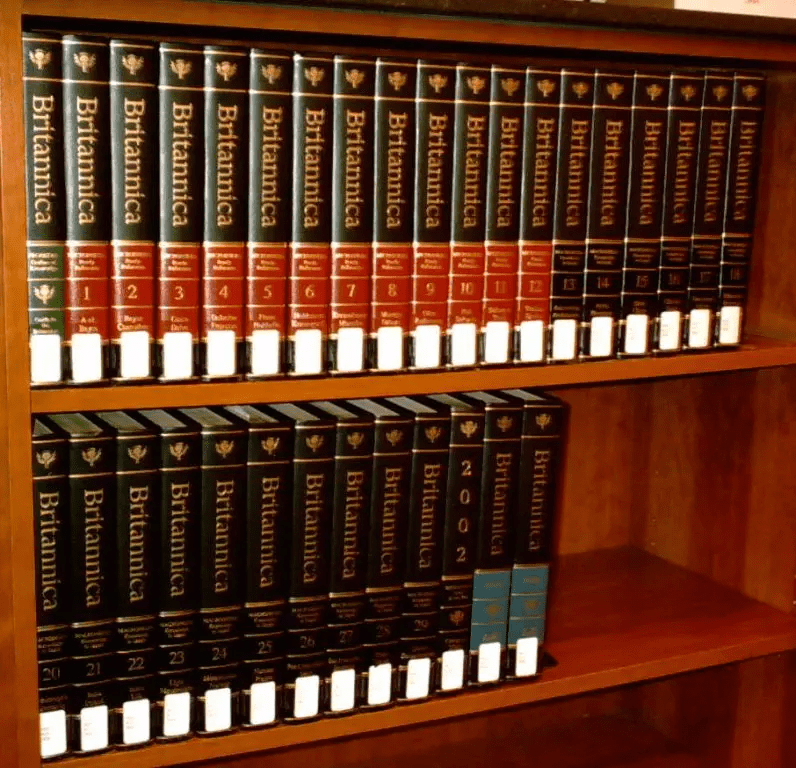
Hullo, what’s this? The Complete Works of Ruskin Bond, Ramachandra Guha’s India After Gandhi, Wendy Doniger’s The Hindus, any book by William Dalrymple or Martin Amis, Christopher Hitchens’ Arguably, Imagining India by Nandan Nilekani – these are tomes not to be trifled with. And fat, to boot. And don’t even get me started on the encyclopediae – Britannica or Penguin.  At least, political gadfly Mani Shankar Aiyar has carved up his impressive life story into three digestible, relatively slim volumes. ‘Give me books about me that are fat,’ as Julius Caesar might have put it but then, he would not have had to scrounge around finding space in his many palaces to display them. To add to my problems, my wife is a former Eng. Lit topper, who places more value on these volumes, excluding the encyclopediae, than I could imagine (not Zadie and Sue, the others). ‘Hands off,’ she rebuked, ‘why don’t you consider getting rid of your 66 Wodehouse novels and another 25 or so cricket and tennis biographies? They have been gathering dust for close to 50 years. Not to mention the amount of space they take up.’ Touché. I pretend not to have heard that. Silence is golden. Start on a project like this and it comes back to bite you in the fleshy parts. And I haven’t even touched upon Sartre, Kafka and Camus to give me an existential migraine. I will concede, however, to retaining my better half’s four J.D. Salinger novels (that’s all he ever wrote) for the reason that they are all very slim volumes and don’t take up much room. And a very good read as well.

At which point, the proper noun Kindle very properly raises its head. I will allow that the advantages of ordering a book online on the Kindle option are many. Instant transfer to your mobile, less expensive than the hardback or paperback versions and, it goes without saying but I will say it anyway, your bookshelves continue to breathe easily. What is more, I can order as many Wodehouse or sports books my heart desires without the distaff side getting a whiff of it. So far, so good. Or in the asinine words of that idiot copywriter who came up with the line ‘Sofa So Good’ for a brand of furniture. That said, there are some downsides. You can’t smell a new book ordered via Kindle. There is no tactile experience of riffling through the pages of Ian Rankin’s latest crime thriller. Above all, the adrenaline rush of a hardback edition being delivered at your doorstep after three days of anxious waiting – all this counts for nought. Still, something is better than nothing, I suppose.

Once upon a time, I went through the same catharsis with LPs, audio cassettes, CDs and DVDs, but what with Spotify and myriad cable and OTT choices available, those conventional options have been closed off. I am going through an emotional struggle on how to rid myself of these items. The Godfather trilogy, Cleopatra, Becket, My Fair Lady, The Lion in Winter, The Graduate, Fawlty Towers, all The Beatles albums, to say nothing of the Carnatic music gems collected almost since birth. At least, it seems that way. Throw in a smidgen of western and Hindustani classical and a smattering of cool jazz and my misery is complete. Nobody wants them. I cannot use them. So, I keep them. Bertrand Russell would have nodded in sympathy with that simple piece of logical cleft stick in which I found myself trapped. That said, there is a new breed of audiophiles who are willing to pay a king’s ransom to buy ‘ye olde world’ record players with diamond stylus and long-playing vinyls to experience a truly authentic, scratchy sound. Ah well, it takes all sorts. And I gave most of mine away for free! Will the recipients appreciate their value? Who can tell? Casting pearls before swine just about sums it up.

In conclusion, try as I might, I am unable to find a satisfactory solution to my problem of plenty. It will remain unresolved as I cast my roving eye over all my books and entertainment options. That being the case, I shall happily drown my sorrows with a single malt and click on to Schubert’s Unfinished Symphony on my Spotify, while I once again read the sleeve notes of the album on my 45-year-old vinyl LP, among the handful I had retained. That would well and truly put the lid on it.

Getting an earful

The handicap of deafness is not in the ear; it is in the mind. Actress and activist Marlee Matlin, who was deaf from early childhood.

Over the past few months, I am being warned and mildly admonished by my better half that I am probably suffering from incipient deafness; ‘Deaf as a doorpost’ being a frequent refrain. Consistent with the stand taken by most people who are ‘accused’ of being hard of hearing, I am into stout denial mode. ‘What me, deaf? Why don’t you speak clearly instead of mumbling to yourself?’ To which the good wife’s response is swift. ‘This morning, I asked you to bring down the Venetian vase from the top shelf of the kitchen cupboard. And what have I got? The medicine box. And not for the first time. We need to consult an ENT specialist.’

‘Well, it certainly sounded like you were asking for the medicine box. You are always asking for it. And please stop saying “read my lips,” a task beyond me when you speak sotto voce with your back turned towards me. No lips visible to read from the back of your head.’ I can be quite sardonic when the mood takes me.

I did not get a response, from which I could deduce that she might also be going deaf or that she was just giving me the cold shoulder. Probably the latter, as she seems to hear every sibilant syllable I utter, even when it is not intended for her shell-like ear. Then again, fair’s fair. I do sense a slight, just teensy-weensy drop in the efficacy of the functioning of my auditory canals. Put it down to a normal, age-related malaise. Nothing to get into an almighty twist about, but I do find myself saying ‘Sorry?’ or ‘What?’ with an alarming frequency when somebody makes a simple conversational remark; with my head deferentially cocked towards the person making the remark. A tell-tale sign, some might say of trouble with the tympanum. In fact, my wife says it about 27 times every day, if you leave out the tympanum bit. On a good day, I can catch it clear as a bell about 15 times. Which is just about par for the course. There’s plenty of ambient noise around where we live – schools and construction work topping the list. That is my defence and I am sticking to it. I am sick and tired of listening to the school kids mauling the National Anthem daily at 9 am, just when I am taking my shower. At least, soapsuds notwithstanding, I am standing for the Jana Gana Mana!

The others – friends, relatives and so on – will be too polite to comment openly, though they might whisper to each other about what they feel might be an embarrassing issue viz., my hearing disability, real or imagined, each whisper ornamenting the previous one. These Chinese whispers do not bother me one bit, because I can’t hear a word they are saying. Which can hardly be classified as a sign of deafness, incipient or advanced. Whispers, Chinese or otherwise, are by definition, not meant to be heard. As the old toothpaste advert promising to rid you of halitosis would say, Your Best Friends Won’t Tell You. So, I go into the Alfred E. Neuman mode, ‘What, me worry?’ Those from the present generation, born after the millennium and wondering who this A.E. Neuman is – think gap tooth, think Mad Magazine. Failing which, put your trust in Google or Yahoo! Not that you needed to be told on that score.

Anyhow, I have been successfully, if unwisely, putting off this visit to the ENT doctor for some time now but it would appear that the sands of time are running out. The chickens are coming home to roost. The issue was precipitated a few nights ago when my wife asked me if I would like the fan to be put on at the speed of 2. I was probably half asleep as I replied, ‘Yes you may switch the lights off, if you wish.’ The explanation that I was half asleep carried no conviction. I thought she said something about a deaf adder under her breath, but it could so easily have been ‘I am getting madder.’ Tough to pick up verbal nuances when you are just about to drop off.

It is a bit of a mystery why many of us get coy and into a self-denial mode when we are asked if there is a problem with the hearing. After saying ‘What was that again?’ and sidling up to the person with a ‘Sorry, didn’t quite catch that. Those blasted Air Force jets are doing some aerial exercises what with the air show coming up and boy, you can’t even hear yourself think. You were saying?’ See what I mean? Somehow, one does not seem to have this issue with other handicaps. You are quite happy to drone on about your astigmatism, rheumatism, lumbago, diabetes (‘My fasting sugar is acting up, but I am into millets, red rice and sugar free tabs’), not to mention neuralgia, osteoporosis and lower back pain coupled with cervical spondylosis. Puts me in mind of a delightful episode from one of Wodehouse’s short stories. Major General Aylmer Bastable is in high dudgeon when one of the toffee-nosed earls at a cure spa mocks him for making a fuss over a mere bout of gout. ‘Snob! Thinks he’s everybody just because he’s got telangiectasis.’

We can talk endlessly, even with a sense of pride, to anyone within earshot about all these afflictions but when it comes to hearing-related ailments, we become palpably shy. A close friend recently inquired politely if I considered getting a hearing aid. To which my response came quick as a flash. ‘My wife deals with all matters to do with hiring maids, so you had better ask her.’ My friend and my wife exchanged knowing glances.

All said and done, it looks as if that visit to the ENT chap is inevitable. He will try and push some new-fangled, state-of-the-art hearing device (‘so cunningly tiny and embedded so artfully it cannot be noticed by anyone’) at a throwaway price, including special manufacturer’s discount, of Rs.6 lakhs (‘We are giving it away really’), German technology made in China; but of course. What is your cut, Doc? It occurred to me that I could buy a decent second-hand car with that kind of money, but I must concur with my life-partner that a second-hand car, however decent, will do nothing to improve my hearing. Assuming always that I do have a hearing problem, a point on which I believe the jury is still out.

Shakespeare’s play, Julius Caesar was prescribed as part of our school syllabus at the Senior Cambridge level. There were many memorable quotes from the play which we keep referencing from time to time in conversation and in our writings. One of the lesser-known quotes, but one that is relevant to the topic under discussion is attributed to Caesar when he urges Mark Anthony, ‘Come on my right hand, for this ear is deaf.’ When the Emperor so commands, you move swiftly to his right hand without making any snide comments about his hearing disability – if you knew what was good for you. The great man was already suffering from epilepsy or ‘the falling sickness.’ Clearly, he had just the one functioning ear in an age where they had not heard of hearing aids. At Caesar’s funeral, Mark Anthony commences his speech with that immortal line, ‘Friends, Romans and Countrymen, lend me your ears.’ There can be little doubt that the entire citizenry of Rome was all ears.

Finally, one must accept that there are degrees of deafness. If one is stone deaf, one can only offer sympathy and speak in sign language. In Tamil, insensitive kids employ the word damaaram, a somewhat pejorative term suggesting, onomatopoeically, the sound of a loud fire cracker going off which the poor afflicted person can barely hear. I grant you that that is beyond the pale, but kids will be kids. Speaking for myself, I am fully confident that my problem, if indeed there is one, is but a passing phase. I intend getting my ears dewaxed first. After which you can drop a pin, and I guarantee you I will hear it, clear as a bell, falling on stony ground.

Postscript: Beethoven composed his monumental 9th Symphony, and pretty much everything else, when he was profoundly deaf. Chew on that.