Too clever by half

Where do you see yourself ten years from now?

I was reflecting the other day on my first job interview. I am talking about an incident that occurred a tad over 50 years ago. At my stage in life, reflecting on the past plays a big role in one’s daily thought process. It’s all very well for people to lecture you on not being morbidly stuck in the past. ‘Past is past,’ they say. ‘Look ahead to the future. And enjoy the present, live in the moment, in the here and now.’ What these well-meaning friends do not understand is that for people like me the past is the present. I wallow in my small triumphs and smile ruefully at my little failures. Did I actually bag 4 wickets for just 6 runs in that Under 14 Inter-school championship? I must have because even the local newspaper had it on their sports pages. ‘Suresh takes 4 for 6’ was the headline. I still have that cutting somewhere. The unbelievers may go, ‘How do we know it was you? Suresh is a very common name. Is there a photo alongside the report?’ O ye of little faith! My friend, even if there had been a photo, which there wasn’t, my then 13-year-old visage would have been a 100% mismatch to what I look like now. So there.

And how about my winning the elocution competition in school reciting Henry V’s famous St. Crispian’s Day speech? I had the audience consisting of teachers and students in the palm of my hands as I closed on these rousing lines, ‘And gentlemen in England now a-bed / Shall think themselves accurs’d they were not here / And hold their manhoods cheap whiles any speaks / That fought with us upon Saint Crispian’s day.’ Some of the spelling and grammar there might look a bit dodgy, but you can blame it on Shakespeare. They couldn’t tell an f from an s in those days. When you hear that the Bard wrote his plays for a fong, you will appreciate what I am saying.

I realise I am rambling on a bit, but that goes with the territory of long-term reflection with rose-tinted glasses. There are so many little turn-offs and diversions. Everything is rosy. Let me get back to that first job interview. I was one among many candidates being interviewed for a management trainee job in a well-known multinational company. Rs.800/- a month stipend during probation was on offer, which was the equivalent of a prince’s ransom in the early 70s. Anyhow, when my name was called, I walked in to the board room confidently, adjusted my tie knot, clutched my file containing my certificates tightly and faced three gentlemen comprising the interview panel. I essayed a bright smile as I wished them good morning and sat down. If I felt nervous, I tried not to show it.

The person sitting in the middle of the threesome, presumably the boss, opened the proceedings. He had a copy of my single page bio-data in his hands, which he peered at intently, turned over the page, found nothing and returned to the typed-up page.

‘So Suresh, what makes you think you are fit to be a management trainee in our company?’

‘I can speak and write well, Sir. That should be useful in any job, don’t you think?’ I thought that was a snappy response. The man in the middle was not impressed.

‘If it’s all the same to you, we will ask the questions.’

‘Sorry Sir, my question was not really meant to be a question eliciting an answer. It was kind of rhetorical, if you get my meaning.’

‘Oh rhetorical, eh? What big words we know!’ This from the bespectacled, balding man to the left of the centre-forward, oozing sarcasm. The sort of person you take an instant dislike to. ‘Are you trying to impress us?’

‘That was the general idea, Sir. I am keen to impress you, but if I crossed the line, the Lakshman rekha so to speak, I apologise and take back the offending rhetorical word.’

The young smarty-pants sitting to the right of the middleman piped in now with, ‘I see you are familiar with the Ramayana. And what word would you like to replace rhetorical with?’

He was clever, this one. He was testing my brag about my knowledge of English. And my Ramayana reference would have irked him further. My brain was whizzing. Rhetorical, synonyms, synonyms. Come on. Ah, got it! ‘Declamatory or florid would work equally well in place of rhetorical Sir, since you asked. I am not trying to impress or show off. There are a few more, but those two should suffice for the moment.’ I sat back in my straight-backed chair, looking smug and quite pleased with myself.

The boss man chimed in. ‘Look we are interviewing you for a management trainee job which calls for skills other than a scholastic knowledge of English and familiarity with the epics. This is not an audition for a stage play. How numerate are you?’

‘I beg your pardon, Sir. Can you elucidate?’

‘Ah ha, not so smart after all. You lectured us on the meaning of rhetorical, but you are stumped when it comes to numerate. Numbers my friend. How proficient are you in analysing graphs, tables, charts, sales projections and so on? What is 377 times 548?’

‘With due respect Sir, I am not Shakuntala Devi. Neither am I autistic. Remember the film Rain Man? Dustin Hoffman. Drop a boxful of toothpicks at random and he could tell you, in a trice, exactly how many toothpicks were lying on the floor. I need time to do the multiplication. You know, 8 times 7 is 56 carry 5 and so on. I did not bring my calculator with me.  If you have studied my bio-data Sir, as I am sure you have, you will find that mathematics was not my strongest suit.’

A wry smile wreathed the left winger’s face. ‘You said a mouthful there, young man. 36% in Algebra, 38% in Geometry and 40% in Arithmetic. Not exactly a budding Ramanujan, leave alone a Shakuntala Devi. How did you even make it to the interview stage? You will cut a sorry figure making a sales presentation to your boss. However, you could be the next Rain Man.’

Now he was hitting below the belt. ‘That is as maybe Sir, but you ought to consider me for Advertising and Public Relations. That could very well be my forte. Not everyone who can, in the blink of an eye, correctly give the answer to 377 times 548 is necessarily a genius. Some of them are pretty dumb. Being numerate is not everything.’

‘You are quite a cocky sort of chap, aren’t you? And that, by the way, is a rhetorical question.’ The Chairperson guffawed at his own poor joke. ‘All right, we shall put you out of your misery. Last question. Where do you see yourself in our company ten years from now?’

That old chestnut. I was forewarned by my friends about this question and I was forearmed. This was, if selected, going to be my first job. I was still four months shy of my 22nd birthday. How on earth could I possibly visualise where I will be ten years down the road? I did not even know what the organisational structure was, to be able to guess what my progress might be.

‘With respect Sir, if recruited I will be more concerned about what I am going to be doing on my first day at work. Projecting myself 10 years down the road requires a level of far-sightedness I do not possess. I don’t have the bandwidth. Perhaps I can work on it as I cut my teeth on the job.’

For once, the Chairman of the Board did not seem put out. ‘Notwithstanding your proclivity for aphorisms, that is an honest answer, young man. If you had said you see yourself as the Managing Director of the company, you would have been out on your ear. Anyhow, you have given us some food for thought. We will let you know in due course.’

‘Out on my ear, food for thought, bit of an aphorisms man yourself, Sir. Thank you and bon appétit.’

I walked out of the room without waiting for a reaction. ‘Cheeky and too clever by half,’ I heard one of the interviewers mutter under his breath. And no, I did not get the job. In the event, I got an opening in an advertising agency in Calcutta. They asked me just one question at the interview. ‘Can you hold a drink?’ At the age of 21, despite my proficiency with aphorisms, I was not sure exactly what that meant but taking no chances, I answered in the affirmative. I got my appointment letter and joined the next day.

‘Alas, poor thing!’

Alas, poor Yorick!’

At the outset, let me proffer my humble apologies to Shakespeare, Hamlet and poor Yorick’s skull, which was Hamlet’s object of profuse sympathy. Yorick was the court jester and, I daresay, was a barrelful of laughs as he and his master downed many a tankard of the blushful Hippocrene at the nearby King & Crown. My current quote is of more recent vintage and can be attributed to the mother of the Leader of the Opposition (LOO) Sonia Gandhi, who was caught on camera saying ‘She could hardly speak, poor thing.’ The present Grande Dame of the Grand Old Party, Sonia Ji was moved to express her heartfelt commiserations in those ill-chosen words to the President of India after a long and presumably tiring speech to open the Budget session at the Lok Sabha prior to Finance Minister Nirmala Sitharaman occupying centre stage. Whether she meant to say the President’s speech was physically tiring to President Murmu, or was found tiresome to Sonia Gandhi and her near and dear ones, we shall never know. Tiring and tiresome. Two words that sound so similar and yet convey very different meanings. Evidently the lady thought she was speaking off the record outside the Parliament’s impressive precincts but you know what they say, ‘Stately columns have ears.’ Off the record, but on tape. Next thing anyone knew, her somewhat innocuous jibe, if indeed it was a jibe, had become a national cause célèbre.

The ruling BJP party, with an eye on the main chance, moved in on Mrs. Gandhi’s remark like a pride of starving lions circling their victim prior to the kill. With the all-important Delhi state elections very much on everyone’s mind, every morsel of opportunity thrown at them had to be snapped up avidly. The Congress Party was already reduced to the margins and viewed as a bit player at the forthcoming hustings, with AAP and the BJP being the perceived frontrunners. This off-the-cuff remark on the President by Sonia Ji was a godsend to the BJP. What is more it might also have spelt the death-knell for the Congress Party as far as the Delhi elections were concerned. Not that they were in with a shout in the first place.

 It’s all politics, of course. The BJP leaders would have known full well that Mrs. Gandhi did not really mean to throw an insulting broadside at the President. However, why look a gift horse in the mouth when it is handed to them on a platter? That is the way they would have looked at it and who can blame them in our dog-eat-dog world of political backbiting. As for the materfamilias of the Gandhi family, she could have exercised a bit more restraint, seeing as she was confronted by a hostile battery of media scribes and cameras. Her choice of words, probably not meant to wound, came out all wrong. One unguarded moment, one word out of place and there is hell to pay. At least her son, who is quite accustomed to dropping bricks over the years, the remnants to be picked up by his minions, could have advised his mother on the perils of sounding off in front of microphones and cameras. ‘Hot mics’ they are commonly referred to and they can singe, as the lady from Vicenza discovered to her cost. The scion of the Congress Party’s first family was untouched by all the brouhaha. He strutted about in his white tee-shirt, flexing his biceps, with nary a care about the consequences of his mummy’s, possibly unintended, faux pas. As far as Rahul Baba was concerned, it was comme si comme ca, if his French was upto scratch. Just another day at the office.

I do not wish to take a political stance on this. When it comes to dropping bricks, our politicians across party lines, frequently keep saying things when they would have been better off maintaining a discreet silence. Then again, discretion may be the better part of valour, but our politicians, for the most part, are not conspicuous for being discreet or valorous. A few years ago, the health minister of Bihar, Mangal Pandey found nothing wrong in Patna’s Indira Gandhi Institute of Medical Sciences asking applicants to declare their virginity as, in his wisdom, virgin meant unmarried and pure. Else their admission could have been in jeopardy. Surely, nothing to make a song and dance about, he felt. Since the report was short on detail, one assumes the stricture applied to female applicants only.

The late Samajwadi Party supremo, Mulayam Singh Yadav sought clemency while opposing the death penalty for a gang of thugs facing the noose on a gangrape and murder charge with this throwaway line, ‘boys will be boys, they commit mistakes.’ He even went on to cast aspersions on the victims suggesting that the girls frequently come on to the boys and when things get ugly, they cry rape.

A junior minister in the BJP government some years ago, termed all south Indians as blacks. This was in response to a group of Africans in Delhi being assaulted within an inch of their lives by a mob for alleged acts of cannibalism, which resulted in Indians being branded as racists in an international forum. While that might have gone down as a wild generalisation, the minister’s response was startling to say the least. ‘If we were racist, why would we have all the entire South (India) which is… you know Tamil Nadu, you know Karnataka and Andhra… why do we live with them? We have black people all around us.’ Just priceless.

Lest you get the wrong impression, this foot-in-mouth disease is not confined just to our country, notwithstanding that this piece was prompted by an Italian lady who has made India her home. It has an endemic quality where the good and the great have been known to commit unpardonable solecisms in such far-off lands as Great Britain and the United States. Allow me to give you a few samplers. The late Prince Philip, the Duke of Edinburgh, was a past master at saying things that would doubtless have made Queen Elizabeth II blush a nice shade of crimson. Whether he intended to or not is not for me to surmise. To a young policewoman wearing a bullet-proof vest, he commented, ‘You look like a suicide bomber.’ At a reception at Buckingham Palace for a group of British Indians, the Duke peered at the name badge of businessman Atul Patel and remarked, ‘There’s a lot of your family in tonight.’ Addressing a group of British students during a royal visit to China he said, ‘If you stay here much longer, you’ll all be slitty eyed.’ Sino-British relations might have taken a nosedive after that gem. Finally, here’s one on which the whole world would have agreed with the great man, ‘British women can’t cook.’ A serial offender, the Duke.

American Presidents are no slouches when it comes to saying the wrong things at the most inopportune moments. During the Nato summit in Washington in 2024, President Biden introduced Ukrainian President Volodymyr Zelenskyy as ‘President Putin.’ A remark he might have had a huge problem living down. Anyhow he stepped down from the Presidential race not long after. Long before that, when Richard Nixon famously declared, ‘I am not a crook’ after being found guilty in the Watergate scandal, people did not know whether to laugh or cry. In 1992, President Geoge H.W. Bush Sr. vomited on the lap of Japanese Prime Minister Kiichi Miyazawa during a state dinner in Tokyo. Reports suggest the meal consisting of raw salmon and caviar made his stomach turn. My tummy would have behaved no differently. The American contingent, including the First Lady Barbara, was sick to its stomach after the incident.

Clearly, Sonia Ji is in distinguished company. As the Congress Party apparatchiks mull over their former President’s unfortunate choice of words while apparently expressing sympathy for India’s President Murmu, they will also be wondering what went wrong in the just concluded Delhi assembly elections. The party could not even muster a single seat and lost their deposit in a staggering 67 out of 70 seats. Evidently, this represents a double hat-trick of ducks in Delhi for the party. A rare, if dubious, record. One’s heart bleeds.

Alas, poor Sonia!

The Budget. A taxing exercise.

The goodies are in the bag

 It’s clearly a budget. It’s got a lot of numbers in it. George W. Bush.

It is that time of the year again. In just a few days, February 1st to be exact, India’s Finance Minister Ms. Nirmala Sitharaman will step up to the podium in the Lok Sabha to deliver the nation’s 75th Annual Budget for 2025. For a record 8th time, if I am any judge. If past practice is anything to go by, she will clear her throat in front of the microphone (this carries more gravitas than saying ‘hullo, hullo, mike testing, mike testing, 1,2,3’ etc) as the clock chimes 11 times ante meridiem. She will be attired in an understatedly elegant fashion, befitting a lady of her exalted and dignified position amongst the nation’s comity of cabinet ministers and parliamentarians. The Prime Minister will be seated by himself, watching his FM avuncularly. As is her wont, Ms. Sitharaman will speak with pursed lips even as an enraptured and anticipatory public will await the goodies and freebies that will, with any luck, be disgorged from her purse strings. Or not. But not before she recites the statutory stanza from some Tamil poet or the other, which no one will follow. That said, it’s eyes down for a full house, as one of my favourite British comedians Tony Hancock used to say.

India’s captains of industry and commerce as well as several self-appointed financial and business analysts will be seen huddled around tables in various television channels parsing and analysing every single statement that the Minister makes, its likely positive or negative impact on an unsuspecting public. The Nifty and Sensex readings, visible at the bottom of our idiot box screens, will jump up and down like a yo-yo with every provision Ms. Sitharaman announces. The late Mr. Rakesh Jhunjhunwala, whose pearls of wisdom on the budget and the bourses we so eagerly awaited will be sorely missed, but there will be several others of considerable standing who will be sitting uneasily and holding forth and, at times, fifth and sixth as well.

These worthies will be taking delicate bites of their cookies, samosas and cream crackers generously supplied by the channels as they provide their own learned sound bites, hydrated with endless cups of hot beverages. Each of these panellists will be armed with something that looks like a mini tennis racket, without the gut strings naturally, bearing numbers from 1 to 10 in descending order of approval, 10 signifying ecstatic to 1 being pathetic, which they will wave at the screens on being asked to score each of the provisions announced. All of which will be collated by the television anchor and a final verdict on Ms. Sitharaman’s long peroration will be delivered. For the record, I have rarely, if ever, come across an industry magnate say anything negative about the budget. After all, he has to deal with ministry officials over the next 12 months and knows only too well which side his bread is buttered on. A final tally of 7.5 over 10 is about par for the course.

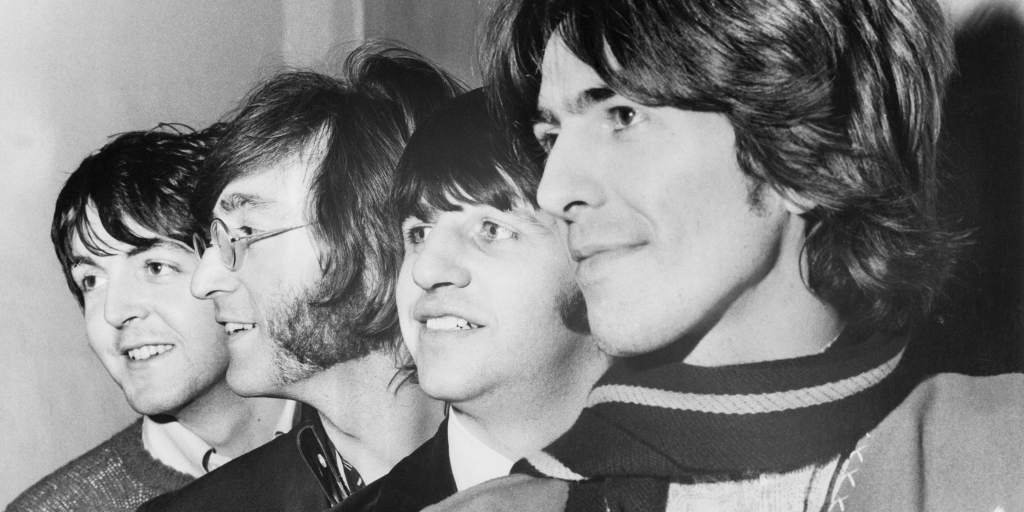
Once the budget has been delivered to the nation Ms. Sitharaman, proudly displaying her carefully designed and embroidered crimson-red budget valise, will pose with her posse of brainy departmental secretaries for the cameras, relief and triumph clearly visible in their broad smiles. Then it’s off to be interviewed by a dozen or so television channels, who will all ask her the same questions only to be given the same answers. Of course, the FM will not fail to acknowledge the inspiring leadership role of her Prime Minister after every second sentence. The TV channels will also buttonhole the heads of various chambers of commerce who will unfailingly shower encomiums on the FM’s far-sightedness. In the immortal words of The Beatles, it will have been A Hard Day’s Night for the Finance Ministry.

Enter stage left, the leaders of various opposition political parties, to whom the television channels will scamper to get their take on the ruling dispensation’s budget provisions. Every single member of the opposition, regardless of the party in question, will roundly condemn the budget. ‘This is a pro-rich budget,’ they will scream. ‘Nothing for the poor, the farmers and the middle-class. Prices are soaring and the people are struggling’ they will intone in unison. ‘This budget speech was written by Ambani and Adani and faithfully read out by the FM,’ will be the final salvo. ‘But Sir, she has provided huge tax relief to the salaried class, isn’t that something?’ the microphone-waving correspondent will butt in. The riposte is swift. ‘Ah, you fell for that, did you? My friend, she is raising corporate taxes and levying additional imposts on air and train travel. You think we are idiots?’ Well, that’s not for me to venture an opinion. You know what you are. Come on folks, tell us something we haven’t heard before.

We are then left with the man and woman on the street or the Common Man, as the late, beloved cartoonist R.K. Laxman collectively portrayed India’s much trodden-on average citizen. Here is a cross section of India’s citizens giving us the benefit of their views after the budget speech. At least, that is how I think they will respond, as the budget itself is yet to be presented.

Mumbai housewife – ‘Yes, yes. Every year, my husband returns home from work on February 1st in a foul mood because of something or the other the Finance Minister said which will affect his take-home pay. He says we will have to cut down on household expenses. No more chocolates for my daughter, only toffees. Eating out only once a month. Thinking of selling his second-hand Maruti and buying a two-wheeler. But he is very silent on his one bottle of Old Monk rum every week!’

IPL debutant – ‘I was bought out at the auction for Rs. 52 lakhs. And Rishabh Pant got Rs.18 crores. I am only 17 years old and now my team’s accountant tells me I have to pay the government at least 30% of my pay plus some additional amount because of the budget. What is a budget anyway? And who is this Ms. Sitharaman? I have never read a newspaper in my life. On my mobile? I only stream Instagram and TikTok. Rishabh Pant hasn’t read a newspaper either. He’s got a shock coming. I was thinking of giving up cricket, but my coach told me to concentrate and score 50+ runs in ten balls and my pay will instantly go up to Rs. 3 crores. The accountant can then guide me on how to avoid paying taxes. So I am practicing hard to hit sixes. Maybe I will consult Mahi Bhai. They pay him crores just to face 4 balls and hit three sixes.’

Bollywood double – ‘I am the poor mug who doubles for Shah Rukh Khan and all the other Khans in Bollywood whenever a dangerous, life-threatening sequence has to be shot. Whether it is going toe to toe with a man-eating tiger or saving some damsel in distress from a rapacious villain with only one thing on his mind, I get to do all the dirty work while the Khans rest comfortably on their laurels. They pay me a measly Rs.20,000/- per two-hour shift (and no accident insurance), while the Khans get paid sums with so many zeroes my head spins dizzyingly. The Bollywood Doubles Union put in an appeal last year to the FM to give us doubles some special benefits in the budget but she took no notice. Instead, actors like the Khans get all kinds of sops in case some nut tries to stab them in the middle of the night. We’ve got doubles for that as well.’

Managing Director of a large corporate house – ‘Life is hard as it is. My family and I have to get by on just Rs.52 crores annually after taxes. I have to maintain four chauffeur driven cars, my daughter and son are in Stanford and Harvard respectively, my wife has had to reduce her foreign holidays with her friends to just once a month. It is simply not good enough. Then there are the three servants, two cooks and four security guards, all of them costing a bomb. And I really wish we had stopped at two Golden Retrievers and one German Sheperd. And one of them is pregnant. That’s a lot of doggies but no, my daughter had to have the two Pekinese to play with on her holidays home. The Budget just ignores people like us who contribute to the wealth of this nation after slogging 90 hours every week. I have sought an urgent meeting with the Finance Secretary. No response so far.’

There are so many more tragic tales like this. Will the Finance Minister look into all such genuine grievances and help the distressed citizens of this great nation while delivering the Budget speech? You can do it Madam. Loved the sari you wore last year. Let us Make India Great Again (MIGA). I can hardly wait for February 1st.

 Larsen’s Toubrohmanyan          

The chief honcho of one of India’s largest corporate entities, S.N. Subrahmanyan of Larsen & Toubro, has riled a whole lot of people for making a couple of ill-advised statements recently. At the outset, I wish to make it abundantly clear that, notwithstanding that he spells his surname the same way as I do, we are in no way related or connected. He has been reported as saying two things that got the goat of many observers. Firstly, that all companies should make their staff slog for 90 hours every week, Sundays presumably being optional, or even included. It is not clear from the reports if public holidays such as Holi, Deepavali, Christmas and Id, as per Chairman Subrahmanyan’s diktat, should also be barred from his employees’ enjoying a bit of R & R with their families and friends.

Harriet Beecher Stowe’s slave driver, Simon Legree of Uncle Tom’s Cabin notoriety, comes irresistibly to mind. As if cracking the whip all year round was not bad enough, the company’s chief whip (a serendipitously apposite description) went on to question the dubious pleasure of sitting at home and staring at his wife all the livelong day. To be fair to the man, he added that this will be equally tiresome for the wife who might wish for nothing more than for her hubby to leave her alone to take out their second chauffeur-driven limousine, indulge in a bit of luxury shopping and live it up at a gossipy hen party with other happily marooned ladies. Closely reasoned, but his pronouncements did not sit well with the public at large.

As usually happens when such quotes, perhaps given in a hasty and irreflective moment get wide traction, the author of said quote is likely to claim that that was not what he meant and that he has been quoted out of context. A standard, anodyne response. Pull the other one, say I. Things said on the spur of the moment are often to be repented at leisure. Anyhow, a clutch of other top-notch executives around the country joined the fray and, for the most part, decided to play safe and delivered Subrahmanyan a broadside for making unsustainable demands on an already overburdened work force. Be that as it may, speaking for myself, I am happily retired with no personal stake in matters concerning an employee’s working hours. During my working days, weekends were sacrosanct, when bosses and their ambitious underlings headed for the golf links at the crack of dawn, played 9 holes and headed straight for the bar, leaving their golf widows at home. A rarest of rare ‘hole in one’ earned you free drinks from your colleagues for as long as your liver would allow. We live in far more straitened times. This is based on reliable hearsay as I was not remotely interested in golf and was, for the most part, abstemious.

The newspapers, social media and most television channels have already covered this corporate contretemps with varying observations, some deadly serious and others, trying to look at the lighter side of things. As an irrelevant aside, a former friend and colleague of mine who had worked briefly at Larsen & Toubro, told me that the company employed so many Sindhis and Tamilians that they code-named it Larsani and Toubrohmanyan! True story, which inspired the headline to this piece.

The fact that the wife-staring utterance attracted far more media attention than the ‘90-hour week’ remark, speaks for itself. For myself, I thought it might be a good idea to talk to a few people from different walks of life and see what they had to say about the idea of employees working round the clock, in a manner of speaking, till they are ready to drop. I was privy to a few interesting responses. All names have been changed lest they face the almighty wrath of other workaholic bosses, who are already in a foul mood thanks to their self-imposed, near-suicidal work schedules. I kept the wife-staring bit out as it would have been a needless, frivolous diversion, many of them unmarried or in live-in relationships. My question to all the respondents was the same. ‘It is being mooted that 90-hour workweeks, 7 days a week, should be the way to go if companies are to perform to their optimal potential. How do you react to this idea?’

Sheela (IT Group Head) – ‘The idea, as you so fancifully put it, is not compatible with live brain activity. As it is, in the IT industry, we work our backsides off speaking to people with indecipherable accents in Texas, Ohio, Manchester, Warsaw and many other cities with punishing time-zone differences. Punsishing for us, that is. Frankly, I have no idea how many hours a week my team puts in, even allowing for Sundays off. If it is not more than 90 hours, I will change my name, from the changed name you have already given me. Good night. Or is it good morning?’

Walter (Ad Agency Creative Consultant) – ‘Clients always want to look at everything for approval, from press ad layouts to film storyboards, instantly. Wanted yesterday, as we say in the agency. Which leaves us with no option but to burn the candle at both ends, rum and pizzas supplied on the house and billed as part of creative fees to client. Workaholism feeds on alcoholism. Next morning, bleary-eyed, we make the presentation to the client who rejects the whole damn thing, asks us to come up with a fresh iteration, this time wanted (you guessed it) the day before yesterday.  90 hours, did you say? Piece of cake. After this, we are all hotfooting it to Sri Lanka, Goa being too crowded – for plenty of rum and to sleep like so many logs and work off our giant hangover.’

Ramachandran (Bank Manager) – ‘The order just came in from H.O. 90 hours to be logged each week. I have decided to keep the branch open till 11 pm every day. That way, at least the customers will benefit by taking advantage of the extended banking hours. I have put in a requisition for a sanction of free dinner for all the branch employees. Many of them will then go to sleep, including the security guards. Particularly the security guards, who sit all day long oiling their rifles with no bullets in them. That will put anyone to sleep. The neighbourhood thugs are already planning a big heist. See if I care.’

Avantika (Travel Agency Executive) – ‘As it is everyone is booking their flight tickets online and we have very little work to do. Hardly anyone comes to us for domestic or international bookings. I spend all my time with a group of IT nerds, specially hired for the purpose, to try and virally infect the computer programmes of all the online travel companies, thus forcing customers to come to our office for help. So far, no luck. Brick and mortar will lose out to digital space. We will be lucky if some of us are not apprehended by the cops sooner than later. Can you blame us? If we are forced to work for 90 hours a week, we have to keep ourselves busy. By hook or by crook.’

Banerjee (Retired MNC Director) – ’90 hours? What does that even mean? See my young friend. Back in the day, we clocked in at our office at 9 am sharp. Some good-natured flirting with the secretary, followed by going through some files, dictating a few letters when the tea service arrives. Discuss office politics with a colleague, attend an internal meeting on sales targets, kick some butt, then it’s time for lunch. A short drive home for a bite, a quick gin and tonic and a few drags on my pipe. Followed by a catnap on the heirloom chaise-longue, and back in the office at 3 pm. Somehow the time passes and it’s back home by 5.30 pm, all set to go to the club for a round of bridge with plenty of liquid nourishment. Care for a small one for the road?’

There you have it. You have heard the voice of the people. They are being asked to work for almost 55% of their week hours, all because the man at the corner office has had his fill of staring at his better half with little to show for it. I can do no better than quote the opening lines from Welsh poet William Henry Davies’ Leisure, ‘What is this life if, full of care / We have no time to stand and stare.’

In the year 2025

Calcutta’s Park Street decked up on New Year’s Eve

The new year has come and gone. Let me rephrase. What I mean by that is that New Year’s Day or January the First Anno Domini has come. And gone. In the blink of an eye. The new year 2025 is very much with us, alive and kicking, and will overstay its welcome until the next December 31st puts in an appearance and breathes its last. It will first open its bleary eyes Down Under in Australasia and slowly work its way northwards when you will hear inebriated folks from the Far East, Asia and the Middle East dancing, shouting and screaming Happy New Year in silly, fancy dress and blowing party hooters and kazoos. As for the Middle East, I cannot vouch for what manner of jollification, if any, will take place as they read, write and view everything backwards.

As the earth’s rotation sees time gaining, the celebrations will then gravitate further on towards the western hemisphere, where most of their good citizens, having drunk themselves cross-eyed on Christmas Eve, will be seen staggering out of bars and pubs. Sloshed to the gills, they will decorate the pavements of London’s Trafalgar Square, New York’s Times Square and Calcutta’s Park Street by throwing up and barely being able to open their eyes on January 1st, with an extremely sore head, vowing never to touch any form of spirit for the remainder of their lives. A promise that will be broken within 24 hours. ‘Black coffee, please,’ will be the cry going out on the late morning of New Year’s Day . When Alfred, Lord Tennyson, in his blank verse poem Ulysses (not to be confused with James Joyce’s stream of consciousness epic of the same name), wrote about drinking ‘life to the lees,’ he had something far more positive in mind, that of enjoying life to the fullest. New Year’s Eve revellers start the evening with similar pious and optimistic intentions, but as the clock chimes 12 at the witching hour, their misery is just beginning. It is a never-ending, reverberating annual cycle.

As if to make everybody’s life more complicated, the Surgeon General of the United States, Dr Vivek Murthy (it had to be a person of Indian origin), has warned the world at large that consumption of alcohol is linked directly to cancer and that we should ignore all that rubbish about a small tot of whisky a day keeping the doctor away. The good doctor recommends instead, and I am guessing, an apple a day to keep your GP (and BP) at bay. It is unlikely that Dr Murthy will win any popularity poll in the near future. A violent response from makers of alcoholic beverages, bar owners and publicans can shortly be expected.

I can hear many of you muttering under your breath and going, ‘What’s he jabbering on about? This is sacrilege, probably Senility and its twin brother Cynicism, launching a pincer attack on humankind. Surely, once or twice a year we are allowed to get roaring drunk, hug and kiss everyone within reach?’ Well, you will not be far off the bull’s eye there. Let me come straight out and square with you, reader. All religious and other celebrations are fine with me, irrespective of the denomination. Hugging and kissing are optional extras, but likely to be looked askance. In India, we celebrate round the year. Public holidays marking religious milestones keep happening every month. I don’t believe any other country enjoys as many holidays thanks to auspicious festivals cutting across all faiths as we do. Just turn the monthly pages on your calendar and the rash of red dates speak for themselves. Hurrah, Mubarak and Sabhash for that! Not for nothing do we cry ourselves hoarse that we are a secular nation.

My beef (sorry, I should have said complaint or crib or employed some other less incendiary term) is that we are never left alone to think in solitude about the year just gone by, particularly all the resolutions we made at the start of the year and managed not to keep even a single one. One needs to be with one’s own thoughts. Good luck with that at a New Year’s Eve party. Quiet reflection is not possible with people milling around you, mumbling incoherent, slurring sweet nothings. Was I kind to animals last year? Let me think. Just then some, punch-drunk, well-meaning soul manages to ‘accidentally on purpose’ upend half a glass of beer all over my trousers. One should be grateful for small mercies that he did not vomit on them. Did I contribute generously to the neighbourhood orphanage when they came round knocking on my door last month? Did I contribute anything at all? While my thoughts are turning over this question, the sound system volume is unbearably turned up with Elvis belting out It’s Now or Never. It’s worse than that, it is actually some wannabe Elvis murdering that song with the help of the ubiquitous karaoke. ‘Never’ is probably the right answer with respect to my contribution to said orphanage. Did I need Elvis or his misguided clone to remind me of this? Oh dear! O Sole Mio!

In the year 1969, a little-known American duo named Zager & Evans had a number one hit song in the world’s pop charts. In the year 2525 (Exordium & Terminus) was on everyone’s lips. Everyone that is, who was actively interested in western popular music, as many of us were at the time. Zager & Evans were soon forgotten, but the song came to my mind vividly as 2025 dawned on us. I can hardly be expected to wait till 2525 to talk about it as I will be residing among the stars in 500 years’ time. As will you, dear reader. The song had an apocalyptic, science fiction ring to it as the lyrics attempted to predict what might happen in 2525, all the way up to 9595! The parenthetical sub-title, Exordium & Terminus translates from the original Latin to The Beginning and The End. With the flower-power generation of the 60s, expressing emotions in Latin, French, German or even Sanskrit was par for the course. Beat poets of the time like Allen Ginsberg and Jack Kerouac were doing it all the time. Not to mention T.S. Eliot’s ‘Datta, Dayadhvam, Damyata’ and ‘Shantih, Shantih, Shantih’ from The Waste Land.

Getting back to 2525, the song’s lyrics suggest, as the decades pass, of robots, test-tube babies and a hint of man’s ultimate extinction from planet earth. The opening verse goes, In the year 2525, if man is still alive / If woman can survive, they may find / In the year 3535, Ain’t gonna need to tell the truth, tell no lie / Everything you think, do and say / Is in the pill you took today. We are still 500 years shy of Zager & Evans’ futuristic crystal ball, but much of what they sing about is already happening. Artificial Intelligence was not in their vocabulary during the 60s. Or the 70s, 80s and 90s, though scientists were fooling around with the idea from 1950.

Now that we are part of the new millennium, social media is the latest malady to infect our lives. You cannot live with it and you cannot live without it. In pre- WhatsApp and Facebook days, we could handpick the friends and relatives we wished to personally greet or send cards to. These days, you are part of several social media groups and once the first person puts out a meme, smiley or an emoji wishing us all the very best, there is a cascading effect. 250 people will respond in similar fashion and woe betide a member of the group who does not join the fray. Mind you, there are a handful of people in these groups who are dear to you and to whom you will gladly exchange good wishes. That said, what is the point in responding to a goodwill message from Bandhan Bank, Swiggy’s or Big Basket when you cannot put a face to them? Frankly, I have had my fill of fridge-magnet platitudes that ping every 10 seconds on my mobile phone during the latter half of December.  As Elton John admitted in one of his songs, ‘I am a genuine example of a social disease.’

Happy New Year. ‘Datta, Dayadhvam, Damyata’ (be charitable, be compassionate, exercise self-control). ‘Shantih, Shantih, Shantih.’

         A Mani-Splendoured Maverick

 Book review

Diplomacy is about surviving until the next century – politics is about surviving until Friday afternoon. Sir Humphrey Appleby in Yes, Prime Minister.

The one thing you can never accuse inveterate ex-diplomat and Congressman Mani Shankar Aiyar of is being parsimonious with words. To put it pithily, the man is never short of a word. Never short of about 500,000 words (give or take), if you count his troika of autobiographical tomes released over the past couple of years. This review, if one can so characterise it, has to do with his latest, and possibly last, of a series of navel-gazing contemplations that he does with such aplomb and panache. However, if the context so demands, I shall freely cherry-pick references from his earlier works. This newly-minted volume titled A Maverick in Politics – 1991-2024, published by Juggernaut Books, is refulgent with dense and detailed descriptions of his colourful journey through the simmering cauldron of political corridors through which he has navigated, at times with consummate skill and at other times with surprising maladroitness, often by his own admission. It comes hot on the heels of his other recent publications, Memoirs of a Maverick, The First Fifty Years (1941-1991) and The Rajiv I Knew.

Given Aiyar’s stature as an eloquent raconteur, prolific writer, occasional disruptor and a willing dispenser of opinion, whether asked for or not, A Maverick in Politics is a must-read for those who simply love the English language, particularly when it is put to use in a unique and often acerbic manner that brooks no argument. His native wit brings home the bacon, a non-vegetarian aphorism his eclectic tastes will not cavil at. He might have considered calling one of his autobiographies The Argumentative Indian, but that title was already taken by the noble Nobel Laureate, Amartya Sen. But Maverick is apposite for a title, the mot juste as the author himself might have put it. As the Bard had it in an entirely different context, “‘tis not so deep as a well, nor so wide as a church door, but ‘tis enough, ‘twill serve.” Indeed, it will serve. Not for nothing has he been so frequently described as a maverick that he chose to anoint himself with the monicker.

Having read the book and trawled through several reviews of the same (and more on the anvil), I arrived at the conclusion that if I must make bold to review something written by the loquaciously (some might even say garrulously) articulate Aiyar, I needed to consider a different tack. Every review of the book I have read thus far, some by very eminent personages, delves deeply into various incidents mentioned in the book. Aiyar at odds with fellow-politicians, Aiyar at odds with the opposition (famously with his own colleagues and even PM Modi) and above all, Aiyar at odds with himself. Honestly, I did not even feel I had the heft or the bandwidth to write a review of this veteran’s memoirs. My dilemma lay in the fact that he invited me to do so. How could I possibly refuse, particularly when he had so readily and handsomely responded to my request by penning an effusive foreword to my latest collection of light-hearted columns published in book form. Noblesse oblige, which called for me to reciprocate. I acquiesced to scratch his back, full of foreboding that I might not be up to the challenge. Happily, I warmed to the task as I went along. Unlike Macbeth, I did not allow ‘I dare not’ wait upon ‘I would.’

As you would expect, the book is full of characters ranging from the high and mighty as well as the down and dirty in politics and bureaucracy. He deals with these individuals and incidents with pitiless candour and a rapier-like satire. He studied in Cambridge after all, where satire was honed to a fine art during the 50s and 60s. However, where Aiyar displays a soft and human side to his personality is when he talks about his family in his first volume, Memoirs of a Maverick. His mother, Bhagyalakshmi takes pride of place for all the trials and tribulations she went through in raising her sons to become men of the world. The untimely and tragic loss of his father and youngest brother is dealt with understatedly. Naturally, his wife, daughters and grandchildren are collectively the apple of his eye and one can almost see his eyes turning moist as he ‘talks family.’ I suppose even the most hard-boiled politician who must needs develop a skin as thick as an elephant’s, will get emotional when he turns to his family. Not that Aiyar is ever capable of getting mawkish or sentimental. Clearly, he is a product of the school of hard knocks, but he gets as close to it as he is likely to where his kith and kin are concerned.

I have deliberately eschewed quoting chapter and verse from the latest volume as many reviewers have done – many of them éminences grises from Aiyar’s rarefied bureaucratic and political world. I would have gone down that path had I not read those reviews. In a strange way, this apparent handicap provided me with an opportunity to talk about what an undiluted joy it was to read the book without the albatross around my neck of pre-conceived notions of political chicanery and skullduggery that was an integral part of his professional life. Furthermore, I had no extended contact with the man to hold strong biases, for or against. I read Mani Shankar Aiyar, never mind what sound or harebrained opinions he might have held on a given subject, for the sheer love of reveling in his ready wit, humour and the ability to not take himself seriously; a trait as rare as hen’s teeth. He will take potshots at anyone with impunity, including himself, and the devil take the hindmost. This review is specially directed towards apolitical youngsters who might never have heard of Waugh or Wodehouse, but in Mani Shankar Aiyar, they might just get a whiff of what it is to write the perfect sentence, sit back and admire it for its own sake. To clumsily paraphrase Oscar Wilde, ‘To write one autobiography might be regarded a blessing. To write three seems like carelessness.’ In Aiyar’s case, his carelessness is our good fortune.

That said, if you are looking for the spicy stuff like how the author was subsequently humiliated by the Gandhis, how he fell foul of his political colleagues, his initial enthusiasm unravelling into a Walter Mitty experience with the Panchayati Raj scheme, how he dared to describe India’s current Prime Minister in less than flattering terms causing an almighty furore and much, much more, you will happily wallow in this tour de force; aided by his sardonic pen (or keypad), masquerading as a poisoned chalice. For a career diplomat and politician, Mani Shankar Aiyar was often undiplomatic and impolitic. His critics averred that his peremptory verbiage caused him to be loved and reviled in equal measure. Therein lies his book’s (or books’) ineffable charm.


Vedic flights of fancy

Recently, the Governor of Uttar Pradesh, Anandiben Patel claimed that Vedic-era sage Bharadwaj conceptualised the idea of the aircraft. She also described the mythological sleeping giant, Kumbhakaran, brother of Ravana from the epic Ramayana, as a technocrat, who spent six months secretly making machines. Presumably he slept soundly during the next six months. The Governor did not specify as to the precise nature of the machines invented during Kumbhakaran’s waking hours. As for the modern-day claim from the western world that it was the brothers Wright, Orville and Wilbur who invented and navigated the first aircraft in 1903, we will have to take that under advisement. Perhaps with a pinch of salt as well, if the word of the Governor of India’s largest state is anything to go by.

 The west has always been quick off the blocks to take credit for achievements where others have pre-empted them, mainly because the latter were too modest to make a song and dance about it. Not to forget, Madison Avenue in the Big Apple is the spiritual home of advertising. ‘It pays to advertise’ was a slogan the Americans created. The Governor further clarified that Kumbhakaran made these machines secretly. Or even secretively. So much so that no one ever came to know about it. Too shy (or sleepy) for his own good. A failing we shall happily gloss over. Addressing a group of university students, Anandiben exhorted the impressionable youngsters to devour our ancient texts to appreciate the ‘unparalleled research and discoveries made by their ancestors.’ In this respect my late mother would have seen eye to eye with the Governor. She was quick to upbraid me for being a cynical unbeliever for looking askance at mythical tales of scarcely believable triumphs that were narrated to me. I was still in my early teens as I listened raptly to these stories from India’s ancient texts. ‘We gave the world Yoga, Ayurveda and Classical Music,’ she would chide me. ‘And aircraft,’ I could have intoned but she would have thought I was being cheeky. I do believe I might have wronged her and now need to introspect and wonder if both my mater and the Governor did not have a point. Not for nothing did Socrates observe that ‘The only true wisdom is in knowing you know nothing.’

It is instructive to note that India’s first aircraft was built by Hindustan Aeronautics Limited during the 1950s. The flying machine was a two-seater cabin monoplane and was named Pushpak, inspired by Pushpaka Vimana from the Ramayana. Let me quickly clarify, before you jump to conclusions, that it was the name given to the aircraft that was the inspiration, not the fabled aircraft itself!

Predictably, the opposition parties have been quick to mock what they view as Ms. Patel’s outlandish claims. She is not the first to proudly point to Bharat Mata as being the harbinger of pathbreaking inventions. On a previous occasion, one of our politicians claimed at a gathering of scientists that several centuries ago, the hydra-headed Ravana had 24 types of aircraft, and Lanka was equipped with a state-of-the-art airport to house these flying marvels at the behest of Lord Rama’s bête noire! Even if the cynics characterise these claims as farcical, it is undeniable that 7th century Indian mathematician, Brahmagupta discovered the zero. He was no cypher.

Indians are naturally blessed with calculating brains. They can be calculative as well. Many of them are billionaires abroad. When they become billionaires in India, half the country wishes to see them behind bars. How ironical is that? Speaking of irony, I found it piquant that one of the Wright Brothers, Orville, credited with inventing the aircraft, himself died in an airplane accident! Hoist with his own petard. On the other hand, Anandiben might tell you that sage Bharadwaj and technocrat Kumbhakaran died peacefully in their sleep. I suppose if you are in dreamland for six months in a year, there is a danger that you might not wake up. Finally, to all those naysayers who refuse to stand in solidarity with our leaders as they heap encomiums on India’s ancient wisdom, I have just one thing to say. Oh, ye of little faith!

    India and China see eye to eye

While I cannot totally admit that the game of chess is a closed book to me, it can be safely stated that beyond being aware of how each of the pieces moves on the chess board, I will not be able to claim even the slightest degree of proficiency. I have, on the odd occasion, to while away the time on a rainy evening, made a few smart moves with a friend. Within five minutes of the start of the game, I hear the words ‘check mate,’ not uttered by me and it’s all over in a trice. After that, I am unable to bring myself to play another game, fully cognizant that I will hear ‘check mate’ again from the other side of the board with that deadly ring of finality and snootiness which is so off-putting. It matters not a whit whether I am playing the white or black pieces. The result is the same.

Under these circumstances, following the game has also been an arduous task when international stars square off against each other, timer at the ready. Several decades ago, even if the intricacies of the game escaped me, one could follow, in a very superficial way, the world championships involving the likes of Spassky, Fischer, Karpov, Korchnoi and others, mostly from the eastern bloc countries, the American firebrand Fischer being an exception. One reason for even this distant interest in the game could have been that chess in those days had a great deal of political significance. When Bobby Fischer and Boris Spassky went eyeball to eyeball over the 64 squares for the world championships at Reykjavik in 1972 it was, in a sense, Richard Nixon taking on  Leonid Brezhnev. Chess was a metaphor for international intrigue. The chess wizards themselves were merely pawns, if you will excuse the unintended pun, doing their masters’ bidding against the kings, queens and knights. The bishops were merely supplicants while the rooks stuck to the straight and narrow. In short, Communism versus Capitalism. As to why they decided to play in the capital of Iceland, the only plausible explanation could be that a neutral venue would have neutralised any political tension that would have been palpable.

That was about as much interest, growing up, that I evinced in a game which, as per conventional wisdom, was discovered in India. An admonishing slap on the wrists is in order. After all, life is not all about cricket, football and tennis. Things have changed now. Ever since Vishwanathan Anand had the world and India agog with his brilliant moves, India is now home to a profusion of international grand masters – both men and women. In truth, many of them are just mere boys and girls, their mothers and fathers accompanying them all over the world with home cooked food in tiffin carriers. I don’t mean that literally, about the tiffin carriers, but home food being cooked in their hotel rooms by Amma is now de rigueur. It comes as no surprise, therefore that an Indian, D. Gukesh, all of 18 summers old, is vying for the title of World Chess Champion right now against his Chinese opponent Ding Liren in Singapore. And it promises to be a battle royal. India pitted against China. If nothing else, I decided that out of sheer patriotism, I should follow the proceedings of this tournament for world chess glory. Particularly at a time when the two uneasy neighbours are exhibiting signs of a thaw. Let Rohit Sharma, Virat Kohli and company duck and weave against the bouncing, moving ball in Australia. I shall sit firmly behind young Gukesh and urge him on.

That is all very well but the first challenge was to figure out where and how to watch this all-important board game, not reputed to be a thrilling spectator sport. A spot of research told me that YouTube was a good option. Thither I streamed, if streamed is the word I want and hey presto, I had a ring side seat from the comfort of my home. A steaming cup of tea and a plateful of cream crackers and I was all set. When I first tuned in, all I could see were the two protagonists (or antagonists) with their chins resting in the palm of their hands and just staring at each other. I could discern no movement of any kind. Were they just trying to stare each other down, some kind of subtle psychological ploy? I was not even sure whose move it was. They were so still, not even the merest blink of an eye was in evidence. I was sure there was a cable snag and that the picture had stalled.

After about six minutes of this fine imitation of still life featuring two statues sitting becalmed, Gukesh suddenly came to life, got up and started walking around, which took his stock-still Chinese opponent completely by surprise. By then I had finished my cuppa and four cream crackers. Still, action was afoot and that was something. Gukesh was walking, Gukesh sat down. Now it was Liren’s turn to get up and get some exercise. This was getting exciting. I could not take my eyes off the screen. After a few minutes of perambulating, Liren too sat down and the two of them started again with the staring.

I know there are some rules governing how much time a player might take to make his move. It was clear that they are given a long rope. Time was not pressing on them. Now that I was getting the hang of things, I decided I would scan the nation’s news front before returning to the chess. Someone was complaining about the poor performance of the government on the economy side of things, GDP clocking in at a miserable 5.4%, but that things will improve from herein on. Is anyone really worried about the GDP figures? Are we travelling less or eating less because of the declining GDP? Is Adani or Ambani concerned about the GDP? Come to that, is the vegetable vendor on my street concerned about it? I rest my case. Meanwhile, India has lost three more wickets in Adelaide and hurtling towards defeat. Social media is full of ‘Virat and Rohit must go,’ and Gambhir along with them – throw the baby out with the bathwater. They might change their minds after one or both of them score centuries in the next Test in Brisbane. Hope springs eternal and we are so fickle in our loyalties.

Now back to the chess. Amazing news from Singapore! Liren has moved his black pawn up one square to bravely confront Gukesh’s threatening bishop. It took about 50 minutes but he seemed well satisfied, rubbing his palms and looking smug. After which they went back to sitting and staring at each other. By now Liren had committed to memory how many hairs there were on Gukesh’s preternaturally hirsute face. Gukesh was at a disadvantage here because Liren, literally on the face of it, appeared to be completely hairless, facially speaking – a smooth operator.  Had Liren been familiar with the Book of Genesis, which I greatly doubt, he might have recalled Jacob’s immortal one-liner, ‘My brother Esau is a hairy man and I am a smooth man.’ Instead, the prodigy from Tamil Nadu fell to humming one of A.R. Rahman’s latest tunes sotto voce. Liren was not best pleased, but that was the idea. At this point, I broke for lunch.

I then took a brief, post prandial siesta and returned to the scene of action. In the blink of an eye, about 90 minutes that is, the two chess wizards had made as many as three moves between them. Lightning kids! This was getting too frenetic for me. My pulse was racing. I decided to call it a day. Next morning’s papers revealed that Gukesh had outwitted Liren and taken an overall lead of 6 games to 5, still 4 games of riveting action to go. This short-lived lead was nullified the following day by Liren, crying ‘Vengeance is mine’ in Mandarin. That’s what happens with chess. Take your eyes away for a few hours and the next thing you know everything is topsy-turvy.

I am now having second thoughts on how closely I wish to follow this time-consuming game of kings and queens. I think I will turn my attention to bridge, a card game about which I am clueless. Now to find that book on contract bridge by Edwin Kantar that my uncle presented to me 35 years ago which is still gathering dust up in the loft, pristinely unopened. Will it be a bridge too far? Who can tell? In which case I shall take up Chinese checkers.

‘Check mate.’ That was Liren drawing level with Gukesh. The battle rages on.

The Deep State in deep waters

There have been occasions when I have had the pleasure, a dubious pleasure some might say, of overhearing conversations at unexpected moments and in unexpected places. I have not gone in search of snooping around expecting to pick up spicy gossip from strangers. I am not that kind of person. Things just happen. One minute you are sitting on some park bench trying to empty your mind of all thoughts, a practice yoga masters encourage their students to indulge in but extremely difficult to achieve. Just when you think the last vestiges of thought are beginning to ebb away and your mind is on the cusp of attaining supreme mindlessness, everything is shattered by hearing a voice close to you saying, ‘I say Rajan what do you make of this Deep State thing? What is Deep State anyway? All these years, I never heard anyone mention Deep State, and suddenly that is all I am hearing and reading about. Can you enlighten me?’

That’s it, end of yoga session and mindlessness. I have been called mindless before but not in a good way. Will have to try it again some other time when I am not even remotely close to any form of human habitation. For now, I am all ears tensely waiting to hear what this Rajan, whoever he is, is about to reveal on the mysterious Deep State. Not to be confused with Deep Throat, which is another kettle of fish altogether. I could have ignored the whole conversation and walked off to find another place to sit where no one else was around. I realised soon enough that that was a hopeless task as the park was buzzing with walkers, many with their pet dogs in tow, joggers, clandestine young lovers whispering sweet nothings to each other and people just sitting around gossiping. Then again, they could be Deep State agents pretending to be clandestine young lovers whispering sweet nothings to each other. It was hopeless. I was in a deep state of helplessness. I might as well have been continuing my yogic asanas sitting at home on my toilet seat. For the present, I decided to do what any sensible person would have done in my place. Make the most of a dicey situation. Curiosity might have killed the cat but I decided to enjoy a bit of eavesdropping. One of them was Rajan, as I was able to glean. The other’s name was soon revealed. They might both have been in their mid-to-late forties, prime of life. Intellect as sharp as a tack. At least that was my impression though one of them was floundering while attempting to unravel the depth of meaning involved in the expression Deep State which has gained wide currency in our political patois.

Rajan responds. ‘Look here Dilip. The Americans are the ones who are openly talking about the Deep State. Apparently, the term refers to a machinery within the government that in reality runs the government, as per the dictates of some higher power. Like George Soros for instance, to pick a name out at random. Those occupying the Oval Office or other important offices in the White House merely follow the dictates of these shadowy individuals in the Deep State. Are you with me?’ Reader, you will have observed that I have assigned an upper case to the term Deep State to stress its importance, except when I employ the term in common parlance, like being ‘in a deep state of helplessness.’

Dilip looks perplexed. ‘I hear you Rajan, but I am not sure I follow. These are deep waters. What higher power? What can be more powerful than the President of the United States?’

Rajan sports a knowing smile. ‘That’s all you know, Dilip. The President is merely a rubber stamp. At least, in the party that is currently in charge but soon to relinquish its position. If the Deep State tells Biden to press a red button that will send guided missiles to Russia from Ukraine, he will press that red button.’

‘But look here,’ interjects Dilip agitatedly, ‘if the missile is to go from Ukraine to Moscow, should not Zelenskyy be pressing that red button instead of Biden? Is that not a huge risk? Biden is not well. Have you seen him walk? He might even be colour blind. Age can do that to people. He might press the yellow button instead of the red one, and the missile might just take off from Washington and blow-up New York and most of the east coast. Did you ever think about that?’

‘You have a vivid imagination, Dilip. Biden is not that unwell. He slurs on his words now and then. Says London when he means Leningrad, which could be a problem. He also has a tendency to trip and fall every now and then, but I think we can count on him to press the right button when it really matters. Particularly when some sharp aide from the Deep State will carefully guide his hand and place his finger on the red button. And if he is really feeling under the weather, they could always call on Kamala to do the honours.’

‘Kamala? Kamala Harris? Are you kidding me? Have you taken leave of your senses, Rajan? That lady cannot make a single move without a teleprompter placed in front of her and if it goes on the blink, she is dead in the water. Only if the screen shows in large, capital letters the words ‘PRESS THE RED BUTTON,’ will she tentatively stick her forefinger out. Even then there is every chance she might press the blue button signalling one transatlantic, guided missile to head China-wards. And smiling non-stop the while, all 32 teeth in full glare for the cameras. No, no, she won’t do. Incidentally, have the media approached Kamala for her opinion on the subject?’

‘Of course they have, Dilip, but she is unable to proceed beyond “I come from a middle-class family and my mother brought my sister and I up single-handedly,” after which she freezes up, waiting for the teleprompter to come alive. Ask Oprah Winfrey.’

‘Since you touched upon Biden, Rajan, what about his latest masterstroke of issuing a Presidential pardon to his son Hunter, for all his alleged crimes and misdemeanours? With one stroke of the President’s pen, Hunter is no longer the hunted.’

‘Nice one Dilip, but seriously, if a father cannot forgive his own son, who else is going to? Cut Joe Biden some slack. Blood is thicker than water or haven’t you noticed? Don’t you follow Indian politics? Anyhow, Biden will be quitting office soon. His wife Jill must have given the President hell to get Hunter off the hook, though she is not Hunter’s biological mother. Remember this was Joe’s second marriage.’

‘Perhaps his first wife was turning on the heat? I must say Rajan, you are really well-informed on American politics.’

‘Nothing to it really, Dilip. Fox News, podcasts on YouTube and a bit of Google search is all it takes these days to be up to speed on happenings around the world.’

‘Quite so. And soon, it will be Donald J. Trump to entertain us and make no mistake, he is a far more engaging entertainer than Biden ever was. He has some sexy dance steps as well. And he will push all the right buttons.’

‘In more ways than one, but enough of U.S. politics. It’s getting late, Dilip. Let’s do a quick round-up of important happenings in our own country, shall we.’

‘Why not? Shall we start with the post-election drama in Maharashtra?’

‘We shall start and end with that subject, Dilip. Nothing else has been happening to keep us bored stiff in front of our television sets.’

Dilip stifles a yawn. ‘On second thoughts, I think we should skip this whole Maharashtra mini-epic with its unending suspense on the appointment of a Chief Minister and other partners in the coalition acting like spoilt brats wanting more of the enormous political pie. Fadnavis seems to be the anointed one, the frontrunner but conspiracy theories are flying thick and fast. I am referring to one sulking brat in particular who seems to be extremely adept at playing ducks and drakes. Let the situation unravel and we will meet again to discuss this vexed issue.’

‘You said a mouthful there Dilip. Let us conclude on the American situation. Trump is letting the world know how much respect he holds for people of Indian origin. There’s Vivek Ramaswamy, Kash Patel and Jay Bhattacharya. Not to forget Tulsi Gabbard who hails from Hawaii but everything else about her is not just Indian but Hindu. I saw her on YouTube, kumkum on forehead and strumming a guitar, singing Hare Rama, Hare Krishna, like the late Beatle George Harrison. Not forgetting Usha, the Vice President-elect J.D. Vance’s wife, who might also have a say in policy making. Above all, Trump and Modi love hugging each other.’

‘Last time Trump was in India he even referred to “Swami Viveka-mundan” (sic). He should take lessons from Tulsi. Small wonder the Deep State has been training its guns on the Indian sub-continent. Not to worry, Trump and his ‘Indian’ team will set everything right. Vivek and Mighty Musk have vowed to fight the good fight and clean up the mess.’

At this point, I decided to make my exit. There is just so much politics one can take of a morning. I have also decided that if I want to get an informed opinion on matters of worldwide interest, there is no point in watching television or reading the papers. Just take a stroll in your park and sit yourself down next to a few wise men exchanging thoughts. You will learn much. And, which is more, you’ll be a Man, my son.

The Winter’s Tale

‘Bare ruined choirs, where late the sweet birds sang.’ Shakespeare, Sonnet 73.

The English winter – ending in July, to recommence in August. Lord Byron.

I have been turning my mind to the weather lately. There is just the hint of a cold snap in the air and most of us are rubbing our hands in joyful anticipation at the onset of winter. Now, I do realise that when I casually talk about welcoming winter with the proverbial red carpet rolled out, I speak from an Indian perspective. It’s all very well for Nobel Laureate John Steinbeck to say things like ‘What good is the warmth of summer, without the cold of winter to give it sweetness.’ He is used to wallowing in the cold. I am more on the side of Virginia Woolf who held that ‘Melancholy were the sounds on a winter’s night.’ Then again, she would say that, having weighted her pockets with stones and walked straight into the nearest river, never to surface again.

 Someone reading this in Europe, Russia, the United States or Canada will not take kindly to my wintry observations. In those countries, winter denotes unpleasant things like shovelling snow from your doorstep, heating pipes blocked, water pipes frozen, cars stalling and your pets pooing or peeing inside the house seeing as it’s too cold for them to venture out to do their business. Always assuming that the pets’ pipes are not irrevocably blocked to allow free flow of bodily wastes. In sum, I can only thank the weather gods that I do not live somewhere in the northern hemisphere. Conversely, we do not anticipate our summers here with glee whereas those from far north of the equator can’t get enough of the sun. Clearly, in this instance what is sauce for the goose is not sauce for the gander.

Where I live in Bangalore, we enjoy what the experts call moderate or temperate weather. The winters are mild and pleasant. Our pets return from their walkies outdoors looking very pleased with themselves, having deposited their ordure in front of somebody else’s gates! That said, nowadays most pet owners carry around fancy gizmos to responsibly scoop up the dog turd and dispense with it elsewhere, presumably flush it down their own toilets. Which still leaves us with the problem of stray dogs treating the entire neighbourhood as their public urinal or lavatory, but we shan’t worry our pretty little heads with that for the moment. After all, what do we pay the civic authorities for? Point to ponder – why do we never talk about cats in this context? Think on it.

 If Bangalore’s winters are balmy, the summers are hottish, air-conditioning required at nights for about six to eight weeks tops. Blame it on global warming. I know things are much harsher in the northern parts of India where room heaters and electric blankets are pressed into service during winter and most homes have installed central air-conditioning during the stifling summer months. I shall not entertain some smart-alec, idealistic, bleeding-heart college student shedding crocodile tears asking me ‘What about the poor, huddled masses, who have to sleep on the pavements?’ What about them, indeed? There is not a lot I can do about it though deserving charities do get my modest attention. I am as distressed about their plight as you are, and just as helpless. So go back to your air-conditioned rooms and weep into your goose down pillows (again with the geese) for the unfortunates and dispossessed. Otherwise, go and sleep on the pavements with the masses and show some genuine solidarity. Not unlike what some of our former leaders apparently did to experience what Mahatma Gandhi was going through during his incarceration under the British. If not, hold your peace.

Sorry if I got carried away there. There are times when you, as a writer do not always control the direction in which the narrative takes you. One thought leads to another and you veer slightly off the beaten track. Let me return to the weather. In India we essentially talk about three distinct types of weather patterns – summer, monsoon and winter. Period. Did I hear someone pipe up with, ‘What about our spring festival, Holi?’ In certain English-speaking quarters in India, we do refer to Holi as the spring festival, but go and ask the man on the street what he understands by ‘spring’ in the weather sense. He will look at you blankly, shrug his shoulders and walk on. On the other hand, he might make some passing reference to his bed which has a spring mattress in urgent need of changing as some of the springs are poking out dangerously.

The same goes for autumn. Autumn Leaves is a lovely song by Nat King Cole. Autumn is also referred to as fall, particularly in America, but autumn is the more common currency. Just as well. Fall Leaves does not quite work as a song title. In India we do not see leaves falling gently to be raked in by gardeners. Here we see whole trees fall when thunderstorms and typhoons strike, blocking roads, snapping electric poles, cleaving cars in twain (at times with passengers in them) and generally causing mayhem and power shutdowns. Along the way, many human lives are lost.

So much for the grim side of the weather. Let me look at the lighter side of human behaviour in India with respect to weather changes. In Calcutta, where I lived for many years, winters can be quite chilly during December and January, cold enough to bring out the woollies and the monkey caps. Add to that the fog and smog that envelope the city, leading to respiratory illnesses in every other family. The average denizen of Calcutta, however, goes by the dictates of his calendar, irrespective of weather conditions. November 1st means the full-sleeve sweaters for men and the ladies’ shawls must be brought out in all their finery. So many parties to attend what with Christmas and New Year just round the corner. Never mind that it is still clocking a clammy 32 degrees Celsius in the shade. The wall calendar has declared winter and its commands as to the appropriate attire shall be scrupulously obeyed.

The city of Chennai has three seasons: summer, summer and summer with the barest hint of a cool breeze when the weather gods feel so disposed. Sea breeze, they call it, being located on the coast, but we only have their fabled word for it. Incredibly, some of the Madras-vasis can be spotted wrapping a scarf round their faces and a shawl to cover their torsos while visiting temples early in the morning or attending concerts in the evening at the various sabhas during the famed music season. The acrid, camphor-like, pungent smell of mothballs aka naphthalene balls, spread out for long periods in the almirahs keeping the termites at bay, announces its arrival from several yards away as the shawls swish with the mythical sea breeze.

 As for the state of Kerala, I don’t think they even have a concept of what winter means, even in its mildest form. ‘God’s own country’ is hot and insufferably humid right round the year, and when the rains make landfall with much fanfare to announce the onset of the eagerly-awaited Indian monsoon, it just pours sheets for days and weeks on end. Only the school going children are happy, thanks to the enforced holidays. At the same time, elsewhere in the country the parched earth reels from drought as the suffering millions pray for rains. Top that for tragic irony. Many other Indian cities and towns will have their own tales to narrate about how our changeable weather affects them. I had to confine myself to the metros I have lived in.

That is the Indian weather. In a nutshell. Two extremes. Feast or famine. Take your pick. Rains are good for the crops, but excess of it spells misery, even for the crops. In conclusion, King Leontes in Shakespeare’s The Winter’s Tale exclaimed, ‘Too hot, too hot.’ Not having read the play (and not intending to), I lack context, but it does seem a very odd thing for the good king to say in a tale about winter. Perhaps his menials placed too many logs in the royal fireplace.