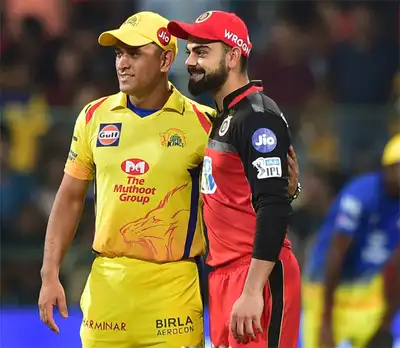
The Indian Premier League (IPL) is upon us. Once more with feeling. This is the 18th edition of this obscenely cash-rich tournament and no one seems to be tiring of it. It is another matter altogether that many cricket followers, particularly those of an older generation, swear blind that they will never watch another IPL game if they can help it. The conviction is palpably absent in their voice as they rain invective on this instant, slam-bam form of the game. When the day arrives and their favourite franchise is in action, you can bet your bottom dollar they will be sitting in front of their television screens eagerly looking forward to watching Dhoni, even if he decides just to stride majestically to the crease and walk back to the pavilion after facing a mere four deliveries, which may or may not include a couple of crowd-pleasing maximums. Or over-boundaries, as some radio commentators of a bygone era used to describe them. If Chennai Super Kings are fielding, then the fans will feast their eyes on their Thala pulling off an age-defying diving catch or whipping the bails off in a flash behind the wickets. The great man keeps mum on retirement plans, as on most other things, and his fans want him to play till he is 50. I tell a lie. Make that 60. And no one is prepared to lay any bets against such an eventuality.
Then there is Virat Kohli. If Dhoni is the ageless father figure of Indian cricket, then Kohli is its ageless sex symbol. Rippling biceps, well-trimmed goatee, body language full of aggro and a Bollywood starlet for a wife. What more can a man want? Or a woman, come to that. And with all that, lest we forget, a terrific batsman who has had the best bowlers in the world for breakfast. If the mood takes him, Kohli can do a fair imitation of a trapeze artist when his team bags a wicket or when he routinely takes India over the finishing line. Pity the bowler whose shoulders he leaps on with gay abandon. Whether it is elation or anger on the field of play, King Kohli can match King Kong! A cricketing equivalent of Novak Djokovic – a beast on the court and a thorough gentleman off it. At least, that’s the word on the street. Makes no difference, the crowds adore the former Indian skipper. After Dhoni, that is. Sachin? Who dat? Public memory is fickle. We live in the here and now.
I decided to catch up with a cross-section of cricket lovers and probe them on what they thought of the IPL. I dived into the deep end of the catchment area of cricket. I stood outside one of India’s better-known stadiums so that I could buttonhole all and sundry as they were getting into the stadium, or coming out of it, and challenge them with a few well-chosen questions. Every single one of them had just cricket on their minds and that helped.
I first stopped a 12-year-old boy (he could have been 15) who was holding his father’s hand (at least it looked like his father) and was about to ask him which his favourite IPL franchise was. Then I saw that he was wearing that famous yellow tee-shirt with the number 7 and ‘Thala’ emblazoned at the back. At which point, I bypassed the kid and sought another victim. No point going after the bleeding obvious.
Two high school girls, in high spirits were my next victims. The match had just given over. I asked one of them if they enjoyed the game. The first one, wearing an RCB tee-shirt gushed, ‘Virat is too cute, yaar, love his goatee.’ Her partner butted in with a ‘Kohli, Kohli. Anushka, I am so jay of you.’ This was going nowhere, so I asked the twitchy twosome, ‘So who won the match?’ The answer was swift, ‘Who knows and who cares? Kohli, Kohli,’ they chanted. They love their cricket, this generation.
A 70 something gentleman ambled out slowly, tapping on his mobile for his driver. I waited for him to finish his call and went up to him. ‘Excuse me Sir, but do you really enjoy this instant-noodles type of IPL cricket?’ He thought for a while and replied, ‘You know, in 1963 at the Eden Gardens when ‘Prince Salim’ Durani used to hit sixes on popular demand….’ I had heard enough. If I had allowed the senior citizen to continue, he would have gone on till the cows came home. Or till his car or Uber arrived. Which would have been about the same time. I smartly ducked and sought another prey.
I spotted a man of Oriental aspect, as Sherlock Holmes might have put it and wasted no time in blocking his path. ‘Good evening, which part of the world are you from?’ ‘India,’ he replied. Surprised, I said, ‘I could have sworn you were from China or some such. We normally don’t come across too many people like you at cricket matches.’ ‘My friend, don’t jump to conclusions. Looks can be deceiving. My family has been running a popular Chinese restaurant for over four decades in this city.’ I regretted being so presumptuous. ‘My apologies. Are you a close follower of the game?’ ‘Not really, don’t get the time. It’s just that my 95-year-old grandfather was keen to know if any player in the IPL bowled the Chinaman. I am here only to oblige him, as I did not have a clue what a Chinaman was.’ ‘Other than you, ha ha,’ I laughed at my own poor joke. ‘Ha ha yourself,’ he said and invited me for a dim sum and beer to his restaurant. Nice chap. Had a sense of humour. For a Chinaman!
Time was running out as I had to file my copy. I trudged my way back to hail an auto. In the receding distance, I could hear faint cries of ‘Dhoni, Dhoni, Kohli, Kohli.’ Must have been a CSK vs RCB game, I thought to myself as I climbed into the phut-phutty.
(An edited version was carried by Deccan Chronicle dt. 1/4/25)






 Suresh's Corner