Sticks and stones may break my bones

The Defence Ministers of the two warring, neighbouring nations and their top military aides, decided to get together at a picturesque, snowy mountain top of indeterminate location, across a flaky, disputed border, to hold their 100th peace talk. The 99 previous peace talks had proved infructuous, with neither side willing to yield an inch of territory. These peace talks invariably turned into sabre-rattling war talks. Our media’s feeding frenzy moved into top gear. It was fervently hoped that the centenary of their jawing across a table will finally bear fruit with a degree of statesmanlike compromise on the cards. Hope springs eternal. The meeting was called to order by the English speaking, but not English, Defence Minister while the famously inscrutable Oriental team, led by their Defence honcho, nodded assent in unison. An interpreter each was present to take care of translating each other’s views.

English Speaking Defence Mininster (ESDM) – ‘Gentleman, I welcome you all to this summit meeting of our two defence teams, who have shown more intent on attack thus far. We are holding this conference at some unidentified mountain top, I know not exactly where. We were brought here blindfolded, and I hope we are not being blindsided. I am not even sure which side of the border we are sitting on – yours or ours. The incessant snowfall in these parts keeps obliterating the border line which results in our constant sparring with each other. This has got to stop. This being our 100th meeting, my Prime Minister is very keen that we should put an end to hostilities and smoke a peace pipe. Speaking metaphorically, of course. We are not all Apache Indians. So, what say you Chief?’

Oriental Defence Minister (ODM) – ‘Agleed, agleed. We totarry aglee. Our mighty Chairman also wishes we smoke many pipes of peace, though I plefer cigalettes myserf. But first, as a show of lespect for 100 talks, we bling speciar cake, baked excrusivery for this occasion. It is vely big cake with 100 candres with battely opelated frames burning blightly. Won’t go off even in the bitterry cord, brustely winds. Olientar technorogy.’

ESDM – ‘That is such a lovely gesture, Minister. Had trouble following you at first, what with all the Ls and Rs getting reversed, but I am beginning to get the drift or rather, dlift in your unique vocab. Sets the right tone, but how do we blow these electronic candles? I think you may have missed a trick there, Sir, though we do appreciate your wonderful techno-led, olive branch initiative.’

ODM – ‘No, no. We do not brow these candres, we use modern technique. At the count of thwee, we sing together, “For he’s a jorry good ferrow, and so say orr of us,” in honour of our mighty Chairman and your gleat Plime Minister. Then I give signar to my obsequious rackey, who after bowing five times, will switch off the candres by lemote contror. Then we all do bottoms up with neat Lussian Storichnaya. After that, we start talks in good mood. So, what say you Chief? Ha ha!’

ESDM – ‘Sounds fun, comrade. Let us go together, you and I, when the evening is spread out against the sky, like a patient etherized upon a table…. beg your pardon, was getting carried away there. All this preliminary pourparlers, at 11,000 feet above sea level, not to mention the neat shot of Russian Stolichnaya, it’s made me light-headed, might need oxygen and I am talking nonsense.’

ODM – ‘Oh no, my lespected fliend, you are not talking nonsense. I know orr about T.S. Eriot, gleat poet. And that quote by you from The Rove Song of J. Arbelt Pluflock was simpry marverrous. So applopliate.’

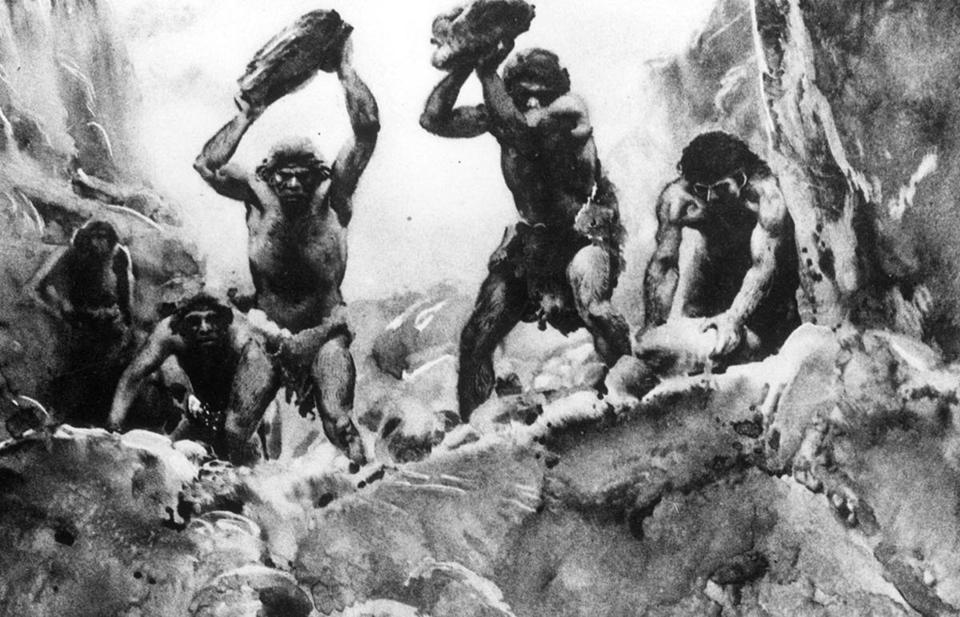
ESDM – ‘You think so, Chief? What a lerief. Good God, I am even beginning to talk like you. Tsk, tsk. Let us get down to business, shall we? First off, why are your soldiers and our soldiers fighting with sticks and stones across the border, and shoving and punching each other?’

ODM – ‘Sticks and stones may bleak my bones, but words will never hurt me.’

ESDM – ‘I am impressed by your familiarity with ancient Christian adages, but what has that got to do with anything? Nobody is hurting you with words. Stick to sticks. And stones. Please answer my question. What’s with the dandas?’

ODM – ‘Ho, ho, ha, ha. Dandas, I rike that word. It means sticks in Hindi, yes? I rearn a littre Hindi when I am posted in our Embassy in your countly some years back. But in meetings with your dipromats, we pletend not to understand so we can forrow how you are abusing us with smiring face.’

ESDM – ‘We learned that trick from you, comrade. Ho, ho, ha ha, yourself. Now look. Enough of all this banter and no, I do not wish to have another large Stolichnaya, and neither will my generals. I know they are dying for a drink or two, but they will simply have to wait. Now about this silly skirmish. How do we put a stop to it?’

ODM – ‘Sirry skilmish? Never heard that before, Minister. I am asking my PA to make notes. You speak Engrish so beautifurry.’

ESDM – ‘Yes, thank you. We have had over 150 years of coaching from the best teachers of that language. Now we speak it better than them. But we digress. I cannot return home without hammering out a solution to this bamboo shoots fight with your lot.’

ODM – ‘But your peopres in the media are boasting orr day rong that they have pushed our boys back. Orr lubbish. Plopoganda. First you stop that. Now you ask me why we fight with sticks. What do you want us to do? Bling out our Karashnikovs? There wirr be bodies evelywhere. Your bodies.’

ESDM – ‘I get your point. Not that we will be sitting back and eating your bullets, mind you. We do have sophisticated weapons, you know. Look, again we are getting obstreperous. Try pronouncing that, my slant-eyed friend. But jokes aside, I have a solution in mind. Problem statement – we do not know where the border actually is and we are both playing blind man’s buff. Or bluff, if you prefer. I suggest both sides move 500 metres back from where we are now sitting and pitch our tents there. Put up some white flags on the disputed territory to flag PEACE. That piece of unoccupied land we shall develop into a field to play cricket or football. You can thrash us in football and we will return the compliment in cricket. This shall be treated as a permanent settlement of the dispute – without a shot being fired. Our bosses will be very happy. There, I am done. Can we sign the peace treaty now?’

ODM – ‘Yes, you are so collect. One plobrem. Have we not tlied this before, and did our boys not bleak orr the lures and began pushing and shoving again? How do we stop that?’

ESDM – ‘But my dear ferrow, I mean fellow, that is why we are developing a playing field. A level playing field, ha ha. Given the conditions, we can even play ice-hockey. It will be an example to the rest of the world, wherever there’s bloodshed over border disputes.’

ODM – ‘Ok, you convinced me. We are leady to sign on the dotted rine. And now for some dericious news. We have allanged speciar feast for orr of you. Menu incrudes Duck Brood Soup, Suckring Pigret Dumprings for starters, Stinky Tofu, Snake Mince, Pigeon On a Stick, Pig Blain and Lice for main course, and finarry, the coup de glace, our world famous Fortune Cookies for your good hearth and happiness. Ho, ho, we can’t wait. And you cannot lefuse our hospitarity.’

ESDM – ‘When you say brood, blain, lice, you mean…never mind. So gracious and generous of you, but my general informs me that our entire delegation is down with a terrible stomach churn, after listening to your menu. It has been a long day. Our simple repast of roti and dal chaval, cooked by our brave jawans, awaits us.’

ODM – ‘That is so sad. We have to eat it orr ourserves. One finar question. How do you plopose to deal now with your western neighbours, who are arso our vely good fliends? And they also have the bomb.’

ESDM – ‘You don’t miss a trick, do you? Don’t fret over them. We have the situation under control. We play cricket with them, on neutral ground and thrash them black and blue. Once in a while, we let them win, just to show there’s no ill feeling. Thanks for asking. Good night, sleep tight, don’t let the bugs bite.  And don’t forget to practice that bamboozling Chinaman delivery for your next game of cricket with us.’

ODM – ‘If I can find reft-arm list-spinner. Ho, ho, ha ha.’

ESDM – ‘Ha, ha, ho, ho, right back at you.’ 

The 100th peace talk was thus convivially concluded. Everyone went away tired, but happy to be able to convey glad tiding to their respective heads of state.

Harry & Meghan – I, Me, Mine

All through the day / I me mine, I me mine, I me mine – George Harrison

Harry & Meghan, the new docu-series on the young renegade royal couple, Prince Harry and American actress Meghan Markle, was released by Netflix worldwide last Thursday. Three episodes have been put out at the first time of asking, with a promise of three more to be aired on December 15. As all of us know only too well, anything to do with the British royal family has always attracted plenty of vicarious attention around the globe, barring a dystopian World War III. We have just finished devouring Netflix’s Season 5 of The Crown, a series that generated a phenomenal viewership for reasons not far to seek. It is one thing to produce a film or television series about historical figures long dead and gone, but quite another to portray royal personages very much alive and kicking, at least a handful of them. The travails of the late Princess Diana and her fractious relationship with the royal family of Windsor have been well documented, and to actually see them on screen, portrayed realistically by actors taking the narrative right up to the present day, would have been extremely unnerving for the late Queen Elizabeth II and the current occupier of the throne, King Charles III.

Purely as an example of authentic story-telling on the small screen for home viewing, The Crown was a runaway success, sumptuously produced and splendidly acted in a realistic and understated fashion. I wish I could say the same for Harry & Meghan which, on the evidence of the first three episodes appears to be a ham-fisted effort on the part of the two protagonists, to tell their side of a sordid story. Narrated in the first person, Harry and Meghan talk straight into the camera about the extreme privations they have had to endure from a rapacious paparazzi (paps, in Meghan’s lingo) as well as Harry’s royal relatives at Buckingham Palace. They portray themselves as being under siege, as victims of a cruel fate and a hidebound family that refuses to understand how the world has changed and how the family of Windsor have cocooned themselves in an archaic mindset that will not accept, on their watch, a fifth-in-line prince to marry a coloured girl from the glitz and glamour world of Hollywood. As one reviewer described it, ‘it’s a love letter to themselves.’

Harry & Meghan employs a combination of professional camera work with plenty of home video, candid shots of Harry, Meghan, their offspring and pet Beagle, some of them presumably  selfies. Just an ordinary, everyday couple enjoying their domesticity. Close friends and Meghan’s mother punctuate the film with flattering comments. The grapevine tells us that the high-profile twosome has been paid an enormous sum of money to come out with this television series, which is hardly surprising. Millions around the world would have been only too eager to see what these two had to convey in their ‘tell all’ tale. Even after denuding their bank balance of a pretty hefty sum, Netflix would have been comfortably in the black with the humongous viewership this series is currently generating. Everyone concerned would be laughing all the way to the bank.

It is therefore, extremely disappointing that even at the level of assessing this televisual effort as a potentially racy, gossipy revelatory piece of cinéma vérité, the net result is dreadfully boring. The first three episodes plod along at a desultory pace, and after a point, it gets repetitive and does not even provide a lowly pleasure of schadenfreude. I am taking the risk of putting out this ‘review’ even before the next three episodes are scheduled to air, and that is primarily because I do not expect them to be any different from what we have just witnessed. The next tranche could well contain more revelations and gripes and further evidence of the martyr syndrome that Harry and Meghan appear to have fallen prey to, but that will not be reason enough to invest three more hours in the false hopes of unexpected gasps of pleasurable surprise. Going by what I have just seen, the viewer is being wooed to see things from the young couple’s point of view, and I am afraid the wooing is simply not seducing. If anything, they inadvertently succeed in pushing our sympathies towards Harry’s royal family, doubtless uneasily squirming in their plush sofas at Buckingham Palace. Queen Elizabeth II, still warm in her grave, could be turning uncomfortably.

Furthermore, for a camera-shy couple that apparently shuns intrusions by the ‘paps,’ a situation that allegedly contributed to the tragic demise of Princess Diana in a Paris underpass (the driver of their Merc being allegedly inebriated did not help), Harry and Meghan seem quite happy to engage professional cameramen to capture their every intimate moment at home or on an African safari. If you can work that out, you are a better man than I am, Gunga Din.

I am not venturing into the whys and wherefores, the rights and wrongs of Harry and Meghan deciding to bare their soiled linen to a gleefully waiting world. That is their business and if they are getting richer by the fistfuls as a result, fair play to them. My limited point is that the television series appears to have been put together in an unseemly haste to catch the Christmas / New Year jollifications and perhaps to stave off competition arriving with similar stories, and as a result, does not provide a level of involved viewing that one expects from documentary film-making dealing with the high, mighty and glamorous. Who knows, perhaps the next three episodes will be a thrill-a-minute joy ride and I may have to eat my words. What is more, there are enough people in India and the rest of the world who will watch, agog, anything that has pretty much anything at all to do with the British royals. If that crowd violently disagrees with my somewhat peremptory views on this tame effort, so be it.

Rest assured. Notwithstanding anything I might have said, I shall avidly await the next instalment with bated breath. And no, I shan’t be risking writing another ‘review.’ Suffice it to say that Harry & Meghan at best, is self-serving and at worst, narcissistic.

Published in the Deccan Chronicle dated 11/12/2022.

The world gets a kick out of this

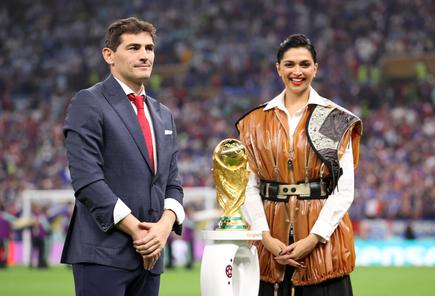
I keep telling myself that I am not really interested in football. Come to that, even my interest in cricket has been waning, perhaps to wax again at the next World Cup. Grand Slam tennis still keeps me riveted, despite Federer’s last, tearful hurrah. At least, Nadal and Djokovic are still there, mixing it up with the new kids on the block. Chess, in the literal sense, is unwatchable, though one takes vicarious delight in India’s emergence as a world chess power. Badminton, with India’s recent Thomas Cup triumph, has kindled much interest though I have always wondered why such a delicate, artistic sport that demands an incredible level of physical fitness, does not attract the masses. Still on racket games, table-tennis evokes a flutter, momentarily, during the Asian or Olympic events. Anyone for squash?

Let me get back to football. Yes, once in a while I do follow the English Premier League. English only in name, as a majority of the players are from outside the British Isles. Oftentimes, there is more excitement surrounding the obscene transfer fees of the leading lights of the ‘beautiful game’ than there is in the game itself. Why do we common folk take such an inordinate interest in the millions being shelled out to a Ronaldo or a Messi? It is the same phenomenon that we witness during the IPL auctions, though I have not found that level of enthusiasm for the Ambani-fueled, cash rich Indian Super League football. As my wife is fond of saying, not without an element of ironic distaste, ‘All this just for kicking a ball around.’

That said, every time the World Cup jamboree comes around once in four years, like the leap year, even those not particularly interested in the game, wake up to smell the coffee, almost always the heady Brazilian concoction. All of a sudden, young and old in India are suffused with feverish excitement. This, despite the fact that there is no Indian participation involved. From the days of Ferenc Puskás, Stanley Matthews, Bobby Charlton, Pelé, Zico, Maradona and now to Messi and Ronaldo, millions of Indians go gaga over the unfolding World Cup drama. Even difficult-to-pronounce names like Mbappe and Lewandowski flow freely off the tongues of football-crazy street urchins in Calcutta. I recall with amusement a visit to that teeming city by the legendary Pelé some years ago. Pelé came over to play an exhibition match, representing the New York Cosmos at the Eden Gardens against Bengal’s pride and joy, Mohun Bagan FC. During the game, even the opposition players were seen running towards the ‘Black Pearl,’ never mind where the ball was, just to be caught on camera with their hero! I suspect even Bagan’s goalie would have been thrilled to step aside and let Pelé slot the ball into an empty goal! The referee, wisely, threw his whistle into the nearby Hooghly. Similar madness was witnessed when Argentina’s idol and poster boy, the sublime Diego Maradona visited the City of Joy in 2017 which also saw India’s former cricket captain and Calcutta’s darling, Saurav Ganguly don his shorts and boots to play footsie with the ‘hand of God.’

Still on Calcutta, World Cup fever also witnesses street artists decorating all available walls with charcoal or paint brush strokes featuring their favourite footballers, their national flags and at times, incongruously, a Tendulkar or Ganguly amongst them. Not forgetting the ubiquitous Amitabh Bachchan and Shah Rukh Khan. It is as much a carnival in Mamata Didi’s city as it would be in Rio de Janeiro or Buenos Aires. In the inappropriately nick-named garden city of Bangalore, where I now reside, football fever does not have quite the earthy, sweaty, seat-of-the-pants intensity that one experienced in Calcutta. In this brushed-aluminium, tech-capital of India, it is all about pubs and clubs inviting all and sundry, with money to burn, to achieve dangerous levels of inebriation while watching the goings-on in Qatar on a large LED screen. After the sixth beer or fifth large rum and coke, no one quite knows who is playing whom. And no one cares. They will all wake up the next morning with a sore head and groan for black coffee and two aspirins.

The timing of these games at the Qatar World Cup, as the tournament progresses, is another reason to gripe. Most of the big games kick off at 12.30 in the morning IST, and unless you are a die-hard football fanatic prepared to sleep it off the next day, the whole affair is a non-starter. We have to satisfy ourselves with YouTube highlights. Many people I know, who would rather commit hara-kiri than miss a game featuring Brazil or Argentina, apply for leave in advance from their work place. Nowadays, one’s work place is also one’s home, so it may not make much of a difference. But back in the day, when little encouragement was needed to ‘bunk’ office, even the bosses took a lenient view of ‘football absenteeism.’

 I vividly recall, when I was a cub trainee at an advertising agency, there was this proverbial watercooler moment, when I cheekily told my boss he was being a stickler for rules for not giving us a day off after one of these big games. I was given a right, royal telling off in no uncertain terms that he was not running a dharamsala. I was not downcast for long as the big chief relented and graciously granted leave of absence. I think he just wanted to show us all who the boss was. Not to mention that he was planning to watch the game himself overnight and sleep it off the following day. Now that I have retired, I face no such impediment. However, even Messi cannot keep me awake after midnight. Not even once in four years. For the crazies, however, their World Cup runneth over.

Postscript: Let us pause to spare a thought and send up a prayer for the great Pelé, who is in palliative care at a Sao Paulo hospital.

Published in Deccan Chronicle on 7th December 2022.

Dream a Little Dream of Me

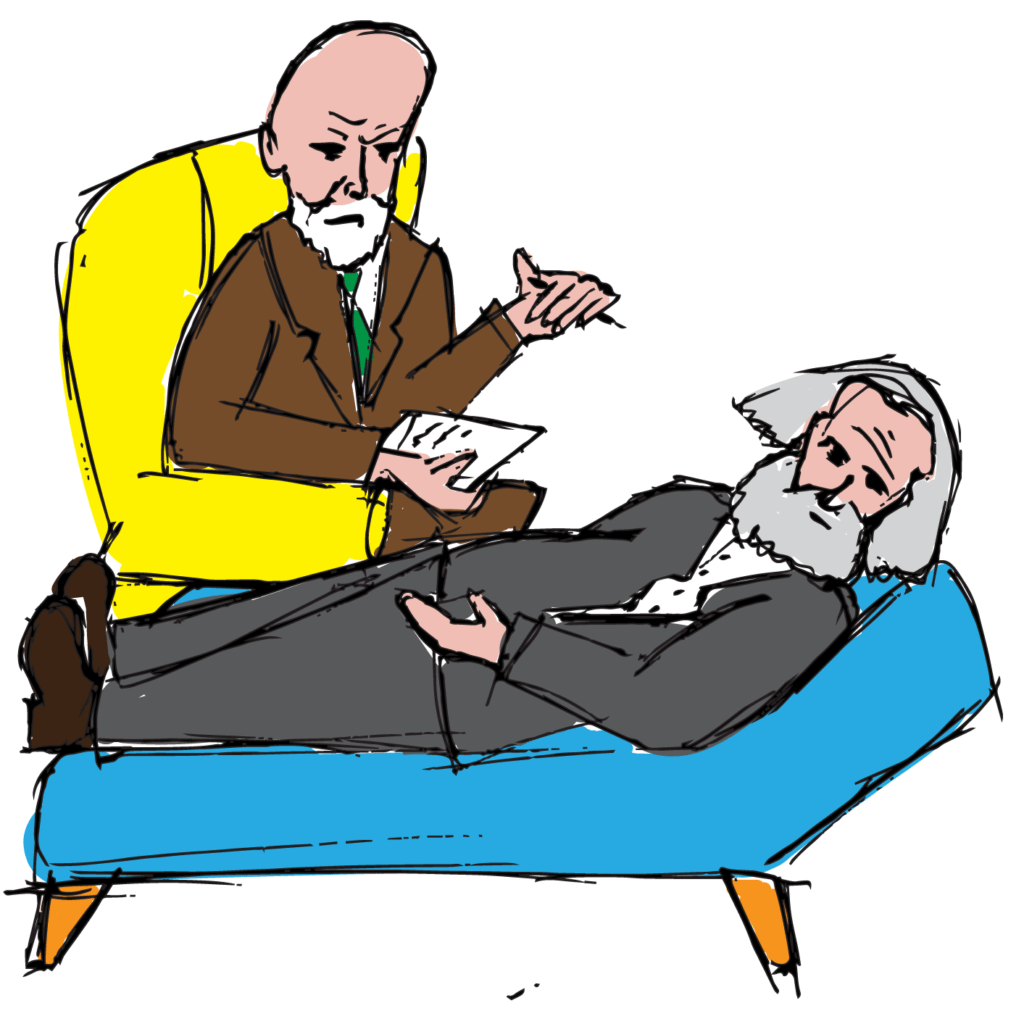
I had a strange dream last night. I dreamt that I was dreaming. What did I dream that I was dreaming about? I will come to that in just a moment. The moot point is, why could I simply not have had a dream? That is what most normal people have, when they hit the pillows and count to twenty or count sheep, if that is their preference. Just a simple dream. Unless it was a nightmare. Applying the same logic you could also, I suppose, have a nightmare that you were having a nightmare. Why did I have to dream that I was having a dream? All very complex and rather Freudian. Which is hardly surprising because that was exactly what I was dreaming that I was dreaming about – having a conversation with the much-celebrated shrink, Sigmund Freud. When I finally woke up from the dream, I realized that I was still dreaming that I had woken up from the first dream. So, I went back to the land of Nod, when my mobile phone alarm finally woke me up, and I rubbed my eyes, relieved that I was no longer dreaming, or indeed, dreaming that I was dreaming. So complicated.

Let me back up a bit here. As most normal people who sleep and dream know only too well, it is an extremely rare case where one can recall precisely what one was dreaming about. Once the mists of sleep dissolve, you can only have a bare-bones recollection of what your mind-at-rest was going through while you slept fitfully. Sometimes the dream disappears altogether only to play back much later, while you are fully awake, leaving you in a state of torpid unease – a sort of déjà vu that I cannot quite put my finger on. I take a cynical view of people who have a tendency to chunter on endlessly about how they dreamt they had scored 500 not out in a Test Match, won the Wimbledon final thrashing Djokovic in straight sets, played the lead violin to rapturous applause at the New York Philharmonic under the baton of Zubin Mehta, split the atom, found a cure for cancer or had a tête-à-tête with the Prime Minister over tea and dhoklas and what a lovely man he was, contrary to how a handful of cynics perceived him. Some of my mean-spirited friends might aver that being invited to tea by the PM should be classified as a nightmare, but I shall dismiss these ne’er-do-wells with the contempt they deserve. If nothing else, the dhoklas would have been scrumptious. To say nothing of the khandvis.

Let me get back to my dream. Or the dream within a dream. I am not sure which is which. Anyhow, there I was, minding my own business, lying comfortably on a leather couch in a luxuriously fitted-out, oak-paneled room somewhere in the Austrian capital, Vienna. I could vaguely hear a sonorous voice counting down from 10. Ending with 4,3,2,1 and a sharp snap of the fingers. I woke up with a start, eyes wide open, and spoke those three immortal words, ‘Where am I?’ I could have added, ‘And who the devil are you?’ but the bearded visage got ahead of me.

‘Good morning. I am Sigmund Freud, your psycho-analyst. You have just woken up from your second dream. As we speak, you have moved to your first dream, but you do not know that. You are still fast asleep and dreaming that you are being interviewed by the world-famous neurologist and founder of psychoanalysis. I shall be asking you a few questions, after which I shall release you from your first dream and you will be home and dry.’

At this point, I found utterance. ‘Look here, old man. All this is rather Freudian. Ha ha,’ I chuckled at my own weak joke. ‘But seriously, how the heck did I get here, even in a dream, first or second? And clearly Mr. Freud, modesty is not your middle name. World-famous neurologist and founder of psychoanalysis? Even though you say so yourself?’

‘I say so myself because it is what it is. Anyhow, you are not here to talk about me. Tell me about yourself. What seems to be the trouble? Time to unburden.’ The shrink sounded a bit shirty. A shirty shrink!

‘The trouble Sir, is that I went to sleep with nary a care in the world. When I woke up, or thought I had woken up, it appears I was still sleeping and dreaming. That was in my cozy home in Bangalore. India, in case you are not aware. Next thing I know, I have woken up again in a strange room in Vienna, travelled back in time and am being quizzed by an Austrian loony doctor.’

‘Not just any Austrian shrink, I’ll trouble you, and less of the loony doctor stuff, if you please. Let’s have some respect. I am here to help you. Don’t worry your pretty little head over first dreams and second dreams. They are all the same. The function of dreams is to preserve sleep by representing as fulfilled wishes, that which would otherwise awaken the dreamer.’ He might have been Austrian but he was talking double Dutch.

‘Yeah, I follow you completely. Do you think you can call Starbucks and order a skinny latte for me. That’s coffee. I really could do with a pick-me-up. Get one for yourself, if you like.’

The psycho-analyst looked befuddled. ‘My friend, I cannot understand a word of what you are saying.’

‘That makes two of us,’ I retorted.

Freud went on. ‘You are still in a dream state. Once you wake up, your life will return to normal. For now, just imagine you are drinking skinny whatever-it-is and your thirst will be slaked.’

‘Gosh, you speak funny as well. I can’t wait to wake up. By the way Doc, what year is this that I have woken up in but in restful slumber on my second dream, or first dream?’

‘1930, and Hitler and his Nazi Huns are swarming all over Austria. My own life is in peril. I am a Jew, you see.’

‘I am sorry about all that, but why are you filling my head with your troubles? I am supposed to be the patient. Anyway, it was all such a long time ago, and you were rescued and shipped off to England where you died a couple of years later. I am talking to a ghost. In my dreams. God almighty!’

Sigmund looked distraught. Bad memories. ‘I am sorry about that. Shouldn’t have taken you back to my terrible past. Most unprofessional. Bit of a slip.’

‘A Freudian slip, eh?’

He guffawed good-humouredly. ‘Good one. Look, all this has given me a thirst. I am also feeling somewhat pooped. Need some caffeine. Cup of coffee do you nicely?’

‘Good call, Doc. Not too much milk, and don’t spare the sugar. Can you stretch it to a croissant?’ In my dream state, I looked forward to the coffee. ‘Shall we carry on with the session, Sigmund? Hope you don’t mind my calling you Sigmund. We are now practically on first name terms.’

‘No issues, my friend. As time is running out and I have more patients waiting, I have to gradually conclude this session, stimulating though it has been. Now let me wrap this up by asking you again. What is it exactly about your dreams that is troubling you.’

‘It is not the dream itself, or the dreams themselves, that bother me. Like you as I am sure, I have had all kinds of dreams, and I have learnt to live with them. As I told you earlier, it is the fact that I am dreaming that I am having another dream that I am unable to cope with. There I am, telling off the Income Tax johnnies who are crawling all over my apartment, that I have nothing to hide, and just as their chief honcho is about to gyve my wrists and haul me off to an unknown destination, I wake up in a sweat, but immensely relieved. “Thank God it was only a dream,” I tell myself, only to realise that I have lapsed into another dream involving my landing in Bangalore from London and promptly being hauled off by customs officials into the red channel and being administered the third degree. Can’t take it anymore, Doc. One bad dream, theek hai. Par for the course. I can handle that. Two bad dreams is pushing the envelope, and not in a nice way. Capiche?’

‘My, my, Italian and everything. These are anxiety dreams, my friend.’

‘Tell me something I don’t know, Doc,’ I riposted.

‘You may be worrying about something altogether different but it manifests itself allegorically in your dreams as troubling touch points. I know a patient who frequently dreams that he is in the middle of a fancy, stylish party. With no clothes on. Not a stitch.’

‘What, starkers?’

‘Absolutely. In the buff, as we say at our annual psychoanalysts’ ball.’

‘Thank heavens I haven’t reached that stage yet. Maybe if a third dream intrudes on the first two, a fate worse than death may also eventuate.’

‘Now, now. Let us not get melodramatic. Yours is a simple condition. My diagnosis is clear. There are too many things going on in your life. These daily occurrences and thoughts of everyday life is what I have coined as “dream-work,” which are nothing but “secondary-process” thoughts which become subject to the “primary process” of unconscious thought. These, in turn, are governed by the pleasure principle, wish gratification and the repressed sexual scenarios of childhood. In sum, it is all about dream distortion, displacement and condensation of the repressed thoughts to preserve sleep. You have nothing to be concerned about. That’s it for now. The bill’s in the mail by dream post.’

At which point, my alarm went off. Again. Alarm bells, more like, contemplating Freud’s bill in the post. I sat up in my own bed. My wife was fast asleep and everything appeared to be kosher. I let out a stifled yowl of relief. Thus awakened, my wife asked me what the matter was. I skipped the whole Freudian episode and replied that I had just dreamt I had solved The Times Crossword Puzzle inside a world record three minutes.

‘In your dreams,’ she mumbled and turned back to sleep.

Exactly.

Here we go again

The people who cast the votes decide nothing. The people who count the votes decide everything.  Joseph Stalin.

If you are a responsible citizen who believes in the democratic process and who takes pride in voting governments in and governments out, depending on their performance during their tenure in power, take a bow. Always assuming that you are one of those, irrespective of age, who will make that journey to the nearest election booth, stand in a long, sweltering line, wear some species of headgear to ward off sunstroke, cast your ballot and come out of the school or college which happened to be your voting venue, stick your almost indelible, clumsily ink-smudged digit up in the air, your face wreathed in a broad smile, for all the world to see what a good boy or girl you have been. Some of the younger smart alecks rudely show their middle finger, as if to say ‘this is what we think of the whole rigmarole.’ If you happen to be close to or above a hundred years old, you can bet your bottom rupee some television news channel or the other will push its camera into your benign, crinkled face and ask you who you voted for and why. Of course, your 75-year-old son and 69-year-old daughter-in-law will be on hand to ensure you are steady on your feet, provided they themselves are steady on theirs.

Leading newspapers will carry the centenarian’s mug shot next morning in the city pages. If he is still standing after all the exertion, he can lie back at home in his comfortable armchair and enjoy a refreshing cup of tea, secure in the knowledge that he has done his bounden duty as a citizen of his country. And wait anxiously in front of his idiot box to see himself on television. WhatsApp messages zinging to and fro. ‘Just saw Uncle Ram on NDTV. Wow, that is so cool!’ We place our trust every five years on a particular political party, either at the state or centre and trust to God they will deliver. Man proposes, God disposes. Alas and alack, not too well! The bar is lowered every five years.

My contemplation here is not so much to analyze the respective merits or demerits of different political parties and how they are likely to fare at the hustings. There are enough experts doing that on a daily basis, firmly tilting to one side or the other of the political divide. I am more concerned with the entire process of elections, at the national or state level, and what we citizens can look forward to, to entertain us during the weeks that precede these elections. At the end of the day, that is all it is, some harmless time pass entertainment. The results themselves are quite incidental. As to why I have chosen this particular juncture to write on this subject should be clear enough to the meanest intelligence. Two very important state elections are just round the corner in India. I am, of course, talking about Himachal Pradesh and Gujarat. And before you can say Narendra Modi, the mega circus of them all, India’s general elections will be at our doorstep, or rather, on our television screens and dailies. Even now, the newspapers are full of double-spread adverts from the concerned political parties, particularly those with very deep pockets, extolling their virtues and all that they have accomplished and promise to do so if elected or returned to power. Television commercials are even more fulsome, supported by a soaring, emotional music soundtrack and moving images of our leaders that rarely move those who will trudge to the ballot boxes. The news channels do not lag behind when it comes to advertising. I was startled early one morning when I turned the first page of my newspaper. There she was, adorning the entire full page, the doughty Navika Kumar of Times Now, bearing all 32 in a seductive smile. A bit unnerving at six in the morning.

Psephologists and party apparatchiks will hold forth through our home screens. Pro-incumbency, anti-incumbency, pre-polls, post-polls, plenty of graphics and numbers will fill our screens, and the one singular quality all the presentations will possess is one of utter confusion. Clarity will be a major casualty. The Congress chap will smugly announce that they have inside information that they are winning by a landslide. The hyper-kinetic lady from AAP will rubbish the Congress claim with a smug riposte, ‘in your dreams.’ Finally, the heavyweight from BJP will steamroll everyone else while invoking PM Modiji’s name at least 27 times during his stormy, concluding peroration. The anchors will add to the mayhem. It is infinitely wiser to wait for the final results. Advertising revenues of the channels will climb exponentially during these pre-election shows. And why not? They are working night and day to keep us abreast of VIPs from the world of corporate India, the film world, sports stars and of course, the politicians who came to vote. Let the TV channels and newspapers make some moolah during these straitened times. We should not begrudge them that.

Speaking for myself, I find the whole election tamasha a continuous entertainment platform, what with all the speculation, the suspense, the research numbers which the politicians will refute or approve depending on which way the wind is blowing. Not to mention the television anchors whose own biases become more than apparent as they attempt to control the ‘debates’ this way and that.

That is all very well, but what about those death-trap potholes that pockmark our roads? What are you politicians doing about them? We are talking about the garden city (that’s a laugh) that is Bengaluru. I live there. ‘Don’t worry about the potholes,’ the powers-that-be assure us. ‘We are patching them up in double quick time. What is more, we are giving you a spanking new, state-of-the-art airport terminal that will be the pride of India. Not to mention the gigantic statue of Kempegowda, the founder of Bengaluru as you approach the airport. What more do you want?’ Patchwork solutions that will barely last the duration of the PM’s inauguration of the new airport terminal. The late, lamented cartoonist, R.K. Laxman’s fabled ‘common man’ is bound to be wearing his endearingly puzzled mien, asking himself, ‘I have never even seen the inside of an airport, never mind spanking new terminals. What good is that to me if I have to navigate my two-wheeler through intolerable traffic jams and craters the size of swimming pools? But I am happy about the statue. Will take a bus ride to the airport, stand in front of the bronze marvel with the good wife and take a selfie.’

The election jamboree is a great relief from the daily tedium of scandals, court cases, murders, corporate honchos being brought to book, more court cases etcetera, etcetera, etcetera. I prefer to spell those words out fully in preference to the untidy ‘etc.’ I am inspired by Yul Brynner’s reverberating throwaway line in The King and I. And speaking of murders, the recent case of a lunatic who hacked his girlfriend into 35 pieces, kept the remains in his refrigerator for a while and finally scattered them to the four winds in a nearby wooded area, caught the prurient and ghoulish imagination of the newscasters and, I daresay, half the nation as well. Film producers around the country are already spitting on their palms and rubbing their hands in glee, while scouting for a script and screenplay writer who can come up in double quick time with the goods.  In short, if you are a disinterested viewer, who couldn’t care less about which party finally wins a particular election, then you can sit back and enjoy the fun. Rather like watching England play Australia in a cricket international. From an Indian perspective, you enjoy the game irrespective of who wins or loses. Which, I need hardly tell you, is never the case if we are taking on Pakistan.

At the end of the day, there is a smidgen of sense in the ruling dispensation wanting to open a dialogue on the merits of holding state and central elections at the same time. The thinking seems to be, let us get this thing over and done with in one fell swoop, post which the states and the centre can get on with the business of governing. Otherwise, the country seems to be beset with a never-ending shenanigan of some kind of election or the other happening all over the country throughout the year, leaving politicians with no time to repair roads and improve infrastructure. Their sole preoccupation has been with how to survive in politics and stay in power. The opposition, true to its name and calling, will oppose this idea tooth and nail, on the premise that such a move will only further aid the ruling party’s avarice to ‘gain the world and lose their soul.’ Speaking for myself, I can only say that elections just once a year will rob the citizens of year-round entertainment, as we will have to make do with one mega jamboree, and remain bereft of the cut and thrust of politics on our TV screens for the next five years. In saying that, I underestimate our politicians’ ability to keep doing crazy things and keep us all on tenterhooks. They are made of much sterner stuff. To say nothing of psychotic nutcases who become vivisectionists because they were dropped on their heads in their infancy.

Wailing and gnashing

I know it was you, Rohit. You broke my heart. With apologies to Godfather Michael Corleone.

India is out of the ICC Men’s T20 World Cup, to accord the tournament its proper nomenclature. The word cricket is missing from the title, but that is typical of those who run this game worldwide. They think everyone must know what they are talking about. How could those living in the Outer Hebrides or Mongolia not have heard about this Maharaja of Sports. Being a rhetorical question, I shall eschew the customary interrogatory squiggle. As I said, India’s players are coming back home, suitably chastened with tails securely tucked between their legs, after being roundly, mercilessly and comprehensively beaten by England in the semi-final. It would not be an exaggeration to say that England wiped the floor with our boys. The much hoped for and hyped-up India – Pakistan final will not take place in Melbourne come Sunday. Let the customary wailing (or weeping) and gnashing of teeth begin. If you are moved to extremes, breast beating will not be looked askance at.

 I do not wish to go into the details of the hows and whys of our manner of defeat, as our newspapers and television channels will be full of it anyway, and every single one of our humongous citizenry will have his or her opinion on the subject, and will be airing them, often abusively, through Twitter or Facebook or whatever. On cricketing matters, I only wish to say that if India managed to cobble together 168 runs, puffing and panting, thanks to some late innings heroics, and England hammered out those runs with 10 wickets in hand and 4 overs to spare, then something is clearly rotten in the state of Denmark. I will leave the painful post-mortem to the millions of social media pundits, who are already at it with a vengeance. Long live cancel culture. ‘Dravid should resign,’ ‘Rohit and K.L. Rahul should be shown the door,’ ‘Make Pandya the captain,’ ‘Bring back Dhoni,’ ‘Our bowlers should be pensioned.’ If you are one of those REM (Rapid Eye Movement) readers, the word is ‘pensioned,’ not ‘poisoned.’ Have yourselves a ball guys.

Then again, there are those who console themselves by saying that it was better that we lost to England than to go into the finals and get thrashed by Pakistan. That would have been intolerable, an ignominy worse than death. Mamma Mia! Even my driver used to wax eloquent, ‘never mind who we lose to Saar, but NOT Pakistan!’ These feelings run deep. And who do those slimy Pakis think they are, anyway? They pretend to play badly initially, lose a couple of games, leaving their opponents wallowing in a false sense of security, and before you can say Babar Azam, they sneak up on you when you are not looking and start beating the living daylights out of everyone in sight. Their bowlers suddenly become unplayable and their batsmen go berserk. Just not done. Not cricket. This is exactly what they did, the Pakis, in 1992 under former Prime Minister Imran (isn’t he gorgeous!) Khan and went on to win the ODI World Cup in Australia.

Anyhow, who gives a toss what happens now? For all I care, Pakistan can beat England black and blue or, for that matter, Captain Buttler can serve up a royal feast, like he did against us in Adelaide. It won’t matter a jot. Many avid followers of the game in India take vicarious pleasure in seeing Pakistan lose to some other opponent, if India were not in the mix. This dog in the manger attitude is baffling. Not that I will be jumping for joy if Pakistan lift the trophy, but why should we want England, a country that ruled us for close to 200 years and was the primary cause for India and Pakistan to undergo a Caesarian section and become two perennially warring nations, to be victorious? Purely on an emotional plane, I mean. Subsequently we helped give birth, normal delivery, to Bangladesh. At least this young nation does the decent thing and keeps losing to us more often than not. That is gratitude. Let me quickly add that I have many very fine English friends, and I travel often to that ‘green and pleasant land,’ so this is nothing personal. However, history is history. And cricket is cricket.

All right, let me admit to being somewhat hypocritical here. I do care about winning or losing a cricket match against our neighbours from the western borders. When we lost to England in the semis, thus denying ourselves another opportunity to slip it across Pakistan, I did not exactly lock myself in the bathroom and blub my eyes out, but it was a near thing. I blamed my inflamed red eyes, when my concerned wife inquired, on a fictitious errant gnat that got wedged in my right eye, and an imaginary fly that took care of the left eye. It was a weak excuse and the better half was decent enough not to probe any further. By now she is fully seized of what happens metabolically to grown men when sporting results go base over apex. Anyhow, the brief moment of madness passed, and I am now ready to get back to watching top-class tennis at the Nitto ATP Finals in Turin. As a spectator sport, tennis is my first love anyway. And that is not sour grapes. No India or Pakistan representative there to destroy my equilibrium. ‘Go Rafa!,’ ‘Go Djoko!,’ about sums it up.

Eminent Marxist intellectual, political activist and Trinidadian cricket lover C.L.R. James, in his brilliant book Beyond a Boundary wrote, ‘What do they know of cricket who only cricket know?’ He was paraphrasing Rudyard Kipling’s similar observation pertaining to England but the saying resonates across many of us cricket enthusiasts from an earlier generation. The game could be appreciated, win or lose, for the glorious literature it produced, for the unforgettable comments it evoked on radio and television, for the lyrical press coverage we devoured every day of a Test Match, whereby merely reading such reports by writers of repute would induce most readers to first turn to the sports pages. Politics could go hang. My eyes are welling up again, but this time out of nostalgia’s rose-tinted glasses and not because we lost a silly cricket match.

Now that cricket is momentarily placed on the back burner, and big-time tennis will ephemerally keep me interested, we are approaching, just round the corner in fact, FIFA World Cup Football. Qatar, the middle-eastern kingdom got the nod to host the event, amidst some controversy, but the games will go ahead. The mother of all sports galas comes around once every four years, and keeps most sports aficionados glued to their television screens. Once again, for those of us in India, we can enjoy the brilliance and artistry of Messi and company for its own sake. No patriotic fervour involved as India is unlikely to be a participant during my lifetime. One is thus an extremely involved, if disinterested, spectator. One can also derive much fun out of the colourful gaiety displayed by the devout fans of their respective countries. Brazil and Argentina will be leading the Latin American challenge while Germany and France will hope to keep the European flag flying. Astonishingly, former champions Italy failed to qualify. England, despite their huge build-up, invariably flatter to deceive, but for some strange reason, they have a strong following in India. English football fans do no credit to their country, but they had better mind their Ps and Qs in Qatar if they value their lives and limbs. Quite literally! The authorities there deal with hooliganism rather summarily.

I end, as I started, with cricket. A very dear English friend of mine sent me this message minutes after England had trounced India at the T20 World Cup in Adelaide. ‘I won’t mention Adelaide. Oops too late, I just have.’ I am already fashioning my telling response to him depending on what happens in the final when England take on Pakistan. Do I wish for Pakistan to win so I can get my own back on my English pal? Or do I hope for an England victory so that Pakistan’s bragging rights are nipped in the bud and all of India will find joy in schadenfreude?

It is a Hamletian dilemma.

PS: I am deliberately posting this blog a day before the start of that final game between England and Pakistan. Knowing the result will add nothing to this piece and probably ruin it for me.

Two cheers for Permacrisis

It is that time of the year again. You might even call it the brief silly season when some dictionary or the other decides to name a word that should be anointed with the grand title of ‘Britain’s Word of the Year.’ Since we are discussing the English language, what Britain thinks today, the world will think the day after tomorrow. At least, that would appear to be the fond hope of Collins Dictionary which, after much head scratching, comes up with a word it deems fit to be given this dubious honorific. Clearly the chosen word must necessarily be of recent coinage, if not vintage, and not one that the dictionary has featured in its pages since its inception, perhaps hidden in obscurity and never seen the light of day. As the poet had it, ‘Full many a flower is born to blush unseen, and waste its sweetness on the desert air.’ What is more, the champion word would have come through a phalanx of other words with similar credentials. Criteria for selection would have been rigorous and for the year 2022, the wordy nerds at Collins shortlisted, from among a laughably asinine field, gems such as Kyiv, sportswashing, partygate and permacrisis. The last named, permacrisis, won hands down and has been crowned ‘Britain’s Word of the Year.’ Deafening applause all round.

The winner, Permacrisis (the upper-case P is my recognition of the title winner and not to be confused with a proper noun) has been defined as ‘an extended period of instability and insecurity.’ Ergo, permanent + crisis = permacrisis. QED. Evidently it has crept into our everyday lexicon, reflecting the upheaval caused by Brexit, the Covid pandemic, severe weather, war in Ukraine, political turmoil and a cost-of-living crisis. If multifarious crises of various denominations are the sole raison d’etre for the birth of the word permacrisis (we can now dispense with the capital P), then countries all over the world, including India, can lay claim to adopting the word, the runners-up included. Microsoft Word indicates its unease with these new entrants (barring Kyiv) and is quick to underline them in vermillion, even as I finish typing them. I can see where Word is coming from.

That said, I personally find the chief contestants for ‘Britain’s Word of the Year’ a pretty poor selection. Apparently, sportswashing refers to the staging of high-profile sports events, or the takeover of well-known teams by ‘unsavoury regimes.’ Are they referring to football teams from the high profile English Premier League? And what on earth is an ‘unsavoury regime?’ One will have to assume, by the application of common sense, that the reference is presumably to teams bought over for ‘thirty pieces of silver’ by enemies of the state (of Britain) such as Russia, rogue nations from the Middle-east or despotic Chinese deep pockets. The ‘Gunners’ at Arsenal may have greater firing power, but the decision to invite massive sponsorship money from airline major ‘Emirates,’ highly respectable brand though it is, does not seem to sit too well with the vox populi. All I can say is that you cannot have your Black Forest cake and eat it too! Russian oligarch Roman Abrahamovic smartly sold off his stake in Chelsea Football Club to American interests once his close friend, Vladimir Putin started playing violent footsie with Ukraine. Politics makes strange bedfellows. Still and all, sportswashing doesn’t quite wash.

Then there is Kyiv, the spelling changed from the original Russian Kiev, presumably a nod of approval to the new, preferred spelling as a defiant snook-cocking exercise in support of the Western Bloc’s alliance with Ukraine against Moscow’s aggression, poster boy Zelensky being the current flavour of the season. This is nothing more than lip service, but I suppose in war time, every little bit counts. As one can divine, two of the shortlisted words take a direct line through the Russkraine (my coinage) conflict. However, a pretty pedestrian choice for rubbing shoulders with the elite ‘Britain’s Word of the Year’ candidates. Not, as I have already stated, that the other contenders are any great shakes either.

Finally, we have partygate. The natural reaction would be, ‘Oh no, not another bloody gate suffix!’ Ever since Watergate hit the headlines all those years ago, we have been inundated with one scandalous gate after another. So much so I won’t even bother mentioning any of them. English publications in India, which are usually one step behind their western counterparts, have been quick on the draw with all manner of sleazy gates to deal with on a daily basis. Try Morbigate on for size, red-flagging the recent bridge collapse tragedy in Gujarat.

Every time a scandal breaks out in any corner of the world, the gates open wide and it is open season for headline writers with impossible deadlines to meet and calcified imaginations. Partygate, Collins? Give me a break. All because Boris Johnson’s reckless party shenanigans brought down his government, making way for Truss and Sunak to foxtrot their way out (and in) respectively of No.10. Surely, the country that gave us ready wits like Oscar Wilde, Winston Churchill and Spike Milligan, could have come up with something far more risible. It was the irreverent Goon, Milligan who famously said, ‘All I ask is the chance to prove that money can’t make me happy.’ To say nothing of Samuel Johnson, the man who did so much to fashion the quintessential English dictionary.

The best word I can think of to describe this contrived selection of words by Collins and their brains trust is ‘humdrum.’ While I do appreciate that current affairs such as wars and pandemics do play an important role in coming up with specially coined words, the point of the exercise defeats me. The language already contains many words that are rare and seldom used that Collins could have dredged up. Many of us are frequently criticized for using words that others consider bombastic and showy. Ask our voluble and loquacious MP from Trivandrum, Shashi Tharoor, a perennial butt of stand-up satire. Thankfully, he has a sense of humour and will endorse my view, with knobs on. However, our fit-to-burst dictionaries can well do without frequent new additions that seem superfluous. I hope Mr. Collins is listening.

It has also been noticed that English dictionaries, in recent years, have displayed a penchant for including words of Indian origin on a fairly regular basis. This could be a tacit acknowledgment of the burgeoning Indian and Asian diaspora in the United Kingdom, and now that a Prime Minister of Indian origin has been installed at No.10 Downing Street, we could justifiably expect more of the same. In anticipation of which, may I make a few suggestions to Collins, Oxford, Cambridge, Mirriam-Webster and other word spinners, of India-centric words that could fit in seamlessly without anyone even being aware. I grant you that this goes against the grain of my stated position that there are already too many words in our dictionaries for us to digest, but I am merely going with the flow. Who knows, some of them may even qualify for ‘Britain’s Word of the Year’ award in 2023.

So, here goes nothing. Laabh, meaning profit, but in Bengali, illogically, due to a pronunciation quirk unique to Bengalis, translates to love, as in ‘I laabh you.’ I am not a great fan of puns, but it could help the case for inclusion. Tamil films are full of macchi these days, meaning pal or friend. ‘What macchi, coming to watch Dhoni’s farewell game at Chepauk?’ It has a certain crude ring to it. Saala, literally translates to brother-in-law in Hindi (along with less innocent connotations) and a few other Indian languages, but is colloquially frequently employed as a pejorative banter, as in ‘Saala, what does he think of himself the son of a so-and-so?’ What good is a language if it does not have its share of homespun, vile abuse? Those are my three candidates, Collins or Oxford or whoever, Laabh, Macchi and Saala. I humbly offer them for your weighty consideration.

As a quick aside, it is pertinent to point out that kids of Indian origin are precociously regular in winning spelling bee contests in the United States and elsewhere. While India’s States are politically and linguistically divided and squabbling over Hindi being declared our national language, the country’s projected world dominance over the next century could well witness Sanskrit as the universal lingua franca of preference. Like the Max Mueller Bhavans of worldwide German fame, I see Sanskrit Bhavans sprouting all over the world. Ah well, hope springs eternal.

It is worth noting that the latest edition of the Oxford Advanced Learner’s Dictionary features 26 new Indian English words, including Aadhaar, chawl, dabba, hartal, shaadi and even mouth-watering delicacies like vada and gulab jamun. Words have been drawn from Tamil, Telugu, Hindi, Urdu and Gujarati vernaculars. That should keep some of our overly touchy Chief Ministers in good spirits. The total count in this category could be well over 100, and I am not even counting the old British Raj legacy contributions like kedgeree, dungaree, khakhi, bungalow, jungle, pundit etc.

Meanwhile, with winter fast approaching, I fervently hope the comity of western nations, already reeling under ‘political turmoil, war and severe weather,’ do not fall victim to permafrost, and that Mr. Collins’ permacrisis will be given a decent burial.

Larry, King at No.10

By now, the whole world knows that Rishi Sunak, at the ripe young age of 42, is the youngest Prime Minister that the United Kingdom has had over the past 216 years. If you are not aware of this earth-shattering, historic statistic, you must be in deep meditation in the dark, damp caves of the Himalayas, your blissfully ignorant body encrusted with anthills. These political milestones are invariably expressed within the limits of certain time frames. Reason being, prior to a couple of hundred years and a bit, there was one William Pitt the Younger, who took the oath of office as PM when he was barely 24 years old, just a few years after he passed his driving test, always assuming one drove cars during the Younger Pitt’s reign. Wet behind the ears? Tell me about it. If William Pitt the Younger made his precocious mark in British politics, could William Pitt the Elder have been far behind? Not on your nelly. The father of the son was also the Prime Minister several years before the chit of a scion walked into No.10, always assuming there was a No.10 during that time. Not that it matters really, as one is merely employing the expression No.10 as an imperishable symbol of Britain’s highest executive official residence. Anyhow, as we in India know only too well, these things run in families – fathers, daughters, sons, grandsons and granddaughters – they all tilt ever so frequently at our own political windmills.

As for Rishi Sunak, since we set much store by numerology, there is a statistical, serendipitous symmetry at play, if you’ll excuse the serendipitous alliteration, between him and the Younger Pitt. Sunak is 42 as he takes over as PM. Flip that number round and what do you get? 24 of course, which was Pitt’s age when he took over the reins to reign. This must be a good omen for Rishi. Why that must be so, I haven’t the foggiest, but then, the logic of numbers brooks no argument. Rishi, his wife Akshata, their two daughters, pet dog Nova and the Downing Street cat Larry, are by now, well ensconced at No.10, toasting their feet with the logs crackling merrily at the fireplace, what with winter almost at their doorstep and energy costs soaring through the chimneys.

When I say, ‘the Downing Street cat’ in that off-hand way, I am doing a great disservice to this brown and white tabby, Larry. This is no ordinary cat mate, this is the officially designated ‘Chief Mouser to the Cabinet Office’ who has served for 11 years in that distinguished capacity, seeing off four Prime Ministers, namely, David Cameron, Theresa May, Boris Johnson and Liz Truss. And now the fifth, Rishi Sunak to contend with. Most people would view Larry as just a regular house cat but in political circles, his status is akin to the magical Jellicle cats of T.S. Eliot’s Old Possum’s Book of Practical Cats, later set memorably to music by Andrew Lloyd Webber for the musical, Cats. In her immensely readable, best-selling book of satirical columns, the incandescent Marina Hyde posits thus on PM David Cameron’s priorities, ‘The Prime Minister was at pains to address one of the dominant news preoccupations over the past 48 hours. To wit: the future of Larry, the Downing Street cat.’  Furthermore, Downing Street’s tryst with cats goes all the way back to 1929. Among the many cats that have served at No.10, two of them in more recent times were christened Humphrey and Sybil, named after two unforgettable characters from British sitcoms, Sir Humphrey Appleby from the Yes, Minister / Yes, Prime Minister series and Sybil Fawlty from the hilarious Fawlty Towers.

When I started writing this column, it had entirely skipped my mind that only a few weeks ago, when Boris Johnson was eased out of office, while Liz Truss and Rishi Sunak went hammer and tongs at each other, attempting to cajole the British public to make the right choice for PM, I had written an extensive piece on Rishi’s chances, how such a result might resonate in India blah, blah, blah, the relevance or otherwise of his Hindu Indian origins, his billionaire Indian in-laws – in fact everything that everyone is now talking about after Liz Truss’ brief and disastrous sojourn at No.10, and Rishi’s dramatic entry into that storied residence. We will have to live with American Presidents murdering the new incumbent’s name, Biden called him Rashid Sunook, for crying out loud. No better than Trump’s Swami Vivekamundan!

Point being that rather than going over all that guff again, I thought it would be better from the point of view of public interest, to speak with Larry the tabby cat and get a unique perspective on these amazing goings-on at one of the most famous addresses in the world. After all, no one has had a closer view of the frenetic comings and goings in and out of No.10 than Larry, the residence’s celebrated feline mascot. Accordingly, I approached Larry cautiously. You never know with cats. They can be temperamental.

‘Good morning, Larry. I trust you are well. Can you spare a few minutes and take some questions?’

Larry looked at me with suspicion, his hackles rising ever so slightly. ‘Have you been cleared by Security? I cannot speak to any old hobbledehoy without the PMO’s clearance. No offence.’

I quickly scribbled “hobbledehoy” in my note pad. Some vocabulary! For a cat, I mean. ‘None taken Larry, I have obtained permission from the authorities. Here’s my card issued by the PMO. Can we start? I hope you don’t mind the cameras. This will be a great photo-op for you.’

‘Look I will give you 10 minutes, not a second more. And what do you mean, great photo-op for me? More like, for you. I am the most photographed cat in the world, and you should be grateful I am giving you the time of day. Better get a move on, because waiting in line are the New York Times and Washington Post, those rags The Sun and Daily Mirror from my neck of the woods, and nearly a dozen newspapers and television channels from India. Pravda and Izvestia from Russia are also trying to muscle in, but I have refused on account of the Ukraine – Russia war. I am a very busy and principled cat.’

‘Right, Larry. Noted and understood. Why don’t you give me a quick, snappy sketch of the four PM’s you have served so far?’

‘I am prevented by the Official Secrets Act from saying too much about them but just for you, here goes. Cameron was fairly pleasant, a hail-fellow-well-met kind of guy, May was up a gum tree, tying herself up in knots over Brexit, Bo Jo was a one-off, gave the impression of being mad as a March hare but he was sharp as a tack. And great fun when in the mood. He scratched my belly every time he stepped out. And that hair! As for Truss, she was hopping around like a cat on a hot, tin roof. She was not here long enough for me to judge her properly, but she blinked a lot.’

‘Blinked a lot? Meaning?’

‘Meaning, blinked a lot. Are you dumb? It must have been the tension. Makes people do strange things.’

‘And now you have Rishi. What do you make of him?’

Larry took a long stretch and yawned before answering, ‘Yes, now as you so shrewdly point out, I have Rishi Sunak. Early days yet, but he was occupying No.11 when he was Chancellor under Boris, and he used to keep popping into No.10 frequently. However, I am the Chief Mouser at No.10, and don’t fraternize much with the lower orders at No.11.’

‘What, by the way is a mouser?’

‘That’s Mouser to you, with a capital M. Show some respect.’ Larry was pretty haughty at this unintended solecism of mine. Mouser, because I make short work of the rats and mice that keep scurrying around these parts. Ever since The Plague.’

‘The Plague? Spotted those capitals this time. But that was way, way back in..…never mind. Getting back to Sunak and family, are they looking after you well, Larry?’

‘I have to wait and watch. For a start, he is a teetotaler, which is fine with me as I am abstemious myself. Three saucersful of milk is my limit. But I am dead in the water if he is a vegetarian, as some rumours seem to suggest. Where will I get my daily supply of fish from? I’ll have to swallow my pride and sidle through Chancellor Jeremy Hunt’s cat flap at No.11. He is bound to have a portion of salmon or tuna, or even a tin of sardines in the fridge.’

‘Good thinking, Larry. And how are you on the subject of Rishi being the first brown Briton from an Asian background becoming the PM of what has thus far been a Caucasian preserve?’ I thought that would fox Larry, but I was wrong.

‘Aren’t we getting a bit racist here, Mr. Whatever-your-name-is? We did have Gordon Brown, but that doesn’t count. Ha, ha that was just me being witty. Look, I am more or less colour blind, so it does not make a blind bit of difference to me what colour Rishi is. I am only worried about the food. I’ll go batty if they keep dishing out rice and dal, morning, noon and night. Can’t eat rats all day long, either. My digestion will go for a six.’

‘One last question, Larry, after that I am out of here. I hear Rishi has brought a dog, Nova, along with him. Where does that leave you in the pecking order?’

‘A brown Labrador, yes. Had to be brown! Look, as long as the canine keeps to herself, I have no issues. I’ll stay aloof, but if she pulls any tricks and tries to be super Nova, she will feel the benefit of my sharp, manicured claws. Previous PMs have also brought in dogs to No.10, but the dumb chums knew their place. One good thing, though. I can’t see the pooch surviving on rice and dal. So, I am looking forward to some left-over mince or steak or something I can get my teeth into.’

‘Brilliant, Larry. Bon appétit. Unlike your PMs, you have nine lives. Make the most of it. Thank you for your time. Much appreciated.’

Before I knew what was happening, the security detail had thrown a ring of guards round Larry. It was time for his afternoon siesta. As I walked away, I could hear a gentle, musical purr, which, to my fevered brain, sounded like Memory from Cats. Larry was in dreamland, tucking into a juicy halibut. The Chief Mouser may or may not have been awake, but he showed himself to be very woke.

Once is not enough

How well he’s read, to reason against reading! William Shakespeare, Love’s Labour’s Lost.

I have long since come to the profound conclusion that really good books ought to be read more than once if one is to derive full value from all the riches of the language that the author has sought to so joyously share with his or her readers. Not unlike listening to your favourite piece of music, repeatedly. It is entirely possible that a whodunnit could have been written extremely deftly, but once you know who it was who put the strychnine in the soup, there is little point in revisiting the narrative. The suspense has been laid to rest. You will always know that it was the butler who did it. As a category, by definition, murder mysteries do not generally merit a second reading, however well written. With due apologies to Agatha Christie, Raymond Chandler, Ruth Rendell and their ilk. The other issue I have with best-selling crime novels, even those written by éminence grises of the supreme quality of Arthur Conan Doyle, Dorothy Sayers or P.D. James is that most of their works have also been adapted to film and television serials, and very well produced too. In fact, in the case of the Sherlock Holmes oeuvre, over the decades many of his famous stories have been filmed in a variety of adaptations such that we have a surfeit of The Hound of the Baskervilles, A Study in Scarlet, The Sign of Four, et al. There is such a thing as having too much of a good thing. Let me reiterate, lest you get the wrong impression, that I yield to no one in my admiration for these great authors and their works. I am merely emphasizing that the genre tends to preclude a second reading for its own sake. I am open to a divergence of opinion.

Speaking of building suspense and climaxing with the final denouement, I would urge readers of this blog to key in on YouTube, The Missing Page, featuring that lugubrious British comedian of the 60s, Tony Hancock. The episode hilariously demonstrates what happens when our protagonist, Hancock, borrows a murder mystery novel, Lady Don’t Fall Backwards, from his local library, only to mortifyingly find the revelatory last page missing, presumably torn out by the previous sadistic reader. He spends sleepless nights trying to outguess the author and takes the librarian to task for his lack of diligence in keeping books with pages missing. He even attempts to locate the author to uncover the mystery only to learn that he has died, and the book is out of print. It’s a laugh-a-minute episode, not slapstick, brilliantly scripted and wonderfully acted. A single viewing will not suffice.

Let us now take P.G. Wodehouse. Between you, me and the gatepost, I can take Wodehouse all the year round. Weaned on the master of farce, as he has often been described, from an early age, I have read most of his famous novels at least twice, if not more. You may well ask why. As I write this column, I am well into chapter five of The Code of the Woosters, a Jeeves / Wooster classic. This could quite possibly be my 10th reading of this ageless wonder involving Bertie Wooster’s escapades in an old English country pile, with his gentleman’s personal gentleman, Jeeves, on hand to rescue his master at every turn from a fate worse than death. A silver 18th century cow creamer plays a sterling part! There are, of course, several other novels by Sir Pelham featuring the likes of Lord Emsworth and his frightful sisters, not forgetting his magnificent sow, the Empress of Blandings, Galahad and Freddie Threepwood, Uncle Fred, aka Lord Ickenham and his greatly put-upon nephew, Pongo Twistleton, the Mulliner tales, the Golfing stories, Ukridge, Psmith (the P is silent), Gussie Fink-Nottle and so many more. On reflection, why do I waste words when I can quote one of our contemporary comic geniuses, Stephen Fry (who essayed Jeeves on television) on Wodehouse.

‘Had his only contribution to literature been Lord Emsworth and Blandings Castle, his place in history would have been assured. Had he written of none but Mike and Psmith, he would be cherished today as the best and brightest of our comic authors. If Jeeves and Wooster had been his solitary theme, still he would be hailed as the Master. If he had given us only Ukridge, or nothing but recollections of the Mulliner family, or a pure diet of golfing stories, Doctor Sir Pelham Grenville Wodehouse would nonetheless be considered immortal. That he gave us all those – and more – is our good fortune and a testament to the most industrious, prolific and beneficent author ever to have sat down, scratched his head and banged out a sentence.’

I will move on from Wodehouse, but not before leaving you with a couple of gems, among hundreds, that demonstrate why we read the man over and over again. ‘The fascination of shooting as a sport depends almost wholly on whether you are at the right or wrong end of the gun.’ The Adventures of Sally. ‘The great thing in life, Jeeves, if we wish to be happy and prosperous, is to miss as many political debates as possible.’ Much Obliged, Jeeves. The last quote resonates like a ton of bricks with me every evening when I tune in to the chaos that is our so-called television debates here in India. As to those unfortunates who have never laid their eyes on a Wodehouse tome, they are more to be pitied than censured.

Evelyn Waugh, a contemporary of P.G. Wodehouse’s, had this to say of the great humourist, ‘Mr. Wodehouse’s idyllic world can never stale. He will continue to release future generations from captivity that may be more irksome than our own. He has made a world for us to live in and delight in.’ It is a quote that adorns many of Wodehouse’s book jacket covers. Waugh himself was no slouch when it came to the telling phrase that rousingly celebrates the English language. Author of some of the finest novels you could hope to get your hands on, special mention must be made of Brideshead Revisited, Put Out More Flags and The Decline and Fall. Mr. Waugh clearly did not care much for newspapers, about which he said, ‘News is what a chap who doesn’t care much about anything wants to read. And it’s only news until he’s read it. After that it’s dead.’ As with any great writer, words are Waugh’s stock-in-trade. As he memorably puts it, ‘One forgets words as one forgets names. One’s vocabulary needs constant fertilizing or it will die.’ That’s one in the eye for the lay person who keeps carping about writers ‘who use big words.’ Evelyn’s son Auberon, himself a journalist and satirist of note during the 80s, didn’t quite achieve his father’s everlasting fame.

It is rare, in the world of English Literature to witness a father and his son achieve stardom almost contemporaneously. The exception to the rule, Sir Kingsley Amis and his son Martin Amis, managed to do just that. Overly fond of his daily libation than was good for him, Kingsley Amis nevertheless wrote a clutch of highly acclaimed novels, most notably his 1954 debut Lucky Jim, a trenchant, rollicking send-up of the literary world, academia and those who peopled it. Here is the highly articulate atheist commentator, gadfly and essayist, the late Christopher Hitchens on Amis’ novel. ‘If you can picture Bertie or Jeeves being capable of actual malice, and simultaneously imagine Evelyn Waugh forgetting about original sin, you have the combination of innocence and experience that makes this short romp so imperishable.’ Lucky Jim requires to be read twice, at least, to savour its subtle and heady flavours. Again, not to miss the reverberating Wodehouse reference. Two great quotes from Lucky Jim – ‘If you can’t annoy somebody, there is little point in writing.’ And this classic, ‘His mouth had been used as a latrine by some small creature of the night, and then as its mausoleum.’

The Amis scion, Martin, a close friend of Christopher Hitchens’ has earned the sobriquet of being the enfant terrible of contemporary English Literature. A prolific novelist, essayist and memoirist, Martin Amis is a modern-day literary celebrity on a par with the likes of Salman Rushdie, Ian McEwan, Julian Barnes and of course, Hitchens himself. Among his many books, he may be best remembered for three novels, collectively referred to as the London Trilogy – Money, London Fields and The Information. Martin Amis’ stories and essays are often dark, dense, thickly portentous and his descriptions and dialogues can take you into uncharted territory. Hence the need to re-read and get a grip on his amazing felicity and razor-sharp observations. His elegant prose can traverse comfortably from high-minded sublime to absolute down and dirty, but the Force is always with him. ‘Someone watches over us when we write,’ he says disarmingly. ‘Mother. Teacher. Shakespeare. God.’ How true, even if we are not aware of it and even if we are non-believers. And my personal favourite – ‘What we eventually run up against are the forces of humourlessness, and let me assure you that the humourless as a bunch don’t just not know what’s funny, they don’t know what’s serious. They have no common sense, either, and shouldn’t be trusted with anything.’ Strong stuff, but as a lifelong follower of humour as a genre, I concur unreservedly.

What I have shared with you, dear reader, is only a smidgen of a sample which does not even begin to scratch the surface of the riches that are available in terms of reading material. Before you hastily order your next best-seller from Amazon, take a quick look at the stack of books in your home library and ask yourself this question, ‘Should I be re-reading some of these great novels and discovering hidden literary treasures that might have escaped me at the first reading, ‘born to blush unseen and waste its sweetness in the desert air,’ before splurging on new books with no space to keep them?’ You might duck that issue by turning to the digital Kindle, which obviates the space problem but that, in my humble opinion, would be indulging in prevarication.

As Oscar Wilde, who can never be kept out of any literary discussion, said, ‘If one cannot enjoy reading a book over and over again, there is no use in reading it at all.’

PS: In case you’re wondering, I have excluded Shakespeare from the ambit of this discussion for obvious reasons. We quote extensively from the Bard’s complete works, as I have at the top of this piece, but we do not pass an idle hour reading his plays from cover to cover, inviting cervical cricks. Unless, of course, it was part of our school or university syllabus, or if we were treading the boards in fancy dress, playing Richard III or Hamlet.

Taking smokers down a peg

Giving up smoking is the easiest thing in the world. I know because I’ve done it thousands of times. Mark Twain

How times have changed. Not all that long ago, actually it was a long time ago in the 70s, when I first started working in an advertising agency in Calcutta, smoking was all the rage. I’ll come to drinking in a while. At the ad agency, pretty much everybody, men and women, lit up a Wills Filter or a Charminar or, if you belonged to the higher echelons of the corporate ladder, India Kings would be the order of the day. Those privileged few who returned after a trip to the United States, United Kingdom or any other part of the world, flashed a duty-free carton each of Dunhill, Marlboro or Benson & Hedges, courtesy Indian Customs’ munificence. A pack or two was all it took to grease the palms of some of the customs officials to chalk a tick mark on your bulging suitcase, enabling it to pass unhindered through the green channel. If you were an inverted snob, as some of our creative writers and designers at the agency were, even the humble rolled up beedi was in the mix. For the more discerning, a pouch of Prince Henry scented tobacco (peeping out of a shirt pocket) was also part of the smoker’s paraphernalia. Pipe or cigar smokers were sighted, though rarely, but there were the odd big shots who sported them with much ostentation.

I am not certain if the poet and novelist Rudyard Kipling was a male chauvinist of the porcine persuasion, but he is ‘credited’ with the quote, ‘A woman is only a woman, but a good cigar is a smoke,’ whatever that was supposed to mean. Speaking of women, in the late 60s in America, Virginia Slims launched an eponymous brand of elegantly slim cigarettes, with the women’s lib inspired catchphrase, ‘You’ve come a long way, baby.’ All in all, there was so much smoke swirling around the office you would have been hard pressed to see the person standing in front of you. All right, so I am exaggerating a trifle here, but put it down to literary hyperbole to drive home a point.

This was a phenomenon that was not unique to our organization. The whole of corporate Calcutta, or for that matter corporate India and possibly the world, was lighting up like there was no tomorrow. To employ celebrated British author Nancy Mitford’s coinage, very au courant during the 60s and 70s, smoking was U and an abstaining non -smoker was, well, non-U. In other words, if you smoked you were ‘with it’ while the non-smokers were out of the charmed inner circle. ‘You’re never alone with a Strand,’ was a famous cigarette ad slogan in the UK. Here in India Wills’ ‘Made for Each Other’ swept the honours boards in the popularity charts. When you consider the fact that one of India’s largest advertisers of the day, ITC Ltd., market leaders in branded cigarettes was headquartered in Calcutta, the biggest client for some of the leading ad agencies at the time, one smoked the company’s brands almost out of a sense of bounden duty. If ITC told you to jump you asked, ‘how high?’

In sharp contrast, in my own family circle, smoking was considered not just an abhorrent habit, but calculated to shorten your life by at least a third. Medical science strongly supported that view. More to the point, the filthy habit was seen as the worst kind of moral turpitude. Smoking was placed on par with immorality of the highest, or do I mean lowest, order. Debauchery might have just about pipped smoking to the post, as far as scraping the bottom of the morality barrel was concerned, but not by much. My father would view anyone seen with a cigarette dangling from his lips like something the cat had brought in. If it happened to be a woman puffing away, she was a gone case, banished to everlasting perdition. Even if he had to reluctantly tolerate a smoker in his midst, say at an official party, if the showoff smoker had the temerity to blow smoke rings in the air, that spelt the end of their relationship. Since my pater was still in service when I started my career in advertising, I would dread the day he would decide to casually walk into the agency to see ‘how his son was faring.’ That is, of course, if he could have floundered through all the smoke and found my cubicle in our ‘den of vice.’ Fortunately, that day never arrived and he retired soon after and settled down in pious Madras.

Speaking for myself, I was not a great fan of the habit. However, on the specious reasoning that one had to keep up with the Joneses, one would puff the odd fag now and then in a spirit of camaraderie, just to show there was no ill feeling. As I was a bachelor at the time and living with my parents, a couple of strong mint chewing gums on returning home provided rigorous exercise to my dentures, in the hope that any residual evidence of tobacco odour would have been obliterated. I think it worked, else my mother would have thrown an apoplectic fit and my father would have had to manage anger and depression (my mother’s) at the same time.

A quick word about drinking. Alcohol, I mean. Much as my folks would not have been patting me approvingly on the back for downing a couple of beers or something even stronger, the lack of overt visual unsightliness while drinking, unlike smoking, did not seem to greatly bother them. Gin and water would look just like a plain, odourless glass of water. An uncle of mine was overly partial to this innocuous looking, but lethal, potion. Kindly bear in mind that we are talking about someone, that’s me, who had just broken out of his teens, in his early twenties, stepping out into the big, bad world where vice and sin stalked the innocent lamb at every corner. Or so it was perceived. Another uncle of mine, who did not wish to utter the word beer within his wife’s earshot, would invite me to go out with him for a spot of ‘malt and yeast.’ By the same logic, chewing paan with treated tobacco and shaved betel nuts, was considered kosher. Subterfuge was the order of the day. My father was an occasional, social imbiber. He sedulously stored a bottle of Chivas Regal in his cupboard for what I believe was at least twenty-five years! Whether that gave it an extra vintage halo or not, I could not say. What little was consumed of it was usually by our next-door neighbour, who would pop round once in a while to down a convivial peg or two, much to my mother’s chagrin.

At some stage, I found even casual smoking provided little joy and much discomfort, and the world had started talking aggressively about the ills of the habit. Advertisements of tobacco and related products were banned and even cigarette packs carried ghastly visuals of skeletal bodies at terminal stages of cancer or lung disease. Ad agencies were going bankrupt. International airports were fitted out with special booths for smokers to congregate, shoulder-to-shoulder and smoke their hearts, or lungs, out to kingdom come. In fact, it’s been a complete turnaround. Mitford’s U and non-U appellation has been totally reversed. Smokers are now almost treated like pariahs (outcasts). In offices, they need to step out of the premises if they desperately need a drag. Thankfully, the little I myself indulged in the habit, after a fashion in the 70s, I gave up soon thereafter. You wouldn’t catch me touching a fag with the proverbial bargepole. Hardly anyone I know smokes nowadays, barring an occasional gasper or two at a party where alcohol is flowing freely. Somehow, even those who puff on a ciggy infrequently are tempted to light up when they are involved in some serious elbow-bending with a glass of single malt or Bloody Mary.

As for drinking, as I had suggested earlier, if you are an alcoholic beyond repair you don’t belong to the land of the living. Abandon hope. However, a glass of beer, a goblet of wine (red or white), or even something stronger in strict moderation, comes under the definition of social drinking, and not too many eyebrows will be raised. Assuming, of course, that you are an adult and know how to hold a drink. This hocus-pocus of ‘my doctor told me two large pegs a day does wonders for my heart,’ is just that, absolute balderdash. The problem is that most doctors lead tension-filled, hectic professional lives, and feel the need to let their hair down once in a while, and who can blame them? Have a civilized drink or two by all means, but don’t justify it by pretending it’s great for health. Only a loony doctor will ever actually say that. Let’s face it. At the end of the day, there will always be smokers in our midst, but at least they cannot say they were not warned of the consequences.

I’ll raise a small peg to that!