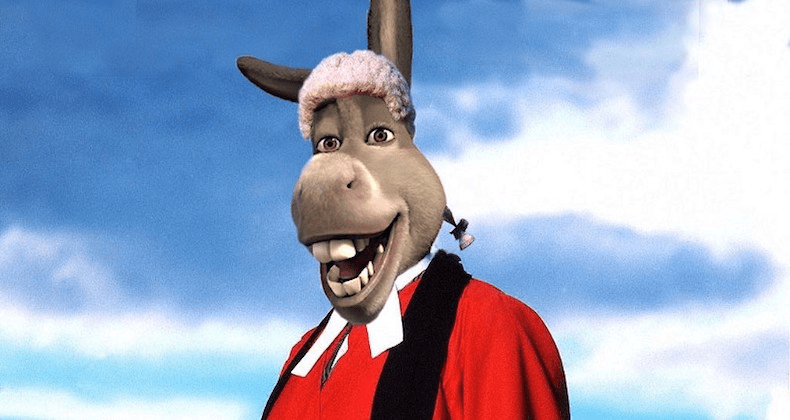
The PM phones in

I have been informed, by those in the know of these things, that the Prime Minister is always ready to talk to the common man. Or woman, come to think of it. One has to be ever so mindful of how you employ these gender terms nowadays. If I had not hastily slipped in that ‘Or woman, come to think of it,’ I would have had to face an avalanche of angry mails from the gentler sex. Always trusting to fate that they have no violent objection to being described as ‘gentle.’ Sorry, haring off at a tangent like that. I was reflecting on the Prime Minister’s desire to speak to India’s common citizen at prescribed times on prescribed days. I am excluding his weekly wireless fireside chat Mann ki Baat from the purview of this discussion. This, if it is true, involves a person-to- person chinwag over the phone with people like you and me, and it shows how the leader of this impossibly vast and amorphous nation has his ear to the ground and, evidently, to the phone as well. The common touch, to borrow a phrase. The number given to me was obviously encrypted, this for the PMO to be able to trace any crank calls that are bound to be made, just for a lark. Like this one. ‘Hullo, good morning Prime Minister, this is Rahul Gandhi. I have underground connections in Sicily, through my relatives in Italy. For your own sake, take me seriously. I strongly suggest you had better watch your back. Say hello to my little friend. Capice?’

Any Mafia film buff would tell you that was a phony call. However, the PMO was taking no chances. A trace was placed on Rahul Gandhi’s mobile number, but after a couple of days of snooping and listening in, all they could get was, ‘Mamma mia Mama, how many times have I told you I hate Coco Pops? Where’s my fluffy, cheese omelette? I WANT MY FLUFFY CHEESE OMELETTE.’ Every day it was the exact same line that was being repeated ad nauseum, and the PMO’s telephone sleuths finally concluded that this was a recorded voice and that they had been had by the short and curlies. More likely it was a ring tone put in by some nutter with a corny sense of humour. Even Rahul Gandhi wouldn’t stoop to something like that,

However, I am not one to throw in the towel that easily. I kept trying, those powerful words of Kipling ringing in my ears, If at first you don’t succeed, try, try again. My perseverance paid off, eventually. And before any of you clever dicks jump out of your skins to tell me that it was not Kipling who said that but one T.H. Palmer, let me quickly assure you I am fully seized of the fact. At heart I am a bit of a tease and just wanted to have you on. Begging your pardon. Seriously though, this T.H. Palmer’s name should have been up in lights for just that one memorable line he composed, but he was one of those poets who was born to blush unseen and waste his sweetness in the desert air. Thomas Gray. Once again, I am guilty of veering off from the subject on hand, but what the heck? Nobody ever told Shakespeare that he was using thirty words when seven would have served the purpose. My best friends keep telling me that my essays are too long. My philosophical response invariably is, ‘How long is a piece of string? Go figure.’

In case you are wondering, I am having to indulge in all this meandering small talk mainly because getting through to the PMO was no simple task. I was placed at number 375 on the call waiting list. Then all of a sudden, before I could say, tongue-twistingly, Rashtriya Swayamsevak Sangh, my mobile started ringing in that familiar shrill ringtone.

‘Good afternoon, are we speaking to Mr. Suresh Subrahmanyan?’ intoned a strong male voice. Not to miss the royal ‘we.’

‘We are, we are,’ I responded with an eagerness that was partly genuine and partly affected. ‘Is that the Prime Minister? Sir,’ I added as a respectful and precautionary afterthought.

“Not yet,’ continued the voice. ‘This is the Prime Minister’s Office, and we have some questions for you before we can put you through to Him.’

I could sense the capital H. ‘Does the Prime Minister’s Office have a name?’ I enquired somewhat cheekily. ‘It is rather unfair that you know my name, I need to keep addressing you as an office. A bit weird, don’t you think?’

‘We do not appreciate your tone. The PMO does not take kindly to smart alecks who make tasteless wisecracks. One more remark like that and you will be taken off the list and your mobile number duly recorded for posterity and future reference.’

Gosh, now I had to worry about my posterior. This was going nowhere, and if it was going anywhere, I did not care for the destination. ‘Sir, Mr. PMO, I did not intend to be smart. My apologies for the unintended solecism. Or gaffe, if you prefer. It’s just that I am number 375 on the call waiting list, I have dropped every other normal household chore that I am expected to perform on a Sunday morning, blocked calls from my entire contact directory and have been sitting and staring at my mobile for “The Call.” My eyes are hurting like blazes from the staring. I was merely anxious to know how much longer it’s going to take before our leader comes on the line to exchange a few friendly words with me.’

‘By and by, and if you keep on jabbering like this, it may never happen. Please answer these simple questions as briefly as you possibly can. How old are you?’

‘That’s a personal question. What’s my age got to do with anything? Let’s agree on 16. I know he likes to speak with youngsters.’ I was bridling.

The PMO was beginning to sound irritated, but no more than I was. ‘You do not sound like a teenager. If you are 16 going on 17, you know that you are naïve, in the words of that famous song from The Sound of Music. Once again, I must caution you. If you do not declare proper and correct information, there will be consequences. For the last time, what is your age?’

‘99. Happy?’

‘We need proof. Send me a scanned photo of you in standing position.’

‘I am 99, I cannot stand. I have a picture of me in standing-erect position when I was 43, but what use would that be to you? Later on, I developed a bad case of scoliosis and my spine is bent. And if I sent you a photo of my grandfather standing in crouched position with a walking stick, how would you know the difference?’

The PMO was by now at the end of his tether. Exasperation was clearly evident in his voice. ‘I have never come across such an ornery person. You wish to speak to the country’s most powerful person and you behave like a juvenile delinquent. I am afraid I cannot waste any more Government time, when there are 625 others waiting in the queue. So kindly…’

Just then a sonorous, authoritative voice chimed in. ‘Secretary Saheb, I have been listening in to your conversation with Mr. Subrahmanyan on the hotline. Please keep the line free. I will speak to him now.’

‘Yes Sir, Yes Prime Minister. Right away, Prime Minister. I am connecting you Sir.’

Next thing I know, I was on the line with none other than the PM himself. ‘Hullo,’ he said, very friendly and everything. What do you say after someone says hullo? Not just someone, but India’s leader extraordinaire.

‘Hullo ji,’ I responded, my voice barely above a croaking whisper.

‘My office will allow me to entertain just two questions from each caller, because there are so many on the waiting list, so please ask both your questions one after the other and I will try to answer them to your satisfaction.’ He was ever so courteous and polite. He didn’t say “Shoot” but I was ready with my two questions.’

‘Prime Minister Sirji, whom do you consider your greatest opponent on the Indian political scene? Second question. Who will take over from you as your party’s leader once you decide to retire? Thank you, Sir.’

‘Very good questions, Subrahmanyan ji. My greatest opponent is myself. I am fighting myself everyday to be a better leader for my people. Other opponents from all parties are also fighting – amongst themselves. I hope that is a good answer.’

‘Brilliant answer, Sir. Jawaab nahin. What about my second question, Sir? Who are you grooming to be your successor? And Sir, please don’t call me Subrahmanyan ji. I am underserving.’

‘You are 99. That demands respect. Recently I honoured someone who was 125. As to your second question, I will follow our veteran cricket captain, M.S. Dhoni’s footsteps. No unnecessary talking in advance. In our party, anyone can become the leader, but not till I retire.’

‘But Sir…’

The PM was now off the air. The PMO was back, ‘Your two questions are over, which is more than you deserved. Your time is up.’

Needless insult from the officious PMO. The PM was nice, but I still nursed doubts. Was this real or fake? He sounded like the PM but his English was faultless. Hmmm….

I’ll check later with number 376 on the call waiting list.

Lend me your ears

I think I am going deaf, and if I am not sure, I am reminded of it on a daily basis. ‘Deaf as a doorpost,’ is my wife’s pet phrase when giving me an earful. I’ll take her word for it that doorposts are hard of hearing. My better half is given to histrionic hyperbole, and I suspect there is more than a smidgen of exaggeration to her exasperated expostulation. As you can see, I might be deaf, ‘might’ being the operative word, but I can hold my own with anyone who wishes to engage with me in an alliterative combat. Just this morning, I was in the shower and the water, after a slow start came out in a noisy, powerful jet stream. It is the way with showers – strong and hot one minute, limp and cold the next. While I was wallowing in the pretend waterfall, singing a particularly catchy snatch from West Side Story, I faintly heard my wife shout to me from the en suite bedroom (actually it is the bathroom that is en suite, but you know what I mean). ‘Your bugger is falling, shall I bake it?’ That caught my attention. Well I mean, how do you respond to that? I knew only one way. I had to stop singing Maria in mid-verse, turn off the shower and shout, ‘WHAT?’ After further admonitions pertaining to the efficacy of my auditory canals, I finally understood that what the good lady wife was communicating through my own Niagara Falls was, ‘Your brother is calling, shall I take it?’ By now, the brother had rung off. After further recriminations, I told her not to worry, he is probably calling just to tell me that Nadal lost in the finals at Indian Wells. He is a tennis freak and his hearing is also somewhat impaired. Perhaps the malady is genetic.

Nevertheless, I thought it best to visit an ENT specialist in my neck of the woods, now that the pandemic is in recession, and have him check out if everything was in ship-shape condition as far as my tympanic membrane and the good old ossicles were concerned. Naturally, as is the habit with ear doctors, he fiddled around the innards of my ears with some instruments I couldn’t see, tut-tutted at the amount of accumulated earwax. ‘Gaunt you spleen your peers properly?’ he grunted. I am not sure I liked his tone, but I had to be polite. Also, I could not follow a word he was saying. I was strapped in one of those swivel chairs so favoured by doctors at their clinics. And that set of instruments which I did not get a proper sighter at, sounded ominous. I was helpless. ‘Didn’t quite catch that, Doc. What exactly do you mean by spleen my peers?’

‘Oh dear, this could prove to be more serious than I thought,’ moaned the doctor, looking concerned. Not that I heard it, of course. He then moved close to my left ear and said in a loud voice, ‘I asked if you, as a general rule, clean your ears properly. Nothing to do with spleen or peers.’

‘Why are you shouting, Doc?’, I shouted back. ‘I can hear you perfectly well. I have just returned from an invigorating trip to the Coorg hills (elevation 4000+ feet at its highest point), and the popping in my ears is yet to fully subside, which accounts for the slight hearing deficiency.’

That’s another thing about incipient or advanced deafness. You think the person to whom you are speaking is deaf, so scream at the top of your lungs. Let me hasten to add that all this does not, on my part, admit to any actual problem with my hearing faculties. I speak academically. I was then asked to listen to some bell-like sounds at varying volume levels, with the aid of a pair of ear phones, while a young lady, with a monitor screen in front of her, kept asking me to make a gesture when I could hear the sound no more. I cheated once or twice, pretending to hear sounds when all was silent. At which point she said archly, ‘Sir, the sound has stopped. If you are still hearing things, we may have to deal with some other problem.’ I bashfully admitted to my trying to pull a fast one and was forgiven. ‘Everyone does it,’ she smilingly said, the good sport. Anyhow, the upshot of it all was that while I was not quite in the deaf adder or doorpost category, my hearing capacity was a touch below par, but nothing to worry about at this stage, taking into consideration the ear-popping issue. We paid the extortionate bill and as we were getting into the car, my wife said, ‘It’s betting grate for crunch. Let’s lick up a granbitch on the way.’ I agreed right away. A granbitch for crunch was just what the doctor ordered. Preferably leg and fleece, laced with a dash of custard. If you couldn’t pick that gobbledeygook up, I could recommend a good ENT chap.

That said, if you do have a hearing problem, it is as well to have it taken care of the moment you hear ‘clean’ as ‘spleen.’ That is the warning sign. I am also aware that we are not supposed to address victims of these handicaps as being deaf or blind. Aurally or visually challenged is the accepted, polite terminology. Why something should be addressed employing two words when one is readily available is beyond my understanding. Imagine pulling up a distracted person with an ‘I am shouting at the top of my voice. Are you aurally challenged or what?’ See what I mean? Lacks punch.

I once had the misfortune to be sitting next to a person who was stone deaf and tone deaf at a Carnatic music concert. He was conspicuously sporting a hearing aid, a bilious pink earpiece, but appeared not to have turned it on. Else, it was malfunctioning. Either way, every time the musician essayed a song my aurally challenged neighbour vaguely knew, he would expand his lungs and burst forth to sing along in joyous disharmony. Eyes tightly closed in fervent ecstasy, he was blissfully unaware of hostile rubbernecks and craned heads attempting to shut him up. The collective shush, shush, was to no avail. When I shook his arm and woke him up from his heightened state of nirvana to make him aware of the disturbance he was causing, he turned to me, smiled beatifically and said, in a very loud voice, ‘He is essaying the raga Amritavarshini. Can’t you hear the thunder and lightning? Legend has it that this raga will bring copious rain. Don’t disturb me again, we are trying to listen to the music.’ I wondered how this handicapped music lover could hear thunder when nobody else in the audience heard it. Also, how on earth could a deaf man, or anyone for that matter, ‘hear’ lightning? It was futile to speculate on matters beyond my ken. At which point, I got up and found another seat. Why members of the audience seated nearby were throwing dirty looks at me was a mystery.

It is a matter of puzzlement to me why some ailments or handicaps are viewed with considerable pity and sadness, and rightly so, while others appear to be a matter for risibility. While the terrible affliction of blindness is generally dealt with in a sombre, grave manner, deafness which is the main thrust of my thoughts, provides much scope for a jolly good laugh. To a deaf person, it cannot be funny that he or she is oblivious to most conversations and other normal sounds we experience on a daily basis. It does help that there are professional deaf interpreters who use sign language to allow deaf people to follow what the news reader is saying. Then again, it would be a blessing not to be able to hear all the tripe that is dished out on our news channels. On a relative or comparative scale, one can take the position that, given a choice, deafness would be greatly preferable to blindness. Incidentally, how did the expression ‘blind as a bat’ come about? Bats are perfectly capable of seeing and are preternaturally gifted with sharp night vision. That said, the world continues to treat those hard of hearing as objects of good-natured comedy and the objectionable thing about that is that so many people do not find it objectionable. It has been that way for eons and will likely remain so.

 Thus, I continue to wonder if my own issues with hearing are the result of a genuine medical condition, or if it is just that my powers of concentration have tended to wane. What that means is that I can clearly hear what my wife is telling me when she asks me if this month’s electricity bill has been paid. However, the sound of the words emanating from her has not been processed by my grey cells into intelligible meaning. The hearing part is fine, the listening part is dodgy. That is a function of focus and concentration. I am probably deeply ruminating on the likely result of a Test match and missing the finer aspects of the settlement of the electricity bill, resulting in much wailing and gnashing of teeth and needless references to doorposts and deaf adders. And that is good news. Why? Because it means I am not going deaf. Probably just mildly batty and senile. And given to repeating myself. Phew! What a relief.

   a full stop to all punctuation marks

this piece cannot be read in a hurry stop suggest keep two tablets of aspirin and a glass of warm water by your side to ward off a sudden onset of migraine stop you have been cautioned stop

i have been wanting to do this for a long time stop namely comma to write an entire piece without capital letters and punctuation marks stop this business of pressing shift to register capitals or to generate punctuations and other symbols was getting a trifle tedious stop let me quickly hasten to add that i am not the first person to try out this crazy comma lazy method stop a leading newspaper i know has eschewed capitals on the letter open single quote i close single quote  for many years now comma for reasons never explained stop initially comma i thought it had something to do with a software glitch comma but now i realise it was a not so clever ploy to draw attention to themselves stop clever dicks comma i don apostrophe t think exclamation mark and while i am typing this on my keyboard comma i keep getting reminded by my dell desktop that the word realise should be spelt comma not with an open single quote s close single quote but with an open single quote z close single quote stop my dashed computer is programmed to a default american setting and not british comma which i greatly prefer comma but there does not seem to be much i can do about it stop america trumps again exclamation mark i realize that stop see question mark i have let the yankee open single quote z close single quote remain stop i have succumbed stop incidentally comma I hope you realize open bracket there we go again close bracket how difficult it is to write like this stop

i thought i will let the entire article run on without any paragraph to break the tedium comma then thought better of it stop i am not a sadist and have no wish to torture my readers comma who are probably giddy reading this anyway stop therefore comma altruism being at the foremost of my thoughts comma i decided to make an exception and at least retain paragraphs wherever appropriate and cling on to the precious few friends i might still have after this piece has been completed stop

now i am fully aware that people are going to dismiss this piece as just a silly comma juvenile gimmick only to draw attention stop be that as it may comma sometimes comma not always comma it does challenge the reader into going through a different reading experience stop as I have already said before comma this may not be a completely original exercise and some crazy nerd somewhere may already have tried it out stop chances are he met with utter failure comma slipped into a deep depression comma took to drink and was found lying unconscious in an open drain stop that comma of course comma would be a state of coma comma as opposed to the rash of commas infesting this piece stop i am not saying it actually happened comma but there’s more than an even chance of such a happenstance stop rest assured comma dear reader comma i will not fall into such a morbid comma manic and mindless trap stop nice alliteration that comma open bracket morbid comma manic comma mindless close bracket stop when inspiration like that comes about unknowingly comma as it did just then comma it gives you quite a thrill stop the sub hyphen conscious takes over and apposite words just tumble out without your even trying stop as a writer comma albeit a modest hack comma such serendipitous word associations give one an adrenalin rush stop as to where all this leaves the semi hyphen colon comma we haven apostrophe t a clue stop speaking for myself comma I just tend to shove colons and semi hyphen colons wherever the fancy takes me stop just to show there’s nothing personal involved stop if you are punctilious about your english comma you would be well advised to get your hands on kingsley amis apostrophe book comma italicize the king’s english stop

i then got to thinking comma what if punctuation marks never existed question mark that is to say comma grammarians were aware of commas comma full stops etc comma but for whatever unfathomable reason comma punctuation marks were never discovered or invented comma what then question mark it is an interesting area of speculation stop point being comma what would some of the greatest passages in english literature comma poetry and popular song lyrics sound like when read without any punctuation marks comma but all the punctuations actually spelt out comma as in this speculative comma if painful hyphen to hyphen read article question mark rather than merely speculating on the subject comma I thought the best thing would be to actually rewrite some of these passages on the lines of this article comma and judge for ourselves how they read stop i ask readers for forgiveness in advance comma as this is bound to test your patience stop if you apostrophe ve come this far comma you might as well go all the way stop

can there be a better way to start than shakespeare question mark all the world apostrophe s a stage comma and all the men and women merely players colon they have their exits and their entrances semi hyphen colon and one man in his time plays many parts comma his acts being seven ages stop A quick explanatory note is in order comma to avoid confusion stop the word colon here refers to the punctuation mark comma and not to open single quote exits and entrances close single quote through which the colon deals with human waste matter etcetera comma or do I mean excreta question mark

moving on to oscar wilde comma one of our greatest wits comma elegantly caustic on newspapers and art comma a view this scribe completely subscribes to stop there should be a law that no ordinary newspaper should be allowed to write about art stop the harm they do by their foolish and random writing it would be impossible to overestimate dash not to the artist comma but to the public comma blinding them to all but harming the artist not at all stop

nobel laureate rabindranath tagore colon do not say comma  open single quote it is morning comma close single quote and dismiss it with a name of yesterday stop see it for the first time as a new born child that has no name stop

singer hyphen songwriter comma poet comma nobel laureate bob dylan colon may you always be courageous comma stand upright and be strong stop may you stay forever young stop i conclude by referring to the estimable sir isaac pitman, who developed the shorthand bible for secretaries comma to whom bosses dictated letters open bracket eons ago close bracket exactly as i have attempted in this piece exclamation mark quod stop erat stop demonstrandum period

Booked for life!

The Bodleian Library, Oxford

I have found the most valuable thing in my wallet is my library card. Laura Bush.

The library card: Laura Bush, former first lady of the United States of America hit the nail on the head in assigning to this precious ticket such a generous accolade. Madam Bush’s claim to fame was not merely as the better half of George W. Bush (few would argue with that), but in her own right, she was widely regarded as an author, librarian and memoirist. Enough to be getting along with, I should think. When I came across this quote, quite by chance, it set me thinking about my college years in Calcutta. My wallet, if I did possess one, contained pocket money of around Rs.20/- in notes and coins, my college identity card and, you guessed it, my British Council and U.S.I.S. (United States Information Service) library membership cards. I had not the faintest what a credit or debit card even looked like, if at all they existed in the early 70s. I did have a driving licence, a bulky, little red booklet which permanently nestled in my dad’s car glove compartment. Having crossed 18, I got to zip around in the legendary Ambassador about twice a month, not without the family driver usually in tow. Failing which, transport meant Calcutta’s smoke-belching buses, its sedentary trams and brisk perambulation, if the distances were not forbidding. In sum, the two library cards, liberally date-stamped, were my sole prized possessions (if two cards can be characterised as ‘sole’).

In hot and steamy Calcutta, during the late 60s and 70s, with power cuts all day long being the norm, the library was a cool and cloistered haven to spend pleasurable hours in. For one thing, the air-conditioning ran even during what was laughably referred to as ‘load shedding,’ thanks to these foreign-funded   establishments being able to afford back-up generators. That alone was worth the price of the membership card. Our college too had a well-stocked library on the premises, but to move to the library in the same building complex where you had just spent five stultifying hours was not a pleasing prospect. You wanted to get the academic fug out of your system once the closing bell rang.

The British Council, being located in tony Theatre Road, later renamed quite appropriately to Shakespeare Sarani, was a mere ten minutes stroll from my college in nearby, swinging Park Street. The Council may not have been quite The Bodleian Library of legend, but good enough for us students. Wasting no time, off I would trudge to BC, as we fondly nicknamed the best library in town. Walking into the precincts of the library with the ‘whoosh’ of the air-conditioning washing all over you, was nothing short of ecstasy. Once inside, you took things as they came. No unseemly rush. Studious looking bookworms were bent over their tomes, some making feverish notes. Others would be strolling along the book racks, randomly picking up a book, putting it back and walking on to the next corridor of shelves. There were usually two or three librarians on duty, located in the well of the library, busily date stamping books being borrowed or being returned. If you were late in returning a book, even after the grant of an extra week’s extension, a small fine had to be paid, which the librarian accepted somewhat apologetically, as if to say, ‘Sorry, I understand you were down with chicken pox, but those are the rules. The due date is sacrosanct.’

Speaking of the librarians on duty, invariably there would be an attractive lady doing the honours along with a couple of earnest looking gentlemen. The younger male visitors to the library would invariably try and make a beeline for the fetching lady librarian, often repeatedly going back to her to ask silly questions.

‘Excuse me Madam, but where would I find Kingsley Amis?’ That’s about as silly as it gets in a library.

‘Did you try the A to D Section?’

‘Ah thanks, I was looking at the K section. You know, Kingsley.’

‘Books are stacked as per the author’s surname and not first name,’ she replies tartly. ‘You’ve been a member long enough.’

The poor sap is not sure if he should be blushing at the unmistakable ticking off or be happy that she remembers him to be a long-time member. He is not finished, however. Glutton for punishment.

‘And what if I am looking for a book title, and not sure of the author’s name? Say, The Code of the Woosters. Do I go to C and hunt for Code of the Woosters, The or should I go to T looking for The Code of the W? Sorry to bother with you all these silly, but necessary questions.’

‘Not at all. I have all day and nothing better to do than to answer all your silly questions. You said that. There’s only another twenty people standing patiently behind you in the queue. Tell you what, go to the W section and look for Wodehouse P.G. You’ll find it there, unless it’s out. I take it you have heard of that author, since you seem to know the book title. And further, I could also recommend, if you visit the C section, The Body in the Library by Christie, Agatha.’

The young visitor couldn’t put a finger on it, but felt she sounded quite threatening. There was an edge to her voice and she spoke through clenched teeth. He took the hint seeing as she was getting quite shirty, and responded calmly.

‘Thanks a lot. I shall visit the W section and look for Wodehouse and not Wooster. I shall give The Body in the Library a wide berth. Be ready with your date stamping machine, miss. And if you are not a miss, do forgive me.’ He was now blabbering. He could have added, a la Tony Hancock, ‘I suppose Lolita is still out,’ but thought better of it.

I guess the point I am attempting to make is that the library was not just a quiet, comfortable place to browse, borrow and return books but was also an excellent forum for enlightening exchanges like the one I just narrated. The Council recruited librarians who were more than just mechanical dispensers of books. They were lively personalities who had something about them. Lest we forget, young boys and girls often met surreptitiously in the library, pretentiously pretending to be reading The Catcher in the Rye or The Lord of the Flies, books that were not only in vogue, but calculated to impress the hell out of your girl or boy friend, as the case may be. From there to popping round the corner for a cup of cheap tea and a puff of Charms was but a simple step.

Another section in the library that many of us made a beeline for was the newspaper section. All the main English newspapers from London were filed in long, wooden slats for us to be able to read in comfort. They were back issues, of course, but it was always a pleasure to read The Guardian or The Times, particularly the Sports pages and some Opinion columns. The Sunday editions were so thick you had to lift them carefully if you suffered from a bad back. Excellent reportage and incisive insights. Mind you, what Margaret Thatcher thought of the Labour Party was of scant concern to me, but it was great fun reading her quotes. ‘The lady’s not for turning,’ being one of her memorable one-liners.

Later on, BC added a selection of long-playing records at a nominal additional charge. Not The Beatles or The Rolling Stones, not on your nelly! However, audio recordings of plays by G.B. Shaw, Oscar Wilde and their ilk were made available. I do fondly recall borrowing Pygmalion and The Importance of Being Earnest with a superb cast headed by the likes of Sir John Gielgud and Sir Ralph Richardson, playing it at home on our Grundig radiogram till the grooves almost ran out. Nowadays all this and much more are freely available at the tap of a key on YouTube. The pleasure of obtaining something rare one experienced in the days when YouTube was not even remotely visualised, can only be experienced wearing the proverbial rose-tinted glasses of nostalgia.

I mentioned the U.S.I.S earlier in this piece. The American library was not my favourite destination of choice. Unlike the British Council, it was located in a very busy and crowded area of Calcutta. Every area in Calcutta was crowded and this one even more so. Nevertheless, they had an outstanding collection of records of American jazz and popular musicals. So once a month or so, I would set out to the U.S.I.S and go home with an armful of Broadway musicals like West Side Story or Camelot and some rare vinyl records of Louis Armstrong, Duke Ellington and Miles Davis. Once in a way, the U.S.I.S also organised film shows of rare classics featuring the likes of Orson Welles’ Citizen Kane and Humphrey Bogart’s Casablanca. The small auditorium was invariably packed to the rafters.

I do not know when I last visited a library. Do today’s young generation even know what the inside of a library looks like? I have wondered about that. As one wise man recently said, ‘Many authors are selling books by the truckloads, but most well-furnished households have books on their shelves which have not even been opened, leave alone read. The expression ‘well-thumbed’ book has ceased to hold any meaning. I mentioned Tony Hancock a little earlier in this column. To those who are unaware, go to YouTube and punch in ‘Tony Hancock – The Missing Page.’ If you do not laugh your guts out, you are not a better man than I am, Gunga Din.

The Russians Are Coming, the Russians Are Coming

I know not with what weapons World War III will be fought, but World War IV will be fought with sticks and stones. Albert Einstein

In the year 1966, when I had just started my university education, and Hollywood films were very much a part of our entertainment and distraction, a film titled The Russians Are Coming, the Russians Are Coming had just been released. A fictional war comedy, it dealt with a Russian submarine that is inadvertently stuck in a sandbar just off the coast of New England in the United States of America. The resultant capers involving Russian soldiers getting entangled with the local island citizenry (pop. 200) provided much cause for cinematic merriment. Those were the days when Russia was America’s public enemy number one and vice-versa, long after Hitler’s Germany was laid to rest. Sounds familiar? Being a Hollywood production, I offer no prizes for guessing who the good guys were. It set me thinking. Things are no different in 2022. The Russians are coming, have come, with a vengeance to Ukraine while the United States and the rest of world do not seem to have the foggiest notion of what to do about it. Plenty of collective head-shaking and hand-wringing but little else. What’s more, this is no flippant war comedy on celluloid. This is the real thing with state-of-the-art fighter jets, bombs, T-14 armoured tanks, AK 47s and hundreds of thousands of foot soldiers; to say nothing of the ever-present danger of a nuclear attack looming. Whatever else it may be, it is not funny.

However, the purpose of this piece is not to delve deeply into the whys and wherefores of the present conflict in Eastern Europe, its global ramifications, the subdued role of NATO, trying to second guess canny China’s likely response, where India fits in, if at all, in this axis of meaningless and bloody conflict. Our television screens and newspapers are so full of the Ukraine-Russia battle that we have actually become inured to it. If it were not for India’s young students being unfortunately caught up in Ukraine and our government’s efforts to ferry them safely home, our thoughts could have so easily turned elsewhere. State elections and the Covid situation, which so occupied our media space, are all but forgotten. I daresay they will resurface again when poll results start coming in shortly, along with the clamour over the steep hike in fuel prices, which is as certain as night follows day. Hopefully, a forlorn hope at that, the Russian aggression by then would have started receding and the warring factions will sit across the table and start talking to each other, even if they will be talking from the side of their mouths. Hope springs eternal.

So much for serious stuff. Let me get back to what prompted me to write this column in the first place. It was a movie title of over five decades ago that spurred me to think of the present imbroglio. Or perhaps the other way round. More to the point, I thought it might be an interesting idea to look at other movie or book titles and examine what relevance they have for us today. Writers and movie producers have no idea when they launch into their creative efforts that, several years down the road those selfsame books, songs and films would strongly resonate with a public, most of whom may not have even been born when these magnum opuses were first released for public consumption.

A popular song by The Beatles during the late 60s that instantly springs to mind, in the present scenario is Back in the U.S.S.R, a jaunty number with a resonating chorus line that goes like this – The Ukraine girls really knock me out / They leave the West behind / And Moscow girls make me sing and shout / That Georgia’s always on my-my-my-my-my-my mind. Well, I guess when The Beatles wrote that song way back when, things were quite hunky-dory and oojah-cum-spiff, to pinch a Wodehouse copyright, between Ukraine and Russia, as they were all part of the homogenous Soviet Union bloc. And speaking of songs, how can we forget Sting’s feelingly sung ode Russians, in which he says, We share the same biology / Regardless of ideology / What might save us me and you / Is that the Russians love their children too.  Prescient.

Still staying with the 60s, which was probably a decade that made the greatest impact on me for a variety of reasons, director Stanley Kubrick’s black comedy classic from 1964, Dr. Strangelove or: How I Learned to Stop Worrying and Love the Bomb, made a deep impression. Shot in evocative black and white and starring Peter Sellers and George C. Scott (of Patton fame), the storyline deals with an unhinged U.S. general who orders a first strike nuclear attack on the Soviet Union, and how the best brains of the American and British defence establishment try and prevent the crew of a B-52 bomber from unloading its deadly arsenal on the Soviet Union and start a disastrous nuclear war. The film was widely considered to be one of the best satirical films of its genre ever made. If you, dear reader, are a film buff and have not seen Dr. Strangelove, you could do worse than search your cable networks and reel it in. It will be time well spent.

Then there was Russia’s venerated writer Lev Tolstoy, whose first name was conveniently changed by the English-speaking world to Leo Tolstoy. Now what is so dashed difficult about pronouncing Lev that it needed to be changed to Leo, even if the anglicised equivalent is justified? Beats me. It’s the same baffling non-reasoning behind why Chennai became Madras, and reverted to the original name later. I have Google-searched and spoken to a couple of notable historians, but to no avail. Some say the city was named after a fishing village called Madraspatnam, but no rigorous, historical facts of substance are adduced to support the claim. Even Wikipedia is stumped. I am open to being corrected by superior minds on this subject. But I meander. Tolstoy wrote War and Peace, a novel of such prodigious length that you were better off watching the film version, of which there are many. Even then, I got the distinct impression that there was much more war than peace in the narrative. At the risk of being cynical, one must conclude that the blood, gore and pumped-up, rah-rah patriotism makes war a far more saleable concept than somnolent peace. What is it with the Russians that at the least pretext they decide to take up arms and go to war? Vladimir Putin is merely keeping the hoary traditions of Lenin, Stalin and Khrushchev alive. Remember Cuba? One can quickly add that their arch rival, the United States is no different. The world is their theatre of conflict.

To continue with my random thoughts on war as a mode of entertainment, what about those handy, little illustrated war comics that were freely available during our school days? In tune with Hollywood war movies, these comics invariably celebrated the bravado and brilliance of the allied forces during the Second World War, making the Germans look like grotesque, villainous caricatures of themselves. We kids lapped it up because we were well and truly brainwashed. ‘Take that, you nasty Krauts. BLAM, BLAM, KA-BOOM and KAPUT.’ Not to mention the German commander threatening a captured allied soldier with a pair of live electrical cables, ‘Ve haf vays to make you tok, you Yankee pig / English dog. ACHTUNG! ACHTUNG! SCHNELL! SCHNELL!’ Naturally, the brave American or British soldier is daringly rescued, more BLAM, BLAM leaving behind a pile of dead German corpses. KAPUT. Didn’t we just love it! I have little doubt that Russian muscle-flexing and aggression will soon become the hottest theme for a slew of forthcoming Hollywood releases. Step forward, Steven Spielberg.

Lest we forget, that brilliant satire that lit up the 80s on the British government machinery, Yes Minister and Yes Prime Minister, in one of the episodes, did a rib-tickling send up of the possibility of a hypothetical nuclear confrontation between Britain and Russia. Fictional Prime Minister James Hacker’s utter confusion on being questioned on how he views the concept of a nuclear deterrent involving Russia, or even Germany and when would be the right moment ‘to press the button’ makes for arguably some of the funniest scenes one can wish to witness, superbly scripted and acted, as only the British can. Speaking of which, one also recalls with fondness BBC’s hilarious Dad’s Army television series, loosely based on the UK’s Home Guard during the Second World War, that so captivated audiences during the late 60s and 70s. The present-day Ukrainian common man and woman taking up arms against the mighty Russian invaders put me in mind of Dad’s Army’s doddering village folk who attempt to stave off the invading Germans with hilarious results.

I guess what I am trying to really get at is this. Rather than watch our dreary television news channels gloating about flying out a slew of correspondents with a camera and telling all of India how brave they are to be right there in the thick of things, and how each one claims to be the first to reach the scene of action, you are better off reading the newspapers and getting a more informed view. There’s simply too much sound, fury and noise on the TV channels, such that the viewing becomes painful in the extreme. Instead, divert your attention during the long evenings by watching some great war films like Saving Private Ryan, The Longest Day, Bridge on the River Kwai, Merry Christmas Mr. Lawrence, The Hurt Locker, The Dirty Dozen and so many more.  Not to be outdone, the Russians recently produced a hagiographic biopic on Mikhail Kalashnikov, the man who designed and developed the iconic AK-47 assault rifle, and after whose name the weapon is sanctified. It is now an accepted axiom that war benefits not only the armaments and allied industries but the film world has also done very well by conflicts that have occurred since time immemorial. If American singer-songwriter Edwin Starr is known for nothing else, he will be remembered for his 1970 hit, War / What is it good for / Absolutely nothing.

I think we can all sing along with that. Altogether now…

The pressure to perform

Sir Lawrence Olivier as Henry V

During my carefree days in boarding school, and here I hark back to the swinging sixties, I did not really feel all that carefree. There were all kinds of pressures that beset us students, pressures that our school masters and teachers, dormitory matrons as well as our parents unwittingly placed on our young, impressionable minds. Not all the problems we had to deal with were necessarily of earth-shattering importance. At least, not in in the generally accepted sense, but for us kids it was the be-all and end-all of human existence. For instance, we could have been part of an inter-house elocution competition. Having qualified for the finals, I had to rehearse Henry V’s famous St. Crispin’s Day speech. Will I remember all the lines or am I going to fluff? That alone was cause enough to find me tossing and turning restlessly through the night. Try this on for size. If we are mark’d to die, we are enow / To do our country loss; and if to live / The fewer men, the greater share of honour / God’s will! I pray thee, wish not one man more. And that’s only for starters. Tongue-twisting lines upon lines that only Shakespeare could have gleefully wrought for a 14-year-old, pimply, adolescent school boy to struggle through. By the time I got to We few, we happy few, we band of brothers, I could see the finishing line, tongue hanging out, puffing and panting. The same held true if we were acting in a play or were part of the soprano section in the school choir.

Other pressures that confronted us could have been an inter-school cricket final with the trophy on the line. Everybody from the games master to the pantry sergeant fell over each other, offering gratuitous advice. ‘Keep your eye on the ball and your head still,’ ‘Do not bowl outside the leg-stump,’ ‘Anything outside the off-stump, shoulder arms and leave severely alone,’ ‘If the umpire says you’re out, you’re out, don’t stand statuesquely at the crease looking sorry for yourself,’ ‘Keep your knees bent while fielding, else the ball will slip through your legs.’ It was like the Ten Commandments, barring that bit about committing adultery. Don’t ask me how we confidently stepped on to the field of play and actually strutted our stuff. Similar words of encouragement were always provided to us in a kindly spirit whether we were representing the school in hockey, football or athletics. Boxing was a particular favourite. ‘Always lead with your left hand, unless you’re a southpaw, and mind you don’t hit below the belt.’ What about stopping a vicious left hook and getting my maxillary bone dislocated? Pressure, pressure, pressure.

Then there were the end-of-term exams that set our nerves on extreme edge, or in the memorable expression employed by our English master, gave us ‘the collywobbles.’ I speak for myself but there are many of my colleagues who will echo my sentiments. There were three term exams during the academic year, the final term deciding on our promotion to the next, higher class. Failing which, we were faced with the dark ignominy of being retained for another year in the same class, a fate worse than death. In schoolboy patois, ‘He plugged in his 6th standard and in every other year so that he became everybody’s classmate!’ In my case, my report card after each term turned up a ‘just above average’ performance. ‘Scraped through’ would have been the mot juste. The master who would sign off on our reports loved the phrase ‘Could do better.’ My report card was littered with ‘Could do better’ at the end of almost every term. I had a horrid time explaining this to my parents. What exactly did it mean? That I did not try hard enough, or that I was actually pretty good but was meant for higher attainments? Who knows? It was a mystery that stayed with me forever. Another perennial favourite on my report would read, ‘His marks do not adequately reflect his true ability.’ Again, that could either be an encouraging comment, or conversely, to indicate that I should not get carried away simply because I did well that particular term. I could have been less than met the eye! Given that some of our teachers were on secondment from the United Kingdom, we applied the old Hollywood Apache lingo, ‘White man, he speak with forked tongue.’ These were mysteries beyond our ken. Our report cards were notoriously opaque. In that famous Churchillian phrase, ‘a riddle, wrapped in a mystery, inside an enigma.’

Another engaging trait amongst us during exams was to find unique ways to impress the other boys, all swotting away, furiously erasing and rewriting. Craning your neck to take a quick peek at your colleague’s paper will be quickly put down by the master with a stentorian, ‘Do not copy your neighbour’s mistakes.’  It goes without saying that all of us had ink stains smudging our hands, shirt fronts and even at the end of our noses. They were not really stains, they were symbols of great courage and honour. Remember we used fountain pens those days, with a handy bottle of Parker or Quink Royal Blue by our side for refills. One sure fire way to make others envious was to keep putting your hand up and asking the supervising master on duty for an extra sheet of writing paper every ten minutes or so. The rest of the class would glance at you with awe, wondering how this guy can write reams when they themselves are still struggling to fill up their first sheet. You, naturally, will look smug and scribble away furiously. That you are filling your sheets with absolute nonsense, putting up a brave front, will not be plain to the rest of the class. That is, until the results are announced later, by which time you are home alone for your summer holidays, safe from prying eyes.

As the time runs out for the allotted two hours and the master gravely intones, ‘Five minutes more boys, then I will come round and collect your papers.’ At this, all of us are turbo-charged with a second wind of furious energy. Scribble, scribble. Scratch, scratch. Rub, rub. By now, most of the boys have submitted their papers. You keep writing rubbish till the master snatches the answer paper away. As you drag yourself unwillingly from the class, some of your classmates gather round with eager questions. ‘What were you writing endlessly for so long, I say? My god, you will probably max your paper.’ You respond mock modestly, ‘Listen chaps, you can’t max a paper on English Language. I wanted to finish with a long quote from T.S. Eliot’s poem, The love song of J. Alfred Prufrock, but master grabbed my paper crying “Time.” I still had eleven lines to go, but I think the examiner will be impressed.’ That would have effectively ruined the rest of the day for my classmates. As to their valid query that Eliot was not even on our syllabus, I merely wipe the ink stain off my nose in a marked manner and walk away and in my wake, leave my mates non-plussed. The truth of the matter is that I was struggling to remember a few lines from S.T. Coleridge’s Christabel, which was part of our syllabus but T.S. Eliot sounded far more impressive; more snob value. In the room the women come and go / Talking of Michelangelo. We were quite insufferable as kids.

Bearing in mind all the mental agony we boys had to go through, particularly in our senior years, the Warden of our school, an ordained priest and a wise, thoughtful Welshman, would invite us to his cottage over the weekend for an evening of lemonade, cookies and some popular records of the day on the turntable. Elvis Presley, Ricky Nelson, Pat Boone, Cliff Richard and later on The Beatles, being particular favourites. He was broad-minded enough to say, ‘I am sure you’ve all had your fill of hymns and psalms during chapel service.’ Some parlour games which included boys being picked out at random to sing a song or recite something of their choice was always on the cards. Antakshari was unknown, thank heavens! Some of us would try and hide behind the settee and play with the two Siamese cats that were the Warden’s popular house pets. However, nemesis would invariably catch up, leaving none of us unscathed. ‘Next your turn, Suresh, don’t hide behind the rubber plant. You are not the Invisible Man.’ So, you sidle in awkwardly from behind the rubber plant, drawing awkward patterns on the carpet with the toe-end of your left shoe, clear your throat, and start warbling Andy Williams’ hit song, Number 54, the House with the Bamboo Door. Some of the boys join in, the others hold their stomachs. The Warden is pleased as punch, the Siamese feline twins purr contentedly. It was meant to be an evening of relaxation. For some of us boys, however, it was more crushing pressure to perform.

Lock, Stock and Barrel

If stock market experts were so expert, they would be buying stocks, not selling advice. Norman Ralph Augustine, former Chairman of Lockheed Martin Corporation.

Those of us who, for several years now, have been placing our faith, trust and such meagre moolah as we have salted away from our honest toil, in India’s public sector banks, have had to rejig our investment strategies in more recent times. Time was when we plonked our hard-earned savings in 10-year fixed deposits for attractive interest of upwards of 10% annually. In fact, during the 70s and 80s, Government of India bonds through the Reserve Bank fetched us between 10 and 11% tax free. We would not touch the stock markets or anything associated with it, not even with the proverbial barge pole. Mutual funds? Never heard of them. Bulls and bears? Belonged to India’s streets and zoos, respectively. All that is now clean out of the window. Banks were safe as houses providing us with security and satisfactory returns.

That was then, this is now. Welcome to the age of slick fund managers, highly skilled at what they do, all of them well educated (Wharton and Harvard topping the list), articulate and beguiling on television news channels, telling us common folk what we should be doing with our money. Most of us have little choice but to listen to them in a dazed trance, the jargon-coated spiel flying over our heads, as our stolid banks are in no position to offer us anything to keep our heads above water. To say nothing of being anywhere remotely close to staying ahead of inflation. The choice is clear. We go back to our bank FDs and be happy with a safe, if piddling 6% annualized return (pre-tax), or be adventurous and dash off into the unknown, wild and wacky world of the stock markets.

The bourses offer you a bewildering variety of options in the form of shares, scrips, fund brands and schemes. Let’s not even get into the cryptic world of cryptos.The promise? Riches beyond your wildest dreams, or just possibly, total bankruptcy. Take the rough with the smooth, can’t make omelettes without breaking eggs and all that sort of guff. I am, of course, stretching a point to make a point. There are many conservative options as well, but don’t expect too much. If your risk appetite is low, you may earn a wee bit more than bank FDs, but the paper work is numbing. By the time you have signed the 75th page of the contract, your signature bears no resemblance to how you signed on the first page. Which means you might have to go through the torture all over again. High risk through equities can bring big rewards, but also erode your precious cash in double-quick time. You will also be constantly told to take the long-term view and not look for short-term gains. That is all very well if you are in the 25 to 35 age group. If you have crossed 70, you are in it for the rollicking short-term. Everything is relative.

Let us take the present scenario and how unfolding events over which you have no control, be it in India or anywhere else in the world, can affect the stock markets, making them jump up and down like a yo-yo. You have no idea why, but it is what it is. One way to maintain your sanity is not to watch the news on television or read the newspapers, rather like the sheep that covers its eyes believing the wolf can’t see it! Naturally that is not an option, unless you wish to hare off to a mountain cave and live like a hermit. In which case, why need savings at all? Live off nature’s bounty with a mountain goat for company. Let me get back to the land of the living.

I am sitting back at home in my rocking chair, safe in the knowledge that my investments in the stock market are currently up by about 25% percent. For the nonce. The pandemic, for the third time, seems to be behind us and the corporate sector is all agog. The government has bid ‘Tata’ to Air India, the Life Insurance Corporation has gone on the block and all is well with the world. The left of centre parties in parliament and the trade unions will be going ballistic for a while at the Government’s effrontery in selling the family silver and gold, but that too shall pass. Dalal Street, however, is happy.

The very next day, the Sensex tanks nearly 2000 points, because Russia is making some threatening moves towards Ukraine. Biden says Vladimir should be Putin his place, Boris Johnson has his hair in a twist, as is his wont. ‘The party is over,’ cries Boris from No.10 Downing Street, referring to their heavily publicized orgy, ‘I am in the clear.’ ‘Not quite Boris,’ says young Rishi Sunak from No.11, ‘I am moving in.’ Rishi’s father-in-law, IT czar Narayana Murthy celebrates at the prospect of his son-in-law becoming Britain’s next PM, but the Indian market continues to tumble. As a poor investor, I go to bed racked by bad dreams of being gored by bulls and being made mincemeat of by bears. Next day, Putin makes noises about a strategic withdrawal, and bingo, the stock market recovers all its previous day’s losses – in one fell swoop. This unpredictable volatility is hard to take. I consider hitting the bottle, but worry myself silly about following Keats’ footsteps – My heart aches, and a drowsy numbness pains my sense, as though of hemlock I had drunk, or emptied some dull opiate to the drains. In any event, more than one small peg is sure to give me a hangover adding more misery. What is more, I don’t know the first thing about writing poetry.

Then there is the other hot potato, the barreling crude oil prices, if you’ll pardon the pun.  Our Nifty and Sensex perform in inverse proportion to the movement of world oil prices. I am not about to explain why, mainly because I am not an expert on the subject, but you can always tune in to one of the business channels and get an earful. In fact, my morning paper had one of these wealth managers saying things like, ‘High oil prices are one of the traditional macro risks for India – each dollar of increase in oil prices adds $1 billion to our import bill.’ Took the words out of my mouth. It never worried me in the least bit what the OPEC countries were up to in the past. When I was at my bank branch office last week, I asked the manager why he can’t jack up interest rates. ‘Do it man,’ I said. ‘We will rush to your branch in droves and you won’t know what to do with the money. A promotion will be yours for the taking.’ He just looked at me wanly as if to say, ‘I am just a mere lackey, a minor cog in a large wheel.’ He removed his mask, took out his handkerchief and turned his back on me. I clearly detected a sniff blossoming into a sob. My heart bled for him. A fellow customer tapped me on the shoulder and said, ‘Leave him alone. Even the lady who headed up the National Stock Exchange consulted an unknown Himalayan yogi on the NSE’s finance strategies. What hope do we mere mortals have?’ He had a point. We are faced with yogis and Himalayan blunders on a daily basis.

Speaking of yogis naturally brings me to the ongoing state elections. As our Prime Minister recently said, in India we have elections and by-elections happening somewhere or the other throughout the year. And much like those mysterious oil prices, for some obscure reason, every time the BJP comes up trumps in a state or central election, the market zooms northwards, and whenever they lose the reverse happens. Perhaps for that reason alone, they keep coming back to power more often than not, irrespective of incumbency or anti-incumbency issues. The cynics will say it’s got something to do with the Ambanis and the Adanis, who hold the present dispensation in very high esteem. And let’s not forget the Tatas who, as mentioned earlier, have wrested control of the management of Air India. They too have joined the swelling ranks of BJP admirers. Ratan Tata was gushing on television, and why wouldn’t he? Which in turn has left many erstwhile Tata admirers between and betwixt.

Fortunately, the hijab row is not impacting the stock markets, one way or the other. Neither, for the moment, has the eruption of another major fraud involving a well-known public sector bank that is rapidly gaining notoriety and a shipping company, made waves. As a nation, we are becoming expert at riding regular scandal waves with equanimity. Another Rs.1500 crore siphoned off? Ho hum. Boring.

All of which leaves me in a bit of a quandary. Do I book profits while the going is good (before it goes horribly bad tomorrow), or do I stay invested for the long term and reap the rewards on the maxim that ‘they also serve who only stand and wait’? One thing is for sure. If I decide to follow the ‘stand and wait’ option, my 100th birthday is bound to be one heck of a bash, if I am still able to stand and haven’t breathed my last. Gate crashers welcome. The orange squash and lemonade (choose your poison) will be overflowing. Our front door, when open, will be wide enough to let in wheelchairs.

It’s too late to stop now

What Shakespeare Actually Did During the Plague | The New Yorker
Shakespeare – if he didn’t say it, it wasn’t worth saying

If you can’t annoy somebody, there’s little point in writing. Kingsley Amis.

For close to twenty years, give or take a few this way or that, I have been writing a weekly column or blog (call it what you will) purely for my own pleasure. Some newspapers and online sites have been good enough to publish my material on a regular basis, others less frequently, still others have given me the old heave-ho. Short shrift. However, for the most part I let myself go, high, wide and handsome, once a week in the verdant, unfettered pastures of my own blog. Of more pertinence, a handful of readers has been kind enough to read my offerings off and on while providing critical feedback. The advantage in managing my own blog is that there’s no word limit to constrain me, no junior sub ‘correcting’ my apostrophes and punctuations wrongly, which can drive you up the wall. Worse still, an entire line, at times, goes inexplicably missing making a hash of the sentence or paragraph. I am quite punctilious that way, and if an error does creep in, I am fine with it as long as it is my own. That way I can take full responsibility, be master of my own fate. It’s when I key in “O. Henry” and someone else converts the great American storyteller into an Irishman “O’Henry,” that sets my jangled nerves on edge. Over a period of twenty years, at an average of a column a week, that works out to a number not to be sneezed at. Quantitatively, I can point to a modicum of accomplishment. Qualitatively, the jury will always be out, a constant assessment in progress. I could, of course, put all that on the calculator and come up with a daunting figure. Then again, I am superstitious and have no wish to tempt the fates. I am the sort of chap, who will fret ceaselessly for seven years if I inadvertently break a mirror at home, worrying about the ill omens that are likely to visit me.

A close friend of mine recently asked me what keeps me going and did I ever consider taking a break. You know, get away from it all for a few weeks and come back refreshed and raring to go. I had to hum and haw before answering. I thought I detected a veiled hint that perhaps I should take a break as my pieces were beginning to show signs of fraying at the edges, but then writing is a bit like being a performing musician, even one from the top echelons. It enjoins upon you an unwritten commitment to keep at it unceasingly. A vocalist has to keep singing if he or she wishes to uphold high performance standards. If one stops singing or practising even for a week, it will almost certainly show. As to why I keep writing without giving myself pause, the only answer I could come up with was, ‘Sheer bloody-mindedness.’ It was just something I had to do. It’s rather like responding to your early morning alarm. You don’t want to get up but you do just that, grumbling the while and getting down to that 30-minute constitutional and those recommended exercises. It’s the boarding school boy in me. Oftentimes, you have to push yourself to come up with an idea, when you are gazing at your computer screen with a glazed look. All said and done, writing has become an ingrained habit and as troubadour Van Morrison said, ‘It’s too late to stop now.’

The late Miles Kington (one of my many inspirations), an effortlessly funny writer who was literary editor of the defunct and celebrated humour magazine Punch, then went on to write for The Times and The Independent, had this to say about writing a column a day spanning thirty years! Allow me to repeat that – a column a day. I puff and pant to complete one a week. One every single day is really pushing the envelope. Kington wrote over thirty-thousand newspaper columns in his lifetime. Mind you, he never wrote a full-length novel. ‘From an early age, I knew I wanted to be a humorous writer and a jazz musician… and when I went to Oxford University, I spent most of the time playing the double bass in jazz groups and writing undergraduate humour. Thus, when I left university, I was almost entirely unfitted for life, and consequently went to London to try my luck as a freelance humorous writer, where I nearly starved to death.’ That’s another thing about achieving great success in certain fields. You need to go through much suffering. It’s almost a sine qua non. Ask Kafka, Camus or Dostoevsky. They made a good living writing about other people’s suffering. I am not implying schadenfreude as they probably suffered themselves. Considering I have taken up writing purely as a hobby and relatively late in life, I can safely opt out of the suffering phase. I had enough of that in my professional career in the corporate world, so I’ll pass up the dubious agony and vainly aim for the illusory ecstasy.

The late Bernard Levin (forgive me for drawing upon the wisdom of eminent columnists no longer amongst those present) who wrote a column for many years for the venerable The Times of London, was a writer of coruscating brilliance. Like Miles Kington, Levin never wrote a novel and never wished to. His frequent observations drew more readers that many authors could aspire to, only in their dreams. Fortunately, we have his prodigious compilation of writings in several of his published books for our undiluted enjoyment. If I were to select just one of Levin’s many purple passages, I will go for this one, where he uses the genius of Shakespeare in a unique way to demonstrate how much we owe the Bard of Avon. In our everyday conversation, we casually toss familiar phrases and aphorisms at random, with nary a thought being given to the original source. The quote is long, but I would not dream of paring it down even a jot. Enjoy this Bernard Levin gem: of purest ray serene, I might add. ‘If you cannot understand my argument, and declare “It’s Greek to me,” you are quoting Shakespeare; if you claim to be more sinned against than sinning, you are quoting Shakespeare; if you recall your salad days, you are quoting Shakespeare; if you act more in sorrow than in anger; if your wish is father to the thought; if your lost property has vanished into thin air, you are quoting Shakespeare; if you have ever refused to budge an inch or suffered from green-eyed jealousy, if you have played fast and loose, if you have been tongue-tied, a tower of strength, hoodwinked or in a pickle, if you have knitted your brows, made a virtue of necessity, insisted on fair play, slept not one wink, stood on ceremony, danced attendance (on your lord and master), laughed yourself into stitches, had short shrift, cold comfort or too much of a good thing, if you have seen better days or lived in a fool’s paradise -why, be that as it may, the more fool you , for it is a foregone conclusion that you are (as good luck would have it) quoting Shakespeare; if you think it is early days and clear out bag and baggage, if you think it is high time and that that is the long and short of it, if you believe that the game is up and that truth will out even if it involves your own flesh and blood, if you lie low till the crack of doom because you suspect foul play, if you have your teeth set on edge (at one fell swoop) without rhyme or reason, then – to give the devil his due – if the truth were known (for surely you have a tongue in your head) you are quoting Shakespeare; even if you bid me good riddance and send me packing, if you wish I was dead as a door-nail, if you think I am an eyesore, a laughing stock, the devil incarnate, a stony-hearted villain, bloody-minded or a blinking idiot, then – by Jove! O Lord! Tut tut! For goodness’ sake! What the dickens! But me no buts! – it is all one to me, for you are quoting Shakespeare.’

Phew! Elsewhere in this column I had talked about being bloody-minded and given short shrift, having no idea that I might have been quoting Shakespeare. Mr. Levin set the record straight on that one. That goes for ‘Tut-tut’ and ‘By Jove!’ as well. However, I take perverse delight in being able to correct Mr. Levin when he attributes the expression ‘but me no buts’ to Shakespeare. I researched this thoroughly owing to a nagging doubt I harboured. Sure enough, the quote (it is authoritatively drawn from several unimpeachable sources) was coined by one Susanna Centilivre in the play, The Busie Body in 1709. That was centuries before Bernard Levin was even a twinkle in his great-grandparents’ eyes! Incidentally, that’s the way ‘Busie’ is actually spelt, in case you are about to shoot off a tart mail to me. Probably archaic, given the year of the play’s introduction. In the event, Bernard Levin is not around to take up cudgels with me, in case he was right in the first place. That said, if there are a bunch of keen Shakespeare Wallahs out there hiding in the woodwork, who wish to come out in high dudgeon and set the record straight yet again (with papers to prove it), they are most welcome.

There you are, you see. I am stuck with writing columns and may never write a full-length novel in my lifetime. I have no regrets on that score, even if I should never say never. If you must know why, I am delighted to quote one of my favourite authors, P.G. Wodehouse, ‘It was one of the dullest speeches I ever heard. The Agee woman told us for three quarters of an hour how she came to write her beastly book, when a simple apology was all that was required.’

Wardle’s Wordle

Image
Rahul Gandhi’s cheeky debut on Wordle

Some things just creep up on you. One minute you are strolling along merrily, whistling a happy tune like Anna in The King and I. Next thing you know, you feel a slight crick somewhere in your lower back, possibly between your third (L3) and fifth (L5) vertebrae, think nothing of it and before you can say slipped disc, you are instructed to lie in bed for a fortnight, with orthopaedic weights straightening you out. That may not be the best parallel to introduce the subject of my column this week, namely, the word game Wordle, that is now the rage and spreading like a rash all over the social media world, but ‘tis enough, ‘twill serve. For me, at any rate, it crept up quite suddenly. A Welsh-born, Brooklyn-based techie by the name of, wait for it, Josh Wardle is responsible for inventing or discovering this game. Evidently, he dedicated it to his techie Indian girlfriend, collaborator and Spelling Bee addict, Palak Shah. These techies tend to stick together. Wordle by Wardle. There’s a nice ring to it. A fortuitous serendipity, I call that, to be able to name a word game that sounds so very like the name of the game’s discoverer. Of and by itself Wordle (the name, not the game) is just a jumble of letters, amalgamating Word and Wardle. You might even be excused for feverishly seeking an anagrammatic solution. However, if the inventor of the game is called Wardle, you have to cut the man some slack while indulging in a spot of rhyming slang.

A couple of weeks ago, I had not even heard of Wordle. For that matter, even the name Wardle meant nothing to me. The only Wardle I had ever heard of was Johnny Wardle, a miserly left-arm spin bowler who turned out in English colours during the late 40s and early 50s. My research does not indicate that the two Wardles are related. However, if someone feverishly goes through details of the family tree with a fine toothcomb and deduces that Josh is the twice-removed grand nephew of Johnny, I shan’t quibble. Live and let live, that’s my motto.

While I am still trying to get my head around the intricacies of this deceptively simple word puzzle, there are some side issues that provide for interesting reading. Apparently, the app for Wordle (where will we be without apps?) started off modestly with less than 100 users in November 2021, a figure that burgeoned to 300,000 users by mid-January 2022, and as we go to press, those numbers have exploded exponentially to hundreds of millions, who play the game daily. Even Omicron’s superfast version BA.2 will struggle to keep up! Most of you who have started dabbling in Wordle know that it’s a once-a-day online game that gives a player six chances to figure out a five-letter word, using the least number of guesses. Sounds like a bit of a lottery, if you ask me. A guessing game with minimal skill sets involved, interspersed with a smidgen of logic, but then again, I have been wrong before on such matters and will therefore suspend judgement. There could be more to it than meets the eye. Meanwhile, one has to bear with the Facebook and Twitter maniacs who are going, ‘Guess what, I got it in 2 guesses.’ Followed by 125 appreciative likes / memes / emojis and a few ‘got it in one.’ To which my only response is, ‘Go tell that to the Marines.’ Even our Congress Party’s first family scion and leader Rahul Gandhi took to Twitter, sailing close to the wind with a not-so-veiled Wordle swipe at the ruling BJP. His opening five-letter salvo? JUMLA, followed by highly suggestive, if somewhat contrived, efforts like TAXES, SNOOP and ending anti-climactically with the correct Wordle answer, a non sequitur – PHOTO.

Like any decent Welshman, Josh Wardle was quite satisfied with his efforts at introducing a new challenge to excite the minds of those who are sitting at home and fretting about the pandemic. And he, with no small help from Palak, did it all for free! His occasional visits for a beer and pub lunch with Welsh rarebit (cheese on toast being the common or garden term) on the menu in Brooklyn was probably all that he craved. A man of simple pleasures. However, he was on an unbelievably lucky streak, and next thing he knew, some slick suit from that media monolith, The New York Times buttonholed him on one of the high streets in Brooklyn, offering him a seven-figure payoff to buy out all the rights to Wordle. ‘Gosh, this is your lucky day, Josh,’ he exclaimed to himself. A closet poet, our Wardle. ‘I am so relieved,’ he sighed, ‘not overcome with joy or anything. Just a sense of relief.’

That understatement of the year may not be an exact quote, but pretty damn close, from what I could glean from various media reports. Rumours that he promptly fainted and needed a dose of smelling salts to revive him appear to be apocryphal. As is the word going round that when he came to, he said somewhat theatrically, ‘Where am I?’ Even if that has been romanticized, Wardle could have been subconsciously thinking of fellow Welsh celebrity and poet, Dylan Thomas who, in his famous poem Do Not Go Gentle Into That Good Night penned these memorable lines, Good men, the last wave by, crying how bright / Their frail deeds might have danced in a green bay. If a green bay had been conveniently to hand, our Josh would have certainly danced in it. On the other hand, it is more than likely that another famous Welshman, pop superstar Tom Jones resonated with Wardle belting out those two mega hit songs, It’s Not Unusual and Help Yourself. One day in the distant future, Josh and Palak will put all this aside and settle luxuriously in their Green, Green Grass of Home.

Till Wordle came along to divert my attention, I was quite happy unjumbling jumbled letters to form a simple word and feeling good about myself. PAPEL was comfortably rearranged to read APPLE. If you are partial to Roman Catholicism, you can also struggle briefly with LAPPA and come up with PAPAL, which will earn you a few brownie points with the Pope. Slightly more challenging would be INKDEL, which I would triumphantly convert to KINDLE. If push came to shove and the degree of difficulty was stretched to breaking point, I would snap a pencil or two, scream a familiar four-letter expletive (ending with the letter K) but finally emerge victorious translating EGLTA into AGLET. Time for a celebratory drink. And if you wish to add to your vocabulary, ‘Aglet’ is a metal or plastic tube fixed tightly round each end of a shoelace. ‘Damn and blast, where’s the aglet on my left shoe lace?’ We live and learn.

Those of us who started out playing Snakes & Ladders, Ludo, Draughts aka Checkers and later on, took halting steps towards Chess while struggling with Crosswords, were feeling reasonably comfortable in our own skins. Bridge was still a far cry. Then along came Sudoku for the numerically proficient, which put the kybosh on chaps like me who managed to barely scrape through his arithmetic paper in school. Sitting next to a Sudoku-mad passenger on a flight is a painful experience. ‘If you don’t mind, could I take page 9 of your newspaper please, if you are not doing the Sudoku?’ I do mind, as Charlie Brown and Hagar the Horrible were on the same page, but what the hell. One has to be civil to one’s fellow passenger. It did not help to elevate my mood when, after solving the Sudoku puzzle, my neighbour passes the crumpled, folded page back to me with a smug ‘Today was plain sailing. You should have tried last Sunday’s. Absolute nightmare. Devised by a sadist. Took me nearly 12 minutes to solve.’ I buried my face in page 9 and took refuge in Charlie Brown.

As for Wordle, I am getting the hang of it. Very slowly. I DRUNEL (NURDLE), do not allow my mood to RUDLEC (CURDLE). Au contraire, I BWRLAE (WARBLE) like Keats’ blithe Spirit, the skylark. To those who tell me the game is a LUHRDE (HURDLE), I draw myself up to my full height and EDIRLB (BRIDLE). Come to think of it, some of those jumbled-up non-words could easily pass for names of some unpronounceable Welsh towns! All right, I can see you all going ‘Those words are all six-letter words. Wordle is a five-letter word game, you dolt! And it’s not a jumble game.’ As if I didn’t know. Gimme a break and pin your ears back, folks. I have got the drop on this Johnny-come-lately, Wardle J. This is Wordle 2.0, this is. My own version. The new, improved six-letter word game. I am getting frantic calls from The New York Times and The Times of London. As soon as I get my eight-figure payoff from either one of them (I am not fussy), I shall settle up promptly with Wardle on his well-deserved royalties. I shall not DDLWAE (DAWDLE). Fair play to you, Josh. If we ever do meet in Brooklyn or Bangalore, I’d like a quick Wordle in your shell-like ear.

Abide with me, while I….

In pictures: India marks Republic Day with military parade - BBC News
Top brass

The beautiful lyrics for the hymn, Abide with Me, were written by Scottish Anglican Henry Francis Lyte in 1847 as he was dying from tuberculosis, the haunting melody for which was set by William Henry Monk. During my boarding school days in Bangalore, we often sang this paean during chapel service, along with other equally memorable hymns. O God Our Help in Ages Past and Breathe on Me Breath of God spring to mind. However, you would not be far wrong in saying that Abide with Me was, by some distance, at the top of the hymn charts. If you woke me up in the dead of night and demanded that I sing the first verse of this hymn, I could do it without batting a droopy eyelid.  As most of you will surely be aware, this particular hymn has been hitting the headlines in India recently for all the wrong reasons. As India’s 73rd Republic Day approached, it came to light that Abide with Me, traditionally played every year by one of the regimental bands at the Beating Retreat, alongside several Indian tunes that were redolent of valour, freedom and patriotism, will be conspicuous by its absence. Needless to say, this set the cat among the pigeons. Everyone and his uncle had something to say. I decided to clamber on to the bandwagon.

The powers-that-be who decide on such matters have clearly been mulling over this issue. A couple of years ago they took the decision to do away with Abide with Me at the Retreat, only to reinstate it, for reasons not clearly articulated. Perhaps somebody up there developed cold feet. This year, that same somebody decided enough is enough and the band stowed away the music sheet for this beautiful hymn in deep cold storage, with no prospect of thawing. Its place was taken by the uplifting tribute to India’s martyrs, Aye Mere Watan ke Logon immortalised by the peerless Lata Mangeshkar. Lest we forget, there’s always Saare Jahaan se Achha or Vande Maataram to fall back on.

Republic Day 2022, followed by the Retreat, has now come and gone without Abide with Me. For a few days, social and conventional media had nothing else to talk about. Musicians from various streams decided to put out their own versions of the hymn on Facebook, Twitter and Instagram in simpatico with those who felt hard done by at the omission. A few days later, all is forgotten as is the way with most ‘hot topics’ in our country, and life has returned to the usual humdrum normality about the assembly elections and the (hopefully) receding pandemic.

An interesting aside. During the rehearsals prior to the Republic Day parade, the band decided to let their hair down, shake a leg and play some popular Hindi film songs. The racy tune from the 1971 hit film Caravan, Piya Tu Ab To Aaja (Monica my Darling), drew a great deal of attention on social media and television news channels. Many thought this was actually going to be part of the R. Day official song list and went berserk, hurling invective at our officialdom for their gross lack of taste. Once the truth was known, the boot was on the other foot and our trigger-happy media socialites, to coin a term, had egg splattered on their faces.  

Here’s the thing. At the top of this column, I talked about attending chapel service in school and lustily singing those gems from the compact hymn book, Hymns Ancient and Modern. This was during the 1960s and the school in which I was a boarder, Bishop Cottons Bangalore, was run very much on Anglican Protestant lines. Church of England, if you must know. Now I come from an orthodox Tamil Brahmin family. I assure you they don’t come more orthodox than that! There were many in my family circle who worried themselves sick over the possibility of our getting converted, if not in actuality, then perhaps through osmosis and ‘sinister influences.’

Let me make it abundantly clear that nothing was further from the truth. If I enjoyed chapel service in school (I was even called upon to read the Lesson now and then), I equally revelled in learning Carnatic music and attending concerts by the great masters and exponents of the time. Though I was not of a particularly religious bent, I was quite happy to be a part of many of our family functions, especially weddings where classical music and sumptuous food were the order of the day. Music, be it a hymn by Henry Francis Lyte or Tyagaraja, or for that matter, Joan Baez (check out her incandescent Amazing Grace), the words were of scant significance. If I liked the tune, nothing else mattered; the lyrics were a bonus. If the music was unappealing, even the most profound lyrics had no impact. If words were all that mattered, we can always turn to poetry. I would recommend T.S. Eliot’s The Waste Land: Datta, Dayadhvam, Damyata / Shantih, shantih, shantih.

What has all this got to do with the price of fish, I hear you ask.The government is of the view that vestiges of British imperialism, wherever possible, should be quietly done away with, though there is nothing quiet about it. This is a deliberate strategy not unique to the present dispensation. Ever since Independence, roads with English names have been gradually replaced with Indian equivalents. Mahatma Gandhi and Jawaharlal Nehru (and his descendants) have dominated our urban geography. Almost every other city in India has an M.G. Road or a Jawaharlal Nehru Road. I won’t even get into the naming of stadiums. Calcutta’s streets with British names were renamed not only with Indian equivalents, but with Communist icons like Lenin, Ho Chi Minh, Maxim Gorky and so on. They could not quite remove Queen Victoria’s imposing statue in front of the Victoria Memorial, but the smaller plinths around the precincts have made way for Indian icons. This is not just a phenomenon unique to India. Most countries that were once colonized, would like to erase those painful memories over time. Let’s face it, you are scarcely likely to hear the band strike up Vaishnava Janato or Mirabai’s Hari Tum Haro at a royal procession in London. Both those lovely songs have been listed as among Gandhi’s favourites, as has the present cause célèbre, Abide with Me. The Father of the Nation clearly had many favourites for us to be getting along with! In fact, the Mahatma specifically requested Nehru’s ‘Queen of Song’, M. S. Subbulakshmi to render Hari Tum Haro at his last birthday celebrations. Speaking for myself, if the mood takes me, I am perfectly happy to listen to Abide with Me being performed by any decent choir with full throated ease. Truth to tell, the brass band version never quite worked for me. Too brassy.

Around the same time as the Republic Day furore, another controversy erupted, and I am not even touching on the annual Padma Awards hullabaloo. This time it was to do with the proposed installation of freedom fighter Netaji Subhas Chandra Bose’s statue at India Gate in New Delhi, earlier occupied by King George V casting his imperious eye into the middle distance. In keeping with technological advancement, while Netaji’s granite statue is being given the final touches, a hologram of the leader will be visible at night. Naturally, the ruling party and the opposition spokespersons were at each other’s throats, the former justifying their decision while the latter saw it as little more than naked opportunism. If there is a grave somewhere containing Netaji’s mortal remains (and that is an unsolved mystery), I am sure he is turning restlessly in it. While there are innumerable examples of statues and monuments being brought down all over the world for any number of reasons, leave alone statues that have been defaced, our politicians from all streams are only waiting for a chance to exercise their lung power when decisions are taken that go against their ideology. If history teaches us anything, it is that this will continue for as long as humans inhabit our planet earth.

Grand Netaji Statue At India Gate, Says PM. Hologram To Fill Spot
Netaji’s hologram at India Gate

The fact of the matter is, I have never been much of a one for parades of any kind. Floats and tableaux leave me largely untouched. I don’t believe I have ever sat in front of my television set to watch the reverberating pomp and splendour, all the way through, during Republic Day parades. Snippets maybe, but no way are you going to catch me sitting through the entire shebang, even with jumbo bags of popcorn. That being the case, whether the band trumpeted Abide with Me or not makes no difference to me. Let the idealogues fight over the rights and wrongs of the alleged error of omission or commission. For myself, I can go to Spotify and select the venerated St. Albans Bach Choir rendering the divine St. Mathew Passion by, who else, but J.S. Bach. Come to that, a recording of T.N Rajaratnam’s Pillai’s mind-blowing Todi on the nadaswaram will work equally well. As for Monica my Darling, I shall give it a miss.